



Solar panels can lower your electricity bill, but what is net metering and why does everyone say it’s so important? I know the terminology can feel confusing when you’re just trying to figure out how much solar could actually save you.
The truth is that your savings depend on more than the panels on your roof. The way your utility credits extra electricity plays a huge role in the final numbers.
By the time you finish reading, you’ll understand how the credit cycle works, what exported electricity is really worth, how different billing models affect your savings, and why checking your local policy is essential before investing in solar.
What Is Net Metering?
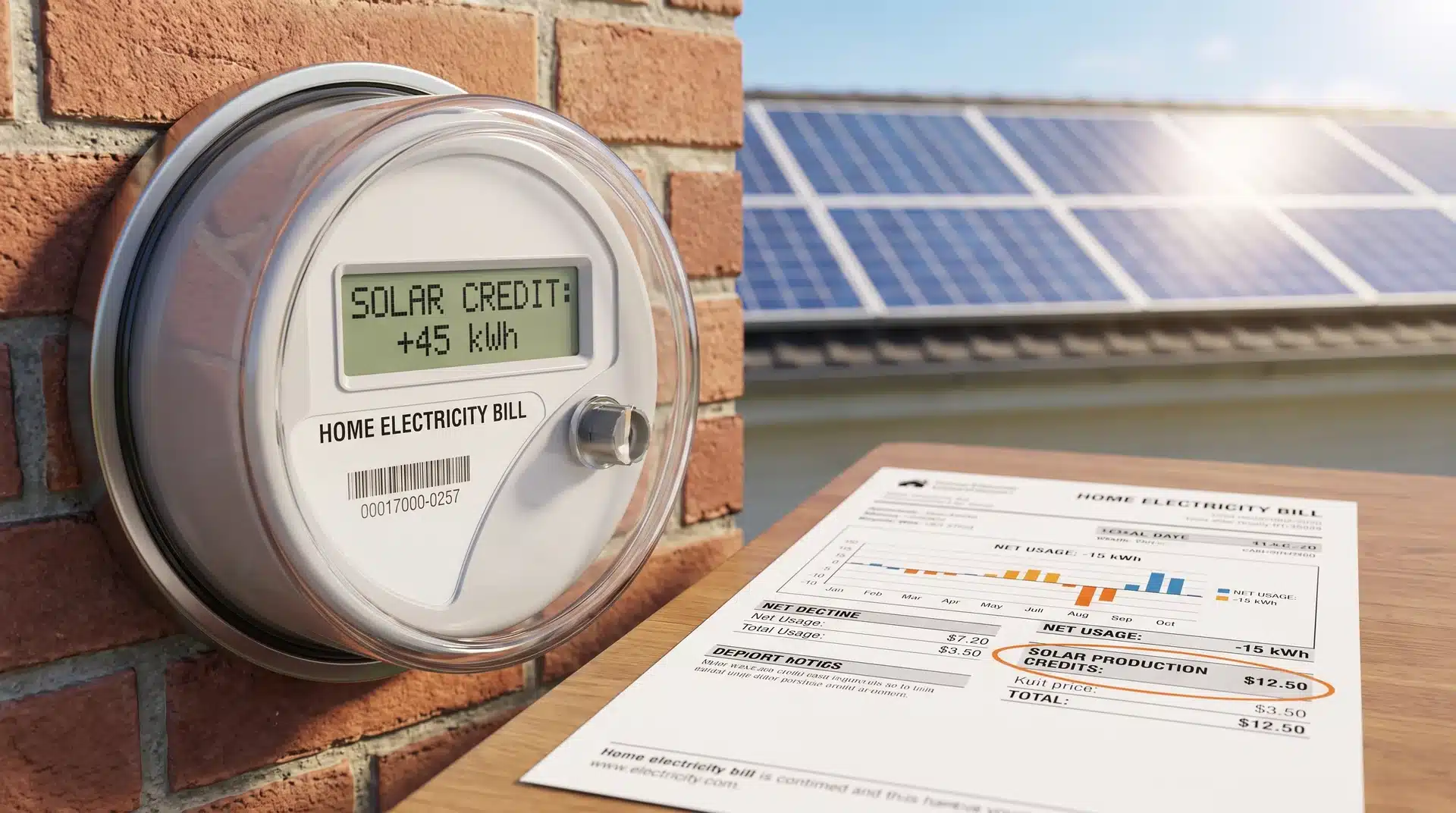
Here’s a simple explanation. Your panels make electricity during the day. If they produce more than your home needs, the extra power goes back to the utility grid, and you receive credits for it.
Your utility tracks that extra electricity as credits on your account. If you’ve wondered what is net energy, it simply refers to the difference between the electricity your solar panels send to the grid and the electricity your home draws from it.
When your home needs power at night or on cloudy days, those credits help reduce what you owe. You’re billed based on that net balance rather than your total electricity use.
You may have heard people say “the meter runs backward.” That was true with older spinning meters, but modern smart meters work differently.
This also explains why many people ask if they’ll still receive an electricity bill after installing solar panels. In many cases, your monthly bill can drop significantly, but fixed utility charges or electricity used beyond your available credits may still appear on your statement.
That last part matters because the value of those credits can vary depending on your utility’s rules. It plays a big role in how much you actually save with solar.
How the Credit Cycle Works

The credit cycle has four stages: generation surplus, export, credit drawdown, and net reconciliation. Understanding the full loop explains how solar credits actually work.
When Your System Overproduces
On sunny afternoons, your panels may produce more electricity than your home uses. The extra flows back to the grid, and your utility tracks it as kilowatt-hour credits.
One detail many homeowners, including me, miss is that utilities usually don’t pay the full retail rate for extra credits left over at the end of the year. I initially expected to get paid for all the extra power my system produced, but many utilities either pay a lower rate or don’t provide payment at all.
That’s why sizing your solar system around your actual energy use matters. Producing more than you can use or offset doesn’t always mean more savings.
When You Draw From the Grid
At night, your panels produce no electricity. On cloudy days, their output can drop significantly. In both cases, your home pulls power from the grid.
When that happens, your utility uses your stored credits first. You don’t pay out of pocket until those credits are used up.
This is what makes net metering work like virtual storage without needing a physical battery. But once your credits run out, you’re charged the normal rate for any additional electricity you use.
How the Net Bill Is Calculated
At the end of each billing cycle, your utility compares how much electricity you used with how much your solar system sent back to the grid.
If you exported more than you used, the extra credits carry forward. If you used more than you exported, you pay the difference. Most utilities roll unused credits into the next month’s bill.
Some programs work differently. Under net metering California rules with NEM 3.0 (officially the Net Billing Tariff), credits build through the year in dollar terms and settle at an annual true-up.
Unlike the older NEM 2.0 program, leftover credits at true-up aren’t paid out at a wholesale rate; they simply expire with no cash compensation. That’s one more reason sizing your system to your actual usage, rather than banking on surplus exports, matters more under current California rules.
What Your Credits Are Actually Worth
Not all net metering credits are equal. What you earn per exported kilowatt-hour depends entirely on the billing model your utility uses, and that model is changing in more places than most solar buyers realize.
Retail-Rate Net Metering
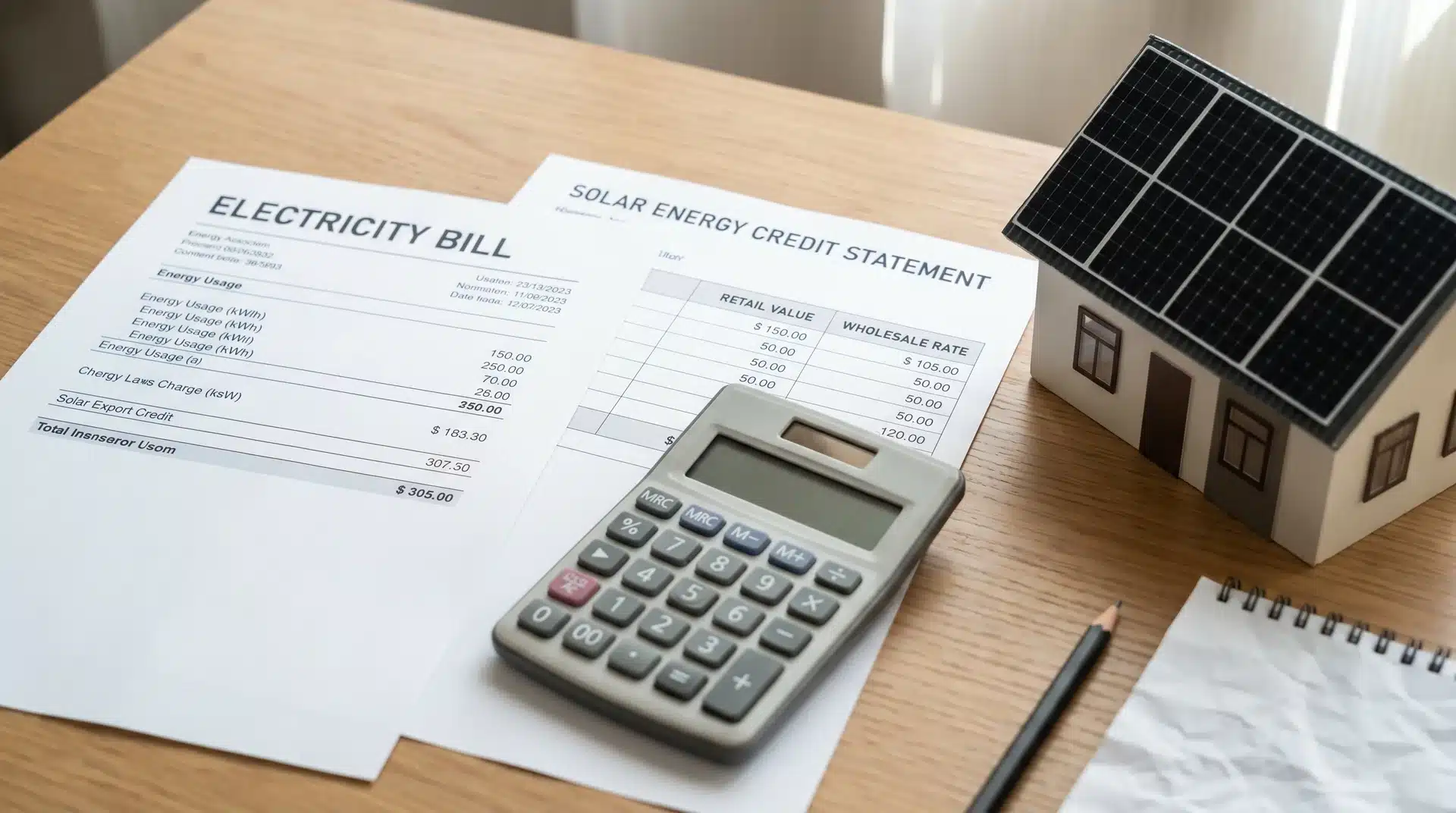
Under traditional net metering, exported electricity is credited at the same rate you pay for power. A $0.14/kWh rate means each exported kWh earns a $0.14 credit, creating a 1-to-1 exchange.
What’s easy to miss is what that credit includes. When you get full retail credit, you’re being compensated not just for the electricity itself, but also for the cost of using the grid that delivers power to your home.
Non-solar customers still pay grid costs through monthly bills. Retail-rate net metering lets solar customers offset some of those costs, which is why some regulators are changing these programs. The debate also centers on how grid costs are shared.
Net Billing and Wholesale Export Rates
Under net billing, exported electricity is usually credited at an avoided cost rate, meaning the amount it would cost the utility to produce or buy that power elsewhere. These credits are often around $0.03 to $0.08/kWh, much lower than typical retail rates of $0.12 to $0.18/kWh.
You still save money on the electricity your home uses directly from your panels. The difference is that extra power you send to the grid is worth much less. This changes how you think about solar savings.
A system designed mainly to export excess power may not perform as well under net billing. Using more of your own solar becomes more valuable, affecting system size, battery choices, and energy use timing.
How Time-of-Use Rates Add Another Layer
Some utilities use time-of-use rates, with higher prices during peak hours and lower rates off-peak. Under time-of-use net metering, solar credits follow the same pattern: exports during high-value hours earn more, while off-peak exports earn less.
This timing difference matters because many south-facing solar systems produce their most power around midday, before peak rates begin. I noticed this with my own setup too. My west-facing panels produce more later in the day, which lines up better with the hours when electricity is often worth more.
It’s a small detail, but it shows why solar savings depend on more than just how many panels you install. Your system design and your utility’s rate rules work together.
Where Net Metering Applies and Where It’s Changing
Net metering is not governed by a single nationwide policy. Instead, each state and utility sets its own rules for how exported solar electricity is credited. As a result, two homeowners with similar solar systems may see very different savings depending on where they live. Understanding your local program is essential because the billing model can significantly affect your return on investment and overall payback period.
Some of the recent policy changes include:
- California: NEM 3.0 (Net Billing Tariff) reduced export credit rates for new solar customers.
- Nevada: Moved away from traditional retail-rate net metering to lower export compensation.
- Hawaii: Replaced standard net metering with alternative solar compensation programs.
- Many other states: Continue offering net metering, but credit rates and annual settlement rules vary by utility.
Before installing solar, review your utility’s current policy so you can estimate your savings more accurately and choose the right system size.
Conclusion
Choosing solar is about more than generating clean electricity. I think understanding what is net metering helps you make sense of the numbers behind your expected savings instead of relying on rough estimates.
You now know how surplus energy becomes bill credits, how those credits are applied when your home uses grid power, why retail and wholesale export rates make a difference, and how changing utility policies can affect your payback period.
With that knowledge, you can compare solar quotes more confidently and set realistic expectations.
Take a few minutes to check your utility’s current billing rules, then share your questions or continue reading our other solar guides for more practical tips.
Frequently Asked Questions
What is the difference between net metering and net billing?
Net metering credits your exported solar electricity at the full retail rate, the same price you’d pay to buy that power back. Net billing compensates exports at a lower wholesale rate, typically a fraction of retail. The distinction matters because it directly determines how much financial value you recover from electricity your home doesn’t consume immediately.
What happens to unused net metering credits at the end of the year?
Most utilities carry unused monthly credits forward to offset future bills. At an annual true-up date, any remaining balance is typically paid out at a wholesale rate or forfeited, depending on your utility’s policy. Cash payouts at retail rate for surplus generation are uncommon. Sizing your system to match your consumption helps avoid leaving value on the table.
Can you use solar panels without net metering?
Yes. Solar panels generate and use electricity independently of any net metering arrangement. Without it, surplus power either goes unused or requires battery storage to capture. Net metering improves the financial return on a grid-tied system, but it isn’t a technical requirement. The panels work either way; net metering just changes what the economics look like.
Is net metering worth it for homeowners?
Under retail-rate net metering, the financial case is well-established. Typical payback periods run seven to twelve years, depending on system size, local electricity rates, and sun exposure. Under net billing or reduced export rate models, the return depends more heavily on how much solar you consume directly rather than export. The billing model in your area is the single biggest variable in that calculation.