
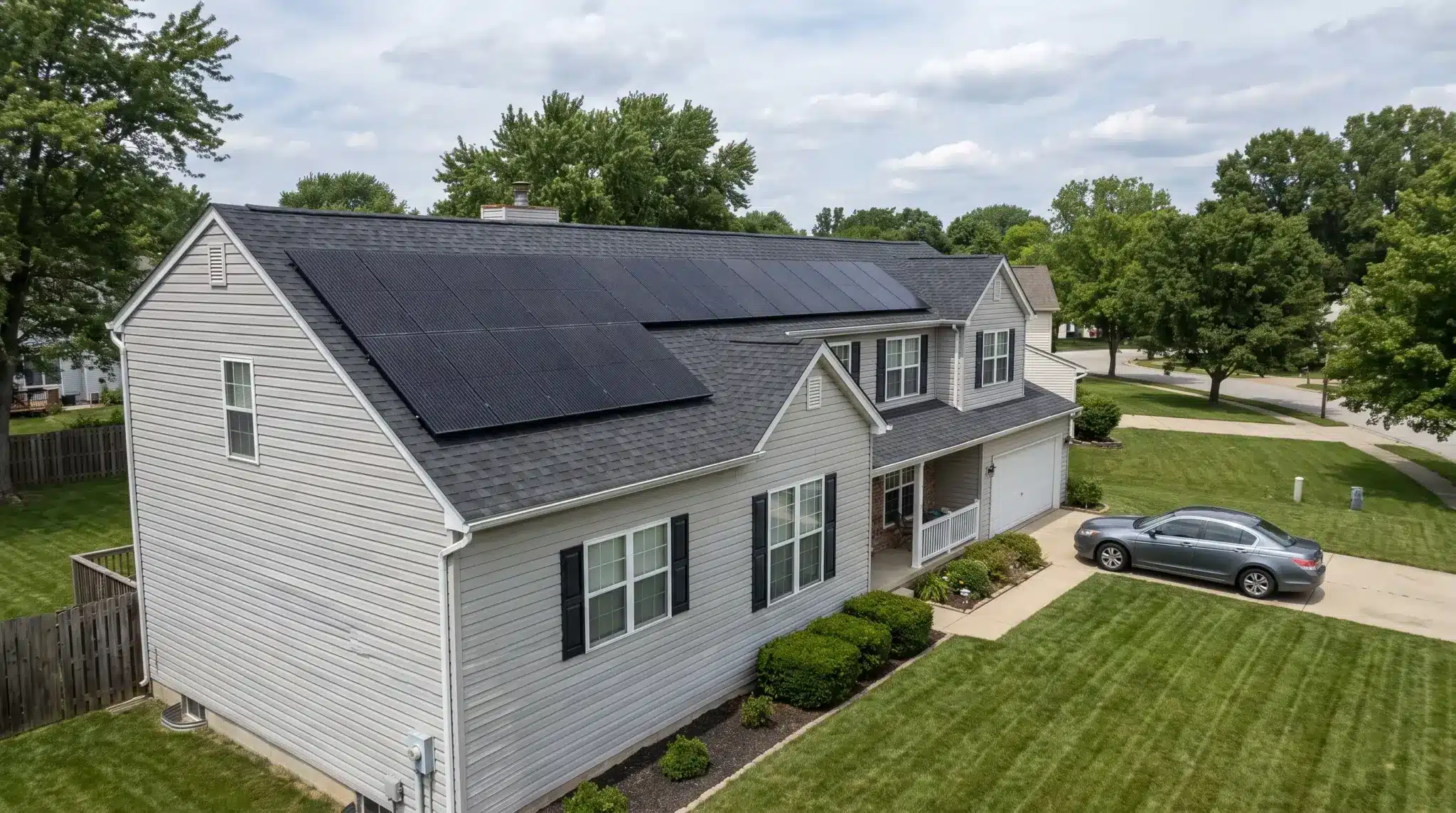

Solar panels can reduce electricity costs, but buying a complete system may require a large payment. Leasing provides another option with little or no upfront expense, though the solar lease cost on your first quote is only part of what you will actually pay.
I have seen homeowners focus on an appealing starting price without checking the full contract cost. That decision can become expensive when the payment rises every year.
Your monthly charge depends on your energy use, roof, location, system size, and agreement terms. Two similar homes can receive very different quotes from the same provider.
Most solar leases last between 15 and 25 years, making this a serious household commitment, and even early lease termination can carry its own costs. Reviewing every payment, fee, and condition can help you protect your budget.
What Is the Average Solar Lease Cost?
The average solar lease cost usually ranges from $50 to $300 per month in the United States, although some quotes may fall outside this range.
Many providers require no down payment because the solar lease ownership structure keeps the panels in the company’s name, which is what lets them charge a monthly fee instead of a purchase price.
A small system designed for modest energy use may cost less, while a larger system may carry a higher monthly payment.
You should compare the lease payment with your remaining utility bill after installation because grid connection fees and charges for extra electricity may still apply.
What Determines Your Monthly Solar Lease Payment?
Two neighbors with similar roofs can end up with very different monthly numbers once a provider runs the math. Here’s what actually drives that figure.
1. System Size, Location, and Sunlight
A household that uses a lot of electricity may need more panels than one with modest energy needs. Adding more equipment generally raises the monthly lease payment.
Location also affects expected production. Roof direction, nearby shade, seasonal weather, and average sunlight can change how much electricity the panels produce.
Panels on a sunny roof may generate enough power with a smaller system. A roof shaded by trees or buildings may require more panels, another layout, or a different energy plan.
2. Local Electricity Rates
Utility prices vary widely across the United States. Some states charge under 12 cents per kilowatt-hour, while others charge more than 35 cents, so the same lease payment can look like a bargain in one zip code and a poor deal in another.
A lease may offer stronger savings in a state with expensive grid electricity, but local rates alone do not make an agreement worthwhile.
Compare these two monthly totals:
- Current cost: Your average utility bill before adding solar.
- Expected solar cost: Your lease payment plus the estimated remaining utility bill.
- Possible savings: The difference between those two amounts.
- Future cost: The expected payment after applying yearly lease increases.
Request estimates based on recent electricity bills, not a general neighborhood average. A quote built around inaccurate energy use may present savings that your home cannot reach.
3. Annual Price Increases
Many solar leases include an annual escalator, commonly around 2.9%, though rates as low as 0% and as high as 3% or more also appear in contracts.
A $150 monthly payment with a 3% escalator would not remain at $150. It would rise to about $174 in year six, $202 in year eleven, and $263 by year twenty.
Some providers offer a fixed-rate lease without yearly increases. Its starting payment may be higher, but the predictable cost can make long-term budgeting easier.
Before signing, ask the provider to show every annual payment for the entire term. Do not accept a calculation based only on the first year.
How Much Could a Solar Lease Cost Over Time?
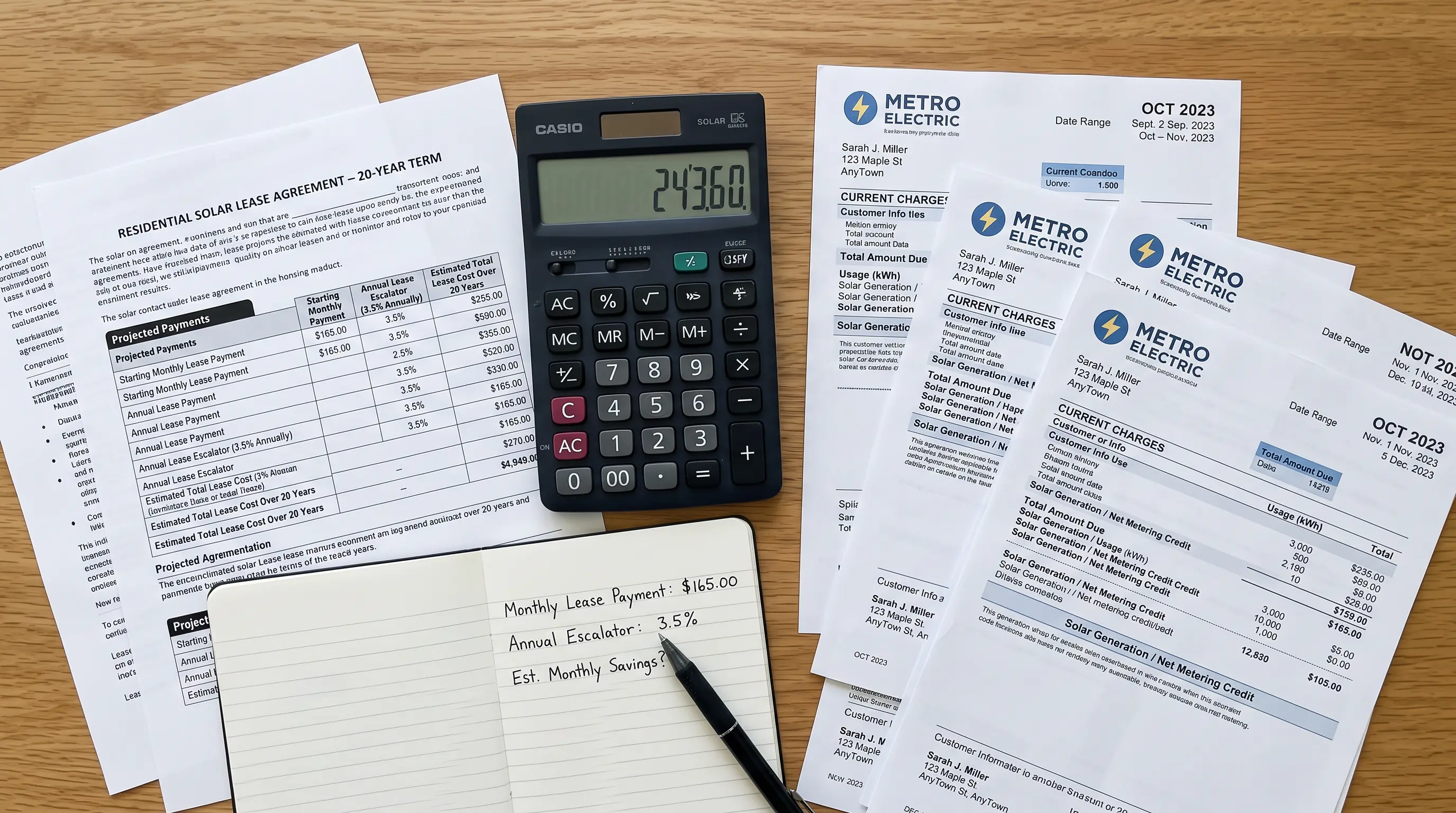
A low starting price can still produce a large total because most leases continue for decades. Calculating the complete amount makes different offers easier to compare.
| Example | Starting Payment | Annual Increase | 20-Year Estimated Total |
|---|---|---|---|
| Fixed-payment lease | $100 per month | 0% | $24,000 |
| Fixed-payment lease | $150 per month | 0% | $36,000 |
| Increasing lease | $150 per month | 2% | About $43,700 |
| Increasing lease | $150 per month | 3% | About $48,400 |
These examples show lease payments only. They do not include grid electricity, utility connection fees, roof work, transfer charges, or optional equipment.
A provider may also promise that utility prices will rise faster than the lease payment. That forecast is not guaranteed, so judge the offer using several possible rate changes.
Check the following numbers before accepting a quote:
- First-year payment: Confirm the exact monthly charge at the beginning of the lease.
- Annual escalator: Find the percentage increase and the month when it applies.
- Total lease payments: Request the complete amount due across the entire term.
- Estimated utility charges: Add the electricity and grid fees that remain after installation.
- Transfer expenses: Check for charges when selling or refinancing the property.
- Buyout price: Find out when a purchase is allowed and how the price is calculated.
- End-of-term expenses: Confirm the cost of removal, renewal, or equipment purchase.
How Is a Solar Lease Different from a Power Purchase Agreement (PPA)?
A solar lease and a solar power purchase agreement (PPA) both let you use panels without buying or financing them, but they charge you in different ways.
With a lease, you pay a fixed monthly amount for the equipment itself, regardless of how much electricity it produces in a given month. With a PPA, you pay for the actual electricity the system generates, billed at a set rate per kilowatt-hour.
That difference affects your monthly bill. A lease payment stays flat until the next scheduled increase, even during a cloudy month with lower output. A PPA payment moves with production, so a strong sunny month can cost more than a weak one.
Both options typically include an annual escalator, and both are owned by the provider rather than you. If you want payment predictability regardless of weather, a lease is usually the simpler choice. If you want to pay only for power you actually use, a PPA may fit better.
Is Leasing Solar Panels a Smart Financial Choice?
Leasing can suit homeowners who want solar power without purchasing the equipment. It may be less suitable for someone focused on ownership, maximum long-term savings, or simple home-sale terms.
Reasons a Lease May Make Sense
A solar lease can work well for homeowners who want a simpler way to use solar power without buying an entire system.
- Many leases allow solar installation without requiring a large initial payment.
- The system owner may handle covered repairs, maintenance, and performance monitoring.
- Your lease payment & remaining utility charges may cost less than your previous average electricity bill.
- You can use solar power without financing the system’s full purchase price.
- A fixed-rate agreement can provide a steady monthly expense without annual increases.
- Check who pays for labor, roof access, inverter replacement, damaged panels, and system removal.
Maintenance coverage is not identical in every contract. Read the service terms to learn who pays for labor, roof access, inverter replacement, panel damage, and system removal.
Reasons to Think Carefully
The lower starting cost may look appealing, but a solar lease can bring financial limits that last for many years.
- Monthly lease payments usually do not provide ownership rights.
- Solar lease agreements commonly last between 15 and 25 years.
- Leasing may provide less long-term value than purchasing a reasonably priced system.
- An annual escalator can increase your monthly charge every year.
- A buyer may need to meet credit requirements and assume the agreement.
- Homeowners cannot claim an ownership-based federal credit for leased solar equipment.
- Ending or buying out the lease may require a substantial payment.
- Check the total cost, transfer rules, service coverage, and exit terms before signing.
The IRS states that this residential credit is unavailable for property placed in service after December 31, 2025. Read the current IRS rules.
Conclusion
A solar lease can place panels on your roof without the high starting cost of buying them. However, its value depends on much more than the first monthly payment.
I would look closely at the escalator, total contract price, repair coverage, and home-sale rules. These details often reveal more than an attractive first-year savings estimate.
Compare the lease with buying, financing, and keeping regular utility service. Use realistic electricity production and utility-rate estimates when calculating each option.
A good agreement should make sense today and near the end of its term. Read every charge, request written answers, and take time before making a 15-to-25-year commitment.
Frequently Asked Questions
Who Gets the Federal Solar Tax Credit with a Lease?
For leased systems, the homeowner generally cannot claim the federal Residential Clean Energy Credit because the homeowner does not own the equipment. The residential credit also ended for post-2025 installations.
Can I Sell a House with Leased Solar Panels?
Yes. The lease usually stays attached to the solar system, so the buyer may assume it. Review transfer rules, credit requirements, fees, and payoff choices before you list your home.
What Happens When a Solar Lease Ends?
At the end of the term, you may renew the agreement, purchase the panels, or request removal. Available choices and costs depend entirely on the language in your signed contract.
Can You Buy Out a Solar Lease Early?
Many contracts allow an early buyout, but timing, pricing, and fees vary. Ask for the buyout schedule in writing and compare its amount with the cost of continuing monthly payments.