
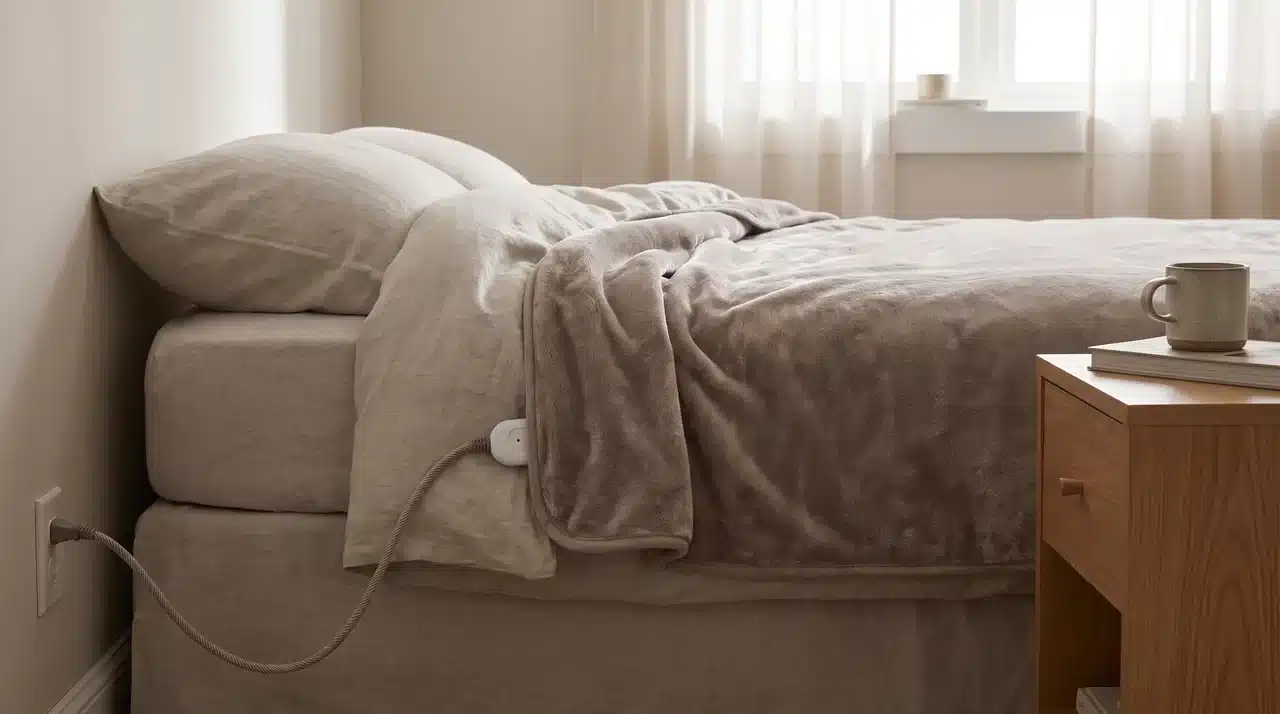


Do electric blankets use a lot of electricity? For many households, the answer is no. Electric blankets warm the person and bedding instead of heating an entire room, so their power demand is usually fairly low.
I usually look at three numbers first: the blanket’s wattage, how many hours it runs, and the local electricity rate. I also keep the heat setting in mind because a blanket may not draw its maximum rated power throughout the night.
Below, you can see typical electricity use, estimated hourly and monthly costs, comparisons with room heating, and practical ways to keep energy use low.
How Much Electricity Does an Electric Blanket Actually Use?
Many electric blankets use around 60 to 200 watts, while many full-size models fall in the 100 to 150-watt range. Exact power needs depend on the blanket’s size, heating system, controls, and temperature setting. That range puts a blanket well below most of the top electricity-draining appliances found in a typical home.
Several factors can change electricity use:
- Blanket Size: Smaller blankets generally need less power than larger queen or king models.
- Heating Zones: Dual-control blankets can heat separate sides of the bed, which affects total power demand.
- Heat Setting: Higher settings can draw more energy, especially while warming cold bedding.
- Temperature Control: The heating element may cycle on and off once the selected temperature is reached.
The table below shows how rated wattage translates into maximum energy consumption over eight hours.
| Rated Power | Typical Use | Energy Used in 8 Hours at Full Power |
|---|---|---|
| 60 watts | Smaller electric blanket | 0.48 kWh |
| 100 watts | Standard heated blanket | 0.80 kWh |
| 150 watts | Larger blanket or heated throw | 1.20 kWh |
| 200 watts | Large or dual-zone model | 1.60 kWh |
These numbers assume the blanket draws its full rated power continuously for eight hours. Real overnight consumption can be lower.
The wattage printed on the label tells you the maximum electrical input rather than the exact amount used every hour. Temperature controls often cycle the heating element on and off after the bedding reaches the selected temperature.
For example, a 150-watt blanket could use 1.2 kWh over eight hours at constant full power, but its measured consumption may be lower during normal use.
When I want a more accurate figure for a heated product, I prefer a plug-in electricity meter. It records actual consumption based on the temperature setting and runtime, rather than relying only on label wattage.
Electric Blanket Cost Per Hour, Night, and Month
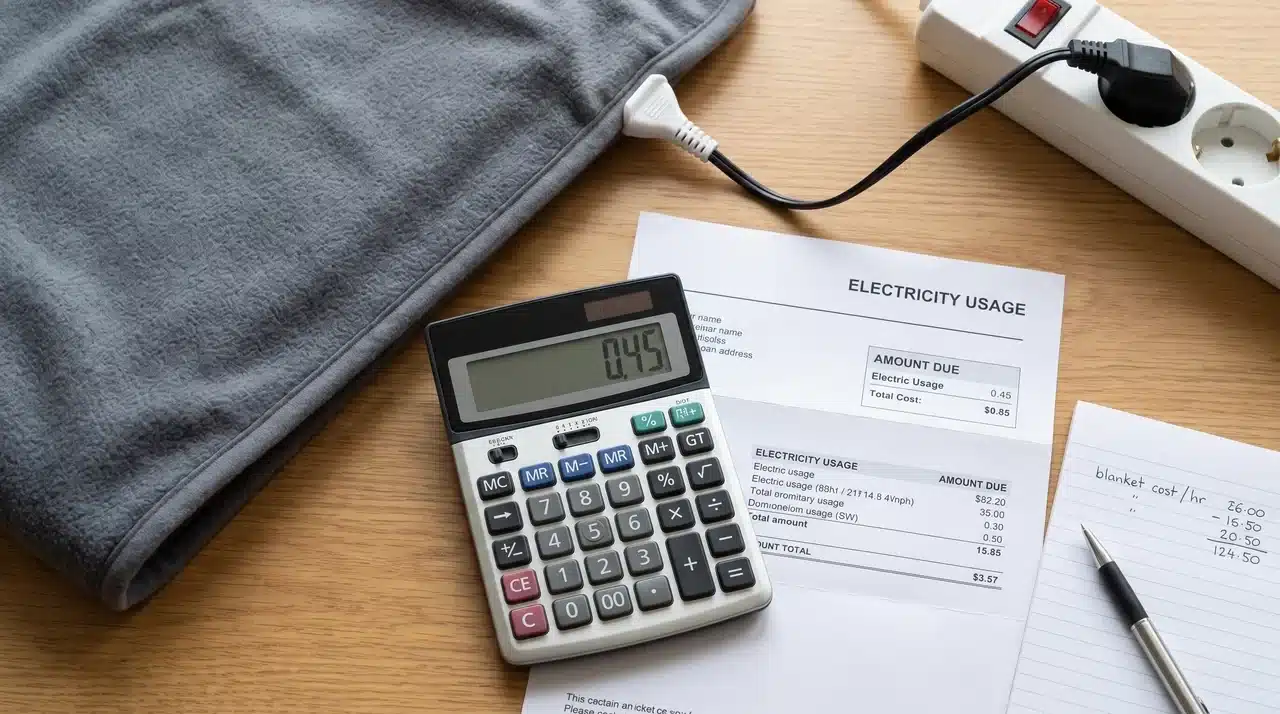
Electric blanket running cost depends on three numbers: wattage, operating time, and the price paid for each kilowatt-hour of electricity.
The calculation is simple: Electricity cost = watts ÷ 1,000 × hours used × electricity rate per kWh
For example, a 100-watt blanket running for eight hours uses a maximum of: 100 ÷ 1,000 × 8 = 0.8 kWh
If electricity costs $0.20 per kWh: 0.8 × $0.20 = $0.16
That gives a maximum estimated cost of 16 cents for eight hours.
To calculate the cost of your own blanket:
- Find the Wattage: Check the blanket label, controller, packaging, or instruction manual.
- Convert to Kilowatts: Divide the wattage by 1,000.
- Add Runtime: Multiply the result by the number of hours used.
- Apply Your Rate: Multiply the kilowatt-hours by the electricity price shown on your utility bill.
The table below uses example electricity rates between $0.17 and $0.27 per kWh.
| Blanket Wattage | Cost Per Hour | Maximum Cost Per 8-Hour Night | Maximum Cost for 30 Nights |
|---|---|---|---|
| 60 watts | 1.0–1.6 cents | 8–13 cents | $2.45–$3.89 |
| 100 watts | 1.7–2.7 cents | 14–22 cents | $4.08–$6.48 |
| 150 watts | 2.6–4.1 cents | 20–32 cents | $6.12–$9.72 |
| 200 watts | 3.4–5.4 cents | 27–43 cents | $8.16–$12.96 |
These are maximum-load estimates. Thermostatic cycling, lower temperature settings, timers, and shorter operating periods can reduce actual electricity use. If a winter statement still looks off despite these small numbers, it’s worth checking the common sudden bill increase reasons before assuming the blanket is to blame.
How Electric Blankets Compare With Other Heating Options
Electric blankets generally require much less electrical input than portable room heaters because they heat a small area close to the body.
A standard portable electric space heater is commonly rated around 1,500 watts. By comparison, a 100 to 150-watt electric blanket draws only about 7% to 10% as much power when both appliances operate at their full rated output.
The blanket can work with less power because heat stays close to the body and bedding. A room heater must warm the surrounding air, furniture, walls, and other surfaces.
The table below shows the practical difference between personal and room heating.
| Heating Option | How It Works | Energy Impact | Practical Use |
|---|---|---|---|
| Electric Blanket | Heats the person and bedding | Relatively low electrical demand | Useful for warmth in bed |
| Higher Thermostat Setting | Heats the room or entire home | Can require considerably more energy | Best kept only as warm as necessary |
| Blanket + Same Thermostat | Adds personal heat without lowering room heat | Limits potential savings | Reducing room heat may save more |
| Blanket + Space Heater | Uses personal and room heating together | Space heater becomes the main electrical load | Avoid unnecessary double heating |
The main savings come from using personal heat instead of some room heating. Running every heating source at the same time naturally reduces the difference.
Electric Blanket vs. Turning Up the Heat
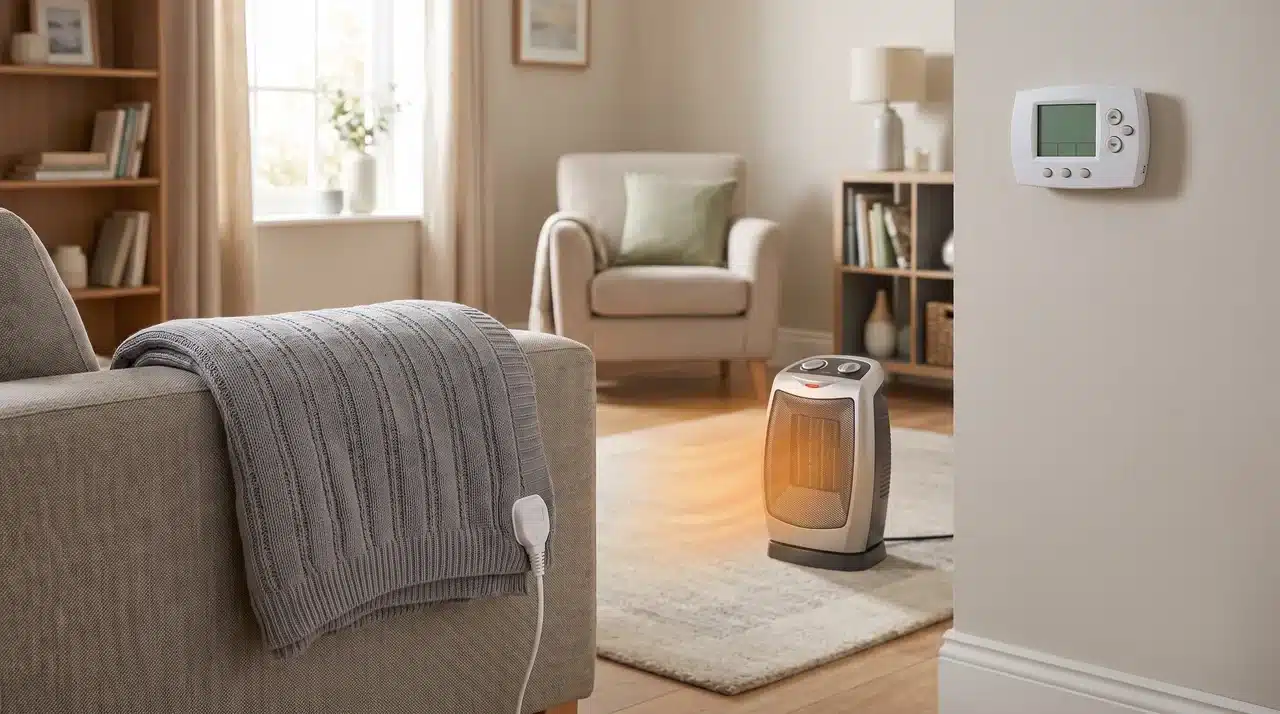
Using an electric blanket is generally cheaper than raising the temperature of an entire home just to keep one person warmer in bed.
A blanket may need only 60 to 200 watts at maximum input. A heating system has to maintain the temperature across a much larger space, so total energy demand can be far higher.
The comparison is not identical in every home. Heating fuel, insulation, outdoor temperature, thermostat settings, and system efficiency all matter.
Still, the basic principle remains simple: heating one person usually requires less energy than heating several rooms.
I find that distinction more useful than comparing wattage alone. An electric blanket makes the biggest financial difference when it reduces the need for extra room heat rather than simply running alongside it.
What Affects Electric Blanket Electricity Use?
Two blankets used for the same number of hours can still consume different amounts of electricity. Both product design and daily habits matter.
- Rated Wattage: A 200-watt blanket has a higher maximum power demand than a 60-watt model.
- Heat Level: Higher settings generally require more heating activity than lower settings.
- Blanket Size: Larger models contain a greater heated area and may require more power.
- Room Temperature: A colder room may cause the blanket to work harder to maintain the selected temperature.
- Bedding: Covers that retain heat well may help the blanket maintain warmth with less heating activity.
- Runtime: Preheating for 30 minutes uses far less electricity than leaving the blanket operating for several hours.
- Heating Zones: Dual-zone models may have separate electrical loads depending on which sides are active.
I recommend treating the wattage label as the starting point, not a guaranteed measure of overnight consumption. Actual use depends on how frequently the heating element operates.
How to Lower Electric Blanket Running Costs
Electric blankets already have fairly low running costs, so the biggest reductions usually come from avoiding unnecessary high-temperature operation and reducing other heating demand.
1. Preheat the Bed, Then Reduce the Setting
A higher setting can warm cold sheets before bedtime. Once the bedding feels comfortable, reduce the temperature rather than keeping the blanket at maximum output.
This approach lowers heating demand while still keeping the bed warm.
2. Use the Timer
Many modern electric blankets include timers or automatic shutoff functions.
A timer prevents the blanket from running long after extra heat is no longer needed. It can be especially useful for people who mainly use the blanket to warm the bed before sleeping.
Always follow the operating instructions supplied with the product.
3. Use Only the Heating Zone You Need
Some larger blankets include separate controls for each side of the bed.
If only one side is occupied, activating one heating zone may reduce electricity use compared with heating the entire blanket. The exact saving depends on how the manufacturer has designed the heating system.
4. Lower Room Heating When Practical
Cutting a few cents from blanket consumption makes little difference compared with reducing unnecessary whole-room heating.
If an electric blanket keeps you comfortable at night, a slightly lower thermostat setting may reduce overall heating costs. Avoid making the room uncomfortably or unsafely cold simply to reduce energy use.
5. Keep Warmth Under the Bedding
Sheets, blankets, and comforters help retain the heat generated by an electric blanket. Keeping the warmth close to the body means the blanket may not need to remain on a high setting for as long.
Follow the manufacturer’s placement instructions because heated throws, mattress pads, and underblankets are designed for different positions.
Is It Safe to Leave an Electric Blanket on All Night?
Some electric blankets are designed for overnight use, while others are intended mainly for preheating or shorter periods. The product instructions should always determine how long a specific blanket can remain switched on.
Modern models may include temperature regulation, automatic shutoff, timers, or overheating protection, but features differ by manufacturer.
Before using a blanket, check the cord, controller, plug, and fabric for damage. Stop using it if you notice exposed wiring, scorch marks, unusual hot spots, damaged connections, or problems with the controller.
Avoid folding, tightly bunching, or placing a blanket in a position that the manufacturer does not recommend.
Energy cost and electrical safety are separate issues. A blanket may be cheap to operate but still needs to be used according to its instructions.
Conclusion
So, do electric blankets use a lot of electricity? In general, no. Their relatively low wattage makes them inexpensive compared with appliances designed to heat an entire room.
I see the best value when a blanket provides personal warmth while reducing the need to heat the whole room. I also prefer checking the actual wattage and utility rate before relying on a generic cost estimate.
A 100 to 150-watt blanket can cost only a few cents per hour, and temperature controls may reduce real consumption further. Use suitable settings, timers, and manufacturer-approved operating methods to stay warm without adding much to winter electricity costs.
Frequently Asked Questions
Does an electric blanket use electricity when switched off?
A basic electric blanket should not consume meaningful electricity when switched off. Models with electronic controls or smart functions may draw a very small standby load while plugged in.
Do dual-control electric blankets use twice as much electricity?
Not necessarily. Total consumption depends on the wattage of each heating zone, which sides are active, temperature settings, and how often each heating element cycles.
Does a heated throw use less electricity than an electric blanket?
Heated throws can use less power because many are smaller, but wattage varies by product. Check the rated power rather than assuming one type always costs less.
Can I plug an electric blanket into a smart plug?
Check the blanket manufacturer’s instructions first. Some heated products should not be used with external timers, smart plugs, extension cords, or other switching devices not approved by the manufacturer.
Does a lower electric blanket setting always use less electricity?
Usually, lower heat settings reduce heating demand because the element runs less often. Exact behavior depends on the blanket’s controller and heating system.