
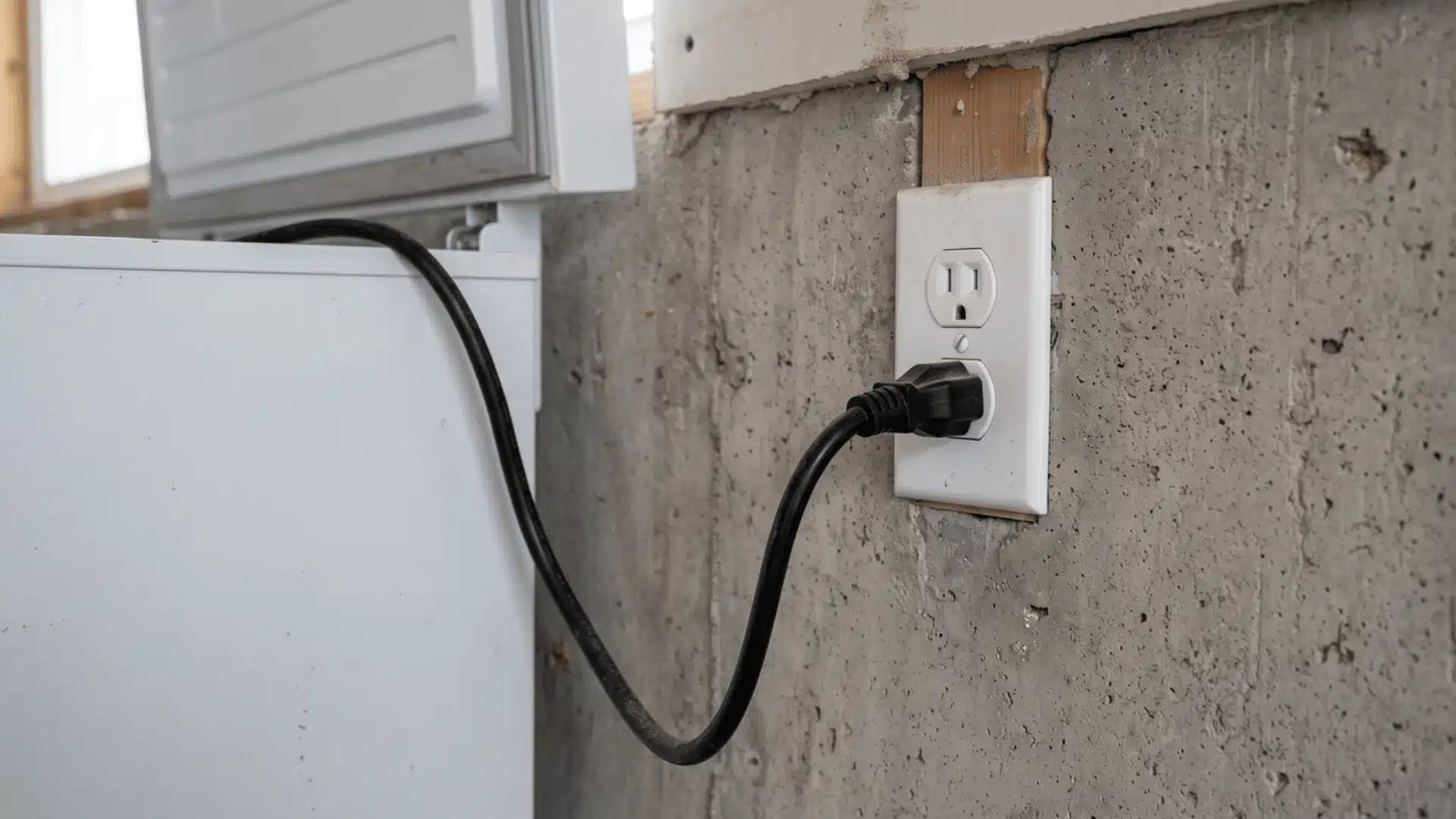


Plugged in a deep freezer and worried it might trip your breaker? Most people ask how many amps does a deep freezer use, then stop right there. But that number only covers half the picture.
I’ve seen freezers run fine for months, then suddenly knock out a circuit for no obvious reason. The real issue isn’t the running draw. It’s the startup surge, and what else shares that outlet at the exact same moment.
Below, I’ll break down both numbers, show you how to calculate your own freezer’s draw, and help you decide if it needs a dedicated outlet.
How Many Amps Does a Deep Freezer Use?
A standard chest freezer draws about 1 to 3 amps during normal running operation on a typical 120-volt household circuit.
Larger or upright models pull a bit more, usually landing between 3 and 5 amps under the same conditions.
That 1 to 3 amp range shows up consistently across major chest freezer brands, from compact 5-cubic-foot models to full-size units.
That running number only tells part of the story, though. A deep freezer doesn’t draw the same amps every second it’s plugged in, and the next section breaks down why that number shifts the moment the compressor kicks on.
Running Amps vs. Startup Surge
“Amps used” isn’t one number for a deep freezer. It splits into a steady running draw and a brief startup spike, and most confusion comes from treating them as the same thing.
| Type of Draw | Amps | When It Happens |
|---|---|---|
| Running | 1–5 amps | While the compressor is actively cooling |
| Startup surge | 3x running draw | The moment the compressor kicks on |
Running Amp Draw
Running amps reflect what the compressor pulls once it’s already cooling, not the moment it switches on. This is the steady number you’d see on a plug-in meter, the same way measuring actual refrigerator power use tells a different story than the nameplate.
Most chest freezers land in that 1 to 3 amp range, with upright and larger models closer to 5. That range shifts slightly based on size and freezer type, but it stays fairly predictable.
Startup Surge
Startup surge is the brief spike that happens the second the compressor kicks on. It typically jumps to about three times the running number, then drops within a few seconds.
That spike is the number circuit sizing actually needs to account for, not the running draw covered above.
Calculating Your Freezer’s Exact Amp Draw
Every appliance has a nameplate, usually on the back or inside the lid, listing its wattage and voltage. Once you have those two numbers, amps = watts ÷ volts.
Say your freezer’s nameplate lists 250 watts on a 120-volt circuit. Divide 250 by 120 and you get about 2.1 running amps — right in line with the ranges above.
This is worth doing once, because published averages are just averages. Your specific model, its age, and its efficiency rating will shift the real number up or down.
Why the Startup Surge Matters More Than the Running Number
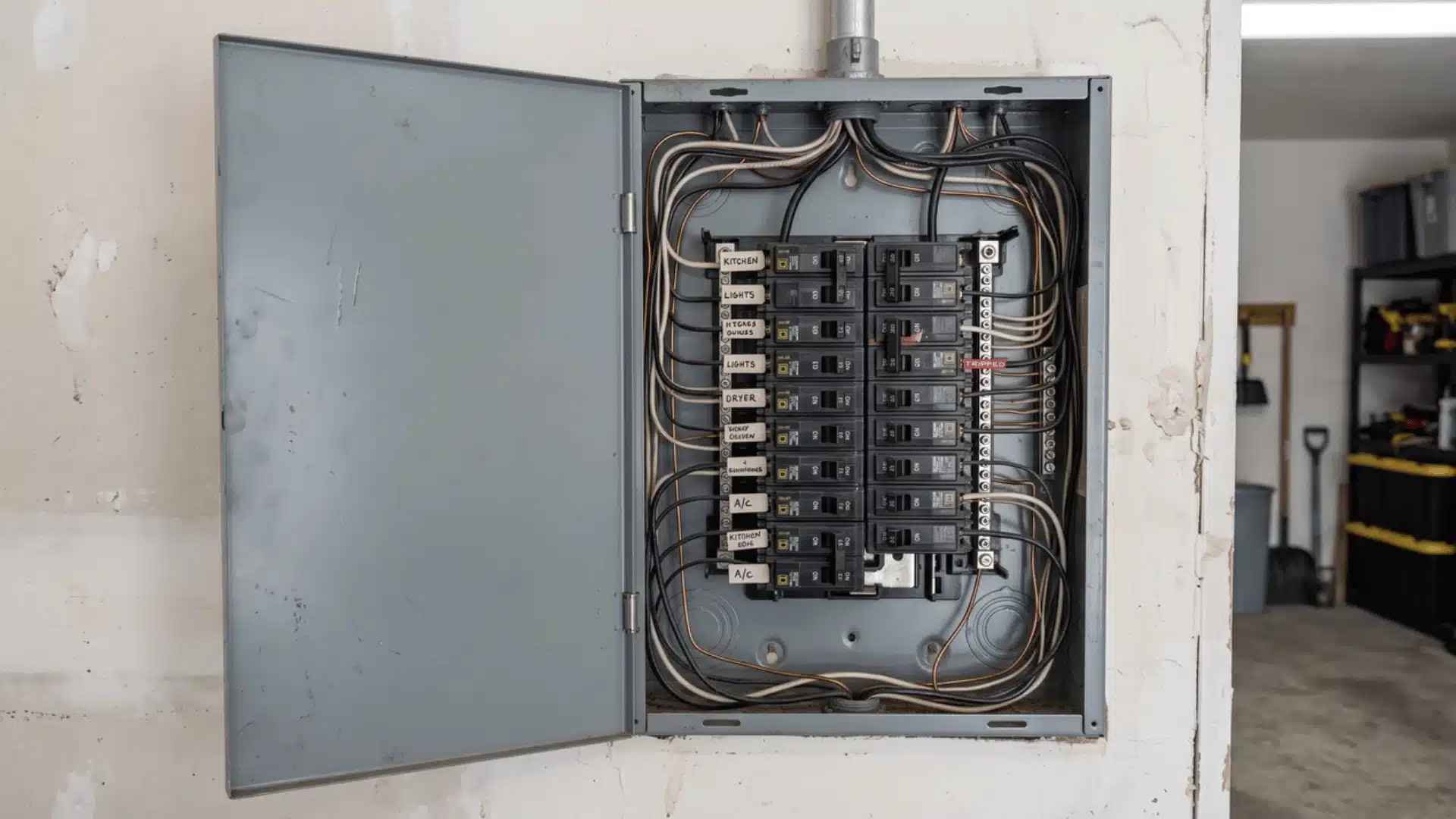
That low running-amp figure isn’t what decides whether your freezer is safe on a circuit. The surge is.
A breaker trips based on total load at the exact moment of startup, not the freezer’s draw over an average hour. That’s a different kind of math than most people expect.
I’ve seen this trip people up when they add up running amps across a few appliances and assume they’re in the clear. The number that actually matters is happening in a different second.
Two freezers with the same running amps can behave completely differently on the same circuit. It depends on what else is drawing power at that exact moment.
A few things change what “that moment” looks like:
- Whether a space heater or window AC unit shares the same circuit
- Whether another appliance’s own startup surge happens to overlap
- How many devices are already pulling power before the freezer even kicks on
That overlap, not the freezer alone, is usually what pushes a breaker past its limit.
Choosing the Right Circuit and Outlet for Your Freezer

Circuit sizing comes down to handling the surge safely, not just covering the running draw. That’s the number that actually decides what your freezer needs.
A standard 15-amp or 20-amp, 120-volt circuit covers a deep freezer’s needs on its own. Most household circuits already meet this without any changes.
Manufacturers recommend a dedicated outlet for a specific reason. It’s not the running draw they’re worried about, it’s the surge.
Sharing a Circuit With Other Appliances
A dedicated outlet isn’t just a manufacturer formality. It’s what keeps the surge from becoming an actual problem.
On a shared circuit, the freezer’s surge can land at the same moment another appliance is drawing power. That’s when a breaker trips, not during normal running hours.
I’ve seen freezers on shared circuits run fine for months, then trip a breaker out of nowhere. The freezer didn’t change. Something else on that circuit did.
A few appliances make this more likely if they share a circuit with your freezer:
- Space heaters, since they draw a heavy load and cycle on their own timing
- Window AC units carry their own startup surge, which can hit at the same moment
- A second freezer or fridge counts too, since any compressor-driven appliance behaves the same way.
- A mini fridge sharing the same outlet adds another compressor cycle into the mix, even though its own draw is small, usually under 1.5 amps running.
Giving the freezer its own outlet removes that overlap completely.
Conclusion
The running draw on a deep freezer stays low and predictable, but that’s not the number that decides safety on a circuit.
Startup surge, and what else shares that circuit at the same moment, is what actually matters.
Once you understand how many amps a deep freezer uses in both states, a dedicated 15-amp or 20-amp outlet stops looking like overkill and starts looking like basic protection for your food and your breaker.
Check what’s already plugged into that outlet, then decide if your freezer needs a circuit of its own.
Frequently Asked Questions
How many deep freezers can run on a 20 amp circuit?
Manufacturers recommend only one deep freezer per dedicated 20-amp circuit, even though running amps would technically allow more. The startup surge, not the running draw, is what risks tripping a breaker when combined with other load.
How many amps does a 7 cubic foot chest freezer draw?
A 7 cubic foot chest freezer typically draws around 1 to 2 amps while running, in line with standard chest freezer figures. Startup surge briefly spikes to roughly three times that, generally landing in the 3 to 4.5 amp range for compact models this size.
Can you plug a freezer into a 15 amp outlet?
Yes, a 15-amp outlet comfortably handles a deep freezer’s running draw of 1 to 3 amps, with room to spare for the surge.
A dedicated outlet is still recommended so the surge doesn’t compete with other appliances at the same time.
What size circuit breaker do I need for a deep freezer?
A standard 15-amp or 20-amp, 120-volt breaker is sufficient for most deep freezers. The size matters less than having a dedicated outlet, since that prevents the surge from overlapping with other appliances.