
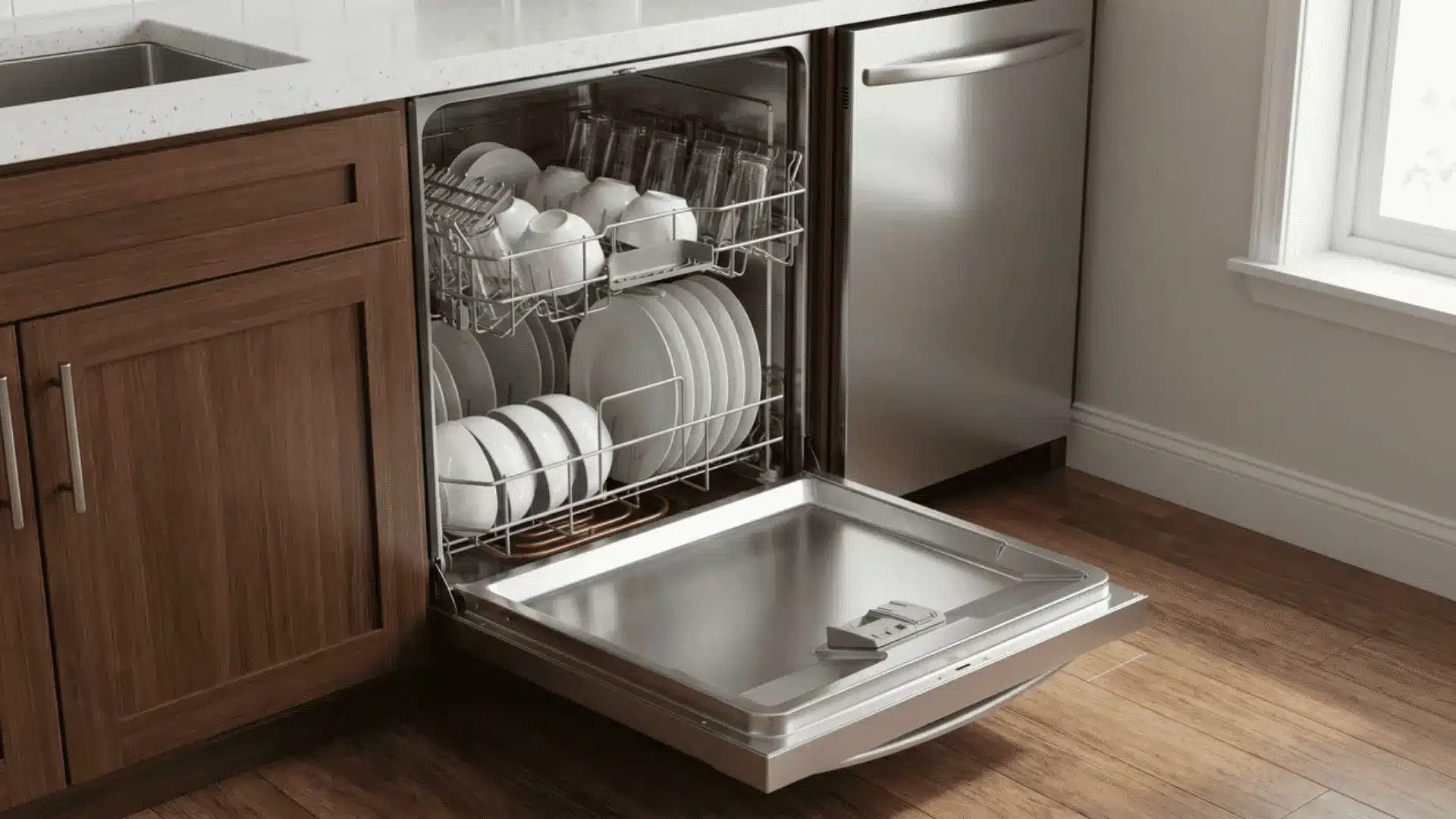

That dishwasher running every day may seem like a hidden energy drain. Many homeowners worry about higher electricity bills and wonder: do dishwashers use a lot of electricity?
I understand why you may have this concern, especially when the appliance runs for long cycles. The truth is that modern dishwashers are usually more efficient than people expect.
I’ll explain how much electricity they actually use, what affects their power consumption, and which settings can help you save energy.
By the end, you’ll know the real cost of running a dishwasher and how to use it efficiently without unnecessary worry.
Do Dishwashers Use a Lot of Electricity?
No, most modern dishwashers use less electricity than other major household appliances. A standard dishwasher generally consumes about 1–1.8 kWh per load, although older or less efficient models may use more.
The electricity a dishwasher uses mainly depends on the work it needs to perform during a cycle. Heating water requires the most energy because the appliance needs hot water to remove grease, food residue, and stains. The drying stage can also increase electricity use, especially when a heated drying option is used.
For example, a dishwasher rated at 1,800 watts does not continuously use 1,800 watts throughout the entire cycle. The heating element turns on only when needed, while other components, such as pumps and controls, require much less power.
Compared with appliances like electric water heaters, air conditioners, and clothes dryers, dishwashers typically have a much smaller effect on total household electricity consumption.
Larger appliances that provide heating, cooling, or drying functions often require much more power during daily use. Knowing how major energy-consuming appliances affect your home’s electricity usage can help you understand where most of your energy costs come from and make smarter decisions about how you use appliances.
How Much Electricity Does a Dishwasher Use Per Cycle?
The electricity consumption of a dishwasher varies based on its size, age, and settings. Most household models fall within these general ranges:
| Dishwasher Type | Average Electricity Use Per Cycle | Estimated Cost Per Load |
|---|---|---|
| Compact dishwasher | 0.5–1 kWh | Around a few cents |
| Standard dishwasher | 1–1.8 kWh | About $0.20–$0.30 |
| Older dishwasher models | 2+ kWh | Higher operating cost |
A typical dishwasher may draw between 1,200 and 2,400 watts when heating water or running intensive functions. However, the total energy used depends on how long those functions operate.
For example, a dishwasher using 1.5 kWh per cycle and running once per day would consume about:
1.5 kWh × 30 days = 45 kWh per month
At an electricity rate of $0.15 per kWh, that equals roughly $6.75 per month. Your actual cost may vary depending on electricity rates in your area and how frequently you run the dishwasher.
What Uses the Most Electricity in a Dishwasher?
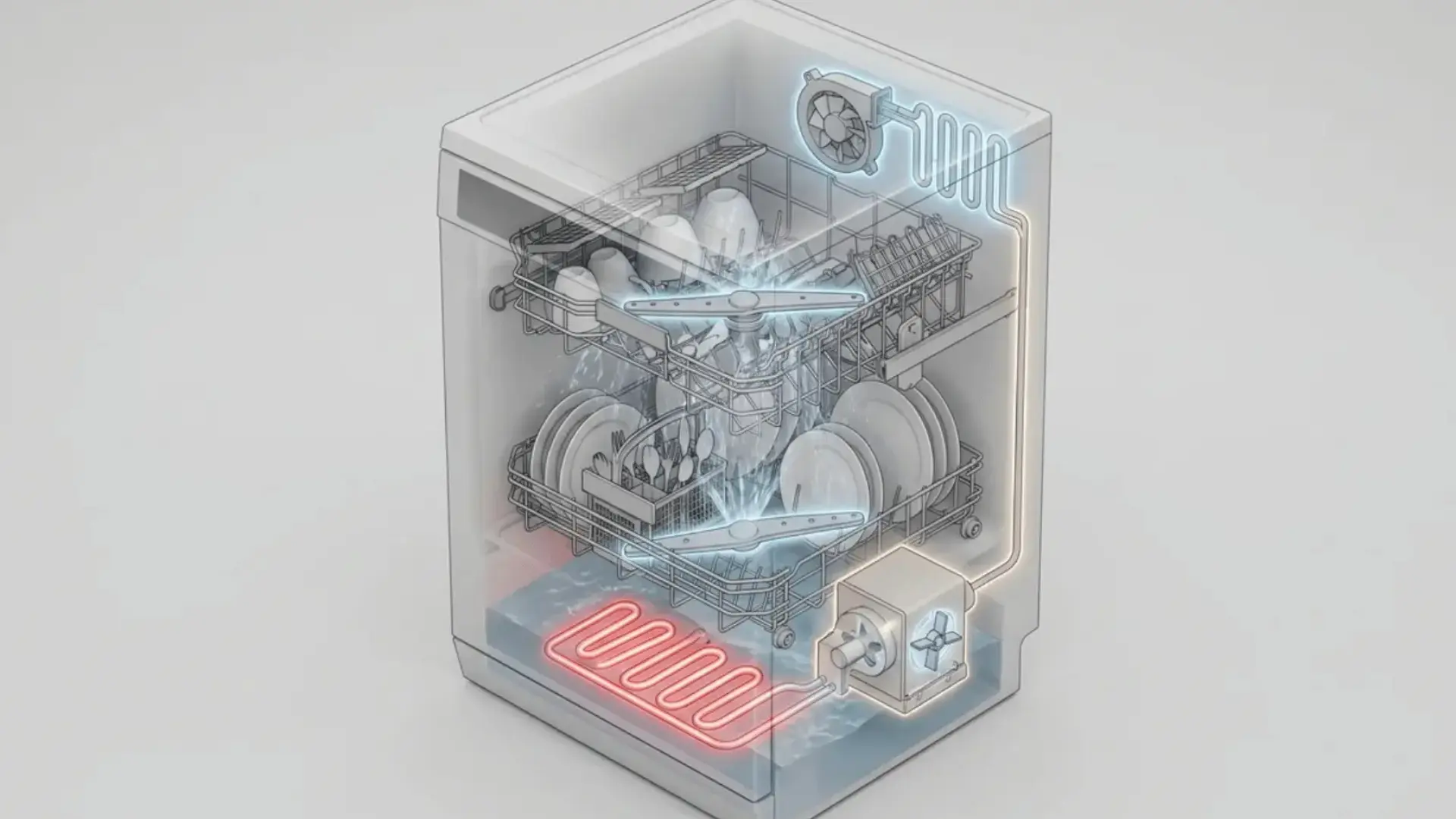
A dishwasher uses electricity for different functions, but heating water and drying dishes consume the most energy during a wash cycle.
1. Heating Element
The heating element is one of the largest electricity consumers in a dishwasher because it raises the water temperature for better cleaning. Hot water helps remove grease, food particles, and stubborn stains from dishes.
Some models heat water internally, while others use hot water from your home supply.
Since heating requires more power than other dishwasher functions, using eco cycles with lower temperatures can help reduce electricity consumption without affecting cleaning results.
2. Heated Drying System
The heated drying system can significantly increase dishwasher electricity use because it relies on additional heat to remove moisture from dishes after washing.
Many modern dishwashers include options such as air-drying, condensation-drying, or energy-saving drying modes. Skipping heated drying whenever possible is an easy way to lower energy consumption.
Allowing dishes to dry naturally can reduce electricity use while still providing clean and ready-to-use dishes after each cycle.
3. Pump and Motor
The pump and motor help move water through the spray arms and drain dirty water after each wash cycle. These components use electricity, but their consumption is generally much lower than that of the heating element and drying system.
Their main role is to keep water circulating and ensure proper cleaning performance. Maintaining a clean filter and running the dishwasher correctly can help these parts work efficiently and prevent unnecessary energy use.
Does a Dishwasher Increase Your Electric Bill?
If you are wondering “does a dishwasher use a lot of electricity,” the answer depends on how often you run it and which settings you choose.
For most households, a dishwasher causes only a small increase in electricity costs. Running a standard dishwasher several times per week usually adds a few dollars to the monthly bill.
Factors that can increase costs include:
- Running multiple cycles every day
- Using heated drying regularly
- Choosing heavy-duty wash cycles
- Using an older dishwasher with lower efficiency
A dishwasher used properly is unlikely to become one of the main reasons for a high electricity bill. Appliances such as heating systems, air conditioners, and electric water heaters usually consume much more energy.
Dishwasher vs. Hand Washing: Which Uses More Energy?
Many people assume handwashing dishes always saves energy, but the actual cost depends on water use and washing habits. A dishwasher can be more efficient when used properly.
| Comparison Factor | Dishwasher | Hand Washing |
|---|---|---|
| Electricity Use | Uses electricity mainly for heating water, running pumps, and drying | Uses energy indirectly through the water heater when using hot water |
| Water Consumption | Uses a controlled amount of water per cycle | Can use more water if the tap runs continuously |
| Energy Efficiency | More efficient when fully loaded with an energy-saving cycle | Less efficient when hot water runs for long periods |
| Cleaning Performance | Provides consistent cleaning with heated water and spray pressure | Depends on washing technique and water temperature |
| Best Way to Save Energy | Run full loads and skip heated drying when possible | Use less hot water and avoid keeping the tap running |
Using a dishwasher efficiently can help reduce both water and energy waste compared with some hand-washing habits.
Factors That Affect Dishwasher Electricity Consumption
Several factors determine how much power your dishwasher uses.
- Dishwasher Age: Older dishwashers often consume more electricity because they may have less efficient heating systems and longer wash cycles.
- Newer models usually include improved technology designed to reduce water and energy use.
- Wash Cycle Selection: The selected cycle can significantly affect electricity consumption. Heavy cycles usually use more energy because they involve: Higher temperatures, Longer cleaning times, Extra rinsing, Eco cycles generally reduce energy use by adjusting water temperature and cycle length.
- Drying Method: The drying option can make a noticeable difference. Heated drying uses more electricity, while air drying requires little to no additional energy.
- Dishwasher Size and Capacity: Larger dishwashers may use more energy per cycle, but they can still be efficient if they allow you to wash more dishes at once. Running fewer full loads is usually better than running many smaller loads.
Ways to Reduce Dishwasher Electricity Use
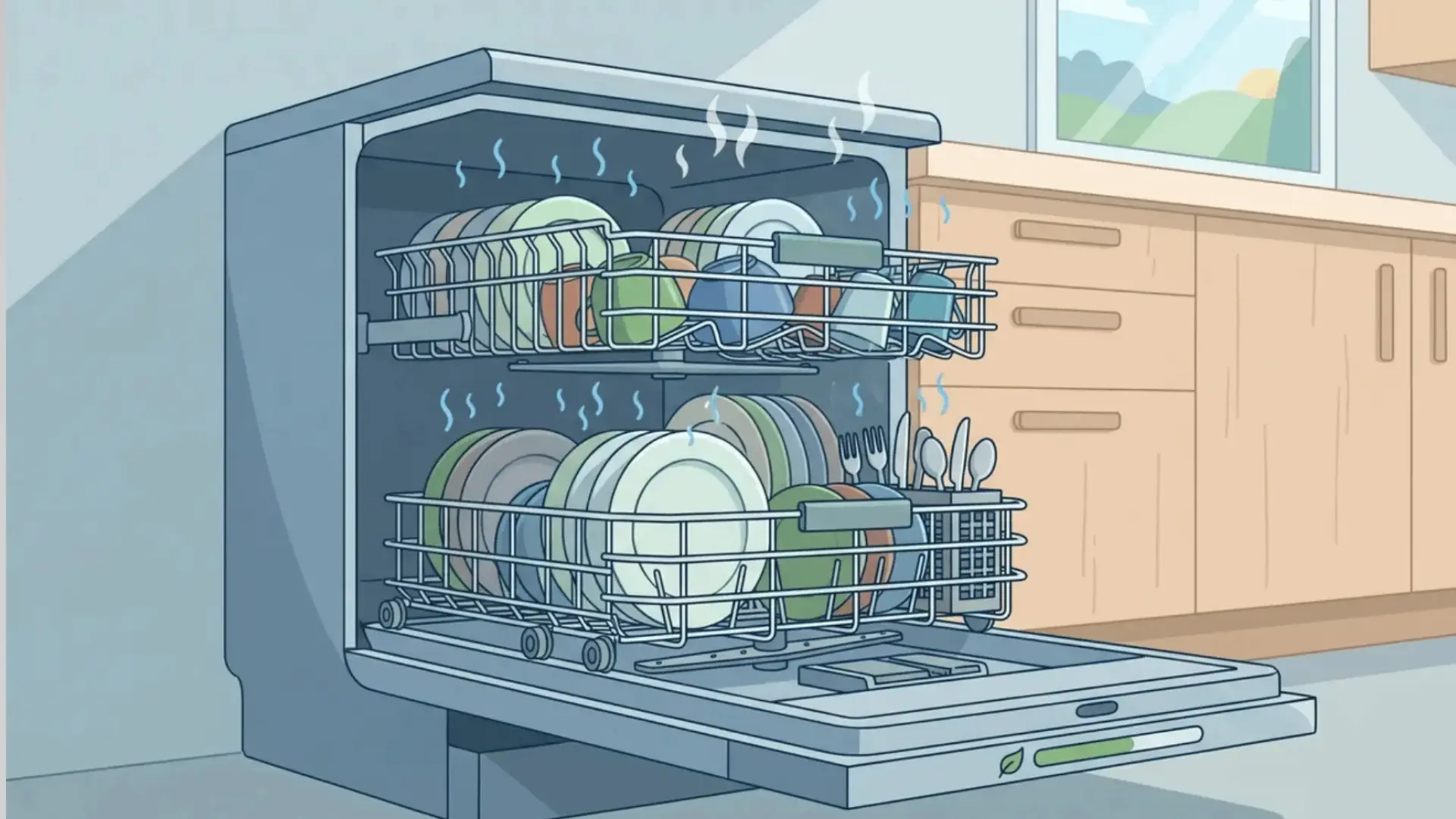
You do not need to stop using your dishwasher to save energy. Small changes can lower electricity consumption while maintaining cleaning performance.
- Use Energy-Saving Cycles: Eco modes are designed to reduce energy use by lowering water temperatures and optimizing cleaning time.
- Skip Heated Drying: Allow dishes to air dry when possible. Opening the dishwasher door slightly after the cycle ends can help moisture escape.
- Run Full Loads: A full dishwasher uses nearly the same amount of energy as a partially filled one. Waiting until you have enough dishes reduces unnecessary cycles.
- Clean the Dishwasher Filter: A dirty filter can reduce cleaning performance and may cause the appliance to work harder. Regular cleaning helps maintain efficiency.
- Avoid Pre-Rinsing: Modern dishwashers are designed to handle food particles. Scraping plates instead of rinsing them under hot running water can save water and energy.
- Choose an Energy-Efficient Model: If you are replacing an old dishwasher, look for models with high efficiency ratings. These appliances may cost more initially but can reduce long-term operating expenses.
Are Energy-Efficient Dishwashers Worth Buying?
Energy-efficient dishwashers can be a good investment, especially for households that use them frequently.
Modern models often include features such as:
- Lower water consumption
- Improved cleaning technology
- Efficient heating systems
- Reduced drying energy
Although the purchase price may be higher, lower electricity and water usage can help offset the initial cost over time.
When choosing a dishwasher, consider more than just the purchase price. Look at energy ratings, cycle options, capacity, and drying features to find a model that matches your household needs.
Final Thoughts
A dishwasher does not have to be a major energy user in your home. I found that understanding its power consumption makes it easier to use the appliance without worrying about unnecessary costs.
If you are asking do dishwashers use a lot of electricity, the answer is usually no when you choose efficient settings and run full loads. Factors like cycle type, drying options, and appliance age affect overall usage.
You can reduce energy consumption by using eco modes, skipping heated drying, and properly maintaining your dishwasher. Try these simple tips in your daily routine, and share your experience with saving energy at home.
Frequently Asked Questions
Can leaving a dishwasher plugged in use electricity?
A dishwasher uses very little to no electricity when it is not running. Most of its energy consumption happens during active cycles, especially when heating water or drying dishes. Keeping it plugged in does not significantly affect your electricity bill.
Does the time of day affect dishwasher electricity costs?
It can, depending on your electricity plan. Some utility providers charge different rates during peak and off-peak hours. Running your dishwasher during lower-cost periods may help reduce overall energy expenses.
Does a half-load dishwasher use less electricity?
A half-load cycle may use slightly less power if your dishwasher has a specific half-load setting. However, many standard cycles use nearly the same energy regardless of the number of dishes inside, so waiting for a full load is usually more efficient.
Do smart dishwashers save more electricity?
Smart dishwashers can help reduce energy use by offering features like remote cycle monitoring, energy-saving programs, and usage tracking. However, the actual savings depend more on the dishwasher’s efficiency rating and how you use it.
Does the dishwasher’s temperature setting affect electricity use?
Yes, higher temperature settings usually require more energy because the appliance needs to heat water to a higher level. Choosing moderate temperatures or eco settings can help lower electricity consumption.
Can a dirty dishwasher use more electricity?
Yes, a dishwasher with a clogged filter, blocked spray arms, or buildup may need to work harder to clean dishes. Regular maintenance helps the appliance operate efficiently and prevents unnecessary energy use.