
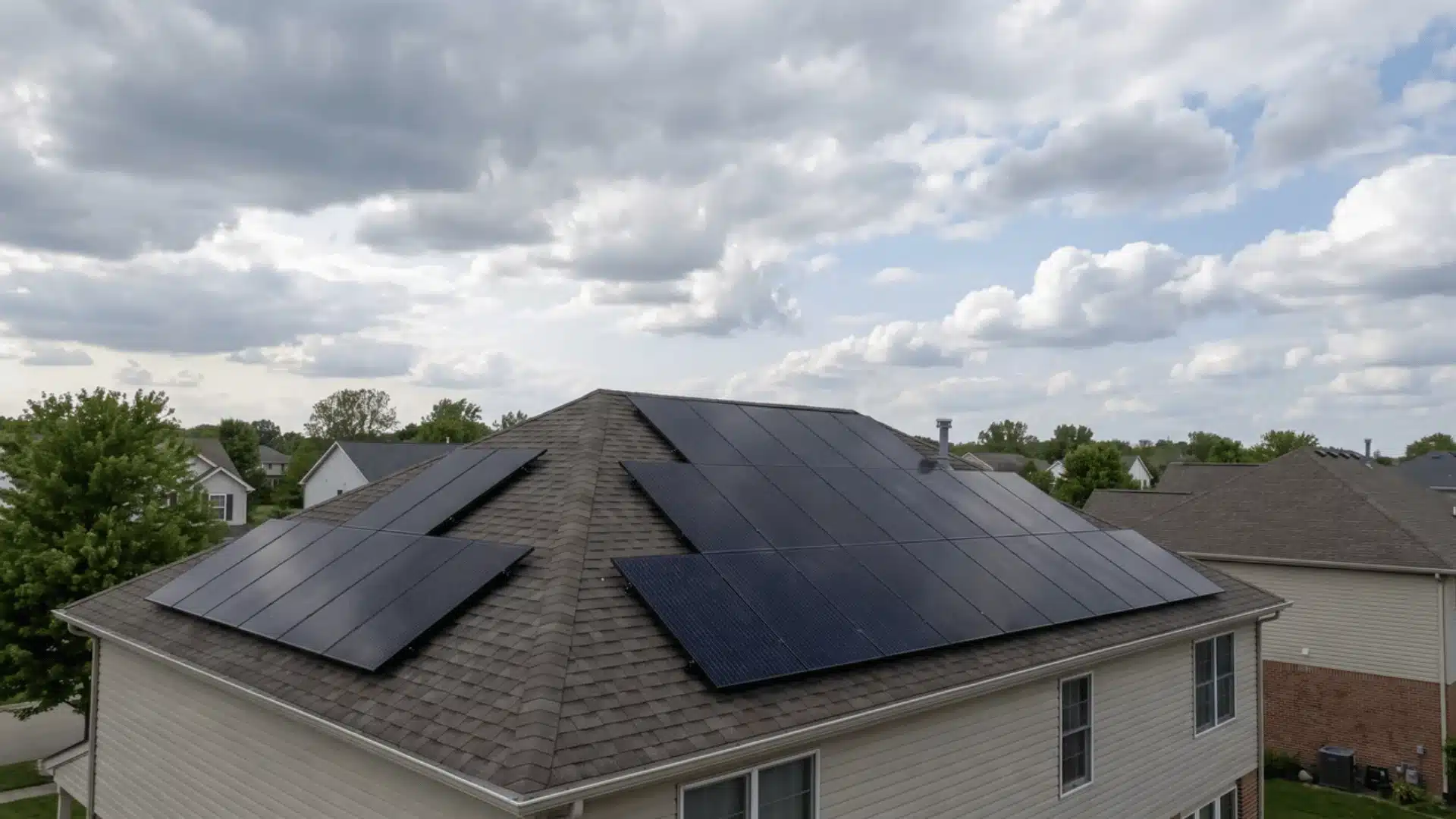

I used to think solar panels needed bright sunshine all day to produce electricity. Once I looked closer, I realized they respond to light in ways that aren’t always obvious.
A cloudy afternoon or light shade can change how much power they make, but they don’t always stop working.
So, do solar panels need direct sunlight to generate electricity? Not exactly. Understanding what affects their performance makes it much easier to know what to expect before installing a system.
Here, I’ll explain how sunlight, clouds, shade, and other everyday conditions affect the electricity your panels can produce.
Do Solar Panels Need Direct Sunlight?
Solar panels don’t need direct sunlight to generate electricity; they need daylight.
Direct sunlight is the strongest source, but it isn’t the only one that works.
What solar cells actually respond to are photons, which are tiny packets of light energy. Photons exist in diffuse, reflected, and indirect light, too. When they hit the solar cells, electrons get knocked loose and current flows. That process works whether the sky is clear or hazy.
Direct sunlight delivers more photons at once, which is why it produces the strongest output.
You’ll often see the figure of 4–6 hours of direct sun cited for solar systems. That’s a planning benchmark for hitting peak production targets, not a threshold below which panels stop working.
Here’s the distinction worth holding onto: panels can work without direct sunlight. They don’t work as well without it. Those are two different things, and conflating them is where most of the confusion starts.
If your roof gets full sun for part of the day and softer light for the rest of the day, the system is still generating power the whole time.
Do Solar Panels Work on Cloudy Days?
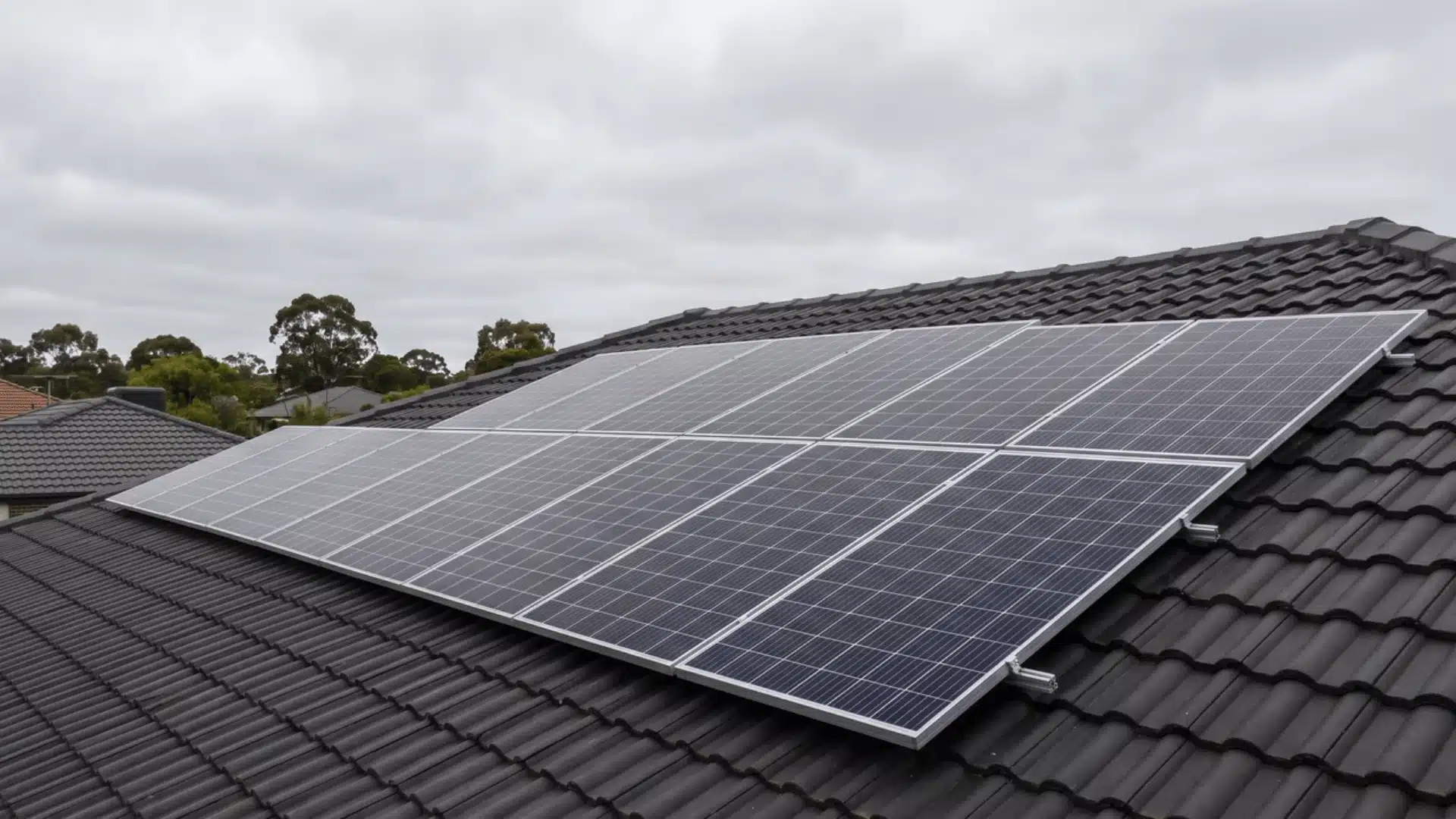
Yes, solar panels work on cloudy days. Output varies widely depending on cloud type, from roughly 10% to 25% of rated capacity under heavy overcast, to 50% to 80% on partly cloudy days. The type of cloud cover matters more than whether it’s cloudy at all.
Clouds don’t block sunlight completely. They scatter it. When light hits water droplets and ice crystals in a cloud, it spreads out in all directions rather than traveling in a straight beam.
That scattered light still carries photons. Those photons still reach the panels, still knock electrons loose, and the system still generates power.
Rain has a secondary effect worth knowing. Dust, pollen, and airborne particulates build up on panel surfaces over time. That layer quietly reduces output. Rain washes it off.
A wet day often leaves panels slightly cleaner and marginally more efficient than they were before.
Light Overcast vs. Heavy Cloud Cover
Not all cloud cover is equal, and the 10–25% figure doesn’t reflect that.
Light, overcast, thin, high clouds scatter sunlight without absorbing much of it. Output stays meaningfully higher than the lower end of that range.
There’s also a known effect at the edges of clouds, where sunlight briefly concentrates as it passes around a cloud mass. In those moments, output can spike above a panel’s rated capacity for short periods.
Heavy cloud cover is a different condition. Thick, low clouds absorb more light before it reaches the panels. That’s when output drops toward the 10% end. Light cloud and heavy cloud are not the same input.
Do Solar Panels Work in the Shade?
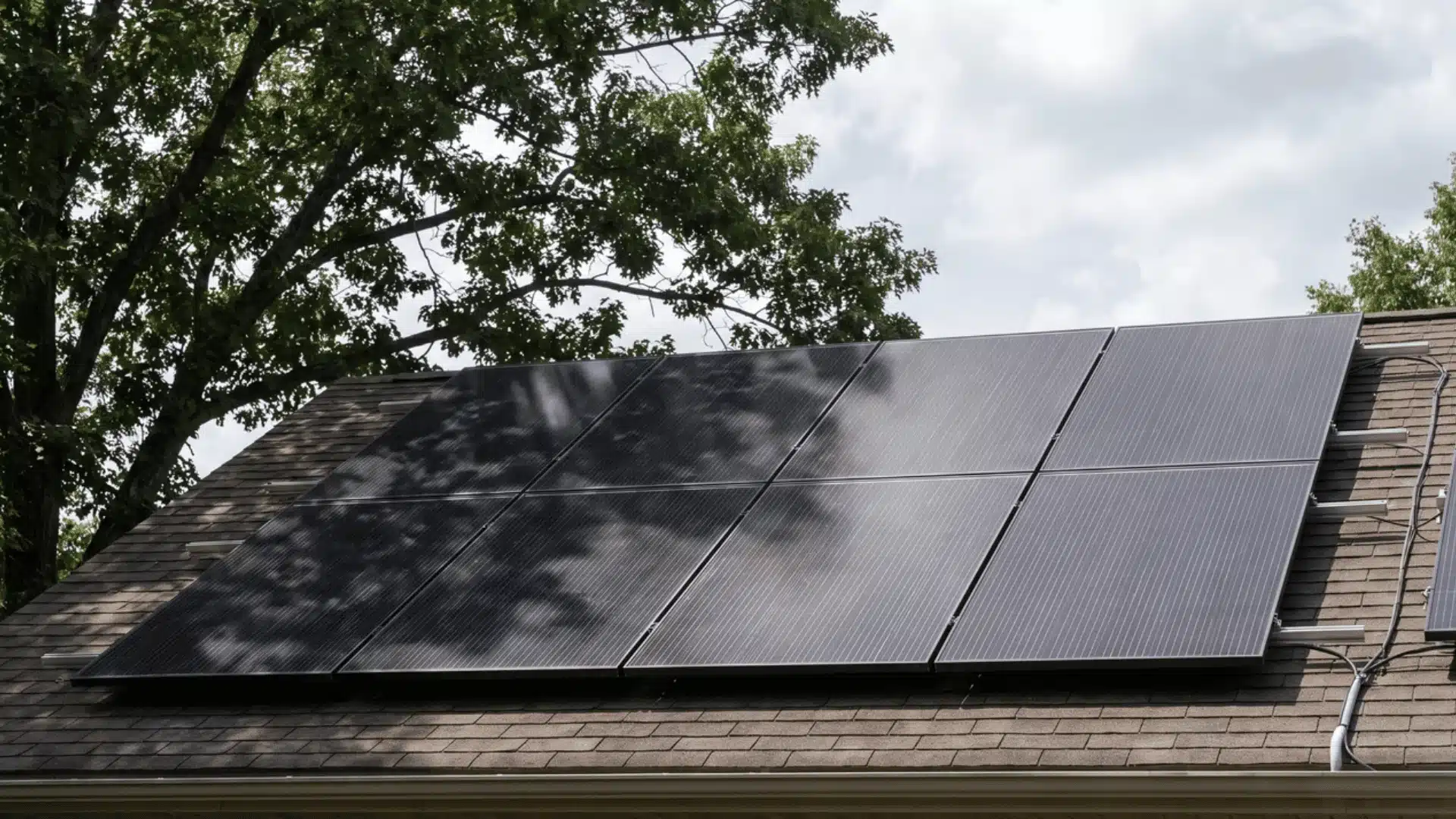
Yes, solar panels work in the shade, but how much they’re affected depends largely on the equipment running the system, not just on how much shade falls on the panels.
Shade is a different problem from cloud cover. Clouds reduce the light reaching every panel evenly. Shade hits specific cells on specific panels. That gap changes how the system responds, which is why the choice of equipment matters here in a way it doesn’t on cloudy days.
If you’re trying to estimate the real impact on your own roof, it’s worth understanding how shade affects solar panel output, since the timing and pattern of shade matter just as much as how much of the panel is covered.
String Inverters and the Shading Problem
Most standard solar installations use a string inverter, a single unit that manages all the panels as a single circuit.
The problem is how the current works in that setup. Every panel in the string produces current, and the string runs at the level of its weakest panel. If one panel is shaded and drops to 40% output, it drags the performance of every other panel down with it.
A tree branch over one corner of your roof can quietly reduce output across your whole system. That’s not an intuitive result, but it’s how the physics works.
Microinverters and Power Optimizers
Both solve the same problem; they decouple each panel from the rest of the string.
A microinverter sits on each panel and converts its output independently. A power optimizer conditions each panel’s output before sending it to a central inverter. The approach differs, but the result is similar: one shaded panel affects only itself.
If shading is a real factor in your installation, a nearby tree, a chimney, or an adjacent roof, this difference in equipment is worth understanding before you buy. It’s one of the few decisions that’s difficult to change later.
Final Take
So, can solar panels generate electricity without direct sunlight? Yes. Direct sunlight helps panels produce their highest output, but daylight alone is enough for them to keep generating electricity.
Clouds, shade, and the type of equipment you choose all affect how much energy your system produces from day to day. I think looking at real-world conditions rather than common assumptions gives a much clearer picture of what solar can deliver.
Before making a decision, take time to evaluate your roof, local weather, and shading. A proper site assessment will show how a solar system is likely to perform at your home.
Frequently Asked Questions
Do solar panels work at night?
No. Solar panels need photons to generate electricity, and there’s no usable light after dark. Homes stay powered at night by drawing from a battery storage system charged during the day, or by pulling from the grid. Without storage, solar output is zero once the sun goes down.
What type of solar panel works best in cloudy weather?
Monocrystalline panels perform better in low-light and diffuse conditions than polycrystalline panels because of their higher baseline efficiency. The gap is smaller under direct sun but becomes more meaningful in consistently overcast climates. Thin-film panels also perform comparatively well when light is scattered rather than direct.
How many hours of sunlight do solar panels actually need?
The 4–6 hour figure is a sizing benchmark for system design, not a minimum for panel operation; as noted above, panels generate electricity whenever daylight is present.
Will shade from a nearby tree ruin a solar installation?
Not necessarily. In a standard string inverter system, shade on one panel pulls down the output across the whole array. With microinverters or power optimizers installed, the impact stays contained to the shaded panel. A shading analysis before installation will show exactly what you’re dealing with and what equipment makes sense.