


A dehumidifier running in the background can make you wonder if your electricity bill is quietly climbing. The constant hum often makes the appliance seem like a major power user.
If you’re asking, “do dehumidifiers use a lot of electricity?” Many homeowners worry about the cost of controlling moisture, especially if they’re running a unit non-stop in a basement or bathroom.
I’ll help you understand what actually affects energy use, including wattage, runtime, humidity settings, and maintenance. You’ll learn how to estimate running costs and reduce unnecessary electricity use while keeping your home comfortable.
Do Dehumidifiers Use a Lot of Electricity?
No, dehumidifiers usually use less electricity than major household appliances like air conditioners, electric heaters, or space heaters.
Most residential dehumidifiers use around 300 to 700 watts, depending on their size, capacity, and efficiency rating. But wattage is only the ceiling; how much a unit actually costs to run depends on how long it operates each day.
A unit running continuously in a very humid room consumes far more energy than one that cycles on and off once it reaches its target humidity.
That distinction, wattage vs. runtime, is the single most important idea in this article, so keep it in mind as we break down the numbers.
How Many Watts Does a Dehumidifier Use?
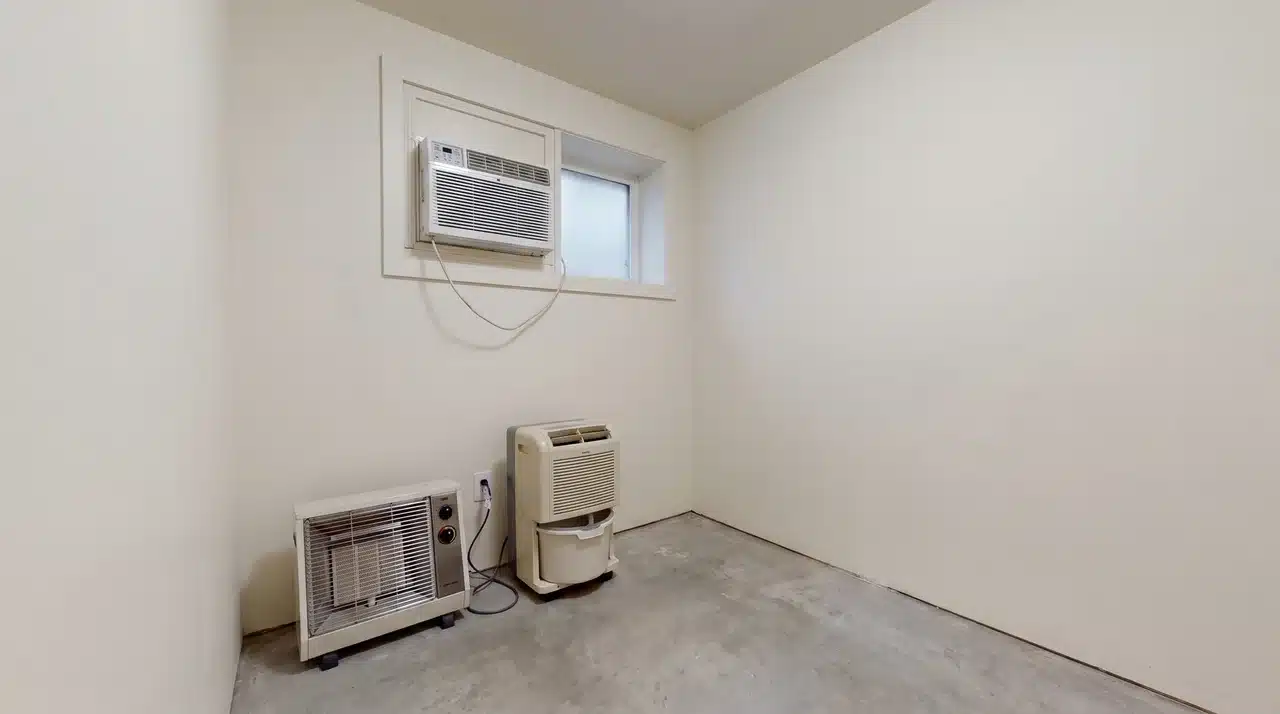
Wattage scales with capacity; the pint rating on the box is a rough guide to how much power the unit draws:
| Capacity | Typical Wattage |
|---|---|
| 20–30 pints (small rooms, closets) | 300–400W |
| 30–50 pints (bedrooms, small basements) | 400–600W |
| 50–70 pints (large basements, whole-floor use) | 600–700W+ |
| 70+ pint (whole-house, commercial-grade) | 700–800W+ |
Larger units draw more power because they move more air and remove more moisture per hour, but a correctly sized large unit that cycles on and off often costs less to run than an undersized small unit running flat-out around the clock.
How Much Does It Cost to Run a Dehumidifier?
Electricity bills are measured in kilowatt-hours (kWh), not watts. Wattage tells you how much power a unit draws at a given moment; kWh tells you the total electricity consumed over time, and that’s what your bill is actually based on.
If you’re wondering whether a dehumidifier uses a lot of electricity in your specific case, running the numbers below gives a far more accurate answer than any general average.
The formula: (Watts ÷ 1,000) × Hours Used × Electricity Rate = Cost
Find your numbers: Check the unit’s wattage on the label or manual, and find your per-kWh rate on your electricity bill or by searching your utility provider’s name plus “electricity rate.”
Example: At $0.13 per kWh, a 500-watt dehumidifier running 6 hours a day costs about $11.70 per month. Double the hours, and you double the bill.
The daily version of the formula: watts ÷ 1,000 × hours used = daily kWh.
A 500-watt unit running 8 hours a day uses 4 kWh. The same unit running 24 hours a day, because it’s stuck fighting a leaky basement or a target it can never reach, uses 12 kWh, three times as much.
Two people with the identical model can report very different bills for exactly this reason: the wattage is the same, but the runtime isn’t.
What Determines How Much a Dehumidifier Costs to Run
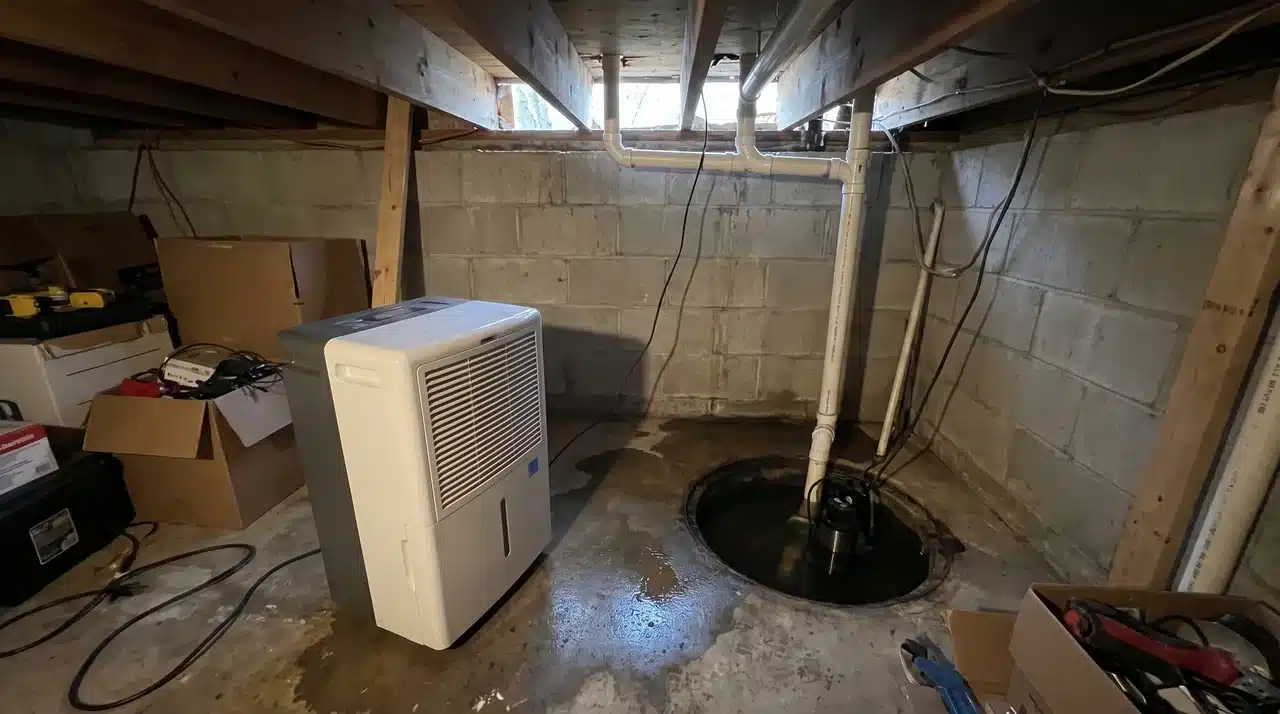
Beyond wattage, two things shape your actual electricity use: the type of dehumidifier you own and the conditions of the room it’s working in. Both affect how long the compressor runs each day, which is the real driver of cost.
Refrigerant vs. Desiccant Dehumidifier Models
Before choosing a dehumidifier, it helps to understand the two main types available. Their operating methods affect how they remove moisture, how much energy they use, and where they work best.
| Dehumidifier Type | How It Works | Typical Use | Energy Use |
|---|---|---|---|
| Refrigerant Models | Use a cooling coil and compressor to condense moisture from the air. | Common in homes, basements, and living spaces with normal temperatures. | Usually consume around 300–700 watts, cycling the compressor on and off after reaching the humidity target. |
| Desiccant Models | Use a moisture-absorbing material to remove water vapor without relying on a compressor. | Better suited for cooler areas such as crawl spaces, garages, and unheated basements, where refrigerant models are less efficient. | Their energy use differs because they do not rely on compressor cycling, unlike refrigerant models. |
While both types remove moisture, refrigerant models are the standard choice for most homes because they balance moisture control and electricity use more efficiently in typical indoor conditions.
Room Size and Moisture Levels
Room size and starting humidity level are the two biggest variables behind daily runtime, independent of settings or maintenance. A larger room contains more air to process, so the compressor needs more time to reduce humidity.
A high-moisture starting point, a damp basement after rain, a bathroom after a shower, means more water to remove before the unit reaches its target and cycles off.
Why the Humidity Setting Matters More Than the Model
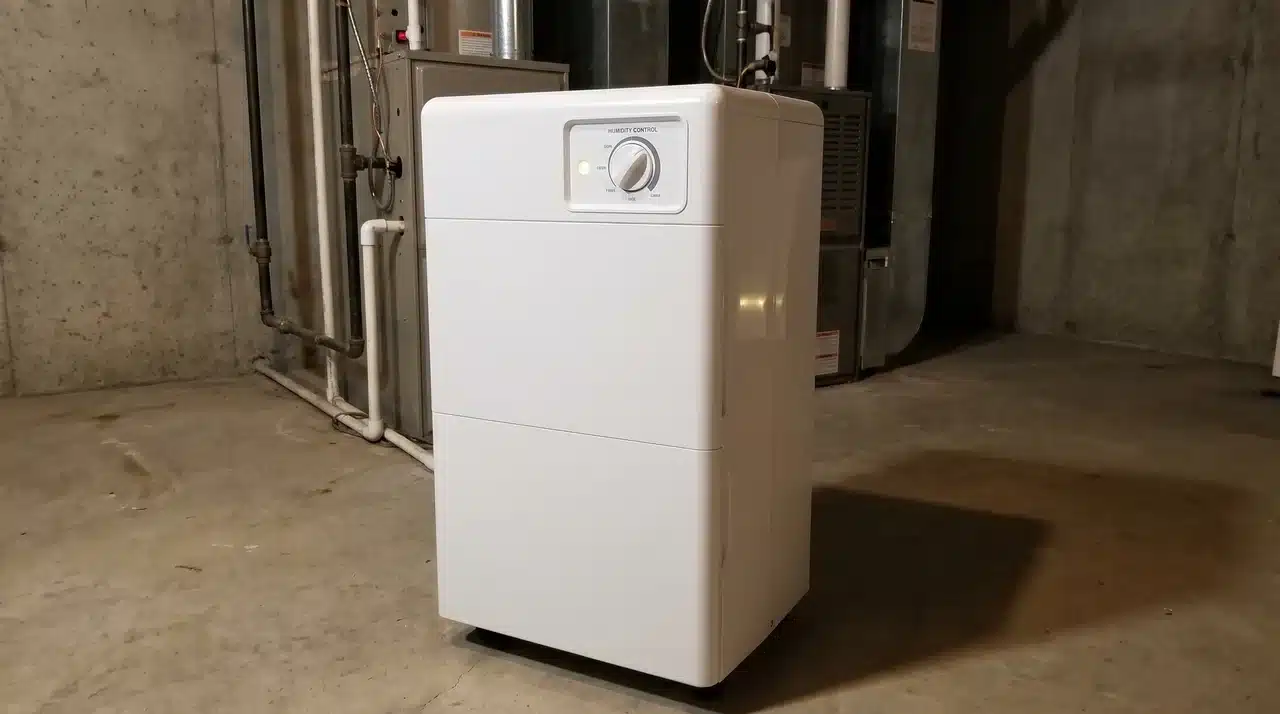
This is the part most people miss, and it’s where costs quietly get out of hand.
Set your target below about 45% relative humidity, and the compressor works harder than the space actually requires; it runs longer chasing a level that’s difficult to maintain, especially in a humid climate or a leaky basement.
Set it to 45–50% RH, and the compressor reaches its target, cycles off, and idles until humidity creeps back up. That cycling behavior is what keeps real-world consumption well below the rated wattage.
The setting is the main dial controlling how hard your unit works, a well-chosen target on an average model will cost you less than a poor target on an efficient one, which is why two identical dehumidifiers in similar rooms can still produce very different monthly bills.
Does an Energy Efficiency Rating Actually Save You Money?
Yes, but only modestly. An efficiency rating helps, but it isn’t the main lever for lowering your bill.
ENERGY STAR-certified dehumidifiers use more efficient compressors and improved designs to remove the same amount of moisture with less power, typically using 13 to 20% less energy than standard units of the same capacity. That’s a real difference over a full humid season, especially for a unit that runs daily for months at a time.
But it’s a secondary lever, not the main one. A non-certified unit running at 45–50% RH will still cost less than a certified unit chasing 35% RH in a leaky basement. It’s worth choosing a certified model if you’re buying new anyway, but it’s not worth replacing a working unit. Fixing your settings and sealing your space will save you more than a new appliance would.
In practice, the rating is best treated as a tiebreaker between two otherwise similar units, not a standalone strategy for lowering your bill.
Are Dehumidifiers More Expensive to Run Than Air Conditioners?
No, a dehumidifier draws significantly less power than an air conditioner. Here’s how it stacks up against other appliances most homes run daily:
| Appliance | Wattage |
|---|---|
| Dehumidifier | 300–700W |
| Window air conditioner | 500–1,500W |
| Space heater | 1,500W |
| Central air conditioning | 2,000–5,000W |
| Electric dryer | ~5,000W |
The gap comes down to what each appliance does. A space heater generates heat from scratch; a central AC moves heat out of an entire home; a dehumidifier just pulls moisture from air it’s already circulating, a much lighter task.
In fact, dehumidifiers rarely rank among the biggest electricity users in a typical household; that usually goes to your HVAC system and water heater instead.
If you want the full picture of where your electricity actually goes, your HVAC system and water heater are the bigger culprits.
There’s a useful side effect here, too: running a dehumidifier reduces the load on your air conditioner because drier air feels cooler. One appliance actively reduces how hard the other has to work.
When a Dehumidifier Can Raise Your Bill Significantly
A dehumidifier running normally won’t shock your electricity bill. But one pattern recurs, usually in basements, where costs climb well above expectations.
The common thread is that the compressor isn’t cycling. It’s running flat out because something is preventing the unit from ever reaching its target humidity.
Target Set Too Low: Below 45% RH, many spaces simply can’t get there, especially in summer.
Unit Too Small for the Space: An undersized dehumidifier runs continuously and still falls short, so runtime climbs while humidity stays high.
Air Infiltration: Unsealed rim joists, an open sump pit, or gaps around pipes constantly draw in humid outside air. The unit ends up competing with the outdoors rather than just managing indoor air; in extreme cases, this can push a basement unit’s consumption close to that of a window AC.
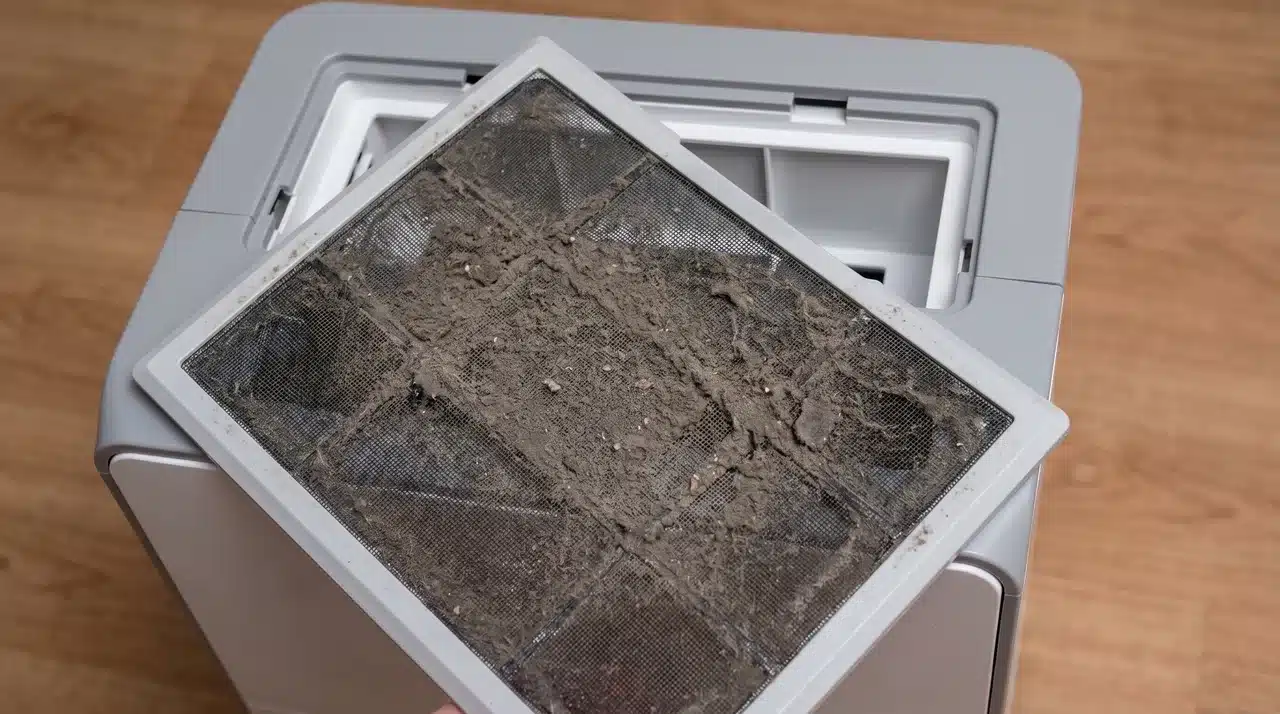
Dirty or Blocked Filter: Restricted airflow means longer runtime for the same result.
Any one of these can push a 500–700-watt unit into 12+ hours of daily runtime. The instinct is often to buy a bigger or more efficient model, but that rarely fixes the underlying problem; it’s almost always the space, the setting, or the sizing, not the appliance.
How to Keep Running Costs Low
The fixes are mostly about settings and space conditions, not the appliance itself:
- Hold 45–50% RH. This is the range where the compressor cycles instead of running continuously, and it’s also where most people are comfortable.
- Clean the filter monthly. A two-minute task that prevents the “longer runtime for the same result” problem described above.
- Seal infiltration points before adjusting settings. No setting change fixes a leaky rim joist or open sump pit, seal first, then dial in your target.
- Choose ENERGY STAR when buying new, for the incremental savings, but treat it as a bonus, not a fix for a sizing or sealing problem.
- Use timers or smart plugs if humidity spikes only at predictable times (after showers, in the afternoon), so the unit isn’t running hours it doesn’t need to.
Every one of these works on the same variable: compressor runtime. Reduce unnecessary runtime, and the bill follows.
Conclusion
A dehumidifier does use electricity, but the overall cost is usually manageable when the unit is sized correctly and used efficiently.
I’ve found that the biggest factor isn’t just the appliance itself, but how long it runs and why it keeps running.
Understanding do dehumidifiers use a lot of electricity comes down to knowing how humidity levels, settings, airflow, and maintenance affect energy consumption.
You can keep costs down by setting realistic humidity targets, cleaning the unit regularly, and addressing moisture problems in your space.
Try these simple adjustments to improve efficiency, and share your experience with your dehumidifier’s energy use.