


Choosing between AGM and flooded batteries can feel confusing because both use similar lead-acid technology while behaving differently in real-world conditions.
The differences are not just about price. Battery construction affects charging, maintenance, heat tolerance, vibration resistance, and long-term performance.
I have seen people replace batteries based only on cost, then discover their vehicle needed a different design.
If you are comparing AGM vs flooded battery options, understanding how each one works helps you choose the right fit for your vehicle.
What Is the Difference Between AGM and Flooded Batteries?
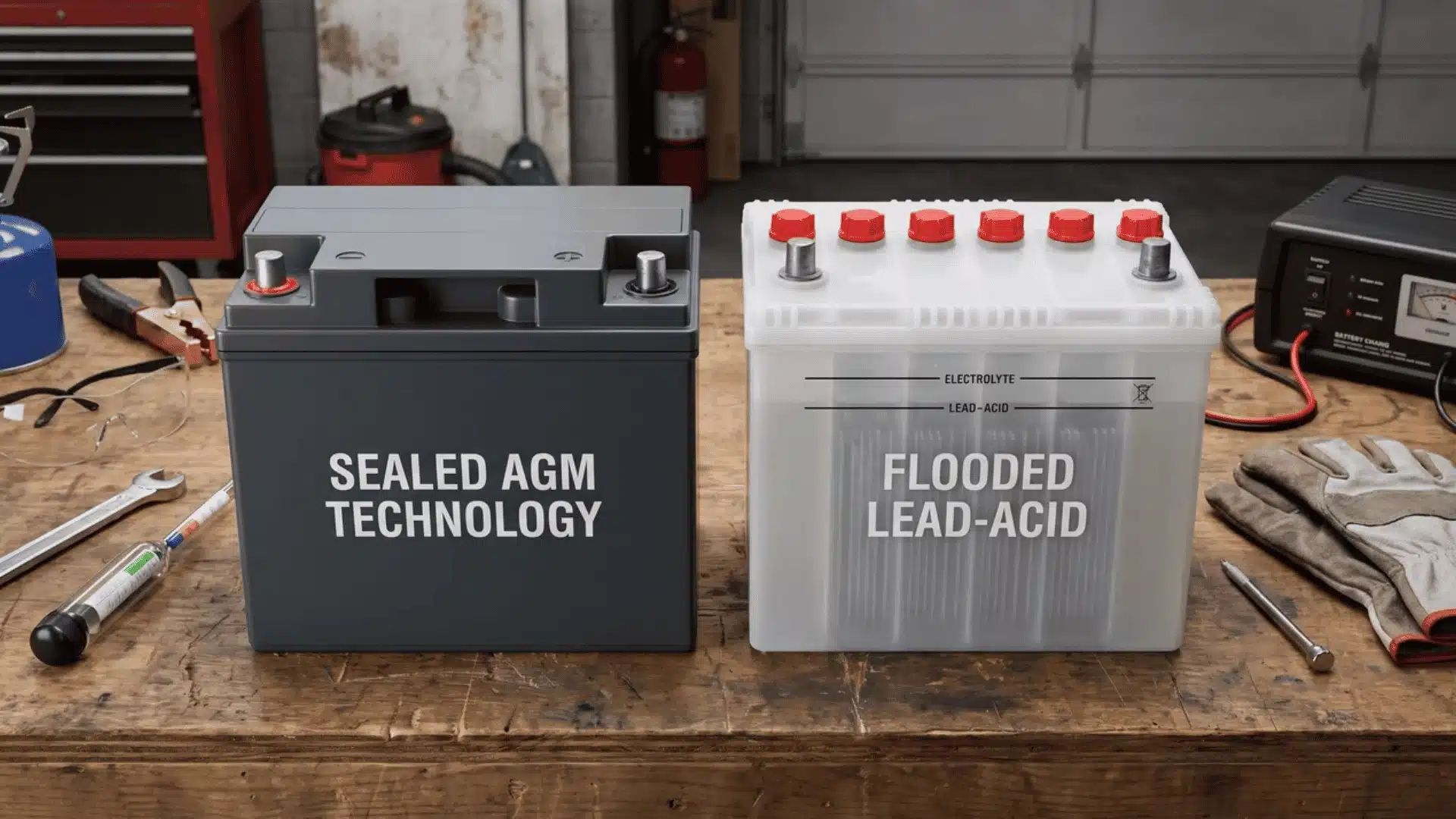
When comparing AGM vs flooded battery designs, the biggest difference comes from how each battery stores its electrolyte.
Both use lead-acid chemistry, but their construction changes how they perform.
An AGM battery holds sulfuric acid inside compressed fiberglass mats between the lead plates. A flooded battery uses free-flowing liquid electrolyte surrounding those plates.
That single design difference affects nearly everything else. AGM’s absorbed electrolyte allows sealed operation, lower spill risk, and more flexible mounting.
Flooded batteries rely on liquid electrolyte movement, which means they usually need upright installation and occasional maintenance.
Neither design is universally better. Each one works best in situations where its construction matches the demands placed on it.
How the Construction Difference Plays Out in Practice
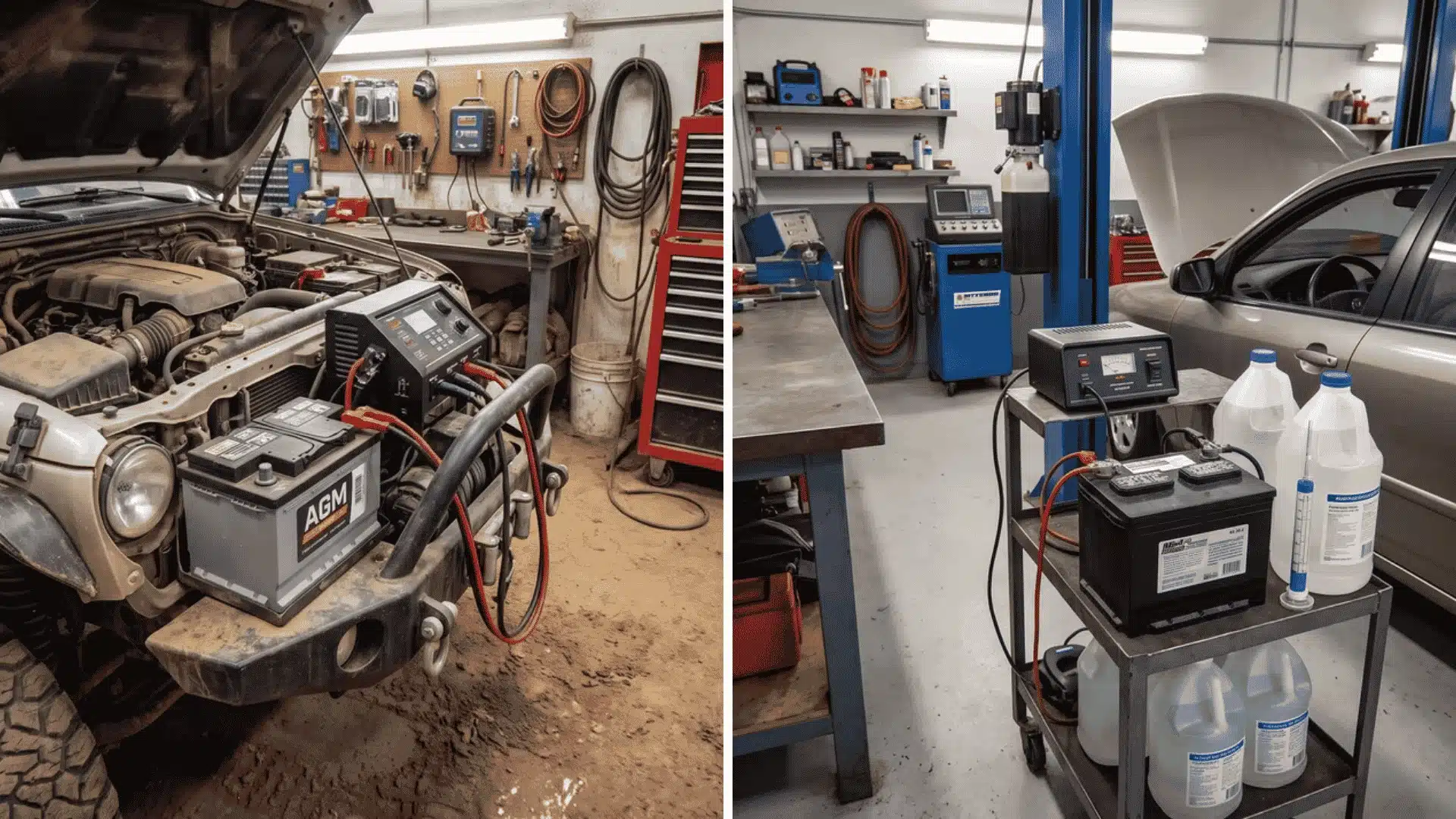
AGM and flooded batteries use the same chemistry, but their internal design changes how they handle everyday conditions and affects AGM battery lifespan over time.
| Feature | AGM Battery | Flooded Battery |
|---|---|---|
| Electrolyte storage | Absorbed inside fiberglass mats | Free-flowing liquid electrolyte |
| Maintenance | Sealed and does not need water top-ups | May require periodic water checks |
| Charging speed | Accepts charge faster due to lower internal resistance | Charges more slowly in many situations |
| Vibration resistance | Higher because mats hold plates securely | Lower because plates sit in liquid electrolyte |
| Heat handling | More sensitive to high temperatures | Handles engine-bay heat better due to vented design |
| Mounting flexibility | Can be installed in more positions | Usually needs upright installation |
| Best suited for | Start-stop vehicles, high loads, vibration-heavy uses | Basic vehicles with standard electrical needs |
| Typical upfront cost | Higher than a comparable flooded battery | Lower than a comparable AGM battery |
Charging Speed and Internal Resistance
AGM batteries have lower internal resistance because electrolyte stays closely held against the lead plates. Because of this close contact, the battery accepts charge faster and delivers current more efficiently during demanding starts.
Flooded batteries can perform well in standard vehicles, but they usually recover charge more slowly after heavy use. The difference becomes more noticeable in vehicles with frequent restarts or higher electrical demands.
Heat Tolerance
Flooded batteries have one advantage in high-heat environments because their vented design allows gases to escape more easily.
AGM batteries are sealed, so heat exposure can create more pressure inside the casing. A hot engine bay can accelerate aging in an AGM battery if temperatures remain high for long periods.
Engine bay temperatures that regularly climb above 140°F (60°C) are enough to noticeably shorten an AGM battery’s service life over a few seasons.
Flooded batteries are not automatically the better choice overall; heat management is simply one more factor in the decision.
Vibration and Maintenance
AGM batteries handle vibration better because compressed fiberglass mats hold internal plates securely. This vibration resistance makes them useful for motorcycles, boats, off-road vehicles, and other applications with frequent movement.
Flooded batteries have liquid electrolyte around the plates, which can allow more internal movement over time.
Maintenance is another difference. Flooded batteries may require water checks, while AGM batteries are sealed and do not need routine top-ups.
Why You Cannot Always Swap One for the Other
An AGM-spec vehicle should usually continue using an AGM battery because its charging system is designed around that battery type.
The difference comes down to charging voltage. AGM batteries typically call for a charging voltage in the 14.4–14.7V range, tighter than the voltage many flooded-battery chargers apply by default. AGM batteries handle specific charging profiles that may overcharge and damage a flooded battery over time.
A flooded battery in an AGM-spec vehicle can experience excessive voltage, causing water loss, gassing, and faster battery wear.
The reverse swap is usually safer. An AGM battery can often replace a flooded battery, but the vehicle may not deliver its full performance benefits.
I have seen battery replacements fail because the new battery did not match the vehicle’s charging strategy. Check the owner’s manual and existing battery label before switching types.
Which One Should You Actually Use?
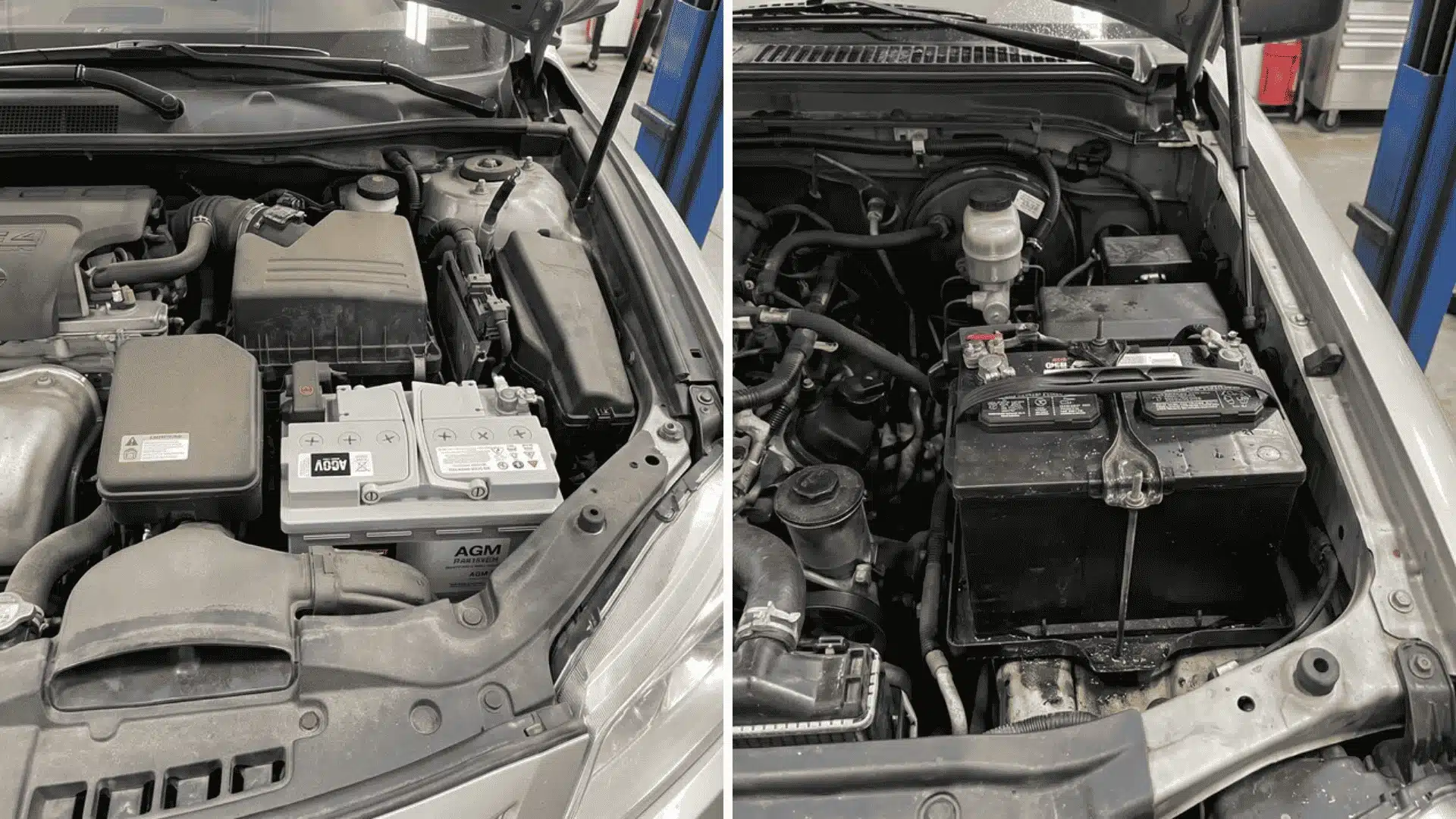
The right choice depends first on your vehicle requirements, then your driving conditions.
Start with one question: does your vehicle already specify AGM? If yes, replacing it with AGM is usually the correct choice.
Choose AGM When You Have:
- A start-stop vehicle
- Heavy electrical accessories
- Frequent short trips
- High vibration conditions
- A manufacturer requirement for AGM
- Irregular charging patterns
Choose Flooded When You Have:
- A basic vehicle with standard electrical needs
- A conventional starting system
- A hot climate where venting benefits matter
- No manufacturer requirement for AGM
A flooded battery can still be the better choice when the vehicle does not need AGM features.
The owner’s manual and current battery label should guide the decision before price or marketing claims.
Conclusion
I have found that choosing between AGM and flooded batteries is less about finding the “better” option and more about matching the battery to the situation.
AGM makes sense when your vehicle needs stronger cycling ability, vibration resistance, or higher electrical support.
Flooded batteries still have a place in simple applications where lower cost and standard performance are enough.
Before replacing a battery, check your vehicle requirements first. The right match will usually matter more than choosing the most expensive option.
Frequently Asked Questions
How do I tell if my current battery is AGM or flooded?
Check the battery label for terms like AGM, Absorbent Glass Mat, VRLA, or Valve-Regulated Lead-Acid. A flooded battery usually has removable caps for checking electrolyte levels, while AGM batteries have sealed tops.
Can I use a regular charger on an AGM battery?
A standard charger may not provide the correct charging profile for AGM batteries. Use a charger with an AGM setting to prevent overcharging, undercharging, or long-term capacity loss.
Do AGM batteries perform better in cold weather?
A fully charged AGM battery often provides stronger cold-start performance because of lower internal resistance. However, both battery types lose power in cold conditions when they are partially discharged.
Is upgrading a standard vehicle from flooded to AGM worth it?
An AGM upgrade is useful when a vehicle has higher electrical demands, frequent cycling, or vibration exposure. For a basic vehicle without those needs, a flooded battery may provide better value.