


Solar panels can look nearly identical, yet they may perform very differently once installed on your roof. That makes choosing between the types of solar panels harder than it first appears.
I know it is easy to focus on efficiency or price alone, but those numbers do not tell the whole story. Your roof space, shade, weight limits, budget, and appearance goals can all change which option makes sense.
Here, you will learn how monocrystalline, polycrystalline, thin-film, PERC, bifacial, and solar shingles differ. You will also see where each type works best, what it may cost, and which factors deserve attention before you choose a system.
What Counts as a Type of Solar Panel?
Solar panel terminology can be confusing because the word “type” is used in different ways across the industry.
Some labels describe the material used to make the cells, while others refer to how the panel is built or how it captures sunlight. As a result, different classification systems often overlap in real-world comparisons.
Panels may be grouped by cell material, such as monocrystalline and polycrystalline, or by photovoltaic material, such as thin-film technology. They can also be defined by cell technology, including PERC designs that improve light absorption.
Another category is light collection method, such as bifacial panels that generate power from both sides. Finally, some systems are classified by roof integration, including solar shingles and tiles.
Because these categories overlap, a single panel can fit multiple descriptions, such as a monocrystalline PERC bifacial module.
Understanding how monocrystalline and polycrystalline panels differ is a useful starting point because their silicon structure affects efficiency, space requirements, cost, and overall suitability. In practice, all six terms are commonly treated as panel types in residential solar comparisons.
Types of Solar Panels
These types cover the main materials, technologies, and designs you will see while comparing solar systems. Each one suits a different mix of roof space, budget, weight, appearance, and energy needs.
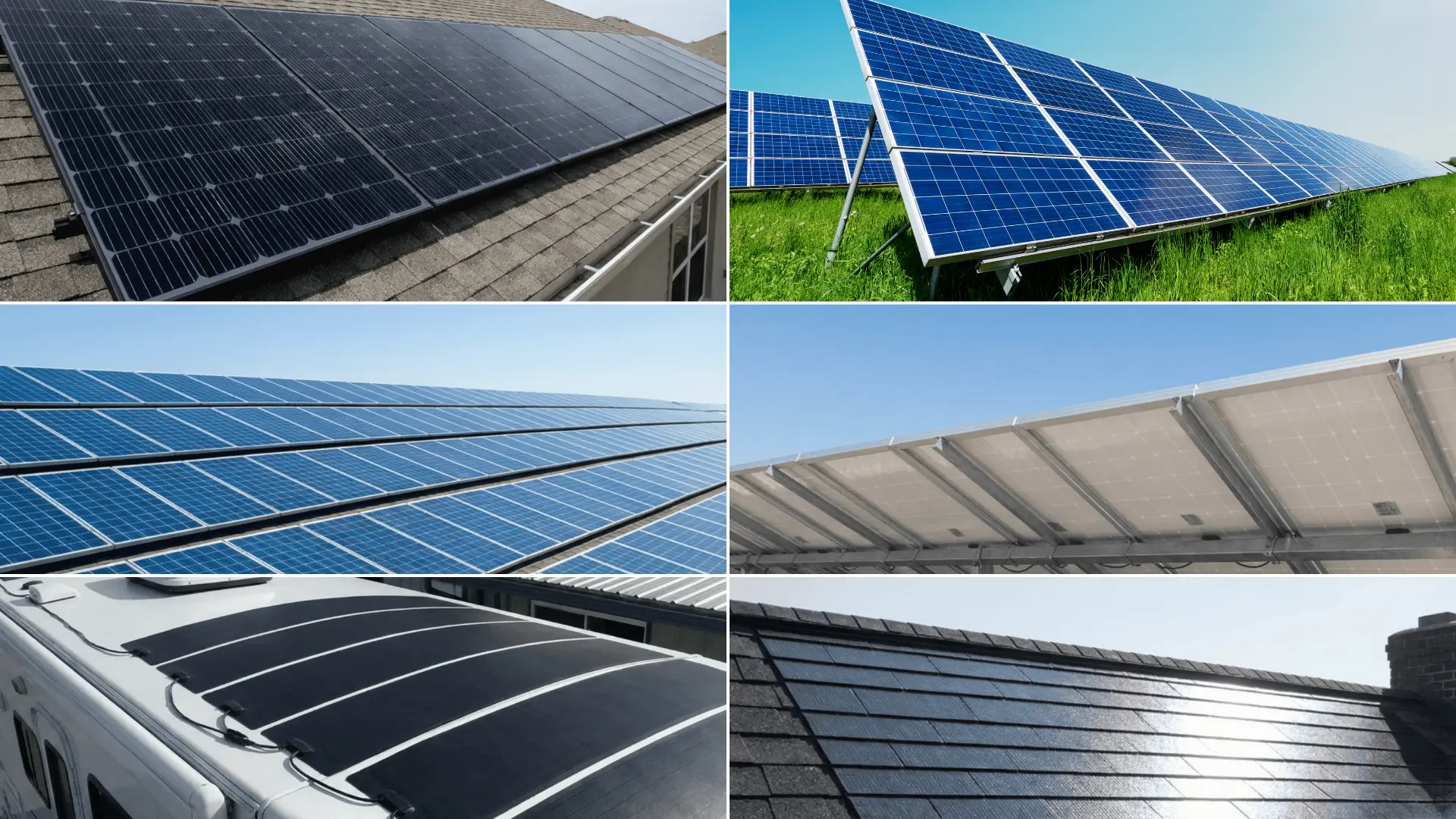
1. Monocrystalline Solar Panels
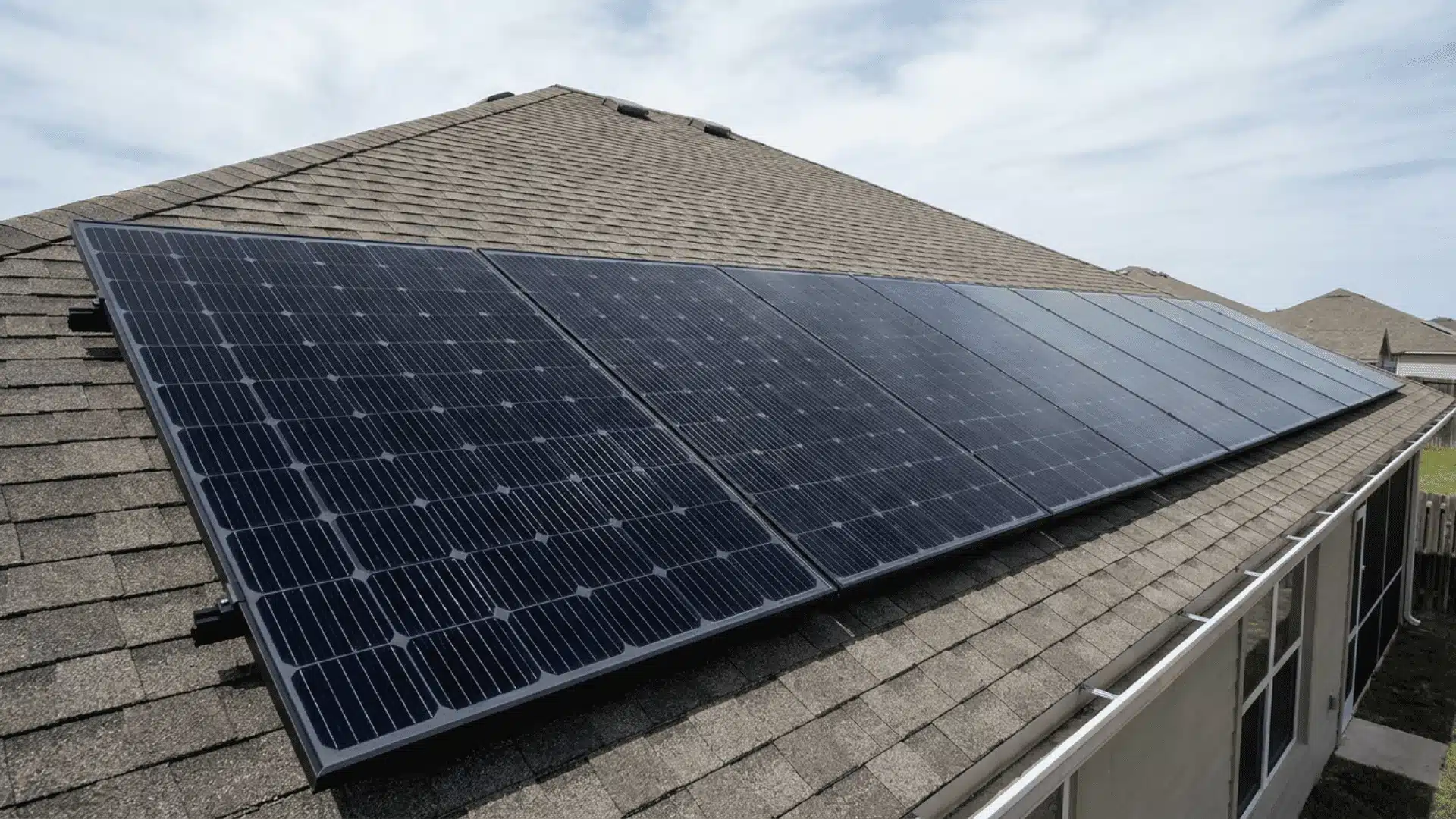
Monocrystalline solar panels use cells cut from one silicon crystal, allowing electrons to move efficiently and deliver high power output where usable roof space is limited for many homes today.
- Efficiency: High output per square foot helps smaller roofs meet substantial household energy needs with fewer individual panels installed overall.
- Cost: Higher upfront prices may be offset by reduced panel quantities, mounting hardware, roof penetrations, and installation labor requirements overall.
- Best use: Ideal for residential roofs with limited area, shade obstacles, vents, chimneys, or higher electricity consumption throughout the year.
2. Polycrystalline Solar Panels
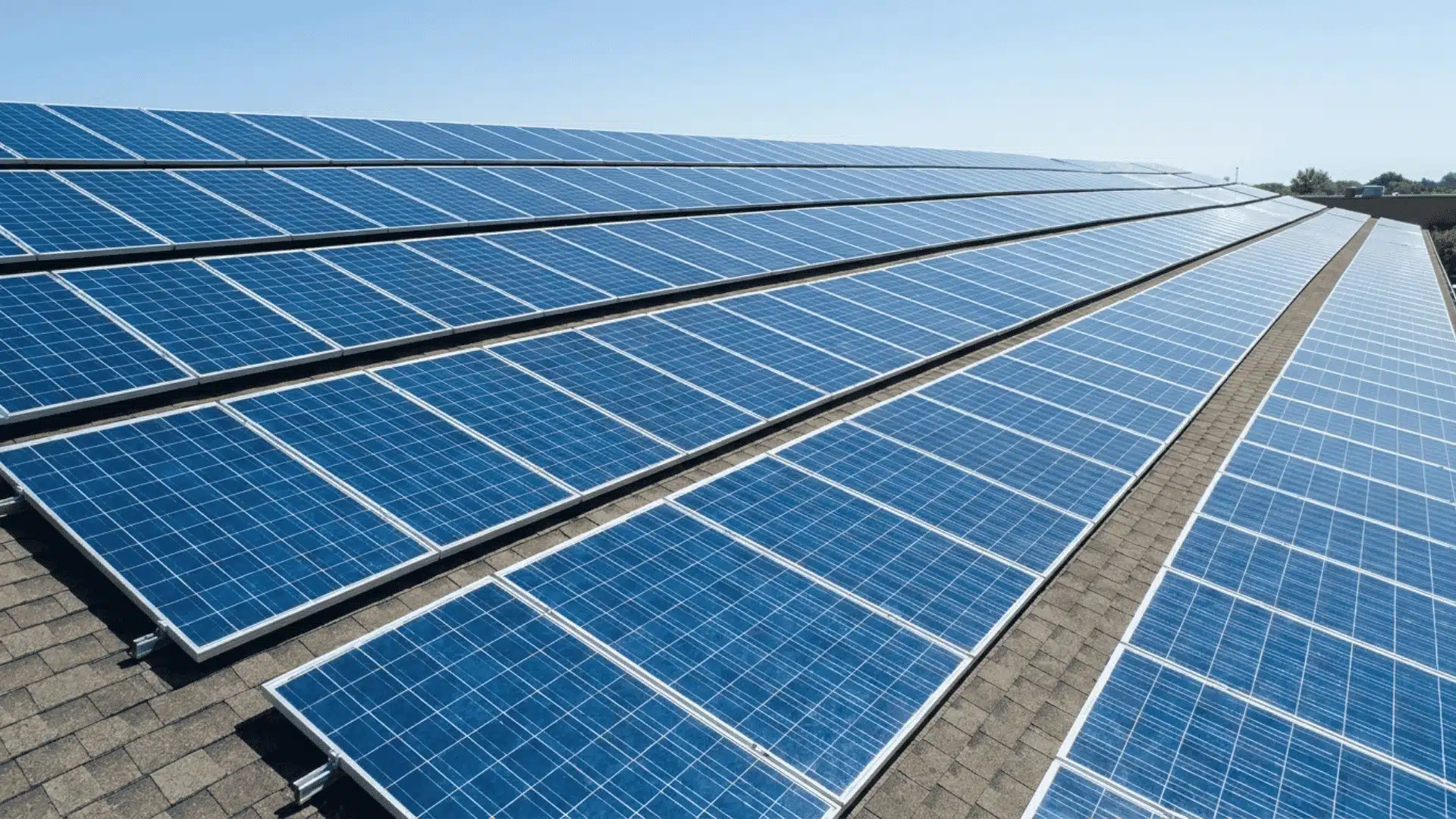
Polycrystalline solar panels use cells formed from several melted silicon fragments, creating crystal boundaries that reduce electrical flow but usually make manufacturing simpler and less expensive overall for many buyers.
- Efficiency: Moderate power output requires more roof area to match the production of similarly rated monocrystalline solar systems in practice.
- Cost: Lower panel prices can support budget-focused projects, although additional modules, mounting equipment, and labor may reduce overall savings.
- Best use: Suitable for large sunny roofs or ground-mounted systems where space is generous and upfront cost matters most..
3. Thin-Film Solar Panels
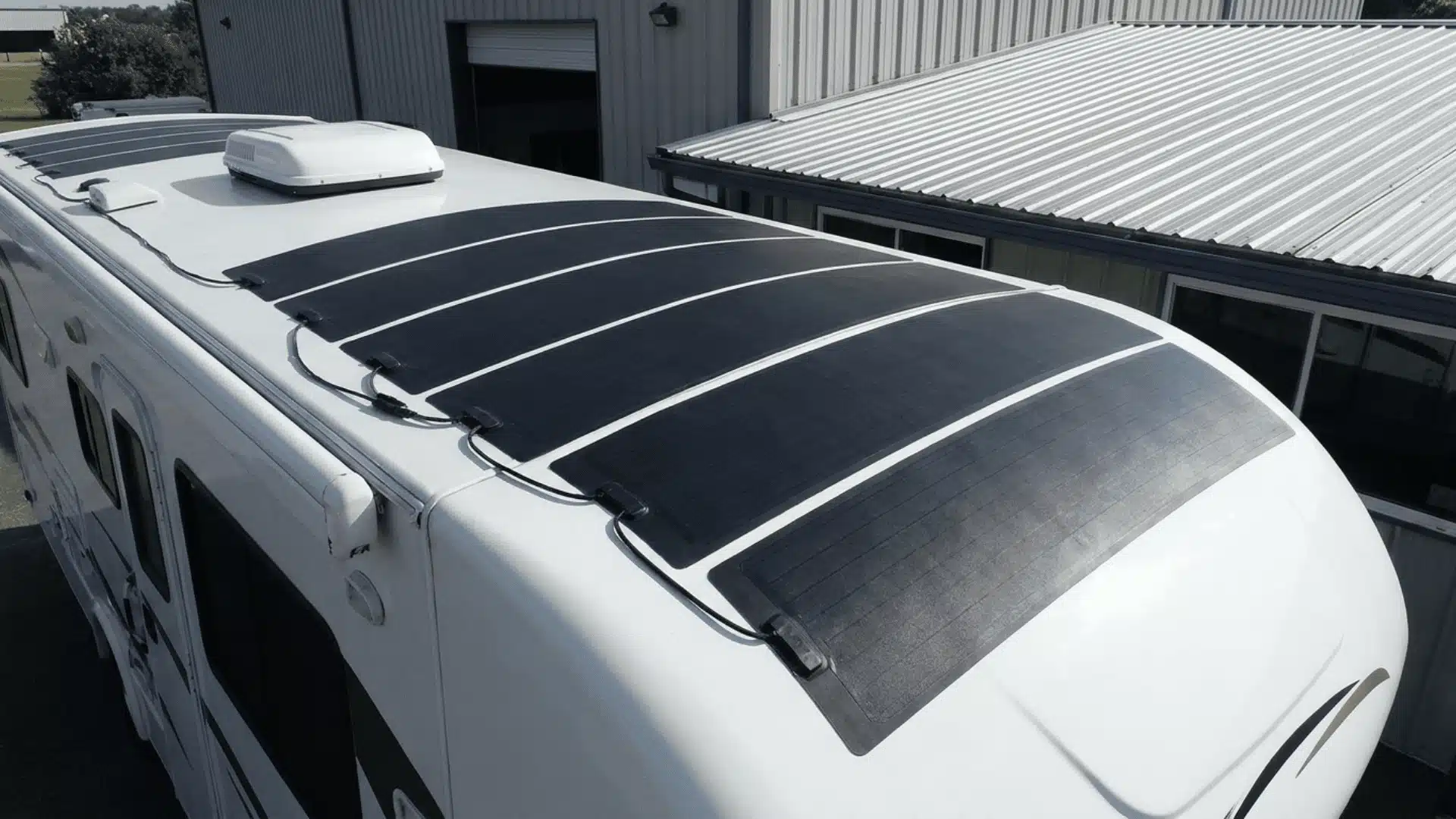
Thin-film solar panels place light-absorbing materials in thin layers over glass, metal, or plastic, creating lightweight modules that may be rigid, flexible, portable, or curved for specialized installations.
- Weight: Their lighter construction can suit roofs, vehicles, or structures unable to support heavier crystalline silicon panels safely during operation.
- Efficiency: Lower power output per square foot usually requires more surface area to reach the same total system capacity overall.
- Best use: Suited to commercial roofs, boats, RVs, portable systems, curved surfaces, and other weight-sensitive applications where flexibility matters.
4. PERC Solar Panels
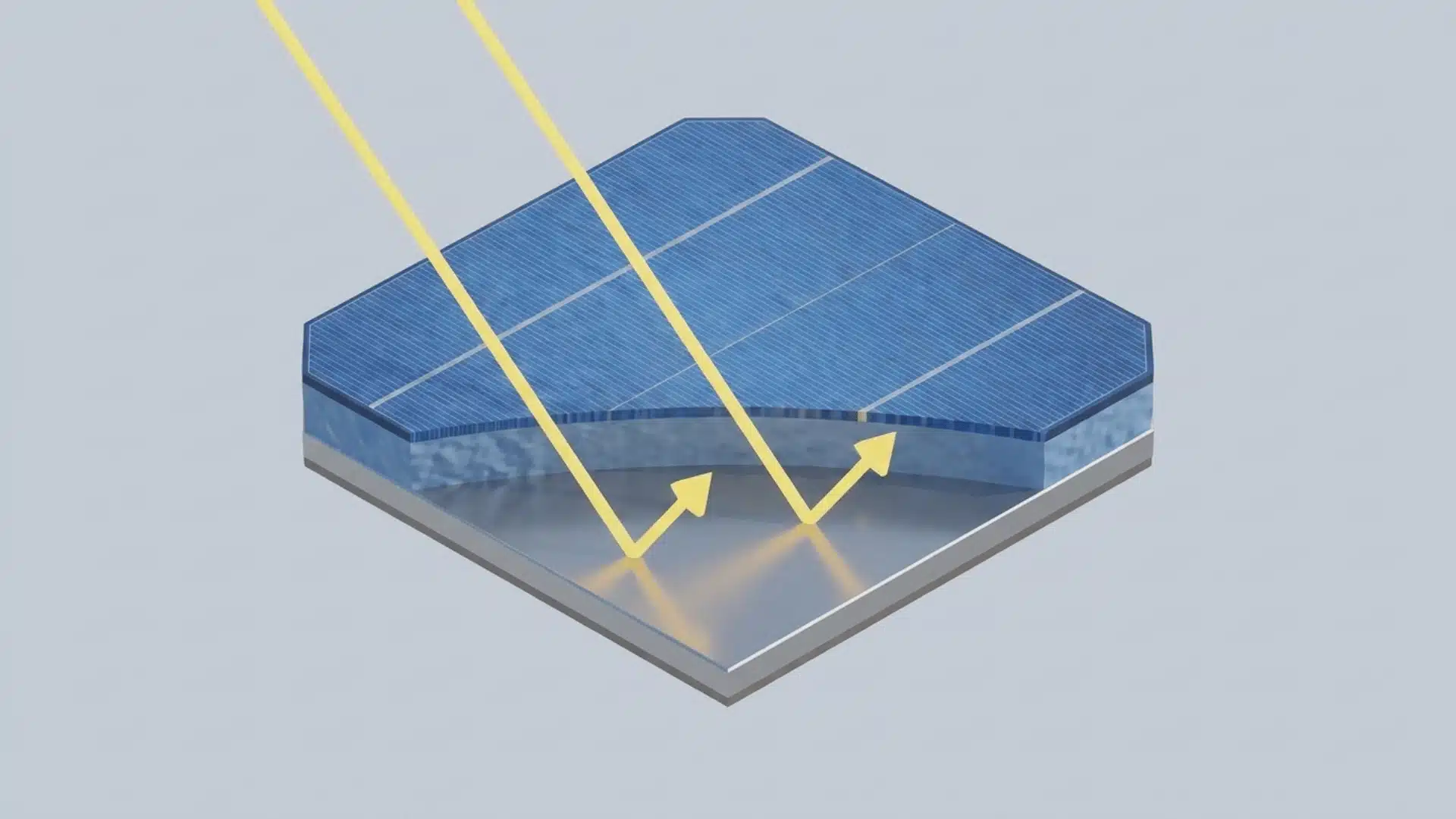
PERC solar panels add a reflective rear layer behind silicon cells, returning missed light into the cell and improving electricity production without creating an entirely separate panel material category today.
- Efficiency: Improved light capture can raise output without requiring larger panels, additional roof area, or major changes to system design.
- Compatibility: This cell design can be combined with monocrystalline or polycrystalline silicon, although monocrystalline PERC products are more common today.
- Best use: Suitable for homes needing energy production from restricted roof space while balancing efficiency, availability, and installed system cost.
5. Bifacial Solar Panels
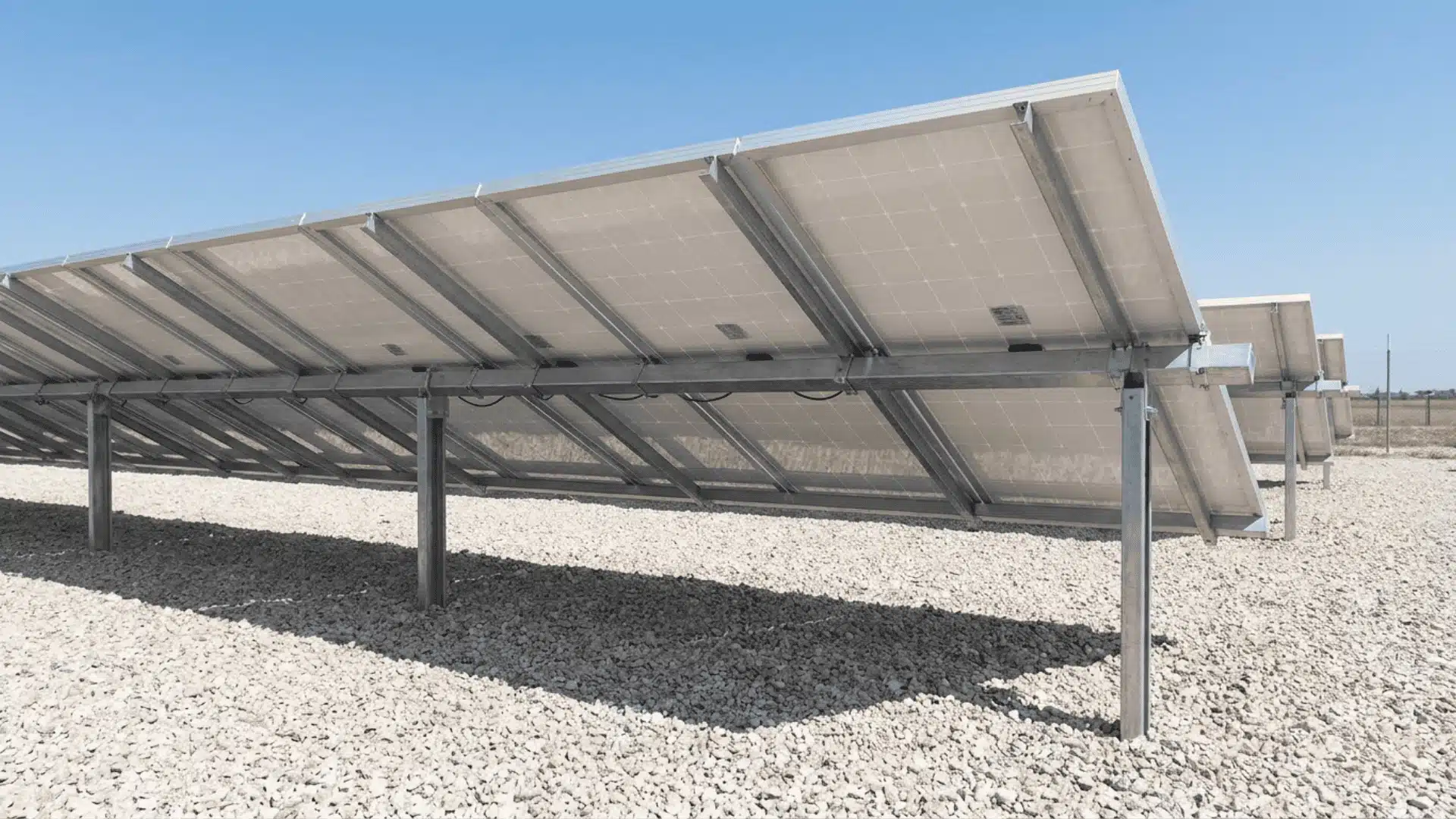
Bifacial solar panels generate electricity from direct sunlight hitting the front and reflected light reaching the rear, allowing both surfaces to contribute to total energy production when properly mounted outdoors.
- Mounting: Elevated racks create space and airflow behind each panel, allowing more reflected light to reach the rear surface effectively.
- Surface: White roofs, gravel, concrete, snow, or other reflective materials can increase rear-side generation and improve the system’s yield.
- Best use: Most effective on flat roofs, carports, ground mounts, and open elevated structures with reflective surfaces below the array.
6. Solar Shingles and Solar Tiles
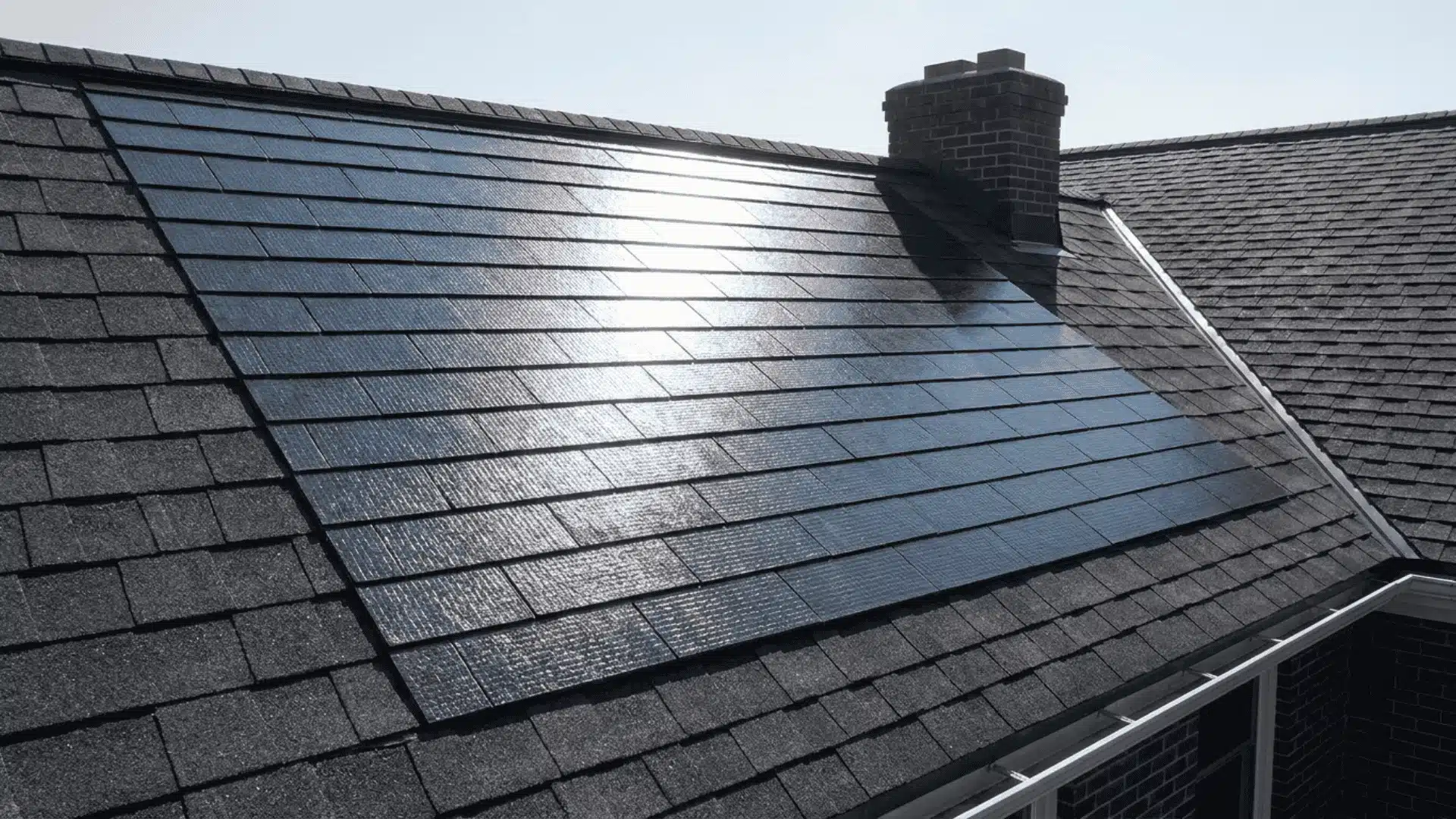
Solar shingles and tiles generate electricity while replacing part of the roof covering, creating a low-profile appearance that integrates more naturally with the home’s exterior design than raised panels.
- Appearance: Their flatter installation suits visible roofs, modern architecture, historic districts, or communities with strict exterior design requirements and restrictions.
- Cost: Premium materials, fewer qualified installers, specialized repairs, and roof integration can make the completed system considerably more expensive overall.
- Best use: Most practical during planned roof replacements where appearance, architectural integration, and neighborhood rules matter more than maximum output.
Factors to Check Before Choosing Solar Panels
Before choosing a panel, compare the property, energy needs, installation limits, and long-term costs because the panel label alone cannot determine system suitability.
| Factor | What to Check | Why It Matters |
|---|---|---|
| Available roof area | Measure usable space after accounting for vents, chimneys, setbacks, shade, and roof orientation. | Limited space may require higher-efficiency panels to meet the property’s energy target. |
| Roof condition and weight limit | Check structural capacity, roofing material, age, damage, and whether repairs or replacement are needed. | A weak or ageing roof may require work before panels can be installed safely. |
| Household energy use | Review annual electricity consumption, seasonal demand, future appliances, electric vehicles, and planned home changes. | System capacity should reflect current consumption and expected future energy requirements. |
| Shade and sun exposure | Assess nearby trees, buildings, roof direction, seasonal shadows, and daily sunlight hours. | Persistent shade can reduce production even when high-efficiency panels are installed. |
| Total installed cost | Compare panel prices, inverters, mounting hardware, permits, labor, roof work, financing, and maintenance. | A cheaper panel may produce a higher total cost when additional modules or installation work are required. |
| Warranty and degradation | Review product coverage, performance guarantees, workmanship terms, exclusions, and expected annual power loss. | Strong warranties protect the investment and show how much output the panels should retain over time. |
| Installer experience | Check certifications, local experience, panel knowledge, roof expertise, references, and after-sales support. | Correct system design and installation can influence safety, durability, and long-term energy production. |
Review these factors together rather than separately. The right panel should fit the roof, meet energy goals, remain affordable, and perform reliably over time.
Common Mistakes When Comparing Solar Panels
Many buyers focus on surface-level specifications and overlook how installation conditions, system design, and long-term performance affect real-world solar output and value.
- Choosing a panel based only on efficiency
- Comparing panel price instead of total installed cost
- Ignoring usable roof area and shade
- Treating PERC as a separate material category
- Assuming bifacial panels work well on every roof
- Using flexible panels as permanent roof replacements
- Ignoring roof condition and weight limits
- Overlooking warranty exclusions and degradation rates
- Assuming every panel using the same technology performs equally
Avoiding these mistakes helps ensure a more accurate comparison between solar options and prevents costly mismatches between expectations and actual system performance.
Wrapping Up
The right solar panel is not simply the one with the highest efficiency rating. It is the one that fits your roof, budget, energy use, and long-term plans.
Monocrystalline panels work well for many homes with limited space. Polycrystalline panels can suit larger roofs and smaller budgets. Thin-film, bifacial panels, and solar shingles solve more specific needs involving weight, mounting, or appearance.
Understanding the types of solar panels helps you compare complete systems instead of judging one product label. I recommend checking usable roof area, total installed cost, warranty terms, and expected output before deciding.
Review several detailed quotes, ask installers clear questions, and explore related solar guides before making your final choice.
Frequently Asked Questions
What are the six main types of solar panels?
The six commonly discussed types are monocrystalline, polycrystalline, thin-film, PERC, bifacial, and solar shingles. They are not all classified the same way. Some describe cell materials, while others describe cell designs, light collection, or roof integration.
Which type of solar panel is most efficient?
Monocrystalline panels usually offer the highest efficiency among standard residential options. Panels using TOPCon or HJT cells may perform even better. Actual energy production still depends on shade, roof direction, heat, system equipment, and installation quality.
Are polycrystalline solar panels still worth buying?
Polycrystalline panels can still make sense if they cost less and you have ample installation space. However, their lower output per square foot makes them less attractive for small roofs. Product availability may also be more limited than before.
Are solar shingles better than solar panels?
Solar shingles can look cleaner and work well during a full roof replacement. Standard panels usually cost less and produce more power from the same roof area. They are also easier to remove, repair, upgrade, or replace.