


Have you ever looked at your electricity bill after using a space heater and wondered why it climbed so high? A small heater can seem harmless, but the energy it uses adds up fast.
If you are asking, “do space heaters use a lot of electricity?” the answer depends on how often you run them, the heater’s wattage, and your room conditions.
I’ll help you understand what drives the cost, how monthly usage is calculated, and which habits can keep your bill under control.
You can also compare it with the appliances that use the most electricity in your home. By the end, you’ll know what to expect before running a space heater this winter.
Do Space Heaters Use a Lot of Electricity?
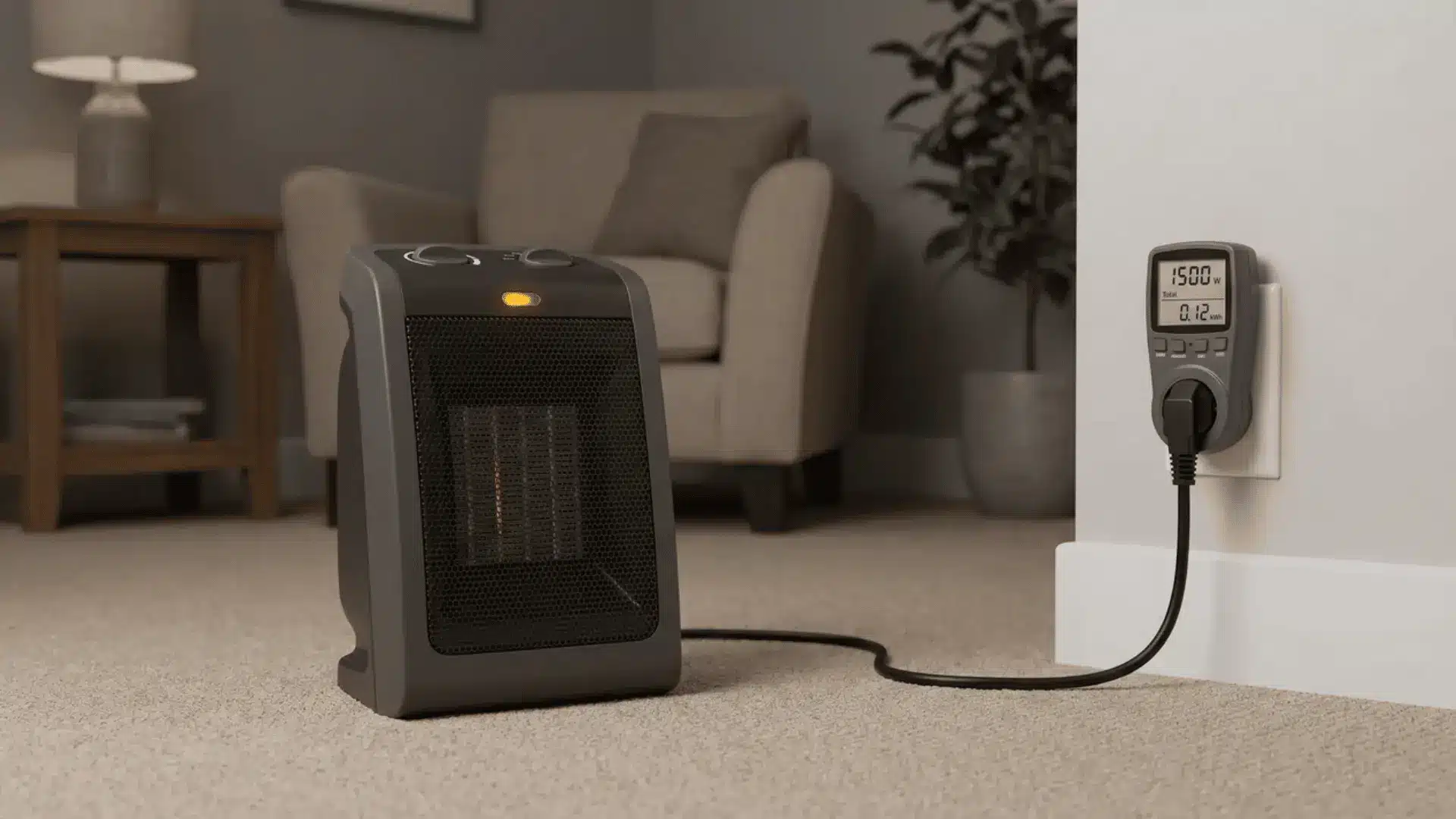
Yes, space heaters can use a significant amount of electricity because they require high wattage to produce heat. Most portable electric space heaters use between 750 and 1,500 watts, with many standard models operating at 1,500W on the highest setting.
A 1,500W heater uses 1.5 kilowatt-hours (kWh) of electricity per hour at full power. At an electricity rate of around $0.17–$0.20 per kWh, that equals approximately $0.25–$0.30 per hour.
However, wattage alone does not determine your final cost. The biggest factor is runtime. A heater used for one hour each evening will have a much smaller impact than one running continuously throughout the day.
The wattage rating on the heater label shows its maximum power draw, but it does not always represent actual consumption because thermostat-controlled models automatically cycle on and off to maintain the desired temperature.
| Space Heater Wattage | Electricity Use Per Hour |
|---|---|
| 750W | 0.75 kWh |
| 1,000W | 1 kWh |
| 1,500W | 1.5 kWh |
The misconception that a small appliance always uses little electricity is what surprises many homeowners. Space heaters are compact, but producing heat requires substantial energy.
How Much Electricity Does a Space Heater Use Per Month?
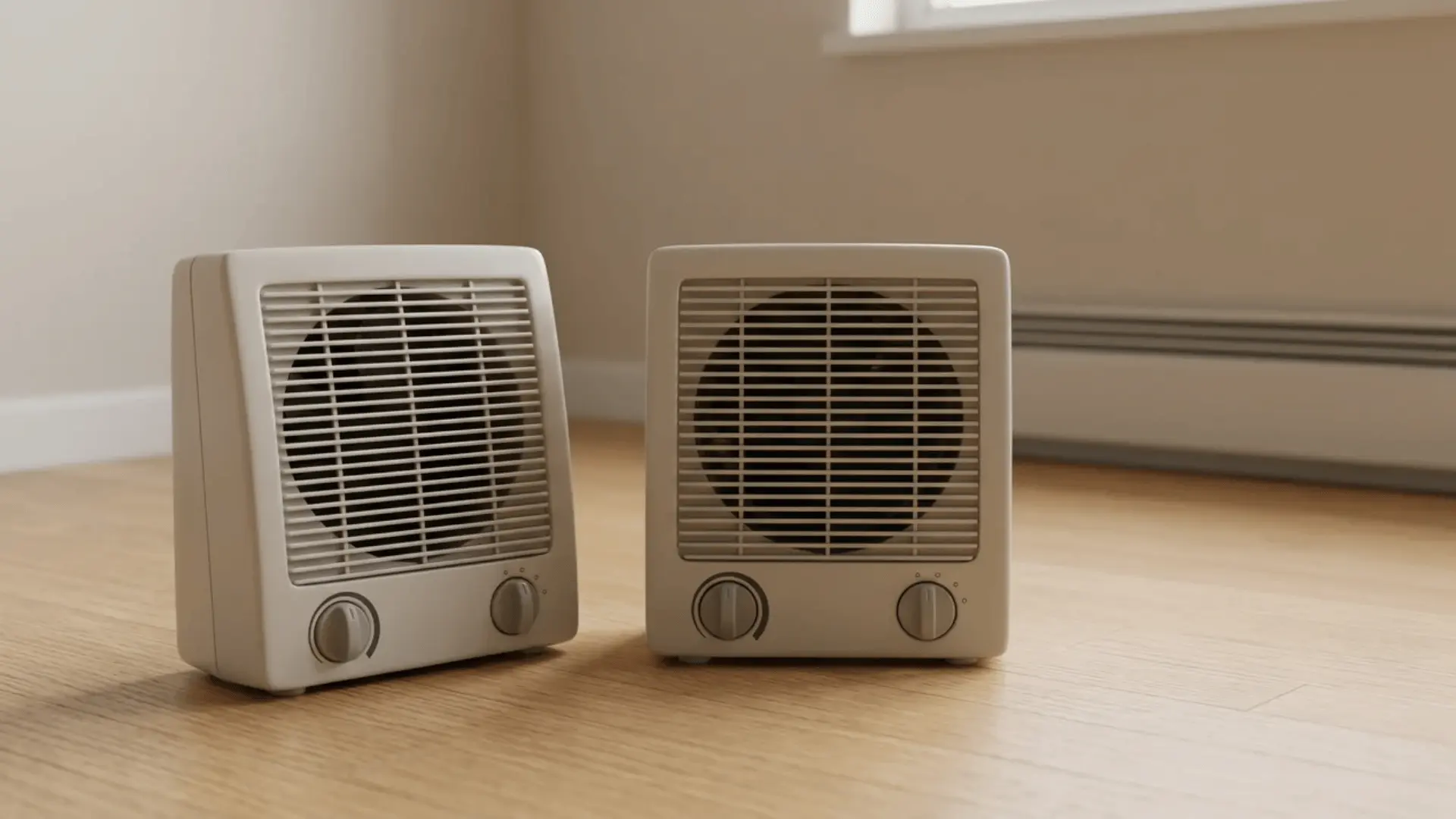
Understanding how much electricity a space heater uses per month depends on three factors: the heater’s wattage, how many hours it runs each day, and your electricity rate.
The calculation is simple: Watts ÷ 1,000 × hours used = kilowatt-hours consumed
For example, a 1,500W space heater running for 8 hours daily uses: 1.5 kW × 8 hours × 30 days = 360 kWh per month
At electricity rates between $0.17 and $0.20 per kWh, that could cost approximately $60–$72 per month if the heater operates at full power for that entire time.
If used for shorter periods, the monthly energy consumption changes significantly. Running the same heater for 2 hours daily uses about 90 kWh per month, while running it for 4 hours daily uses about 180 kWh per month.
In real-world conditions, many heaters do not operate at full power throughout the entire day. Models with built-in thermostats cycle on and off to maintain the set temperature, which can reduce actual electricity consumption.
The biggest factor affecting monthly energy use is not only the heater’s wattage but also how long it actively runs. A high-wattage heater used occasionally may cost less than a lower-wattage model running for many hours every day.
Why Does Wattage Matter More Than Space Heater Price?
No resistive electric space heater uses less electricity per hour than another at the same wattage. That’s not a design flaw; it’s physics.
Resistive heating passes current through a wire. Electric resistance heaters are already highly efficient at converting electricity into heat.
The difference between models usually comes from features that control runtime, such as better thermostats and timers, rather than the amount of heat produced from each unit of electricity.
Resistive heating itself converts electricity to heat at nearly 100% efficiency, and no engineering innovation changes that ratio. Many people assume a more expensive heater costs less to operate, but at the same wattage, that isn’t true.
The real variable is the duty cycle, how much of the hour the heater actually runs at full draw. That’s where models differ. A well-designed thermostat reaches your target temperature and shuts off. A poorly calibrated one overshoots or runs longer than needed.
Premium models justify their price through features that reduce runtime, not conversion rate. The ones worth paying for include:
- Accurate thermostat: Cuts off sooner, cycles less, saves more over time
- ECO mode: Automatically adjusts output to maintain temperature efficiently
- Programmable timer: Prevents the heater from running when the room is empty
These features lower your bill by reducing how long the heater runs, not how many watts it draws per hour.
That distinction matters when shopping. If you want to cut how much electricity your space heater uses, runtime controls are what move the number. Price and brand claims about efficiency won’t.
When Can a Space Heater Save Money Compared With Central Heating?
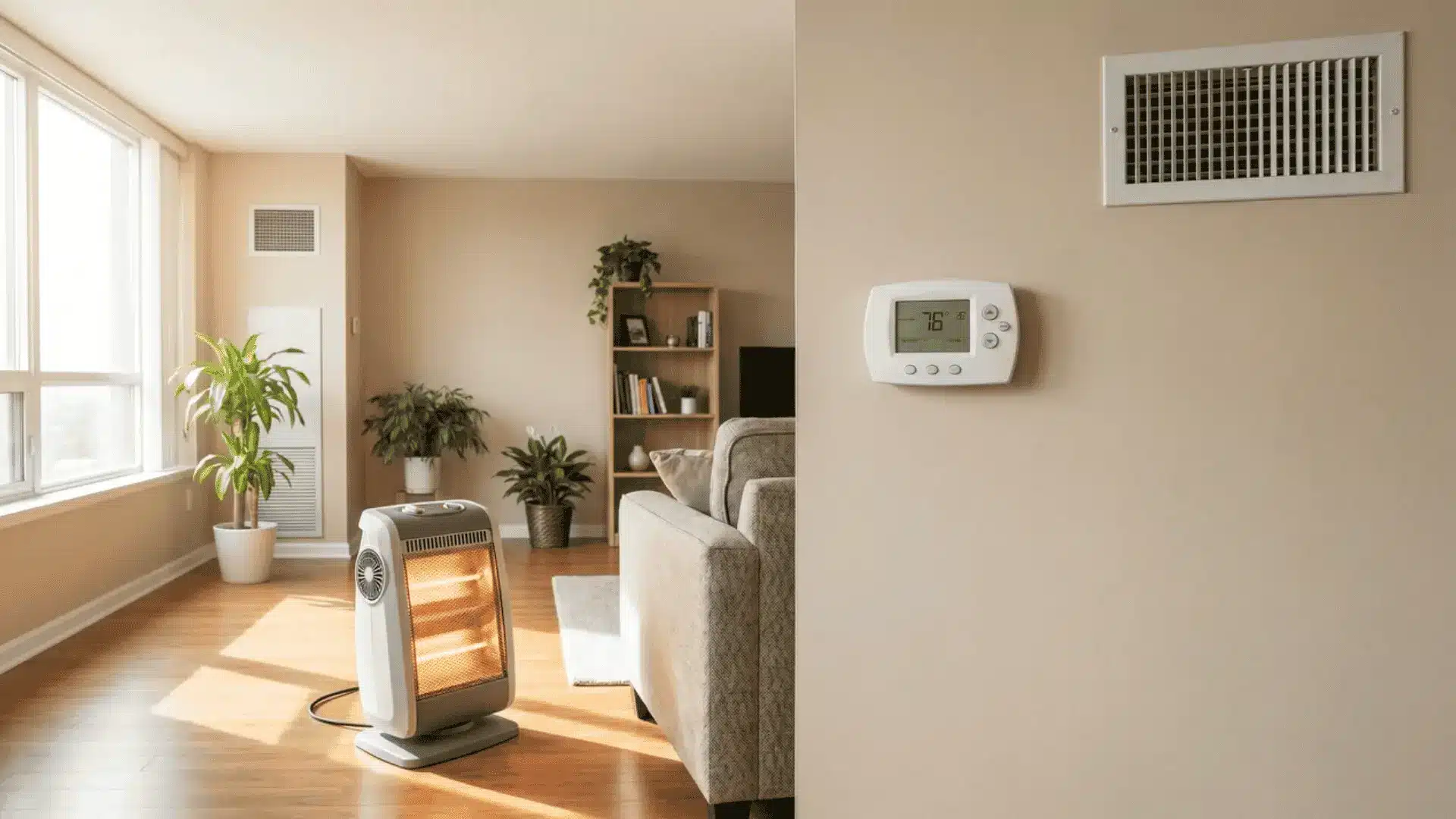
Zone heating saves money when you run a single heater in a single room and lower your central thermostat by 5–7°F. That’s the condition. Everything else depends on your home.
The logic isn’t complicated once you break it down. The savings come from the gap between what you stop spending on central heat and what the space heater costs to run.
The Zone Heating Calculation
Whether zone heating saves money depends on the difference between what you spend on the space heater and what you save by lowering your central thermostat. Here’s what that trade-off looks like in practice.
A space heater running for 8 hours costs around $2.40 at $0.20/kWh. In this example, zone heating costs slightly more, but in a larger home, the central heat savings would be bigger.
The break-even point shifts with three things:
- Home size: Larger homes waste more heat on empty rooms, making zone heating more valuable
- Insulation quality: A well-sealed apartment loses little heat, and central heating is already efficient there
- Local utility rates: Higher rates make every running hour more expensive for both systems
In a small, well-insulated apartment, a space heater will often cost more than just running central heat. There’s not enough wasted heating to offset.
When Do Space Heaters Cost More Than Central Heating?
Two situations reliably flip the math against you. Knowing them saves a real amount of money.
Running multiple heaters at once is the most common mistake. Two 1,500W heaters running 8 hours a day cost around $144 a month, more than most central heating systems.
Heating a large or open space is the other failure mode. Central systems distribute heat efficiently across square footage. A space heater doesn’t scale; it just runs longer and harder for the same result.
The rule is simple: one heater, one occupied room, thermostat turned down. Outside that setup, central heating often wins on cost.
Does a Lower Heat Setting Use Less Electricity?
It depends on the type of heater. On models with a wattage dial, yes, a lower setting draws less power and cuts your cost directly. On thermostat-controlled models, no, the heater still runs at full power each time it switches on; a lower setting just makes it cycle off sooner.
On a heater with a simple low/medium/high dial, each setting draws less power. A 750W setting costs exactly half what a 1,500W setting costs per hour. The reduction is direct and proportional.
Thermostat-equipped heaters work differently. The dial sets a target temperature, not a wattage level. The heater still runs at full draw; it just cycles off sooner once the room hits that temperature.
So a lower thermostat setting reduces runtime, not draw. Your bill goes down because the heater runs less, not because it pulls less power while running.
That distinction has a practical consequence. In thermostat models, your room matters as much as your setting.
A drafty room loses heat fast, so the heater cycles back on more often. Better insulation and sealed gaps keep the room warm longer, meaning fewer cycles and a lower bill, regardless of where the dial sits.
Tips to Reduce What a Space Heater Costs You
The two things that drive your space heater bill are how long it runs and how many watts it draws while running. Both are within your control.
- Use the thermostat: It reduces unnecessary runtime by turning the heater off after reaching the desired temperature.
- Use a timer: Avoid running the heater when the room is empty.
- Choose a lower wattage setting: A 750W setting uses less electricity than a 1,500W setting.
- Reduce heat loss: Close doors and seal drafts to keep the heater from working harder.
None of these require a new heater or a big change in routine. Used together, they reduce both the hours your heater runs and the draw per hour, which is where the savings actually come from.
While reducing electricity costs is important, safe operation matters too. Keep space heaters away from curtains and furniture, avoid damaged cords, and do not leave them running unattended.
Conclusion
Space heater costs are not determined solely by the wattage printed on the label. I’ve found that runtime, thermostat settings, and how you use the heater have a much bigger effect on the final bill.
If you’re asking, do space heaters use a lot of electricity, the answer depends on your usage habits, home setup, and heating needs.
You can lower costs by heating only occupied areas, using timers, and reducing heat loss. Try these simple changes with your heater and see how they affect your energy use this season.
Frequently Asked Questions
Can a dishwasher use electricity even when it is not running?
A dishwasher usually uses little to no electricity when it is not actively operating. Some models may use a small amount of standby power for electronic controls, displays, or smart features. However, this energy use is typically very low compared with the electricity used during washing and drying cycles.
Does running a dishwasher at night save electricity?
Running a dishwasher at night does not usually reduce the amount of electricity the appliance uses. However, some utility companies offer lower off-peak electricity rates during certain hours, which may reduce operating costs. The energy savings depend on your local electricity pricing plan.
Should you turn off the dishwasher at the breaker when not using it?
Most households do not need to turn off a dishwasher at the breaker because standby electricity use is minimal. However, disconnecting power may make sense during long periods of non-use, such as vacations, repairs, or when following manufacturer recommendations.
Does a dishwasher use more electricity during the first cycle of the day?
No, a dishwasher does not automatically use more electricity during its first cycle. Energy use depends on the selected program, water temperature, drying option, and model efficiency. A heavy-duty cycle with heated drying can use more electricity than a normal cycle, regardless of when it runs.
Why do dishwashers run for so long if they use less electricity?
Many modern dishwashers run longer because they use lower temperatures, sensors, and optimized water usage instead of relying on high energy output. Longer cycle times do not always mean higher electricity consumption because the appliance may be using energy more efficiently throughout the process