
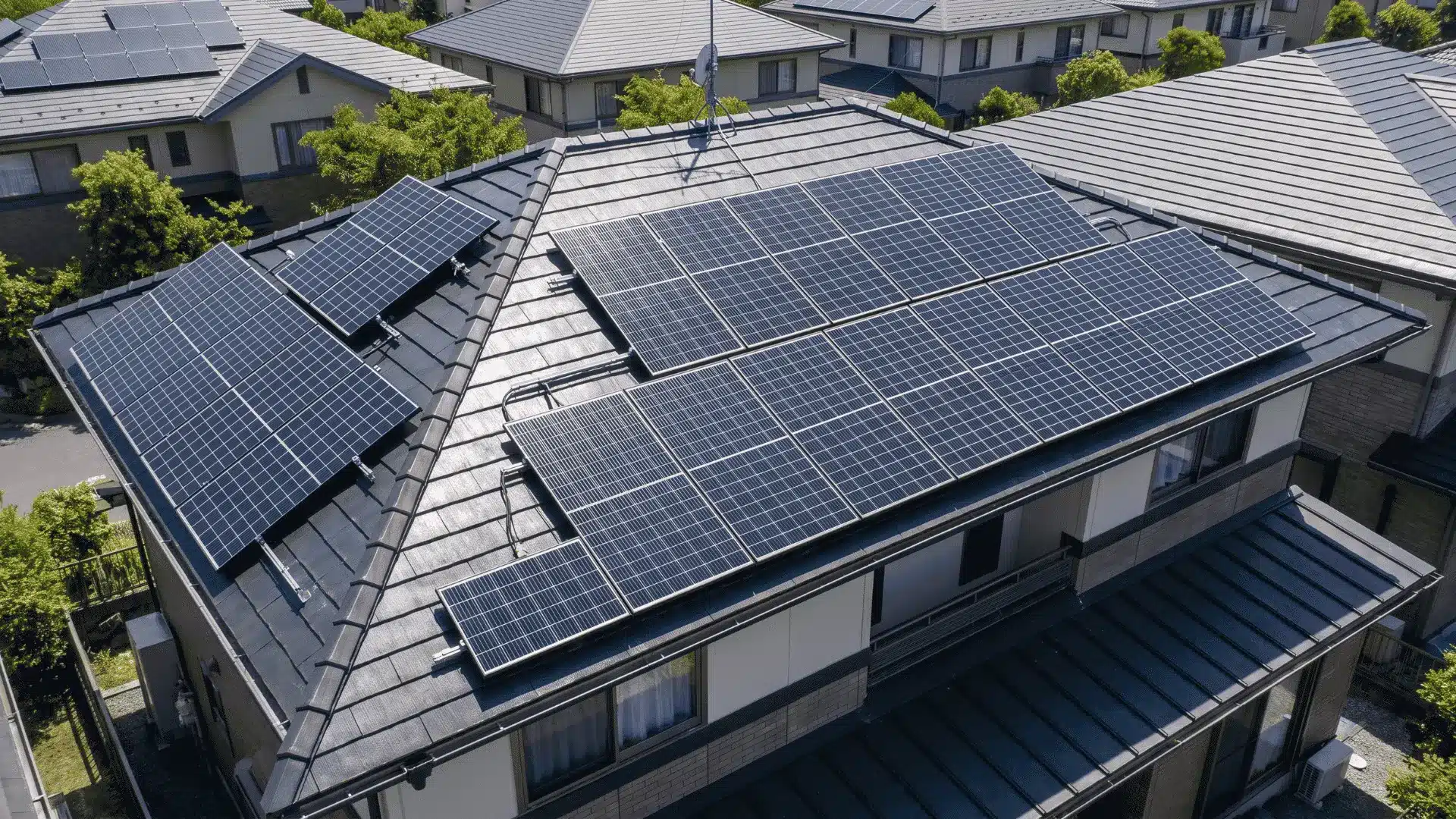

Comparing solar panels often focuses on wattage and price, while the question of who stands behind the panel gets less attention.
With Aptos solar panels, that question has a clearer answer than most brands at this price point.
Aptos is a US-engineered product with solid structural credentials, a trade-focused distribution model, and a technology stack that holds up under scrutiny.
What this means for a specific install, including roof type, climate, and system size, is worth understanding before any decision is made.
What is Aptos Solar Technology?
Aptos Solar Technology is a US solar brand headquartered in Santa Clara, California, with a sales and support office in San Antonio, Texas. Its panels are designed and engineered in the United States; manufacturing happens offshore in Vietnam, but the engineering decisions, quality standards, and warranty support are all domestic.
That distinction matters more than it might seem. A brand with US-based engineering and a physical US headquarters has real accountability. You’re not chasing a foreign entity if something goes wrong.
Their product line is called the DNA Series. It covers both monofacial and bifacial panels, ranging from 370W up to 550W on the commercial end. That range means the same brand serves a modest home system and a large ground-mount installation.
Efficiency across the lineup averages around 20.6%, with the highest-output models reaching into the low 21% range. That puts Aptos in solid mid-tier territory. Behind the 22%+ panels from premium brands, but ahead of most budget imports.
One thing that confuses buyers is that Aptos doesn’t sell directly. You won’t find them on a consumer retail shelf.
They supply through professional distributors such as Signature Solar, Greentech Renewables, and similar trade channels, typically landing around $0.70 to $0.90 per watt before installation; in line with other US-engineered brands like Mission Solar or Silfab.
Buyers begin their research with Aptos solar panel reviews before comparing specifications, installer quotes, or system sizing options.
How Does Aptos DNA Series Technology Work?
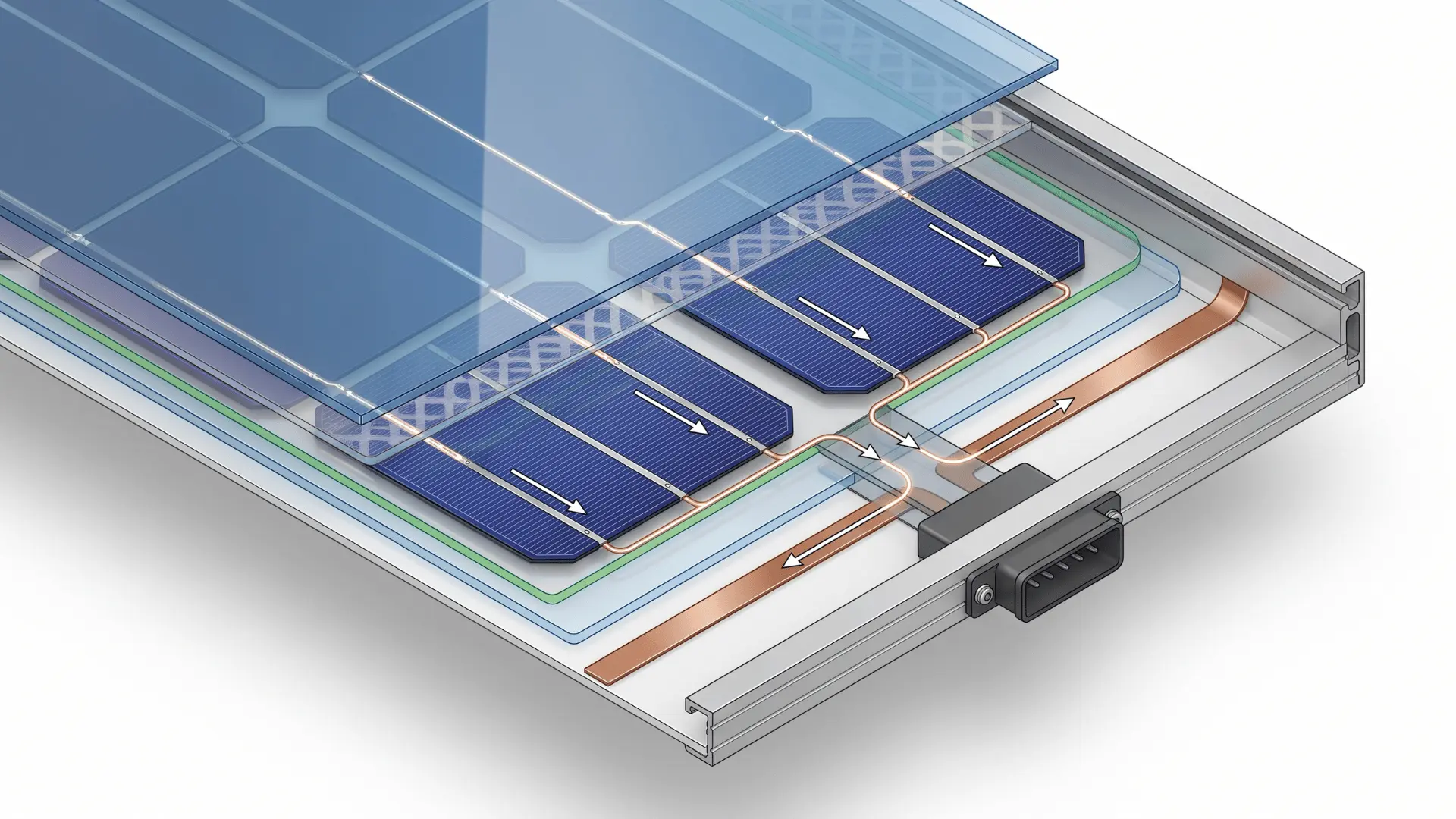
The DNA Series is Aptos’s full-panel lineup, named for the company’s patented Dual Nano Absorber (DNA) cell technology. DNA combines a split-cell design with PERC (Passivated Emitter and Rear Cell) construction, layering the two approaches rather than treating them as separate add-ons.
Split-Cell Design and What It Does to Output
Every cell in a standard panel carries the full electrical current the panel generates. More current means more resistance, and resistance bleeds off as heat, not power.
Split-cell design cuts each cell in half. Half the cell size means half the current per cell. Lower current means less resistive loss, so more of what the panel generates reaches your inverter.
That matters most in two situations: partial shading and high heat.
When part of a panel is shaded, standard cells drag down the whole string. Smaller cells limit how far that drag spreads. In high temperatures common during summer peak hours, a lower current helps prevent efficiency from falling as sharply.
PERC and Selective Emitter: What the Combination Adds
PERC adds a reflective layer to the rear of each cell. Light that passes through without being absorbed is reflected for a second pass. Standard PERC does this well at strong midday irradiance.
A selective emitter refines the electrical field at the point where current is collected. The result is better performance at both ends of the day, early morning and late afternoon, when light is weaker and standard PERC starts to drop off.
These two aren’t interchangeable. They solve different parts of the same problem. Together, they extend the productive hours of the panel across a full day.
Bifacial Panels in the DNA Series
Bifacial panels capture light from both the front and the rear. The rear picks up reflected light from the ground or roof surface below the albedo. Typical rear-side gain runs 5–15%, depending on what’s underneath.
On the DNA BF26 models, the rear-side gain sits atop an already efficient cell. Because split-cell design minimizes resistive losses, the additional current from the rear face doesn’t encounter the same bottleneck as a standard cell would. The gain compounds rather than just adding.
That’s why bifacial DNA panels perform best on ground-mount or elevated-roof installations where rear-face exposure is consistent, and the panel can use what it collects.
Structural Strength Under Real-World Loads
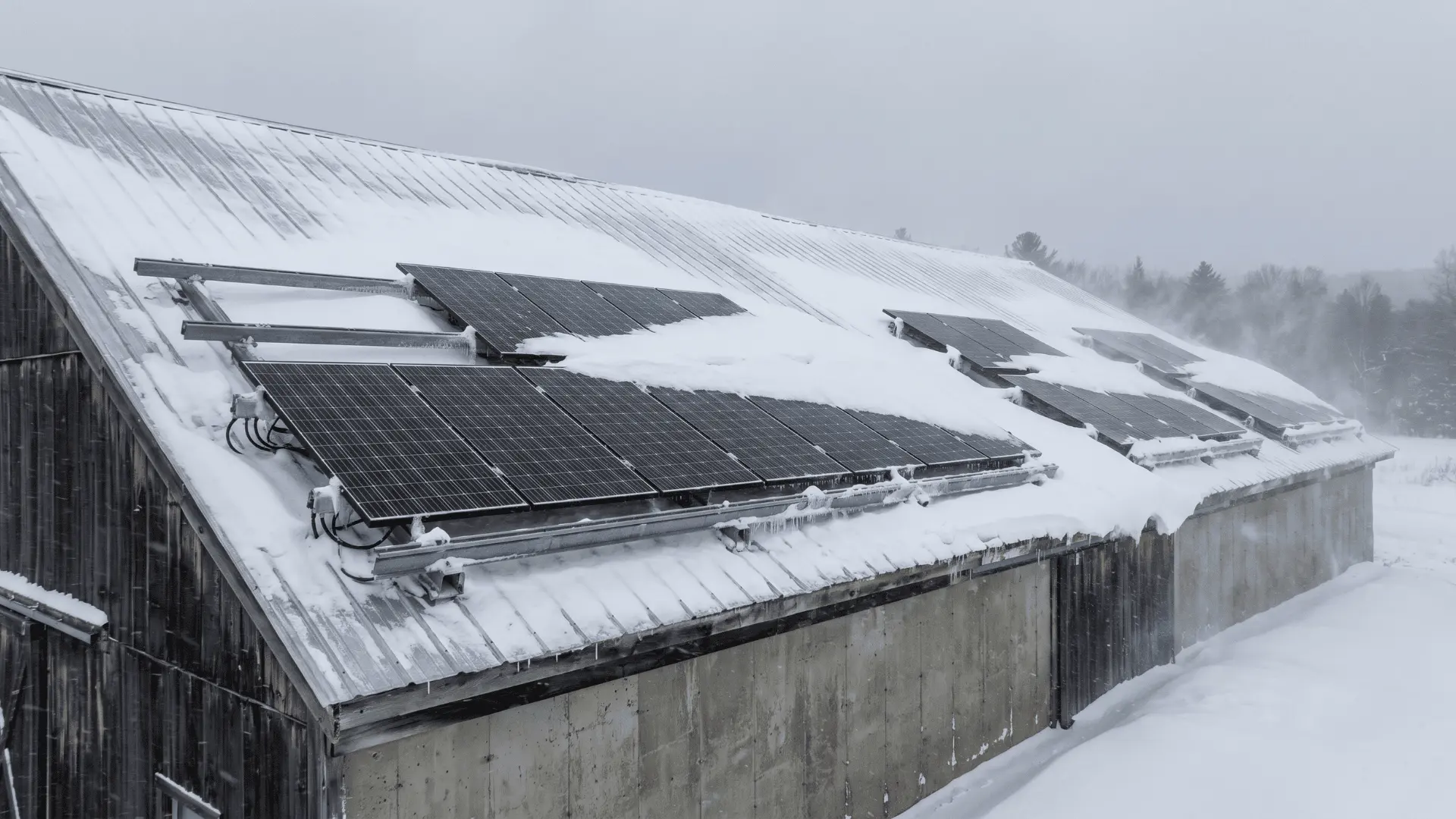
Aptos DNA panels are rated for 6,200 Pa wind load and 5,400 Pa snow load, with hail resistance up to 1-inch-diameter impacts. These figures exceed those of most similarly priced panels and are verified by IEC testing standards rather than internal-only benchmarks.
What Wind and Snow Ratings Mean in Practice
These ratings show how much wind and snow load a panel is designed to withstand under standardized structural testing.
A 6,200 Pa wind rating translates to roughly 210 mph of sustained wind pressure, well beyond hurricane-force thresholds.
In practice, most residential roofs and their mounting hardware reach their own limits long before the panel does. The 5,400 Pa snow rating follows the same pattern: it supports heavy accumulation without frame stress, with the mounting system typically becoming the constraint first.
These ratings indicate a structural envelope in which the panel remains intact under conditions that exceed those typical of residential installations.
Quality and Manufacturing Controls
Manufacturing certifications help verify that every panel is built using consistent production and quality control standards.
Two certifications back the manufacturing process: ISO 9001, which audits quality management across every stage of production, and ISO 14001, which governs environmental controls at the manufacturing facilities themselves.
Together they tighten process consistency between production batches, which is what actually lowers the risk of a hidden manufacturing defect reaching your roof.
Certification coverage extends beyond product testing into how the panels are built, creating tighter control over consistency across large-scale production runs.
Coastal and Corrosion Resistance
Panels installed near the coast need extra protection against salt exposure, moisture, and long-term corrosion.
Aptos panels carry a Level 6 salt-mist certification, the tier built for harsh coastal exposure.
Frames and junction boxes are tested directly against salt-air degradation, which cuts the risk of long-term material breakdown in marine climates. That makes the panels a reasonable fit for coastal installs with high salinity exposure.
Salt exposure is one of the fastest ways solar hardware degrades, and this rating directly addresses that failure mode rather than assuming generic outdoor durability.
What Warranty Does Aptos Offer and What Does It Actually Cover?
Aptos offers a 25-year product warranty covering defects, materials, and manufacturing faults, protecting against early physical failures in the solar panel itself.
A 30-year performance warranty guarantees output retention over time, with panels typically holding around 85 percent of rated output at year 25 and roughly 82 to 83 percent at year 30.
On a 400W panel, this equates to about 340W at year 25, reflecting an annual degradation rate of roughly 0.54 percent under standard operating conditions.
Claims are handled through installers or distributors, supported by a US headquarters in Santa Clara, California, a sales office in San Antonio, and established trade channels for accountability.
How Do Aptos Panels Compare to Other Mid-Tier Solar Brands?
Aptos sits in the upper range of the mid-market segment, positioned above generic distributor labels and below premium brands like SunPower and REC.
| Category | Aptos | Typical Mid-Tier Brands | Premium Brands (SunPower, REC) |
|---|---|---|---|
| Structural Ratings | 6,200 Pa wind, 5,400 Pa snow, Level 6 salt mist | Lower or not publicly disclosed | Similar or slightly higher in select models |
| Certifications | IEC-tested, ISO 9001, ISO 14001 | Basic IEC compliance | Full certification stack with brand-specific validation |
| Market Position | Upper mid-tier | Budget to mid-tier range | Premium segment |
| Distribution Model | Trade-focused channels | Mixed retail/import channels | Controlled premium dealer networks |
| Brand Validation | Used/distributed by established players like SunPower | Limited third-party validation | Strong brand legacy and global recognition |
Worth knowing: the SunPower entity that used Aptos panels in its U-Series filed for Chapter 11 bankruptcy in 2024, and the SunPower name is now owned by a different company, Complete Solaria. The association reflects Aptos’s past validation within professional installer networks rather than an active current partnership.
Conclusion
Aptos solar panels don’t win on brand recognition. They win on what’s underneath it: the engineering standards, the structural ratings, and a manufacturing process backed by real certifications.
For buyers, the decision comes down to this: you’re getting upper-mid-market performance at a price point that doesn’t demand a premium-brand premium. A closer look at Aptos solar panel reviews shows that most real-world feedback aligns with the brand’s published performance ratings and warranty structure.
The SunPower relationship, the ISO certifications, and the distributor network all point in the same direction. This is a panel built to perform and backed by people you can actually reach.
If you’re ready to move forward, get a quote from a certified installer and ask specifically for the DNA Series.
Frequently Asked Questions
Are Aptos solar panels of good quality?
Aptos panels sit in the mid-to-upper market tier. The DNA Series uses half-cell PERC technology, and the structural ratings; 6,200 Pa wind load, and 5,400 Pa snow load exceed most comparably priced competitors. The SunPower distribution relationship signals a quality threshold above generic import brands. For most residential and light commercial installs, they represent solid value.
Who makes Aptos solar panels?
Aptos Solar Technology makes them. The company is headquartered in San Antonio, Texas, and designs and engineers its panels in the USA. It operates as a trade supplier rather than a consumer brand, which is why you find its panels through distributors like Signature Solar and Greentech Renewables rather than in retail.
What is the warranty on Aptos solar panels?
Aptos offers a 25-year product warranty covering materials and workmanship, plus a 30-year performance warranty guaranteeing output above a set threshold. The two cover different things, one protects against defects, the other against degradation. Terms can vary between residential and commercial series, so confirm at the time of purchase.
Where are Aptos solar panels manufactured?
Aptos designs and engineers its panels in the United States. Manufacturing takes place at overseas facilities. That’s standard practice for US solar brands and doesn’t affect the domestic warranty support or the engineering standards behind the product.