

You’ve probably driven past a field full of solar panels and wondered what’s actually going on there.
It’s clearly not powering the farmhouse next door, so where does all that electricity actually go?
Solar farms are one of the biggest shifts happening in how the world generates power right now. But most explanations either oversimplify the whole thing or drown you in technical detail.
Find here what a solar farm is, how it turns sunlight into usable electricity, the different types that exist, and what the real benefits and limitations look like, with no background knowledge needed.
What is a Solar Farm?
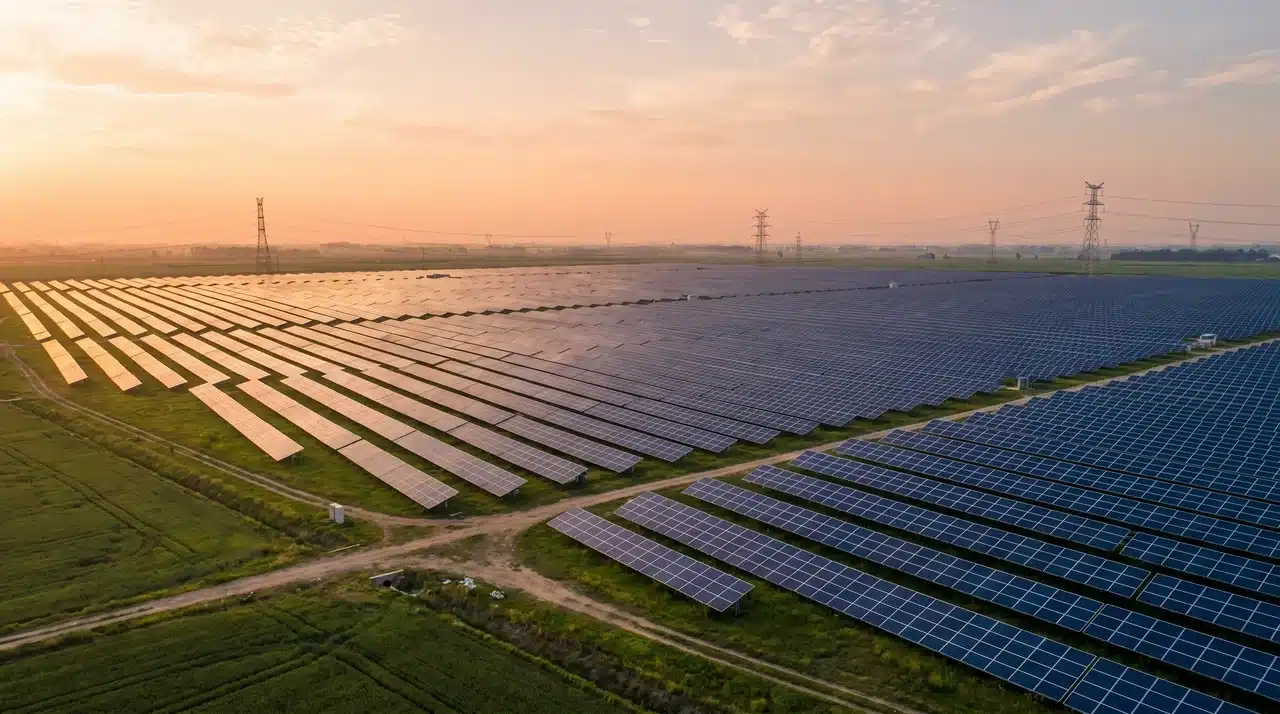
A solar farm is a large field of solar panels built to send electricity into the power grid.
Think of a solar farm as a giant, high-tech power plant, but instead of burning dirty coal, it uses the sun! Also called a solar ranch or solar park, it’s a large piece of land covered with hundreds, sometimes thousands, of solar panels.
These panels act like giant sponges catching sunlight. When the sun hits them, they turn that light into electricity. This clean energy is then sent via high-voltage power lines directly to the electrical grid, which supplies power to thousands of local homes and schools.
Unlike the small panels on a house roof, these massive farms are built to power entire towns, helping us fight climate change with clean, renewable energy.
How Does a Solar Farm Actually Generate Electricity?
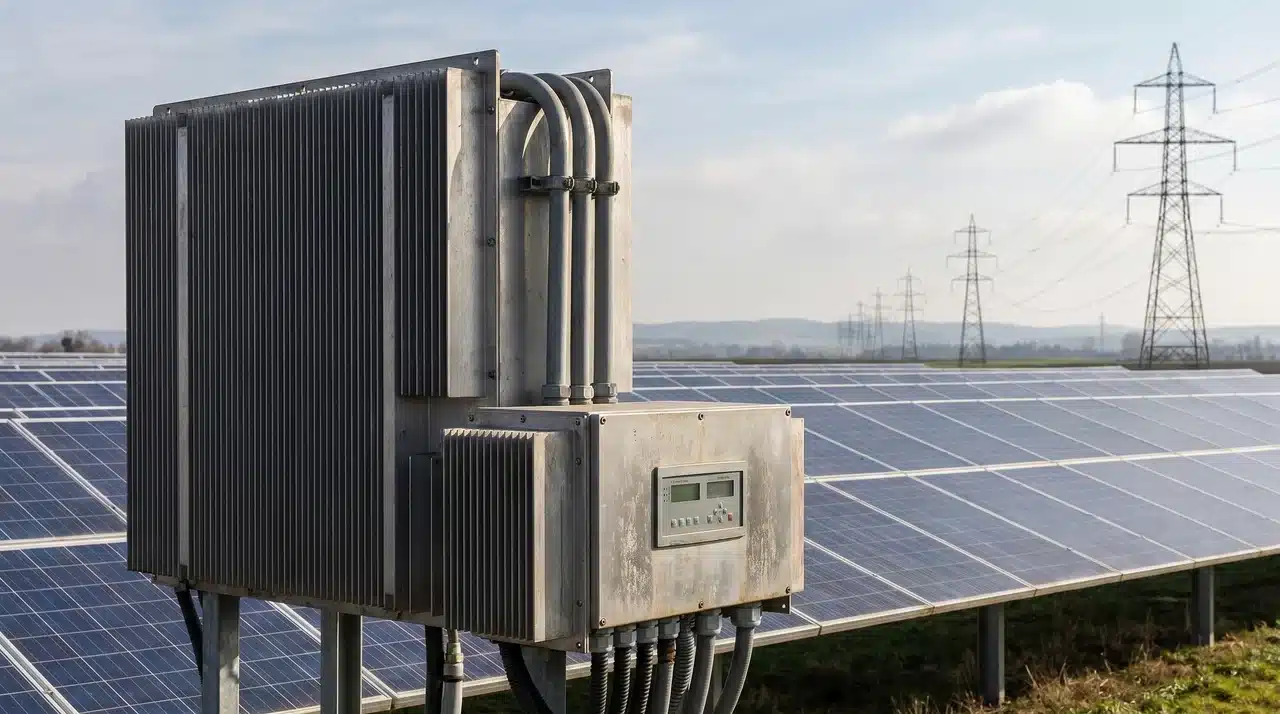
A solar farm doesn’t just collect sunlight and send it straight to your home. There are three stages between the panel and your power outlet, each serving a specific purpose.
From Sunlight to Direct Current
Every solar panel is made up of smaller units called photovoltaic cells. When sunlight hits one of these cells, it knocks electrons loose inside the material. Those moving electrons create electricity.
That electricity is direct current (DC). It flows in one direction only, like a battery.
Why the Electricity Has to Be Converted
Electricity from a solar farm has to be converted because the panels and your home use two completely different “languages” of power.
Solar panels generate Direct Current (DC) electricity, in which the power flows in a single, straight line. However, our homes, appliances, and the giant power grid use Alternating Current (AC), in which the power safely jiggles back and forth.
Think of it like a phone charger: your wall outlet gives AC power, but your phone needs DC power, so the little charging block translates it. At a solar farm, a massive machine called an inverter does this translation job in reverse.
It converts the raw DC power from the panels into AC power. Without this conversion, the electricity couldn’t travel through the power lines or turn on the lights in your house.
Getting Power From the Farm to the Grid
Once the electricity is converted to AC, it still isn’t ready to travel long distances. The voltage is too low.
Transformers step the voltage up so the electricity can move efficiently across high-voltage transmission lines.
When it gets close to where it’s needed, another transformer steps the voltage back down to a level that’s safe for homes and businesses to use.
Without this stage, a solar farm sitting 50 miles from a city couldn’t reliably serve it.
What are the Different Types of Solar Farms?
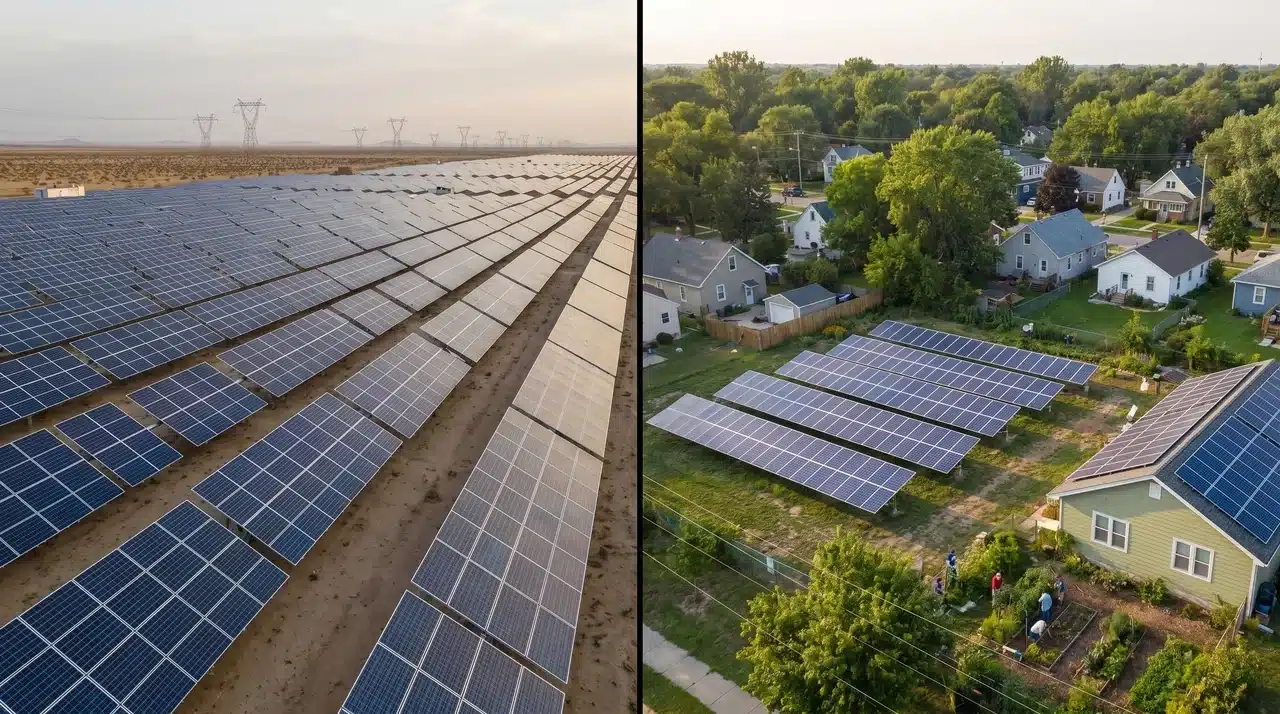
Not all solar farms work the same way, and the difference between them matters more than most explanations let on. The type of solar farm that exists in your area determines whether you can actually benefit from it directly or whether it simply feeds into the grid with no connection to you at all.
There are two main types worth understanding: utility-scale farms and community solar farms.
Utility-Scale Solar Farms
Utility-scale solar is typically defined as ground-mounted projects with a capacity greater than 5 megawatts (MW).
Utility-scale farms are the large installations you typically picture when someone mentions a solar farm. They cover hundreds or even thousands of acres and generate electricity at a scale that can power entire cities.
The electricity they produce gets sold wholesale to grid operators and utility companies. Those companies then distribute it through the existing grid to homes and businesses.
As an individual, you have no direct relationship with a utility-scale farm, even if one exists near you.
Your utility company might buy power from it, but you wouldn’t know. It just shows up as electricity through your existing supply.
Community Solar Farms
Community solar farms are smaller and built with a completely different purpose. Instead of selling power wholesale, they’re structured so that households and businesses can subscribe to a share of the farm’s output.
The U.S. Department of Energy defines community solar as projects in which “financial benefits flow to multiple customers within a defined geographic area.”
When the farm generates electricity, subscribers receive credits on their electricity bills based on their share of the output.
This matters because it gives people access to solar energy without needing to install panels on their own roofs.
Renters, people with shaded roofs, and those who can’t afford a full installation can all participate through a community solar subscription.
The practical takeaway is straightforward. If you’re researching solar farms because you want to get involved or reduce your energy bill, community solar is the path that’s actually open to most people.
What Land Do Solar Farms Use, and What Else Can They Be Used For?
Solar farms need open, flat land with reliable sun exposure. The amount of land required depends on the size of the installation: utility-scale farms can cover hundreds of acres, whereas community solar farms are much smaller and easier to site.
Land use is one of the most common concerns people raise about solar farms. The land doesn’t necessarily have to serve just one purpose.
Agrivoltaics: Using the Same Land for Energy and Farming
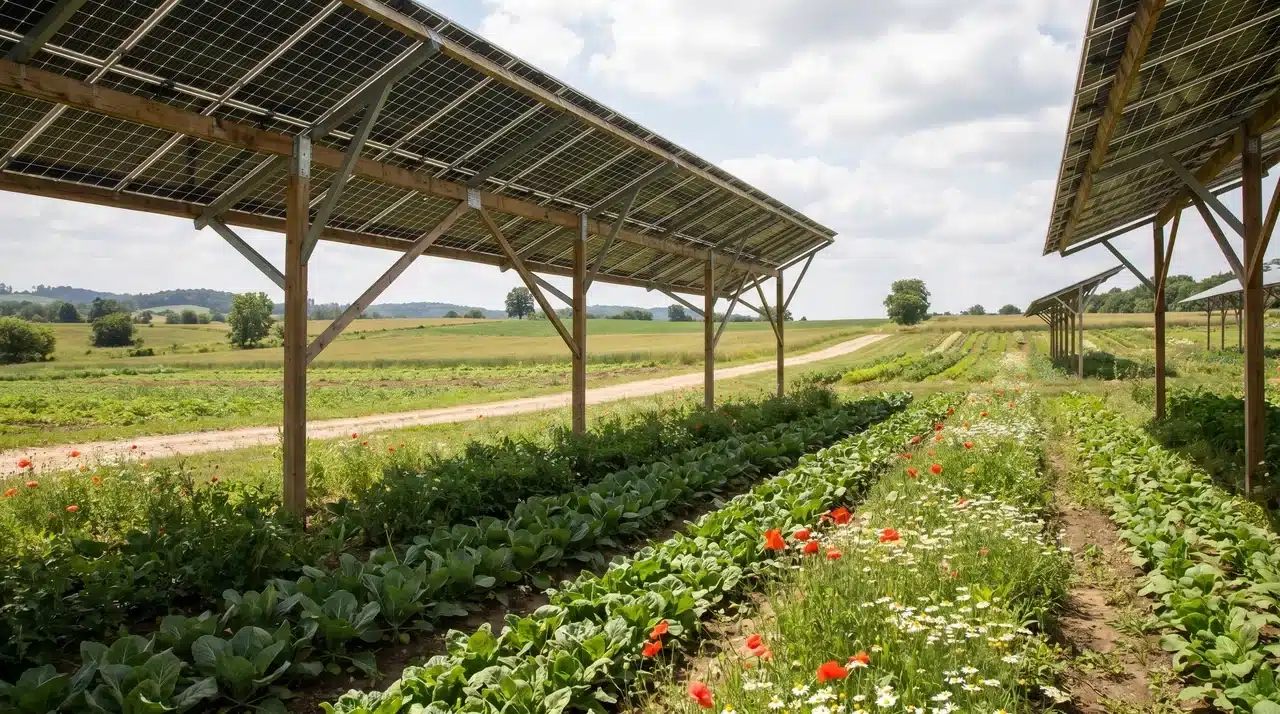
Agrivoltaics is the practice of combining solar energy generation with agriculture on the same piece of land. It sounds like a compromise, but in practice it often works well for both.
Here’s how it typically works:
- Panels are mounted higher than usual, leaving enough space underneath for animals or crops
- Sheep are commonly grazed beneath and between the panels, keeping vegetation low without the need for mechanical mowing
- Certain crops actually benefit from the partial shade the panels provide, especially in hotter climates where direct sun can stress plants.
- The farm owner gets dual income from both energy generation and agricultural use of the same land.
This doesn’t make the land competition argument disappear entirely. A large utility-scale farm still takes significant acreage out of other potential uses. But agrivoltaic design does change the picture because the land isn’t sitting idle underneath the panels.
For communities weighing solar development against agricultural preservation, this is worth knowing before forming an opinion either way.
Benefits and Limitations of Solar Farms
Solar farms offer several advantages, but they also come with practical limitations. Solar energy is growing rapidly, even though it is still only one part of the broader electricity system. Here’s a look at both:
| Benefits | Limitations |
|---|---|
| Generate electricity without direct greenhouse gas emissions during operation | Generate power only when sunlight is available, with reduced output on cloudy days and none at night |
| Require relatively little maintenance compared to fossil-fuel power plants | Require a significant land area, particularly for large utility-scale projects |
| Create local jobs and provide lease income for landowners | Need suitable locations with adequate sunlight, land, and grid access |
| Community solar programs expand access to solar energy for renters and households without suitable roofs | Grid connection and transmission infrastructure can add high costs |
| Large projects can supply clean electricity to tens of thousands of homes for decades | Recycling and disposing of aging solar panels is an emerging challenge |
Solar farms are not a complete answer to every energy challenge, but they have become an important source of low-carbon electricity. Their benefits and limitations are best understood within a diversified energy system.
Conclusion
Solar farms are more than just fields of panels. They’re a connected system that takes sunlight, converts it into usable electricity, and delivers it to homes and businesses through the grid.
The type of farm, how the land is used, and who can actually benefit from it all depend on factors that often go unexplained, until now.
If you were looking to understand what a solar farm is and how it affects you, you now have your answer. The next step is finding out whether a community solar program is available in your area.
It could be the simplest way to access clean solar energy without installing a single panel.
Frequently Asked Questions
What is the difference between a solar farm and rooftop solar panels?
Rooftop panels generate electricity for the building they are mounted on. A solar farm is a large ground-mounted installation that feeds electricity into the public grid, serving thousands of homes or businesses rather than a single property. The two systems operate independently and serve different purposes within the broader energy network.
How do solar farms make money?
Utility-scale farms earn revenue by selling wholesale electricity to utility companies under long-term contracts. Community solar farms generate income through subscriber fees; households pay for a share of the farm’s output and receive credits on their utility bills in return. Landowners earn income separately through land lease agreements with the operator.
What is community solar and how does it work?
Community solar is a smaller-scale solar model that lets households and businesses subscribe to a portion of a solar farm’s electricity output without installing panels on their own property. Subscribers receive credits on their monthly utility bills based on how much energy their share produces. It is particularly useful for renters or homes unsuitable for rooftop installation.
How much land does a solar farm need?
Scale varies significantly. Utility-scale farms can span hundreds to thousands of acres. Community solar installations are typically smaller, often ranging from 10 to 50 acres. The land requirement depends on the target energy output and whether tracking systems or agrivoltaic practices are incorporated into the site design.