

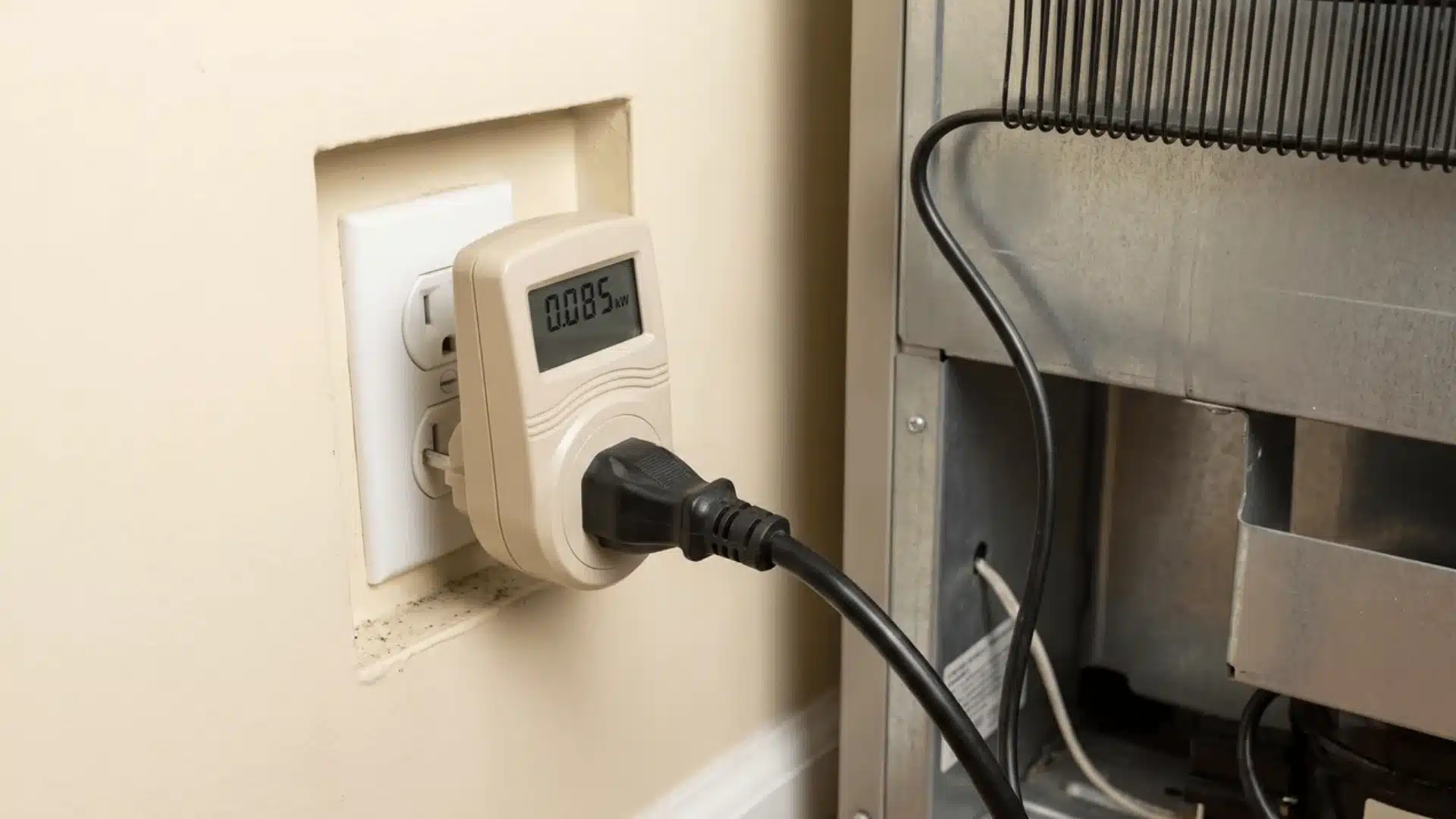
Solar panels increase home value, but the number you see quoted online is rarely the number you’ll actually get.
The real story is more conditional than most sources let on, and understanding those conditions is what separates a smart installation decision from an expensive assumption.
What drives the premium, what kills it, and why two identical systems in different zip codes can produce completely different outcomes at sale, that’s what this piece works through.
If you’re considering solar or already have it and are thinking about selling, the details here will change how you look at the decision.
Do Solar Panels Increase Home Value?
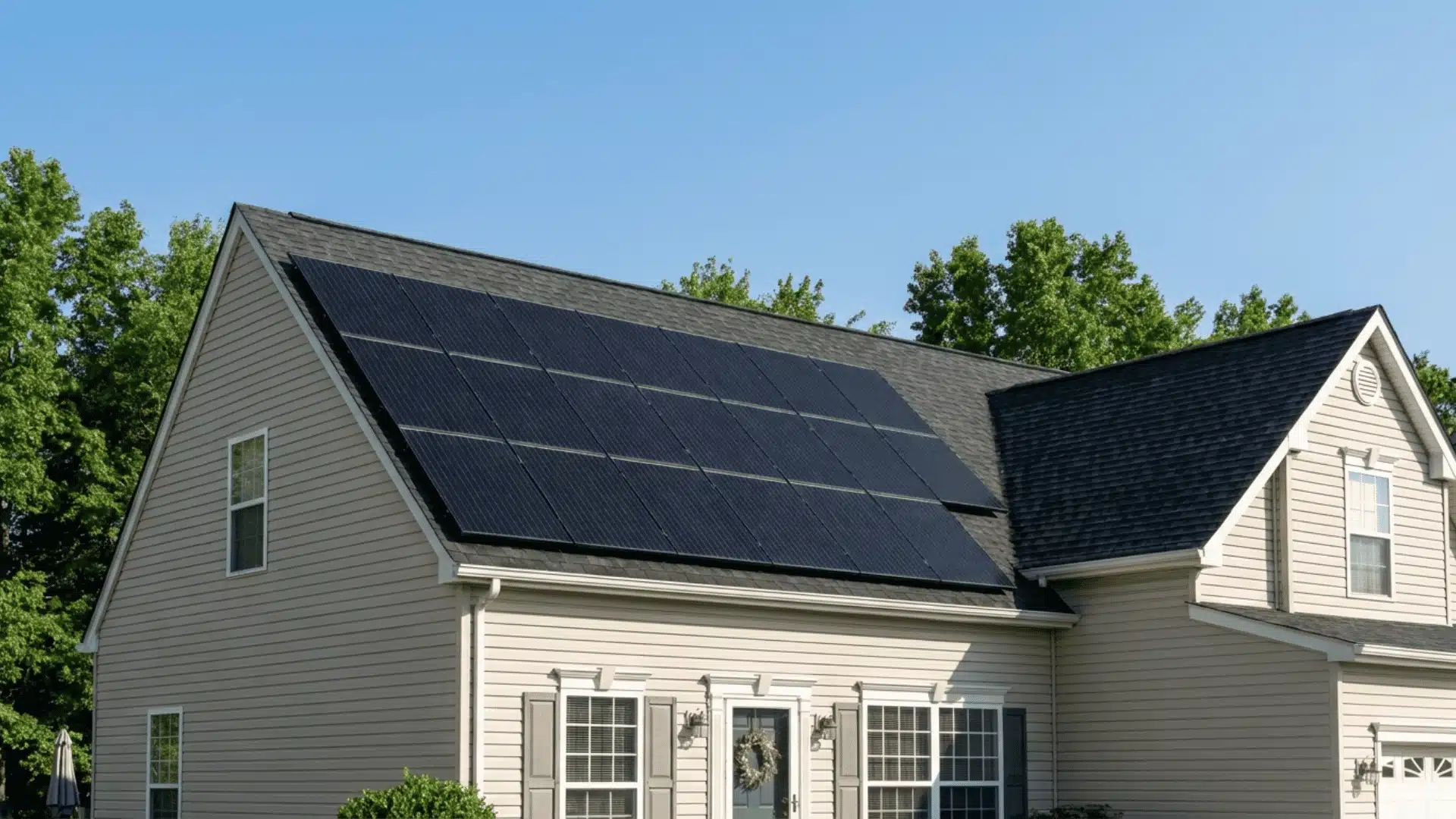
Yes, solar panels increase home value, and the data is consistent enough that this is no longer a contested question.
On average, homes with owned solar systems sell for 4.1% more than comparable homes without them, with some markets reaching 4–7% more, depending on location and electricity rates. That range exists for a specific reason.
Buyers aren’t paying for the hardware sitting on your roof. They’re paying for the future utility savings that hardware will generate, and the size of that premium scales directly with how valuable those savings are in your market.
That’s why the “solar adds $20K automatically” framing breaks down in practice. A buyer looks at your system and runs the numbers: how much electricity it still produces, how long it will last, and what the local power costs are.
Their answers to those questions drive the offer, not the panels themselves. The premium is real and well-documented. How large it turns out to be depends on conditions you can actually influence.
Do Solar Panels Increase Appraised Value?
Yes, but appraisers don’t assign the same premium a buyer might pay. Three factors determine the appraised value: the income method, ownership status, and comparable sales data.
The income method works by multiplying the system’s annual electricity savings by the remaining useful years. A system saving $2,000 per year with 18 years left is worth more than one saving $800 per year with 6 years remaining, even if both are the same size.
Owned systems are treated as permanent improvements; leased systems are often excluded entirely. More solar home sales in your area also help, since appraisers rely on local data to assign an accurate number.
How Does Solar Power for Residential Homes Work?
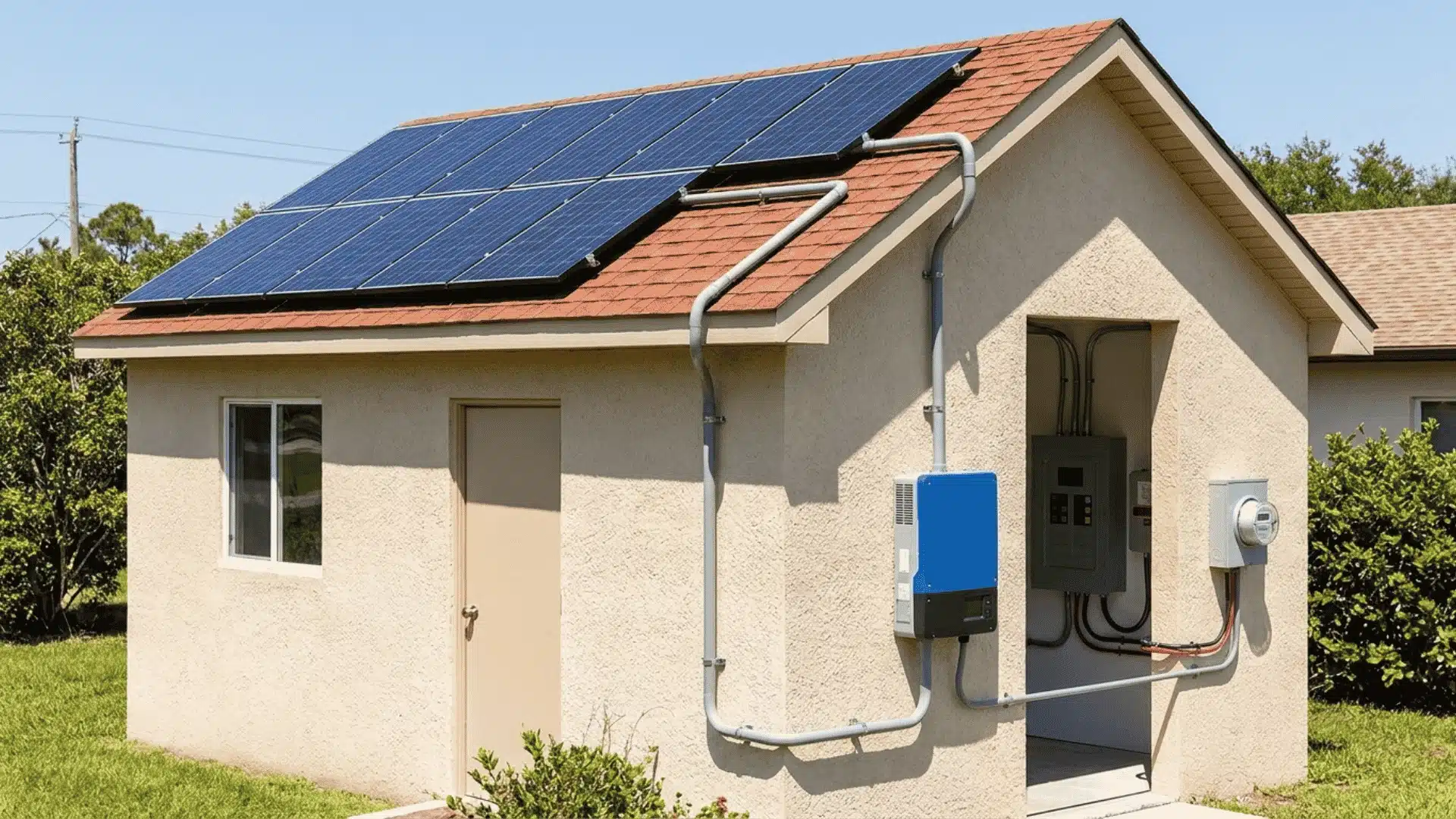
Solar panels convert sunlight into electricity through the photovoltaic effect. Silicon cells release electrons when exposed to light, generating DC electricity. An inverter converts that into the AC power your home runs on.
The system feeds into your electrical panel, and your home draws from solar first. Excess production flows back to the grid; when demand exceeds production, the grid fills the gap.
Residential systems are typically grid-tied, with no batteries required. Net metering handles the balance by crediting you for exported power and billing you for imported power.
Installers size systems based on your annual consumption, roof orientation, shading, and local sun hours. Homeowners generally target an 80–100% offset, though the right number depends on consumption patterns and how your utility structures net metering credits.
Panels are rated to last 25–30 years with roughly 0.5% annual degradation. That predictable decline is why appraisers can put a concrete number on remaining system value.
What Actually Drives the Size of the Value Increase
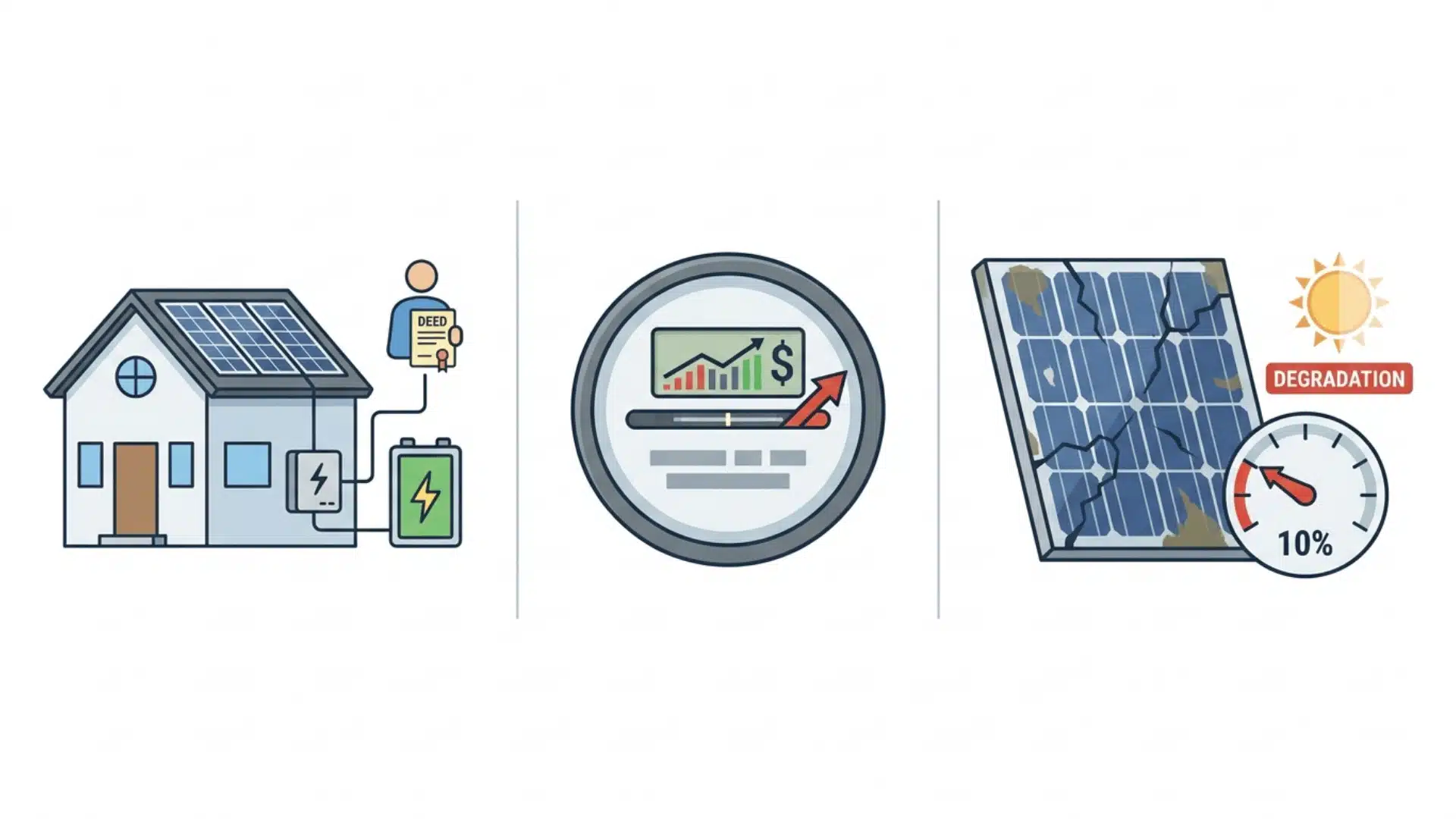
Most explanations list the factors that affect a solar premium without explaining why each one moves the number. Understanding the logic helps you figure out which variables are worth acting on before you sell.
Owned Systems vs. Leased Systems
Ownership status shapes how buyers and appraisers see your system, and the difference is significant.
| Factor | Owned System | Leased System |
|---|---|---|
| What the buyer acquires | A permanent asset with no obligations | An inherited contract with a solar company |
| Impact on the electricity bill | Reduced from day one, no strings attached | Dependent on lease terms and remaining payments |
| How appraisers treat it | Like a finished basement, measurable, transferable value | Often assigned zero or reduced value |
| Buyer’s typical response | Willing to pay a premium | Many walk away or reduce their offer |
| Effect on sale price | Adds 3–7% on average | Offsets much of the potential premium |
If you’re planning to sell, owned panels are an asset. Leased panels require a conversation with your solar provider before you list.
Why Electricity Rates Determine the Ceiling
The premium a buyer pays for solar is essentially a discount on future electricity bills. The higher your local rate, the more those savings are worth, and the more they’ll pay to secure them.
Two identical systems producing 10,000 kWh per year tell different stories. At $0.30 per kWh, that’s $3,000 in annual savings. At $0.11 per kWh, the same system saves $1,100.
A buyer in the first market is acquiring something worth nearly three times as much. This is why national averages can mislead.
A 6% premium in California and a 2% premium in Louisiana can both be perfectly rational responses to the same underlying logic. The system didn’t change; the market did.
How System Age and Size Affect Appraisal
Larger systems generate more savings and command higher premiums; that part is straightforward. Age is more nuanced.
Panels degrade gradually, losing around 0.5% of output each year. A system under five years old is close to rated capacity, with most of its warranty intact, which is near full appraised value.
A 15-year-old system produces less, carries expiring coverage, and buyers will often price in eventual replacement costs. Size and age don’t work in isolation either.
A large, older system in a low-rate market can appraise at a lower value than a smaller, newer one in a high-rate area. Ownership, rates, and system condition all pull in the same direction or work against each other.
How Much Faster Do Homes with Solar Sell?
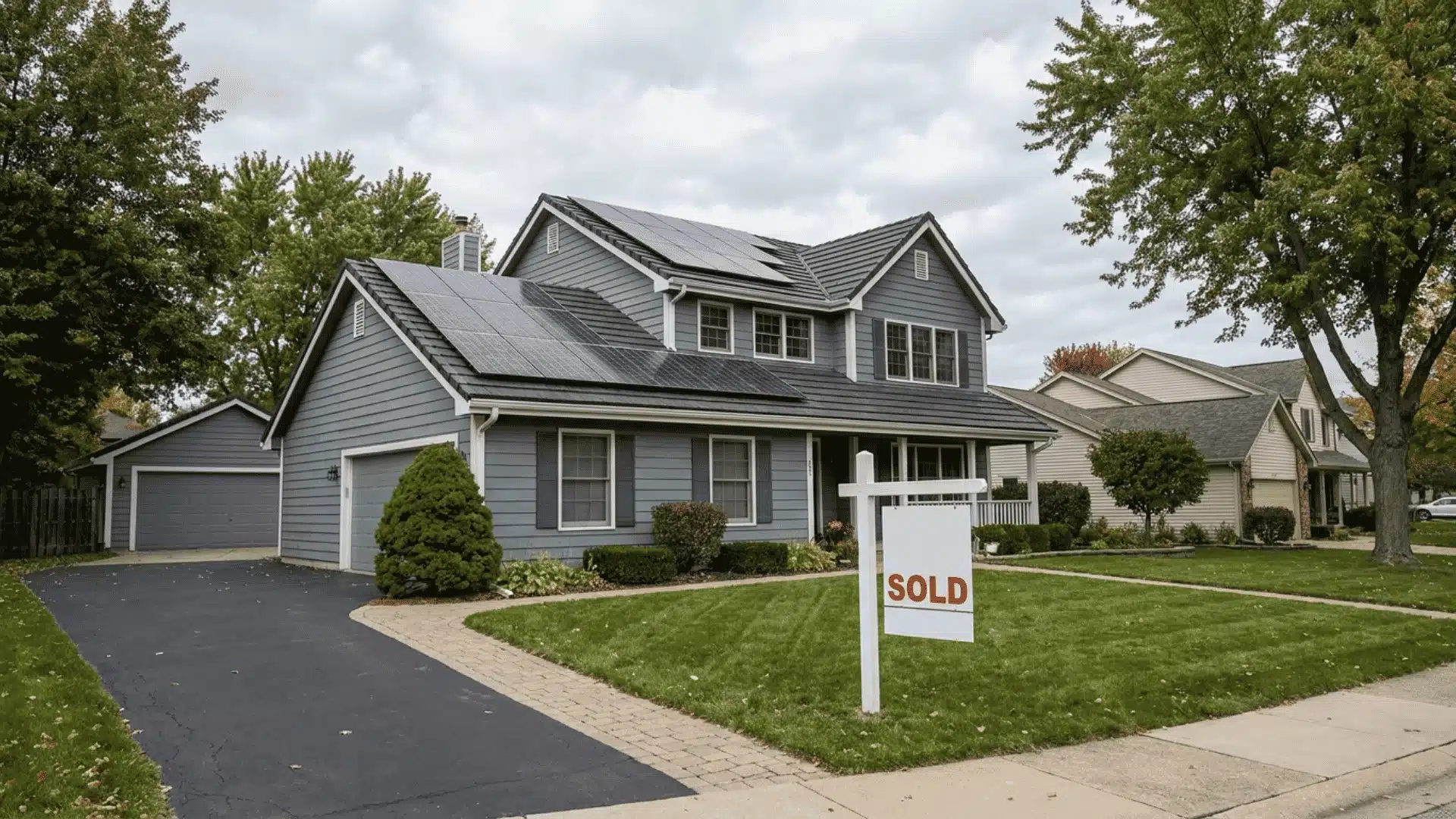
Research has consistently found that homes with solar panels sell faster than homes without them – in some studies, up to 20% faster. That advantage shows up in a few consistent ways.
- Fewer days on market: Solar-equipped homes spend meaningfully less time listed before going under contract, thanks to a sufficient number of buyers to shorten the timeline.
- Stronger negotiating position: Every additional week unsold costs the seller in carrying costs and leverage. A faster sale reduces both.
- A clear demand signal: Buyers increasingly value energy independence and predictable electricity costs. In high-rate markets, that preference is strong enough to move timelines.
The speed benefit is strongest where savings are largest – in low-rate markets or areas with limited solar adoption, buyers may treat panels as neutral.
The pattern holds across markets, but like the value premium, it’s not automatic. Location and buyer profile still determine how much of the advantage actually shows up.
Do Solar Panels Affect Property Taxes?
For most homeowners, this is genuinely good news, but it depends on where you live. Many states offer property tax exemptions that prevent some or all of a solar system’s added value from increasing assessed property taxes.
It works by excluding the value your solar system adds from your home’s assessed value. Your home is worth more on the open market, but your tax bill doesn’t reflect that.
That’s a real financial advantage; a buyer acquires a more valuable home without the increase in carrying costs that would normally follow.
The exemption isn’t universal. States without it will assess the added value and tax it accordingly, which buyers may factor into their offer.
Before assuming the exemption applies to you, check your state’s current rules through the Database of State Incentives for Renewables and Efficiency. The details vary more than most summaries suggest.
Wrapping Up
The relationship between solar panels and home value is real, but it isn’t automatic. Ownership status, local electricity rates, and system condition all pull the final number in different directions, sometimes significantly.
The speed advantage is genuine, too, but it follows the same logic: strongest where buyers have the most to gain.
What makes solar a strong financial asset isn’t the hardware itself; it’s the savings it reliably delivers to whoever owns the home next.
If those savings are large, predictable, and unencumbered by a lease, buyers will pay for them. Get those conditions right, and the premium takes care of itself.
Frequently Asked Questions
Do leased solar panels increase home value?
Generally no, or only minimally. A leased system requires the buyer to take over your contract with the solar company, fixed payments, terms they didn’t set, and a provider they didn’t choose. Appraisers typically treat this as a liability rather than an asset. Owned systems are the ones that reliably command a price premium.
How much do solar panels add to home value in California?
California tends to see among the highest solar premiums nationally because retail electricity rates are well above the national average. Higher rates mean larger savings, and buyers pay more to secure them. Estimates commonly range from 4% to over 6%, with newer, high-production systems in high-rate utility territories pushing toward the upper bound.
Does adding solar panels increase property taxes?
In most states, no. The majority of U.S. states have solar property tax exemptions that prevent the value added by a solar system from being included in a home’s assessed value. Check your state’s current rules through the Database of State Incentives for Renewables and Efficiency, as exemption status and terms vary by state.
What is the 20% rule for solar panels?
The 20% rule is a general guideline suggesting that a solar system should not be sized to produce more than 20% above your home’s annual electricity usage. Oversized systems add installation cost without a proportional increase in home value, since buyers pay for savings they’ll actually use, not excess capacity.