

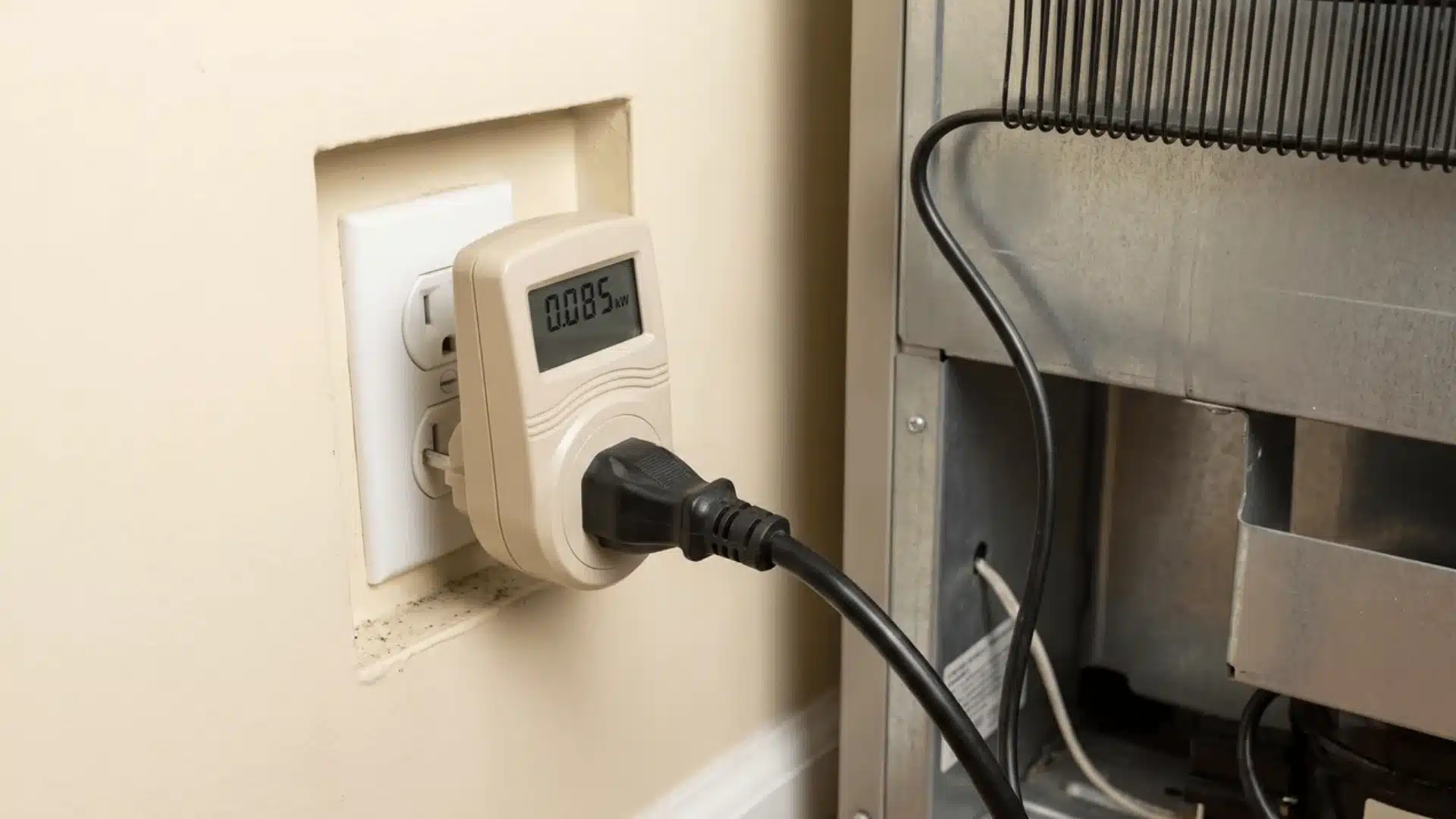
A sudden spike in your electric bill can be alarming, especially when your routine remains unchanged.
In most cases, figuring out why your electric bill is so high does not require guesswork. Hidden rate increases, billing errors, and seasonal charges often contribute.
High-energy appliances like HVAC systems, water heaters, dryers, and refrigerators can quietly drive up physical consumption. Even minor issues may lead to noticeable cost increases.
Reviewing historical billing data helps pinpoint the source quickly, and comparing usage patterns tells you whether the problem originates inside your home or within the utility grid.
The Reason Your Bill is Higher Than It Should Be
A high electric bill traces to one of three causes: you used more electricity, your rate per kilowatt-hour (kWh) went up, or your billing cycle was longer than usual.
Identifying which one applies determines every step that follows because the fix for a rate increase is completely different from the fix for a leaky HVAC system.
The most common mistake is assuming an appliance is the culprit when the actual driver is a rate change, which sends homeowners on an unnecessary hunt through their home.
Your bill contains the information needed to rule out each category before you investigate further.
Phase 1 Diagnosis: Did Your Rate Go Up, Not Your
Usage
Many households face massive bill increases without changing a single daily habit because utility prices are climbing sharply.
The kWh Box on Your Bill
Most utility statements include a small historical chart or table showing your average daily energy consumption over the past year.
Look for the section labeled “average daily kWh” or “historical usage” on the second or third page. This metric reflects your true daily energy speed, regardless of how many days were included in the billing cycle.
How to Find Your Base Rate on the Bill
Finding the exact price you pay for power requires looking past the final total on the front page.
To verify a rate change, look for the detailed breakdown section on your statement and follow these steps:
- Find the line item labeled supply, generation, or generation service charge.
- Locate the small decimal number showing your cost per kilowatt-hour.
- Grab an older statement from last year to see if that specific decimal has grown.
Checking this number reveals whether the price of the energy itself has shifted over the last few months.
The Delivery Charge: Why Fees Rise Independently
Your power bill is split into two independent parts: producing electricity and physically moving it.
The supply fee covers the cost of generating the power; the delivery fee funds the maintenance of the physical grid, including wires, poles, and local substations.
National utility companies are rapidly raising delivery charges to upgrade aging infrastructure and manage massive load growth. In some regions, growing electricity demand from data centers and increased electric vehicle adoption have added pressure to utility infrastructure and grid planning.
Consequently, your supply rate might stay locked on a fixed contract while your delivery fees quietly spike. A higher delivery fee increases your total statement cost even if your household power consumption remains flat.
Phase 2 Diagnosis: Is Your Heating or Cooling System the Culprit?
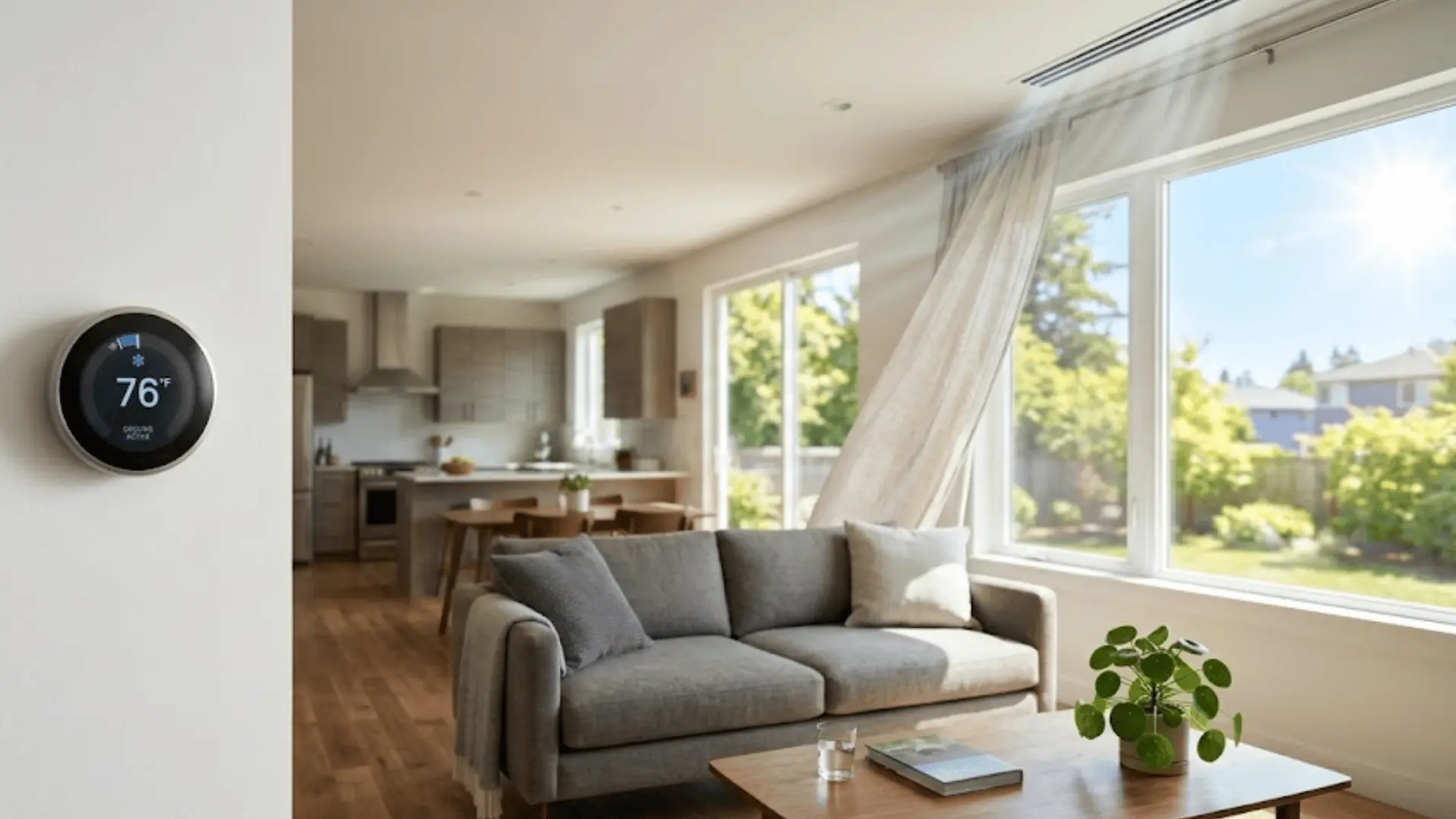
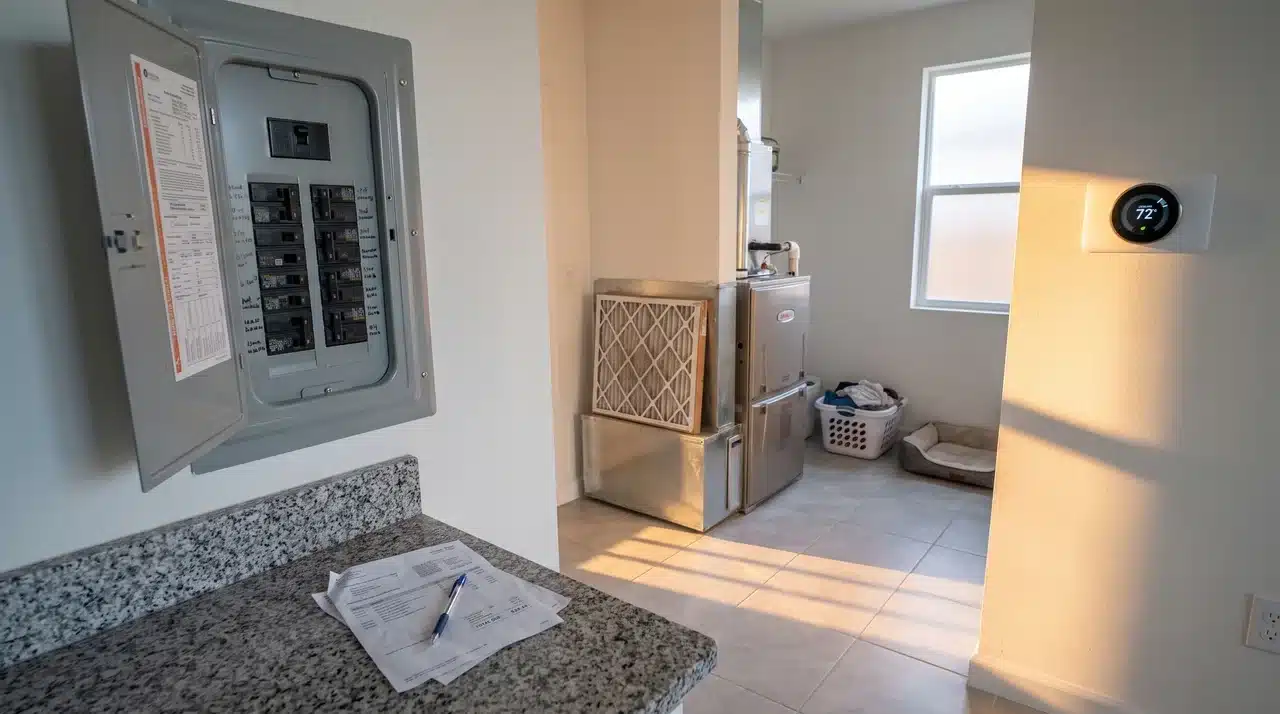
Your climate control setup is the heaviest power user in the building, which makes it the first place to look for internal usage spikes.
The Impact of Heating and Cooling
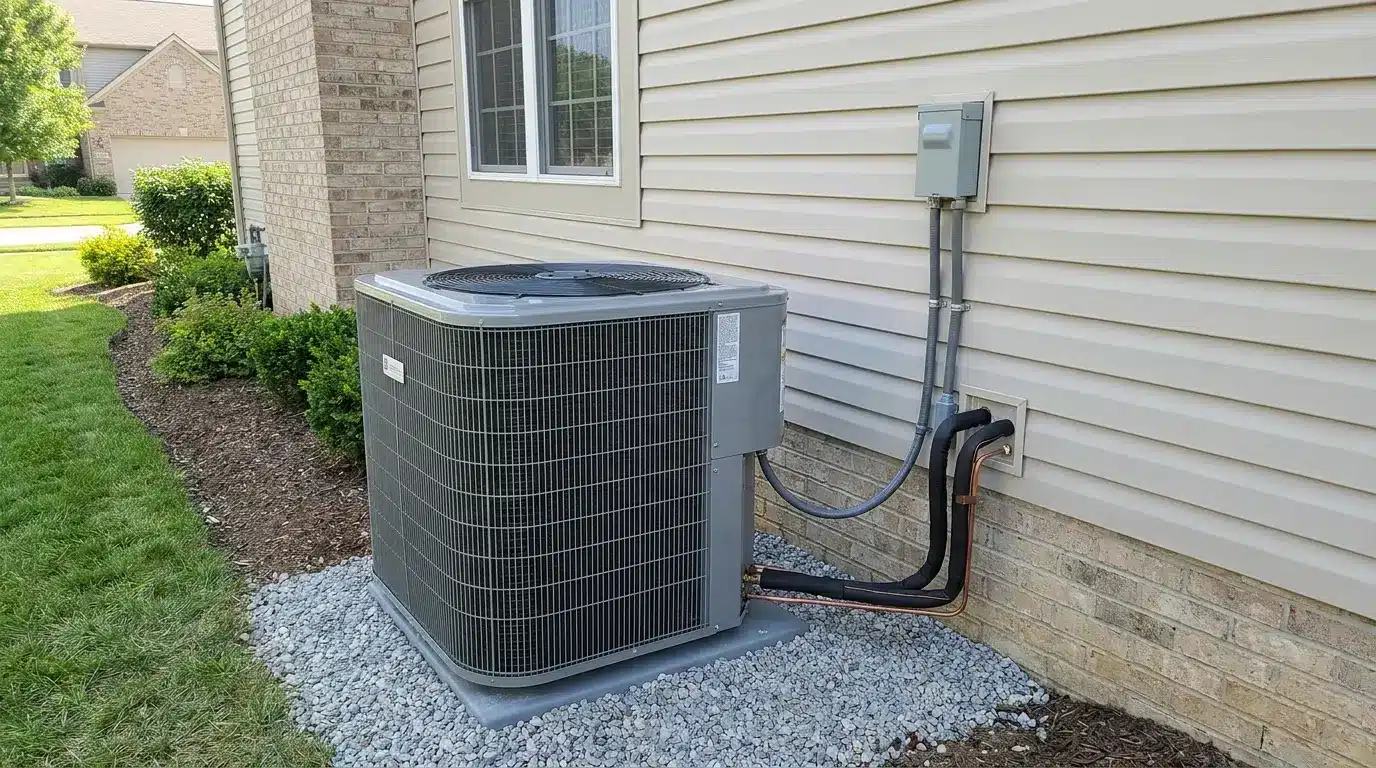
Your HVAC system is the heaviest electricity draw in the house, and the numbers from federal data make that clear:
Air conditioning alone accounts for 19% of the average American household’s annual electricity use, according to the U.S. Energy Information Administration. Space heating adds roughly another 12%, bringing the combined climate control to nearly a third of your total energy footprint.
Even a small efficiency loss hits disproportionately hard. Because HVAC starts from such a large baseline, a minor mechanical restriction, a clogged filter, or a slow refrigerant leak eclipses the combined footprint of every light bulb, laptop, and kitchen appliance in your home.
The problem is usually runtime, not raw power draw. The system rarely pulls more wattage per second. Instead, structural restrictions force it to run significantly longer cycles to reach your thermostat setpoint. A well-insulated home can significantly reduce HVAC runtime compared to a home with substantial air leaks and poor insulation, and that gap shows up directly on your monthly bill.
Signs Your HVAC Is Running Harder Than It Should
To catch an invisible efficiency drop before the billing period ends, look for common operational warning flags around your home:
- Short-cycling behavior: The outdoor compressor or indoor fan turns on and off rapidly every few minutes.
- Tepid airflow: The air coming directly out of your supply vents feels lukewarm during a heavy cooling cycle.
- Persistent dust layers: Heavy gray buildup accumulates around your intake registers within a few days of a deep cleaning.
- Continuous run times: The system hums along for hours without ever shutting down during peak afternoon heat.
Recognizing these simple behavioral changes helps you spot an overworked motor or a blocked airflow line before it runs up your bill.
The Compounding Cost of Poor Insulation
Failing insulation acts like a giant thermal hole, forcing your climate systems to heat or cool the same air multiple times.
When fiberglass bats degrade or wall insulation settles, conditioned air escapes directly into your attic or crawlspace. This continuous loss means your home loses its thermal seal within minutes of the system shutting down.
The thermostat registers the temperature bounce, fires up the HVAC unit again, and begins another expensive cycle.
According to the U.S. Department of Energy, homeowners can save up to 20% on heating and cooling costs by air sealing and adding insulation, with savings varying by home size, climate, and the condition of existing insulation.
Phase 3 Diagnosis: Phantom Loads and the Myth of the Microwave
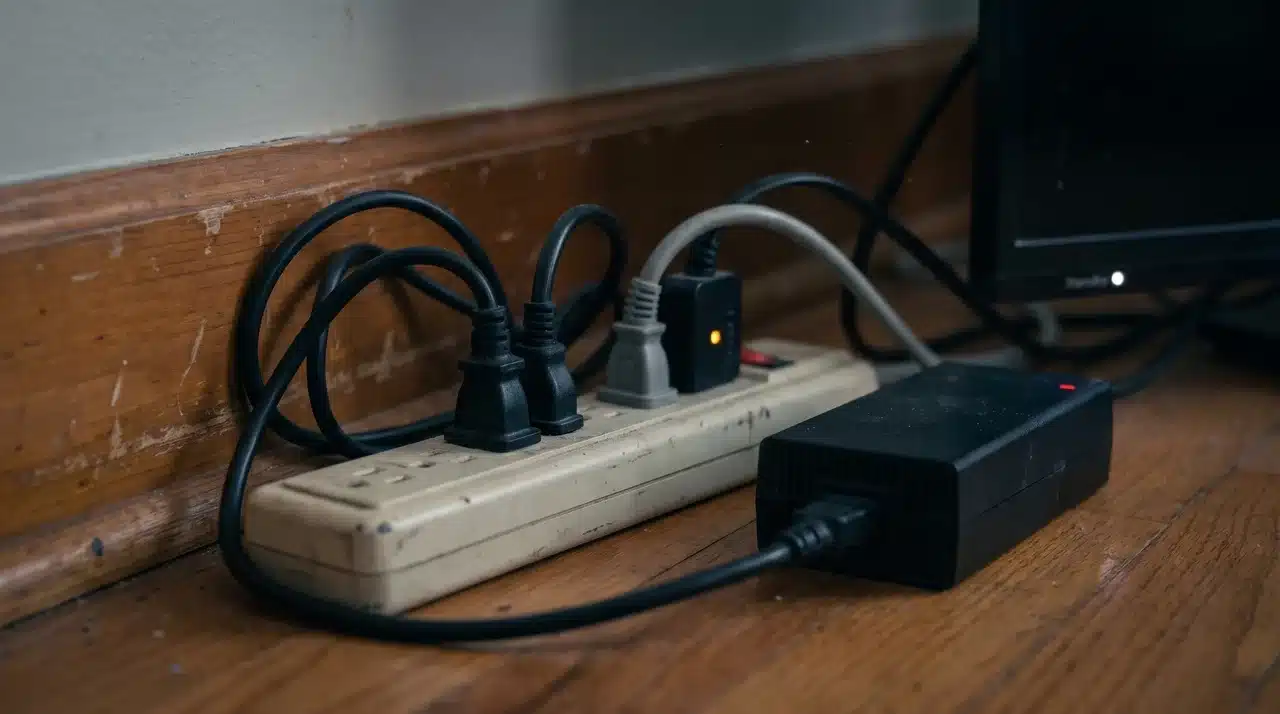
Many homeowners spend days unplugging tiny phone chargers while ignoring the larger, hidden energy drains in their homes.
Calibrating Priority (Big vs. Small Rocks)
Phantom loads are often blamed for high electricity bills, but the reality is more nuanced. Understanding what actually drives your costs can save you from chasing the wrong culprits.
| Factor | Detail |
|---|---|
| What it is | Steady standby power drawn by electronics when turned off |
| Typical impact | 5%–10% of total household utility expenses |
| Can it explain a $100 spike? | No standard living room electronics alone can account for it |
| Seasonal behavior | Flat year-round, unlike heating/cooling, which fluctuates with weather |
| Effect of unplugging small appliances | Minimal shaving only saves a few pennies, leaving the root cause untouched |
| Where the calculation changes | Large secondary appliances (e.g., garage refrigerators) in unconditioned spaces are the real driver |
Don’t waste time unplugging phone chargers when a garage freezer might be running around the clock. Focus your energy audit where the watts and the savings actually are.
The True Hidden Culprits
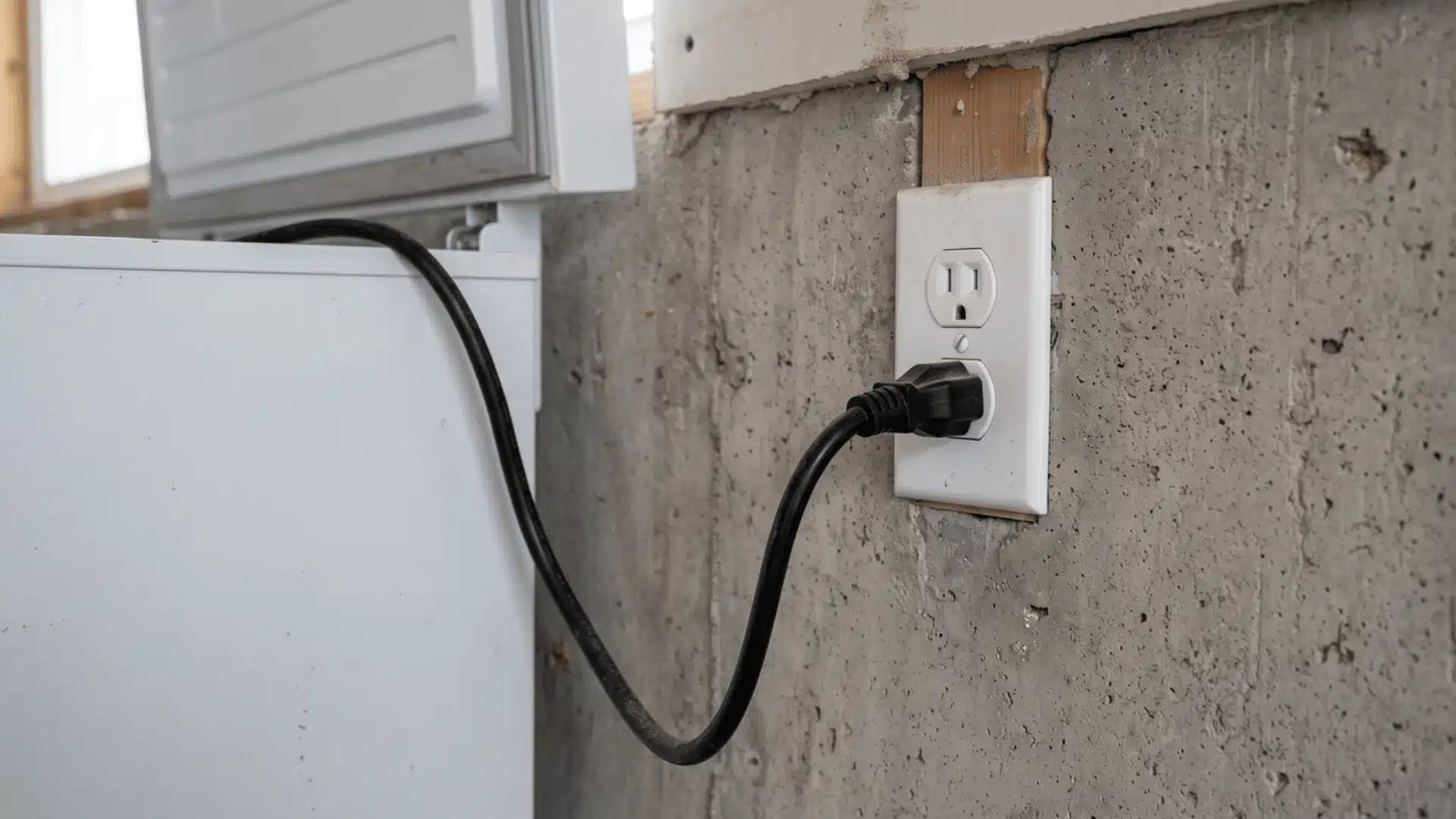
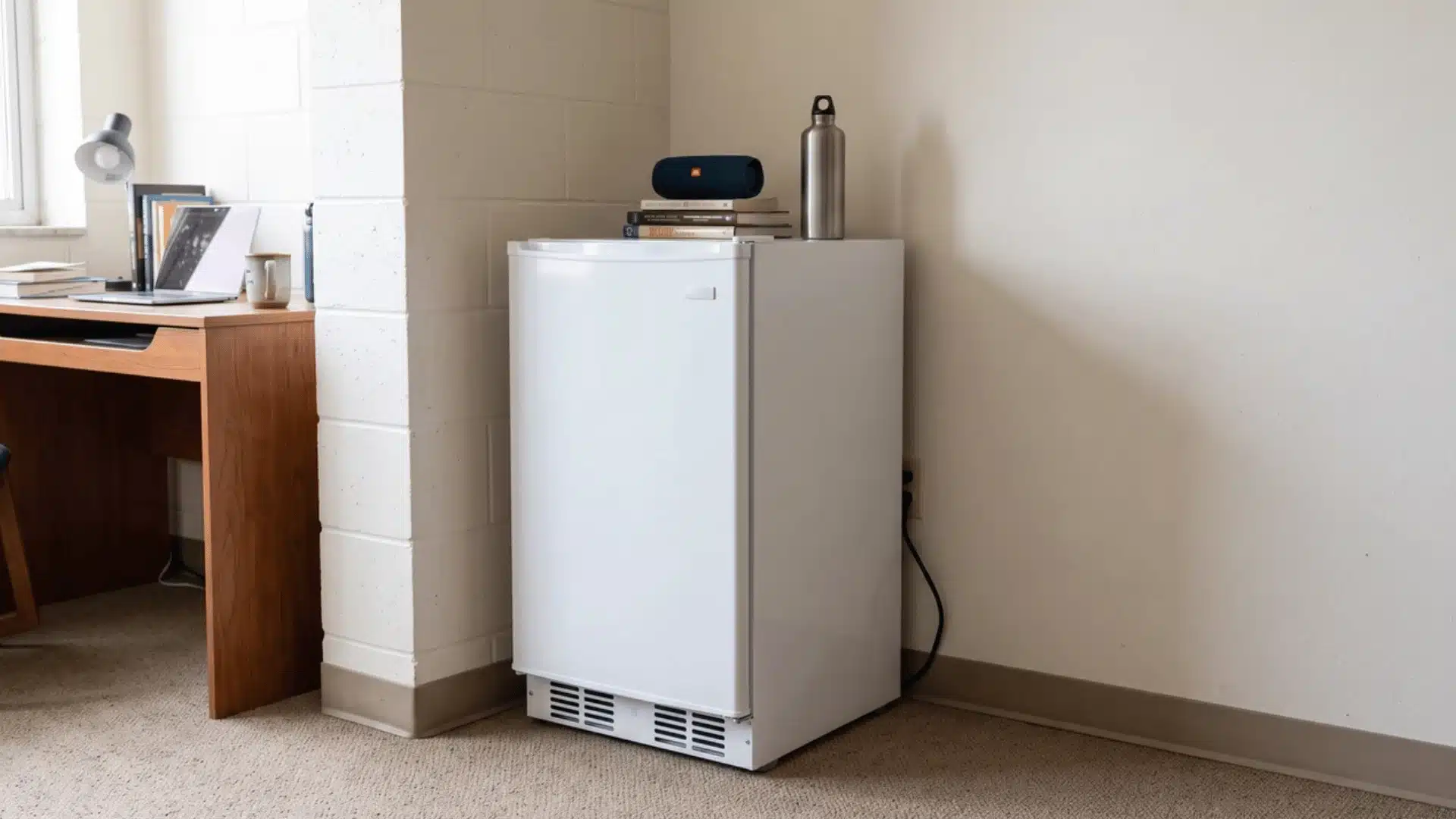
The real danger comes from heavy mechanical equipment left running continuously without any regular household supervision. A classic example is keeping an older, inefficient second refrigerator or chest freezer operating inside a sweltering summer garage.
The compressor must work double-time against the trapped heat to stay cold, turning a convenient appliance into a massive drain.
Other high-impact hidden continuous loads that quietly drive up your billing profile include:
- Game consoles: Systems left permanently in instant-on standby mode rather than fully powered down.
- Older cable boxes: Legacy network boxes that draw near-maximum operating power 24 hours a day.
- Pool pumps: Recirculation timers set to run for excessively long daily intervals during summer months.
These continuous draws create a high financial floor that prevents your monthly bill from dropping to normal levels.
The Execution Sequence: How to Find What’s Actually Driving Your Bill
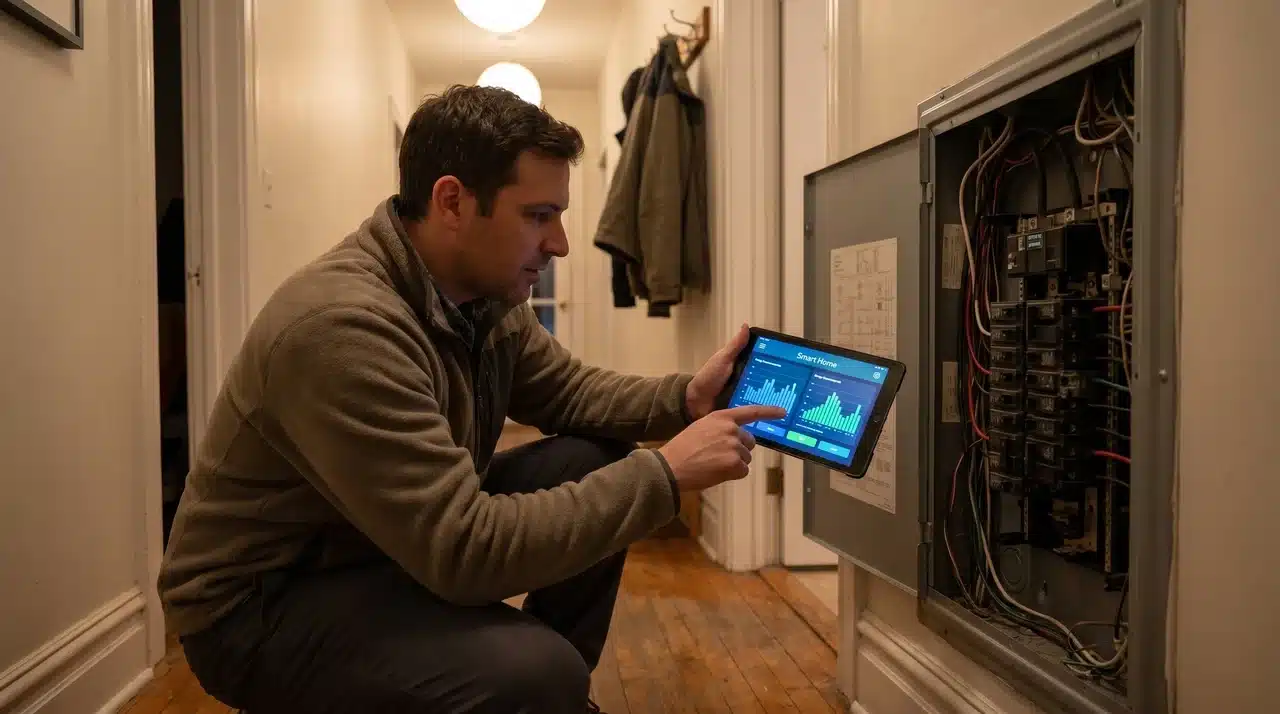
Fixing an unexplained bill spike requires a structured plan, so you do not waste time chasing the wrong issues.
The Year-over-Year Comparison
If your total kilowatt-hour usage matches last year’s footprint but your bill is higher, stop looking inside the house. The issue is entirely pricing or fee adjustments from your power provider.
If your total energy consumption has climbed, you must work through your home from the largest energy drains down to the smallest.
| What You’re Comparing | What It Actually Tells You |
|---|---|
| July vs. June (Current year) | The season has changed, not useful for diagnosis |
| July (Current year) vs. July (Last year) | True usage or rate shift is the number that matters |
| kWh flat, bill higher | Rate or fee increase, stop looking inside the house |
| kWh higher, bill higher | Consumption problem work from the largest drain down |
This strategic sequence targets the high-impact systems first before spending effort on minor electronic devices.
Your Priority-First Troubleshooting Checklist
When your physical power consumption shows a clear increase, use this prioritized sequence to track down the source:
- Check the HVAC system: Inspect the date on your air filter and look for short-cycling behavior in your outdoor unit.
- Audit secondary appliances: Unplug unneeded garage refrigerators or check the runtime programming on pool pumps and hot tubs.
- Locate vampire electronics: Shift gaming consoles out of instant-on mode and use smart power strips for entertainment centers.
Following this specific order ensures you address the major climate control variables before worrying about tiny standby loads.
When the Diagnosis Points to the Utility Company
Sometimes the problem isn’t inside your home at all; your utility company may be the source of the spike.
- Check the exact start and end dates on your bill to ensure you weren’t charged for an extended 34-day billing cycle
- Look for an “E” or the word “Estimated” next to the meter reading to see if the utility company guessed your previous usage
- Review your billing history to confirm that a corrected balance from a prior low estimate isn’t being added to your current statement
- Contact your utility provider to request a physical meter accuracy test if usage shows a giant spike with zero lifestyle changes
Before making any changes at home, rule out billing errors and meter issues. A single call to your utility provider could resolve the entire problem.
Conclusion
The answer to why your electric bill is so high almost always starts with one question: did your kWh usage go up, or did your rate? Pull your statement from this month and the same month last year.
If your kWh is flat, call your utility and ask about rate changes and delivery fee adjustments. If your kWh climbed, start with your HVAC filter, move to secondary appliances, and check phantom loads last.
That sequence covers the cause in the vast majority of cases and skips the hours of unnecessary troubleshooting that homeowners waste.
Frequently Asked Questions
Why is my electric bill so high all of a sudden?
A sudden spike usually points to a rate increase taking effect, extreme weather, or an HVAC system running with a clogged filter. Check whether your total kilowatt-hour usage increased alongside the dollar amount on the front page. If your usage held flat but the cost jumped, your utility provider changed the per-unit price.
What systems draw the most electricity in a standard home?
Heating and cooling systems dominate home energy profiles. According to the U.S. Energy Information Administration, air conditioning accounts for 19% of the average household’s annual electricity use, with space heating adding another 12%, putting combined climate control at nearly a third of your total consumption.
What is a normal electric bill per month?
Average monthly electric bills vary significantly by region, home size, and season. A single-bedroom apartment typically runs lower than a three-bedroom house. The more useful benchmark is to compare your own bill month-over-month and year-over-year rather than against a national average, since local utility rates vary widely.
I have solar panels installed. Why is my electric bill still sky-high?
A sudden spike in solar bills typically traces back to an annual “True-Up” billing cycle or a recent shift in regional net metering rules. Many utilities bill solar customers once a year for the cumulative energy gap where household consumption outpaced panel generation. Additionally, newer net metering frameworks have significantly reduced the financial credit you receive for exporting excess power to the grid.