


Sunlight is a renewable resource. The sun keeps producing energy whether you use it or not. Nothing you do with it changes how much shows up tomorrow.
“Renewable” gets applied loosely, though. The real question isn’t just what sunlight is called. It’s why the label of “renewable” holds, and where its honest limits sit.
The sun will burn out someday. The panels that catch its light don’t last forever. Neither fact changes the classification, and I’m here to explain exactly why.
I’ll tell you one more thing: sunlight and solar energy are not the same thing. Only one of them gets a clean answer on the renewable question.
What Makes a Resource Renewable or Nonrenewable?
A renewable resource is one that nature replaces faster than humans use it. That’s the whole definition. Not “lasts forever.” Not “infinite in theory.” Just: replenishment keeps pace with use.
I think this distinction matters more than people expect. Skip that, and you can’t reason through any of the harder questions, including why sunlight qualifies and coal doesn’t.
This is exactly where that line sits.
| Renewable | Nonrenewable | |
|---|---|---|
| Replenishment | Naturally replenished on a human timescale | Forms over millions of years; cannot be replaced once used |
| Examples | Sunlight, wind, rain | Coal, oil, natural gas |
| Effect of use | Supply is unaffected by how much you use | Every unit consumed reduces what remains |
| Practical supply | Keeps showing up regardless of demand | Finite; will eventually run out |
| Classification basis | Replenishment rate keeps pace with use | Replenishment rate is too slow to matter |
Here’s something people don’t know: the boundary isn’t fixed.
A technically renewable resource can act like a nonrenewable one if use outpaces replenishment.
Groundwater is the clearest case. It refills naturally, but in some aquifers, we’re drawing it down far faster than rain puts it back. The classification is always about rate, not the label on the tin.
It’s not about whether something lasts forever. It’s about whether the source can keep up. Sunlight can. Fossil fuels, on the other hand, like coal, oil, and natural gas, cannot.
Why Doesn’t Using Sunlight Reduce the Supply?
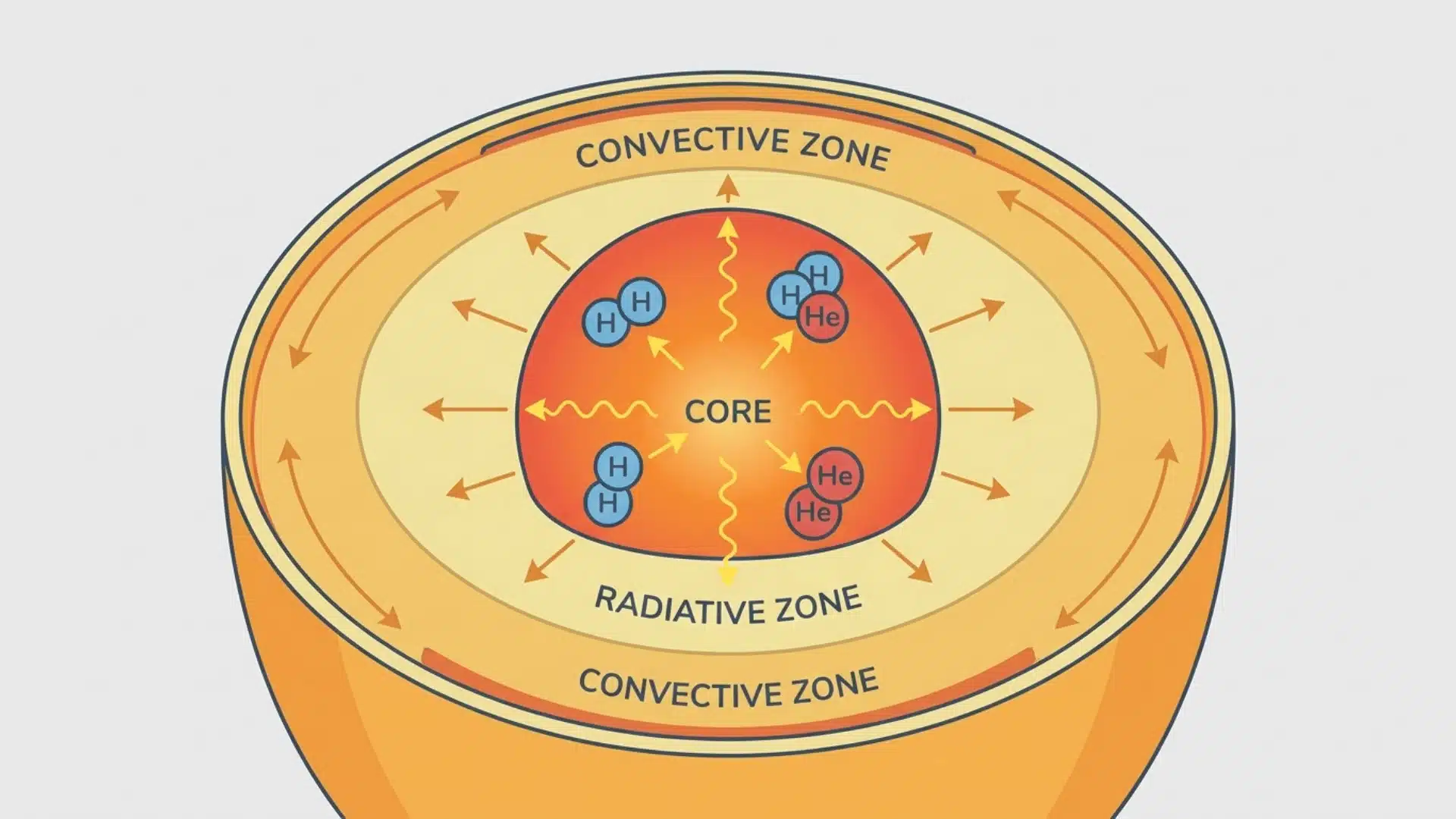
Your gut says: if you use something, you use it up. That’s true for almost everything, but sunlight is a genuine exception, and the reason is physical, not a technicality.
If you’ve ever wondered how capturing light from a star 150 million kilometers away could possibly affect nothing about that star, you’re asking exactly the right question.
Here’s how it works, step by step:
Nuclear fusion happens in the sun’s core. That’s the process where hydrogen atoms fuse into helium under extreme heat and pressure. The reaction releases radiation. It has been running continuously for 4.6 billion years.
That radiation travels outward and escapes the sun as light and heat. It crosses around 150 million kilometres to reach Earth.
When it arrives, a solar panel intercepts some of those photons, the individual packets of energy that make up light, and converts them into electricity. Photons the panel misses keep going: absorbed by the ground, reflected into space, scattered by clouds. Gone, with or without a panel.
None of that touches the sun. The fusion rate in its core is driven by temperature, pressure, and gravity. What happens to the light after it lands on Earth is completely cut off from that process.
Why the Scale Makes This Hard to Picture
I’ve seen people struggle with this because the scale is hard to picture.
The sun fires energy in every direction into space. Everything Earth receives is a tiny fraction of that output. Everything solar panels catch is a tiny fraction of that fraction.
A billion panels running flat out wouldn’t shift the sun’s output by any amount we could detect. “Using up” sunlight isn’t physically possible because there’s no path from your roof to the sun’s core.
The One Real Caveat
The sun’s output does vary.
Solar cycles, roughly 11-year patterns of increased and decreased activity, change how much radiation reaches Earth. Solar flares spike output briefly.
But both come entirely from stellar physics inside the sun. They have nothing to do with how much sunlight we capture. You cannot trigger a solar cycle by running more panels.
Does the Sun’s Eventual Death Make Sunlight Nonrenewable?
If you’ve asked this question, you’re thinking about it more carefully than most people do. The answer is less complicated than it might seem.
The renewable classification asks one thing: does this resource replenish faster than we use it? It does not ask whether the resource lasts forever.
The sun has roughly 4.5 to 5 billion years of fuel left.
No energy policy, power grid, or human civilization has ever planned on a horizon anywhere near that. The sun’s eventual end is real in astrophysics. In energy terms, it’s so far out it doesn’t factor.
Compare that to how nonrenewable resources actually run out.
Coal, oil, and natural gas deplete on timescales you can track in a spreadsheet.
Reserves are measured. Drawdown rates shape policy today. That’s a real replenishment problem happening on a human timescale. The sun’s lifecycle is not in that conversation.
A resource that outlasts every planning horizon humans have ever worked with qualifies as renewable. The sun clears that bar so far over that the question becomes theoretical rather than practical.
Is Solar Energy the Same Thing as Sunlight?
Sunlight and solar energy are connected but not the same thing.
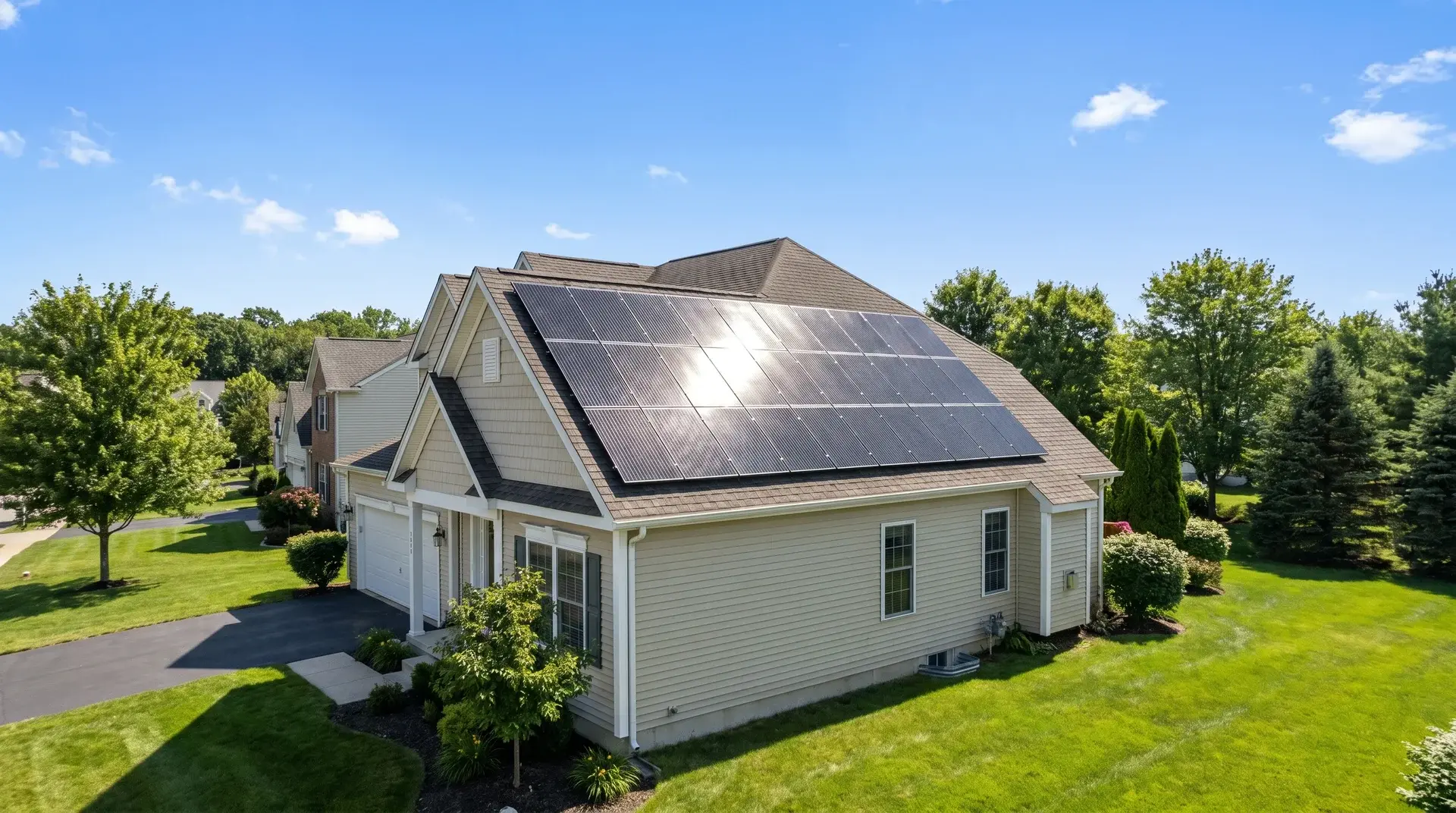
Sunlight is the raw resource. Solar energy is what you get once technology converts it into electricity or heat.
The source is renewable. The technology that harvests it is a separate question, and this is where I think the conversation usually goes wrong.
You’ll hear two takes: solar is perfectly clean, or solar has a footprint, so it’s not really renewable. Both are wrong, and both miss the same point.
Solar panels are built from silicon, silver, and aluminium. Mining and processing those materials has an environmental cost. The panels last roughly 25 to 30 years. When they reach end of life, recycling them is still a developing industry; panel waste handling today isn’t where it needs to be long-term.
None of that changes what sunlight is. The sun’s output stays renewable regardless of what we build to catch it.
If you’re thinking seriously about solar energy, not just looking for a yes or no on the label, keep the two things separate.
The fuel is renewable. The hardware around it carries its own costs. Both are true at the same time, and neither cancels the other out.
Wrapping Up
Whether sunlight is renewable or nonrenewable comes down to one thing: replenishment rate.
The sun produces energy through nuclear fusion, continuously and independently of anything we do with the light that reaches us.
That’s what puts it in the renewable category, not a promise of infinite duration, but a gap between the sun’s output and any possible human demand so large it isn’t a real concern.
The sun’s eventual end is a fact of astrophysics. It isn’t a fact of energy planning.
The honest take is this: sunlight as a source is renewable, but solar energy as a system with panels, manufacturing, and end-of-life carries its own footprint. Keep those two things separate and you end up with a much clearer picture than either the overclaim or the dismissal gives you.
Frequently Asked Questions
Why is sunlight considered a renewable resource?
Sunlight is renewable because the sun keeps producing it continuously, and using it doesn’t reduce the supply. The classification turns on replenishment rate, not whether the source lasts forever. The sun has roughly 4.5 to 5 billion years of fuel left, so far beyond any human planning horizon that the supply is effectively limitless in practice.
Is solar energy the same as sunlight?
No. Sunlight is the raw energy that arrives from the sun. Solar energy is what you get when technology, panels, inverters, and infrastructure convert that sunlight into electricity or heat. The source is renewable. The technology that captures it carries its own manufacturing and end-of-life footprint, separate from the source itself.
Can sunlight be used as an energy source everywhere on Earth?
Technically yes, but not equally. Solar irradiance varies a lot by location, season, and climate. Regions near the equator get strong, direct sunlight year-round. Higher latitudes and cloudy areas get significantly less. That affects how practical solar energy is in a given place, though the source itself stays renewable regardless of where you are.
Does capturing sunlight with solar panels reduce how much is available?
No. Solar panels intercept photons already traveling toward Earth. The sun’s output runs on nuclear fusion in its core, a process that operates completely apart from anything happening on Earth’s surface. Catching some of those photons doesn’t change how many the sun produces or how many arrive here.