

Your house has that one room that’s either too hot or too cold, no matter what the thermostat says.
I get it, it’s annoying, and running new ductwork to fix it sounds expensive and messy. That’s exactly the problem ductless heating and cooling was built to solve.
No ducts, no torn-up walls, just one outdoor unit paired with a compact indoor unit in the room that needs help.
I’ll break down what it actually is, how it heats and cools with the same hardware, what’s inside it, and where it makes real sense for your home. By the end, you’ll know if it’s worth looking into for your space.
What is Ductless Heating and Cooling?
Ductless heating and cooling, also called a mini-split, heats and cools your home without ducts. No hidden network of metal boxes running through your walls and ceiling.
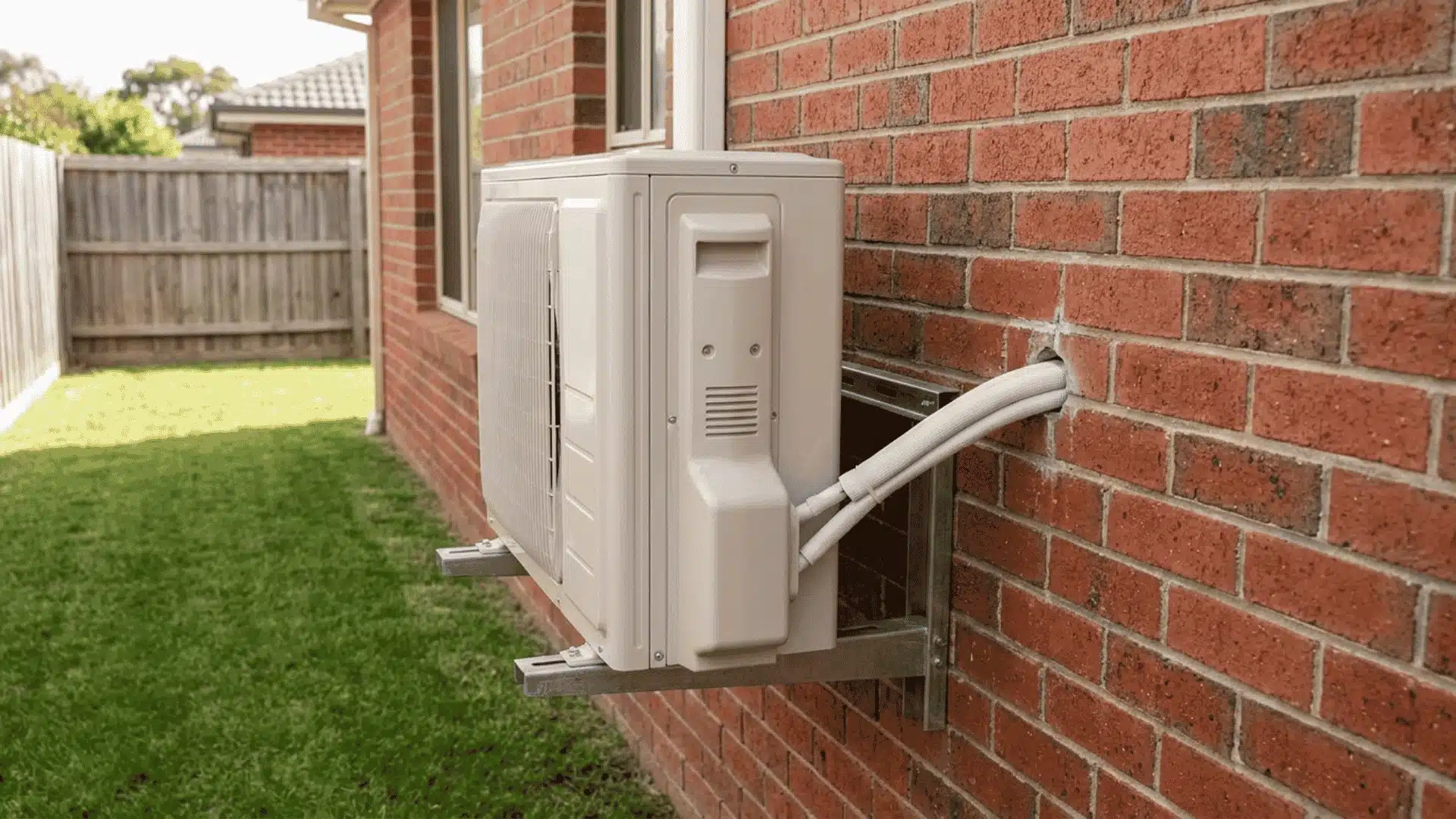
Instead, there’s one outdoor unit. It connects to one or more indoor units through a thin conduit carrying refrigerant.
Here’s the part people miss: refrigerant, not air, does the work of moving heat around. That’s why there’s no duct network to build, patch, or lose energy through.
I’ve seen homeowners assume “ductless” means cooling only. It doesn’t. Most of these systems are heat pumps. The same unit that cools your living room in July flips the process and pulls heat from outside air to warm it in January. If you’re trying to figure out how the two actually differ, it comes down to delivery, not the technology itself.
One thing worth saying plainly: ductless isn’t always the right call. If your home genuinely needs air spread across a big, open floor plan, stacking up indoor units room by room stops making sense. At that point, a central ducted system built for that job wins.
What Does a Ductless System Include?
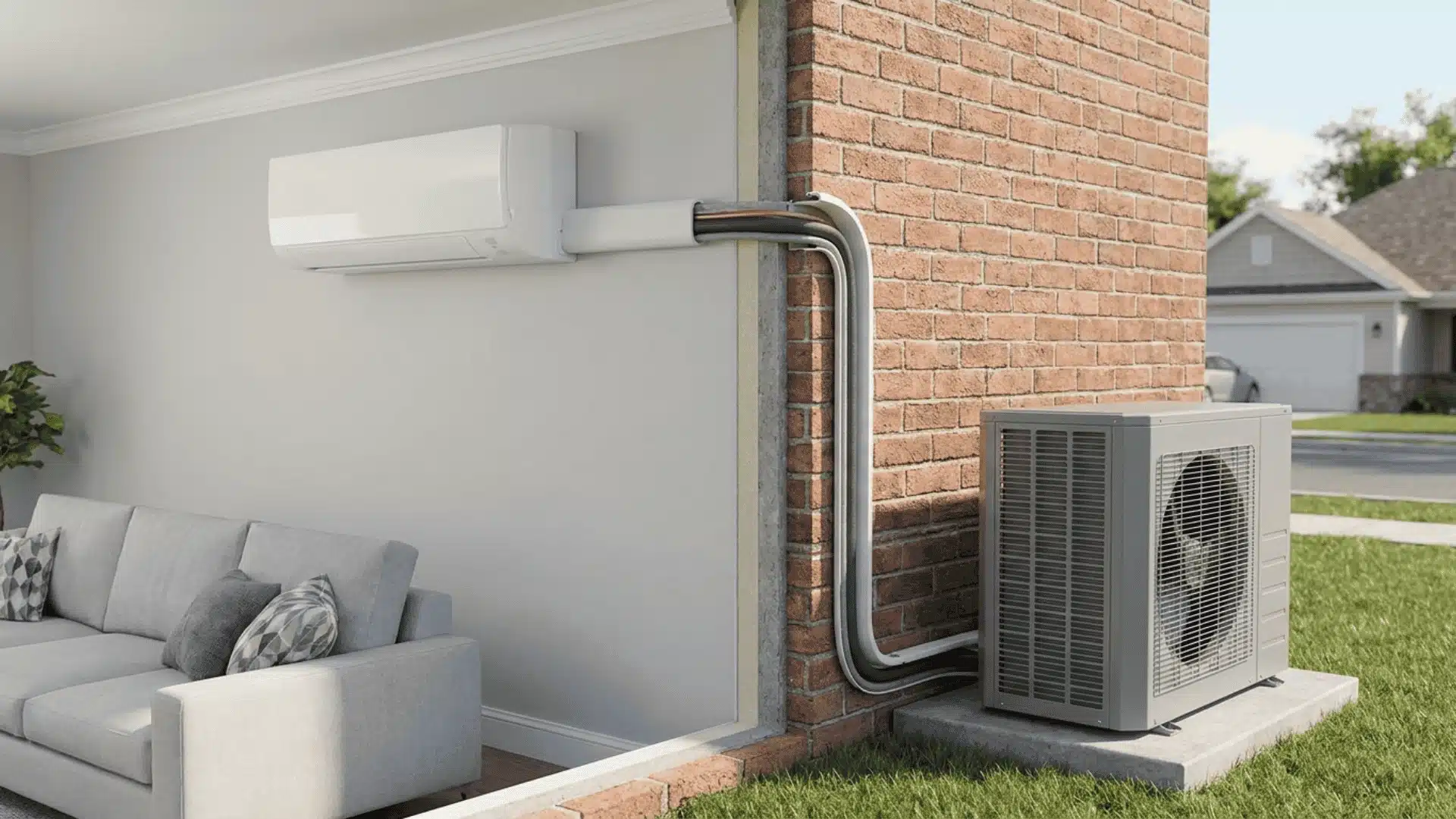
A ductless setup can cover one room or a whole house, depending on how many indoor units connect to that one outdoor unit. Here’s what makes up the system:
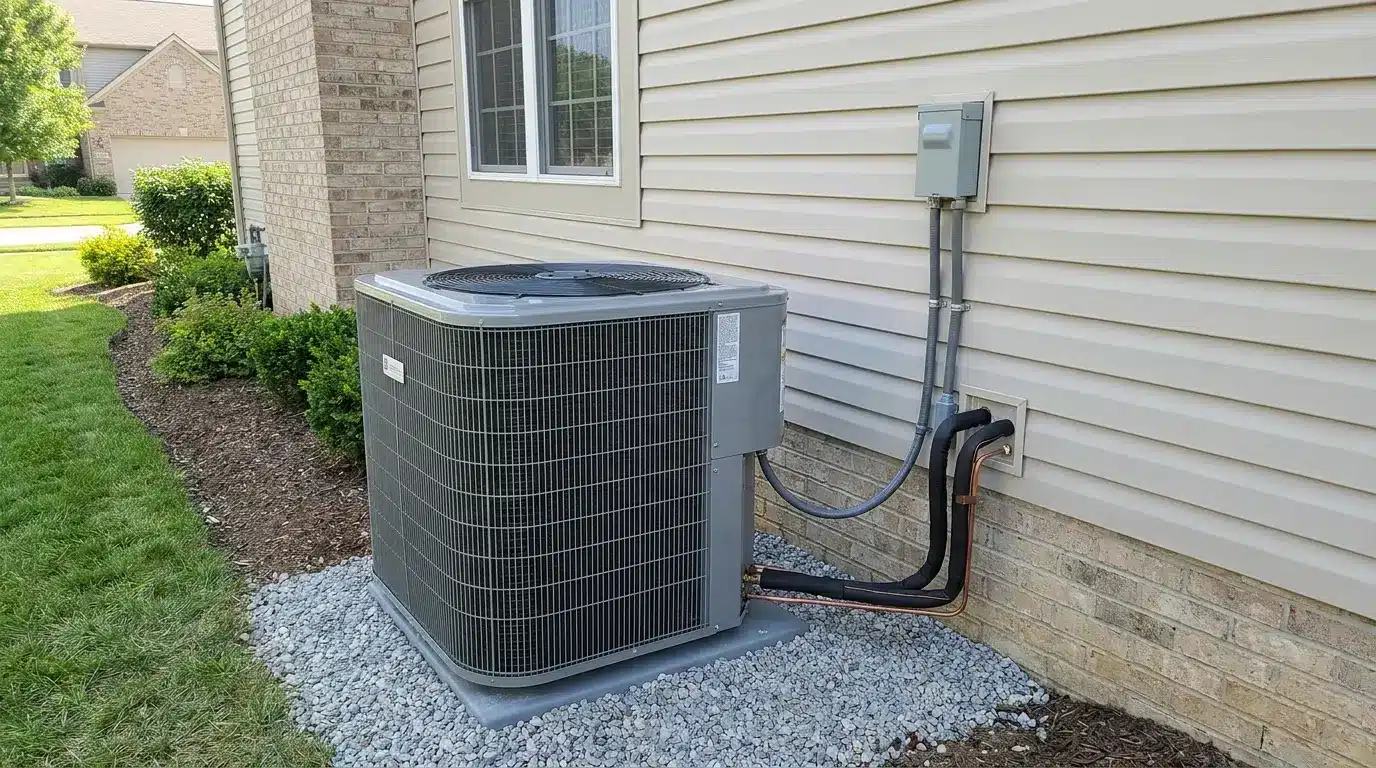
- Outdoor unit: houses the compressor and condenser coil, where heat transfer happens
- Indoor unit(s): mounted on a wall or ceiling, each with its own thermostat for independent zone control
- Conduit: runs through a small wall hole, carrying refrigerant lines, a power cable, and a condensate drain together
- Inverter-driven compressor: ramps up and down constantly instead of switching fully on and off
That inverter compressor is the real efficiency driver. It hums along at low speed most of the time and only works harder when a room actually needs it, dodging the energy spikes a normal compressor creates every time it kicks back on from a dead stop.
Choosing Between Single-Zone and Multi-Zone Systems
A single-zone system is one outdoor unit paired with exactly one indoor unit. It’s the simplest, usually cheapest way to add comfort to one space, think a garage conversion or a new room addition.
A multi-zone system connects one outdoor unit to several indoor units, each in a different room, each controlled on its own.
Here’s the tradeoff I’d flag before anyone gets excited about going multi-zone: the outdoor unit has to be sized for everything it’s serving at once.
Push it past that capacity, and every zone loses performance. Add more rooms, and the refrigerant line runs get longer and trickier to install too.
How Heating and Cooling Actually Switch
It’s easy to think a ductless system needs completely different hardware for heating versus cooling. It doesn’t. The refrigerant just runs in reverse.
Here’s the switch, side by side:
| Heating Mode | Cooling Mode | |
|---|---|---|
| Indoor unit | Releases heat into the room | Absorbs heat from the room |
| Outdoor unit | Pulls heat from outside air | Releases heat to outside air |
| Heat flows | Outside → Inside | Inside → Outside |
| You feel | Warm air | Cooler air as heat is pulled out |
Same refrigerant, same hardware, opposite direction. Once that clicks, the whole system stops feeling like a mystery box.
What Ductless Systems Are Not
Let’s clear something up. A ductless mini-split is not a portable AC, not a window unit, and not gas-powered. It’s a permanent, electric system that needs a licensed installer and a real wall penetration.
A portable unit rolls between rooms. A window unit comes out every fall. A mini-split does neither, it’s bolted to one wall, conditioning that zone, full stop.
It’s also not a piece of central HVAC. There’s no furnace, no air handler, no duct network behind it, and you can’t retrofit one into an existing ducted system.
Here’s where most explanations fall short: they call ductless “more efficient” without saying why. It comes down to how each system loses energy. Ducted systems push air through leak-prone ductwork running through your attic and walls.
Ductless systems move refrigerant instead, through a sealed line just millimeters wide, with barely any surface area to leak from. That’s the real reason behind the efficiency gap, not marketing spin.
Where Ductless Actually Makes Sense

Ductless systems solve one specific problem: adding real heating and cooling to a space that was never built for it.
- Room additions, where extending existing ductwork means tearing into walls that don’t need to be touched otherwise
- Older homes built with no ductwork at all
- Converted garages, basements, and attics that never had duct access to begin with
- Detached spaces like a workshop or guest house that sit completely outside your main system’s reach
It also works as a fix, not just a whole-house solution. If one room on your ducted system never quite hits the right temperature, a single-zone mini-split can handle just that room without you replacing anything else.
Where I wouldn’t bother: a fully ducted home with no comfort complaints. At that point you’re running two systems to do a job one already handles fine.
Why Does Ductless Heating and Cooling Matter?
The savings come from that same inverter compressor we talked about earlier, running steady at low speed instead of cycling fully on and off uses noticeably less electricity over time.
But I want to be straight with you: those savings aren’t automatic. If the system’s oversized for the room, or it’s stuck conditioning more square footage than it was built for, it can end up costing you more than expected.
It ends up cycling inefficiently, working overtime to make up for a size mismatch it should never have had.
Frequently Asked Questions
Is ductless heating and cooling the same as a heat pump?
A ductless mini-split is a type of heat pump. Both move heat with refrigerant instead of generating it, which is the whole point of a heat pump in the first place. “Ductless heat pump” and “mini-split” describe the same system — one just leans on the heating function, the other on the setup.
How much does it cost to install ductless heating and cooling?
A single-zone system typically runs somewhere between $2,000 and $5,000 installed, depending on the unit size, wall penetration complexity, and local labor rates. Multi-zone setups cost more since each added room means another indoor unit and a longer line run. Get at least two bids before you commit.
Is ductless heating electric or gas?
Ductless systems run entirely on electricity. There’s no gas combustion happening anywhere in the process. The compressor uses electrical energy to move refrigerant and transfer heat, rather than burning fuel to create it.
Why is my electric bill high with a mini-split?
The usual culprits are an undersized unit working past its limit, the thermostat set to extreme temperatures, or a dirty air filter choking airflow. These systems are built to run at low, steady output, pushing them to extremes forces higher energy draw and cancels out the efficiency you’re paying for.
Conclusion
Ductless heating and cooling isn’t just a duct-free gadget, it’s a genuinely different way to move heat through your home.
You get one unit that handles both hot and cold days, zones you can control separately, and an install that skips major wall damage.
I’ve walked you through how it works, what’s inside it, and where it actually earns its keep versus where it doesn’t.
None of that matters, though, if the unit isn’t sized right for your space. That’s the one thing I’d tell you never to skip.
If you’re thinking about making the switch, get a real quote first. And if this helped, pass it along to someone still stuck deciding.