

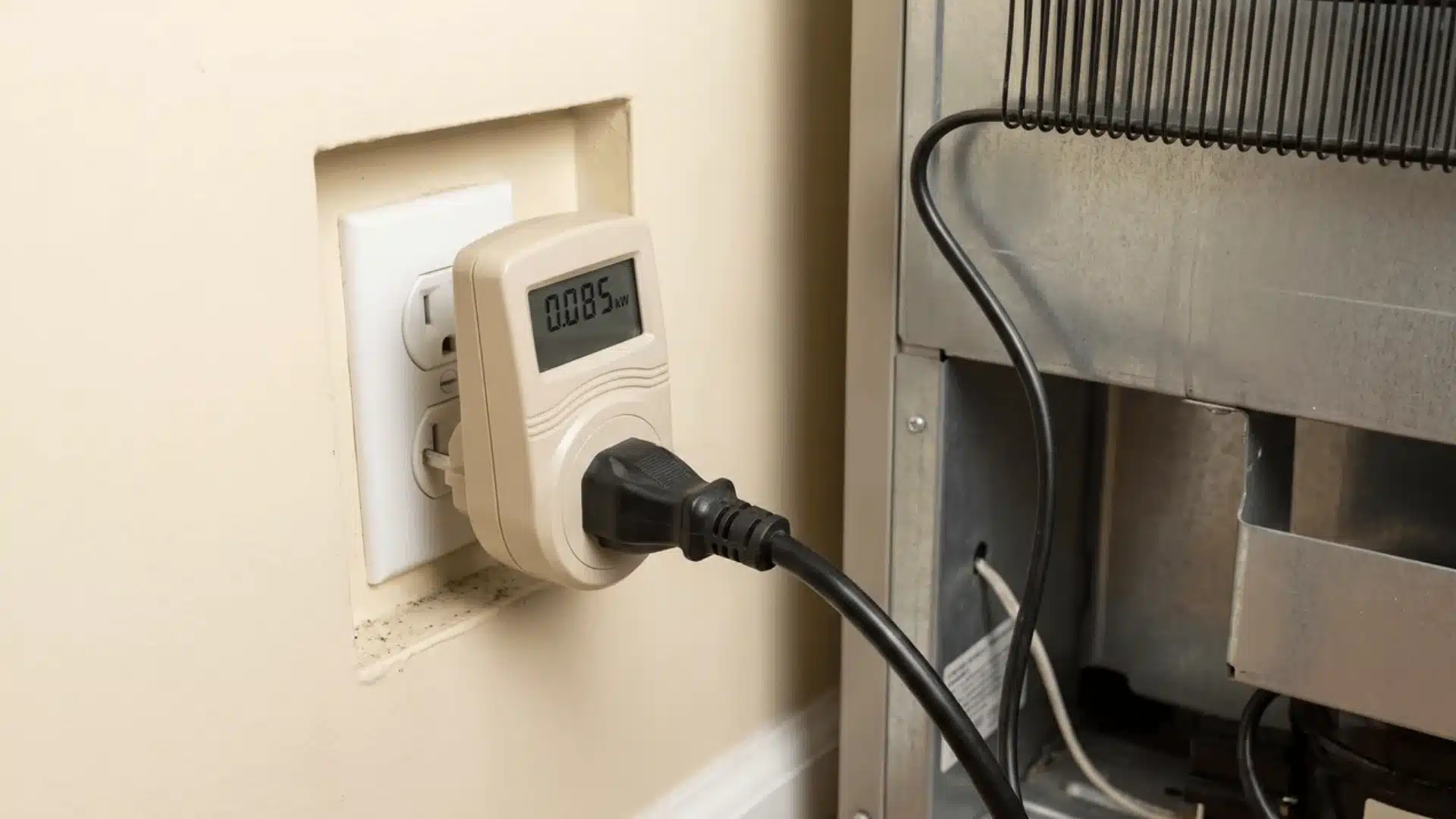
Your ceiling fan hums along all summer, and you barely notice it, until the electricity bill lands and suddenly every appliance in your house looks suspicious.
Do ceiling fans use a lot of electricity? I checked the numbers, and the answer surprised me. Most fans draw less power than a single light bulb, yet somehow they still get blamed for high bills.
If you’re trying to figure out what’s actually driving up your costs this summer, you’re in the right place.
Below, you’ll find the real wattage, what it costs to run a fan by the hour, month, and year, and how pairing it with your AC can cut your cooling bill significantly.
Do Ceiling Fans Use a Lot of Electricity?
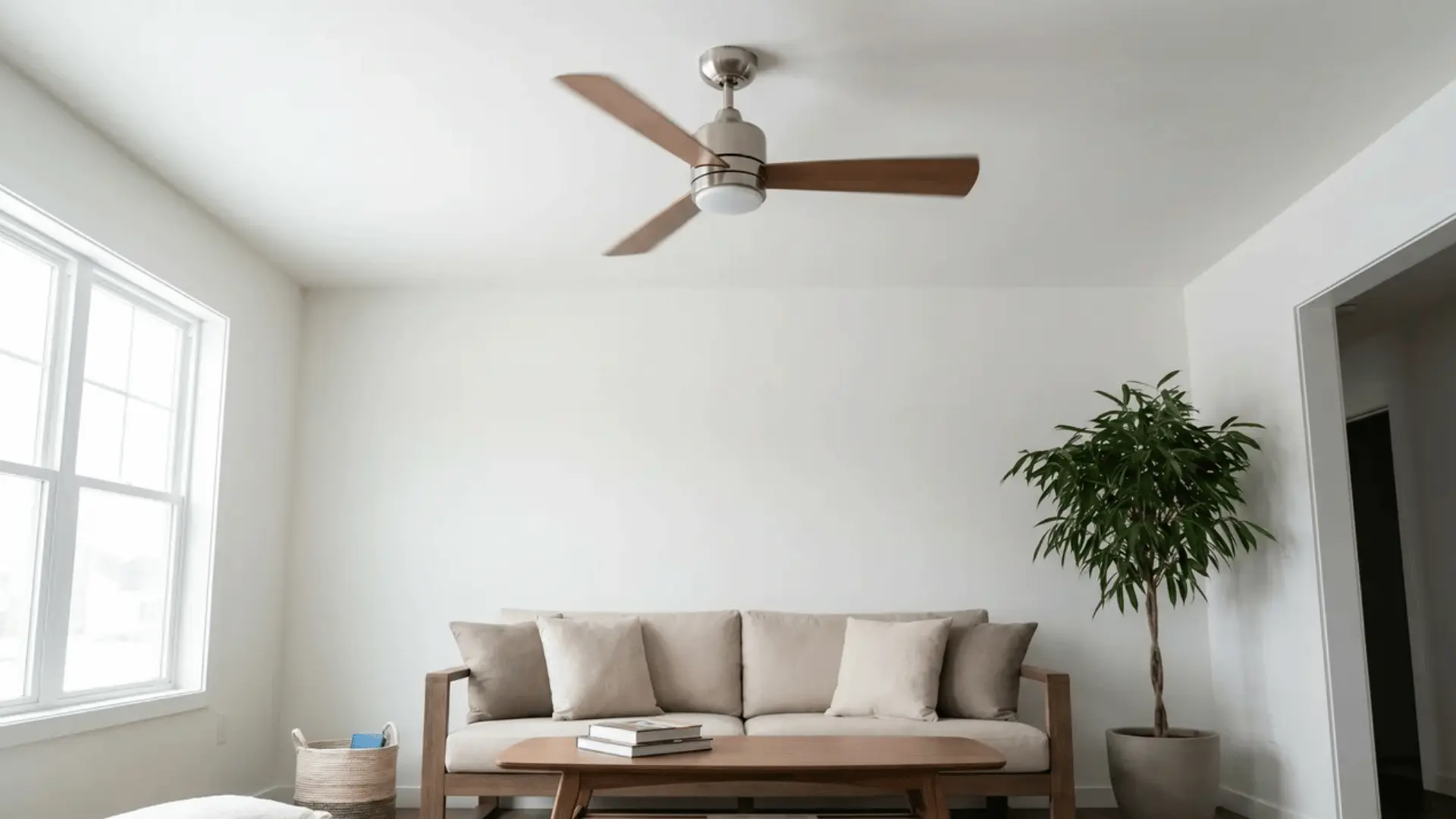
No, ceiling fans do not use a lot of electricity. Ceiling fans generally use between 15 and 90 watts, depending on fan size, motor type, and speed setting, a fraction of what most home appliances draw.
Compared with energy-hungry home appliances like air conditioners, refrigerators, or electric heaters, their electricity consumption is very low
A standard 48-inch ceiling fan typically uses around 75 watts on a higher setting. However, the motor type plays a major role in energy consumption:
- Traditional AC motor fans usually consume around 50–75 watts.
- DC motor fans often use around 15–30 watts because they convert electricity more efficiently and lose less energy as heat.
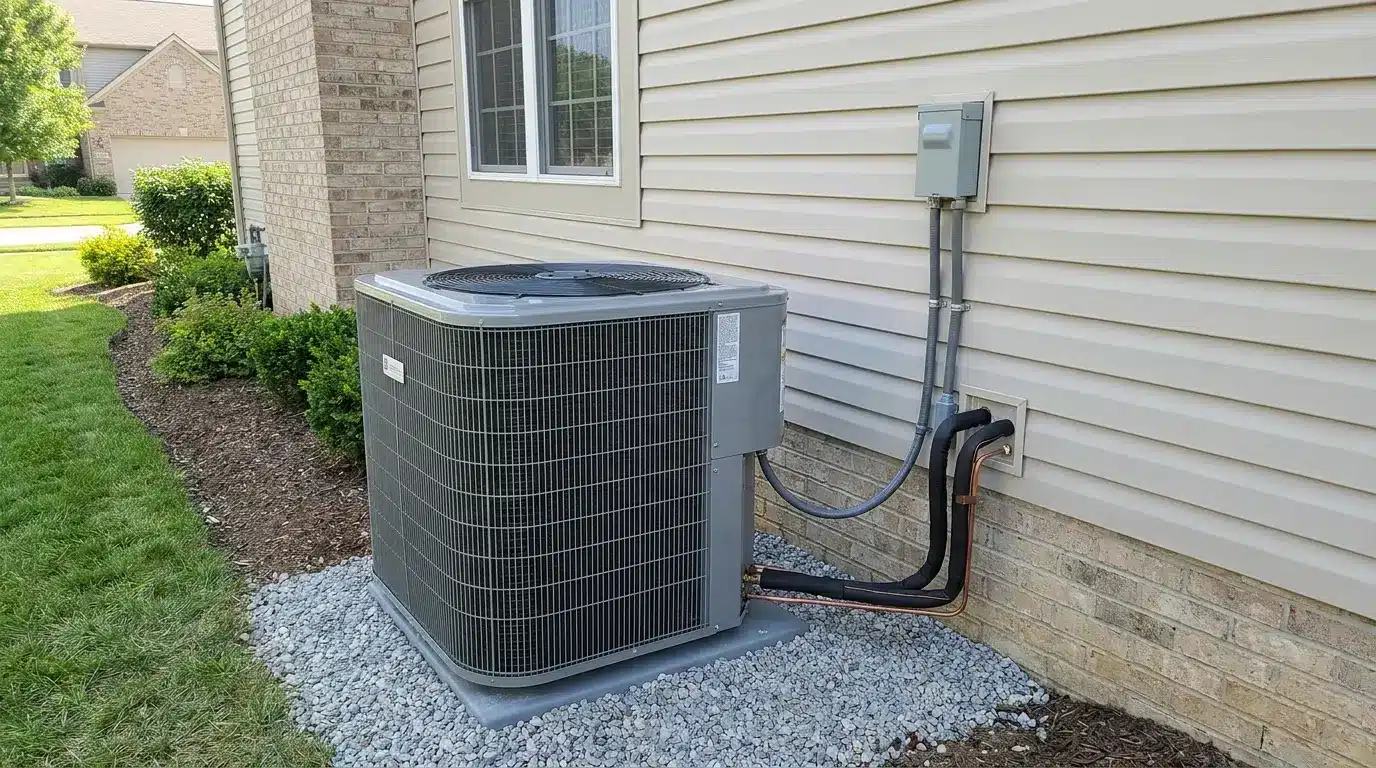
For comparison, a central air conditioning system may draw between 1,500 and 3,500 watts while running, roughly 20 to 50 times more than a ceiling fan. That’s not a rounding error; it’s a completely different category of appliance, and it makes the ceiling fan one of the lowest-energy cooling options for homes.
What Does It Cost to Run a Ceiling Fan?
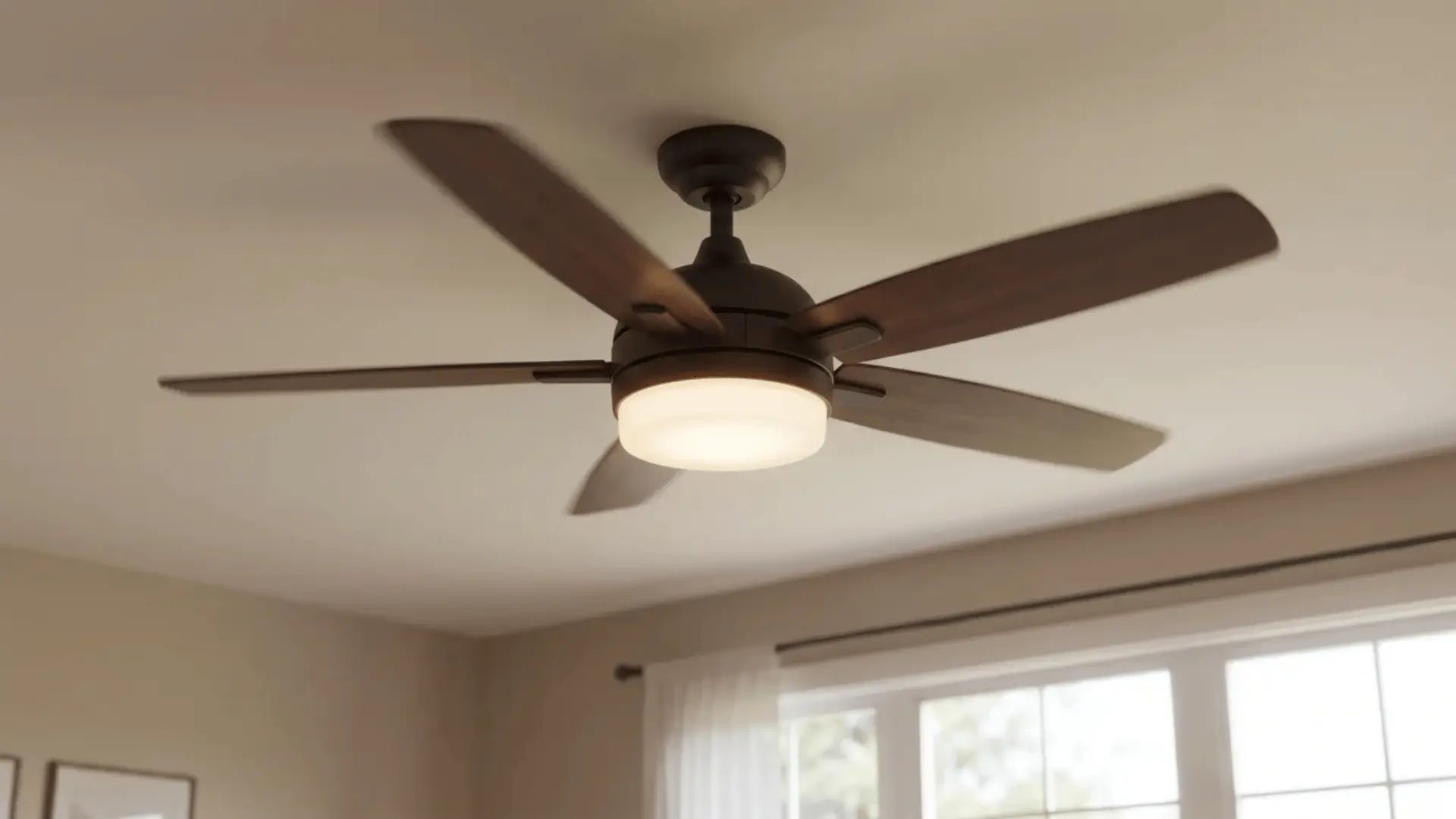
The cost of running a ceiling fan depends on its wattage, operating hours, electricity rate, and whether the fan includes additional features like built-in lighting.
A typical 75-watt ceiling fan costs approximately:
- Per hour: $0.01–$0.02
- 8 hours per day: Around $0.10–$0.16
- Per month: Around $3–$5
These estimates are based on average U.S. electricity rates. Your actual cost may vary depending on your location, utility provider, and how often the fan runs.
You can calculate your own ceiling fan electricity cost using this formula:
(Watts ÷ 1,000) × Hours Used × Electricity Rate = Running Cost
The fan motor usually accounts for most of the electricity use, but models with built-in lights can consume more power.
Incandescent bulbs may add 60–120 watts, while CFL bulbs can add around 30–60 watts. LED lighting adds much less energy use and helps keep overall consumption lower. For accurate estimates, check the wattage label on your fan and include any lighting when calculating total electricity usage.
How Much Electricity Does a Ceiling Fan Use in 24 Hours?
Leaving a ceiling fan running all day does not lead to a huge electricity bill, but the energy use can add up over time.
A 75-watt fan running continuously for 24 hours uses:
0.075 kW × 24 hours = 1.8 kWh per day
At average electricity rates, this equals roughly $7–$9 per month. A DC motor fan using less power may cost closer to $2–$4 per month for continuous operation.
Although the cost remains relatively low, running fans in empty rooms provides no comfort benefit because ceiling fans cool people, not spaces.
Why Ceiling Fans Don’t Actually Lower Room Temperature
Ceiling fans cool your skin, not the air. The room temperature stays exactly the same whether the fan runs or not. What changes is how your body feels.
Here’s what’s actually happening when a ceiling fan runs:
- Air moves across your skin: the fan accelerates airflow without changing room temperature.
- Sweat evaporates faster: that evaporation pulls heat directly off your body.
- You feel cooler: the perceived drop is roughly 4°F, even though the thermometer hasn’t moved.
That process is entirely person-dependent. No person means no sweat, no evaporation, and no cooling effect — just a motor burning watts for nothing. A fan running in an empty room wastes every watt it draws.
Humidity shifts the numbers too. In dry air, evaporation is fast, and the full 4°F drop is realistic. In humid climates, moisture already slows evaporation, so the perceived cooling lands closer to 2°F.
Not per hour, no. But across weeks of empty rooms, it adds up to zero benefit. The rule is simple: fan on when you’re in the room, off when you leave.
How Do Ceiling Fans Reduce Your Air Conditioning Bill?
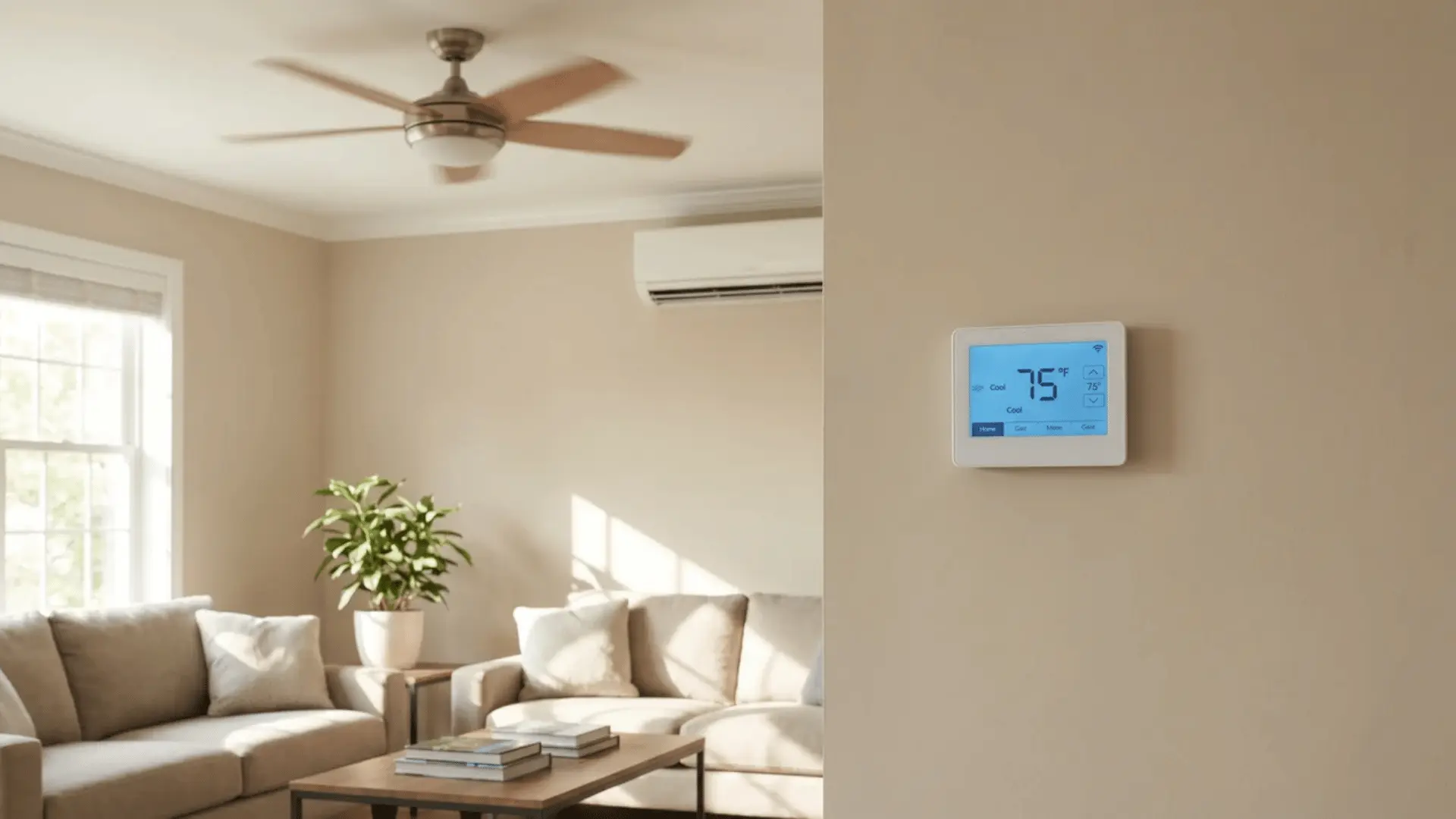
The savings don’t come from the fan itself, they come from what the fan lets you do with your thermostat.
When a ceiling fan runs, the wind chill effect makes the room feel 2°F–4°F cooler than it actually is. That means you can raise the AC setpoint by the same amount, and according to the U.S. Department of Energy, you won’t feel any difference in comfort.
Here’s where the real savings happen:
- Higher setpoint = shorter compressor cycles. Your AC doesn’t run long enough to reach the target temperature, so it shuts off sooner.
- Less runtime = disproportionate savings. AC compressors aren’t linear; small setpoint increases reduce runtime by more than the difference in degrees would suggest.
- Up to a 40% reduction in cooling costs, that figure comes from compressor cycling, not just temperature math.
A 2°F shift sounds small. But because the compressor works harder than any other part of your system, reducing how often it runs creates outsized savings on your bill.
One condition changes everything, though: the strategy only works when the fan and AC run together in the same room.
| Scenario | Result |
|---|---|
| Fan + AC running together | Thermostat rises, compressor cycles less, bill drops |
| Fan running, AC off | You feel cooler, but there’s no compressor to reduce, no bill impact |
A 75-watt fan can offset an AC unit drawing 3,000 watts — not remotely a close comparison.
Do Fans Use a Lot of Electricity Compared With Other Cooling Appliances?
Many people worry that fans consume a lot of electricity because they often run for several hours daily. However, their power usage is much lower than that of most cooling appliances.
| Appliance | Average Power Use |
|---|---|
| Ceiling Fan | 15–90 watts |
| Table Fan | 30–60 watts |
| Tower Fan | 40–100 watts |
| Window AC | 500–1,500 watts |
| Central AC | 1,500–3,500 watts |
Compared with air conditioners, ceiling fans use far less electricity, making them a budget-friendly cooling option.
Does Ceiling Fan Direction Affect Energy Savings?
Ceiling fan direction changes airflow patterns, improving comfort in different seasons, but it does not directly reduce the fan’s electricity consumption.
Summer Setting: Counterclockwise Rotation
During summer, ceiling fans should rotate counterclockwise to push air downward into the room. This creates a cooling breeze that moves across your skin and improves evaporation, making you feel cooler without lowering the actual room temperature.
The airflow lets you slightly increase your AC thermostat setting while maintaining comfort, which can reduce cooling demand and help lower energy costs.
The fan uses the same electricity; it just improves how effectively your cooling system works.
Winter Setting: Clockwise Rotation
During colder months, switching the ceiling fan to clockwise rotation on a low speed helps redistribute warm air trapped near the ceiling.
The gentle upward airflow pushes warm air down along the walls and back into the living space. This can improve comfort in rooms with high ceilings and reduce the heating system’s workload.
Changing fan direction does not lower the fan’s wattage, the energy benefit comes from better air circulation, not reduced electricity use.
Ways to Reduce Ceiling Fan Electricity Usage
Simple usage habits and efficient fan choices can help reduce electricity consumption while keeping your home comfortable during warmer months.
- Choose energy-efficient DC motor fans.
- Turn fans off when leaving a room.
- Use lower speed settings when possible.
- Keep fan blades clean for better airflow.
- Match fan size to your room.
- Turn off unnecessary fan lights.
- Use fans with AC instead of lowering the thermostat too much.
These small changes can reduce energy waste, improve fan performance, and help keep electricity bills lower without sacrificing comfort.
Summing Up
So here’s where I land: your ceiling fan was never the villain behind your electricity bill. Do ceiling fans use a lot of electricity? Not even close, a few cents an hour, a few dollars a month, nothing that competes with an air conditioner.
What actually matters is how you use it. Run it only when you’re in the room, since an empty room gets zero benefit from moving air.
Pair it with your AC and raise the thermostat a couple of degrees, and you’ll feel just as comfortable while your compressor works less. That’s where the real savings live.
Try adjusting your fan habits this week, and see how much lighter your next energy bill feels.
Frequently Asked Questions
Do ceiling fan remotes or wall controls draw power when the fan is off?
Yes, but only a tiny amount. Remote receivers and smart wall controls stay in standby mode to listen for signals, typically pulling under 1 watt. Left idle for a full year, that standby draw usually adds up to a few cents on your bill.
Can a ceiling fan replace air conditioning entirely?
Not in most climates. A fan only changes how your skin feels, not the actual room temperature, so it can’t cool a space down on its own during extreme heat. It works best as a supplement that lets your AC run less often, not as a full replacement for it.
Is it cheaper to run multiple ceiling fans or one window AC unit?
Running several ceiling fans is almost always cheaper than running a window AC. Even five fans at 75 watts each draw less than half the power of a single window unit, though fans only work well if someone is in the room to feel the airflow.
Does the number of fan blades affect electricity usage?
Not significantly. Blade count mostly affects airflow smoothness and noise, not power draw. A well-balanced 3-blade fan can move as much air as a 5-blade fan while using similar wattage, since the motor size matters far more than blade count.