


I once watched a neighbor’s whole-house generator kick on two seconds after a storm knocked out power, while the rest of us sat in the dark wondering what we’d missed. That gap usually comes down to one thing: knowing how many watts to run a house before you ever buy equipment, not after.
You don’t need to be an electrician to get this right. All it takes is knowing what your appliances draw, how those numbers stack up, and how to size a generator or solar setup based on real math rather than a guess.
By the time you finish reading, you’ll be able to calculate your own home’s power needs, sidestep the mistakes that leave people underpowered during an outage, and choose a system that actually matches how you live.
How Many Watts to Run a House?
There’s no single number that works for every home; it depends on your goals. The deciding factor isn’t square footage; it’s the total electrical load of the appliances you need running at the same time:
| Power Requirement | Watt Range | What It Can Run |
|---|---|---|
| Fridge, lights, and phone charging | 1,500–3,000 W | Bare essentials only |
| Essentials + window AC unit | 3,500–5,000 W | Adds one-room cooling |
| Essentials + gas furnace fan | 2,500–4,500 W | Adds heat during winter outages |
| Essentials + sump or well pump | 4,000–6,500 W | Adds water/drainage systems |
| Partial home backup | 3,500–8,000 W | Furnace fan, pumps, window AC, more appliances |
| Whole-house backup | 10,000–20,000+ W | Most major appliances, central AC, electric heating |
Even at the “essentials-only” tier, one added appliance can shift your target by thousands of watts.
How Much Power Does the Average U.S. Home Use?
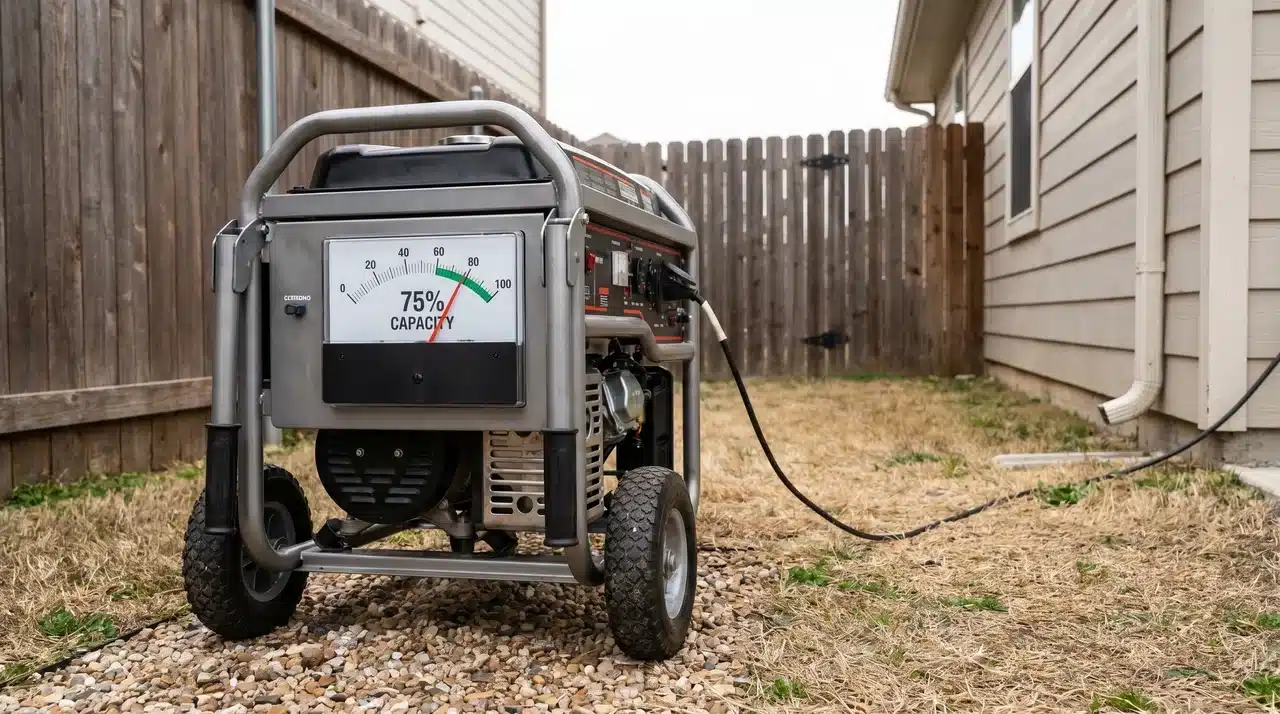
Before you size a generator or solar system, you need to understand what your home actually pulls on a normal day. That baseline shapes every decision you make from here.
According to the U.S. Energy Information Administration, the average U.S. home consumes around 29 to 30 kilowatt-hours of electricity per day, roughly 1,200 watts of continuous power spread evenly across 24 hours.
But electricity use is never that steady. During low-activity hours like late night, your home might draw as little as 300 to 500 watts across everything combined. Cooking dinner with the AC on? You can spike well past 10,000 watts in minutes.
Your monthly utility bill shows average consumption. It tells you nothing about your peak demand, which is exactly what backup power must handle. That swing between average and peak is what makes sizing tricky.
What Appliances Use the Most Watts in a Home?
Not every appliance hits your power supply equally hard. A few heavy hitters account for the bulk of your home’s total electrical load, and knowing which ones they are affects how you size any backup system.
Before looking at the numbers, understand that running watts and starting watts are two very different things. Motor-driven appliances, AC units, well pumps, and refrigerator compressors draw two to three times their running wattage the moment they start, and that startup surge is what causes most generator sizing mistakes.
| Appliance | Running Watts | Starting Watts |
|---|---|---|
| Central air conditioner | 2,000 to 5,000 | Up to 8,000 |
| Electric water heater | 4,000 to 5,500 | 4,000 to 5,500 |
| Electric furnace or baseboard heaters | 5,000 to 15,000 | 5,000 to 15,000 |
| Well pump | 750 to 1,500 | Up to 3,000 |
| Refrigerator | 150 to 400 | Up to 1,200 |
| Microwave | 900 to 1,200 | 900 to 1,200 |
| Clothes dryer (electric) | 4,000 to 6,000 | 4,000 to 6,000 |
Devices people consistently overlook include space heaters (1,200–1,500 W), window AC units (500–1,500 W), EV chargers (up to 7,200 W for a Level 2 charger), and pool pumps (750–1,500 W) — any one of which can determine your minimum generator size on its own.
What Drives Your Home’s Wattage Needs
Your wattage requirement is not a fixed number. Several variables push it up or down significantly:
- Heating type: A gas furnace requires only 300–600 watts for its blower fan, while an electric furnace requires 10,000–15,000 watts to produce the same heat output.
- Air conditioning and climate: Central AC carries one of the heaviest loads in any home, and homeowners in hot climates must account for the compressor surge in addition to their baseline running load.
- Water system: Homes on municipal supply need zero pump power, but a private well pump adds 1,500–3,000 watts of surge demand that cannot be removed from your total.
- Simultaneous appliance use: A generator handles a refrigerator, lights, and a sump pump together comfortably until one more heavy appliance starts, and that single addition is what trips the system.
- Backup goal: Essentials-only coverage needs a fraction of the wattage that whole-home power requires, so defining your minimum acceptable comfort level before calculating anything else saves significant money.
Appliance efficiency and home layout play a smaller supporting role, with HVAC equipment older than 10–15 years often drawing 20–30 percent more power than a comparable modern unit.
How to Calculate Your House’s Wattage Needs
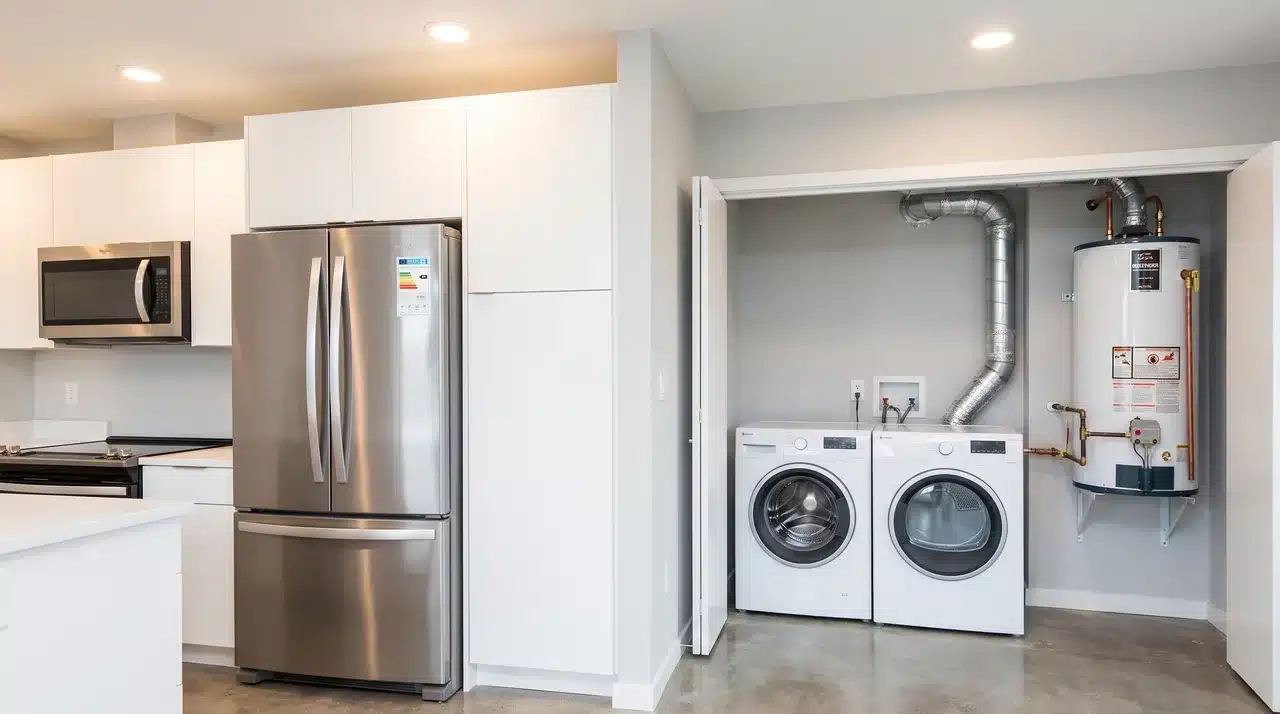
- List the appliances you need. For emergency backup: refrigerator, lights, internet equipment, chargers, furnace fan, medical equipment, sump pump, essential kitchen appliances. For whole-home backup, add: central AC, electric water heater, electric dryer, oven, and other major electronics.
- Find running and starting watts from appliance labels or manufacturer specs — especially for anything with a motor.
- Add up running watts. Example:
| Appliance | Running Watts |
|---|---|
| Refrigerator | 200 |
| Furnace fan | 500 |
| Lights | 200 |
| Chargers | 100 |
| Window AC | 1,200 |
| Total | 2,200 |
- Add only the largest startup surge, not every appliance’s surge, since typically only one motor starts at a time. Window AC: 1,200 running / 3,600 starting → extra surge = 3,600 − 1,200 = 2,400 W 2,200 + 2,400 = 4,600 W
- Add a safety buffer of 20–25% so the generator isn’t run at max capacity: 4,600 × 1.25 = 5,750 W → round up to a ~6,000-watt generator
Final Sizing Logic
Your final number is not your average load but your highest simultaneous running load, plus the starting surge of your single largest motor-driven appliance, plus a safety buffer on top of that.
Skip the buffer, and you’re running constantly at the edge of capacity; skip the surge, and your generator trips the moment the AC compressor cycles back on.
Get all three components right, and your system runs reliably every time you need it.
What Size Generator Do I Need: Portable, Inverter, or Standby
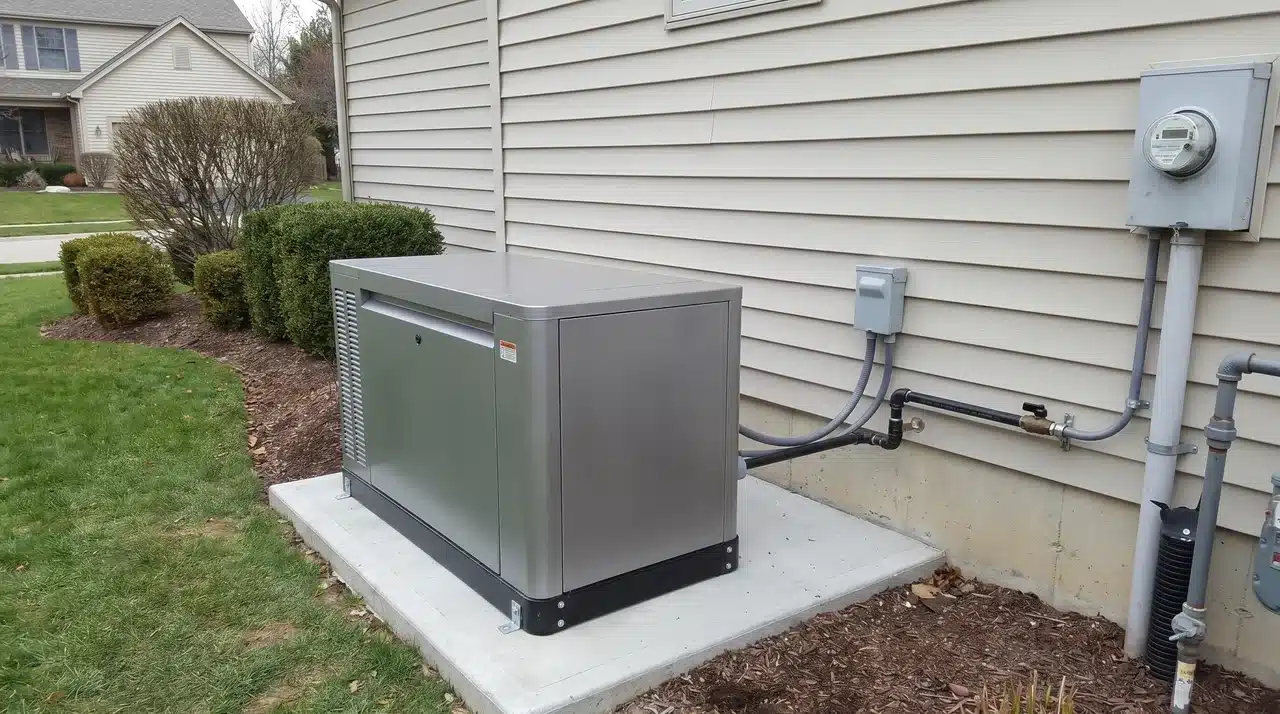
Once you know your target wattage, the next decision is what kind of generator delivers it, and that comes down to three main types.
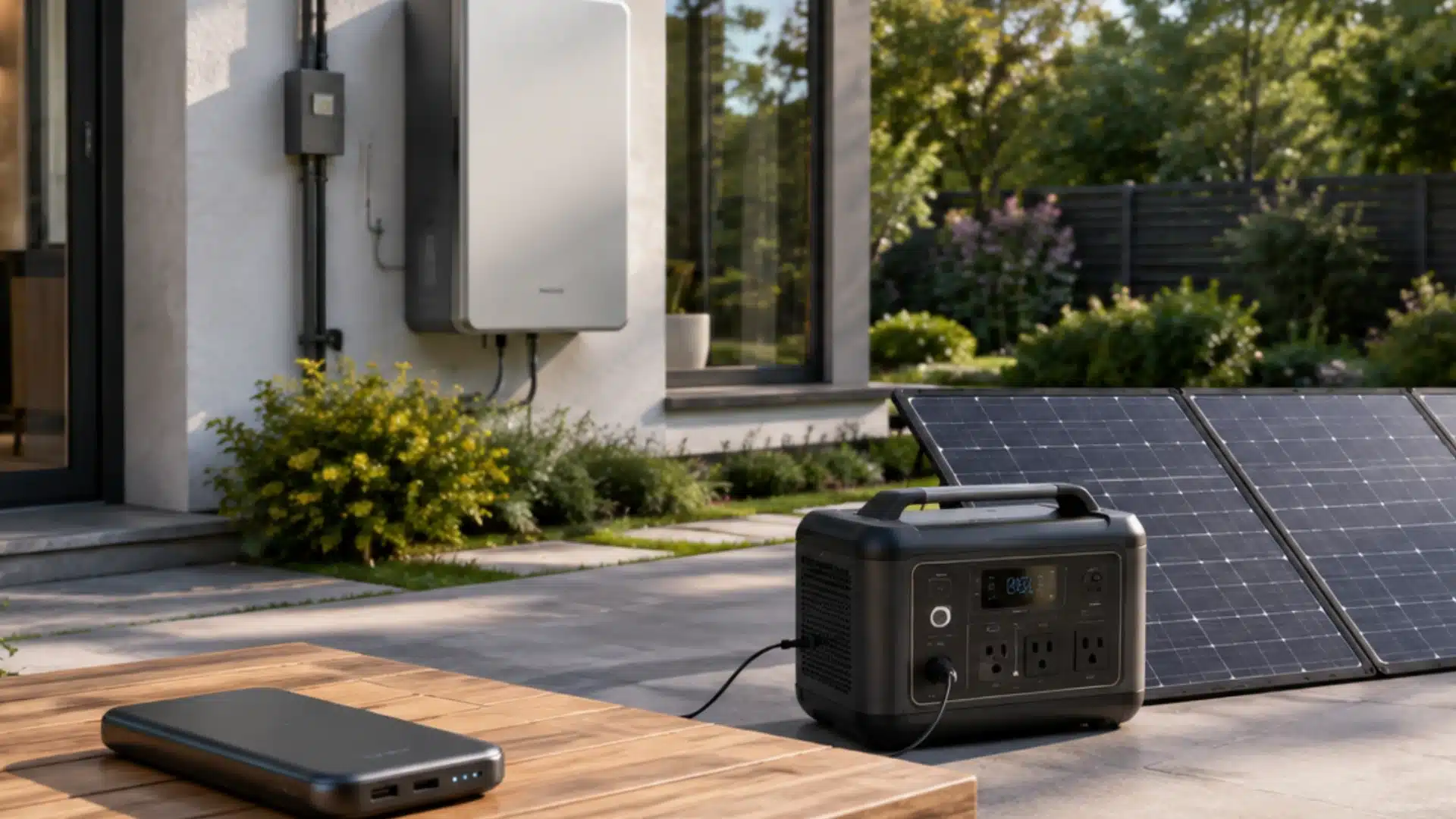
1. Portable Generators run on gasoline or propane and need to be manually set up, connected directly to appliances via extension cords or to your panel through a transfer switch. They’re the most affordable option per watt and work well for essential and partial backup in the 3,000–10,000-watt range. The tradeoff: you have to be home to start them, refuel them, and move them outdoors for ventilation.
2. Inverter Generators Produce cleaner, more stable power by regulating electrical output electronically rather than mechanically, making them safer for sensitive electronics like laptops, medical devices, and smart appliances. They tend to be quieter and more fuel-efficient, but are usually sold in smaller wattage ranges, often 2,000–7,000 watts, so they suit essential or partial backup better than whole-home needs.
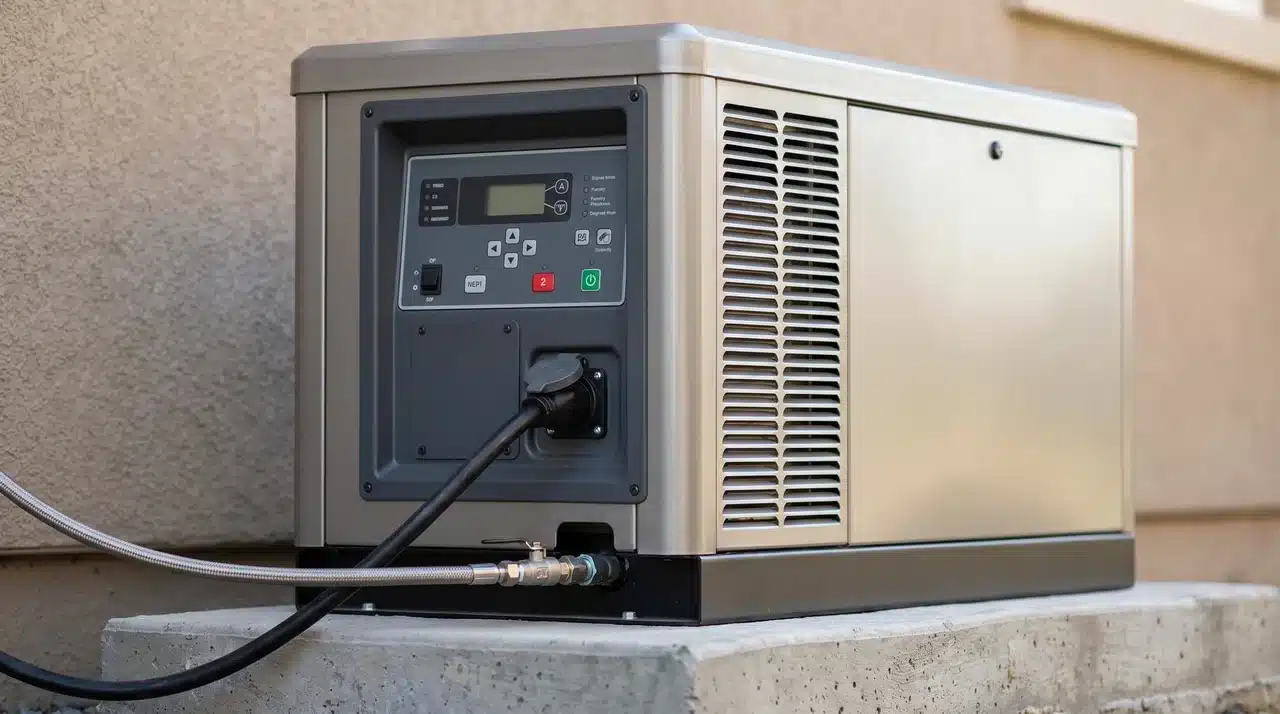
3. Standby Generators are permanently installed outside the home, wired directly into your electrical panel, and run on natural gas or a large propane tank. They start automatically within seconds of an outage and can be sized well into the 10,000–20,000+ watt range needed for whole-home backup. They cost more upfront and require professional installation, but remove the guesswork of manual setup during an emergency.
If your wattage calculation lands under 7,000 watts and you’re comfortable handling setup yourself, a portable or inverter model is usually enough. If your number climbs above 10,000 watts due to electric heat, central AC, or a well pump, a standby system is generally worth the investment.
Does Square Footage Matter?
Not directly. A 2,000-square-foot home with gas heat, efficient appliances, and no central AC may need a fairly small system.
A similarly sized home with an electric furnace, electric water heater, central AC, and an EV charger could require several times as much power. What’s inside the house matters far more than its floor area.
A 5,000-watt home and a 15,000-watt home can sit on identical lots with identical square footage. Here’s what actually separates them:
| Factor | 5,000W Setup | 15,000W Setup |
|---|---|---|
| Heating type | Gas furnace | Electric furnace or heat pump |
| Air conditioning | Window unit or none | Central AC |
| Water heating | Gas water heater | Electric water heater |
| Water source | Municipal supply | Private well pump |
| Kitchen appliances | Minimal simultaneous use | Full simultaneous use |
| Typical profile | Smaller gas-heated home | Larger all-electric home |
Two houses, same footprint, a 3x difference in wattage, because appliances, not walls, set the number.
Two Real-World Wattage Examples
The Apartment Renter: No furnace, no AC unit to worry about, just a refrigerator (200 W), a few lamps (150 W), a laptop and phone chargers (100 W), and a window fan (100 W). Total running load: 550 W. Add a small buffer, and a 1,000–2,000-watt portable or inverter generator covers this comfortably, keeping food cold and devices charged through a short outage.
The Rural Home with an Electric Furnace and Well Pump Refrigerator (200 W), electric furnace (12,000 W), well pump (1,000 W running, 3,000 W starting), lights and electronics (400 W), and a chest freezer (300 W). Running total: 13,900 W. Add the well pump’s extra surge (2,000 W) for 15,900 W, then the buffer brings it near 19,000–20,000 W, squarely in standby generator territory.
Sizing for Solar Power
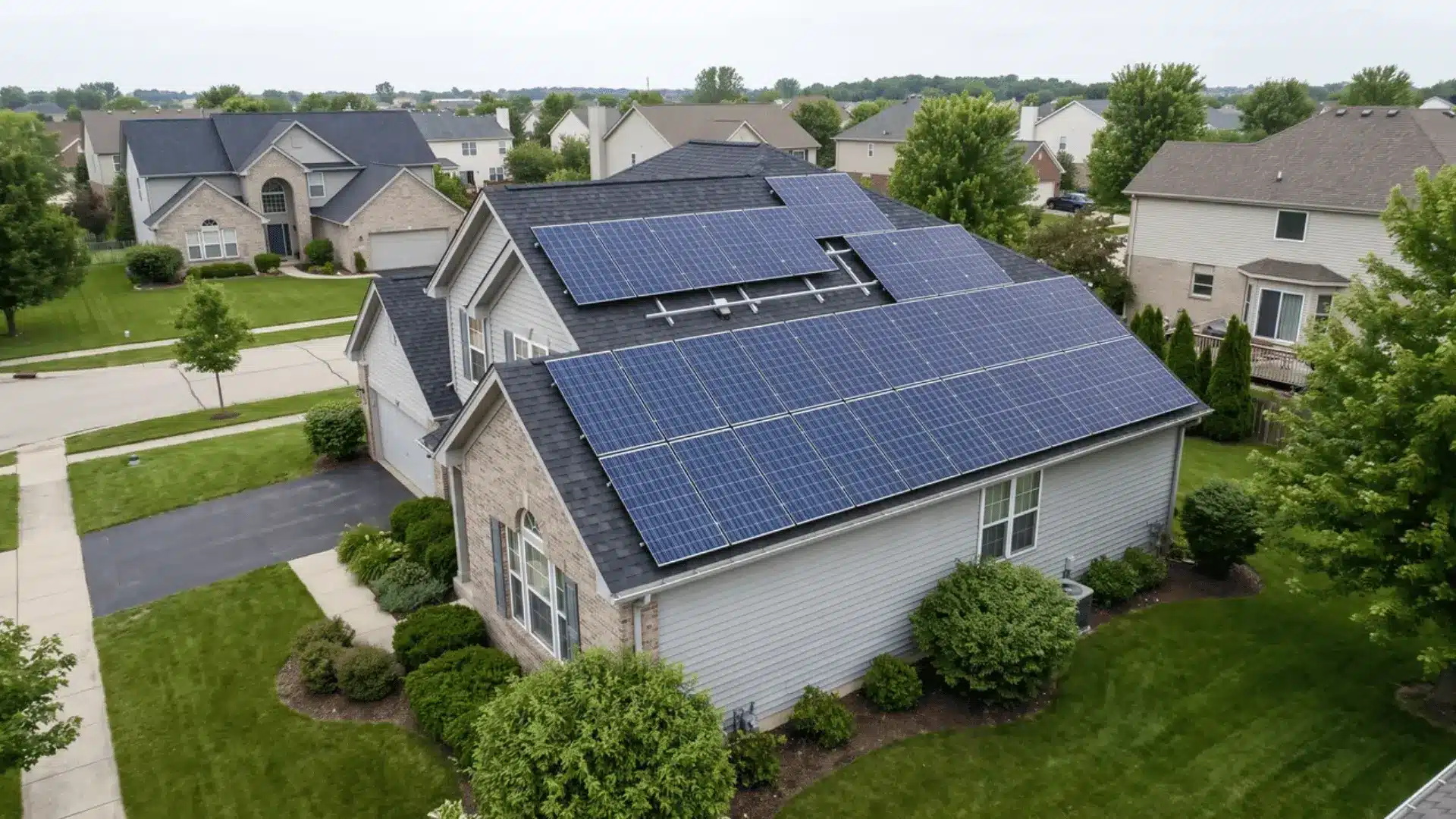
Solar systems are sized differently from generators. Generators are built around peak watt demand; solar is sized around daily energy consumption in kilowatt-hours (kWh).
To estimate your solar needs:
- Check your monthly electricity usage.
- Divide by 30 to get the daily average consumption.
- Factor in your location’s sunlight availability.
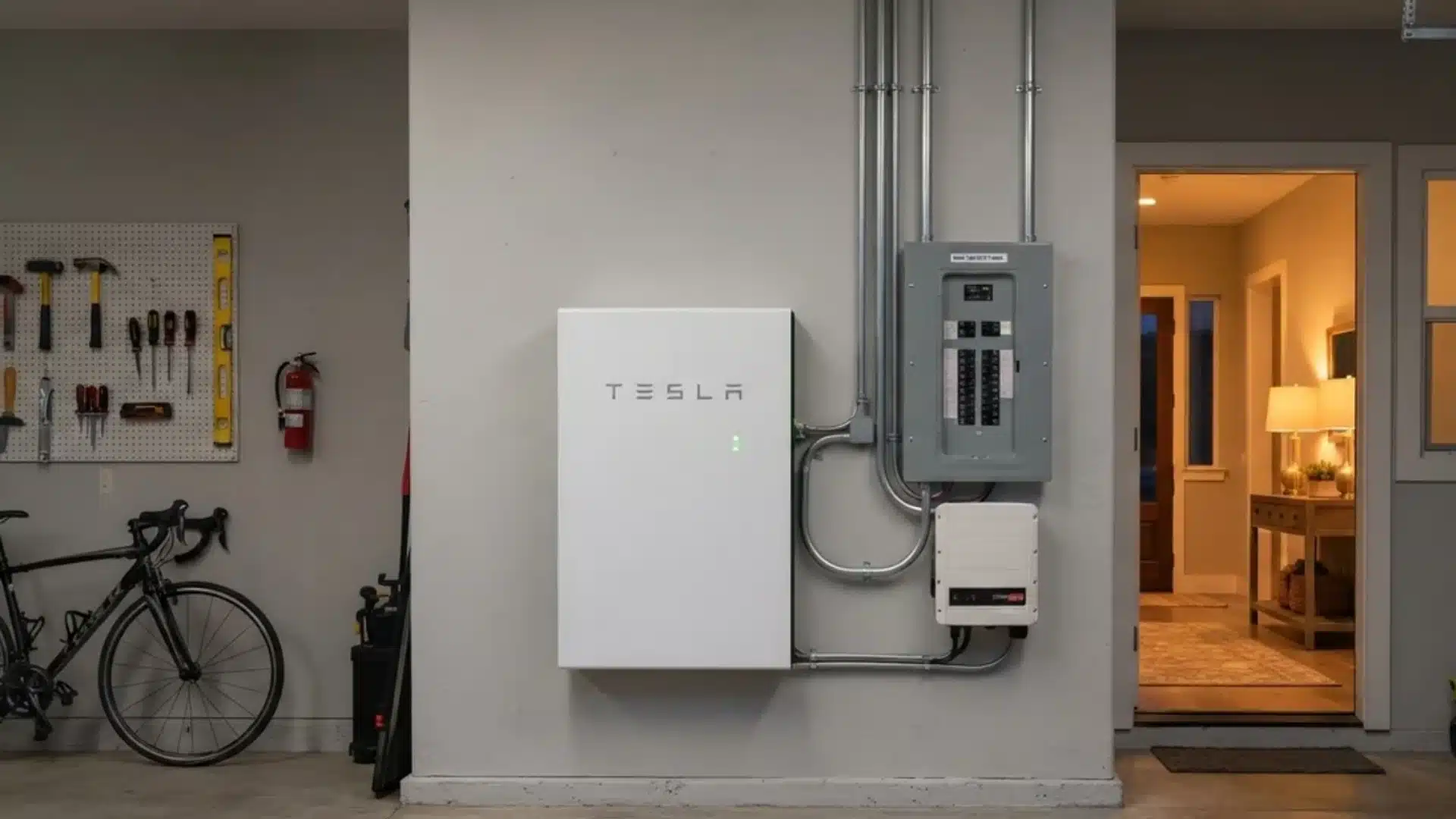
- Add battery storage if you need nighttime or outage backup.
A home that uses around 30 kWh/day may need roughly 8–12 kW of solar panel capacity, depending on the climate and sun exposure. Battery systems are rated in kWh because they store energy over time, unlike generators, which deliver instantaneous bursts of power.
Generator Safety Basics Worth Knowing
Sizing your generator correctly is only half the job; using it safely matters just as much.
- Never run a generator indoors, in a garage, or near windows and vents. Portable generators produce carbon monoxide, which can build up quickly in enclosed or semi-enclosed spaces.
- Use a transfer switch instead of backfeeding power through an outlet. Backfeeding can send electricity into utility lines and endanger repair crews working to restore power.
- Keep the generator dry and on level ground, and let it cool before refueling to avoid the risk of a fire from spilled fuel on a hot engine.
- Don’t overload the unit. Running at or above its rated capacity for extended periods can damage both the generator and whatever is plugged into it.
- Test your generator periodically, not just when an outage hits. A unit that’s been sitting unused for months can fail right when you need it most.
These steps don’t change your wattage math, but they determine whether the generator you sized correctly actually works when it counts.
Conclusion
Figuring out how many watts to run a house becomes much easier when you know which appliances matter most, understand the difference between running and starting watts, and leave a safety buffer.
I always find that spending a little time on the numbers is far better than dealing with an overloaded generator during a power outage. Once you calculate your power needs, choosing the right backup system feels much more straightforward.
If you have questions or your own sizing tips, share them in the comments. I’d love to hear about your experience.
Frequently Asked Questions
How many amps does my generator need to match its wattage?
Watts and amps aren’t interchangeable without knowing voltage. For 120V circuits, divide watts by 120 (a 6,000W generator delivers about 50 amps at 120V). For 240V appliances like electric dryers or well pumps, divide by 240 instead. This matters when matching a generator to your transfer switch or panel, since transfer switches are rated in amps, not watts.
How long can a generator run continuously?
Most portable gasoline generators run 8–12 hours on a full tank at 50% load, while propane and natural gas standby units can run indefinitely as long as fuel supply continues. Running a generator at or near 100% capacity for extended stretches shortens its lifespan and increases the risk of overheating, which is a separate concern from simply picking the right wattage.
Gasoline, propane, or natural gas, which fuel type should I choose?
Gasoline is the most widely available but degrades in storage after about 3–6 months unless treated, making it a poor choice for infrequent emergency use. Propane stores indefinitely and burns cleaner but yields slightly less energy per gallon. Natural gas is only viable for standby units with a home gas line, offering unlimited runtime without refueling but no portability.
How often does a generator need maintenance?
Manufacturers generally recommend an oil change every 50–100 hours of use, an air filter check every 25 hours, and a full test run every month even without an outage. Standby generators typically self-test weekly on a timer. Skipping this schedule is one of the most common reasons a correctly sized generator fails to start when it’s actually needed.
Can I run a generator in the rain?
Portable generators should never run in rain or standing water unless housed in a manufacturer-approved, ventilated generator shelter or tent, moisture can cause electrocution or short-circuit the unit. Standby generators are built with weatherproof enclosures and are designed to operate outdoors in all conditions.