

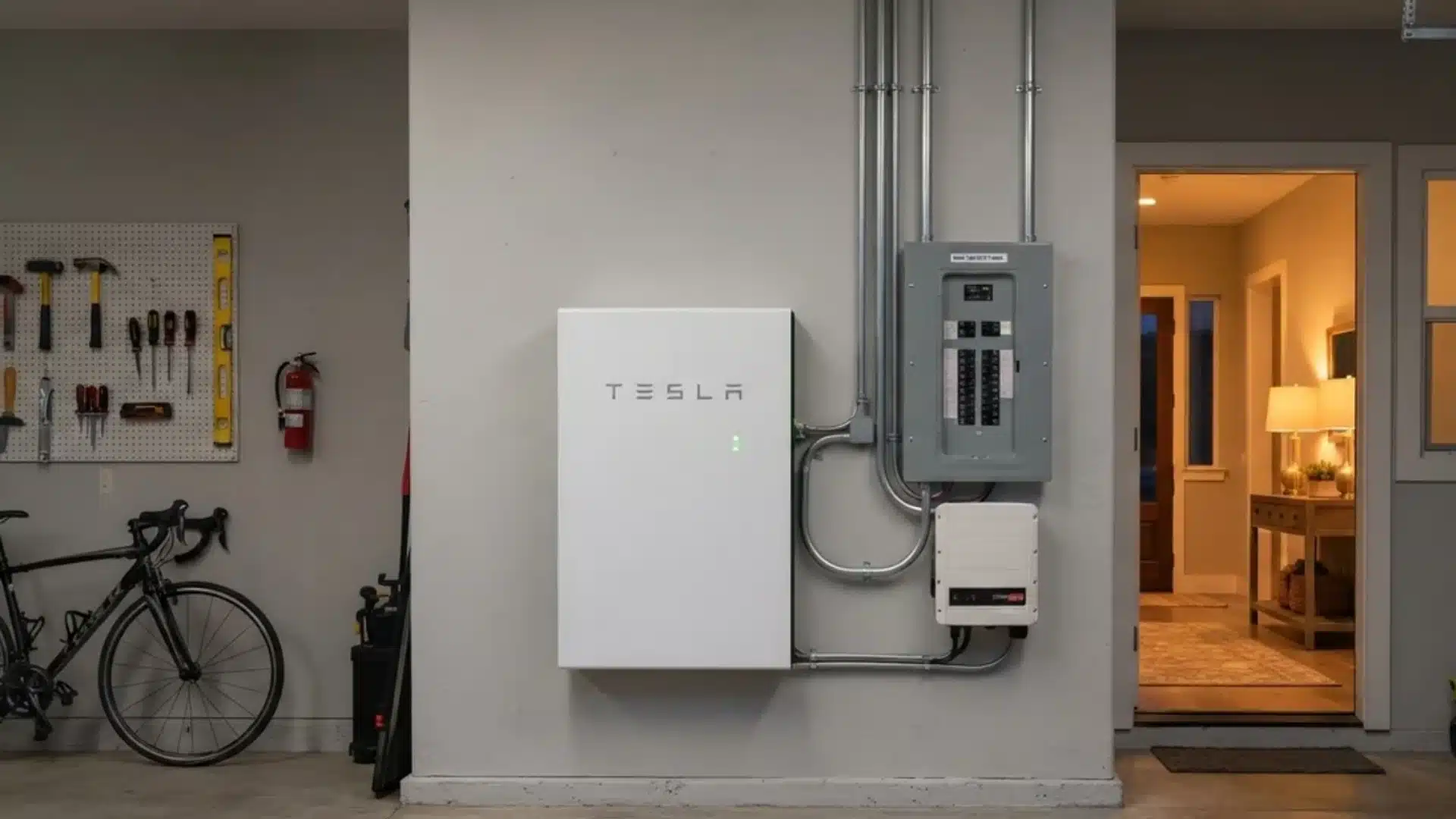
A water heater can look like a simple appliance choice until installation costs, energy use, and morning demand start pulling you in different directions.
I know how easy it is to focus only on the purchase price and miss the bigger picture.
The tankless water heater vs tank decision comes down to how much hot water you use, how your home is wired or plumbed, and how long you plan to stay.
You need to compare flow rate, recovery time, maintenance, space, lifespan, and total cost before choosing. By the end, you will know which system better fits your household, budget, climate, and daily routine.
Tankless Water Heater vs Tank at a Glance
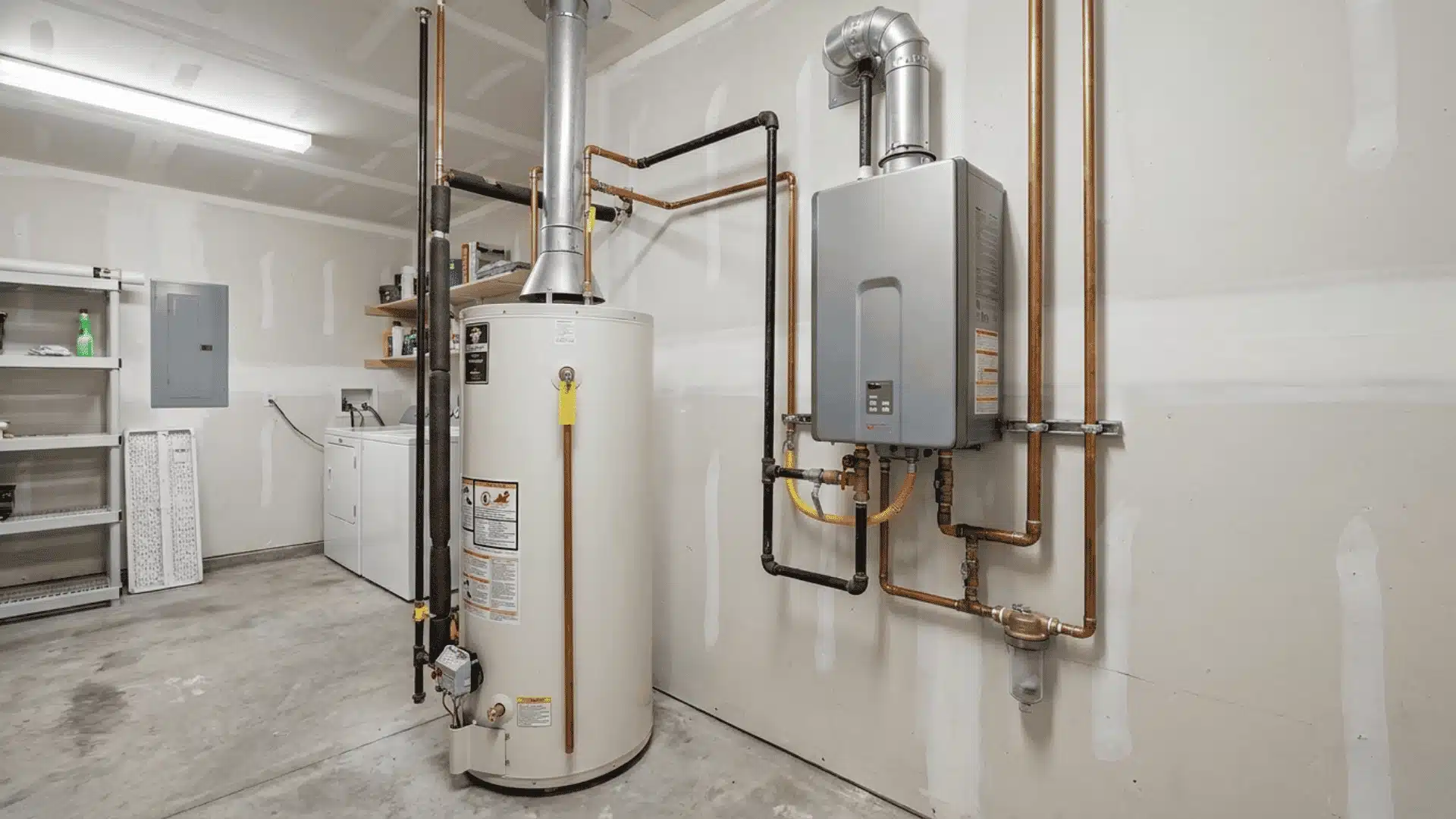
A tankless water heater is generally a better fit when you want lower standby energy use, continuous hot water, a compact design, and a longer potential lifespan. A traditional tank heater is often better when you want a lower initial cost, simple replacement, and reliable performance while several fixtures run together.
The biggest difference is how each system handles demand. A tank stores a limited amount of hot water that can be used quickly. A tankless unit heats water continuously but can only process a certain number of gallons per minute.
| Comparison Factor | Tank Water Heater | Tankless Water Heater |
|---|---|---|
| Heating method | Stores heated water | Heats water on demand |
| Initial cost | Usually lower | Usually higher |
| Installation | Often straightforward | May require utility upgrades |
| Hot-water supply | Limited by tank capacity | Continuous within flow limit |
| Simultaneous use | Strong until tank empties | Limited by rated flow rate |
| Energy use | Includes standby heat loss | Avoids most standby loss |
| Space required | Needs floor space | Usually wall-mounted |
| Typical lifespan | Around 8–12 years | Often 20 years or more |
| Maintenance | Flushing and anode checks | Descaling and filter cleaning |
| Best suited for | Budget-focused households | Long-term efficiency and space savings |
Neither system should be chosen by efficiency ratings alone. Installation conditions and peak household demand can have a greater effect on the final result.
How Each Water Heater Works
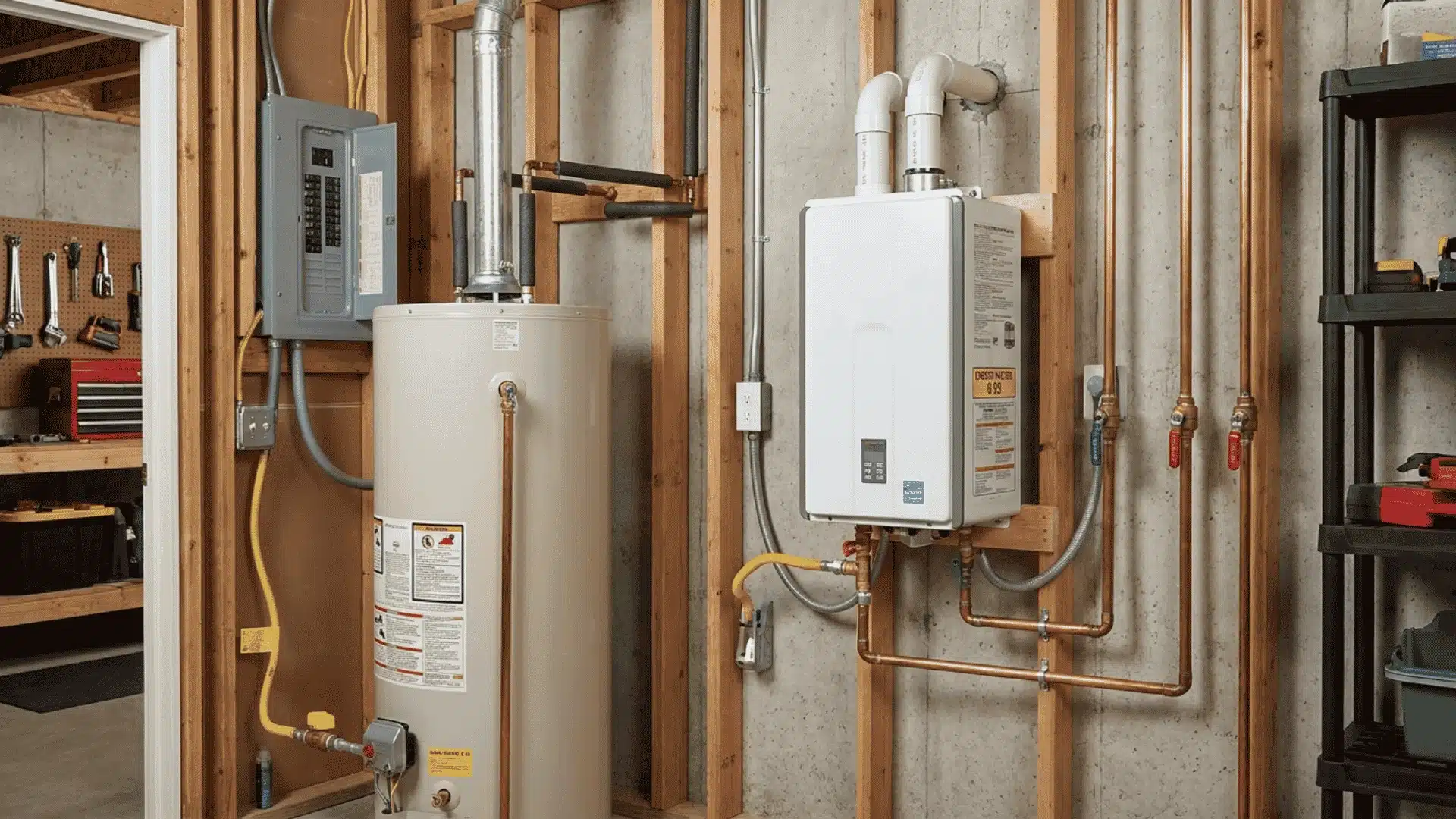
Tank and tankless water heaters use very different methods to provide hot water. Understanding those methods makes their cost and performance differences easier to evaluate.
How a Tank Water Heater Works
A traditional water heater stores a set amount of heated water, commonly between 40 and 80 gallons. Gas burners or electric heating elements warm the water inside the tank and maintain its temperature until someone opens a hot-water fixture.
As hot water leaves, cold water enters the tank and begins heating. If the household uses the stored supply faster than the system can replace it, the water eventually turns cold.
The tank then needs time to recover. Recovery speed depends on the tank size, fuel type, heating capacity, incoming water temperature, and thermostat setting.
How a Tankless Water Heater Works
A tankless heater does not maintain a stored reserve. It activates when a hot-water tap opens and heats water as it passes through a heat exchanger. These on-demand systems are available in both gas-powered and electric versions, although their heating capacity and installation requirements differ.
Whole-home units are rated by flow rate, usually expressed in gallons per minute. They must also raise the incoming water to the required temperature. A unit may perform well with one shower but struggle when several fixtures operate together.
Tankless performance therefore depends on both the number of fixtures operating and the temperature rise the unit must produce.
Upfront Cost and Installation Differences
A tank water heater normally costs less to purchase and install, especially when an existing tank is replaced with a similar model. The plumbing, venting, gas connection, and electrical supply may already be in place.
Installing an on-demand water heater can be more complicated. A gas model may need a larger fuel line, different venting, a condensate drain, or a nearby electrical connection for its controls. An electric model may require several dedicated high-amperage circuits and a larger electrical panel.
These upgrades can cost as much as, or more than, the heater itself. A professional tankless system setup makes the most financial sense when the home already has suitable plumbing and utility capacity.
These upgrades can cost as much as, or more than, the heater itself.
The total project cost may include:
- Water heater equipment
- Professional labor
- Permits and inspections
- Gas-line modifications
- Electrical-panel upgrades
- New wiring or dedicated circuits
- Venting changes
- Plumbing alterations
- Removal of the old heater
- Water-treatment equipment
A tankless conversion makes the most financial sense when the home already has suitable infrastructure. If major upgrades are required, the energy savings may take many years to recover the additional expense.
Hot-Water Supply and Simultaneous Demand
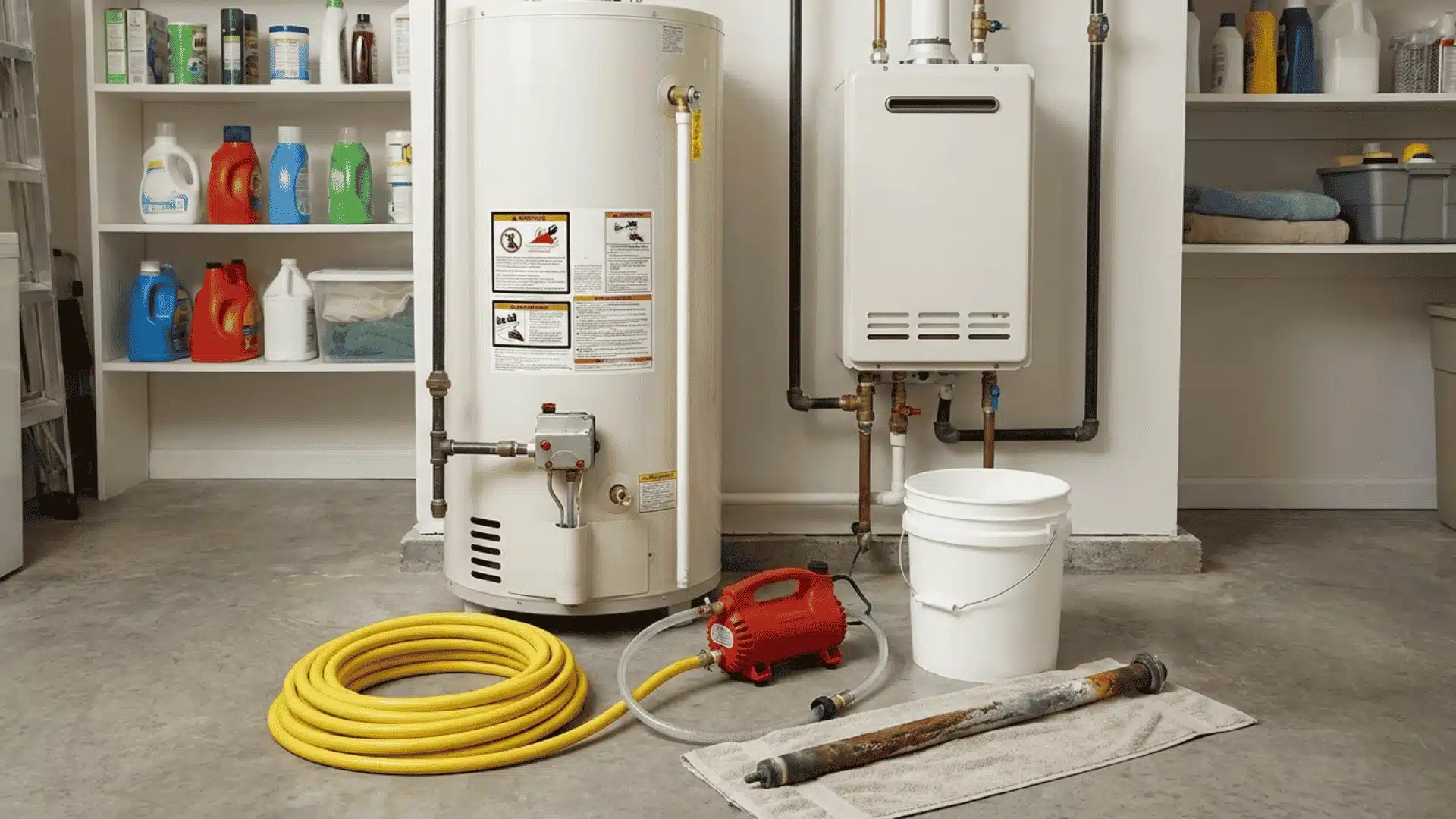
The two systems fail in different ways under heavy use.
A storage tank can deliver a large amount of hot water over a short period. Several fixtures may run together without an immediate temperature drop. However, once the stored supply is depleted, the household must wait while the tank reheats incoming water.
A tankless heater does not run out of stored water because it has no tank. It can continue producing hot water for a long shower or several back-to-back showers. Its limitation is the maximum flow it can heat at one time.
Typical fixture demands may include:
- Standard shower: around 1.5–2.5 gallons per minute
- Dishwasher: around 1–2 gallons per minute
- Washing machine: around 1.5–2.5 gallons per minute
- Bathroom faucet: around 0.5–1.5 gallons per minute
- Kitchen faucet: around 1.5–2.2 gallons per minute
Two showers may be manageable for a properly sized whole-home unit. Adding laundry or a dishwasher at the same time can push demand beyond its capacity.
A professional should calculate peak flow instead of sizing the system only by household occupancy.
Energy Efficiency and Monthly Operating Cost
Tankless water heaters usually consume less energy because they do not keep dozens of gallons hot throughout the day. A storage tank repeatedly reheats water as heat escapes through the tank walls, even when no fixtures are being used.
This standby heat loss creates the main efficiency difference between the systems.
Actual savings depend on:
- Daily hot-water consumption
- Gas and electricity prices
- Heater efficiency
- Incoming water temperature
- Household usage patterns
- Thermostat settings
- Installation quality
- Maintenance frequency
Homes that use small amounts of hot water throughout the day may see stronger percentage savings from tankless equipment. Large households with concentrated morning or evening demand may save less than expected.
A more efficient system also does not guarantee a quick financial return. The higher installation price must be compared with annual operating savings and the length of time you expect to remain in the home.
Gas and Electric Tankless Water Heaters
Homeowners often wonder whether on-demand water heaters use gas or electricity. Both types are available, but their capacity, operating costs, and installation needs can differ considerably.
Gas tankless units are usually better suited to whole-home demand because they can produce a larger temperature rise at higher flow rates.
When comparing the leading gas-powered tankless models, focus on flow capacity, efficiency rating, warranty coverage, climate suitability, and access to local technicians rather than choosing by brand reputation alone.
Electric tankless heaters are compact and do not require combustion venting. They can work well for a sink, bathroom, home addition, or another point-of-use location.
However, a whole-home electric unit can place a heavy load on the electrical panel and may perform less effectively when incoming water is very cold.
Maintenance Requirements
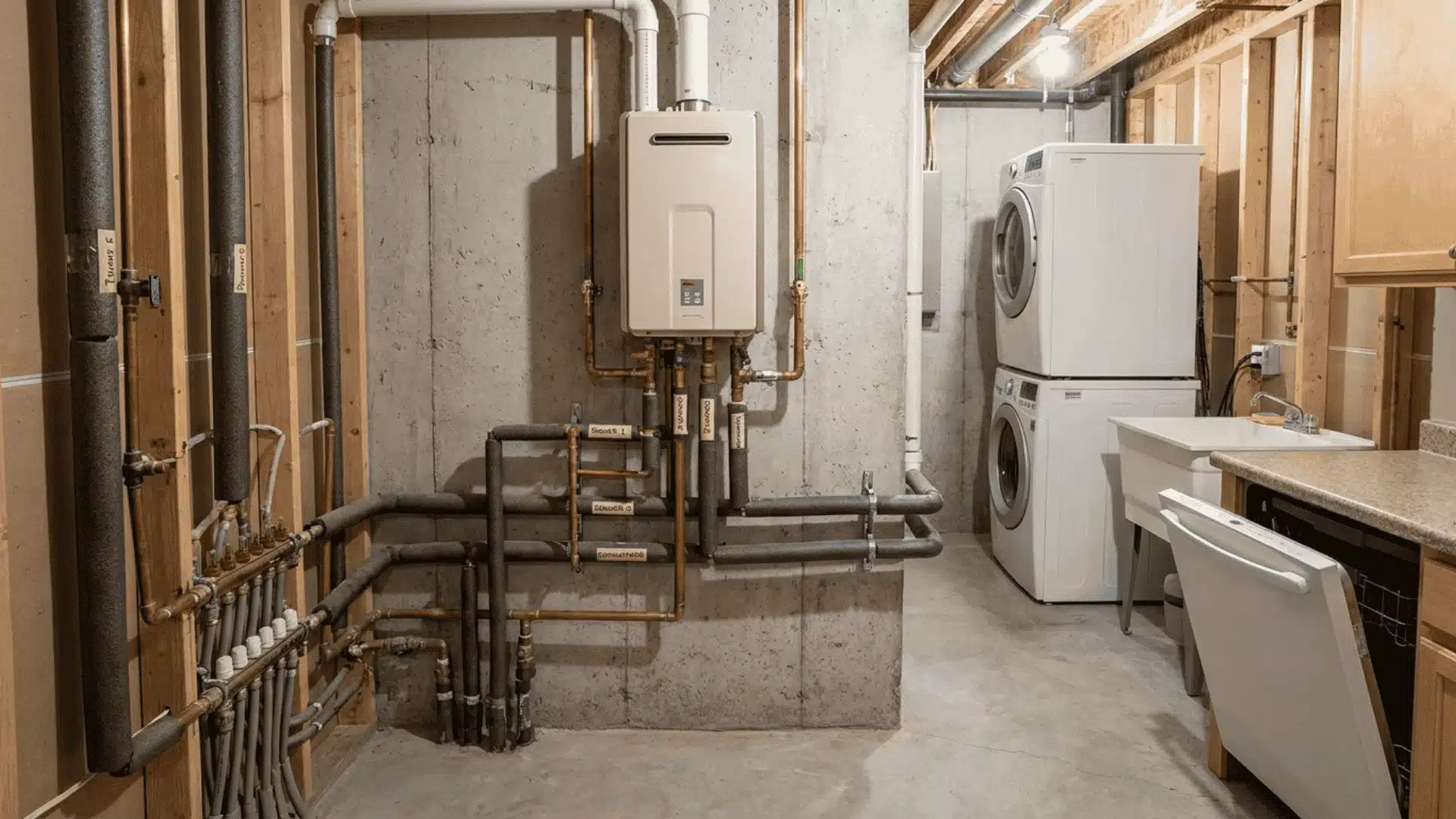
Both systems need routine care, although the maintenance tasks are different.
Tank Water Heater Maintenance
Storage tanks collect sediment as minerals settle at the bottom. Annual flushing can reduce buildup, protect heating performance, and limit noise.
Tank owners should also inspect the anode rod periodically. This replaceable metal rod attracts corrosive elements that would otherwise attack the tank lining. Once the rod is depleted, internal corrosion can accelerate.
Common maintenance tasks include:
- Flushing sediment from the tank
- Checking the pressure-relief valve
- Inspecting the anode rod
- Looking for leaks or corrosion
- Testing heating elements or burners
- Checking venting on gas models
A neglected tank may become less efficient and develop internal corrosion that eventually causes leakage.
Tankless Water Heater Maintenance
Tankless heat exchangers have narrow internal passages that can collect mineral scale. Hard water increases the rate of buildup.
Descaling is normally performed by circulating a cleaning solution through the unit. Inlet filters may also need cleaning, while gas systems require inspection of the burner, venting, and condensate drain.
Common maintenance tasks include:
- Descaling the heat exchanger
- Cleaning the water inlet filter
- Inspecting the burner
- Checking venting and combustion
- Cleaning the condensate drain
- Testing sensors and controls
- Inspecting for leaks
Tankless systems can be less forgiving when maintenance is ignored. Scale restricts water flow, reduces heat transfer, and places additional stress on the heat exchanger.
Lifespan and Repair Considerations
A conventional storage heater often lasts around 8–12 years, although water quality, installation, maintenance, and tank construction can shorten or extend that range.
The main long-term risk is tank corrosion. Once the steel tank begins leaking, replacement is normally required because the storage vessel cannot usually be repaired safely.
A maintained tankless heater may last 20 years or longer. Many internal components, including sensors, valves, fans, and burners, can be replaced separately.
However, a longer lifespan does not mean lower repair costs. Tankless systems contain more electronics and specialized parts. Some plumbers may not service every brand, and replacement components can be expensive.
Before buying, confirm that trained technicians and parts are available locally. The best-rated unit provides little value if qualified service is difficult to obtain.
Benefits of Tankless Water Heater vs Tank
The main benefits of tankless water heater vs tank systems relate to efficiency, space, service life, and continuous operation.
- Reduced standby energy loss: The system heats water only when a fixture creates demand.
- Continuous hot-water production: Hot water can continue as long as demand remains within the unit’s rated capacity.
- Compact installation: Most units mount on a wall and free up floor space in utility rooms, garages, or closets.
- Longer potential lifespan: Replaceable components can allow a maintained system to operate considerably longer than a storage tank.
- Lower stored-water leak risk: There is no large vessel holding 40–80 gallons that can rupture and release water.
- Flexible placement: Some models can be installed indoors or outdoors when local codes, climate conditions, and manufacturer requirements permit.
These advantages are most valuable when the heater is sized correctly, and the property does not need extensive gas or electrical upgrades.
Space, Placement, and Noise
A storage water heater needs enough floor space for the tank, plumbing connections, drainage provisions, and service access. Large-capacity models can be difficult to fit inside small closets or crowded utility rooms.
Tankless units mount on a wall and use much less floor area. That can be useful in apartments, small homes, finished basements, or garages where storage space matters.
However, tankless placement still has restrictions. Indoor gas models need approved venting and combustion arrangements. Outdoor models require freeze protection and must be suitable for local temperatures.
Tankless heaters can also produce fan, burner, or ignition noise during operation. Storage systems are often quieter, although sediment buildup may cause popping or rumbling sounds.
Is a Tankless Water Heater Better for Your Home?
Whether a tankless water heater is better depends on your home’s infrastructure, budget, and daily hot-water use.
It is often the stronger choice when you plan to stay long term, have adequate gas or electrical capacity, need to save space, and use hot water at different times throughout the day. It also suits households that take long or back-to-back showers, provided the unit is sized for peak flow and temperature rise.
A storage tank may be better when installation costs must stay low, replacement is urgent, or several fixtures run at once. It can also make more sense in older homes that need costly upgrades or in cold climates where electric tankless performance may drop.
The best option is the system that matches demand, infrastructure, and expected total ownership cost.
Choosing the Right System by Household Type
Different household situations point toward different starting choices.
| Household Situation | Better Starting Option | Why |
|---|---|---|
| Small home with limited space | Tankless | Wall-mounted design saves floor area |
| Older home with limited utilities | Tank | Fewer gas or electrical upgrades |
| Family using several fixtures together | Large tank or carefully sized tankless | Peak demand must be covered |
| Household taking back-to-back showers | Tankless | Continuous supply within flow capacity |
| Home needing urgent replacement | Tank | Faster and simpler installation |
| Long-term homeowner | Tankless | More time to recover the higher cost |
| Rental or short ownership period | Tank | Lower initial investment |
| Home with hard water | Either with treatment and maintenance | Both systems can be affected by minerals |
| Cold-climate home considering electric tankless | Tank or gas tankless | Cold inlet water raises power requirements |
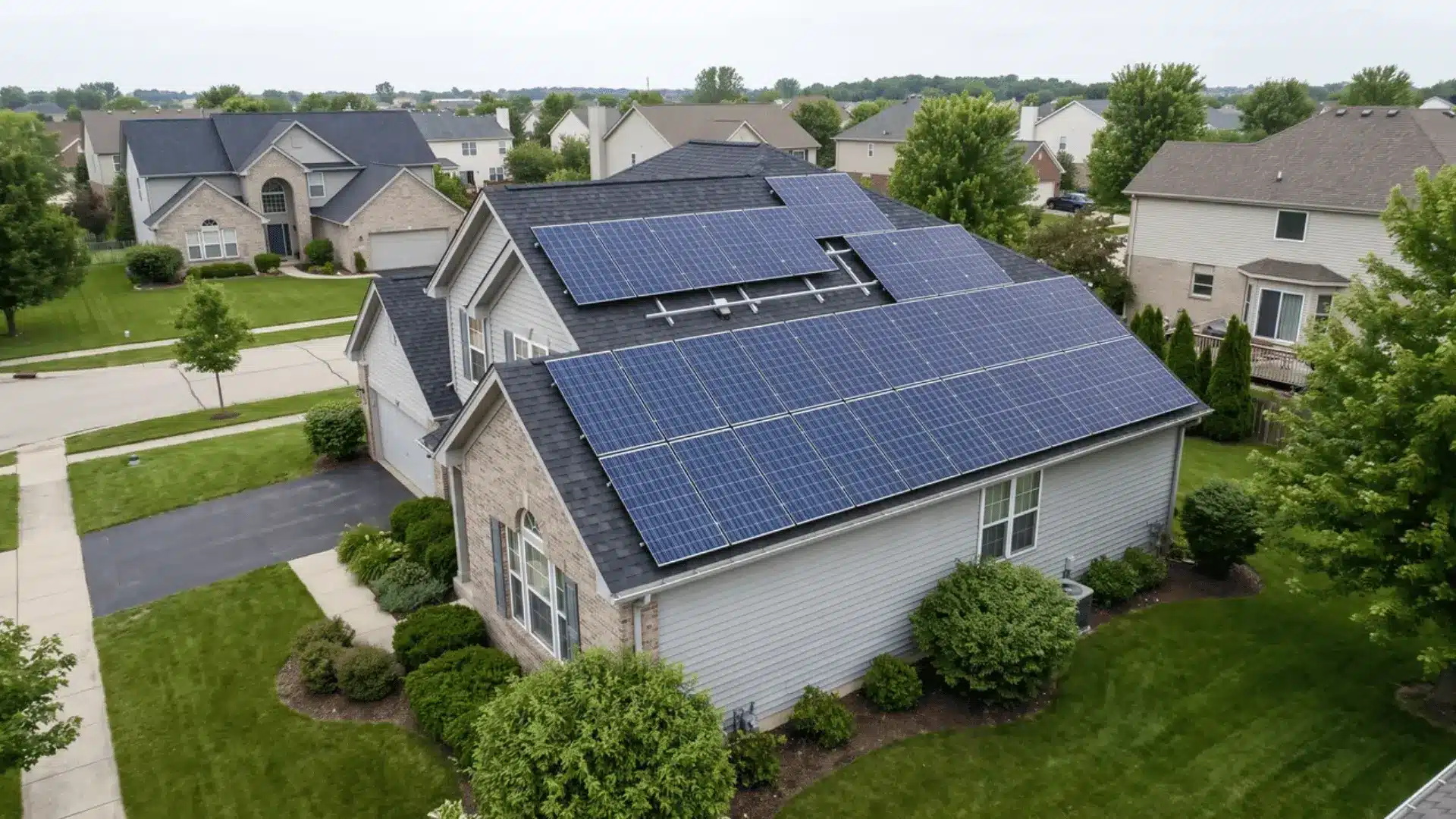
| Home with solar electricity | Depends on panel capacity and usage | Electrical load and operating schedule matter |
This table offers a starting point, not a final sizing recommendation. Fixture flow rates, temperature rise, fuel availability, and local codes still need to be checked.
Final Thoughts
The better water heater is the one that fits your home, not the one with the most impressive label. A tankless system can save space, reduce standby heat loss, and provide continuous hot water when sized correctly.
A tank model can cost less upfront, handle short bursts of heavy demand, and replace an older unit with fewer upgrades.
The tankless water heater vs tank choice becomes easier once you compare peak usage, installation needs, maintenance, climate, and how long you expect to stay.
I recommend getting a load calculation before you buy. Use that result to compare total installed cost, then share your choice or check related home energy guides for planning help.
Frequently Asked Questions
Why do plumbers sometimes recommend against tankless water heaters?
The hesitation usually comes down to installation complexity and infrastructure readiness. Older homes often need gas line upgrades, electrical panel work, or dedicated venting, each of which adds cost and labor. Plumbers who flag this aren’t dismissing tankless technology; they’re identifying that the upfront investment frequently doesn’t pencil out for the specific home in front of them.
Can a tankless water heater run two showers at the same time?
It depends on the unit’s rated flow capacity and the fixtures involved. A standard residential tankless unit handles roughly 5–7 gallons per minute. Two showers running simultaneously draw about 4 GPM, manageable. Add a dishwasher or laundry cycle, and most standard units reach their ceiling, causing the temperature to drop across all fixtures.
What is the actual energy savings from going tankless?
The DOE estimates 24–34% savings over conventional tank heaters for typical households. The savings come from eliminating standby heat loss, the energy consumed in keeping stored water hot when no one is using it. The realized savings depend on household usage patterns; homes that draw hot water in short bursts throughout the day see more benefit than households with concentrated usage windows.
How long does a tankless water heater last compared to a tank-style water heater?
A properly maintained tankless unit typically lasts 20 years or more. A conventional tank unit averages 8–12 years. The lifespan advantage is real but matters most if the household plans to remain in the home long enough to benefit and if annual descaling maintenance is consistently performed.