

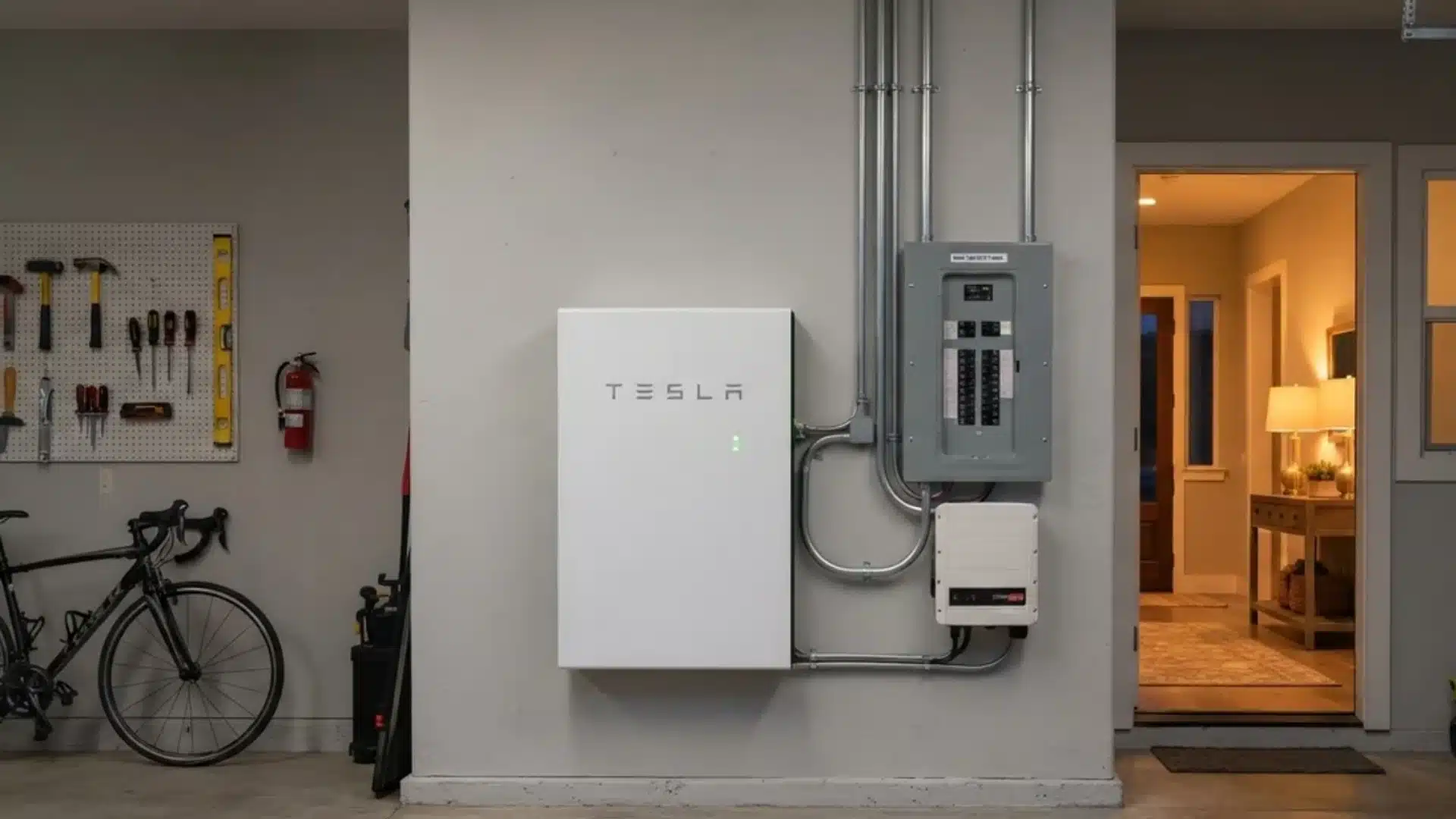
Choosing a tankless water heater gets confusing fast. A lower-priced model may seem ideal until you discover that your home cannot support its power needs or hot-water demand.
I know you want a clear answer before paying for equipment and installation. So, are tankless water heaters gas or electric? They can use natural gas, propane, or electricity, and each option has different strengths.
Gas units usually deliver more hot water at once, while electric models are compact and vent-free.
Understanding flow rate, temperature rise, utility costs, required upgrades, and maintenance will help you compare both types and choose the system that fits your household.
Tankless Water Heaters Use Gas or Electricity
Tankless water heaters come in three main fuel configurations: natural gas, propane, and electricity.
Gas models use a burner to heat water as it passes through the unit. Electric models perform the same task with high-powered heating elements. Neither type stores a large supply of hot water in a tank. Instead, the heater activates when you open a hot-water fixture and shuts off when the flow stops.
The fuel source affects more than energy use. It determines how much hot water the unit can produce, what upgrades may be required, and how the system must be installed.
The tankless water heater vs tank comparison focuses on how water is supplied and stored, while the gas-versus-electric decision focuses on the energy source. A traditional tank keeps a limited volume of water heated, whereas a tankless system heats water only when a fixture is opened.
How Gas Tankless Water Heaters Work
A gas tankless water heater detects water flow when someone opens a hot-water tap. The burner then ignites and transfers heat through a heat exchanger into the moving water.
Most residential models use natural gas, although propane versions are widely available. A unit must be designed or properly converted for the specific fuel being used. Homeowners should not assume that a natural gas model can automatically operate on propane.
Gas heaters usually have higher heating input than electric models. That additional power helps them maintain a stronger flow rate when multiple fixtures are operating.
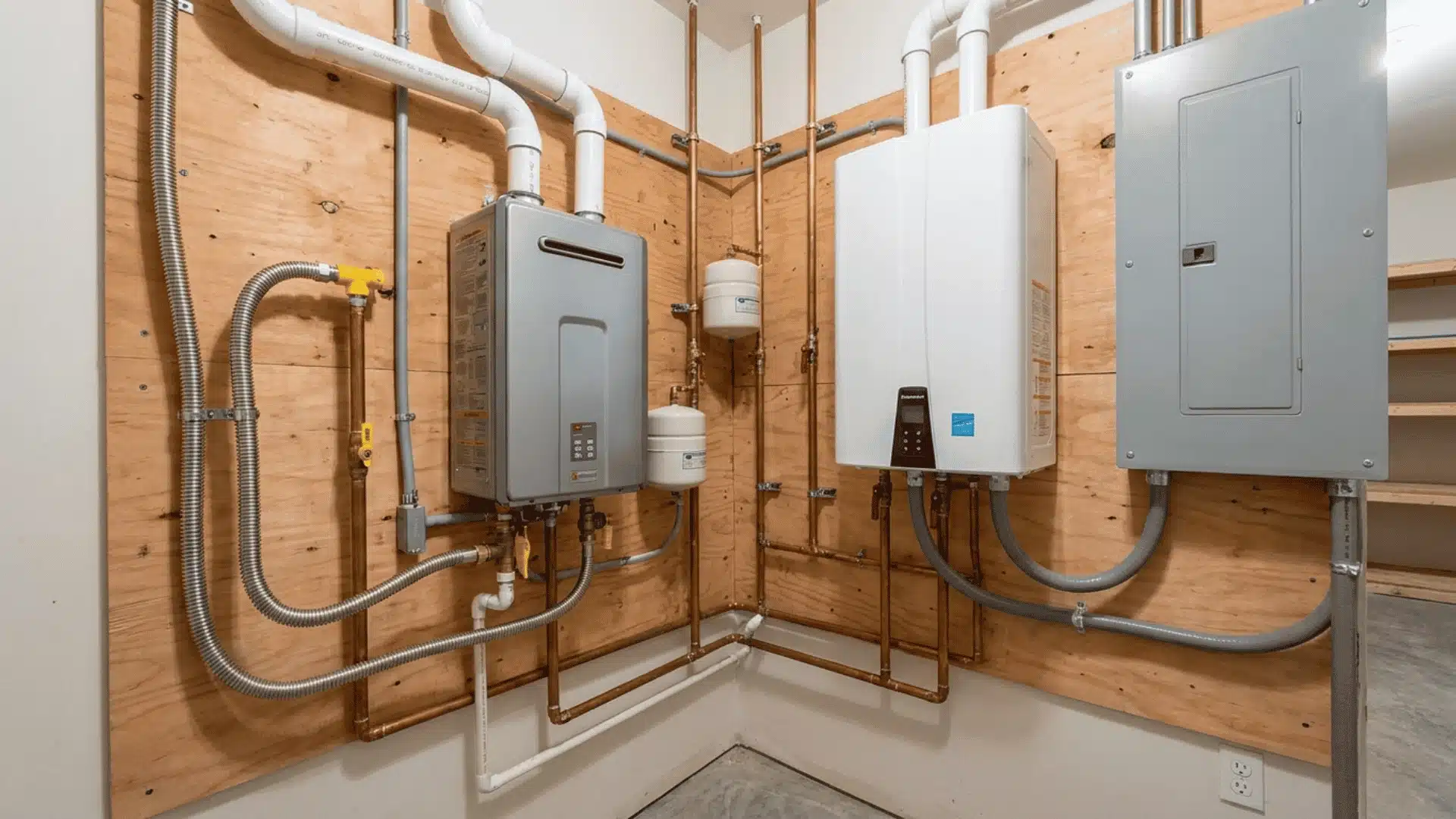
The home must also have an adequate gas supply. High-capacity models may require a larger gas line, approved venting, combustion air, electrical power for controls, and condensate drainage.
How Electric Tankless Water Heaters Work
Electric tankless heaters warm water using one or more internal heating elements. These elements activate in stages as water flows through the unit, allowing the heater to adjust its energy use based on demand.
Electric models do not need a burner, chimney, or exhaust vent. Their compact design makes them easier to place in closets, utility areas, bathrooms, or under sinks.
Electrical capacity is the main limitation. Whole-house models may require several dedicated circuits, heavy-gauge wiring, and enough panel capacity to support their power demand. Smaller electric heaters are commonly used for individual sinks, bathrooms, garages, and other point-of-use applications.
Gas vs. Electric at a Glance
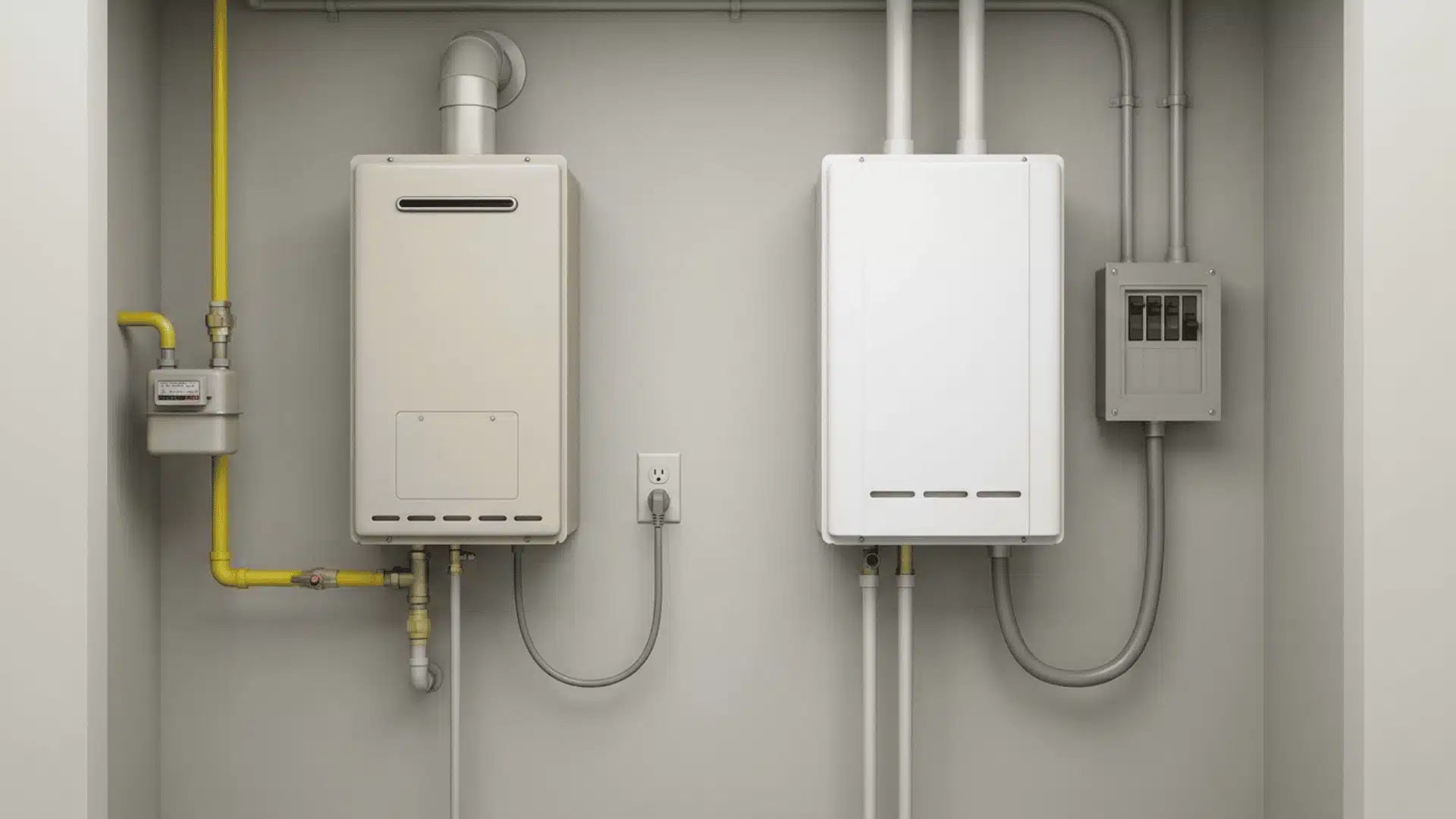
Both types can provide continuous hot water when properly sized. The main difference is how much demand they can handle and what your home needs to operate them.
| Comparison Factor | Gas Tankless Water Heater | Electric Tankless Water Heater |
|---|---|---|
| Energy source | Natural gas or propane | Electricity |
| Purchase price | Usually higher | Usually lower |
| Installation | Requires gas supply, venting, and combustion planning | Requires sufficient panel capacity, breakers, and wiring |
| Hot-water output | Generally higher | Usually lower at large temperature rises |
| Efficiency | High, with some exhaust heat loss | Very high at the appliance |
| Operating cost | Often lower where gas is affordable | Depends heavily on local electricity rates |
| Maintenance | Burner, venting, condensate, and scale checks | Scale and electrical-component checks |
| Space needs | Requires venting clearance | Compact and vent-free |
| Best use | Large homes and high simultaneous demand | Small homes, apartments, and point-of-use applications |
Gas generally provides more hot water at once, while electric equipment offers simpler placement and avoids combustion-related installation requirements.
Performance: Flow Rate, Temperature Rise, and Climate
A tankless heater’s output is usually listed in gallons per minute (GPM), but that number only means something alongside temperature rise, the difference between your incoming water temperature and the desired outlet temperature.
If water enters at 50°F and needs to leave at 120°F, the unit has to produce a 70°F rise.
Colder incoming water demands more heating power, which lowers the gallons per minute the heater can actually deliver, so the maximum flow rate on a spec sheet can be misleading if it was measured at a smaller rise than your home needs.
This is where gas and electric units tend to diverge:
Gas units generally maintain stronger flow rates during high simultaneous demand and large temperature rises. A properly sized gas model may support several showers, laundry, or a large tub at the same time, provided the fuel supply and venting are adequate.
Electric units perform best when demand is moderate and incoming water is relatively warm. The same unit may serve several fixtures in a warm region but only one fixture when groundwater is much colder.
Compare each model’s rated output at the temperature rise your home actually requires rather than relying only on its highest advertised GPM.
Installation Costs Can Change the Decision
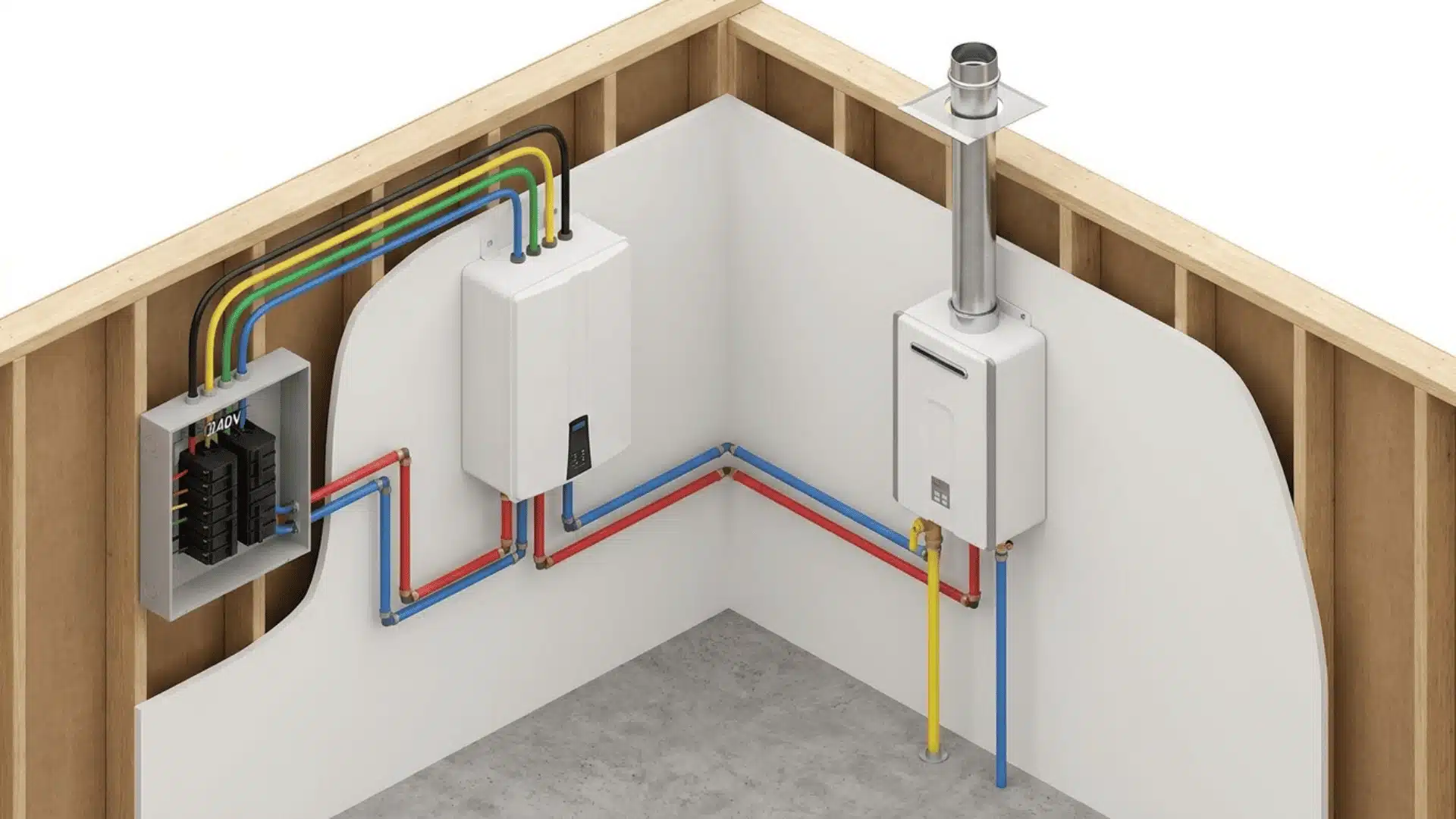
The equipment price represents only one part of a tankless water heater installation.
An electric model is often cheaper to purchase, but the savings can disappear when a home needs major electrical work. A gas model may carry a higher purchase price while fitting more easily into a property that already has suitable fuel and venting infrastructure.
Gas Installation Expenses
Installing a gas tankless heater may involve:
- Increasing the gas-line size
- Installing approved exhaust venting
- Providing combustion air
- Adding a condensate drain
- Modifying water lines
- Installing a nearby electrical outlet
- Obtaining permits and inspections
Electric Installation Expenses
A whole-house electric heater may require:
- Multiple dedicated breakers
- Heavy-gauge electrical wiring
- Additional panel space
- A larger electrical panel
- A utility-service upgrade
- Water-line modifications
- Permits and professional labor
Point-of-use units are usually simpler to install than whole-house electric models. Compare complete installation estimates rather than equipment prices alone.
Maintenance and Service Requirements
Both gas and electric tankless heaters can develop mineral scale inside the heat exchanger. Hard water increases the risk because dissolved minerals collect on internal surfaces and reduce heat transfer.
Many manufacturers recommend periodic flushing, although the correct schedule depends on water quality, usage, and product instructions.
Gas models may also require inspection of:
- Burners and ignition components
- Air intake and exhaust venting
- Condensate drainage
- Gas connections
Electric models have fewer combustion-related components but may still need checks for:
- Heating-element condition
- Electrical connections
- Scale buildup
- Flow sensors
- Error codes
Local service availability is important. A highly rated unit provides little value when qualified technicians and replacement parts are difficult to find.
Real-World Experience with Gas and Electric Models
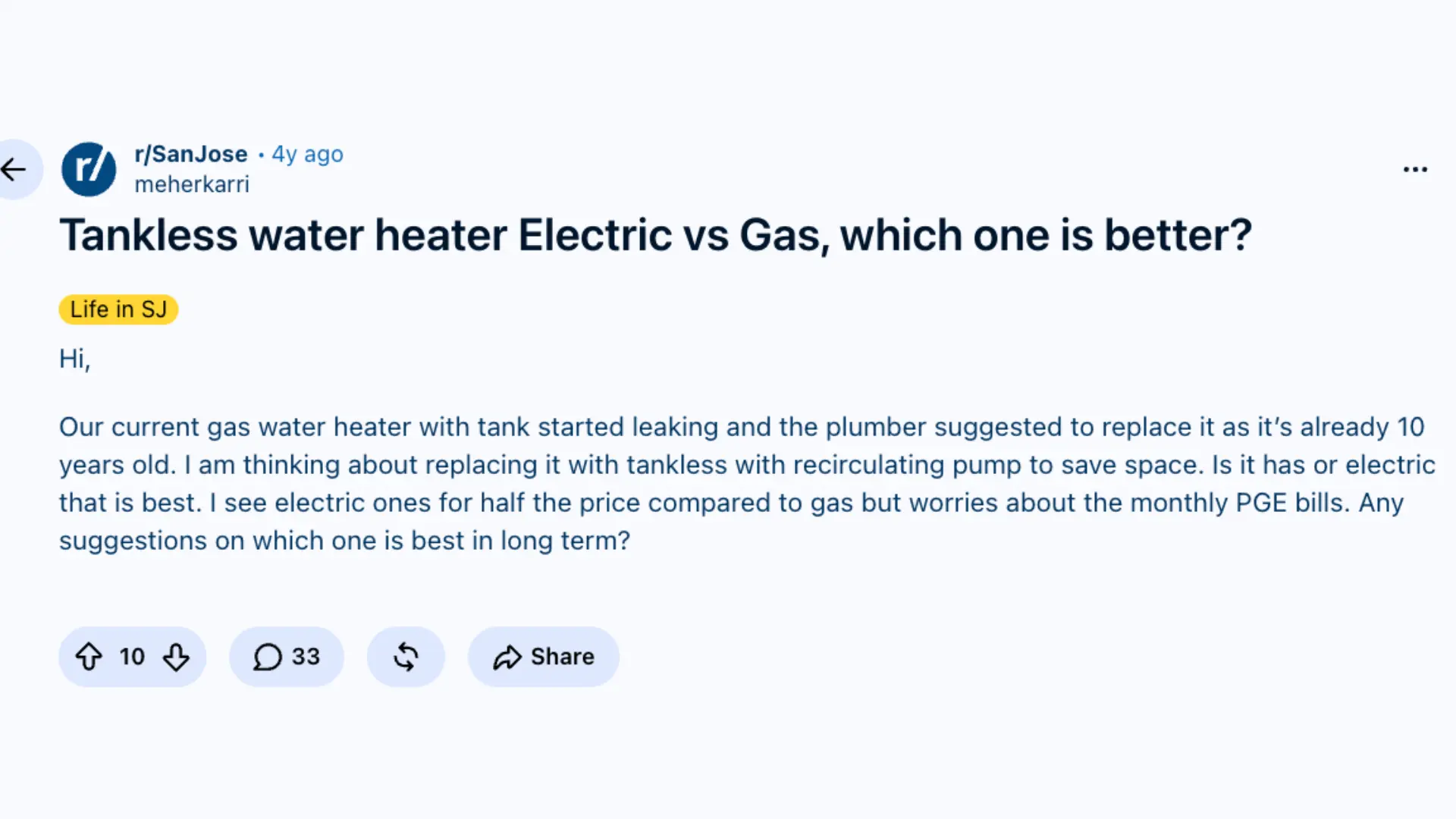
A Reddit discussion in r/SanJose shows how homeowners weigh gas and electric tankless water heaters in real life.
Most commenters warned that electric tankless models can require heavy wiring, several high-amperage breakers, and even a panel upgrade, making installation far more expensive than the unit itself.
Gas tankless systems were seen as more practical for homes that already have gas service, although some users noted that gas-line upgrades may also be necessary.
Others recommended heat pump water heaters because they use less electricity than standard electric resistance models and may qualify for rebates. The discussion also highlighted local energy policies, solar power, and future restrictions on gas appliances.
Overall, commenters agreed that the best option depends on existing infrastructure, utility costs, available incentives, and whether the home can support the required electrical or gas upgrades.
Which One Is Right for You?
Gas is the better choice when several hot-water fixtures run at the same time, the home already has suitable gas or propane service, and incoming water temperatures are very cold.
It also suits households with large tubs, high-flow showers, or frequent simultaneous use. Gas may be more practical when local fuel costs are favorable or when a whole-house electric system would require major electrical upgrades.
Electric works best when hot-water demand is low to moderate and usually only one fixture runs at a time. It is also a good fit when gas service is unavailable, venting would be difficult, or space is limited.
Choose electric only if the panel has enough spare capacity and local electricity rates are reasonable. Small point-of-use units also work well for remote sinks or bathrooms.
Questions to Ask Before Choosing
- How many hot-water fixtures may run simultaneously?
- What is their combined peak flow rate?
- What is the coldest incoming water temperature?
- What temperature rise must the heater provide?
- Can the gas line or electrical panel support the unit?
- Will venting, wiring, or utility upgrades be required?
- What are the local gas and electricity rates?
- How hard is the water?
- Are qualified technicians and replacement parts available locally?
- What maintenance does the warranty require?
Final Verdict
The best fuel type is the one your home can support without sacrificing performance or creating excessive upgrade costs. Gas units usually suit larger households, colder incoming water, and several fixtures running together.
Electric models make more sense for lighter demand, limited space, or point-of-use applications, provided the electrical system has enough capacity.
If you are still asking, “Are tankless water heaters gas or electric?” remember that both can work when correctly sized and professionally installed.
I recommend comparing realistic flow rates, required temperature rise, utility prices, installation work, maintenance, and local service support.
Check your home’s connections, request complete installation quotes, and check out related water-heater guides before choosing your unit.
Frequently Asked Questions
How do I know if my tankless water heater is gas or electric?
Look at the connections entering the unit. A gas model has a threaded or flexible gas supply line and a metal exhaust vent exiting through a wall or roof. An electric model has no vent and connects to a dedicated electrical circuit, typically with multiple large-gauge wires and one or more dedicated breakers in the panel.
Can I switch from a gas tankless to an electric one, or from electric to gas?
Switching fuel types is possible but rarely cost-effective. Moving from gas to electric typically requires a panel upgrade and new high-amperage wiring. Moving from electric to gas requires a dedicated gas line run and exhaust venting. Either conversion adds $1,500–$4,000 in infrastructure costs before the new unit is purchased.
Do electric tankless water heaters work well in cold climates?
Whole-home electric tankless units struggle in cold climates because the temperature rise required from cold groundwater reduces their effective flow rate significantly. A unit rated at 4 GPM with 70°F inlet water may deliver only 2 GPM with 45°F groundwater, often insufficient for multi-fixture households in northern regions.
Is a condensing gas tankless unit worth the extra cost over a standard gas model?
In most cases, yes, if you are already choosing gas. Condensing units operate at 90–96% efficiency, compared with 80–85% for non-condensing models, which lowers operating costs and qualifies them for federal energy efficiency tax credits in eligible years. The payback on the price difference is typically 3–5 years at average gas rates; verify current credit availability before purchasing.