



A solar loan can look affordable until the numbers start adding up. A low monthly payment may seem appealing, but the interest rate, loan term, and financing fees can change what you pay over time.
That is why I like to check more than one number before comparing offers.
A solar loan calculator can help estimate your monthly payment, total interest, and overall borrowing cost. Still, the result depends on the details you enter.
One wrong assumption can make a loan look cheaper than it really is. Understanding the numbers first can help you compare financing options with more confidence and avoid unexpected costs later.
What is a Solar Loan Calculator?
A solar loan calculator is a tool that shows what you would pay each month if you finance solar panels instead of paying cash.
You type in the system cost, down payment, interest rate, and loan length, and it works out your monthly payment plus the total interest over time.
This helps you compare loan offers before you sign anything. One thing changed recently: the federal Residential Clean Energy Credit ended for homeowner-purchased systems installed after December 31, 2025.
So if a calculator still subtracts that credit, double-check its assumptions. The Energy Department notes solar loans typically run five to twenty years, which is another number worth confirming with your lender.
What Numbers Do You Need Before You Calculate a Solar Loan Payment?
A solar loan calculator turns four numbers into a monthly payment, but your starting price already depends on the solar panel types and roof size you’ve chosen. Get one wrong and the whole estimate shifts.
- System cost: the full price of the panels, inverter, and installation, before incentives.
- Down payment: whatever cash you put in upfront, even if it’s zero.
- APR: the interest rate tied to your loan type and credit profile.
- Loan term: usually 10, 15, 20, or even 25 years for solar-specific loans.
One thing changed for 2026. The 30% federal residential solar tax credit expired for homeowner-purchased systems installed after December 31, 2025.
If your calculator still subtracts a federal credit by default, that number may not apply to you. A separate federal credit, the Section 48E clean-energy credit, still applies to leases and power purchase agreements.
The company that owns the system claims that credit and can pass part of the savings through in your monthly lease or PPA rate.
A calculator that doesn’t ask which ownership structure you’re using will overstate your real savings.
How to Calculate Your Solar Loan Payment
Your monthly solar loan payment depends on more than the system price, because the interest rate, loan term, fees, and loan structure all shape it directly.
1. How the Monthly Payment Is Calculated
Your lender calculates the monthly payment using the financed amount, APR, and loan term, spreading repayment evenly across scheduled monthly installments.
Longer terms usually reduce each payment, but they also increase total interest because the balance stays unpaid longer.
2. Where the Loan Structure Actually Changes Your Payment
Some solar loans use a recast structure, where a large principal payment can reduce the balance and lower future monthly payments.
If that lump sum never happens, the borrower may stay with the higher payment and interest rate for the full term.
3. Solar Loan Payment Example
A $30,000 loan at 9.99% APR over ten years produces a monthly payment of roughly $396 before any extra payments apply.
Over 120 months, the borrower also pays substantial interest, making the total financing cost much higher than the original principal.
Before accepting the estimate, compare it with your lender’s actual terms, especially any recast conditions, rate changes, fees, or required lump-sum payments in the agreement.
How Loan Term and APR Change Your Solar Payment
Your APR and loan term have the biggest effect on what you pay each month and how much interest you pay overall.
A lower APR reduces borrowing costs because less interest is added to the balance. Even a small rate difference can matter over 10, 15, or 20 years.
Loan length works differently. A longer term spreads the balance across more payments, which usually lowers the monthly amount.
The tradeoff is that you stay in debt longer and may pay much more interest. A shorter term raises the monthly payment but reduces the time interest has to build.
When comparing offers, look at both the monthly payment and total repayment amount. The cheapest monthly option is not always the least expensive loan overall.
Unsecured Solar Loan vs. HELOC: Comparing Your APR Options
Your loan type changes your APR more than almost any other input. Here’s how an unsecured solar loan stacks up against a HELOC or home equity loan.
| Feature | Unsecured Solar Loan | HELOC / Home Equity Loan |
|---|---|---|
| Collateral needed | None, based on credit | Your home equity |
| Typical APR range | 6% to 25%, higher for weaker credit | 5% to 10%, priced near prime rate |
| Approval speed | Same day to a few days | Two to four weeks |
| Common fees | Dealer fees sometimes rolled into the loan | Closing costs, usually no dealer fee |
| Best fit for | Buyers with little or no home equity | Homeowners who want the lowest total interest |
If you have equity in your home, a HELOC usually costs less over the full loan term, even with the longer wait. If you don’t, an unsecured solar loan gets you funded fast; just expect a higher rate if your credit isn’t strong.
Why Your Solar Loan Estimate May Be Wrong
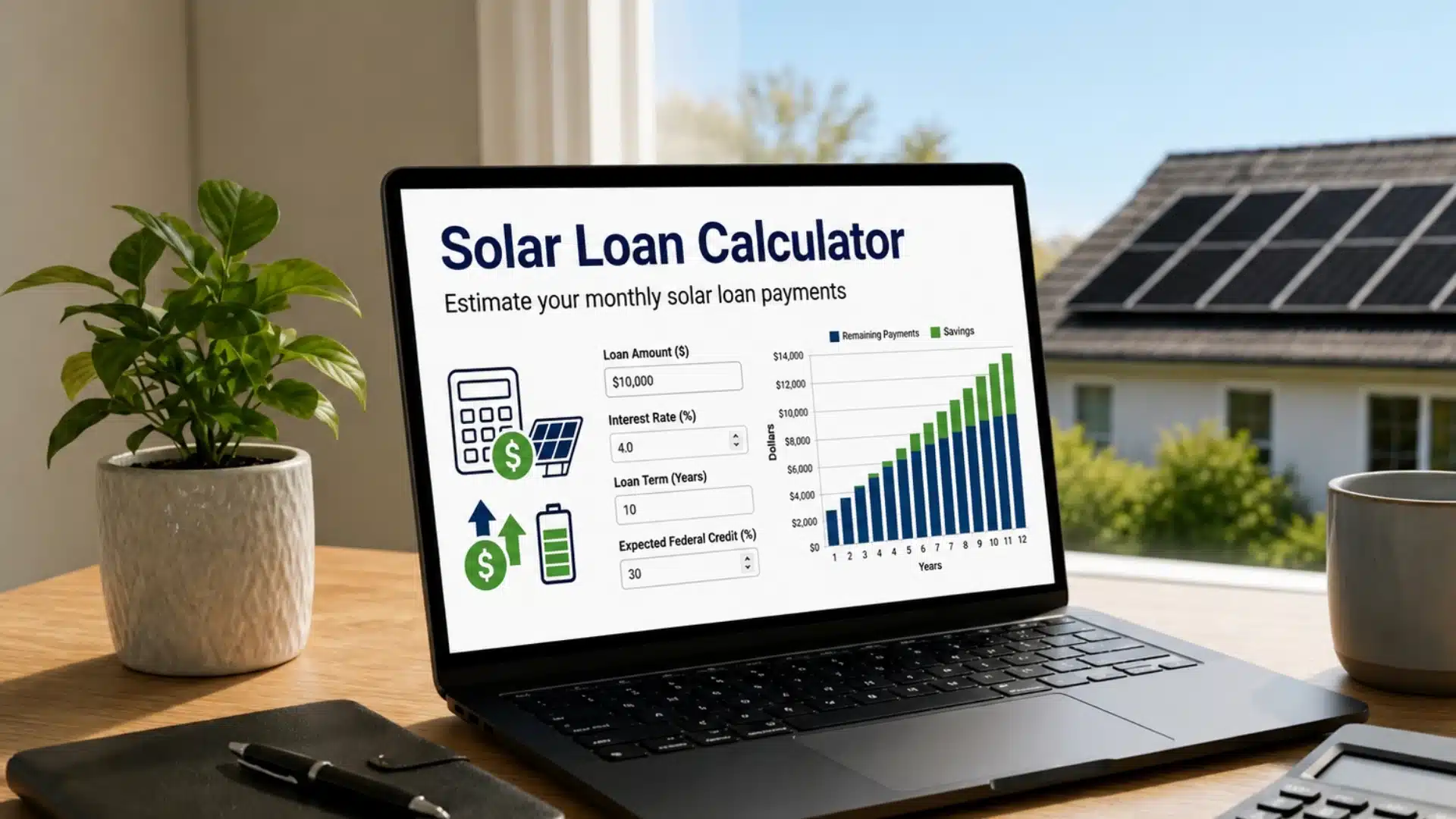
A solar loan estimate can look simple, but the final payment may be different from what a calculator shows. Some costs and loan terms are not always included in a basic calculation. I recommend checking the full loan offer before relying on any estimate.
- Dealer Fees: Some solar loans include dealer fees that increase the amount you borrow above the system’s cash price. These fees can make a low advertised rate look more attractive than the total financing cost.
- Wrong Loan Amount: Entering the system’s cash price instead of the actual amount financed can produce an inaccurate payment estimate. Always check how much you are actually borrowing.
- Payment Changes: Some solar loans expect a large principal payment after an initial period. If you do not make that payment, your required monthly payment may increase.
- Conditional Rates: An advertised APR may only apply to certain borrowers or loan terms. Your approved rate can differ based on your credit profile and lender terms.
- Missing Loan Details: A calculator may not include every fee, special payment condition, or changing interest rate. Read the loan disclosure carefully before treating the estimate as final.
Always compare the calculator result with the lender’s written offer, the same way a solar angle calculator result only holds up once you check it against your roof’s real conditions.
Check the amount financed, APR, monthly payment, fees, and total repayment so you know what you are agreeing to before signing.
How to Verify Your Solar Loan Estimate
A calculator result should give you a useful estimate, but it should never replace the actual numbers provided by a lender.
Start by requesting a full amortization schedule showing the principal, APR, monthly payment, loan term, and total interest.
Then get preapproved with two or three lenders. This gives you rates based on your credit profile, not a generic estimate.
It also helps to compare a solar-specific loan with a HELOC or home equity loan using the same cash price for the system. Check whether dealer fees have increased the amount you finance.
When one lender advertises a noticeably lower rate, review the full offer carefully. Higher principal, added fees, or special payment conditions often explain why the deal looks cheaper upfront.
The Ending Note
A solar loan calculator is useful for estimating what a solar system may cost each month, but the final number depends on your actual loan terms.
Interest rates, repayment length, dealer fees, and the amount financed can all affect what you pay. I recommend testing a few different scenarios before choosing a loan, then comparing the results with real offers from lenders.
Look beyond the monthly payment and check the total interest and total repayment.
A little comparison can prevent expensive surprises later. Have you used a solar loan calculator before? Did the final loan payment match your estimate? Share your experience or questions in the comments below.
Frequently Asked Questions
Does a solar loan calculator include the federal tax credit automatically?
Not for a home you’re buying outright. The 30% residential credit expired for systems placed in service after December 31, 2025. If a calculator still subtracts it, check whether it’s assuming a lease or power purchase agreement instead. Those still connect to a separate federal credit that the system’s owner claims and may pass through to you.
What APR should I use in a solar loan calculator?
Use the rate tied to the loan type you’d actually qualify for. Unsecured solar loans commonly run 6% to 25% APR. Home equity loans and HELOCs run closer to 5% to 10%, since most price near the prime rate. A generic average APR only gives you a rough starting point.
How accurate is a solar loan calculator’s monthly payment estimate?
It’s only as accurate as what you enter. Calculators can’t account for dealer fees baked into the system cost. They also miss a recast loan’s rate jump if you skip the paydown window. Treat any output as a starting number, not a final one.
Can I use a solar loan calculator for a home equity loan?
Yes, but adjust your rate input first. Home equity loans and HELOCs typically carry lower APRs than unsecured solar loans. Entering a solar-loan-specific rate will overstate what you’d actually pay through home equity financing.