


Most homeowners assume a heat pump that will not warm the house needs a full replacement. That is rarely true.
In many homes, a heat pump that isn’t heating properly comes down to something small, like a thermostat set to the wrong mode or a filter choking airflow.
Other times the fix runs deeper, into refrigerant levels, a stuck reversing valve, or electrical trouble that only shows up under load.
The tricky part is that a heat pump can sound and feel like it is running fine while it quietly fails to warm a single room.
Knowing which symptom points to which cause saves you from guessing, and from paying for repairs you do not actually need.
Here is where that heat actually comes from, and why it sometimes stops arriving.
How Does a Heat Pump Produce Heat?
A heat pump does not create heat by burning fuel like a furnace. Instead, it transfers available heat from outdoor air into your home through a refrigeration cycle.
The outdoor coil absorbs heat, refrigerant carries it through the system, and the indoor coil releases that heat into your living space.
Because heat pumps move heat instead of creating intense heat, their airflow may feel different from a furnace. A properly operating heat pump can warm your home even when the air from the vents feels mild.
In colder weather, the system may also use defrost cycles or supplemental heat to maintain comfort. Understanding how heat moves through the system makes unusual airflow easier to interpret.
Why is My Heat Pump Running but Not Heating?
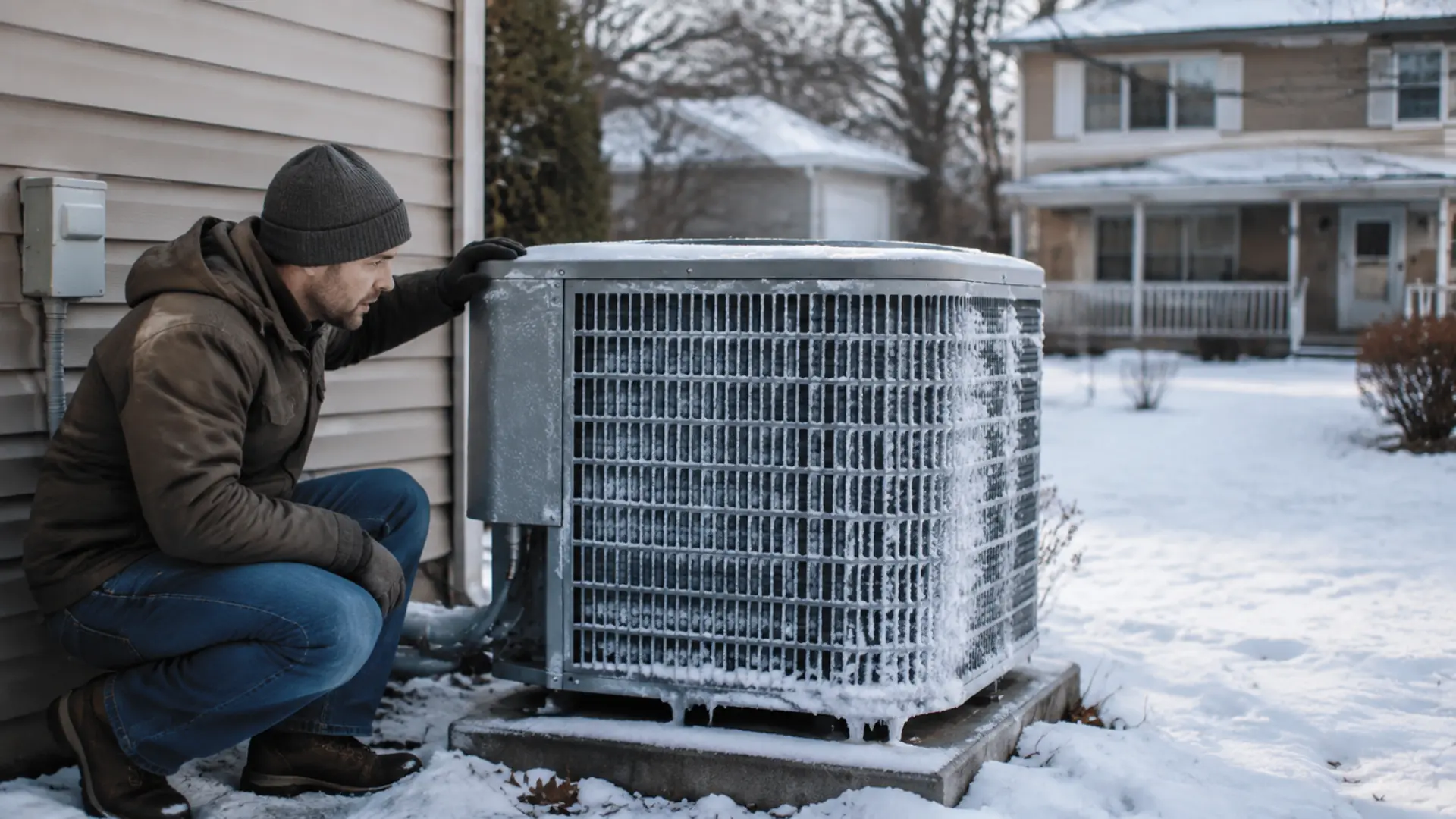
A heat pump may run for long periods without indicating a problem.
Longer cycles can be normal, especially when outdoor temperatures drop, but the system should still gradually warm your home and maintain the thermostat setting.
1. Thermostat Settings and Control Problems
The thermostat tells your heat pump when to heat, stop, and run the indoor fan. A wrong setting can leave the equipment running without warming your home.
First, make sure the thermostat is set to Heat. Set the temperature a few degrees above the current room temperature.
The fan should usually be set to Auto. The On setting can keep the blower running between heating cycles.
A blank screen may come from dead batteries or lost power. Replace the batteries if your thermostat uses them.
Also compare the displayed temperature with how the room actually feels. A noticeable difference may point to an inaccurate thermostat reading.
Error messages can also help narrow the problem. Check the thermostat manual before changing settings you do not recognize.
You can safely check the mode, temperature, fan setting, batteries, and display. A faulty thermostat or loose connection needs further testing.
2. Restricted Airflow
Your heat pump needs steady airflow across the indoor coil and through the duct system. Restricted airflow reduces how much heated air reaches your rooms.
A dirty filter is a common starting point. Hold it up to light and replace it if dirt heavily covers the surface.
Check supply vents and return grilles throughout the home. Furniture, rugs, curtains, and closed vents can reduce air movement.
Weak airflow from several vents may point to a dirty indoor coil or another problem inside the air handler.
The outdoor unit also needs open space around it. Remove leaves, loose snow, grass, and other debris blocking airflow.
If airflow stays weak after you clear visible blockages, you may need further inspection.
3. Frozen Outdoor Unit and Defrost Problems
Light frost can form on the outdoor coil during cold, damp weather. A working heat pump removes that frost during defrost.
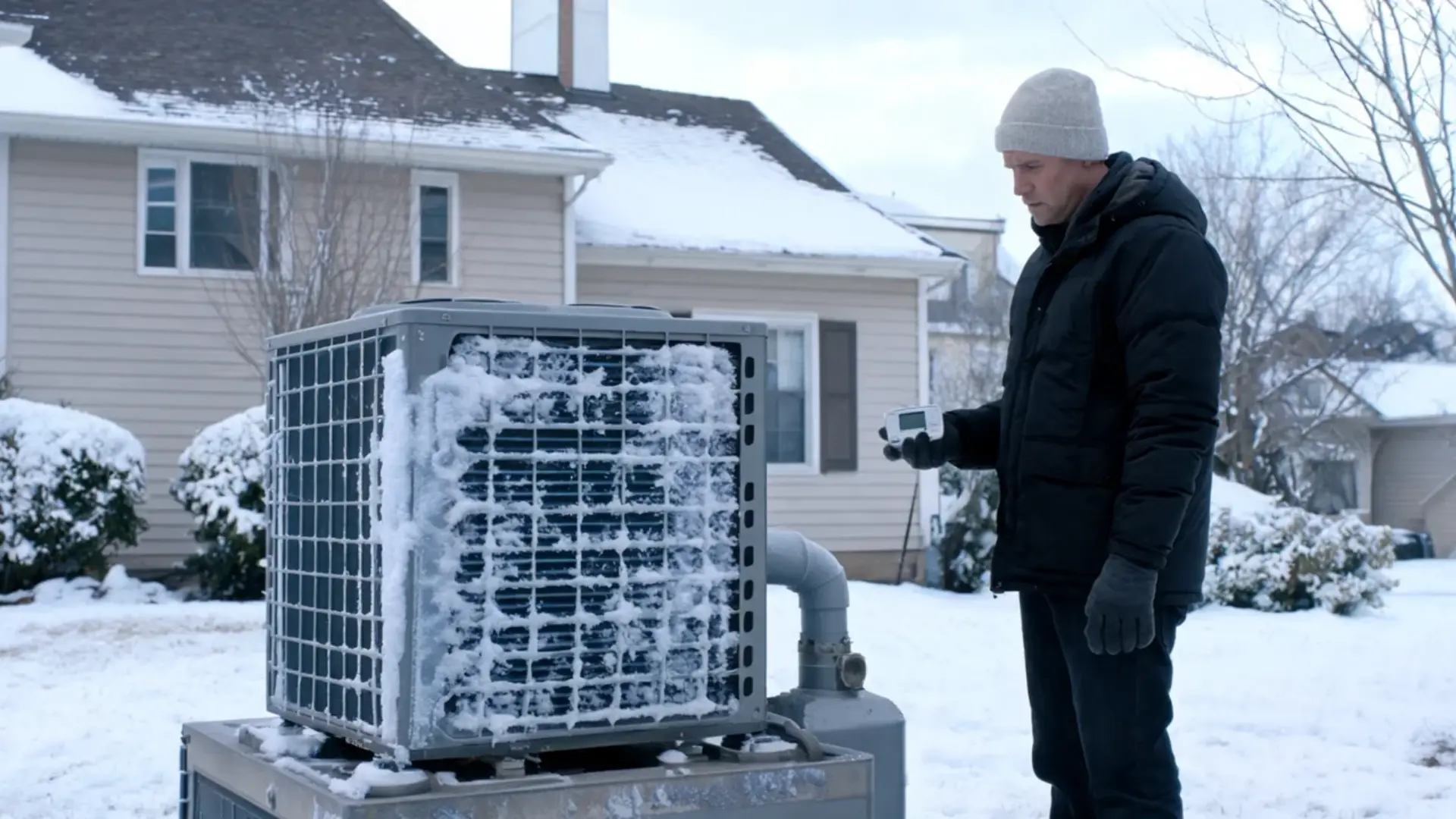
Thick ice is different. It can block airflow across the coil and reduce the system’s ability to collect outdoor heat.
Pay attention when ice covers much of the coil or remains after defrost. Ice that quickly returns also deserves attention.
A blocked coil can contribute to freezing. Defrost sensors or controls can also stop the system from clearing frost properly.
Do not chip or scrape ice from the coil. The thin fins and refrigerant tubing can be damaged easily.
Persistent heavy icing needs professional inspection because it can reduce airflow and prevent proper heating.
A normal defrost cycle usually lasts several minutes. The exact timing depends on outdoor temperature, humidity, frost buildup, and system design.
Steam or mist may appear as frost melts during defrost. It should clear when the cycle ends, while smoke or a burning smell needs prompt attention.
4. Low Refrigerant or Refrigerant Leaks
Refrigerant carries heat between the outdoor and indoor coils. Too little refrigerant reduces the amount of heat the system can move.
You may notice weak heating, longer run times, or trouble reaching the thermostat setting. Frozen coils or refrigerant lines can also appear.
Heating and cooling may both become weaker when the refrigerant level is too low.
Refrigerant does not normally disappear during regular operation. A low charge can point to a leak somewhere in the system.
Adding more refrigerant without repairing that leak will not provide a lasting fix. Leak testing and refrigerant work require proper equipment.
5. Faulty Reversing Valve
The reversing valve changes refrigerant flow when the heat pump switches between heating and cooling.
A heat pump that cools normally but does not heat may have a faulty reversing valve. That pattern is especially useful when narrowing the problem.
The valve may stick or fail to move fully. Heating can then become weak, inconsistent, or completely unavailable.
This part sits inside the refrigerant circuit. Testing or replacing it requires an HVAC technician.
6. Electrical or Compressor Problems
Electrical faults can stop one part of the system while another part still runs. That can make the heat pump seem partly operational.
Check the electrical panel once for a tripped breaker. Also confirm that accessible indoor and outdoor power switches are on.
Do not keep resetting a breaker that trips again. Repeated trips can point to wiring, capacitor, motor, or compressor trouble.
Listen to the outdoor unit as it starts. Humming without starting can mean a component is receiving power but cannot operate correctly.
Grinding, loud buzzing, or repeated shutdowns also need attention. Poor heating and cooling together can point to a larger equipment fault.
These symptoms require electrical and component testing before replacing any part.
If the basic checks do not restore heat, stop there. Persistent icing, repeated breaker trips, weak heating, or poor mode switching need proper testing.
Those signs often point to faults that require tools, electrical checks, or refrigerant work.
Why is My Heat Pump Running Constantly but Not Heating?
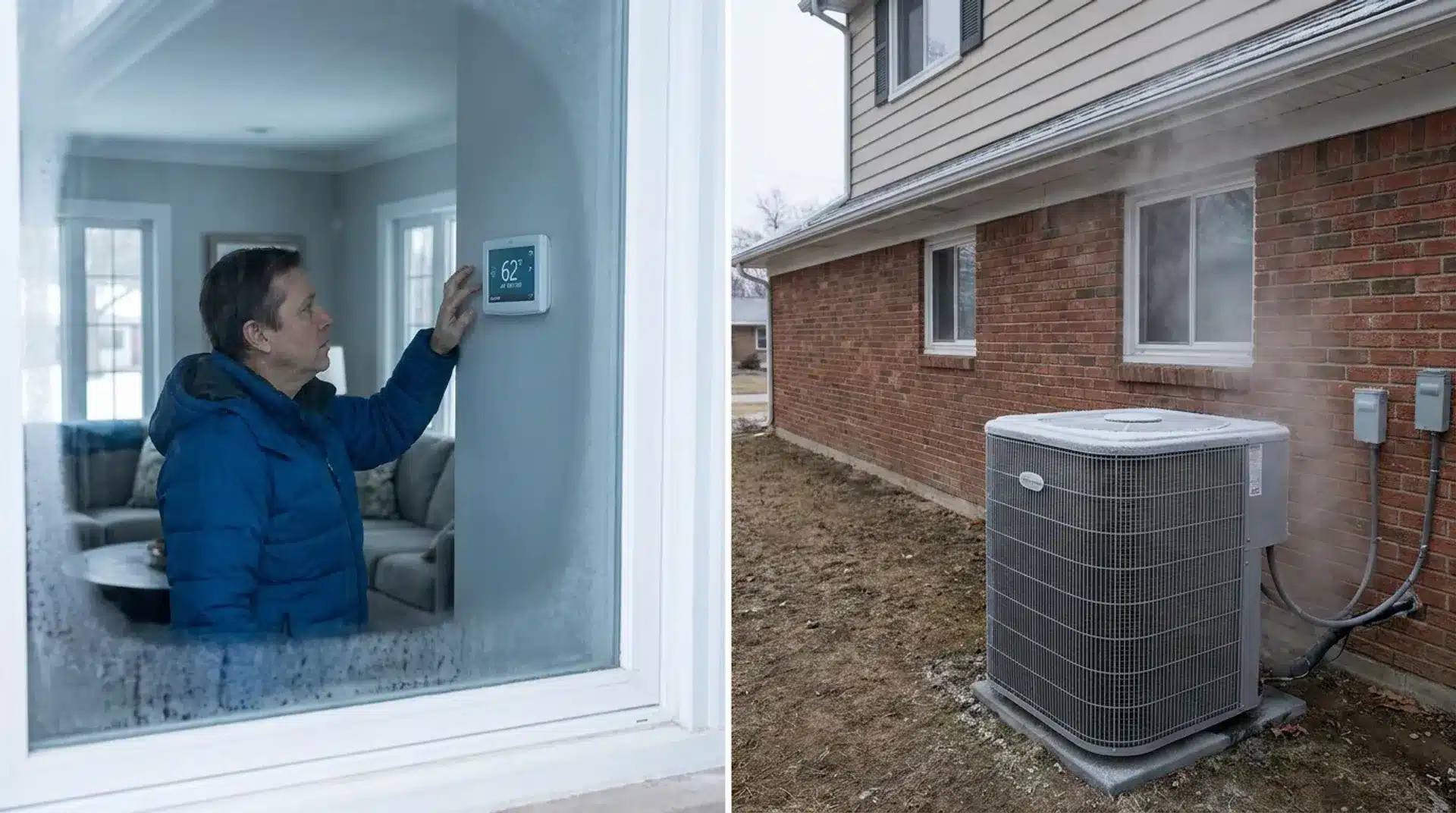
A heat pump may run for long periods during cold weather because it transfers heat rather than generating it through combustion.
Longer cycles can be normal when outdoor temperatures drop, but the system should still gradually warm your home and maintain the thermostat setting.
If it runs continuously without improving indoor comfort, check whether the thermostat is set correctly and whether the air filter is restricting airflow.
Blocked vents, low refrigerant, outdoor-unit problems, or a system that cannot meet your home’s heating demand may also contribute. Check these basic conditions first.
If the heat pump continues running without reaching the set temperature, or if the indoor temperature keeps falling, schedule a professional inspection to identify the cause.
Heat Pump Blowing Cold Air When Set to Heat
Cool air from the vents can be normal for a short time. The difference is usually duration and indoor comfort. If heating returns and the room stays near the set temperature, the system may still be working as expected.
When Cool Air is Normal
A heat pump may blow cooler air during defrost while it clears frost from the outdoor coil. Normal heating should return after that cycle ends.
You may also feel cooler air just after startup. Air already sitting in the ducts can reach the vents before warmer air follows.
The fan setting can change how the air feels. When set to On, the blower keeps moving air even after active heating stops.
Heat-pump air also feels cooler than furnace air. It can still warm the room even if it feels mild against your skin.
When Cold Air is Not Normal
Cold air is more concerning when it lasts through the full heating cycle. The system should not keep blowing cold air while the room continues to lose heat.
Watch the thermostat as well. If the indoor temperature keeps dropping or never reaches the set point, the system is not keeping up.
Heating should also return after defrost ends. If cold airflow continues after that point, the behavior is no longer temporary.
Short periods of cool airflow do not always mean your heat pump has a problem. Focus on how long the air stays cool and whether your home keeps warming. If heating does not return, you may need further checks.
Heat Pump Not Blowing Cold Air
A heat pump not blowing cold air can be normal when the system is in heating mode because it moves heat instead of producing extremely hot air.
However, if the system is in Cool mode and does not produce cold air, check a few basic issues first.
Check that:
- The thermostat is set to Cool
- The temperature setting is below the current room temperature
- The air filter is clean
- Supply vents are open
- The outdoor unit is running
If cooling does not return after these checks, the problem may involve restricted airflow, electrical issues, low refrigerant, or another component that requires professional diagnosis.
Heat Pump Not Heating in Cold Weather
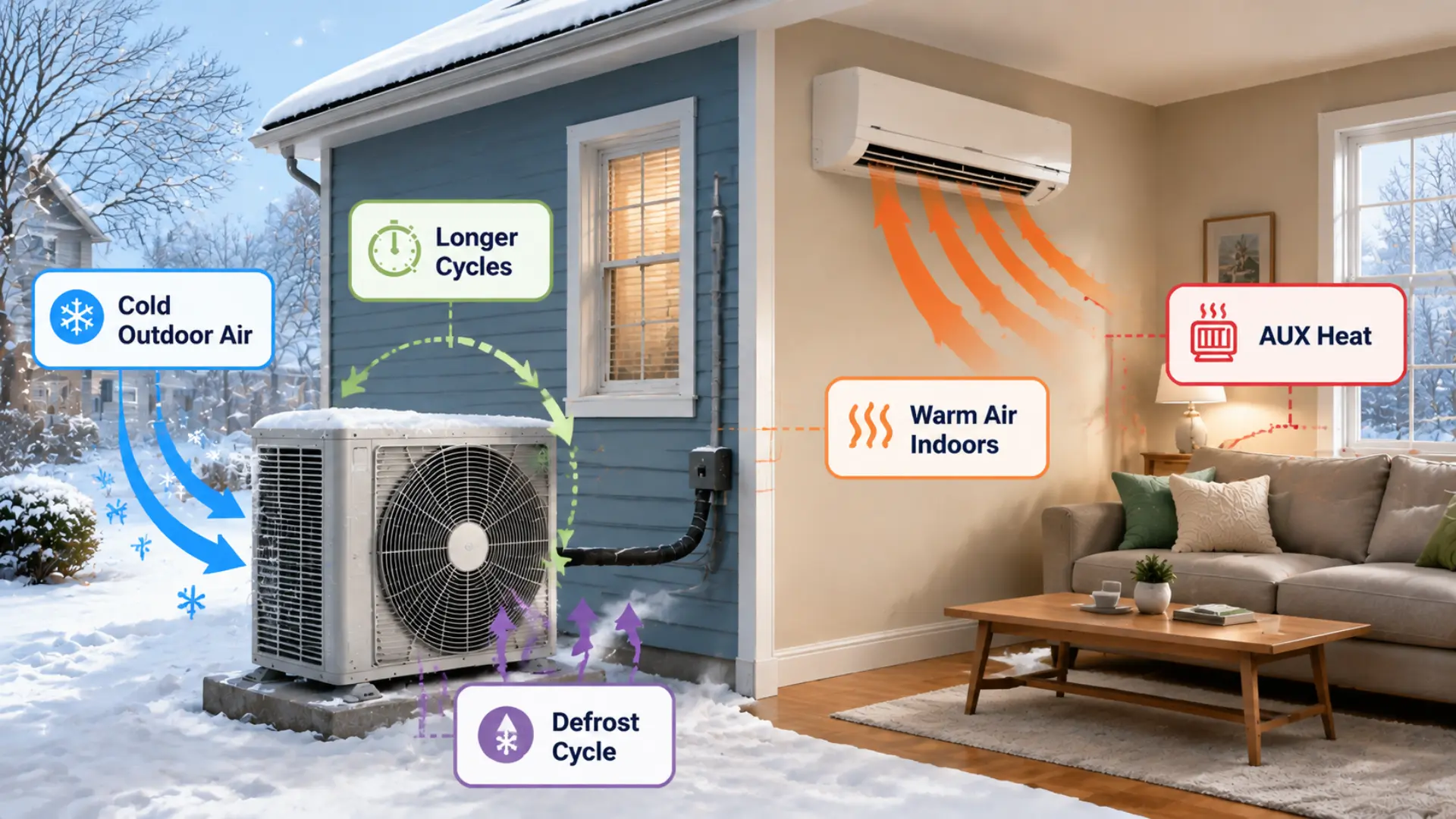
Cold weather changes how a heat pump performs because less heat is available outdoors. As temperatures fall, the system may run longer, produce less heat, and enter defrost more often. Some units also use backup heat to maintain the thermostat setting.
1. How Cold Weather Affects Heat Pump Performance
A heat pump moves heat from outdoor air into your home. When outdoor temperatures drop, the system has less heat to collect.
As a result, heating cycles often run longer. The unit may run longer instead of turning on and off frequently.
Heating output can also decrease during colder conditions. A system that easily reaches the thermostat setting in mild weather may take longer when temperatures fall.
Cold, damp weather may increase defrost activity during normal operation.
Some cold-climate heat pumps are built to operate with greater capacity at outdoor temperatures below 32°F, according to the Department of Energy’s Cold Climate Heat Pump Challenge.
Standard models may need backup heat sooner during severe cold.
If you are still weighing a heat pump against a heating system fits your house question, cold-climate performance is often the deciding factor.
2. Can a Heat Pump Work Below Freezing?
Many modern heat pumps can operate below freezing. Their performance depends on the equipment model, outdoor temperature, home heating demand, and available backup heat.
Some systems continue heating effectively in very cold conditions, while others may lose capacity sooner. The difference depends on how the unit was designed and installed.
No single temperature applies to every heat pump. A system that maintains indoor comfort is usually operating within its expected range.
If the heat pump runs for long periods but cannot reach the thermostat setting, it may need attention.
3. AUX Heat and Emergency Heat
AUX heat is backup heating that turns on automatically when the heat pump cannot provide enough heat on its own. It often activates during very cold weather or when the home needs extra heating.
Many systems use electric resistance heat for AUX operation.
The Department of Energy notes that backup heating is usually more expensive to operate than normal heat pump operation, since it is less efficient at turning electricity into heat.
Frequent AUX use during extreme cold can be normal. However, if it runs often during mild weather, the system may not be meeting heating demand properly.
AUX heat automatically supports the heat pump when extra heating is needed.
Emergency heat manually uses the backup heating source when the heat-pump portion cannot operate properly. Cold weather can change how your heat pump behaves without meaning the system has failed.
Longer cycles, more defrost activity, and occasional AUX heat can be normal. Watch comfort levels and thermostat performance to know when the system needs closer attention.
What Can You Check Before Calling an HVAC Technician?
Before calling an HVAC technician, check a few simple items around your heat pump.
These steps do not replace professional service, but they can help rule out basic issues and provide useful details if the system still does not heat properly.
- Confirm the thermostat is set to Heat.
- Set the fan to Auto.
- Set the temperature above the room temperature.
- Check the air filter.
- Make sure supply and return vents are open.
- Remove loose snow, leaves, and debris around the outdoor unit.
- Confirm the indoor and outdoor units have power.
- Check for a tripped breaker.
- Note thermostat error messages.
- Note unusual sounds or smells.
If these checks do not restore heating, avoid repeated resets or changing several settings at once. Keep note of what you observed so the technician can start with clear information during the inspection.
When Does a Heat Pump Need Professional Repair?
Simple checks can solve some heat pump problems, but certain signs mean it is time to stop troubleshooting.
If the system shows unusual behavior or basic checks do not restore heating, professional service is the safer next step.
Call an HVAC technician if the breaker trips again after being reset, thick ice remains on the outdoor unit, or the outdoor unit does not start.
Professional help is also needed when the system shuts down repeatedly, heating and cooling performance both drop, or cooling works while heating keeps failing.
Grinding noises, strong electrical sounds, burning smells, or smoke are also warning signs. Stop using the system and arrange service if you notice these problems.
Refrigerant work, internal electrical testing, reversing-valve repair, and compressor diagnosis require proper tools and training.
Avoid attempting repairs that involve system components you cannot safely test. Knowing when to stop troubleshooting can prevent further damage and help a technician identify the problem faster.
If repairs keep piling up on an older unit, it helps to know the cost and what to expect before you commit to another service call.
How Can You Prevent Heat Pump Heating Problems?
Regular maintenance helps your heat pump handle seasonal heating demands more effectively.
Simple care at home, combined with professional service, can support steady operation and help keep the system ready when temperatures drop.
- Replace or clean the air filter: Check the filter regularly and clean or replace it as recommended. A clean filter supports proper airflow.
- Keep supply and return vents clear: Keep vents open and remove nearby objects. Clear vents allow air to move properly through your home.
- Clear debris around the outdoor unit: Remove leaves, dirt, grass, and snow from the unit. A clean area helps maintain proper outdoor airflow.
- Maintain space around outdoor equipment: Keep storage items and plants away from the unit. Open space allows the heat pump to operate normally.
- Schedule seasonal maintenance: Arrange professional service before heating season. A technician may check connections, refrigerant condition, defrost operation, coils, motors, and fans.
Final Thoughts
A heat pump not heating doesn’t always mean a big repair bill. Most of the time, the fix is something you can check yourself: a thermostat setting, a dirty filter, or a coil buried in leaves.
The moment repeated breaker trips, thick ice, or strange smells show up, that is your signal to call a technician instead of guessing further.
Cold weather changes how these systems behave, so give your heat pump room to run long cycles before assuming something is broken.
Paying attention now, before a full breakdown, is what actually protects your heating budget.
What was it for you, a filter, a valve, or something stranger? Tell us what finally fixed your system.
Frequently Asked Questions
Can a Heat Pump Lose Efficiency Over Time?
A heat pump can become less efficient as parts wear, airflow becomes restricted, or maintenance gets skipped. Dirty coils, aging components, and worn seals can all make the system work harder to reach the same temperature. Yearly maintenance, filter changes, and prompt repairs help catch small problems before they quietly raise your energy bills.
Should I Turn Off My Heat Pump If It Is Not Heating?
You do not need to turn off a heat pump that runs but does not heat, but avoid resetting the breaker repeatedly or switching modes over and over. Turn off the system only if you notice thick ice, burning smells, smoke, or repeated breaker trips, then call a technician before running it again.
How Often Should I Change My Heat Pump Air Filter?
Most filters should be checked monthly and replaced or cleaned based on filter type, household usage, and indoor air quality. Homes with pets, dust, or heavy use often need changes every 30 to 60 days. A clean filter protects airflow, keeps energy bills lower, and helps the system heat evenly.
Can a Power Outage Damage a Heat Pump?
A power outage rarely damages a heat pump directly, but it can reset thermostat settings, trip breakers, or interrupt communication between the indoor and outdoor units. After power returns, check the thermostat mode, confirm both units have power, and watch for a full heating cycle before assuming a deeper problem exists.
How Long Does a Heat Pump Usually Last?
A heat pump commonly lasts 15 to 20 years when it is sized correctly, installed well, and maintained on schedule. Climate, run time, and equipment quality all affect that range. Regular filter changes, yearly tune ups, and quick repairs when something feels off help the system reach the longer end of its lifespan.