
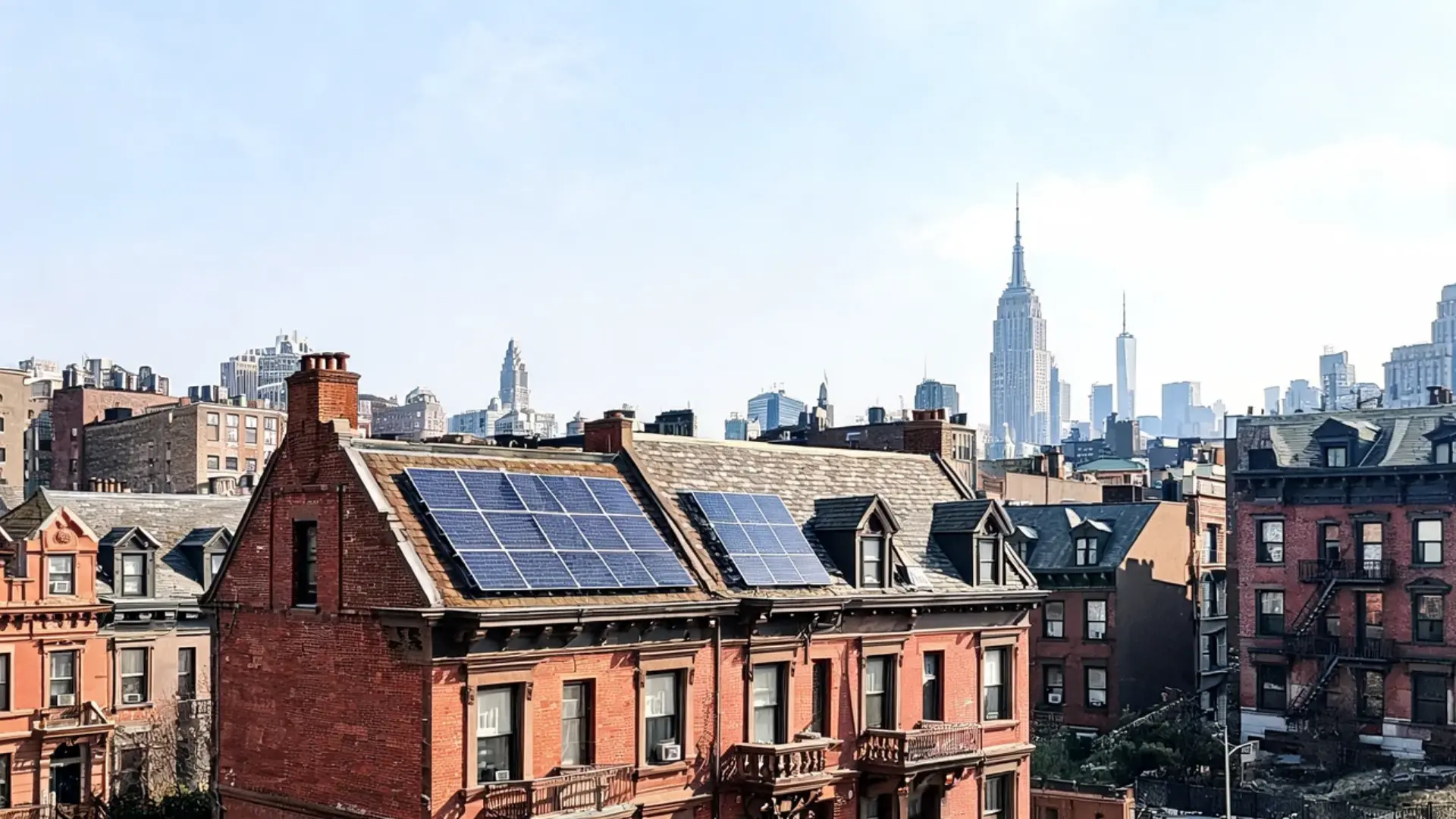


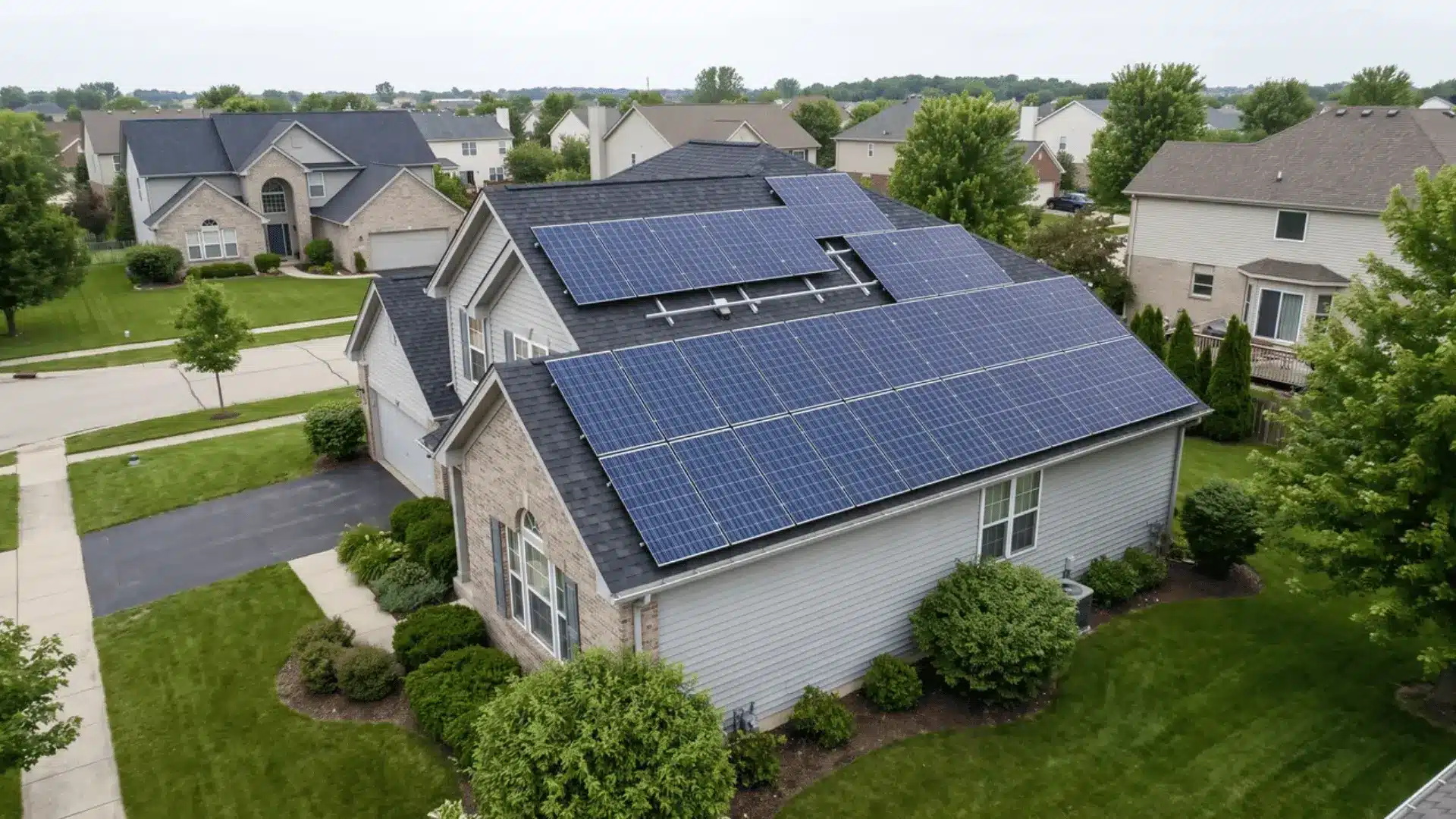
New York solar incentives can reduce the cost of going solar, but the savings are not the same for every homeowner.
NY-Sun, Affordable Solar, the state solar tax credit, sales tax exemptions, property tax exemptions, utility bill credits, community solar, and battery incentives all work differently.
Your location, utility, income, system size, ownership type, and tax situation can change which benefits apply.
That is why it helps to check each program before relying on a savings estimate.
This guide explains the main solar incentives available in New York, how they work, and what to confirm before signing a solar contract.
Solar Incentives Available in New York
New York offers several solar incentives that can reduce installation costs, lower state and local taxes, or reduce electricity bills.
The benefit available to you depends on your location, utility, household income, system, ownership, and the program rules that apply to your project.
| Incentive | What it does |
|---|---|
| NY-Sun | Reduces the cost of eligible solar installations |
| Affordable Solar | Provides additional NY-Sun support for qualifying income-eligible households |
| NY solar tax credit | Provides a New York State income tax credit |
| Sales tax exemption | Exempts qualifying solar equipment from certain state sales taxes |
| Property tax exemption | Can exempt the added assessed value of a qualifying solar system |
| Net metering and other bill credits | Provides credits for eligible solar generation under applicable utility rules |
| Customer Benefit Contribution | A utility bill charge that can apply to certain customers with newer solar systems |
| Community solar | Provides utility bill credits without requiring rooftop panels |
| Statewide Solar for All | Provides bill discounts through community solar |
| Battery storage incentives | Can reduce the cost of eligible home battery systems |
| Solar financing | Lets eligible homeowners finance qualifying clean energy projects |
These incentives do not all apply to the same solar project, and some have separate utility, income, tax, ownership, or system requirements.
The sections below explain how each benefit works and what you need to qualify.
NY-Sun for New York Homeowners
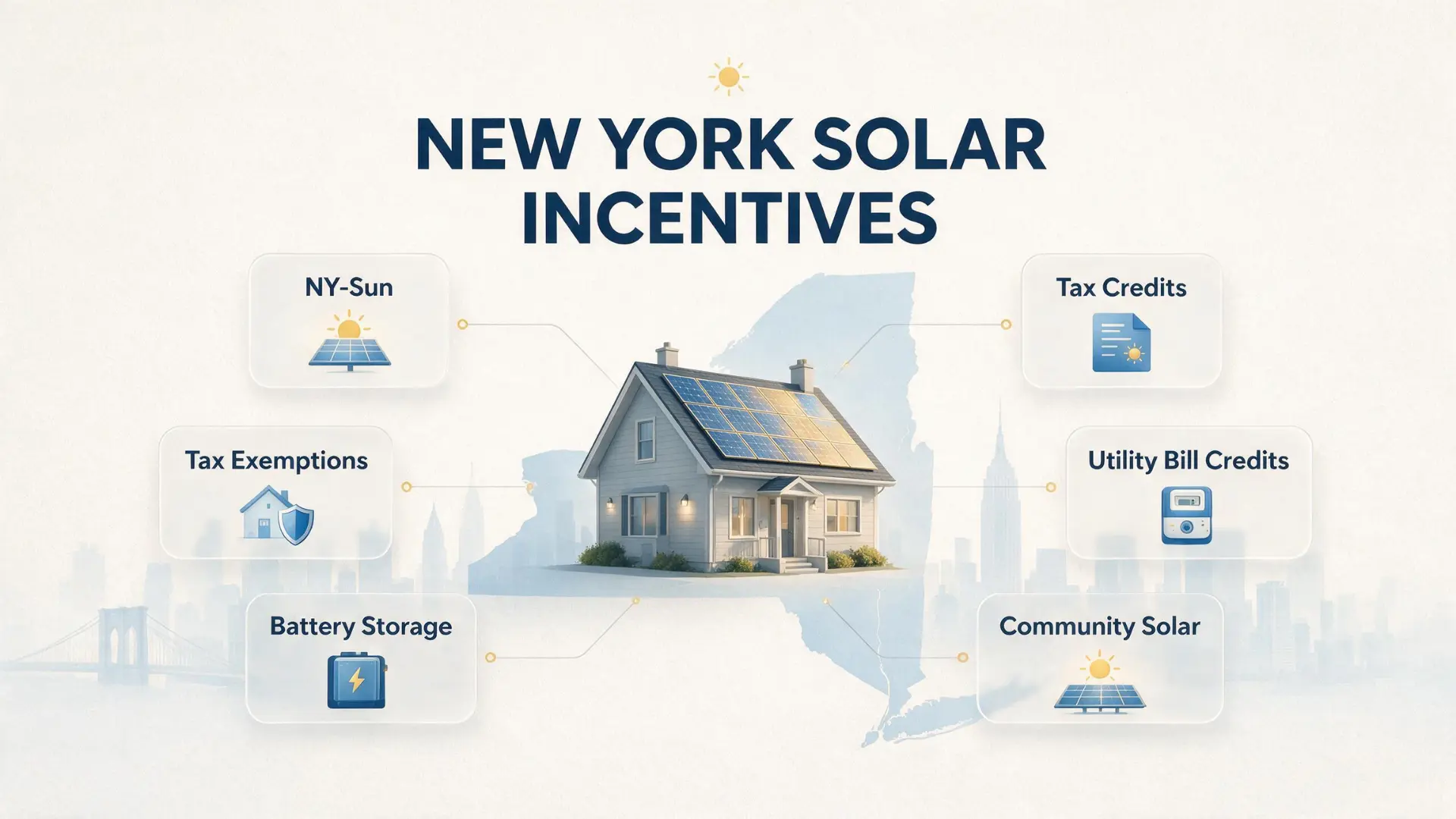
NY-Sun is New York’s main state solar incentive program for eligible residential systems.
Homeowners generally access the incentive through a participating contractor, and the amount available depends on the project’s region, current incentive availability, system size, and program requirements.
1. NY-Sun Benefits for Homeowners
NY-Sun provides financial incentives for eligible residential solar photovoltaic systems through the NY-Sun program, run by the New York State Energy Research and Development Authority (NYSERDA).
The program is designed to reduce the upfront cost of installing solar at your home. You generally access NY-Sun through a participating contractor rather than applying for a separate payment yourself.
The contractor handles the incentive process connected to your solar project. The incentive is generally applied to the project price.
Your contract should clearly show the NY-Sun incentive amount, the original project cost, and the amount you are expected to pay.
NY-Sun is separate from New York’s state solar tax credit and utility bill credits, and homeowners often combine several of them on the same project; see our guide on how to stack these incentives and how that actually works.
Each benefit has different eligibility requirements, so do not treat the NY-Sun incentive as the total value of all solar incentives available to your project.
2. NY-Sun Incentive Amounts
There is no single NY-Sun incentive amount for every New York homeowner.
The amount available depends on your region, utility, project eligibility, system size, and the incentive currently available for your project.
NY-Sun uses Con Edison, Long Island, and Upstate regions, and available incentives can differ by region and current program capacity.
Current incentive levels and available capacity are published through NYSERDA’s regional dashboards.
Here is the part a lot of the latest quotes still get wrong: in much of the state, the standard, full-price NY-Sun rebate has already been claimed by other homeowners and is no longer open in that region.
That leaves the income-eligible Affordable Solar incentive as the main active NY-Sun benefit for many applicants right now.
Do not assume a standard rebate applies just because an older quote or a salesperson mentions one; ask your contractor to pull up the live block status for your specific utility territory before you calculate savings.
For example, the standard residential MW Block incentive has been phased out in some regions, while certain Upstate residential blocks remain available.
Affordable Solar incentives also have separate rates for qualifying households.
Your contractor should confirm the current NY-Sun incentive that applies to your project rather than using an older rate or another homeowner’s solar quote as a reference.
3. NY-Sun Eligibility Requirements
Homeowners with eligible residential solar projects in New York can qualify for NY-Sun incentives when their project meets the program’s current requirements.
Residential projects must meet the applicable system size, equipment, installation, utility interconnection, and contractor requirements.
You generally work with a NY-Sun participating contractor, who submits the project application and handles the incentive process through NYSERDA.
Your eligibility and incentive amount can also depend on your region, utility, project timing, and the specific NY-Sun incentive available when you submit your application.
4. NY-Sun System Size Requirements
System size matters because NY-Sun limits the size of residential solar projects that can receive incentives. Under the current Residential/Nonresidential program, eligible residential systems are limited to 25 kW DC.
NY-Sun also limits residential system production to 110% of annual electricity use for incentive and financing eligibility.
A system designed above that limit may not qualify, even if it remains within the 25 kW DC size cap.
Your system must also meet NY-Sun requirements for its expected electricity production and project eligibility. Base system sizing on your home’s electricity use and the applicable program rules.
Ask your contractor to show you the proposed system size, estimated annual production, and the electricity usage data used to size the system before you sign the contract.
5. Affordable Solar Program
Affordable Solar provides additional NY-Sun support for qualifying income-eligible households, generally those earning less than 80% of the median income in their area.
The incentive is designed to reduce the cost of eligible residential solar projects beyond the standard NY-Sun incentive available to the project.
Currently, Affordable Solar provides $0.80 per watt in the Upstate incentive dashboard and Con Edison regions, and $0.40 per watt on Long Island’s rate, subject to eligibility and program availability.
I ran the math on a typical 7 kW residential system, which is close to the state average: at $0.80 per watt Upstate or in Con Edison territory, that comes to roughly $5,600 off the installed cost before any tax credit even applies.
On Long Island’s $0.40-per-watt rate, the same system would earn about $2,800.
The program has specific income and project requirements, so meeting a general income threshold does not automatically guarantee eligibility.
Your participating NY-Sun contractor can confirm the current Affordable Solar requirements and apply the appropriate incentive to the project.
NY-Sun can lower the cost of an eligible solar project, but the incentive is not the same for every homeowner.
Your region, system size, project eligibility, and available program funding determine what you can receive, so confirm the current terms before calculating your solar savings.
New York Solar Tax Benefits
New York offers several tax benefits that can reduce the cost of going solar.
The state solar tax credit can lower your income tax, while sales and property tax exemptions can reduce taxes connected to a qualifying solar energy system.
1. New York Solar Tax Credit
The New York State Solar Energy System Equipment Credit equals 25% of qualified solar energy system equipment costs, up to $5,000, per the Form IT-255 instructions from the New York State Department of Taxation and Finance.
The credit applies to qualifying equipment installed at your principal residence in New York, as stated in the New York State solar energy system equipment credit rules.
It can also apply to certain solar projects financed through a qualifying written power purchase agreement, subject to New York’s specific tax requirements.
This is a nonrefundable state tax credit. If the credit is larger than your state tax due, you can generally carry forward the unused amount for up to five years.
Not every expense connected to your solar project qualifies.
Use New York’s definition of qualified expenditures when calculating the credit, and do not automatically include financing charges, interest, or loan fees as eligible solar costs.
2. New York’s $5,000 Solar Tax Credit
The $5,000 solar credit is the maximum New York State solar energy system equipment credit, not a direct $5,000 payment.
The credit equals 25% of your qualified solar expenditures, so you would need $20,000 in eligible costs to receive the full $5,000 credit.
For example, if your qualifying solar project costs $16,000, your potential New York State credit would be $4,000.
However, the credit is nonrefundable, meaning it can reduce your New York State income tax liability to zero but cannot create a tax refund.
If your allowable credit is greater than the amount of state tax you owe, you can generally carry the unused portion forward for up to five years.
Your actual credit may also depend on which project costs qualify under New York tax rules.
3. Solar Equipment Sales Tax Exemption
Qualifying residential solar energy system equipment is exempt from New York State’s 4% sales and use tax. The exemption also covers the state’s 3/8% Metropolitan Commuter Transportation District tax.
Local sales taxes can work differently. A locality must specifically provide the exemption for the local portion of sales tax to be waived.
Before calculating your total savings, check the applicable local sales tax rules for your installation location and confirm how the exemption is reflected on your solar contract or invoice.
4. Solar Property Tax Savings
New York generally provides a 15-year property tax exemption for the increase in assessed value caused by a qualifying solar energy system.
The exemption applies to that added value, not your entire property tax bill. There is an important local exception.
A municipality can adopt a law opting out of the Section 487 exemption, and the state’s opt-out list shows which counties, towns, and school districts have done this. Hence, the benefit is not automatically available everywhere in New York.
If you are counting on this exemption, check with your local assessor to confirm that the exemption applies in your municipality.
New York also provides Form RP-487 for applying for the solar property tax exemption.
New York City has a separate Solar Electric Generating System Tax Abatement rather than using the statewide property tax exemption.
NYC homeowners should check the city’s requirements and application process before including a property tax benefit in their solar savings estimate.
5. Federal Solar Tax Credit Eligibility
For a solar system installed now, the federal 30% Residential Clean Energy Credit is not available.
IRS guidance on home energy credits confirms the credit applies to qualified property installed through December 31, 2025, and is unavailable for property placed in service after that date.
This federal change is separate from New York’s state solar credit. The New York credit remains 25% of qualified costs, up to $5,000, under current New York State tax information.
When reviewing the latest solar quote, make sure any federal tax credit shown is not being counted as a current residential solar benefit.
New York’s state credit has separate rules and remains available under current state tax law. New York’s solar tax benefits address different parts of your project, from income tax to sales and property taxes.
With the federal credit gone, the state pieces carry more of the weight than they used to, so getting the qualified-cost math right matters more this year than it did last year.
How Does Solar Reduce Your Electric Bill?
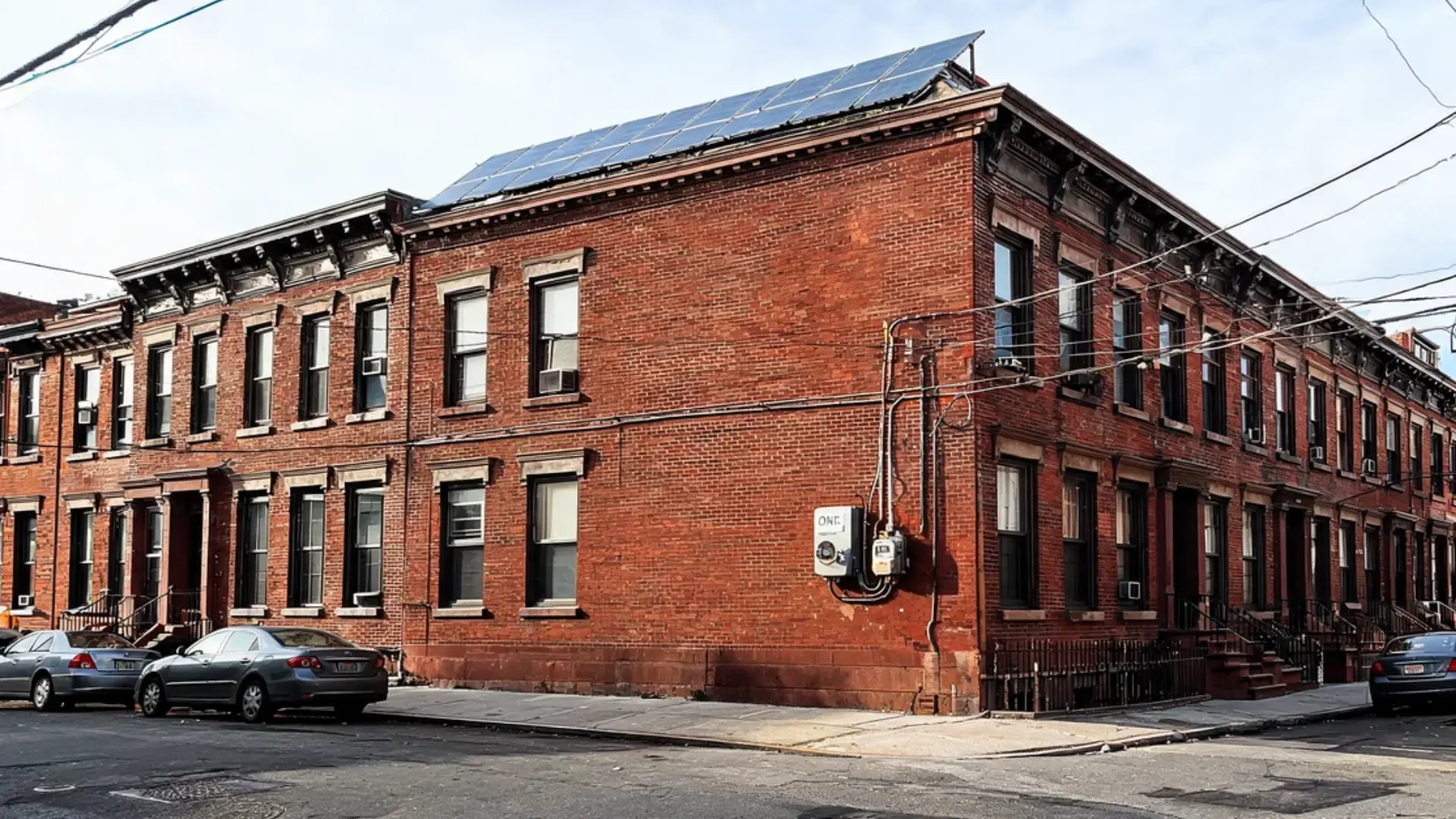
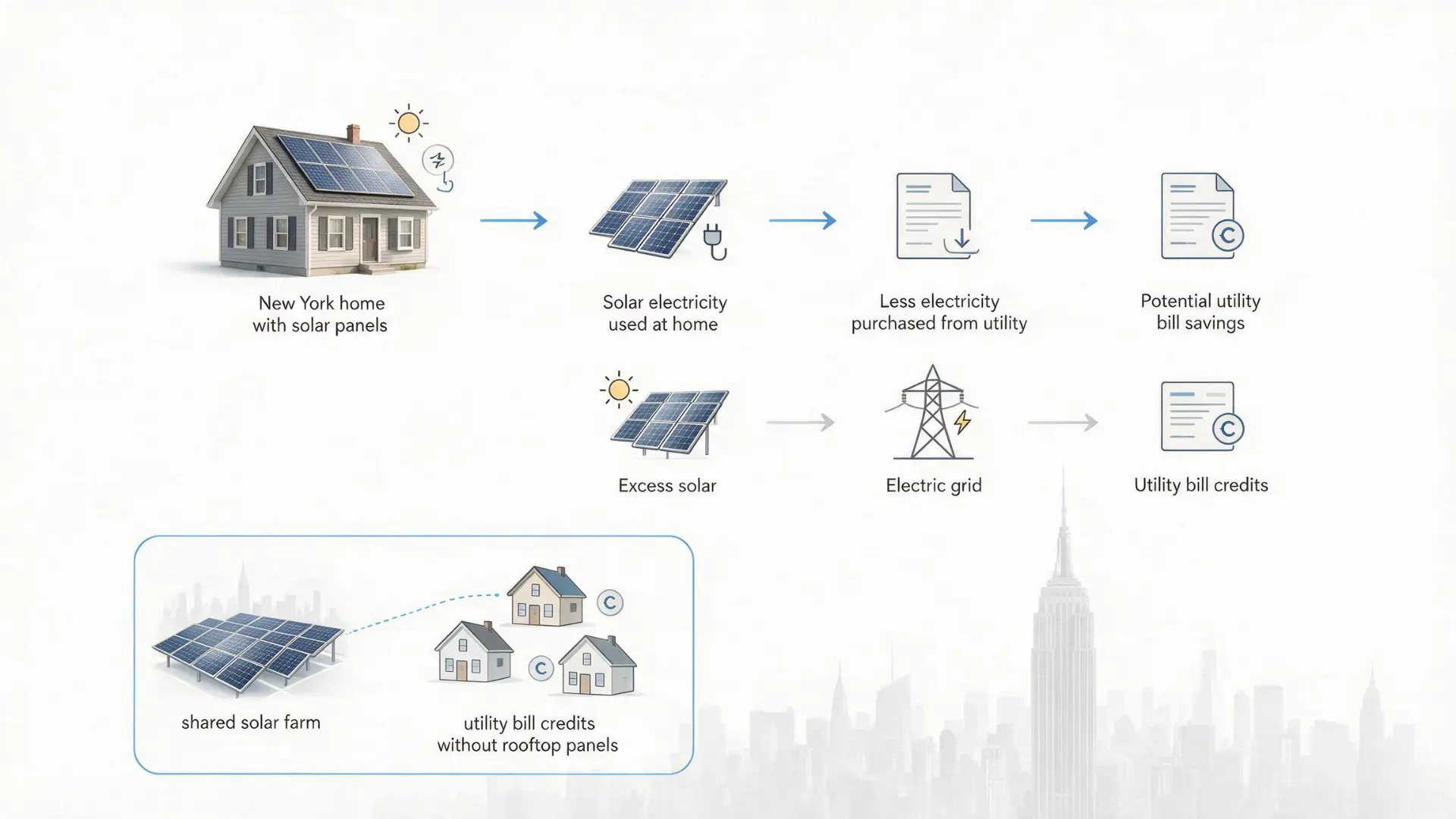
Solar can reduce your electric bill by lowering the electricity you buy from your utility and, in some cases, providing credits for electricity your system or a shared solar project produces.
Your savings depend on your electricity use, utility, rate structure, and compensation rules.
1. Net Metering Rules in New York
Solar panels first supply electricity to your home when they are producing power. This reduces the amount of electricity you need to purchase from your utility at that time.
If your system produces more electricity than your home is using, the excess can be sent to the electric grid.
Depending on your utility, project type, and compensation arrangement, that exported electricity can result in credits on your utility bill.
VDER, or Value of Distributed Energy Resources, is New York’s framework for compensating eligible distributed energy resources based on the value they provide to the electric system, including through the Value Stack compensation framework.
New York also uses other distributed energy resource compensation methods, including the Value Stack, so not every solar project is compensated through traditional net metering.
Your utility and project arrangement determine how exported electricity is valued.
2. Customer Benefit Contribution for Solar Customers
The Customer Benefit Contribution (CBC) is a charge that can appear on the electric bills of residential customers who interconnected solar PV on or after January 1, 2022, according to NYSERDA’s owner resources page.
It helps fund public benefit programs, and the amount is calculated based on the solar system’s DC size.
The charge varies by utility and compensation arrangement, so there is no single statewide CBC amount. NYSERDA publishes current utility rates, which can change annually.
Customers with solar installed before January 1, 2022 are generally not subject to the CBC under the current rules.
Include the CBC when estimating your ongoing solar costs. A system can reduce electricity purchases while still having a utility bill that includes this separate charge.
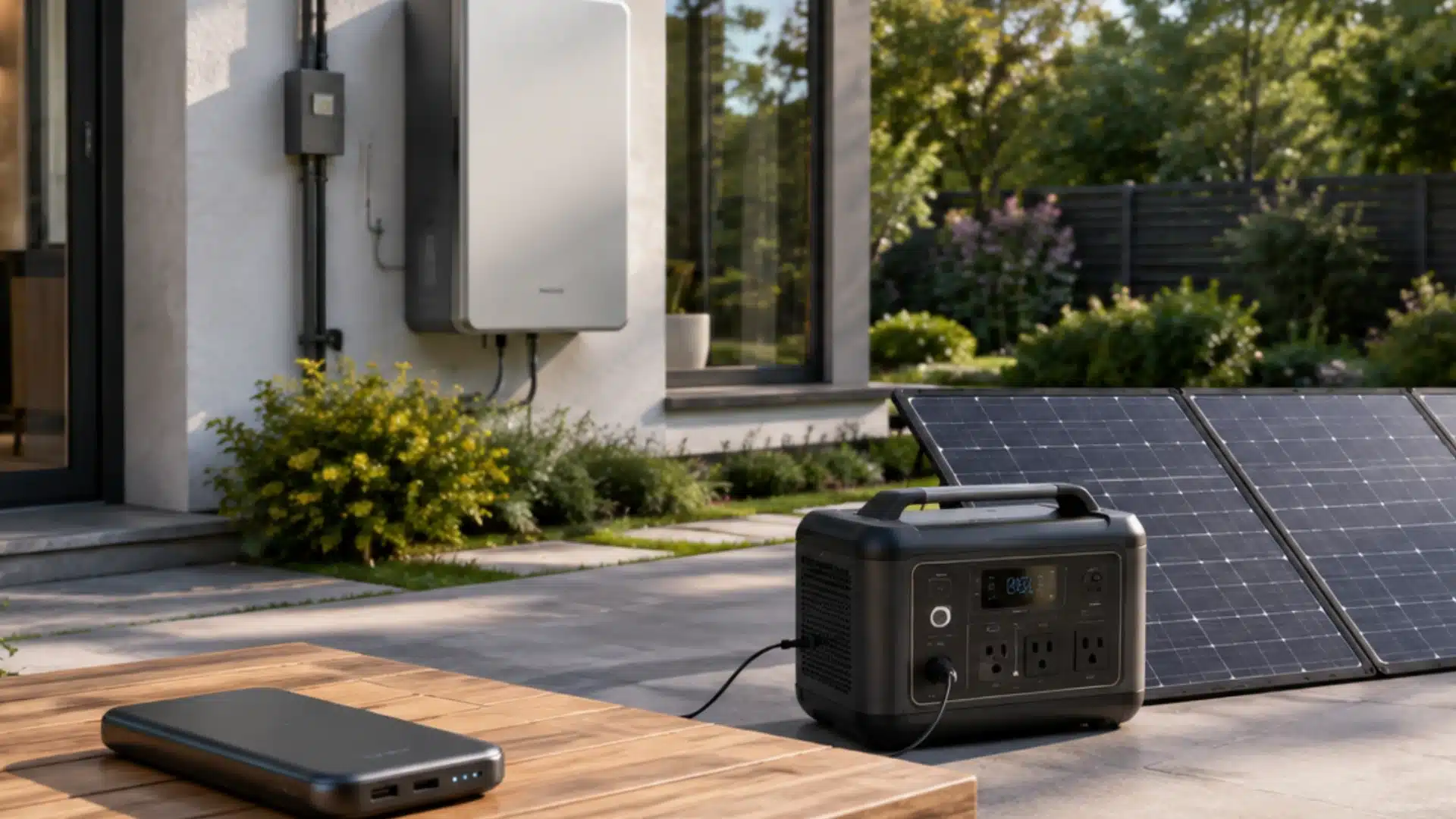
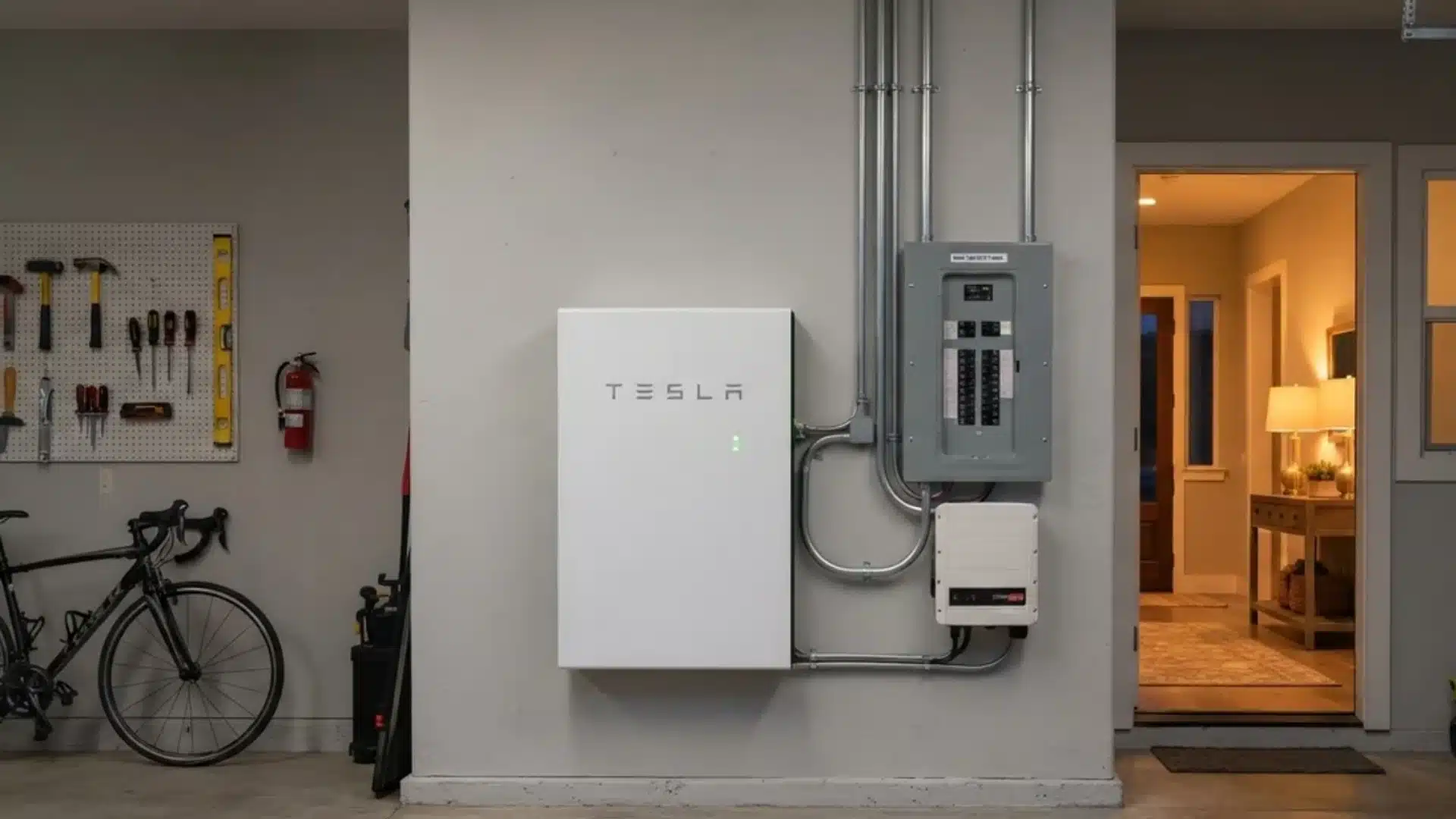
3. New York Battery Storage Incentives
New York offers incentives for eligible residential battery storage systems through NYSERDA’s home storage program.
Eligible systems can be paired with new or existing solar, and incentives are based on the storage system’s capacity in kilowatt-hours, up to 25 kWh.
Residential systems must generally be 25 kWh or less, new, permanent, stationary, and installed by a participating contractor.
Incentive rates vary by region and available program capacity, so you can’t treat the amount as a single statewide benefit.
Additional requirements can apply to new storage projects, including participation in qualifying utility programs where required.
Check the current NYSERDA requirements before including a battery incentive in your project savings.
4. Utility Rules and Solar Savings
Your utility determines many of the rules that affect how your solar electricity is credited. The same solar system can produce different bill savings under different utility rate structures.
Your results can depend on:
- Utility territory: Different utilities can have different compensation rules.
- Rate structure: Your electricity rate affects the value of each kilowatt-hour.
- System size: A larger system can produce more electricity, but its output must fit applicable program rules.
- Utility rules: Interconnection, billing, and compensation requirements can affect how your solar generation is credited.
Your current electricity usage also matters. A system that closely matches your home’s needs can produce a different financial result from one that sends much more power to the grid.
5. What Is Community Solar?
Community solar lets you receive utility bill credits from a shared solar project without installing panels on your own roof.
The project sends electricity to the grid, and participating customers receive credits based on their share of the project’s generation.
Community solar can work for renters, apartment residents, homeowners with unsuitable roofs, and others who cannot install rooftop solar.
Availability, subscription terms, credit calculations, and fees depend on the project and utility.
You do not receive the electricity from the remote solar panels directly. Instead, the solar project generates power for the grid while your utility bill reflects the credits assigned to your account.
6. Statewide Solar for All
Statewide Solar for All helps income-eligible New York renters and homeowners lower their electricity costs through community solar, according to NYSERDA’s Statewide Solar for All program.
Eligible customers can subscribe to a participating community solar project without installing panels on their property or paying upfront installation costs.
Eligibility is based on income and qualifying utility assistance requirements set by the program. Eligible households can receive bill discounts through participating community solar projects.
The benefit is provided through the customer’s electric bill rather than as a payment toward a rooftop solar installation.
Program availability and eligibility requirements apply by project and customer. Your electric bill savings depend on how your utility uses, credits, or compensates you for your solar generation.
Rooftop solar, community solar, and income-eligible programs work differently, and mixing them up is the most common mistake I see homeowners make when they compare quotes.
Confirm which category your situation actually falls into before you compare billing and compensation rules.
Solar Savings From New York Incentives
Your solar savings depend on your home’s electricity use, system production, utility rates, project cost, financing, and available incentives.
Because these factors differ from one homeowner to another, no single statewide savings figure accurately represents every New York solar project.
For a fuller walkthrough of what a real New York solar bill looks like before and after installation, see our NY costs and savings breakdown, which covers the numbers behind a typical install in more depth than fits here.
1. Factors That Affect Solar Savings
Several factors affect your solar savings, from system costs and electricity use to utility rates, financing, and available tax benefits.
- Solar system cost: Start with the full price of the proposed installation before applying incentives or other benefits.
- Electricity use: Your current electricity use affects how much solar generation can offset electricity purchases.
- Solar production: Roof direction, shading, weather, and system design affect how much electricity your panels can produce.
- Tax situation: Your state tax liability can affect how much of an available tax credit you can use.
- Financing costs: Interest and loan fees can increase the total amount you pay for the system.
- System ownership: Buying, leasing, or using a PPA can result in different costs and savings.
- Utility rates: Your electricity rate affects the value of the electricity your system offsets or exports.
Looking at these factors together gives you a more accurate view of the costs and savings your solar system may provide.
2. Comparing Solar Quotes
Compare solar quotes using the same financial information rather than focusing only on the advertised price or monthly payment.
Ask each contractor to show the total system price, applicable incentives, expected electricity production, projected utility savings, financing charges, and total repayment amount separately.
A lower monthly payment does not necessarily mean a lower total cost. A longer loan term can reduce the monthly payment while increasing the amount you pay over time.
Also compare the assumptions behind each savings estimate.
Check the electricity rate, expected system production, degradation assumptions, financing term, and other factors used to calculate the projected savings.
3. Realistic Solar Savings Estimates
A realistic solar savings estimate should compare your expected solar costs with the electricity costs your system is expected to offset over the same period.
It should use your actual electricity usage, proposed system production, utility rates, project price, incentives, and financing terms.
Projected savings are estimates, not guaranteed returns. Electricity rates can change, system production can differ from projections, and financing terms can change your total cost.
You can also use the estimated solar payback period to compare projects. This is the time it takes for your cumulative solar savings to recover your net cost after applicable incentives.
A shorter payback period generally means you recover the initial investment sooner.
Use your recent electricity bills and the specific system proposed for your home when reviewing the estimate.
Focus on the total financial result, including upfront costs, incentives, financing, remaining utility costs, and projected savings, rather than relying on the largest savings figure in a sales presentation.
The financial value of solar depends on your actual costs, electricity use, incentives, financing, and projected production.
Comparing these figures together gives you a clearer basis for judging your potential savings.
New York Solar Financing Options
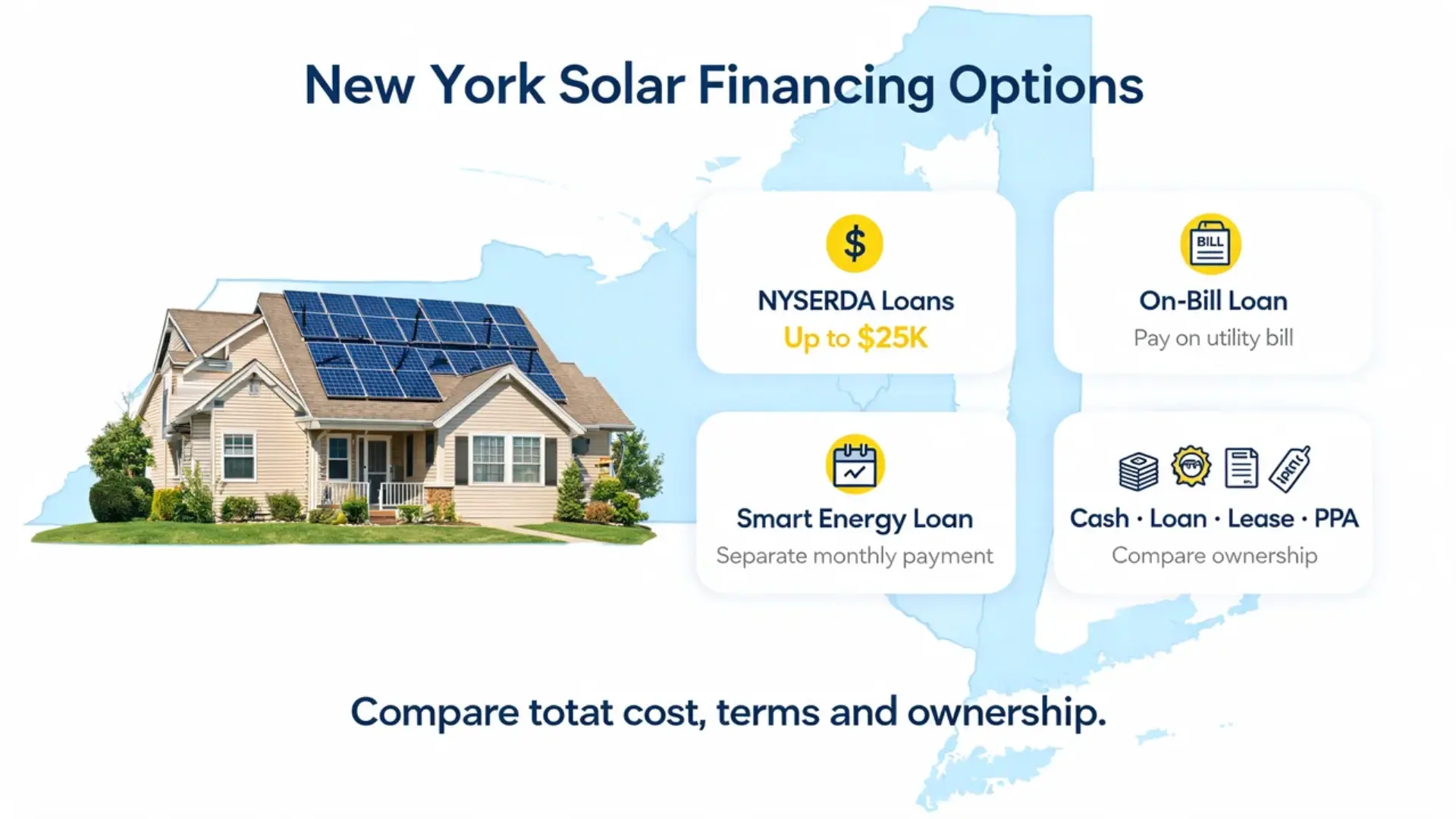
Solar incentives can reduce your project cost, while financing can spread the remaining amount over time.
Eligible New York homeowners can use NYSERDA financing or other payment options, with eligibility, loan terms, interest rates, and ownership varying by the option selected.
1. NYSERDA Solar Loans
NYSERDA offers two residential financing options that can be used for eligible clean energy projects, including solar photovoltaic systems: the On-Bill Recovery Loan and Smart Energy Loan, detailed on NYSERDA’s residential financing page.
Both are loans, not rebates or incentives, so borrowers must repay the amount borrowed with applicable interest and fees, as outlined in NYSERDA’s residential financing programs.
Homeowners could be eligible for up to $25,000 in NYSERDA financing for eligible clean energy improvements at existing one-to-four-family residential properties.
Loans above $13,000 have additional payback requirements under the program rules.
Available interest rates, repayment terms, and cost-effectiveness requirements vary by loan type and applicant.
NYSERDA also provides an interest rate estimator. Rates are subject to change and require a credit review, so the rate shown in a current estimate should not be treated as guaranteed.
2. How Do On-Bill Recovery Loans Work?
With an On-Bill Recovery Loan, your loan payment is included on your utility bill rather than paid through a separate monthly loan bill.
For residential applicants, the applicant or co-applicant must own the property, and the property must receive service from a participating utility.
The name on the utility account must also meet NYSERDA’s requirements.
For OBR financing, NYSERDA requires the estimated average monthly energy cost savings to be greater than the monthly loan payment.
This cost-effectiveness requirement is an important part of determining eligibility. The loan can finance eligible clean energy projects, including qualifying solar photovoltaic installations.
Because the repayment is added to the utility bill, the loan payment should be considered separately from any electricity savings or solar bill credits.
3. Smart Energy Loans
A Smart Energy Loan works more like a traditional loan. You make separate monthly payments through direct billing or automatic payment rather than adding the payment to your utility bill.
The loan can finance eligible solar photovoltaic projects at existing one- to four-family residential properties. Interest rates are subject to change, and the final rate requires a credit review.
NYSERDA residential loans are available through participating contractors. Your contractor can help connect the solar project with the financing application and applicable program requirements.
4. Solar Payment and Ownership Options
NYSERDA loans are not your only payment choices. Cash, loans, leases, and power purchase agreements differ in cost, ownership, payments, and access to available benefits.
| Payment option | How it works | Who owns the system |
|---|---|---|
| Cash | You pay upfront | You |
| Solar loan | You repay borrowed money over time | You |
| Lease | You make regular payments to use the system | Third party |
| PPA | You pay based on electricity produced | Third party |
With cash, a solar loan, home equity financing, or a personal loan, you generally own the solar system.
A lease or PPA usually leaves ownership with the solar provider; if you want the full mechanics of that arrangement, see how a solar PPA works.
System ownership can affect who is eligible to claim certain tax benefits and incentives, so do not assume every solar payment option provides the same benefits.
The right payment option depends on your budget, ownership preference, financing costs, and eligibility.
Compare the total cost and terms of each option rather than choosing based only on the monthly payment.
How Do You Check Your Solar Incentive Eligibility?
Before signing a solar contract, check each incentive against your home, utility, project, and financial situation. This helps prevent estimated savings from including benefits you may not qualify for.
- Confirm your utility and NY-Sun region: Identify your electric utility and the NY-Sun region that applies to your property.
- Check current NY-Sun availability: Confirm the current incentive amount, available capacity, and requirements for your project.
- Check Affordable Solar eligibility: Review the current income and location requirements to see if you may qualify for additional assistance.
- Review New York tax benefits: Confirm your eligibility for the state solar tax credit and applicable sales and property tax exemptions.
- Check utility compensation: Find out how your utility compensates eligible excess solar generation and applies credits to your bill.
- Verify your contractor: Confirm that your contractor participates in NY-Sun and can process the applicable incentive.
- Review your solar contract: Check that the incentive amount and final project price are clearly shown in the agreement.
- Compare total costs and financing: Review the project price, financing rate, fees, repayment period, and total amount you will pay.
- Keep your records: Save contracts, invoices, tax documents, incentive details, and other records related to your solar project.
These checks help you identify the incentives that may apply to your project and give you a more accurate starting point for calculating your expected solar cost.
Wrapping Up
New York solar incentives can make solar more affordable, but only when you understand which benefits fit your project.
NY-Sun, the New York solar tax credit, sales tax exemptions, property tax rules, utility credits, community solar, battery incentives, and financing options all have separate requirements.
A strong estimate should clearly show your total system price, available incentives, tax benefits, financing costs, and expected bill savings.
Before signing anything, confirm current program availability, check your utility rules, and make sure your contractor shows each benefit in writing.
Which incentive matters most for your home? Share your situation in the comments.
Frequently Asked Questions
Do Solar Incentives Depend on Your Income in New York?
Some do, and some do not. Affordable Solar and Statewide Solar for All require income at or below roughly 80% of the area median. NY-Sun’s standard incentive, the state tax credit, and the sales and property tax exemptions do not have an income test, though they have their own eligibility rules.
Can You Get New York Solar Incentives Without Owning Your Home?
Yes, to a degree. Renters cannot claim rooftop incentives like NY-Sun or the state tax credit, but they can subscribe to community solar or Statewide Solar for All if income-eligible. Rooftop programs generally require property ownership and installation at that address.
Do You Need Excellent Credit to Qualify for NYSERDA Solar Financing?
Not necessarily. NYSERDA does not publish a minimum credit score for its On-Bill Recovery or Smart Energy loans. Still, approval and your final interest rate depend on a credit review, and households at or below 80% of area median income can qualify for a discounted rate. Ask a NY-Sun contractor about your specific eligibility before applying.
Can You Combine NY-Sun With the New York Solar Tax Credit?
Yes. NY-Sun and the state solar tax credit are separate benefits with separate rules, and eligible homeowners can typically claim both on the same project. The tax credit applies to your qualified costs after the NY-Sun incentive is subtracted, so calculate it in that order.
Are Solar Incentives Available For Battery Storage Without Solar Panels?
Yes. New York’s residential battery storage incentive does not require the battery to be paired with a new solar installation. Eligibility depends on current NYSERDA program requirements, system specifications up to 25 kWh, utility requirements, and available incentive capacity in your region.