



Ask five people what Tesla solar costs and you will get five different numbers, and most of them come from an online calculator that stopped being accurate months ago.
I checked Tesla’s current pricing against today’s installs and found a real gap between the number homeowners expect to pay and the number they end up signing for.
Roof condition, system size, financing choice, and a federal tax credit that just changed all move that final figure more than most people realize before they request a quote.
A single headline price will not tell you whether Tesla solar cost actually fits your budget once equipment, labor, and incentives are added together.
Here is what really shapes your quote, starting with the number Tesla shows you first.
How Much Does Tesla Solar Cost?
Tesla solar costs $2.27 to $3.30 per watt installed as of today, or roughly $18,000 to $26,000 for an average 8 kW system before incentives.
Tesla prices by total system size rather than a fixed per-panel rate. It uses your address, roof layout, and electricity usage to create the first estimate.
The initial online price usually includes solar equipment, standard installation, and system monitoring.
Still, that number should be treated as a starting point, not the final cost.
What Affects Tesla Solar Pricing?
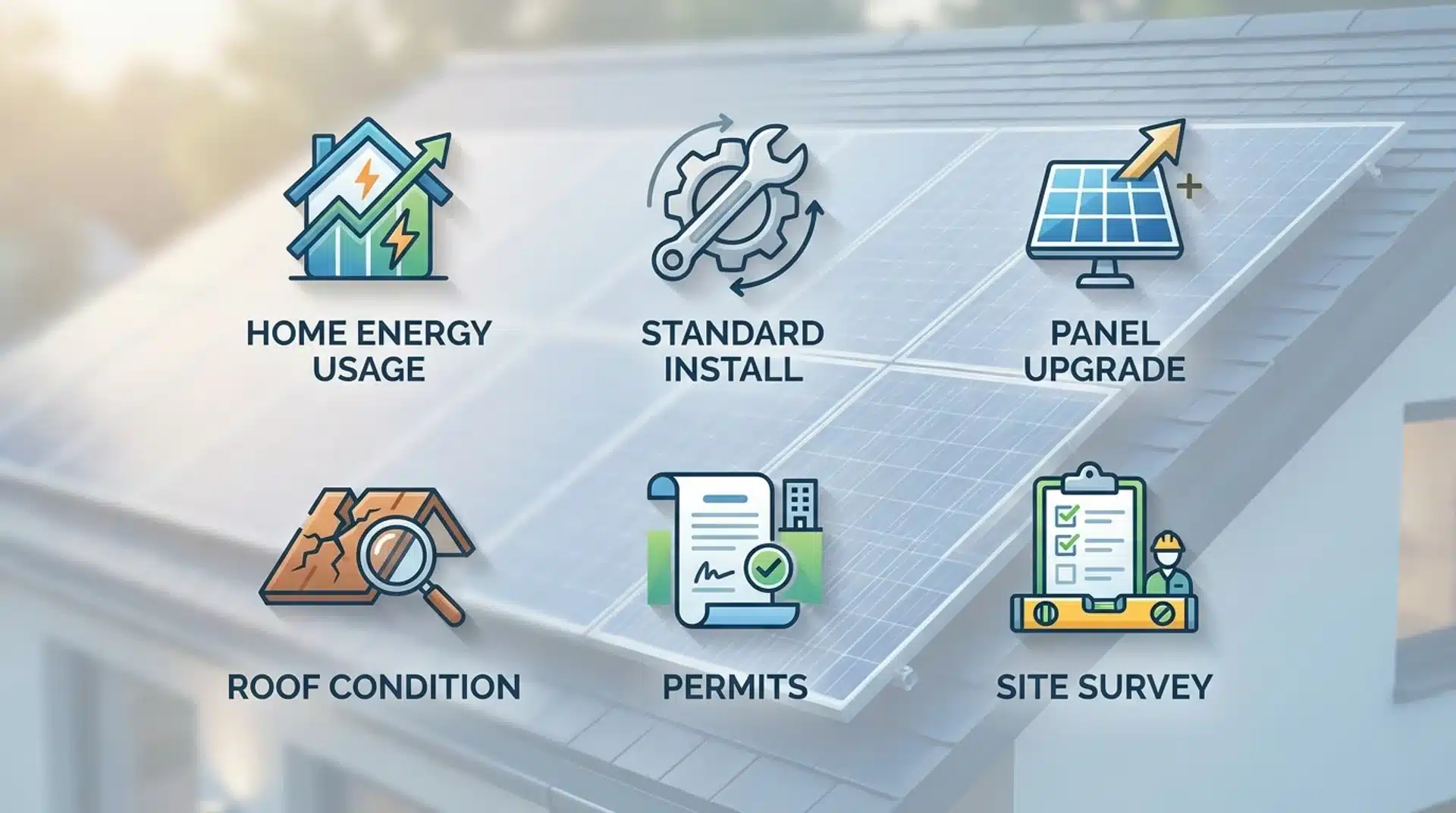
Several factors can change your final Tesla solar quote after the online estimate:
- Home energy usage: Tesla prices by total system size instead of a fixed per-panel rate. Your address and electricity usage help shape the first estimate.
- Standard installation scope: The initial online price usually includes solar equipment, standard installation, and system monitoring.
- Electrical panel upgrades: If your existing panel cannot safely support the system, upgrades can add about $1,500 to $3,000.
- Roof condition and material: Older roofs, tile surfaces, flat roofs, or unusual installation conditions may require extra preparation before panels can be installed.
- Permitting timeline: Local permitting can delay installation, although these delays usually affect your project timeline more than the final price.
- Site survey results: Tesla’s online estimate is only a starting point. Your site survey confirms roof conditions, electrical requirements, and installation complexity.
If you want to see what happens after the quote is signed, our step-by-step install guide walks through it from mounting to inspection.
Note: Solar pricing shifts often, so confirm current numbers directly with Tesla before you budget.
Why Tesla’s Net Cost Isn’t What You’ll Find?
Tesla’s real net cost as of now can look different from figures shown on older solar calculators. Several incentives and ownership details now affect what you actually pay.
- The federal tax credit changed: Many calculators still subtract 30%, but that credit no longer applies to homeowners who buy their system outright for any system placed in service after December 31, 2025, as the IRS confirms the expiration in its current Form 5695 instructions.
- State incentives now matter more: Your net cost depends largely on local rebates and tax programs. States such as California, New York, and Massachusetts may still offer meaningful savings.
- Leasing works differently: If you lease your Tesla solar system, the leasing company may claim available credits instead of passing them directly to you.
- Online estimates may be outdated: Some calculators still use older incentive rules, making their advertised net prices lower than what you may actually pay in 2026.
Before setting your budget, confirm which state incentives still apply and base your decision on Tesla’s updated final price.
How You Can Pay for Tesla Solar: Cash, Loan, or Lease
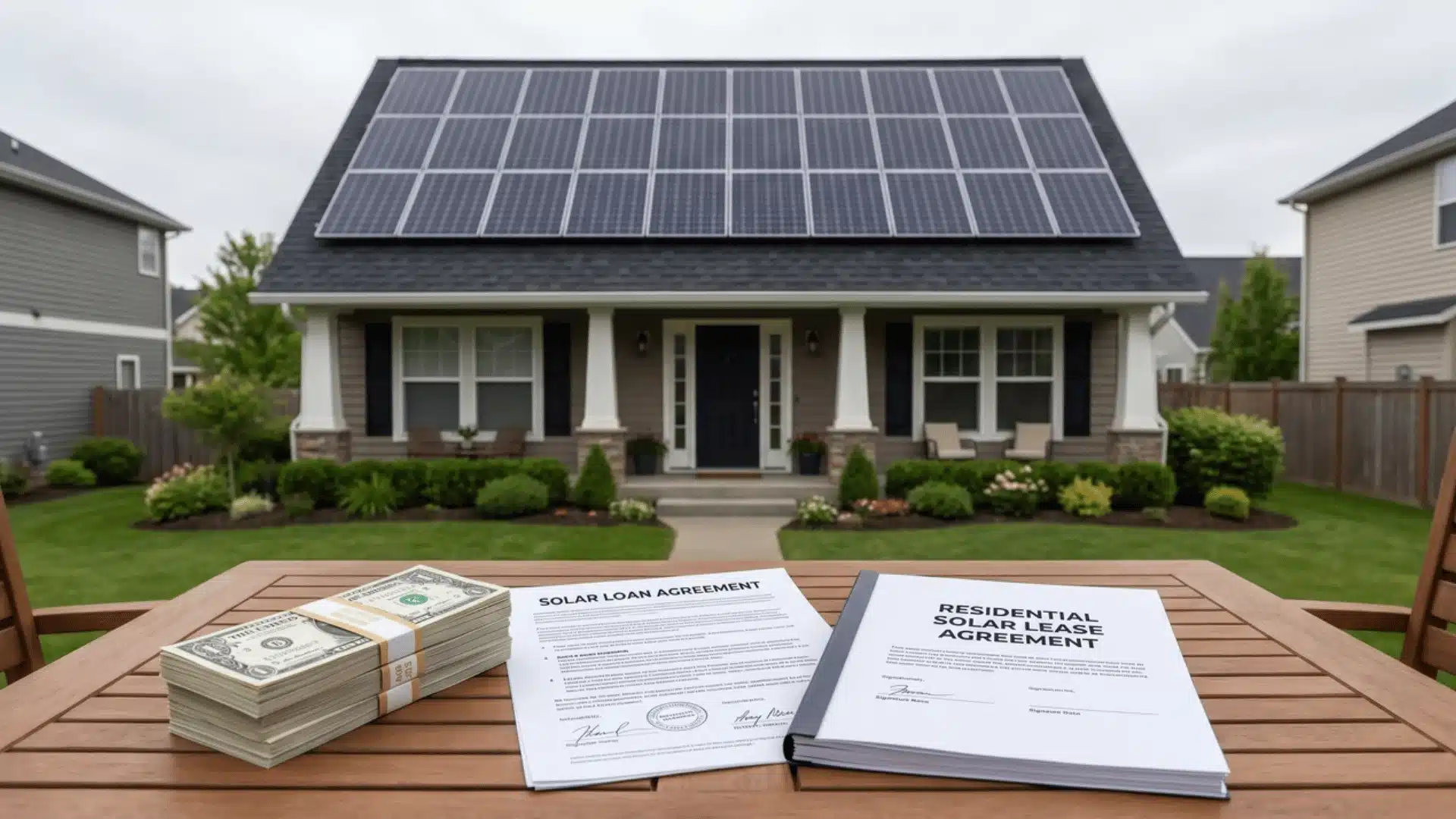
Your payment method can change your total solar cost, monthly expenses, and long-term savings. Each option works differently depending on how much you can spend upfront and whether ownership matters.
1. Cash
Paying cash means covering the full Tesla solar cost upfront and owning the system from installation.
You avoid interest charges, lender fees, and monthly financing payments while keeping all future electricity savings. The main drawback is the large upfront expense, which can tie up money you may need elsewhere.
Cash usually delivers the lowest lifetime system cost and the strongest long-term return.
2. Loan
A solar loan lets you spread the system cost across several years instead of paying everything upfront. You own the panels, but interest and possible lender fees increase your total spending.
Monthly payments may still compare favorably with your previous electricity bill, depending on rates and energy use.
Loans work well for homeowners who want ownership without using a large amount of cash immediately.
3. Lease
A solar lease usually requires little or no upfront payment and replaces ownership costs with a fixed monthly charge.
Tesla or another provider owns the system while you use the electricity it produces.
Leasing reduces your initial financial commitment, but long-term savings are usually lower than with ownership. You may also miss certain state incentives, tax benefits, or other programs reserved for system owners.
How Long Until Tesla Solar Pays for Itself?
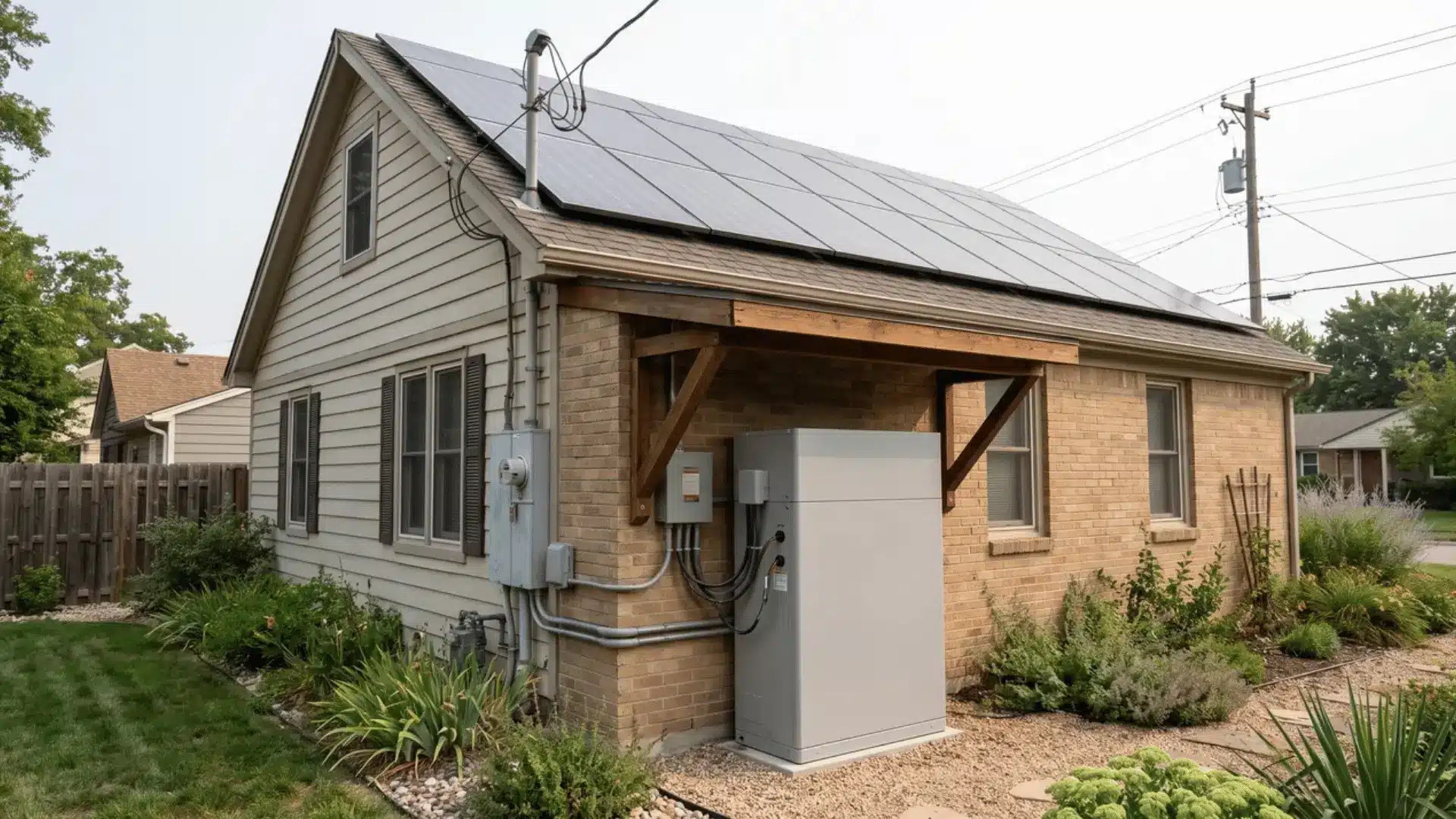
Most Tesla solar customers reach payback in 7 to 13 years, and your local electricity rate is the single biggest factor in where you land in that range.
Payback period is simply the time it takes for your electricity savings to equal what you spent on the system, so a shorter payback means real returns start sooner.
The calculation is simple: net system cost divided by annual electricity savings. Use your final net system cost after any eligible incentives when calculating payback.
Your local electricity rate has a major effect on the result. Homeowners in high-rate states usually recover their investment faster because every kilowatt-hour of solar replaces more expensive grid electricity.
For example, someone paying 30 cents per kWh in Massachusetts may break even years sooner than a homeowner paying 12 cents in Louisiana, even when both install similar-sized systems.
Most homeowners currently see a 7 to 13 year payback period.
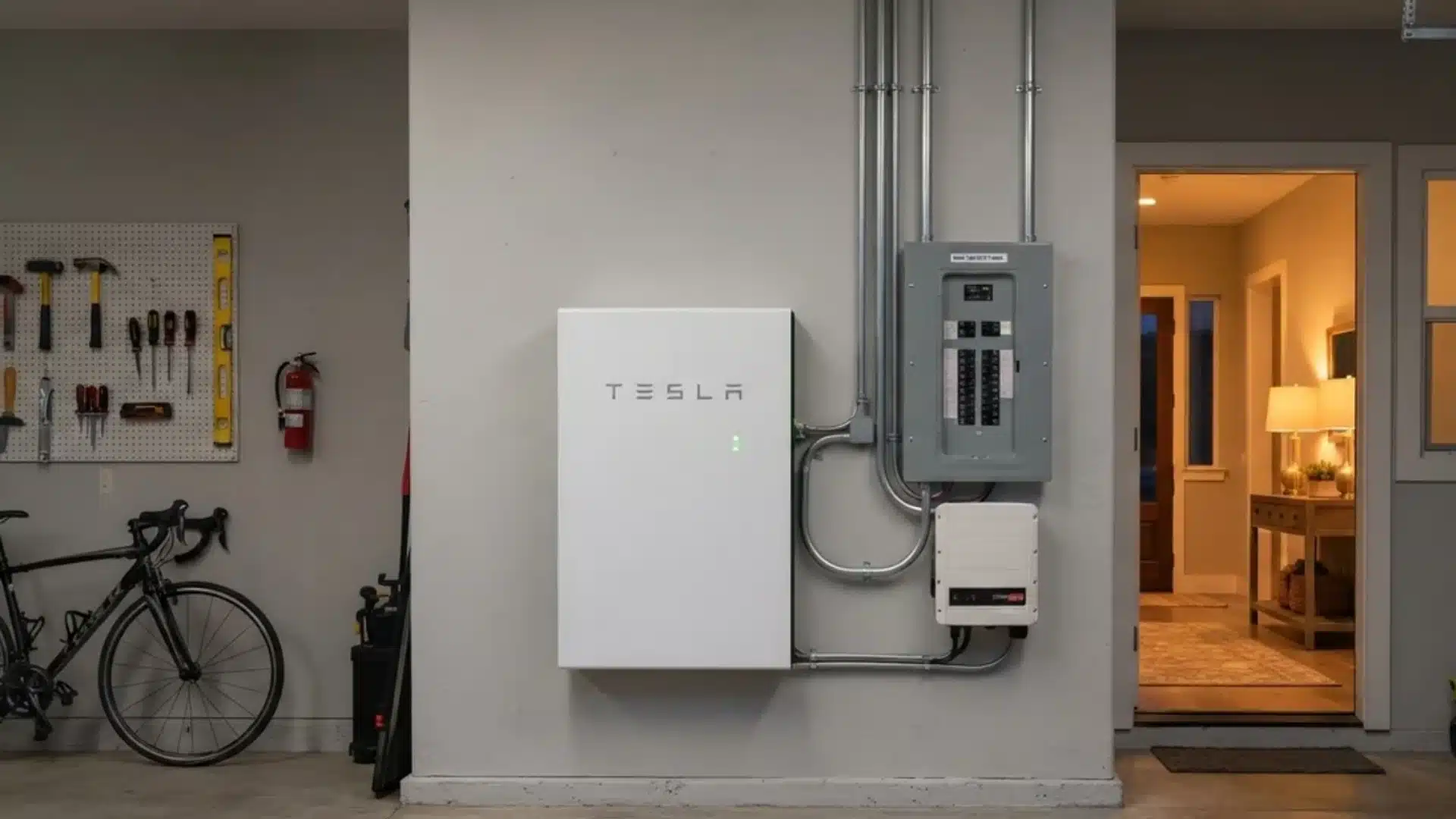
Adding a Powerwall can extend that timeline by roughly three to five years, although it provides valuable backup power during outages.
Tesla Solar Panels vs. Solar Roof vs. Powerwall: Cost Breakdown
Tesla products have different pricing structures, so the table below separates the main equipment, labor, permitting, and potential extra costs.
Tesla stopped accepting new Solar Roof orders on August 20, 2026, after about 7 years and roughly 3,000 total US installations, so its figures below are historical rather than current purchase pricing.
Electrek’s original report confirms the wind-down and notes Tesla’s Energy lineup now covers only solar panels, Powerwall, and Megapack.
| Cost Component | Tesla Solar Panels | Tesla Solar Roof | Tesla Powerwall 3 |
|---|---|---|---|
| Equipment / Base Cost | $10,000–$12,000 | $35,000–$55,000+ | $9,000–$11,000 |
| Installation Labor | $1,500–$2,000 | $8,000–$15,000+ | $2,000–$3,500 |
| Design & Engineering | $1,500–$3,000 | $3,000–$6,000 | $500–$1,500 |
| Permits & Inspections | $110–$760 | $200–$1,000 | $100–$600 |
| Electrical Panel Upgrade | $1,500–$3,000 if needed | $1,500–$3,000 if needed | $1,500–$3,000 if needed |
| Roof Repairs / Removal | $500–$5,000+ if needed | About $11,500 average roof replacement | Usually none |
| Additional Wiring / Equipment | $500–$2,000 | $1,000–$3,000 | $500–$2,000 |
| Typical Installed Total | $18,000–$26,000 for 8 kW | Historically $35,000–$100,000+ | Roughly $12,000–$18,000 per unit |
For most homeowners, standard solar panels have the lowest total cost, while Powerwall adds battery storage expenses on top of solar installation costs.
If you’re still weighing whether a battery is worth adding at all, our best home batteries guide compares Powerwall against every major alternative.
Is Tesla Solar Worth the Cost?
Tesla Solar is worth the cost for homeowners who care most about the lowest verified price per watt, and less worth it for anyone who wants the fastest installation or the most responsive customer service.
Where you land depends on which trade-off matters more for your budget and timeline. Tesla’s biggest advantage is its lower price per watt.
That can reduce your initial investment and shorten the path toward savings, particularly when competing quotes for similar system sizes come in higher.
The main trade-off is customer experience after purchase.
Installation timelines can sometimes run longer than expected, and owner feedback on communication and post-installation support has been mixed.
If your priority is the lowest verified installation price, Tesla can offer strong value.
However, buyers prioritizing premium panel efficiency, faster installation, or highly responsive service may find better options elsewhere.
Before deciding, get at least one competing solar quote using the same system size and equipment requirements. Comparing real local prices gives you a clearer answer than relying on national averages alone.
Conclusion
Tesla solar cost really comes down to your final installed quote, not the number you see first online.
Equipment, labor, financing choice, and your state’s incentives all shape that figure more than any advertised per-watt price.
Comparing panels, Solar Roof history, and Powerwall separately also matters, since each solves a different problem and none of them fit every home the same way.
Your electricity rate and expected payback period tell you more about long term value than any single headline number ever will.
Before you sign anything, get a second quote for the same system size.
What did your Tesla quote look like once the site survey came back? Share your numbers below.
Frequently Asked Questions
Is Tesla Solar Cheaper Than Other Installers?
Usually, yes. Tesla commonly prices between $2.27 and $3.30 per watt, often below the national average for comparable systems. Tesla also offers a price match guarantee, reviewing a lower competing quote within about 14 days of receiving it, so get competing quotes before you sign anything.
Can I Add a Tesla Powerwall Later If I Already Have Solar?
Yes. Tesla Powerwall can be AC coupled onto an existing solar system and works with most major inverter brands, so you typically do not need to replace your current panels or inverter. A certified installer handles the addition, and lead times can run longer than a new combined system since it depends on local availability.
How Long Does a Tesla Solar Installation Actually Take?
From signed contract to activated system, Tesla installations have run three to five months for many homeowners, based on aggregated owner reviews. Most of that time comes from permitting and utility interconnection rather than the physical install day itself, which typically takes one to three days.
Does Adding Solar Increase My Home’s Resale Value?
In most markets, yes. Multiple industry studies, including a widely cited Zillow analysis, have found homes with owned solar sell for several percent more than comparable homes without it, though the exact premium varies by location and shrinks for leased systems. Owning the system outright, rather than leasing, tends to matter most for resale.