


Picking the best solar battery feels easy until you’re three tabs deep in spec sheets and more lost than when you started.
The Tesla Powerwall 3 shows up at the top of almost every review list, and for many homes, it genuinely earns that position.
The gap between the popular choice and the right choice is where expensive mistakes live.
The battery that fits your home depends on things most buyers don’t check until after they’ve gotten a quote. Get those wrong, and the highest-rated product on the market becomes the wrong product for you.
Here’s what those variables are, which products are worth your money, and the one question you need to answer before any of it matters.
What Actually Makes a Solar Battery Worth Buying?
“Best solar battery” is not a single answer. It’s a use-case answer. Your inverter type is the variable that decides every other comparison.
I’ve seen buyers fall in love with a product on paper, sit through an installer quote, and find out it won’t connect to what they already have. That’s not a spec problem. It’s a sequencing problem, and it happens more often than any review site lets on.
Before brand or price enters the picture, three things determine which products even make your shortlist.
The first is your inverter type. It decides which batteries can physically connect to your system. The second is your backup load, how much of your home you need running when the grid goes down. The third is your budget.
Get those three wrong, and the top-rated battery on every review site becomes the wrong battery for you.
There’s a fourth factor that doesn’t show up on comparison charts: the warranty capacity floor.
Most top-tier batteries promise they’ll hold at least 70% of their original capacity at the end of the warranty term. That’s a minimum, not a target. Real-world performance usually stays above it.
But if you’re weighing a 10-year warranty against a 15-year one, knowing what each is actually promising changes the math on which is cheaper over time.
The specs matter too. Capacity, power output, efficiency, and chemistry all interact. The next section unpacks each one before we get to product names.
What Do the Key Specs Actually Mean?
Five numbers determine whether a battery will work for your home in the long term. Here’s what each one means, and why ignoring any of them costs you later.
1. Usable Capacity
Usable capacity is the electricity a battery can actually deliver, measured in kilowatt-hours (kWh). It’s not the number on the box.
The gap comes from depth of discharge (DoD). DoD is the share of the nameplate capacity you can actually use. Multiply the nameplate figure by the DoD percentage, and you get the real number.
A 15 kWh battery with a 90% DoD delivers 13.5 kWh in practice. Always use the usable figure when comparing products. Nameplate numbers are marketing. DoD-adjusted numbers are what run your fridge.
2. Continuous Power and Peak Power
Continuous power, in kilowatts (kW), tells you how many things the battery can run at once. Most buyers stop there, and that’s where they get caught out.
The number that really matters for a heavy home is peak power. When your HVAC compressor kicks on, it pulls two to three times its running load for a split second. If the battery can’t handle that surge, the system trips.
You won’t find out until the power goes out and the AC won’t start.
3. Round-Trip Efficiency
Round-trip efficiency is how much of the energy you put in you actually get back out. This is where things get quietly expensive, and I’d argue it’s the spec that matters most over a full ownership period.
The Tesla Powerwall 3 sits at 97.5%. Some competitors land near 89%. At 365 daily cycles of 10 kWh each, that gap is roughly 375 kWh lost per year. That compounds over a decade.
If you’re comparing two batteries on price alone, you’re missing the number that shapes the real cost.
4. Battery Chemistry
Lithium Iron Phosphate (LFP) is the chemistry in almost every premium home battery sold today. It’s thermally stable, has a low fire risk, and uses no cobalt.
LFP batteries are rated for 3,000 to 6,000 cycles, far more than older NMC chemistries. The trade-off is size: LFP takes more physical space per kWh. For most home installs, that’s a trade-off worth making without a second thought.
5. Warranty and Capacity Floor
Most top-tier batteries carry a 10- to 15-year warranty. What they’re promising matters as much as how long it takes.
The standard guarantee is at least 70% of the original capacity at the end of the term. Buy a 13.5 kWh battery, and you’re promised at least 9.45 kWh of usable storage after a decade of daily use.
Shallow cycling, never draining below 20%, keeps performance well above that floor. How hard you push the battery each day shapes what you have left at year ten.
The Best Solar Batteries of 2026: What Each One Is Built For
Not every battery here is going after the same job. Each one was designed with a specific situation in mind. Matching it to your system type and backup load matters more than chasing the highest overall score.
Here are the five strongest options onthe market right now:
Tesla Powerwall 3
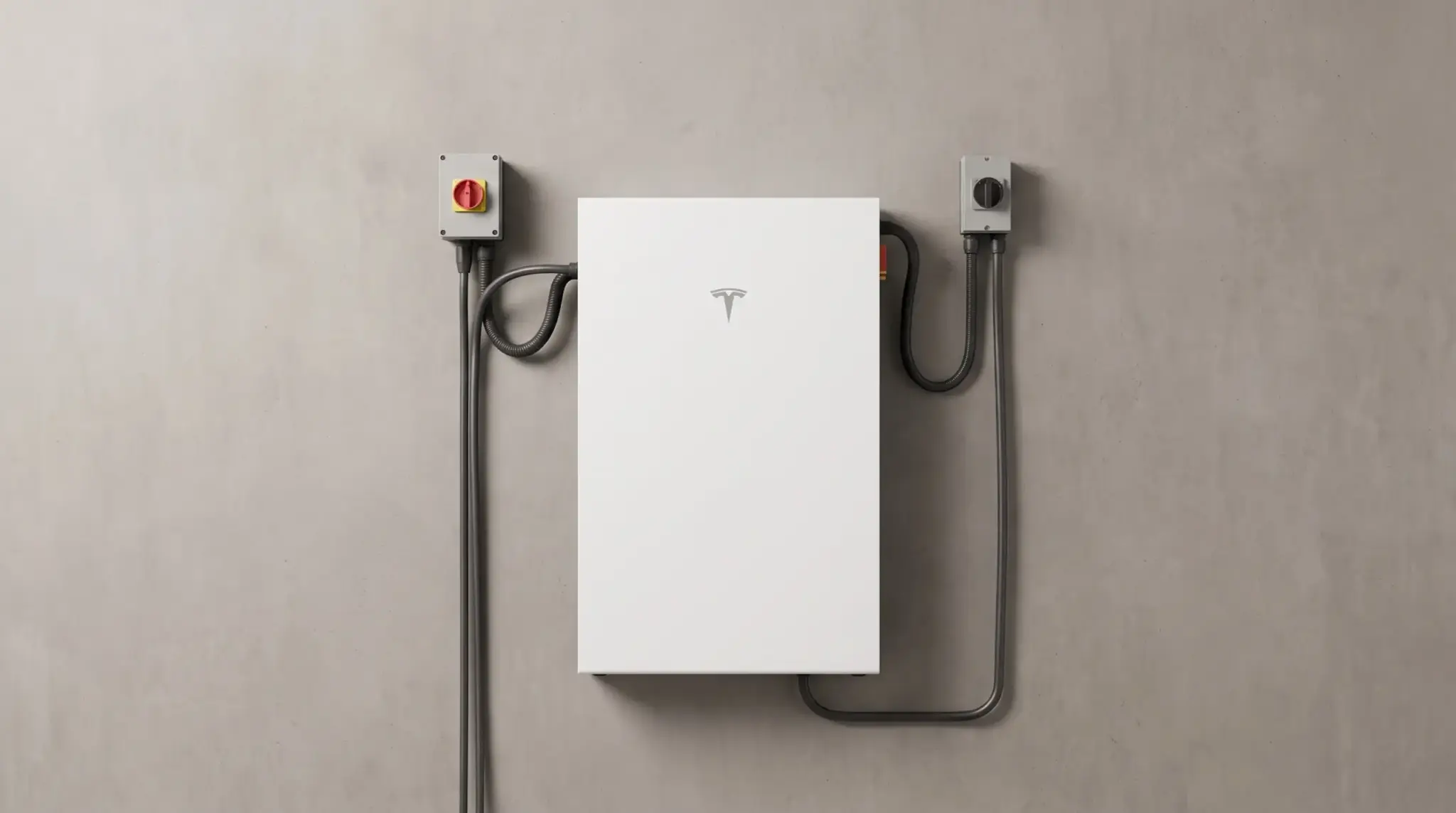
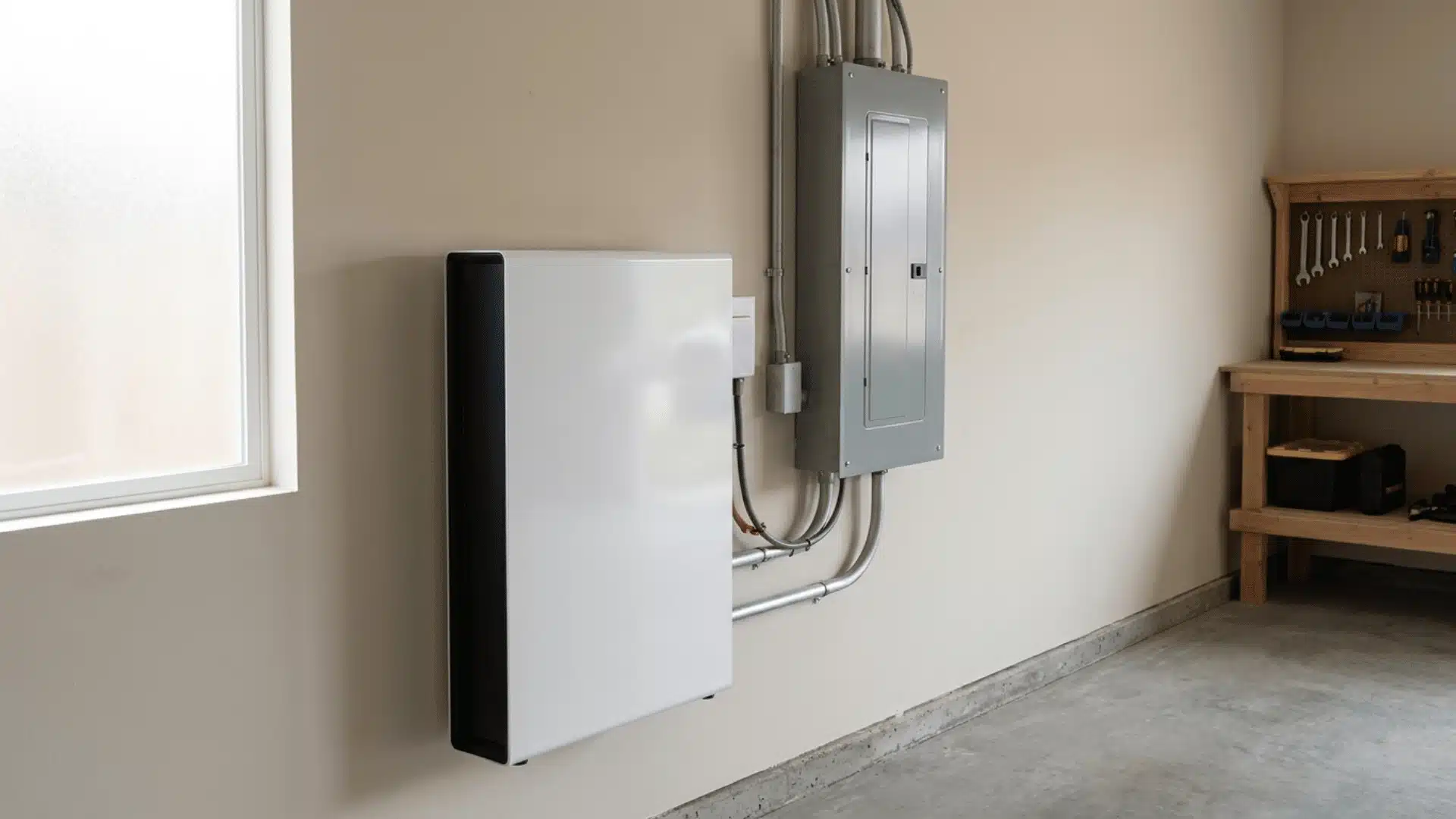
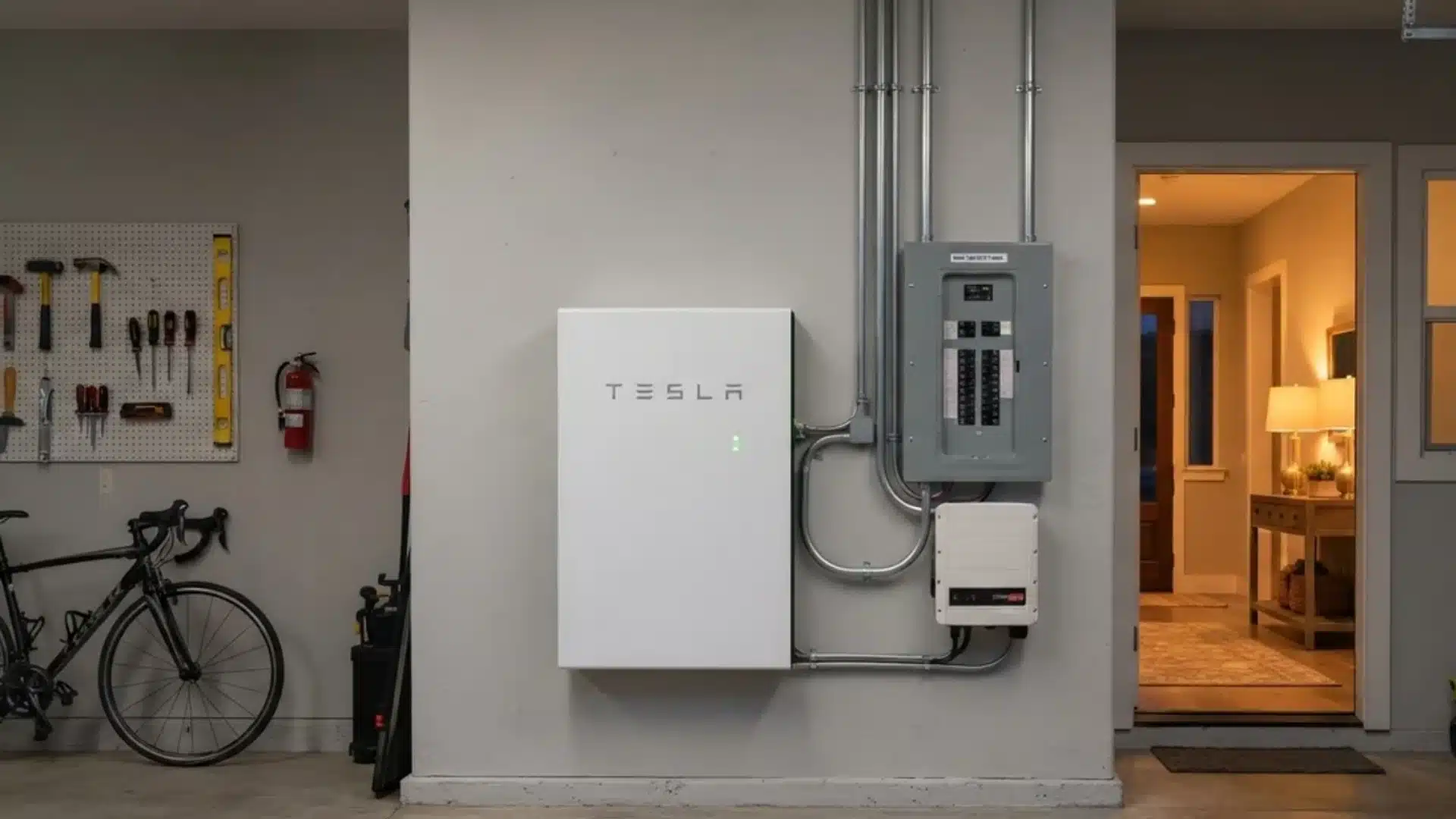
The Powerwall 3 is the default pick for most new grid-tied installs, and I think that reputation is earned.
It has a built-in hybrid inverter, one fewer thing to buy, install, and maintain. Usable capacity is 13.5 kWh. Round-trip efficiency is 97.5%, the highest on the market. Continuous power is 11.5 kW.
It works best when you’re building a new system around it from scratch. If you already run Enphase microinverters, it’s not the right fit; there’s a better option for that below.
FranklinWH aPower 2
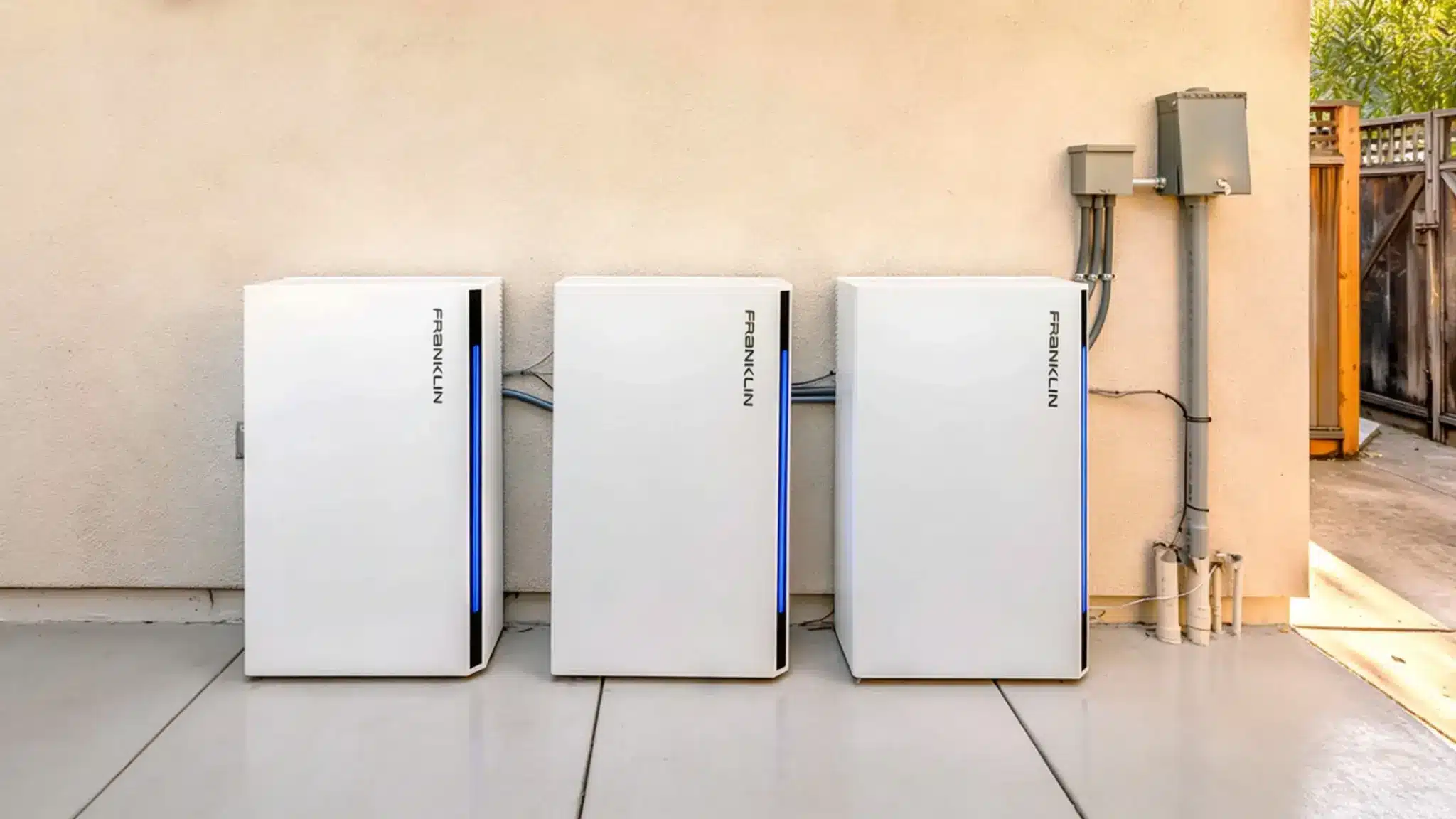
The aPower 2 is for homes with serious backup needs, multiple HVAC units, heavy appliances, or a need to run almost everything during an outage.
It carries 15 kWh of usable storage, the highest peak power on the market, and a 15-year warranty. That five-year edge over most competitors means a longer guarantee on how much capacity you’ll still have when the warranty ends.
If your home runs hard and your backup load is large, the aPower 2 earns its price premium over the Powerwall 3. If your needs are standard, it’s more battery than you need.
Anker SOLIX E10
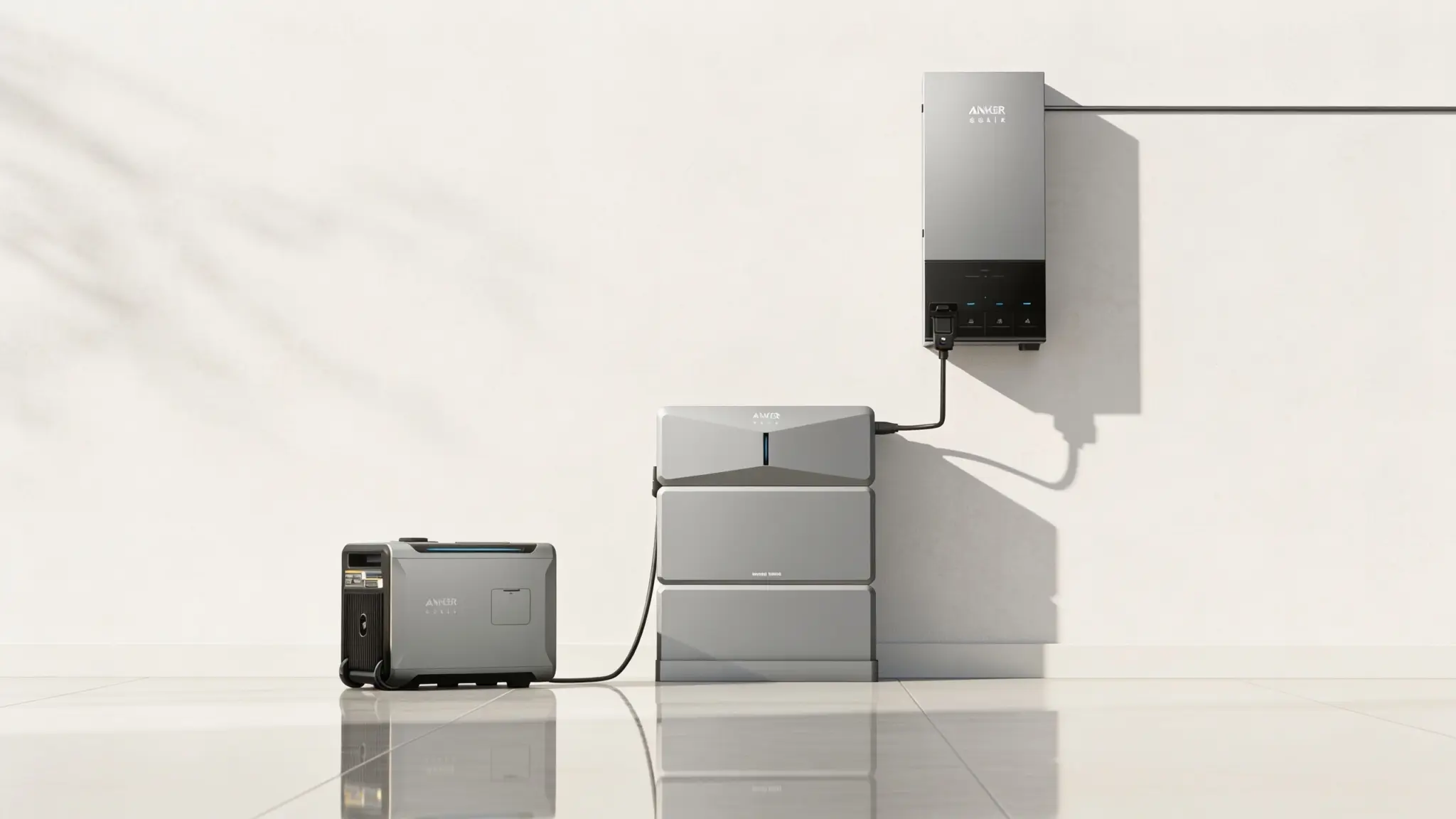
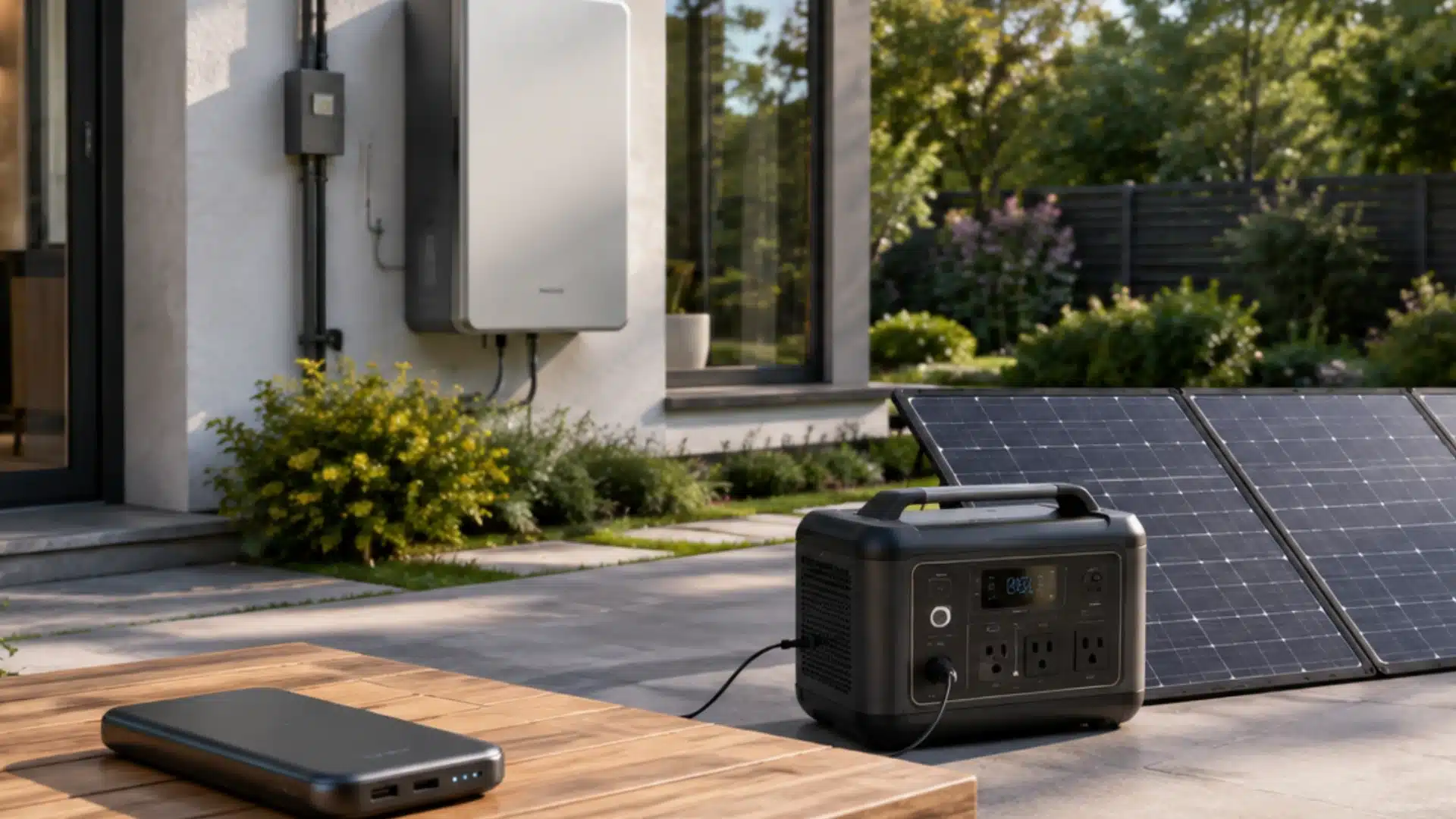
The Anker SOLIX E10 works differently from the rest. It’s a modular, stackable system built for whole-home backup without a traditional installation.
Units click together and run without fans, with no noise at all. It handles heavy surge loads for high-power tools and appliances. You scale it by adding modules rather than replacing the base unit.
If you want whole-home backup with a simpler setup path, the SOLIX E10 deserves a serious look. It sits between a traditional solar battery and a power station in how it works and how it’s installed.
Enphase IQ Battery 10C
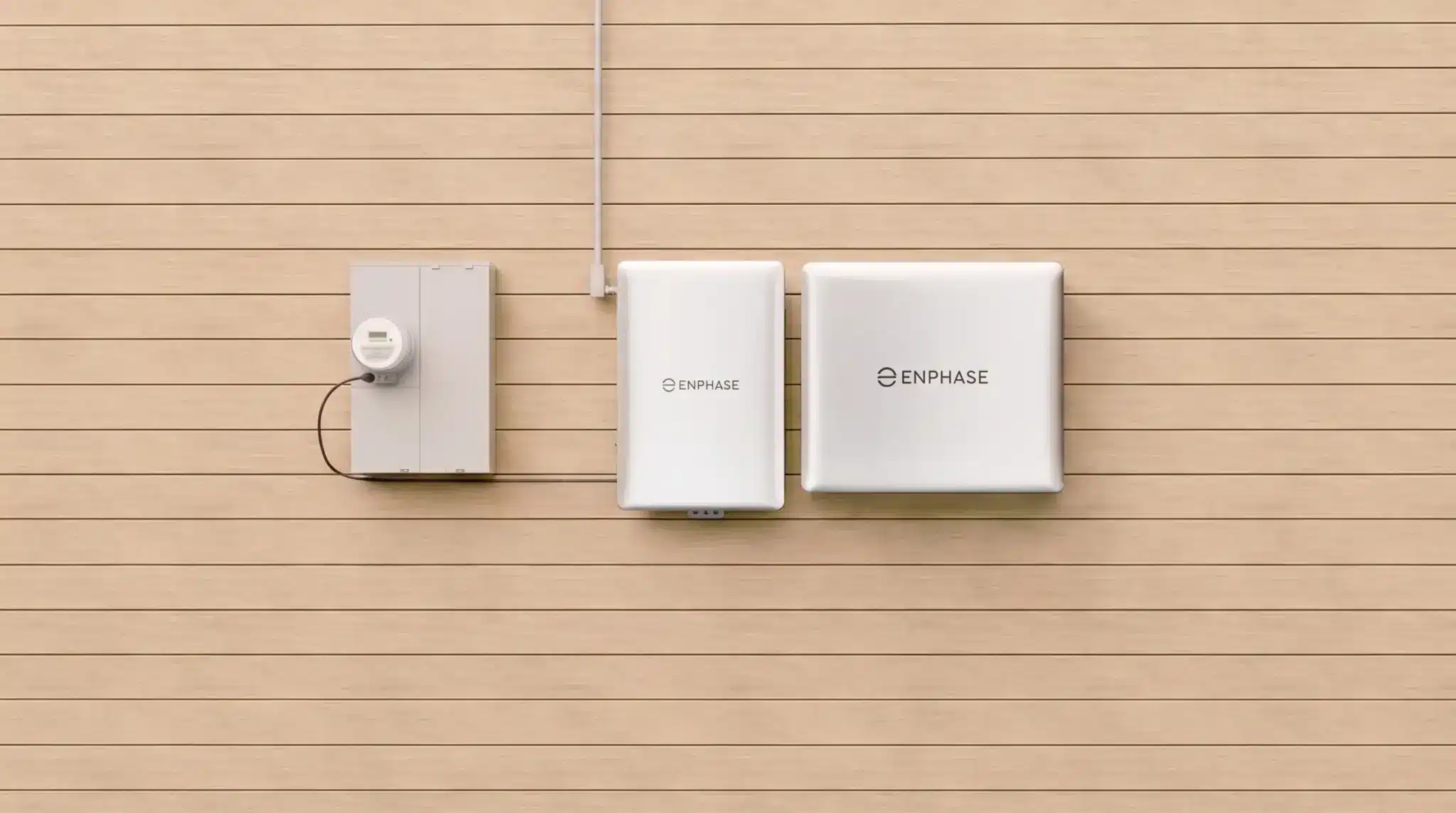
This one exists for a single situation: homes already running Enphase microinverters. If that’s you, the IQ Battery 10C is the obvious choice; nothing else fits as cleanly.
It’s AC-coupled by design, so it connects to an Enphase system without a separate hybrid inverter. It also gives you panel-level optimization, which makes the biggest difference on shaded roofs. Usable capacity is 10.0 kWh, with 7.1 kW of continuous power.
Outside an Enphase setup, it’s not the right call. Its efficiency and power specs make sense as part of a full Enphase system, not as a standalone pick.
EG4 WallMount Gen 3
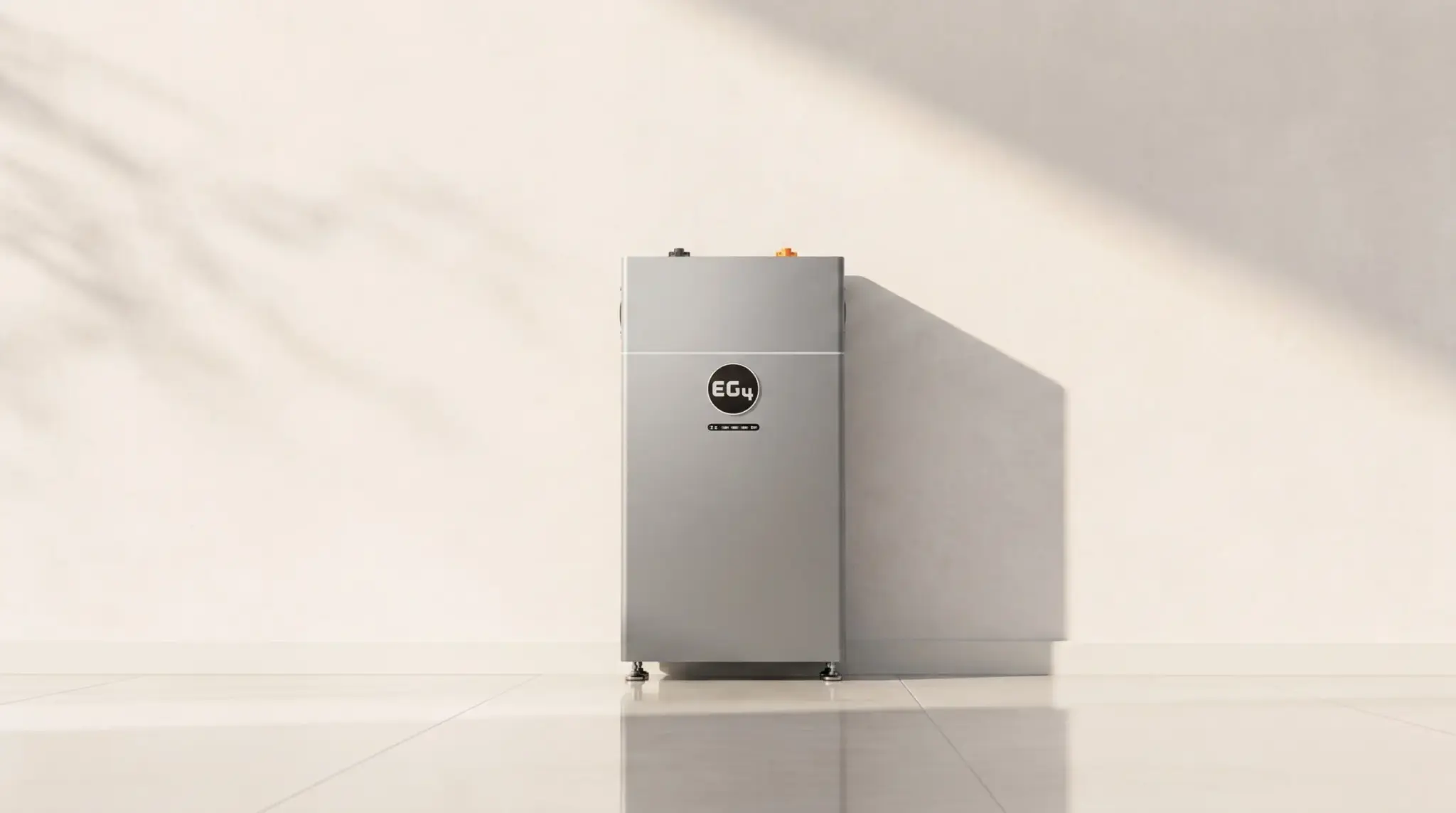
The EG4 WallMount Gen 3 is for DIY builders and off-grid installs. It’s a 48V LFP battery with 16 kWh of capacity. You can run up to 32 units in parallel for large-scale storage.
The catch is complexity. Setting this up takes more hands-on knowledge than anything else on this list. If you’re comfortable with electrical systems and want high capacity at a lower cost per kWh, it delivers.
For the technically confident buyer going off-grid or building a big DIY system, it’s the strongest option in that category.
Does Your Inverter Already Decide Which Battery You Can Buy?
Your inverter type decides which batteries can connect to your system. That check comes before specs, before brand, and before budget.
I’ve watched buyers get deep into research, pick a battery they’re excited about, then hit a quote and find out it won’t work with what they already have. It’s an avoidable problem, and it always comes back to inverter type.
Here’s how each type maps to your options. This is the filter that runs before everything else:
| Inverter Type | Battery Compatibility | Key Details |
|---|---|---|
| String inverter | AC-coupled batteries only | Best for older systems. Fewer battery options. Works with Anker SOLIX E10, but not Tesla Powerwall 3 without hybrid support. |
| Hybrid or multi-mode inverter | AC-coupled and DC-coupled batteries | Best flexibility for new installs. Supports Tesla Powerwall 3 and FranklinWH aPower 2. |
| Enphase microinverter system | AC-coupled batteries | Best paired with Enphase IQ Battery 10C. Other batteries work but with less integration. |
Check your inverter type before you request a quote. Finding a compatibility problem after a purchase costs real money. Pick the inverter-battery pairing first, then pick the battery.
The Bottom Line
The best solar battery for your home isn’t a review score. It’s what your system actually needs.
Your inverter type sets the limits. Your backup load sets the size. Your budget sets the ceiling. Get those three right and the shortlist practically writes itself.
Chemistry, efficiency, and warranty depth aren’t bonus features. They’re long-term costs hiding in plain sight. A battery at 89% round-trip efficiency versus one at 97.5% gives up hundreds of kilowatt-hours a year. Over a decade, that adds up.
The one step that costs you nothing: find out your inverter type before you request a quote. Five minutes now prevent the most common compatibility mistake buyers make.
Frequently Asked Questions
Which solar battery is the best?
The Tesla Powerwall 3 is the best overall choice for most homes in 2026. It has a built-in hybrid inverter, 13.5 kWh of usable capacity, and a 97.5% round-trip efficiency, the highest on the market. It works best in new grid-tied installs with a hybrid inverter. Other homes may need a different fit.
How long do solar batteries last?
Most premium LFP batteries carry a 10- to 15-year warranty that guarantees at least 70% of original capacity at the end of the term. Real-world lifespan depends on how deeply you discharge the battery each day. Shallow daily cycling typically keeps the battery above that floor for longer than the warranty period.
How many solar batteries do I need to power a house?
One 13.5 kWh battery covers essential loads for roughly 24 hours. Running the whole home, including HVAC, usually takes two or more. The right number depends on your daily energy use and which loads you need backed up. A load audit from your installer gives you a specific answer.
What is the difference between AC-coupled and DC-coupled solar batteries?
DC-coupled batteries connect directly to the solar panels through a hybrid inverter, converting energy once and losing less in the process. AC-coupled batteries convert twice, once from solar to AC, then back to DC for storage, making them slightly less efficient but easier to add to an existing system without replacing the inverter.