


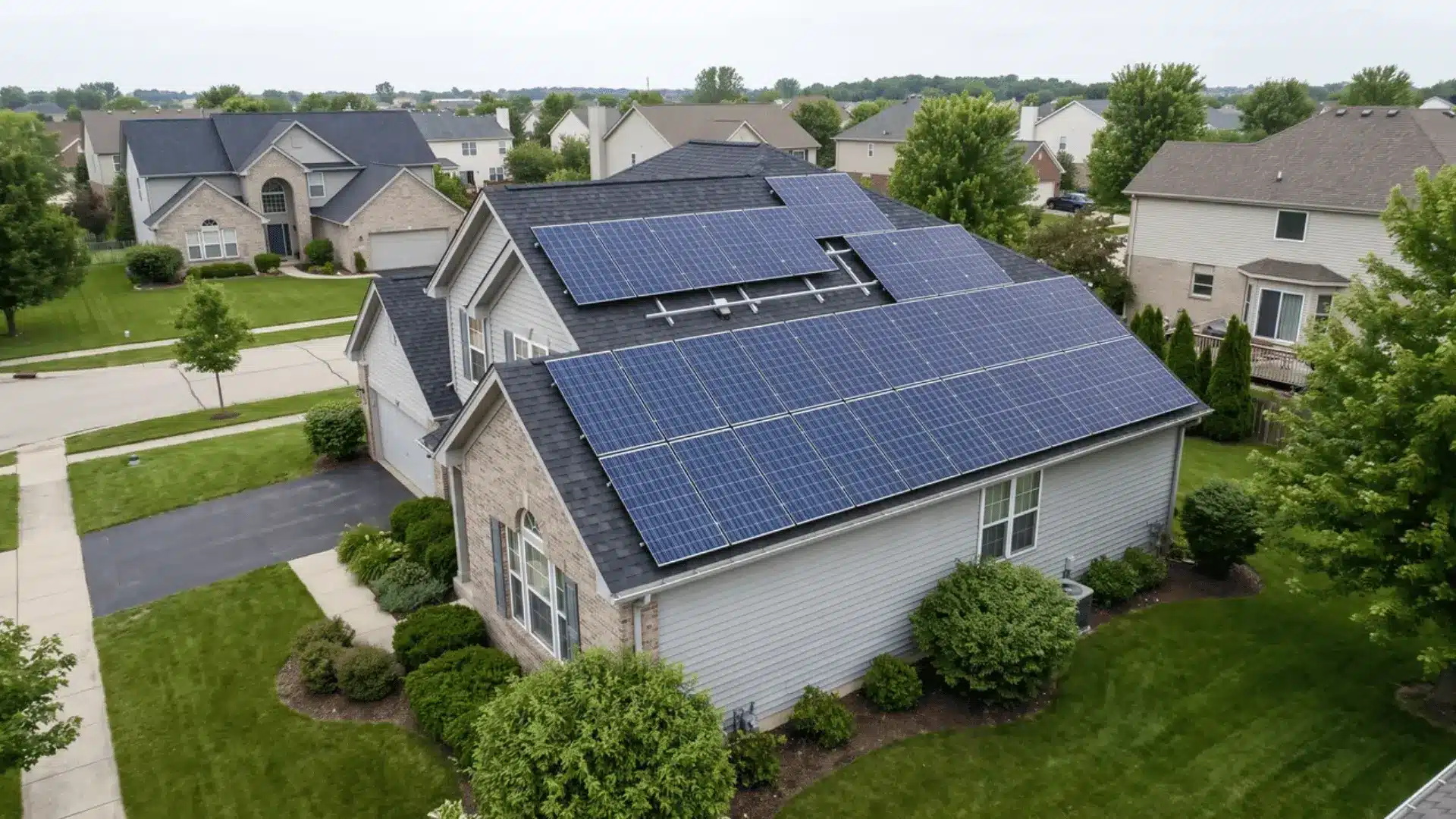
Renters can’t put solar panels on someone else’s roof. Neither can people with too much shade, or a roof that won’t hold the weight.
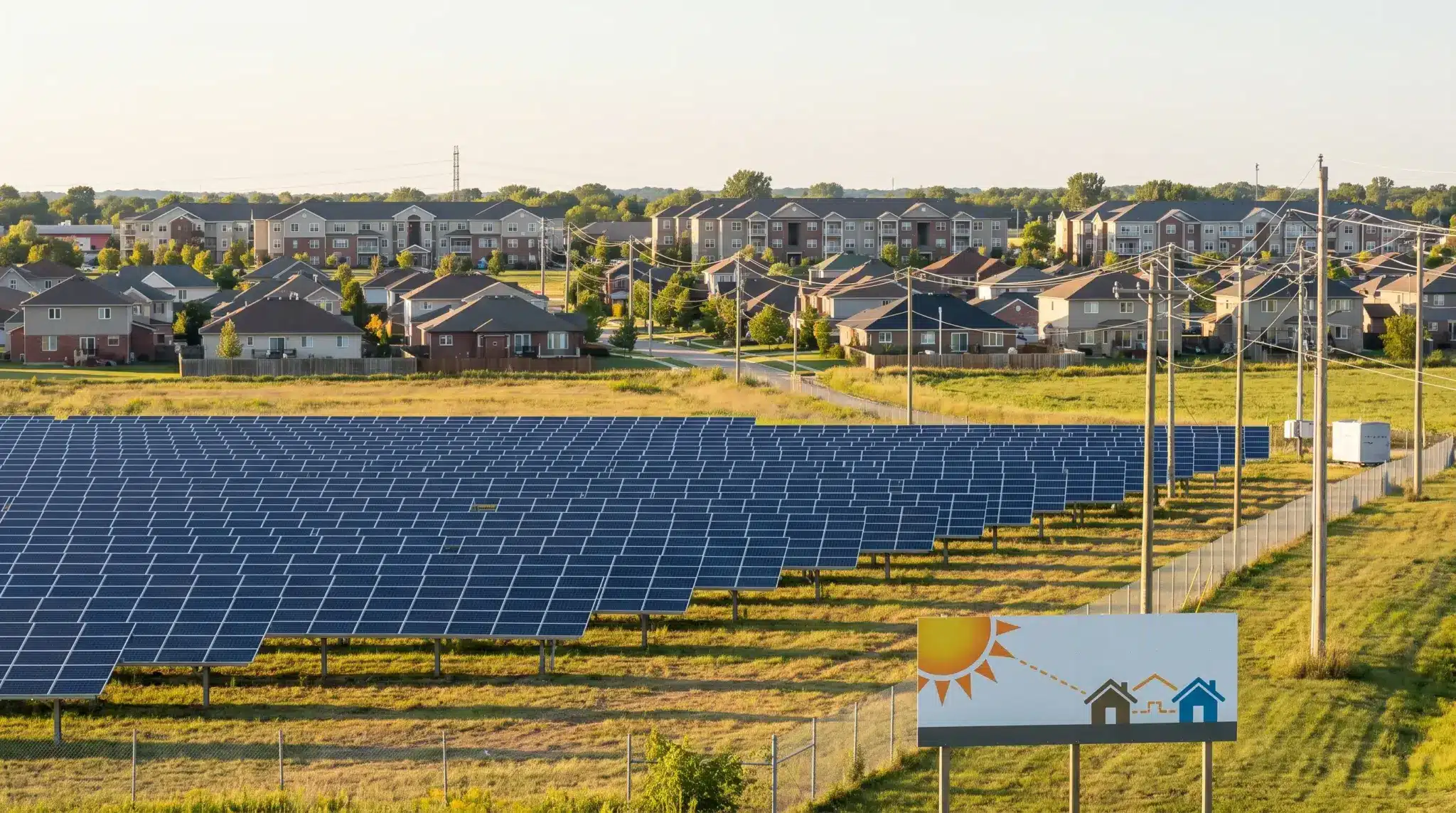
Community solar projects changed that math. Instead of owning equipment, you subscribe to a share of a solar farm built somewhere else. Your utility credits your bill for the electricity that share produces.
This guide walks through how the process works, what it tends to cost, and where it falls short. It also covers who typically qualifies to join.
How Do Community Solar Projects Work?
The idea is simple, even if the plumbing behind it isn’t. One solar farm serves many households at once, and your share shows up as a bill credit rather than as power flowing straight to your house.
1. A Solar Farm Produces Clean Electricity
A community solar project starts with a large array of panels built at a shared site. It’s usually on open land, an old industrial lot, or a purpose-built solar facility, not on anyone’s roof.
I’ve seen people assume “community solar” means panels on a nearby shared building. In practice, the farm is often miles from any of its subscribers.
The developer who built it keeps it running, cleaning panels, fixing inverters, watching output day to day.
2. Customers Subscribe to a Portion of the Solar Project
You sign up for a share of what the farm produces, sized to roughly match your own electricity use. Most providers ask for a past utility bill to size that share accurately, not a guess.
Many programs also set aside some subscriptions for lower-income households. These often come with a guaranteed minimum savings rate built in.
If money is tight, it’s worth asking a provider directly whether they run one of these slots.
3. Electricity Goes Into the Local Grid
The power your share generates doesn’t travel to your house. It goes into the same shared grid everyone else’s electricity already runs through. Your utility tracks how much your share produced.
That output isn’t constant. Cloudy stretches and shorter winter days pull it down, and the credit that follows moves with it.
4. You Receive Credits on Your Electricity Bill
Your utility turns your share’s output into a credit on your bill, usually priced as a discount off its own standard rate. That’s the detail people miss most: the credit isn’t a fixed dollar amount.
It moves with your utility’s own pricing and with how much sun your share actually caught that month. When a program “guarantees savings,” it means the discount rate, not a locked-in number.
I’d rather see a provider advertise a percentage than a dollar figure. The percentage is what actually holds up over time.
Benefits of Community Solar Projects
Subscribing instead of installing changes what you’re responsible for. It also opens the option to people rooftop solar simply excludes.
- Lower upfront cost. Most programs skip the big installation expense rooftop systems require.
- No maintenance responsibility. The solar developer handles repairs and monitoring, not you.
- Cleaner energy, without a construction project on your own roof.
- A flexible middle ground if you want solar’s benefits but aren’t ready to own a full system.
I’ve noticed the “no maintenance” line gets overlooked. Skipping storm damage and inverter repairs is worth more than most people expect.
Here’s how that trade-off stacks up against putting panels on your own roof.
| Feature | Community Solar Projects | Rooftop Solar |
|---|---|---|
| Installation | No installation at your home | Panels installed on your property |
| Best For | Renters, apartments, shaded homes | Homeowners with suitable roofs |
| Upfront Cost | Usually lower | Usually higher |
| Maintenance | Handled by the solar provider | Handled by the homeowner |
| Ownership | Usually subscription-based | You own the solar system |
| Roof Condition | Does not matter | Roof must support panels |
| Energy Source | Shared solar farm | Personal solar panels |
For anyone without a roof built to carry panels, community solar isn’t the fallback option. It’s simply the one that fits.
How Much Do Community Solar Projects Cost?
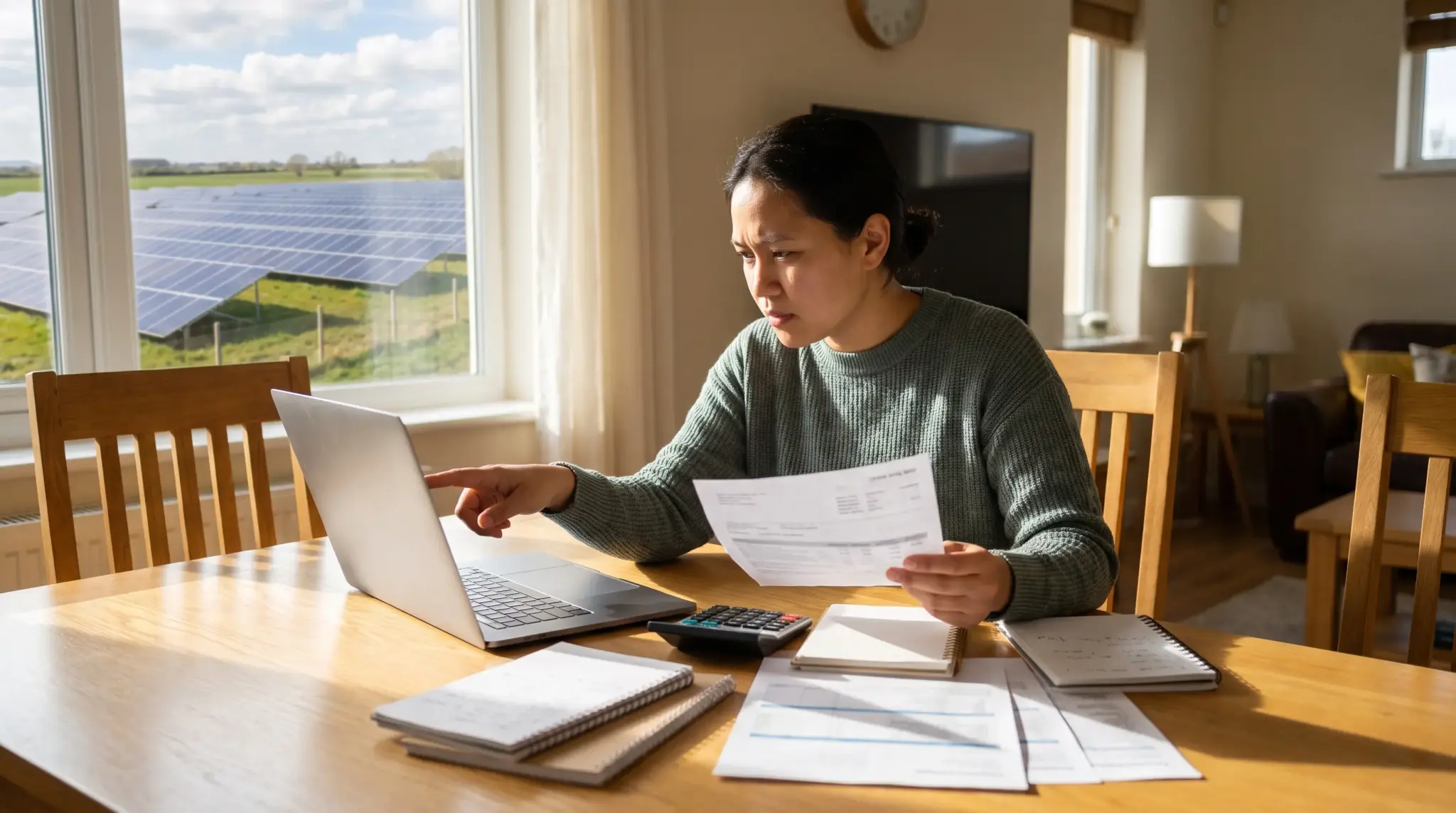
Community solar is priced as a discount, not a flat fee. That distinction matters more than most explanations let on.
Your bill credit is usually a percentage off your utility’s standard rate. That’s also why savings vary by location.
When your utility’s rates rise, your discount rises with them in dollar terms.
Programs generally price access to a share of the farm in one of three ways:
- Monthly subscription plans. These are charged against your share’s output each month.
- Pay-as-you-save models, where you’re only billed once credits show up.
- Upfront purchase options let you buy a share outright instead of subscribing.
Whichever model you pick, the actual dollar cost depends on your utility’s rates, not just the plan type.
Before signing anything, a few details are worth confirming:
- Monthly subscription fees
- Contract length
- Cancellation rules
- Expected savings
- Transfer options if you move
Confirm these before you sign, and you’ll avoid most of the surprises subscribers run into.
Community solar is usually built to cost less than your normal electricity use, but that’s not guaranteed everywhere. The final number depends on your local rates and the program’s specific terms.
I’d treat any provider who promises a fixed savings number, rather than a discount rate, with real skepticism.
Are There Any Downsides to Community Solar?
Community solar isn’t a scam, and it isn’t a pyramid scheme. You’re paying for a share of real electricity a real farm produces, and your utility bills you accordingly.
But it isn’t risk-free. Because your credit is a discount off a rate that moves, your actual savings can shrink if your utility’s pricing changes.
Some contracts lock you in for years and charge a fee if you cancel early.
If you move outside your utility’s service area, you’ll typically need to cancel or transfer your subscription. Not every provider makes that simple.
I’d read the cancellation clause before the pricing page, honestly. That’s the part people regret skipping.
None of this makes community solar a bad option. It just means the paperwork matters as much as the panels.
Who Can Join a Community Solar Project?
Community solar programs are open to a wider range of people than rooftop solar ever was.
Renters, apartment residents, and anyone with a shaded or weak roof can subscribe without touching their building. Small businesses looking for cleaner energy without construction can join too.
I’ve talked to renters who assumed solar was permanently off the table for them. Community solar is usually the answer they didn’t know existed.
If you’ve been told solar “isn’t for you” because you don’t own your roof, this is the exception that actually applies to you.
The Department of Energy’s Community Solar Basics guide is a good starting point. So is the SEIA Community Solar State Map, which breaks down programs by state.
Conclusion
Community solar projects give people who can’t install rooftop panels a real way into solar. There’s no construction, and no need to own the roof at all.
The trade-off is that your savings ride on your utility’s own pricing. It’s not a number any provider can lock in forever, no matter what the marketing promises.
That’s not a reason to avoid the option. It’s a reason to read the contract closely before you sign it. Pay attention to the cancellation terms and how credits get calculated.
If a program is available where you live, the specific terms are what decide whether it’s actually worth it.
Frequently Asked Questions
What is a community solar project?
A community solar project is a shared solar farm that multiple people subscribe to instead of installing their own panels. Each subscriber pays for a share of the farm’s output and gets a bill credit in return. It’s calculated as a discount off their utility’s standard rate.
Is there a downside to community solar?
Yes. Your savings are tied to a discount off your utility’s rate. That means they aren’t fixed, and can shrink if pricing changes. Contracts can also include cancellation fees or lock-in periods. Moving out of the service area may mean canceling your subscription.
Who owns community solar projects?
Most community solar farms are owned and run by an independent solar developer or the local utility. They’re not owned by individual subscribers. You’re paying for a share of the electricity produced, not the physical equipment. A smaller number of programs let you purchase a share outright instead.
Can renters join community solar programs?
Yes. Since community solar doesn’t require installing anything on your property, renters can subscribe the same way homeowners do. It’s one of the main reasons the model exists. It opens solar access to people who don’t control their own roof at all.