


Do solar panels work in winter, or does cold weather slow everything down until spring? The answer is simpler than most people expect.
Solar panels need light, not heat, so freezing air does not stop them from making power. In fact, cold temperatures can help panels work more efficiently when sunlight reaches the cells.
The real winter limits come from shorter daylight hours, lower sun angles, cloudy days, and snow sitting on the glass.
That means your system may produce less overall, but it should not shut down for the season.
Here is what actually affects solar output between November and March.
Do Solar Panels Actually Work in Winter?
Yes, they do. Panels run on light, not heat, so a clear day in January makes power the same way a clear day in July does.
The real change between seasons comes from shorter daylight hours and a lower sun angle. Your system collects less total light, so it produces less total power.
This is the myth I run into constantly. People assume snow or freezing air shuts a system down until spring.
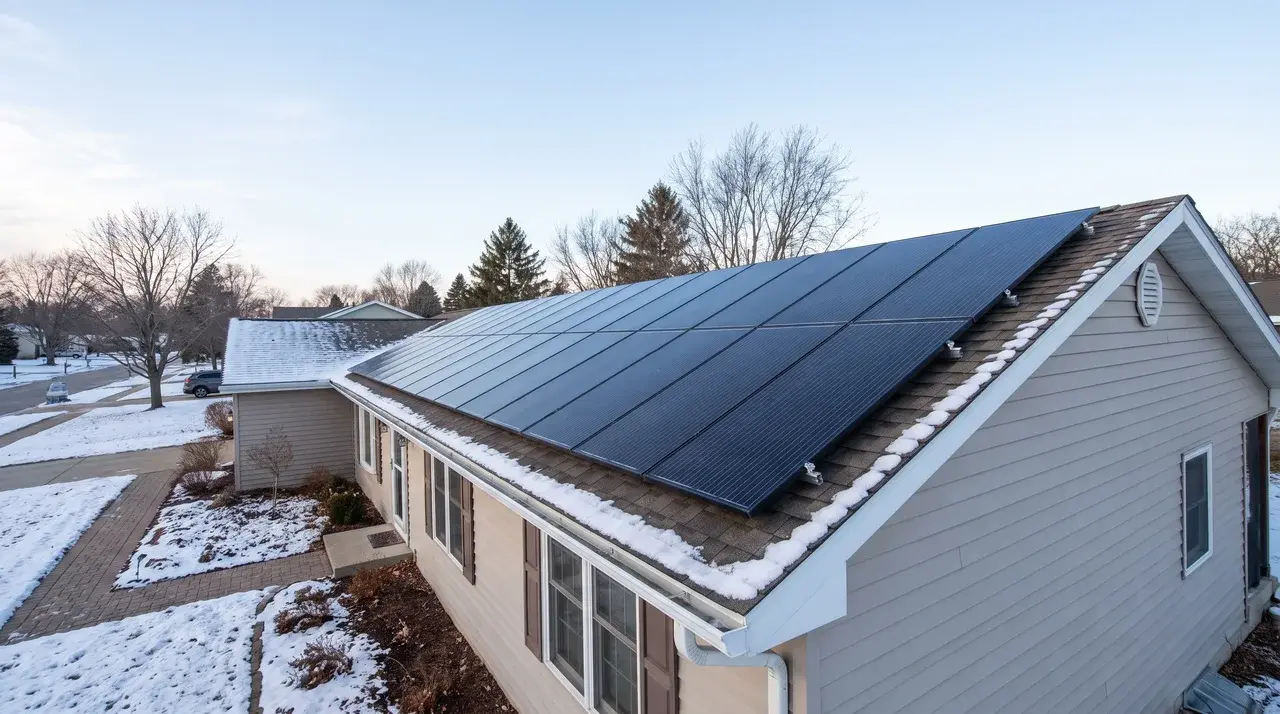
That’s not what happens. A light dusting of snow, or a cold sunny afternoon, still means your panels are working. You’ll see less power than in summer, but the system never really stops.
Why Cold Weather Actually Helps Solar Panels?
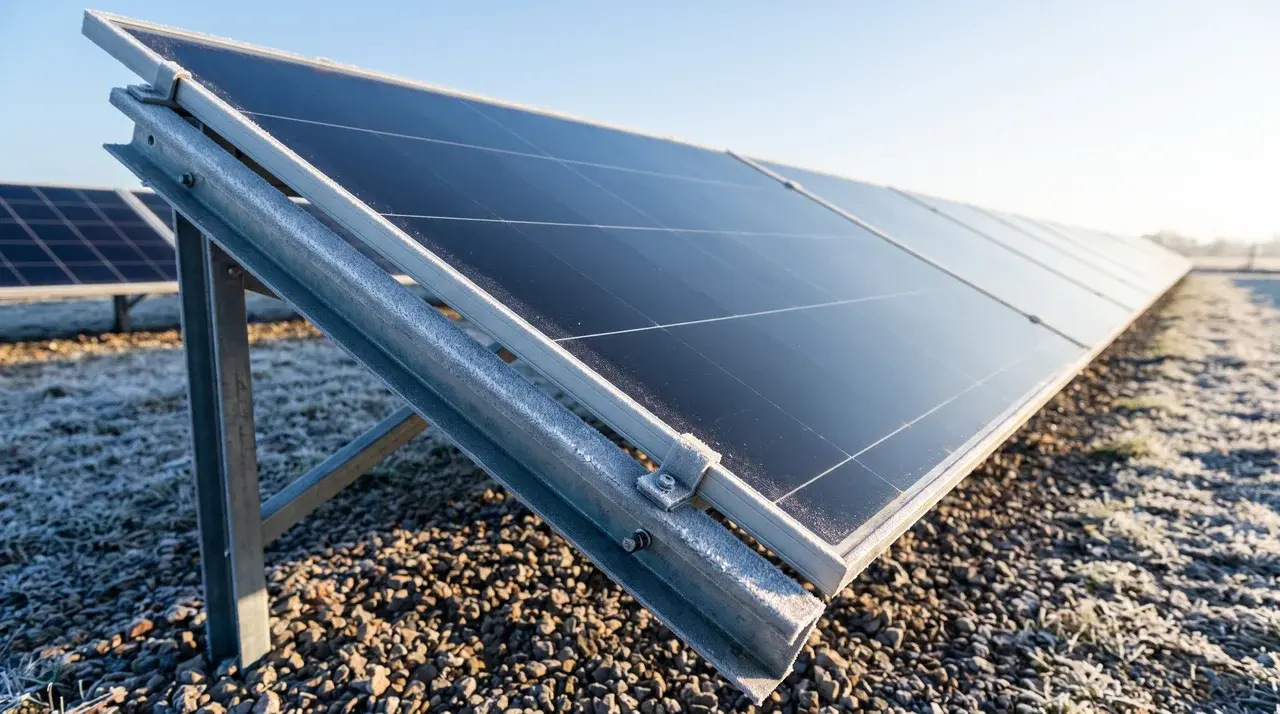
Cold doesn’t just fail to hurt your panels. It actually helps them work harder. Here’s the reason, plus the one exception that trips people up.
The Science of Cold and Electricity
Solar cells get rated at a standard test temperature, around 77°F (25°C).
An NREL module performance report puts the typical shift at roughly half a percent of power for every degree Celsius the cell runs below that mark, which is why a cold, clear day nudges output up a little.
When the actual cell temperature drops below that test point, the panel produces slightly more voltage for the same amount of sunlight.
That’s why a cold, clear day can outproduce a warm one at the same light level. I’ve seen this catch people off guard, since most assume heat means more power.
Here’s the part that matters. This boost only works if light still reaches the cells.
On a freezing day with heavy clouds, there isn’t much sunlight to convert in the first place. Cold air doesn’t make up for missing light.
The advantage disappears completely once a panel ices over or gets buried in snow. No light gets through, so the temperature bonus doesn’t count for anything.
Snow’s Reflection Effect
Fresh snow on open ground can bounce extra sunlight onto a panel’s surface. That adds a small amount of power on top of the direct sunlight.
This only helps panels facing open, snow-covered ground. It does nothing for panels facing shade or trees.
Snow sitting directly on the panel works the opposite way. It blocks light instead of adding to it, so the gain only comes from snow on the ground, never snow on the glass.
What Reduces Solar Output in Winter?
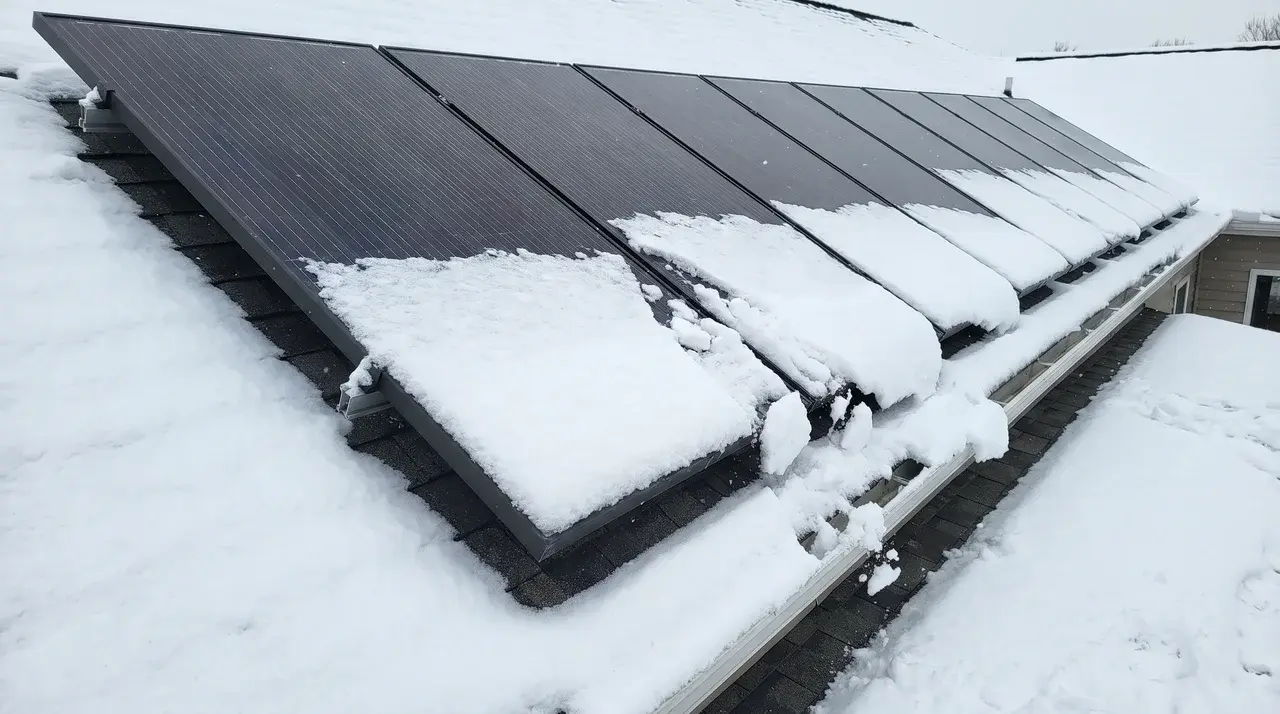
Cold air isn’t the problem. Two other things are doing the real damage to your winter output, and neither one has much to do with temperature.
Shorter Daylight Hours
Winter days simply give you fewer hours of usable sunlight than summer days. That shrinks total production, even though each hour of sunlight gets converted just as well as before.
Location changes how much this matters. A home near the equator loses relatively few daylight hours in winter.
A home much farther north loses several hours a day. If you live somewhere with long, dark winters, this is the bigger factor for you, not the cold.
Snow Coverage on Panels
A layer of snow sitting on the glass blocks sunlight from reaching the cells underneath. That can cut production close to zero until the snow clears.
Most panels sit at a tilt, and the dark glass absorbs enough heat from any available sunlight to melt or slide snow off. This usually happens within a day or two of clear skies.
Not all snow behaves the same. I’ve seen wet, heavy snow or ice grip a panel for several sunny days in a row, long after light powder would have slid right off. None of this freeze-thaw cycling raises any safety concerns either.
It’s a fair question homeowners ask, and whether solar panels are toxic has a straightforward answer once you look at what’s actually sealed inside a panel.
What This Means for Your Winter Energy Bill?
Here’s where people get confused. Cold weather raising efficiency and winter lowering total output may sound contradictory. They don’t.
Efficiency measures how well a panel converts each hour of available sunlight into electricity, and that number can rise in cold weather.
Total output measures how much electricity your system makes across a full day or season.
Output depends on how many hours of sunlight you get and how strong that sunlight is, not just how well each hour gets used.
Where you live changes how big this gap is for you.
A mild winter with little snow means a smaller seasonal drop. A region with short days and heavy snow means a bigger one.
Either way, many net metering programs are designed to credit a summer surplus against winter usage, so your full year of production usually matters more than any single winter month.
Wrapping Up
So, do solar panels work in winter? Yes, they do. Cold air does not stop solar production, and it can even help panels convert available sunlight more efficiently.
The drop in winter output usually comes from shorter days, weaker sun angles, clouds, and snow blocking the panel surface.
A clear, cold day can still produce useful power, while a buried panel cannot produce much until light reaches it again.
For most homeowners, winter brings a seasonal dip, not a shutdown. Net metering can also help balance lower winter production with stronger summer output.
How does your solar panel system perform in winter? Share your experience in the comments.
Frequently Asked Questions
Do Solar Panels Work in Cloudy Weather?
Yes. Panels still make power under clouds since they need light, not direct sun. Output drops because less light reaches the cells, but production continues. This is the same reason panels keep working under winter’s shorter, weaker daylight instead of shutting off completely.
Can Solar Panels Work Without Any Sun at All?
No. Panels convert light into electricity, so without any light there’s nothing to convert. At night, or if panels are fully buried under snow or ice, production stops until light reaches the cells again. Weak winter daylight still counts as usable light, so panels keep producing during the day.
How Does Winter Solar Efficiency Compare to Summer?
Per-panel efficiency often runs slightly higher in winter, since cold temperatures help panels convert sunlight into electricity. Total output usually runs lower in winter, since fewer daylight hours and weaker sun angle outweigh that efficiency gain. Exact figures vary by manufacturer and location, so check a specific system’s rated output rather than relying on one number.
What’s the Biggest Downside of Solar Panels in Winter?
The main downside is lower total output from shorter days and possible snow coverage, not a failure in how panels work. Snow usually clears within a day or two once skies clear, since panels sit at an angle and dark glass absorbs heat. Most systems see a seasonal dip in production, not a shutdown, and that difference is what actually matters for your winter bill.