


Electricity bills keep climbing, and solar looks like the obvious fix.
But rooftop panels aren’t for everyone. You might rent. Your roof might sit in shade all day. Or you just don’t have the cash for an installation.
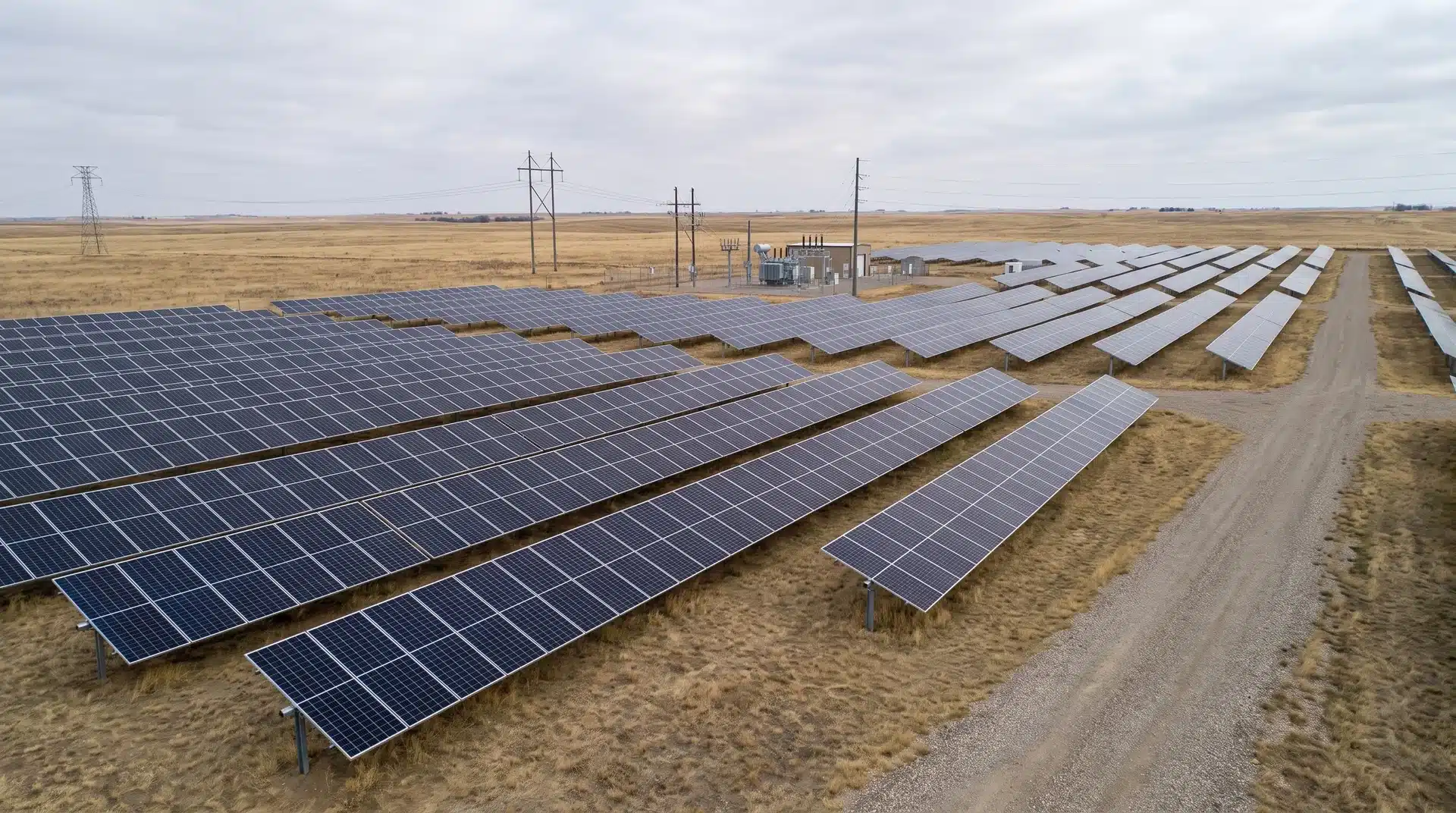
A community solar program solves that a different way. Instead of putting panels on your own roof, you subscribe to a share of a solar array built somewhere else.
Your utility knocks credits off your bill for the power it produces. You don’t need to own anything, and you don’t need a rooftop that faces south.
You just need to check whether your utility offers it.
What Is a Community Solar Program?
A community solar program lets you subscribe to a shared, off-site solar array. You skip installing panels on your own roof.
Your utility tracks how much energy your share produces, then applies a bill credit for that amount.
The U.S. Department of Energy (DOE) describes it the same way: one shared array, generating power divided among customers. None of them ever touch a panel.
I’ve read through a handful of these program contracts. The pitch always sounds the same: no roof, no hardware, no upfront bill.
That part is true. What the pitch skips is the trade-off sitting underneath it.
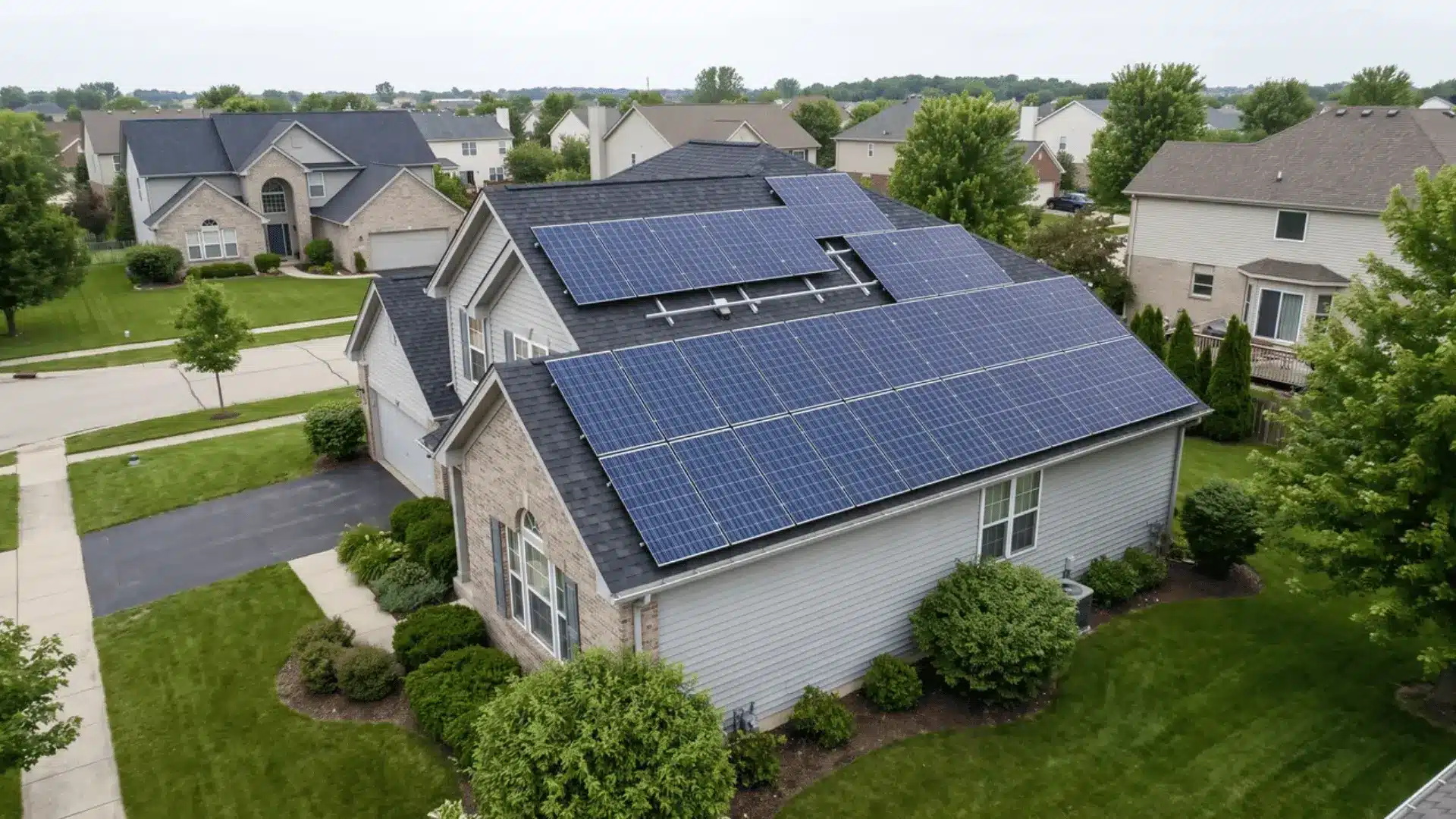
Own your rooftop system outright, and your savings ceiling sits higher over time. You’re not paying anyone else a subscription fee forever.
A community solar program trades that higher ceiling for zero maintenance risk and zero installation hassle. Neither choice is wrong. It depends on how much upside you’re willing to give up for convenience.
That trade-off shows up clearest side by side against a rooftop system. It also shows up in who actually owns the array.
Community Solar vs. Rooftop Solar: What’s the Difference?
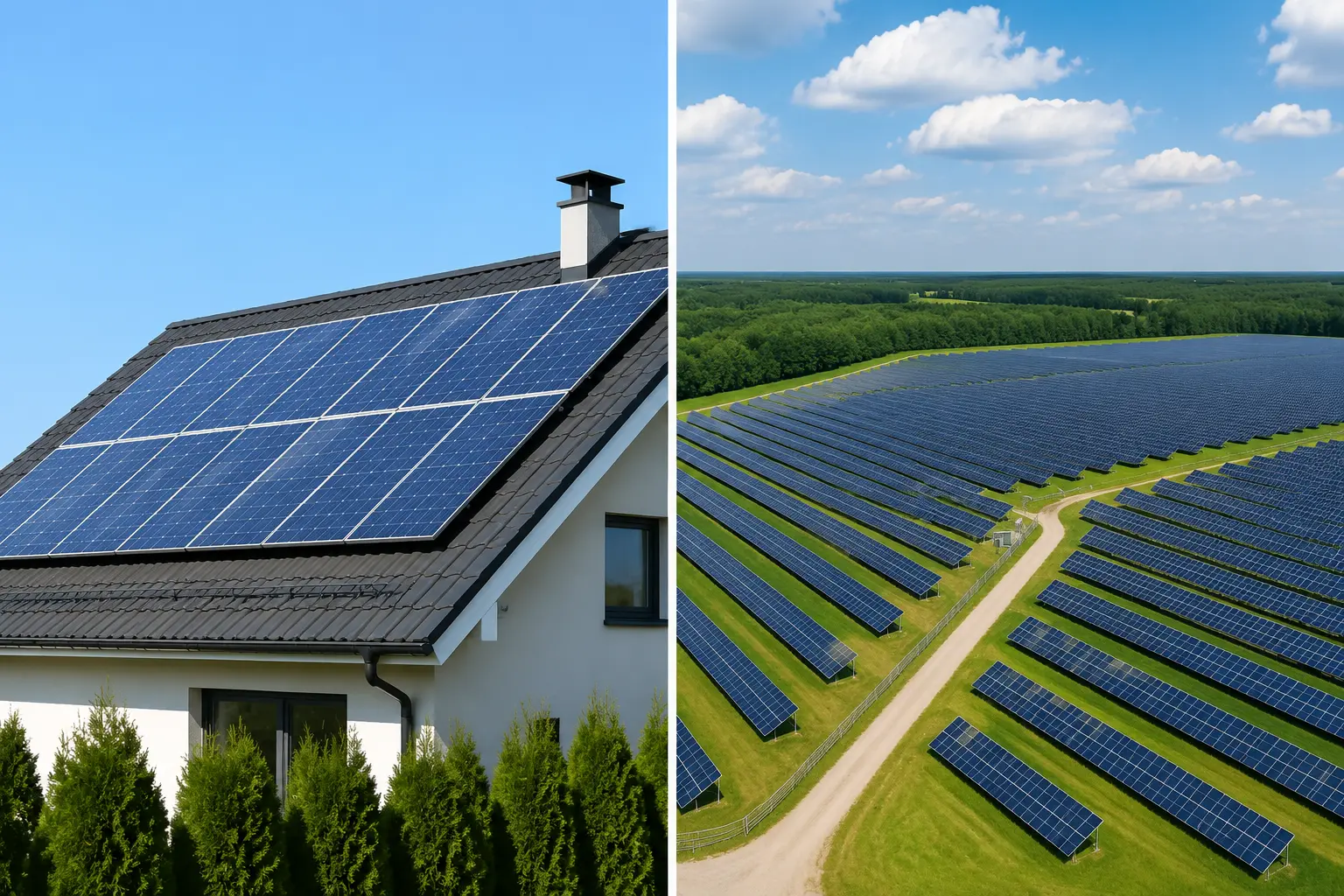
Here’s the side-by-side that actually matters. Where the panels sit, who owns them, and who’s on the hook if something breaks.
| Feature | Community Solar Farms | Rooftop Solar Panels |
|---|---|---|
| Location | Solar panels are installed at a shared off-site location, such as a solar farm | Solar panels are installed on your home or building |
| Ownership | Usually owned by a solar developer, utility, or energy organization | Usually owned by the homeowner or property owner |
| Installation | No installation is needed on your property | Requires roof inspection, permits, and installation |
| Upfront Cost | Often requires little to no upfront payment | Usually requires a larger upfront investment unless financed |
| Best For | Renters, apartment residents, and homes with unsuitable roofs | Homeowners who want to own their solar system |
| Maintenance | Handled by the project owner | Usually handled by the homeowner or solar provider |
| Energy Benefits | Subscribers receive credits on their electricity bills | Homeowners use the electricity generated by their own panels |
| Long-Term Savings | Can reduce electricity costs but savings depend on the program | Can offer greater savings because you own the system |
You’re probably wondering which column fits you. If you rent, or your roof sits in shade past noon, the left column is your only real option anyway.
Who Owns and Runs a Community Solar Project?
You don’t own the panels in a community solar program. A solar developer, your utility, or a nonprofit energy group does.
They handle construction, repairs, and the day-to-day running of the array. You just collect the credit.
Here’s the part most people miss: “no installation required” doesn’t always mean no paperwork. Some programs still make you sign an interconnection or usage agreement before your subscription activates. It’s not hardware. But it’s not nothing, either.
Whoever owns the project carries the maintenance risk, not you. That’s the whole point of the trade-off.
How Does a Community Solar Program Work?
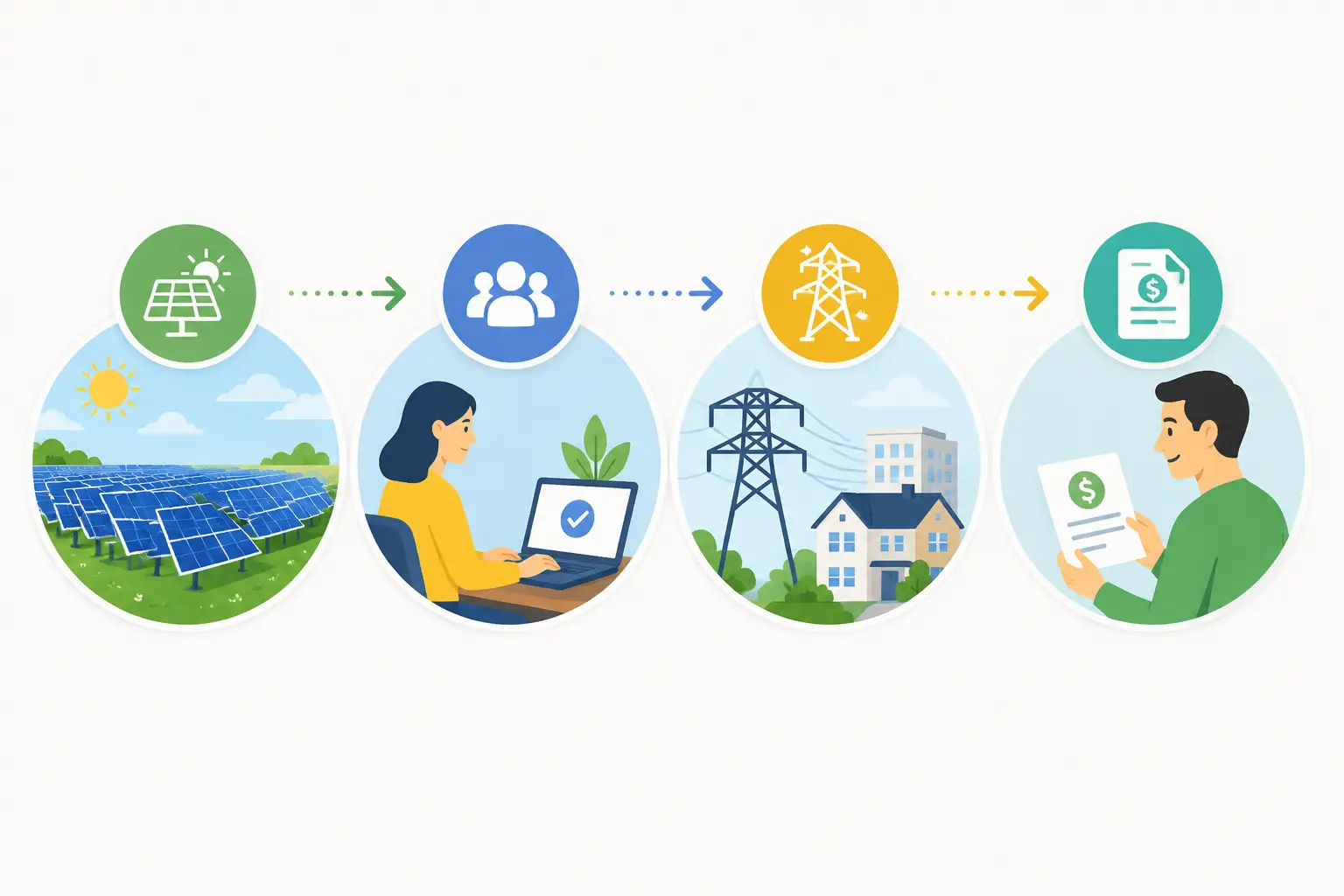
The process runs in one direction: generation, then subscription, then a bill credit, then a separate payment from you. Your savings come from the gap between the last two.
It looks complicated from the outside. Once you see the four steps in order, it isn’t.
Step 1: A Solar Farm Generates Electricity
A community solar project starts with a large installation, usually called a solar farm. It’s built off-site, on open land, a commercial rooftop, anywhere with strong sun.
The panels convert sunlight into electricity that flows into the local power grid. It doesn’t travel straight from the farm to your house. It just joins the utility’s overall supply.
Step 2: You Subscribe to a Share of the Project
Once a project is up and running, you sign up for a share of what it produces. That happens through a subscription agreement with the solar provider or program manager.
You don’t install anything. You don’t touch your roof. You just pay for access to a slice of the array’s output.
The National Renewable Energy Laboratory (NREL) points out why this matters. It removes the roof, the loan, and the permits that keep households out of rooftop solar.
I’ve seen people assume a bigger subscription always means bigger savings. It doesn’t. Your share only pays off if it roughly matches what you actually use each month.
Step 3: Solar Production Creates Bill Credits
As the farm generates power, your utility tracks exactly how much your share produced. That amount shows up as a credit on your monthly bill.
Say your share produces $30 worth of credits one month. That $30 comes straight off what you owe the utility.
The exact number moves with sunlight, season, and how the array performed that month. It’s never a flat, guaranteed figure.
Step 4: You Pay Your Subscription Fee
Community solar isn’t free. You pay the solar provider separately for your share of the project.
The whole arrangement only works if your credits are worth more than your fee. If you get $40 in credits and pay $30 in fees, you’ve saved $10 that month.
This is the part people skip when they compare programs. A low sign-up fee means nothing if the credit rate behind it is weak.
What You Actually Save Each Month
Your credit rate isn’t something the provider just makes up on the spot.
It’s usually set as a discount off your utility’s retail rate. Or it’s a fixed per-kWh rate approved by your state’s regulator.
That’s why savings vary so much by state. You’re not shopping a free market. You’re working inside a rate a regulator already approved.
The Department of Energy recommends community solar programs deliver at least 20% household savings as a consumer protection benchmark. The exact number depends on your state and provider.
Here’s the catch before you sign anything. That rate isn’t locked for the life of every contract. Some programs can adjust it. That’s exactly why “guaranteed savings” language in a contract matters more than the discount you’re quoted on day one.
| Monthly Cost | Amount |
|---|---|
| Electricity bill | $150 |
| Solar credit | -$30 |
| Subscription fee | +$25 |
| Total savings | $5/month |
That table is one illustration, not a promise. Your own numbers depend on your utility rate, your usage, and your specific contract.
Community Solar Program Requirements: Are You Eligible?
Requirements vary by location. Three things decide most of it. Where you live, how much power you use, and whether you accept the terms.
Where You Live and What You Rent or Own
The solar project has to connect to your local grid. So your home or business needs to sit inside its service area.
Most programs only work with customers of specific utilities. You don’t need to own your home.
Renters, condo owners, and apartment residents can usually qualify, as long as their utility is an eligible one.
The Oregon Community Solar Program sets its own eligibility rules. It depends on which utilities participate and where you live.
Community solar is active in 24 states and Washington, D.C. right now. That’s exactly why “is it available” always comes down to checking your own state first.
Minimum Electricity Usage Requirements
Some programs set a minimum usage level so your subscription size roughly matches your actual electricity habits.
Subscribe to more than you use, and you won’t see the full financial benefit from your credits.
Credit Checks and Contract Terms
Some providers run a credit check or set payment requirements before they’ll enroll you. Income-based programs often relax or skip this step entirely.
Read the contract before you sign it. Look for subscription length, payment terms, cancellation rules, and what happens if you move.
State-by-State Program Examples
Availability comes down to your state and utility. A few examples show how different the rules can get:
- NY-Sun Community Solar: A New York program supporting shared solar projects for homes and businesses.
- Oregon Community Solar Program: Lets eligible utility customers subscribe to community solar projects.
- Illinois Solar for All: Opens solar access and savings to income-qualified residents specifically.
- Maryland Community Solar Pilot Program: Expands shared solar access across the state.
None of these are interchangeable. What your neighbor’s state offers might not exist where you live.
Advantages of Community Solar
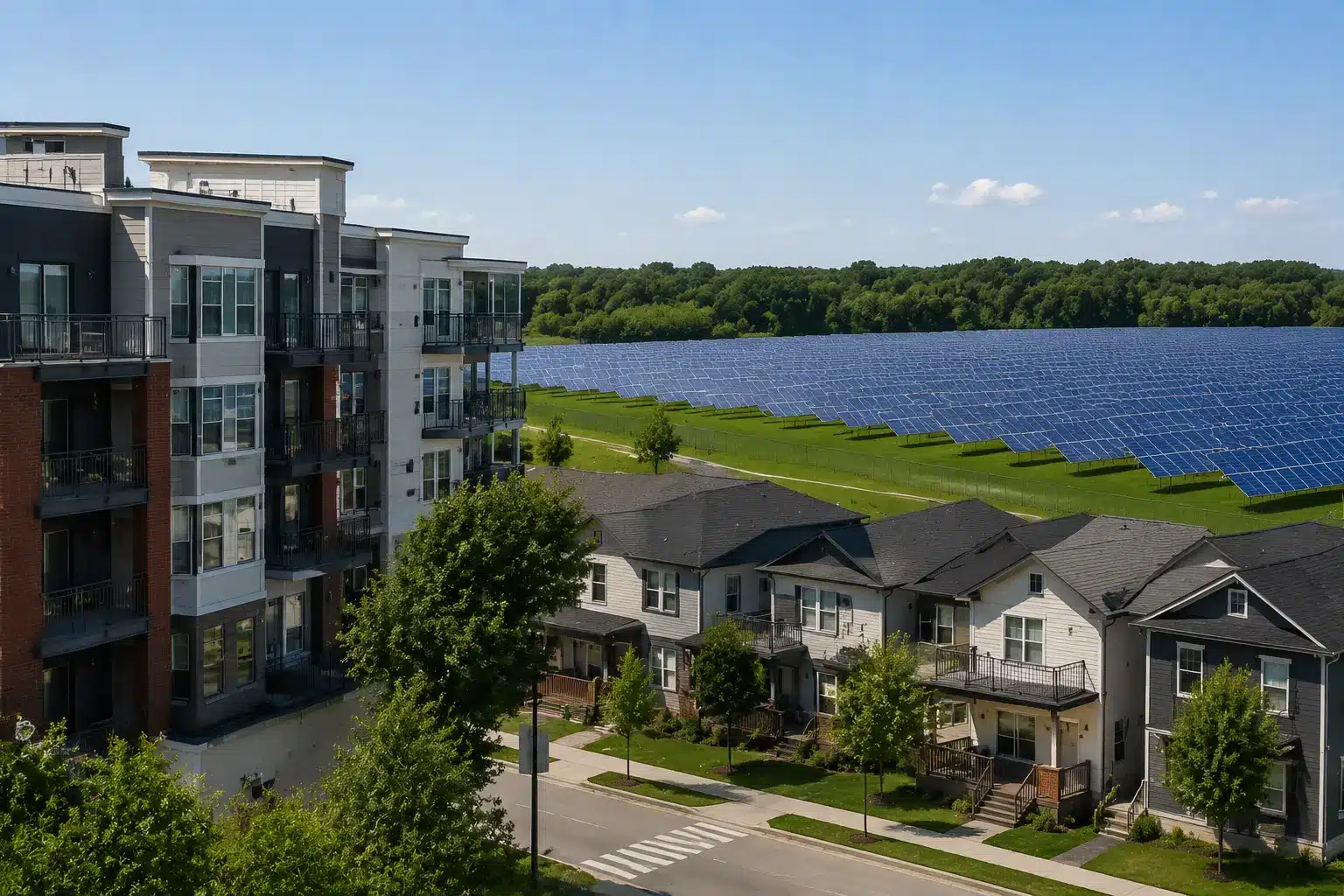
Strip away the marketing, and community solar’s real advantages come down to access, effort, and flexibility.
Lower Barrier to Solar Access
Rooftop solar takes a big upfront investment that plenty of households simply can’t make. Community solar swaps that for a subscription.
The Solar Energy Industries Association (SEIA) frames this as equal access to solar’s benefits. You don’t need good credit or a paid-off roof to get in.
That’s the part I think gets undersold: this isn’t a discount version of solar. For renters and tight budgets, it’s often the only version that’s actually available.
No Installation Hassle
Community solar removes the work that comes with owning a private solar system. You skip all of the following:
- Getting permits
- A roof inspection
- Installing solar panels
- Keeping the equipment maintained over time
The project owner handles construction and repairs. You just collect the bill credit.
Helps Expand Renewable Energy
Every new subscriber adds more solar capacity to the grid. That helps push out reliance on fossil fuels.
Here’s the catch: a project only gets built if it hits its subscriber minimum. More sign-ups doesn’t just help the grid. It’s what gets the array built in the first place.
Flexible Option for Renters
Rooftop solar rarely works for renters, since you don’t own the building and can’t make permanent changes to it. Community solar sidesteps that entirely.
Many programs even let you transfer your subscription if you move within the same area. I wouldn’t assume yours does without checking first.
Is Community Solar Legit?
States regulate community solar, and it runs through utilities or licensed developers. It isn’t a peer-to-peer setup or a referral scheme, which is exactly why it isn’t a pyramid scheme.
If you’re searching whether community solar is a pyramid scheme, here’s the honest answer: the structure itself is legitimate.
The real complaints usually trace back to billing confusion. Or they trace to a contract’s rate-adjustment clause, not fraud. Someone signs up expecting a fixed discount, then finds their credit rate can shift. That’s a contract problem, not a scam.
Programs aimed at low-to-moderate-income households often carry stronger consumer protections, including guaranteed-savings language and rules against surprise fees. Those protections exist precisely because this space has had enough billing complaints to earn them.
Here’s the stance I’d take: the sign-up pitch tells you almost nothing useful. The contract’s rate-adjustment clause tells you everything. Read that section before you read anything else.
A downside worth naming honestly: savings aren’t always guaranteed for the full term. If it isn’t in writing, don’t assume it.
How to Find a Community Solar Program Near You
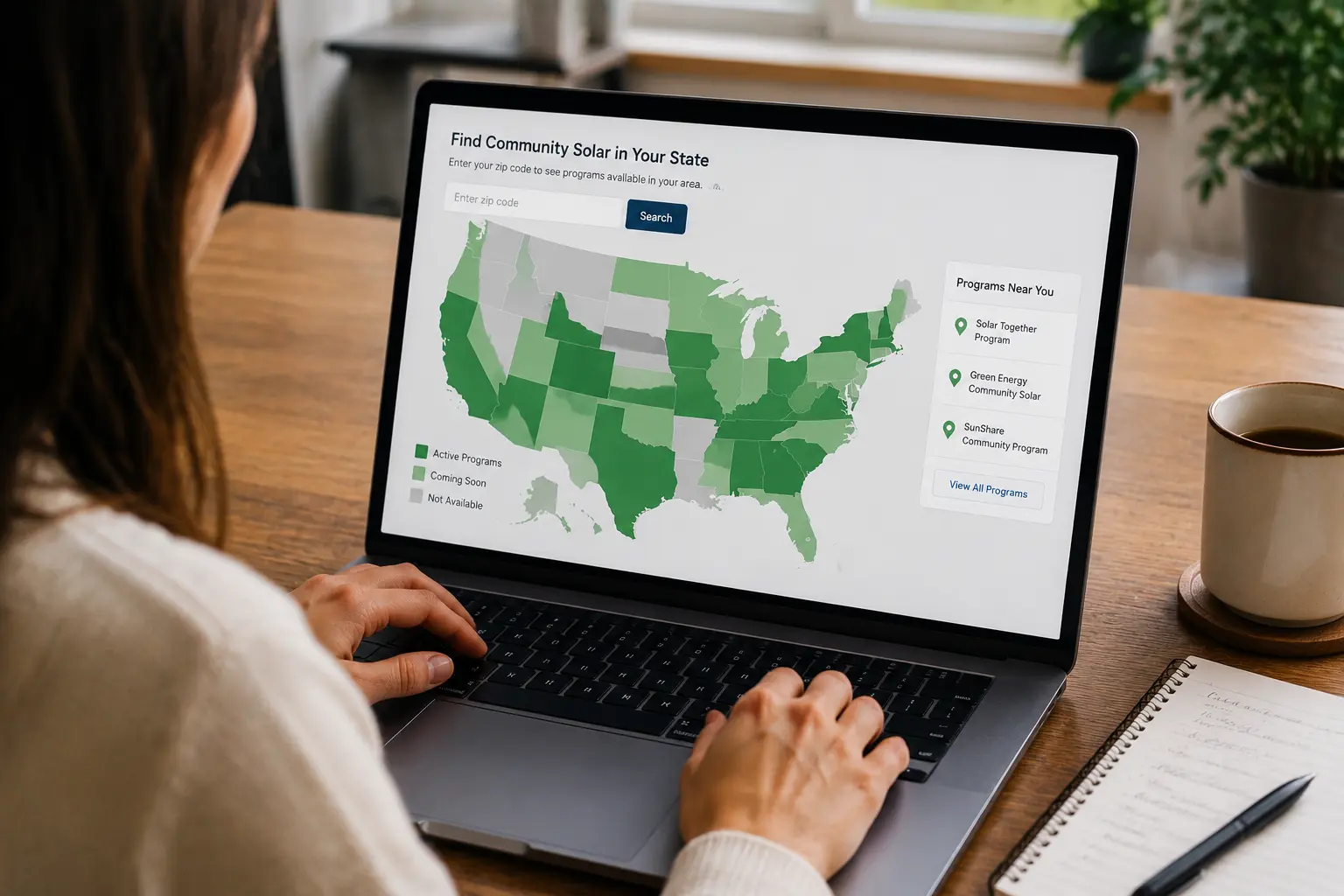
Finding a program starts with checking what’s actually available where you live. Availability depends entirely on your state and your utility.
Search Your Utility’s Community Solar Programs
Your electricity provider is the first place to check. Many utilities list active community solar projects right on their website.
Confirm the program covers your service area before you go any further.
Compare Subscription Terms and Costs
Not every program works the same way. Before you commit, compare a few things:
- Monthly subscription fees
- What bill credits you can expect
- Contract length
- Payment options
- Whether you can transfer or cancel
The lowest fee isn’t automatically the best deal. If the credit rate behind it is also low, you’re not saving more. Go back to how that rate gets set in the first place.
Review Your Savings Estimate
Most providers hand you a savings estimate before you sign. Ask how they calculated it, not just what the number is.
Your real savings still depend on your utility rate, the array’s actual output, and your subscription size.
Read the Cancellation Policy Before You Join
Check the cancellation terms before you sign anything. Some programs let you leave easily. Others charge a fee or require advance notice.
Knowing this upfront saves you a headache if your situation changes or you move.
If your state doesn’t have a marketplace tool yet, check two resources directly. Solar United Neighbors maintains a project directory by region. EnergySage Community Solar runs a marketplace for comparing local options side by side.
Conclusion
A community solar program is a real path to solar savings if rooftop panels were never in the cards for you. Renters, shaded roofs, and tight budgets all have a workaround now.
But the value isn’t in the sign-up pitch. It’s in the credit rate, the contract terms, and whether the program you’re looking at is well-run.
Check your state’s rules, compare a few providers, and read the rate-adjustment clause before anything else. That’s where the real difference between programs shows up, not in the marketing.
Community solar won’t beat owning your own rooftop system dollar for dollar. For everyone locked out of that option, it’s still a genuine way in.
Frequently Asked Questions
What is a community solar program?
A community solar program lets you subscribe to a share of a shared, off-site array. You skip installing panels at home. Your utility tracks the energy your share produces and applies a bill credit for it. You pay a separate subscription fee, and your savings come from the gap between the two.
Is community solar cheaper than rooftop solar?
Community solar usually costs less upfront since there’s no equipment to buy or install. Rooftop solar can save more over time if you own your system and qualify for incentives. Which one costs less depends on your budget, your roof, and how long you plan to stay.
What are the disadvantages of community solar?
Community solar savings are usually smaller than owning rooftop panels outright. Availability depends entirely on your state and utility. Some programs run credit checks or require minimum contract lengths. Savings can shrink if your credit rate isn’t fixed, so read the terms first.
How do I find a community solar program near me?
Start with your utility’s website first, since many list active community solar projects directly. Marketplace tools like EnergySage and directories from Solar United Neighbors can also help you compare. Compare subscription cost, credit rate, and cancellation terms before choosing one to join.