


Solar panels seem simple from the outside, but the process happening inside them is surprisingly complex.
Sunlight knocks electrons loose from silicon atoms and sends them moving in one direction, and that movement is where electricity begins.
That movement becomes electricity, but before it can run a single appliance in your home, it passes through components most homeowners never think about, and each one changes what the power can do.
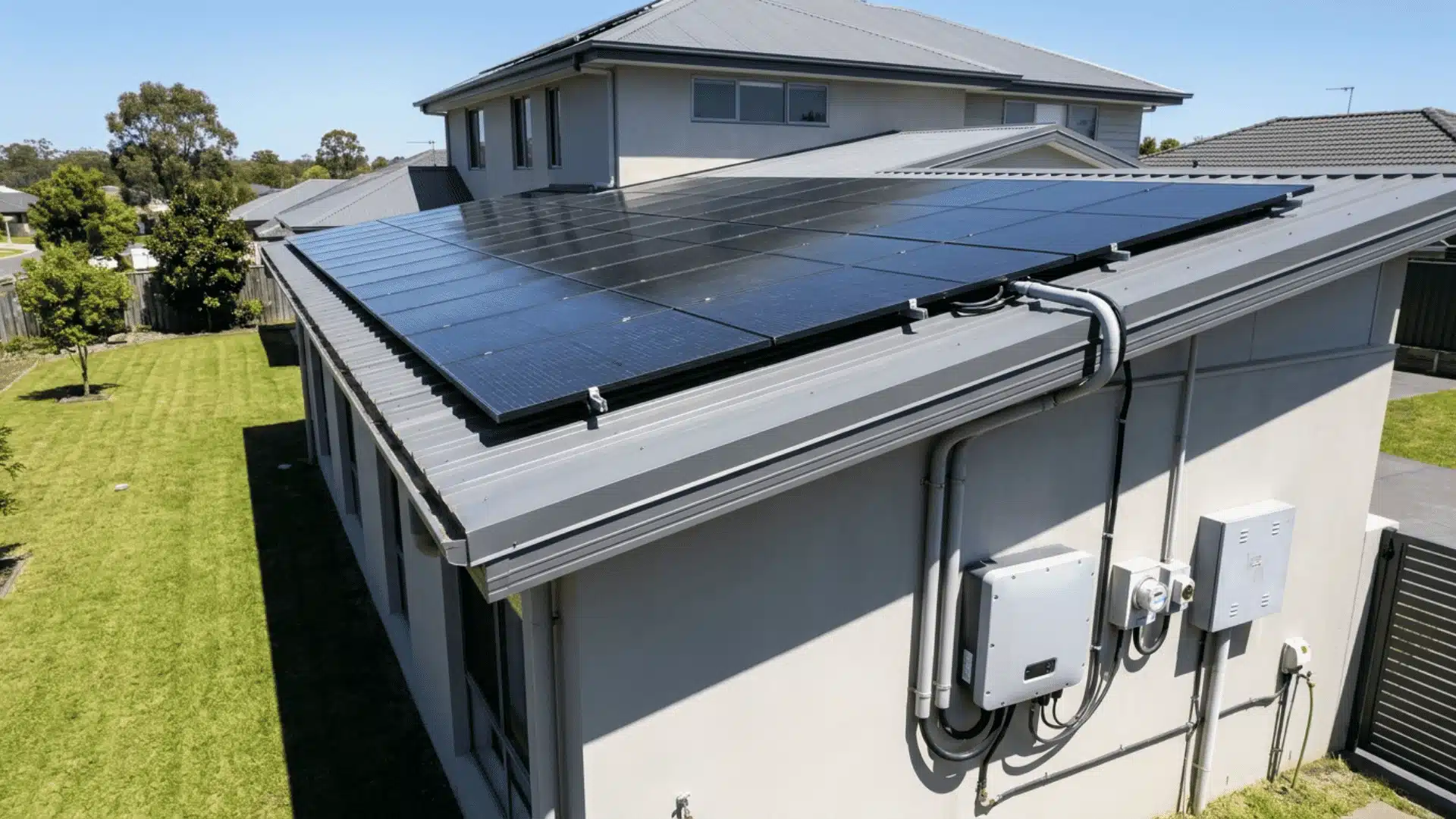
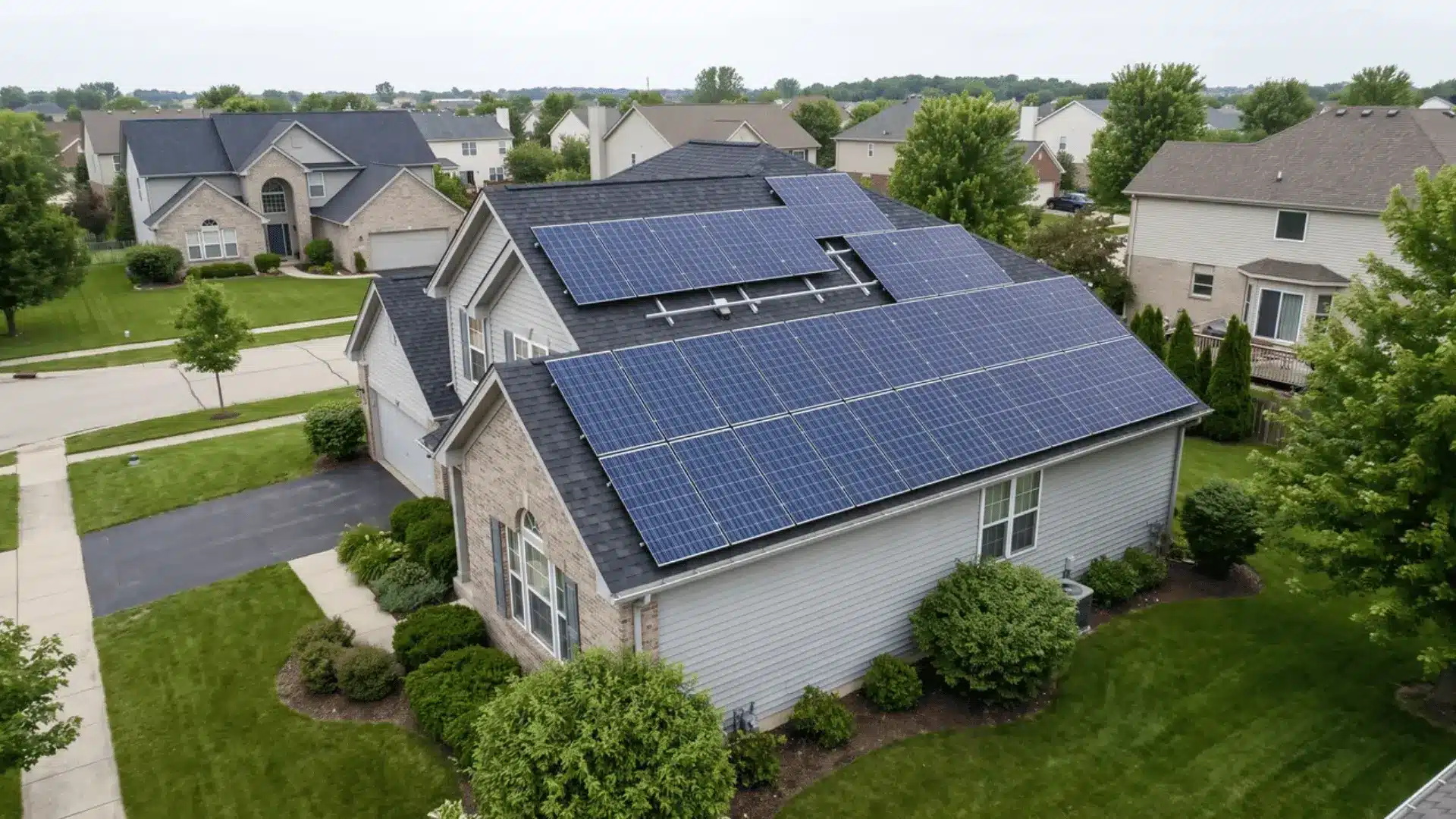
I’ve found that many people focus on the panels themselves, but how solar panels work on a house is really about the entire system around them.
Understanding that system is what separates a good solar decision from an expensive one. It starts with what happens the moment sunlight hits the panel.
What Actually Happens When Sunlight Hits a Solar Panel
Solar panels don’t store sunlight; they use it to generate electricity. Each panel contains photovoltaic (PV) cells made from silicon, a semiconductor that sits between a conductor and an insulator.
When sunlight reaches the silicon, photons transfer energy to electrons. Some of those electrons gain enough energy to move freely, creating an electric current.
The cell is built with two layers that create an electric field, which pushes those electrons in one direction.
What I find interesting is that the focus is usually on the sunlight itself, when the real story is what happens to the electrons inside the cell. Their movement creates direct current (DC), the type of electricity solar panels naturally produce.
Your home, however, runs on alternating current (AC), which changes direction many times per second. Before solar electricity can power your appliances, it must first be converted from DC to AC.
Why Solar Power Needs an Inverter
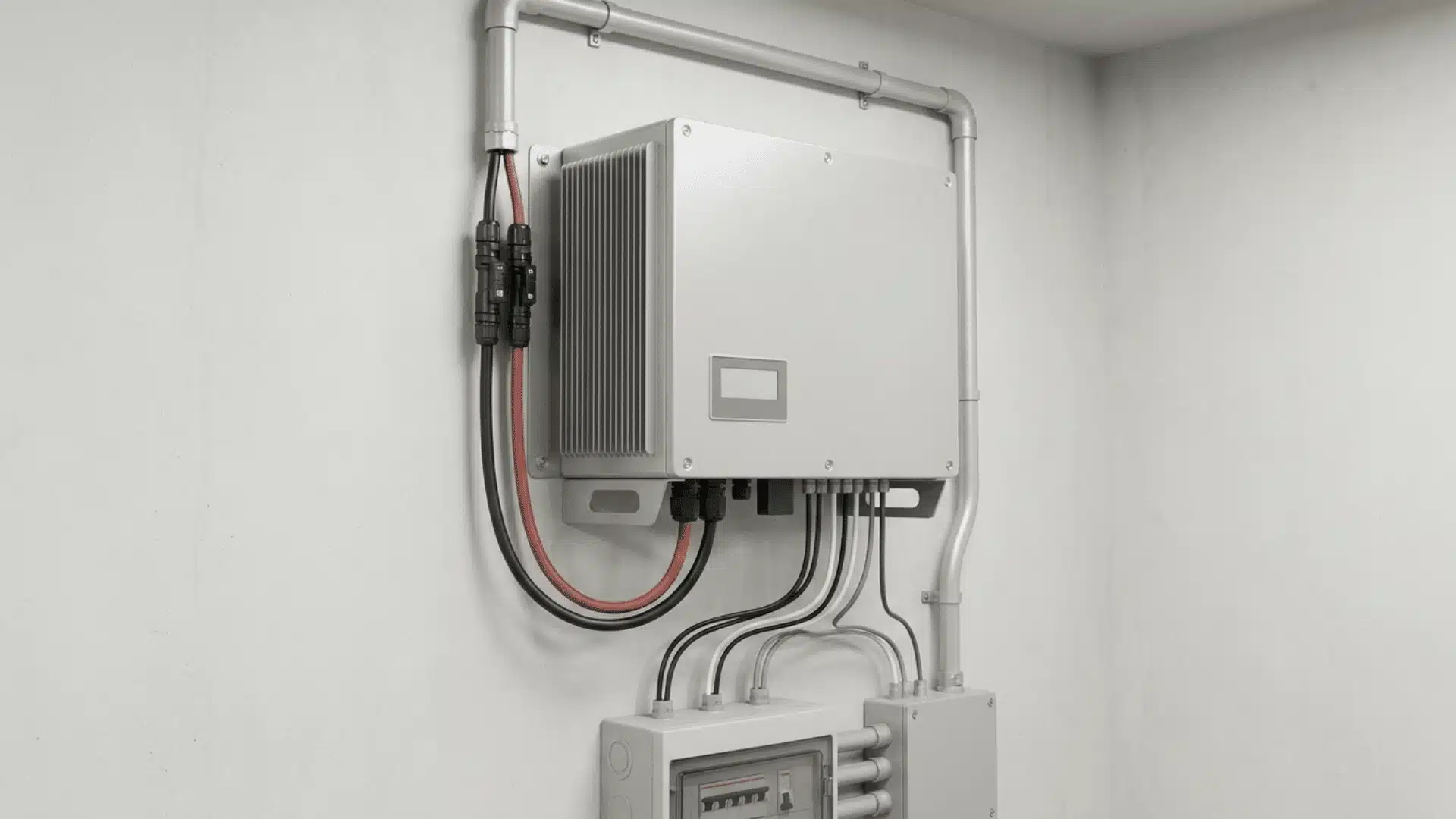
The electricity leaving your solar panels is usable, but not yet for your home. It needs one more step before it can run anything. That step happens inside the inverter.
Its job is to take the DC electricity from your panels and convert it into AC electricity your home can actually use. Without it, the power your panels generate goes nowhere.
But the inverter does something most people don’t realize. It doesn’t just convert; it continuously synchronizes with your utility grid’s frequency.
Your home is pulling from both sources at once, and the inverter keeps them in step. This is why a standard solar system doesn’t automatically keep your lights on during a grid outage.
When the grid drops, the inverter shuts down too, by law, to protect utility workers on the lines.
String Inverters vs. Microinverters
There are two main inverter setups, and the difference matters more than most installers make it out to be.
| Feature | String Inverter | Microinverter |
|---|---|---|
| How it works | One box converts all panels together | Each panel has its own converter |
| Cost | Lower upfront cost | Higher upfront cost |
| Shading impact | One shaded panel reduces output from all panels | Shading only affects the panel it hits |
| Best for | Roofs with consistent, unobstructed sun | Roofs with trees, angles, or mixed exposure |
| Monitoring | System-level only | Panel-by-panel performance tracking |
If your roof gets even sun all day, a string inverter does the job cleanly. If there’s any shade, obstacles, or panels facing different directions, microinverters will outperform them over time.
How Converted Electricity Moves Through Your Home
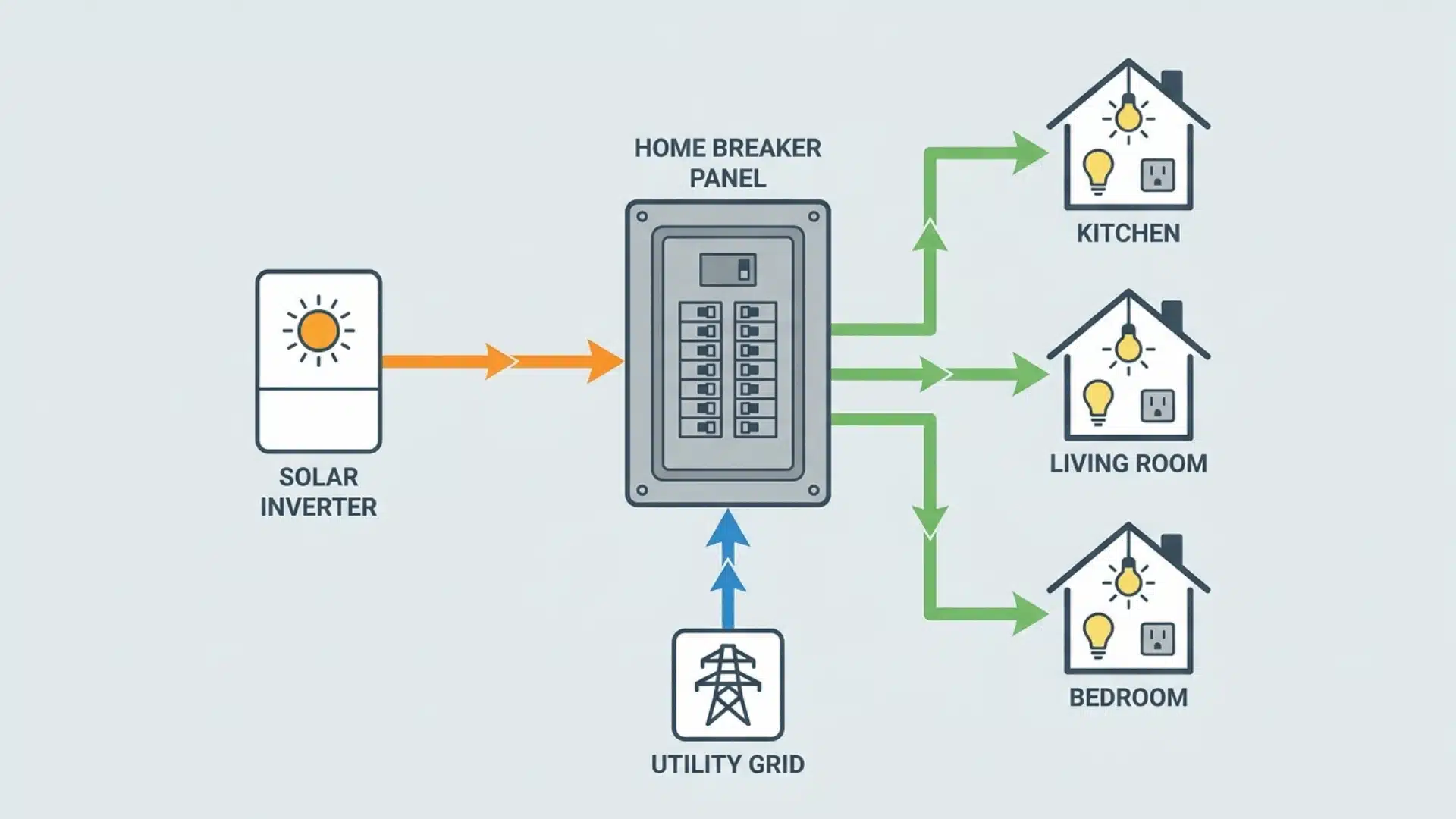
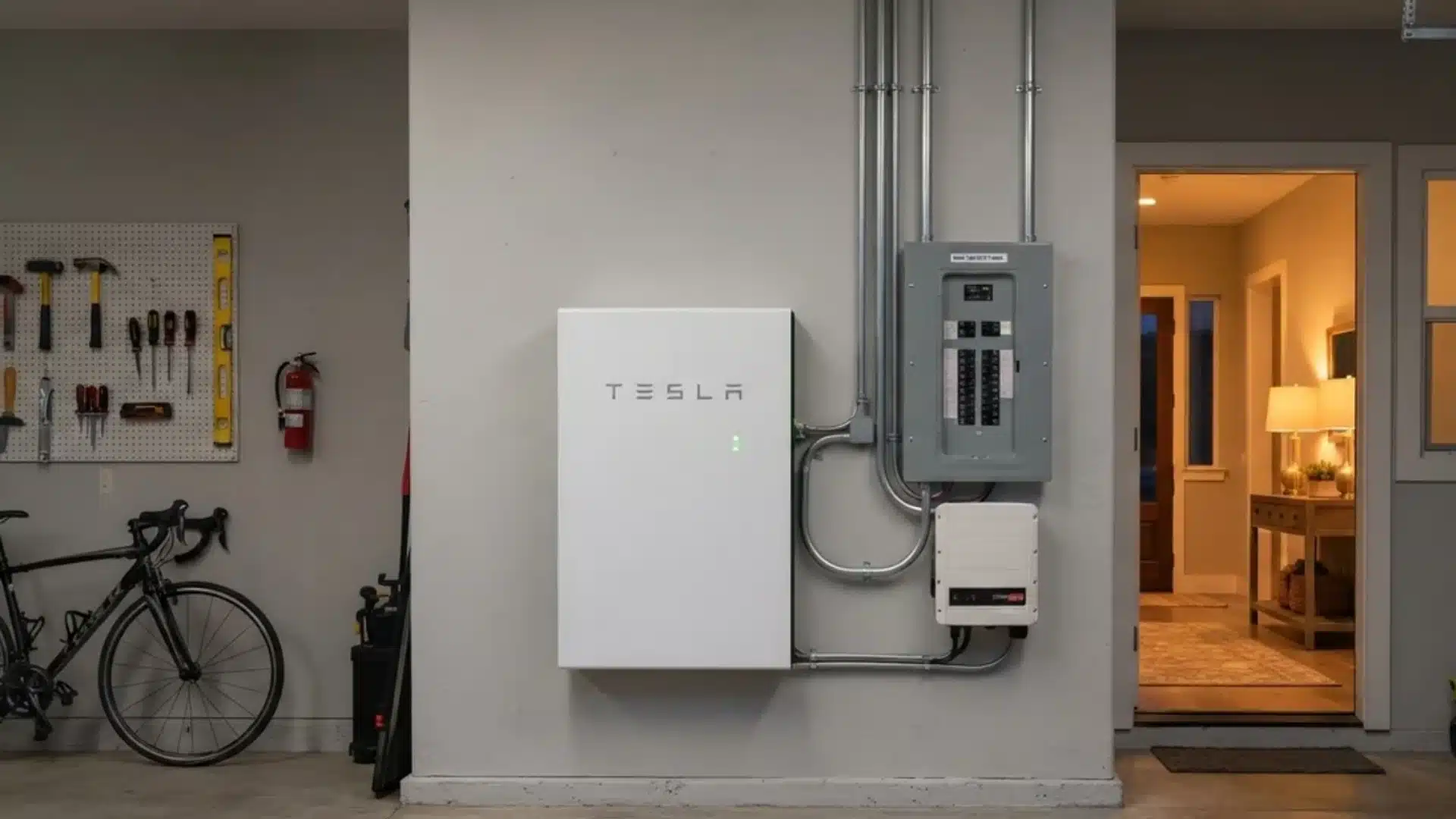
Once the inverter converts DC to AC, the electricity flows into your home’s main electrical panel, the breaker box. This is where solar power stops being solar power and just becomes electricity.
Here’s the path it takes from that point:
- AC electricity enters the breaker box. The panel routes it to your circuits exactly as it would with grid power. Solar-generated AC and grid-supplied AC are identical here.
- Your home draws what it needs in real time. Panels don’t charge the house up and release it slowly. They feed power continuously, and your home takes from whatever is available at that moment.
- The grid fills any shortfall automatically. If your panels produce 2kW and your home uses 3kW, the grid quietly supplies the remaining 1kW without any action from you.
- Surplus power flows outward. When production exceeds demand, the excess doesn’t sit idle. It either charges a battery or moves back to the grid.
That fourth step is where net metering comes in, and where your system starts working in reverse.
What Happens to Excess Power, and What Happens at Night
Your solar system doesn’t stop working when demand drops or the sun goes down; it continuously shifts direction.
Either pushing surplus electricity out to the grid or drawing power back in. Understanding both directions is what makes the full picture clear.
When Your Panels Produce More Than You Need
When your panels produce more than your home needs, the excess flows back through your bidirectional meter onto the grid. Your utility tracks that export and credits your account.
You’re effectively using the grid as a battery, banking surplus during the day and drawing against it later. Credit rates vary by state, so confirm what your provider pays before assuming a 1:1 return.
Some utilities have moved away from full retail-rate net metering. The credit you receive may be less than what you pay for grid electricity, so it’s worth factoring into your system size.
What Happens After Dark
At night, your panels produce nothing. No photons means no freed electrons, so your home switches to grid power automatically.
This is how every standard grid-tied system is designed to work. One thing that catches people off guard, during a grid outage, a standard solar system shuts down even if the sun is shining.
The inverter is required by the safety code to disconnect when it loses the grid frequency. Without the grid present, it won’t run. That only changes when a battery is part of the system.
The Role of a Solar Battery (and When It Actually Matters)
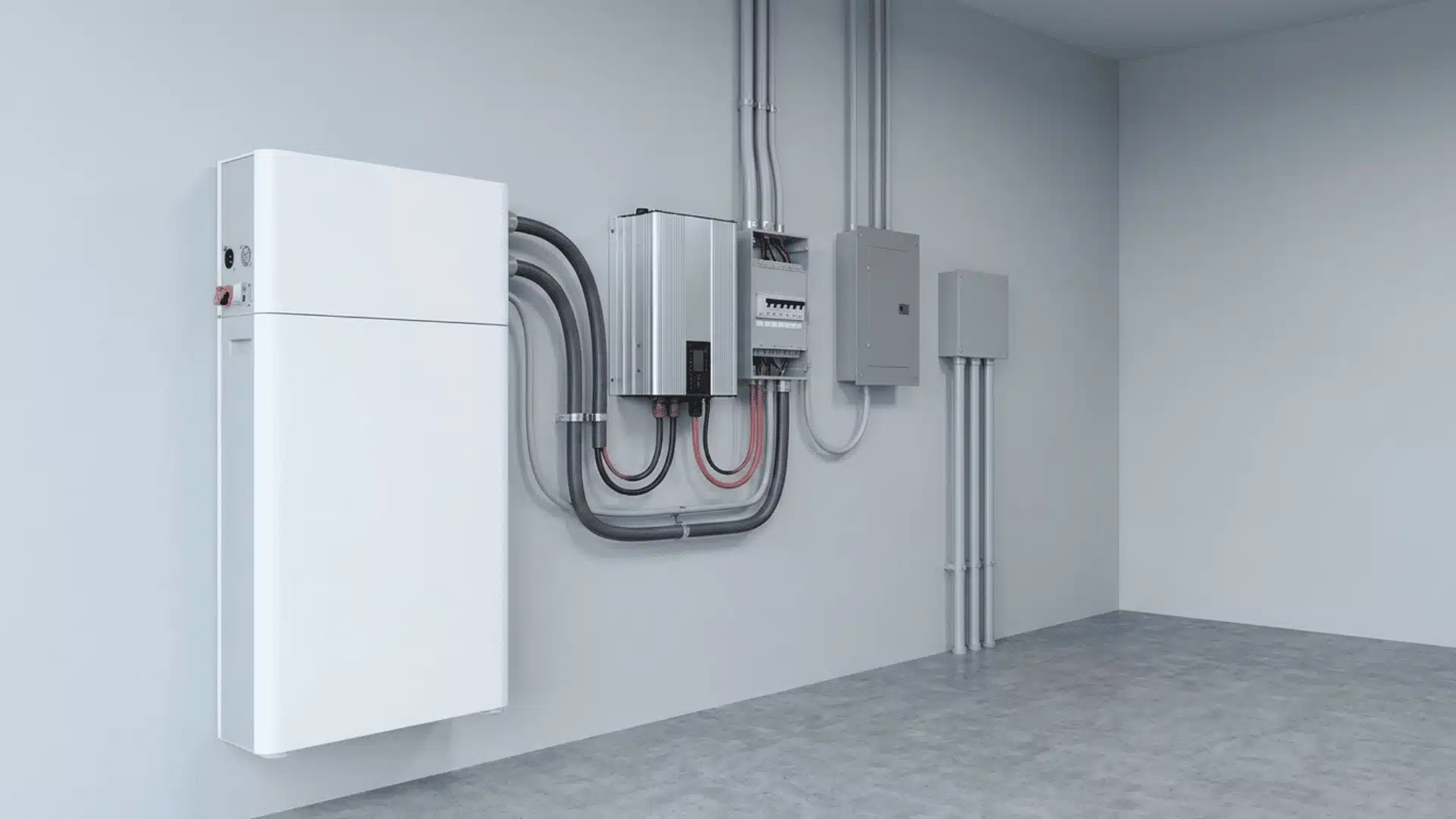
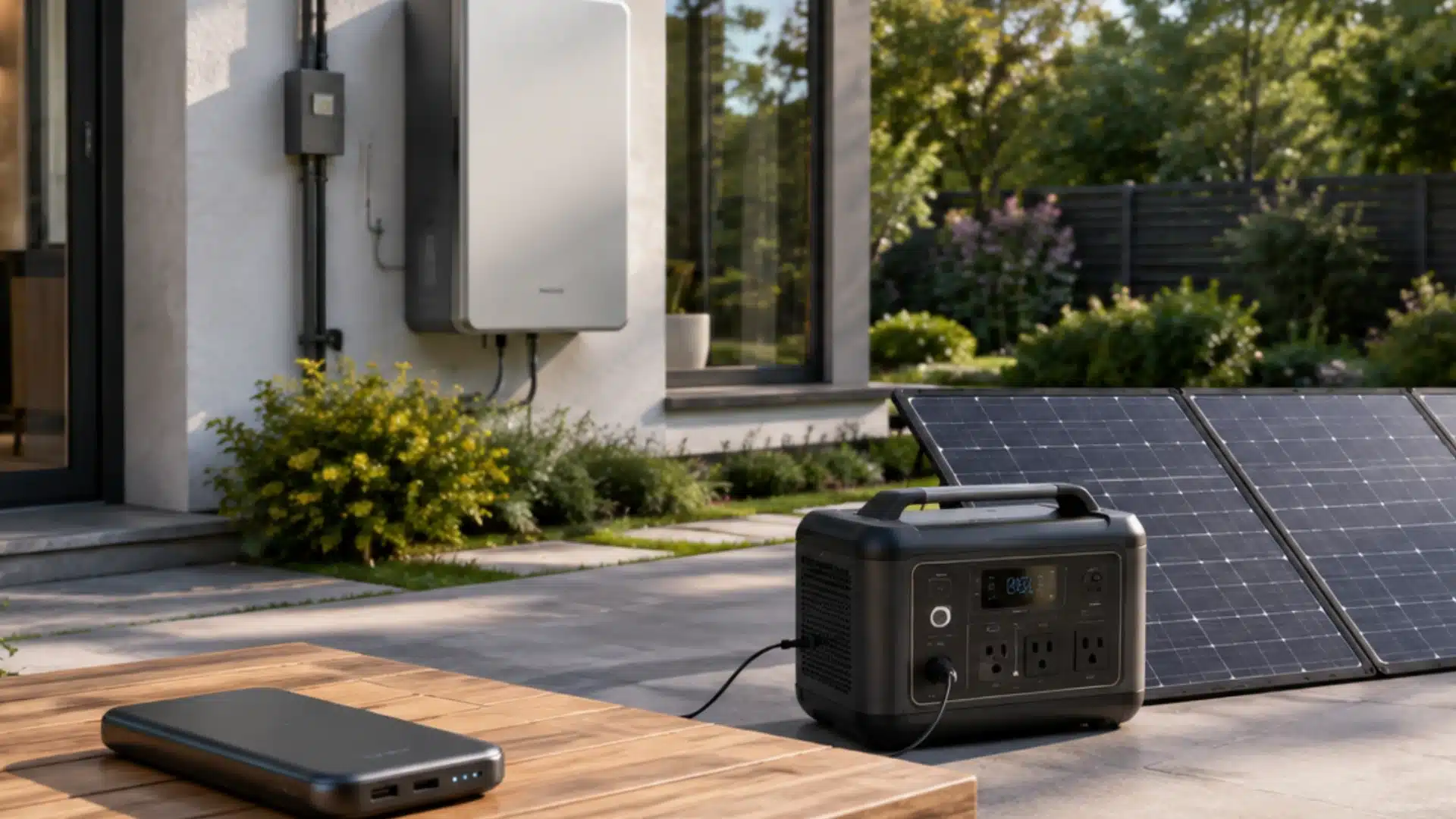
A solar battery stores the excess electricity your panels produce during the day so you can use it after the sun goes down. Without one, that surplus goes to the grid instead.
For most grid-tied homeowners, a battery isn’t essential, but there are two situations where it changes things significantly.
Overnight self-consumption means using what your panels have already generated rather than buying back grid power at night.
Grid outages are where a battery paired with the right inverter can keep your home running independently. A standard system shuts down the moment the grid goes down.
A few things worth knowing before you decide:
- Most residential batteries are sized for overnight use or partial-load outages, not multi-day backup.
- If outage resilience is your main reason for adding one, sizing it correctly matters as much as having it.
- If your utility still offers strong net metering credits, the financial case for a battery is weaker than installers often suggest.
A battery isn’t essential for every system, but for the right situation, it’s what makes solar genuinely independent.
Wrapping Up
Knowing how solar panels work on a house can make every solar decision easier, from choosing the right inverter setup to deciding whether a battery is worth the added cost.
Once you follow the process from sunlight to usable electricity, the system becomes much easier to understand. Sunlight frees electrons, electrons create current, and that current is converted into power your home can use.
What matters most isn’t memorizing the technology. In my view, it’s understanding where the real trade-offs are so you can evaluate recommendations with confidence and make choices that fit your needs.
If solar is on your radar, take a close look at your utility’s net metering policy first. That single factor can have a bigger impact on your system’s value than many homeowners realize.
Frequently Asked Questions
Why is my electric bill still high if I have solar panels?
Solar panels offset what they produce in real time. If your household draws more power than the panels generate during cloudy periods, at night, or during peak usage hours, you pull from the grid and pay for it. Oversized loads, a smaller-than-needed system, or low net metering credit rates can all keep bills higher than expected.
Do solar panels work when the power goes out?
Not automatically. A standard grid-tied system shuts down during outages for safety reasons, to prevent electricity from backfeeding onto utility lines. To use solar power during an outage, you need a solar battery paired with a compatible inverter that can isolate your home from the grid.
How do solar panels work at night?
They don’t generate electricity at night; there are no photons to free electrons. A grid-tied home draws power from the utility after dark as normal. If a solar battery is installed, stored daytime energy is used first before the system falls back on the grid.
How many solar panels does a house need?
Most homes need 15–23 panels, but the exact number depends on your electricity usage, local sun hours, and panel wattage. A qualified installer can size your system accurately.