
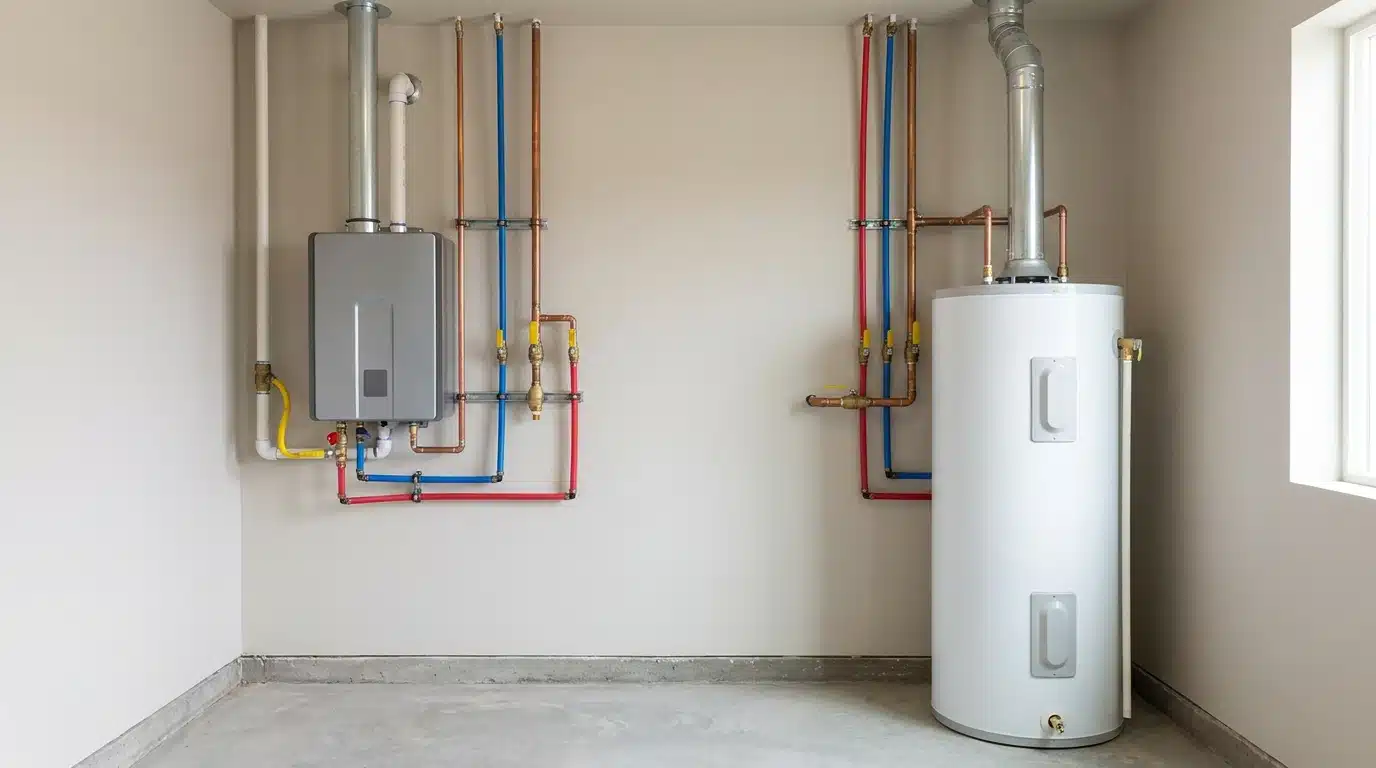

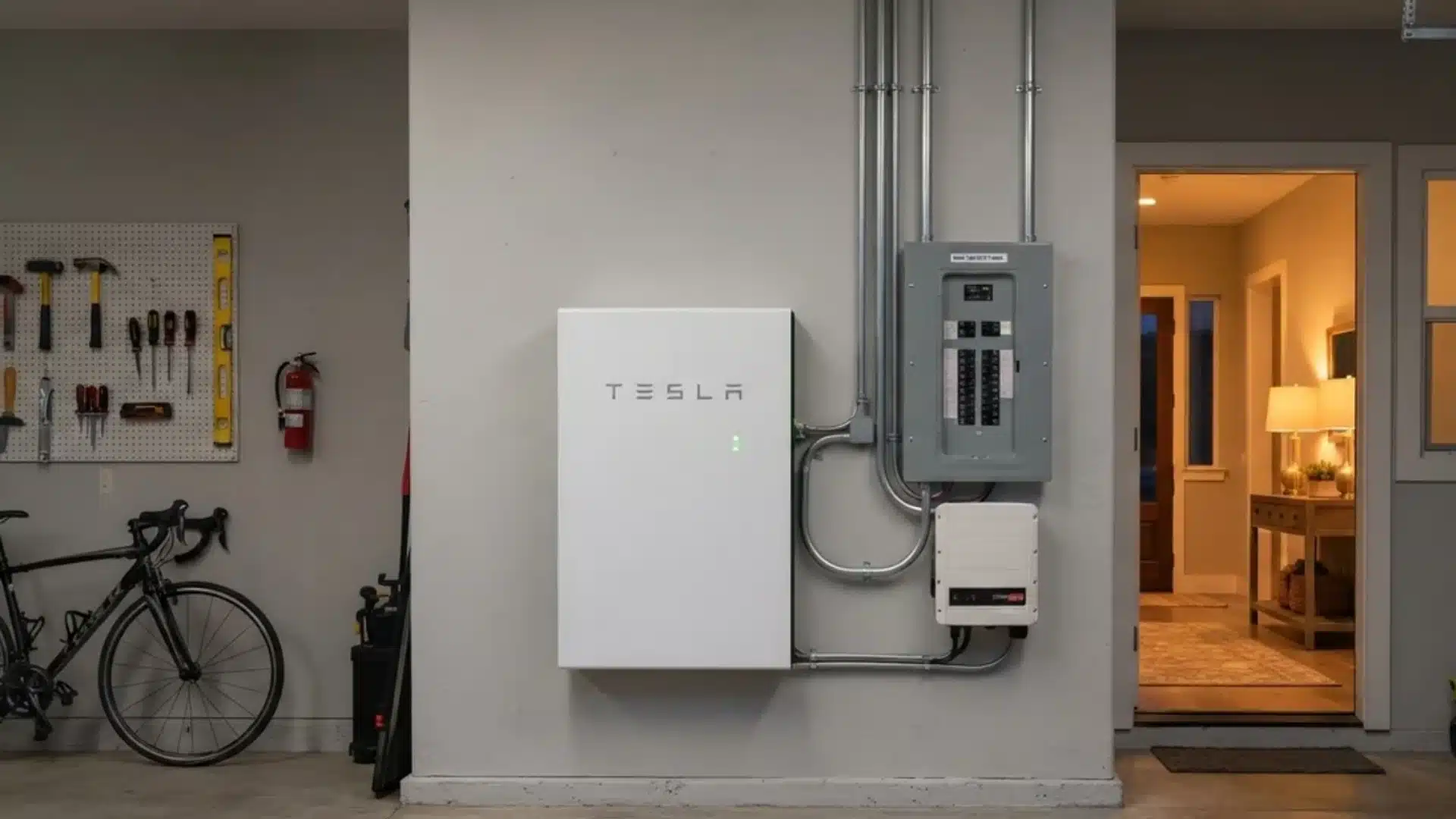
A tank water heater almost always fails the same way. The steel tank rusts through, and the whole unit gets replaced.
A tankless unit rarely dies this way, since it never stores a tank of water at all, and that design difference explains most of the gap when people ask how long do tankless water heaters last.
In the home energy audits I run, I see two nearly identical units installed the same year age at completely different speeds, and the difference usually traces back to water quality and service history, not the brand on the label.
Manufacturer estimates give you a starting range, but your own water, climate, and maintenance habits decide what happens to that number over the next 15-20 years.
Here is how the two types are built to fail, and what changes the outcome.
Which Type of Water Heater Lasts Longer?
Tankless units usually last 15 to 20 years with proper care. Tank models commonly last 8 to 12 years. A.O. Smith generally posts these ranges.
ENERGY STAR lists 20 years for certified whole-home gas tankless equipment. Use these estimates for residential planning. Point-of-use and commercial systems may follow different ranges.
These figures are planning ranges, not expiration dates. Condition and repair history matter when a specific unit develops problems.
Why Do Tankless Systems Serve Longer?
Tankless systems often last longer than tank models because they avoid the large steel storage vessel that eventually becomes a common failure point.
- Storage tank corrosion: Tank water heaters keep heated water inside a steel vessel around the clock. The anode rod slows corrosion, but it cannot prevent it forever.
- Tank leaks: Once the storage vessel itself starts leaking, the entire tank usually needs replacement. A leaking valve or fitting may still be repairable separately.
- No large storage vessel: Tankless systems heat water as it moves through a heat exchanger, so there is no large tank sitting full of water that can rust through.
- Replaceable components: Many tankless parts can be serviced individually. A technician may replace a sensor, valve, fan, heating element, or ignition component without replacing the whole unit.
- Heat exchanger condition: The heat exchanger is the major exception. Severe scale buildup, corrosion, or leakage can make full unit replacement more practical than repair.
- This repairable design can extend a tankless system’s useful life, although maintenance and water quality still affect how long it lasts.
What Affects Tankless Lifespan and Performance?
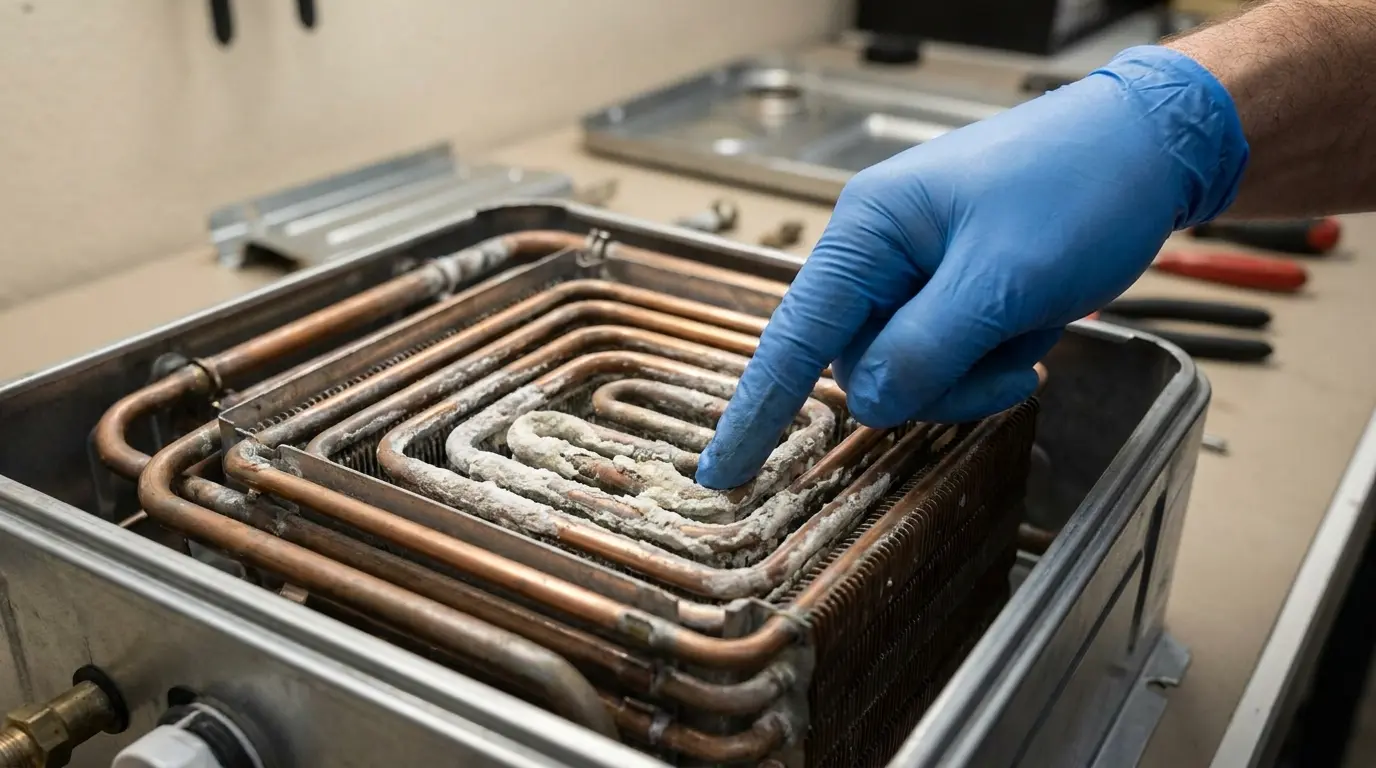
Water quality, service history, sizing, recirculation habits, installation quality, and local climate all shape how long a tankless unit actually lasts, and how well it performs along the way.
Some conditions cause early wear. Others show that the selected model cannot meet household demand.
1. Hard Water and Scale
Hard water contains dissolved calcium and magnesium. Heating can cause dissolved minerals to form scale inside narrow water passages.
Scale narrows water passages and blocks heat transfer. Untreated deposits can damage the heat exchanger. The U.S. Geological Survey groups hardness by calcium carbonate concentration:
- Soft: 0 to 60 milligrams per liter
- Moderately hard: 61 to 120 milligrams per liter
- Hard: 121 to 180 milligrams per liter
- Very hard: More than 180 milligrams per liter
Use a water sample from the property. Then compare the result with the limits in the heater’s manual.
2. Missed Maintenance
No fixed lifespan applies to every neglected system, since hardness, temperature settings, operating hours, and equipment design all change the result.
Service needs also differ between models. A complete appointment may cover these areas:
- Heat exchanger: Descale it when testing or when the manual calls for service.
- Water filter: Rinse debris from the cold-water inlet screen.
- Air and exhaust: Check gas-model openings for dirt, nests, snow, or other blockages.
- Condensate system: Clean the trap and inspect neutralizer media on condensing models.
- Connections: Look for water, gas, or condensate leaks.
- Controls: Review stored codes and confirm safe electrical operation.
Keep every invoice and service date. Those records can support warranty claims and reveal recurring problems.
3. Incorrect Sizing and Heavy Demand
Sizing affects comfort and equipment workload. These checks show if a model can meet your busiest hot-water period.
- Flow rate: Tankless capacity is measured in gallons per minute.
- Temperature rise: Subtract incoming water temperature from the selected outlet temperature.
- Cold climates: Colder groundwater needs more heat. The same model supplies less hot water during northern winters.
- Simultaneous use: Rinnai’s U.S. sizing method includes fixtures, groundwater temperature, set temperature, and elevation.
- Heavy demand: An undersized heater may reduce flow or fail to reach the selected temperature.
- Quote check: I would reject a recommendation based only on household size.
Ask the contractor to document peak demand, temperature rise, and the selected model’s output.
That calculation should use local winter groundwater temperatures.
4. Continuous Recirculation
Recirculation can reduce the wait at distant fixtures. Pump controls determine how often the heater runs.
- Constant circulation: A continuously running pump makes the heater operate more often.
- Demand controls: These controls start circulation when someone requests hot water.
- Timers: A timer may run the heater when nobody needs hot water.
- Service life: ENERGY STAR warns that continuous circulation can reduce savings and shorten heater life.
Ask the contractor to document the pump schedule, trigger, and temperature shutoff.
Those settings should match your household’s actual hot-water use.
5. Pressure, Venting, Power, and Freezing
Utility conditions can damage a correctly sized heater, so check these requirements before installation or before cold weather sets in.
- Water pressure: Keep it within the model’s stated range. Incorrect pressure can cause shutdowns, leaks, damage, or warranty disputes.
- Gas requirements: Gas models need correct fuel delivery, combustion air, and an unobstructed exhaust path.
- Electrical requirements: Electric models need suitable breakers, voltage, and wiring.
- Freeze protection: Built-in protection may require power and may not cover exposed plumbing.
- Power outages: A winter outage can disable the heater’s freeze protection.
- Cold-weather preparation: Follow the manual’s insulation and draining steps before freezing temperatures arrive.
Compare each requirement with the exact manual. Have a qualified technician correct any mismatch before regular use.
How Does Warranty Coverage Affect Durability Value?
Warranty coverage affects durability value by capping what a defect costs you to fix during the covered years, not by promising trouble-free operation for that whole period.
Coverage often ends at different times for the heat exchanger, other parts, and labor.
One Rinnai SENSEI residential warranty covers the heat exchanger for 15 years or 12,000 operating hours, whichever comes first.
Most other parts receive five years, but the integrated controller receives one year.
Products registered within 90 days may receive five years of reasonable labor coverage. Otherwise, labor coverage defaults to one year.
The warranty excludes damage caused by improper installation, poor maintenance, misuse, or conditions outside a covered defect.
Terms change by model, application, registration, temperature setting, and installation. Read the exact warranty before judging durability.
When Should a Tankless Water Heater Be Repaired or Replaced?
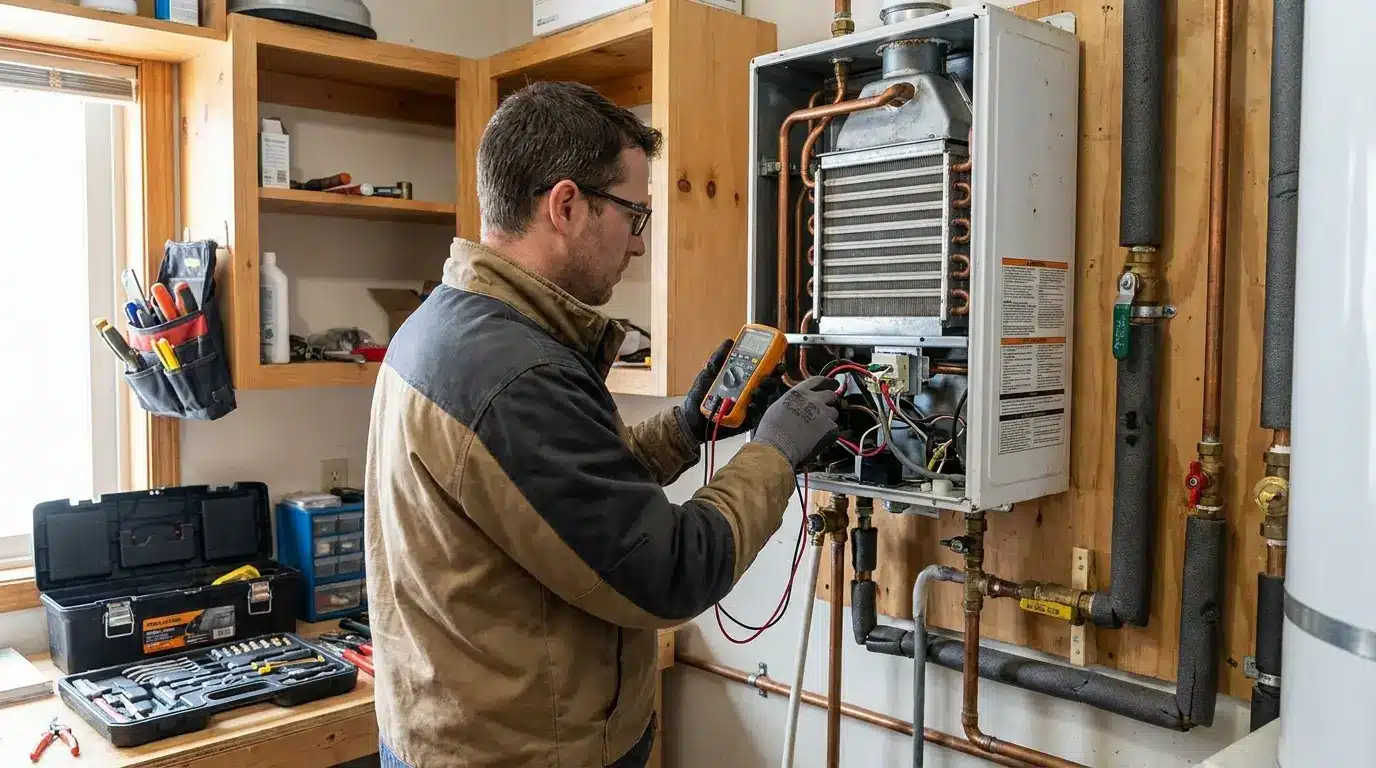
Repair tends to fit a single failed, still-available part; replacement tends to fit a leaking or badly corroded heat exchanger, discontinued parts, or problems that return after correct repairs.
Each symptom can have several causes, so a professional should inspect these warning signs before you choose either path:
- New or repeated error codes appear.
- Water temperature changes during steady use.
- Hot-water flow falls without a fixture change.
- New noises become louder or more frequent.
- Water appears inside or below the cabinet.
These signs confirm the need for service, not replacement. A diagnosis must identify the damaged part.
Moisture does not automatically prove heat-exchanger failure. The technician should inspect fittings, valves, relief piping, and condensate lines.
If you smell gas, leave immediately. Do not use switches, electrical equipment, or a phone indoors. Call 911 or the gas supplier from outside. The CPSC gives the same safety advice.
The diagnosed fault, parts supply, and total price should guide the choice.
| Repair may be practical when | Replacement may be practical when |
|---|---|
| One serviceable part has failed | The heat exchanger leaks or has severe corrosion |
| Required parts remain available | Essential parts are discontinued |
| Performance returns after service | Problems return after correct repairs |
| Warranty coverage reduces the bill | Repair cost approaches installed replacement cost |
| The installation remains safe | Major installation corrections are required |
I would request written prices for both options. Each quote should include labor, permits, disposal, equipment, and required upgrades.
Is a Tankless Water Heater Worth It for Durability?
Tankless is often worth considering when you expect long ownership and can maintain the unit correctly. Start with the installed price difference. Add expected service, water-treatment, and repair costs for each option.
Then subtract the cost of any tank replacement avoided during your ownership period. ENERGY STAR estimates certified gas tankless equipment can save a family of four $95 yearly, which is $1,800 lifetime, considering no inflation.
That estimate compares tankless equipment with standard gas storage equipment. It does not apply to every household or electric model.
Local fuel prices and hot-water use change the savings. I would select tankless when the longer service period offsets its price premium. A tank model fits short ownership or costly conversions better.
Conclusion
The honest answer to how long tankless water heaters last is that the design gives tankless units a real head start, typically outlasting tank models by close to a decade.
Water quality and upkeep decide whether one unit actually reaches that range.
A unit that gets an annual flush and correct sizing tends to run 15, 20, or more years. One that gets neither can fail before its tank replacement would have.
Check your model’s exact warranty terms, keep every service invoice, and size the next unit for your real demand rather than your square footage.
Have you tracked how long your own water heater lasted, and what kept it running? Share your numbers in the comments.
Frequently Asked Questions
Can a Tankless Water Heater Last 30 Years?
Some well-maintained tankless units do reach 25 to 30 years of service, according to Rheem, but treat that figure as a best-case outcome rather than a normal replacement schedule. Reaching that range usually means soft to moderately hard water, annual descaling, correct sizing from day one, and no history of pressure or venting problems. Most homeowners should plan around 15 to 20 years and treat anything beyond that as a bonus.
How Often Should a Tankless Water Heater Be Serviced?
Most manufacturers, including Rinnai, recommend flushing mineral deposits from the heat exchanger at least once a year for typical water conditions. Homes with very hard water often need service every six to nine months instead, since scale builds up faster and narrows the internal passages sooner. Check your specific model’s manual for its recommended interval, since some condensing units also need annual condensate trap and neutralizer checks.
Does Hard Water Always Require a Water Softener?
No. A water softener only helps once your water actually tests as hard or very hard, generally above 120 milligrams per liter on the USGS scale. Softening water that already tests soft or moderately hard adds ongoing cost without meaningfully extending your unit’s lifespan. Test your water first, compare the result to your model’s stated hardness limits, and only add treatment if the numbers actually call for it.
Do Electric Tankless Water Heaters Last Longer Than Gas Models?
Not on their own. Fuel type has less effect on lifespan than the heat exchanger design, water quality, and how consistently the unit gets serviced. Electric models skip combustion parts like burners and ignition components, which removes a few failure points, but they still scale up in hard water and fail early without maintenance just like gas units do. Compare specific models and warranty terms rather than choosing by fuel type alone.
How Can You Find the Age of a Tankless Water Heater?
Check the rating plate on the unit itself, which usually lists a serial number that encodes the manufacture date. If the plate is faded or missing, your installation invoice, permit record, or original receipt should show the purchase or install date. When none of those are available, most manufacturers, including Rinnai and Rheem, can decode a serial number over the phone or through their website if you provide the full string.