
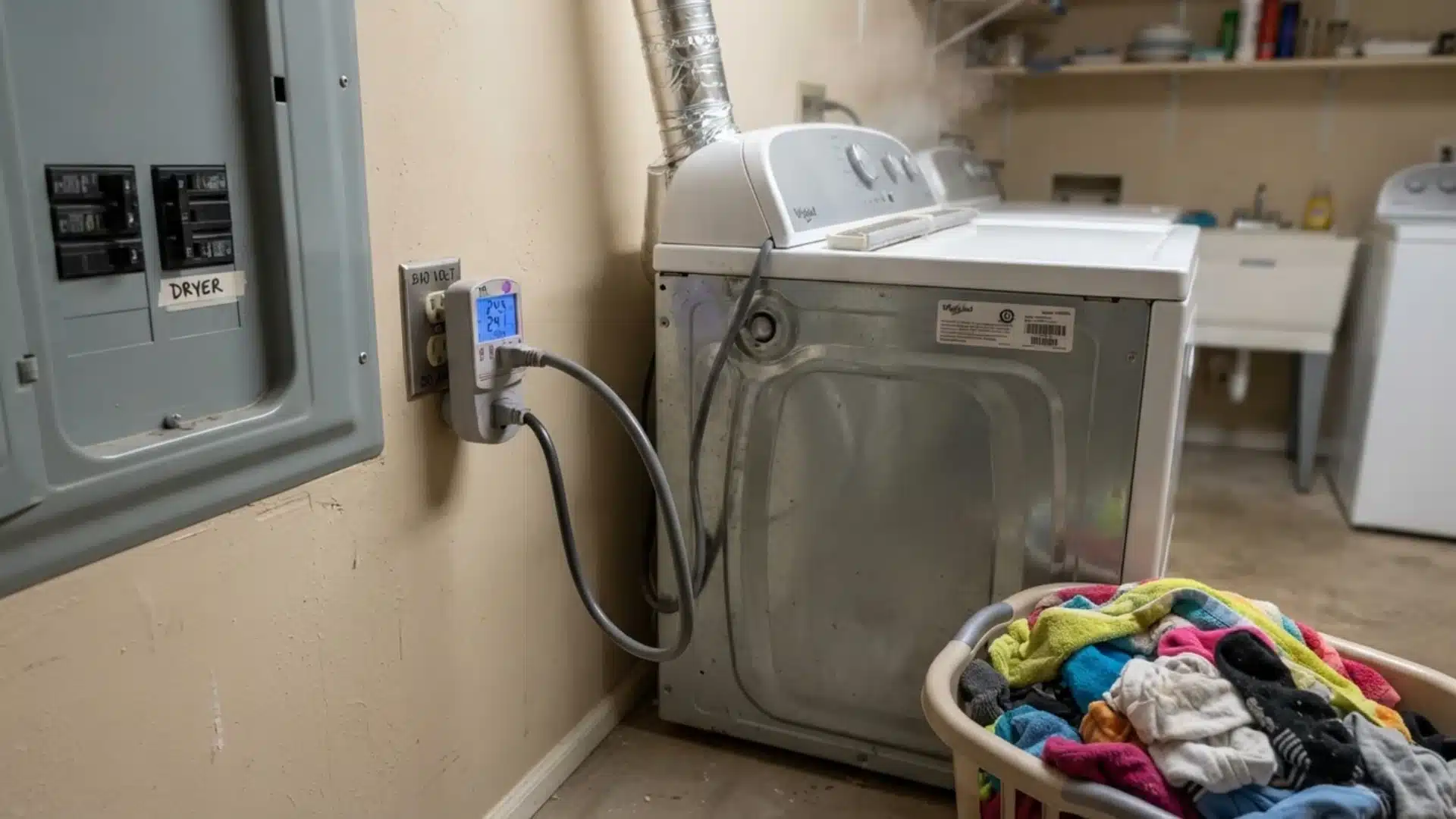


Ever wondered why your dryer keeps tripping a breaker or if your outlet is even strong enough for it? It’s a common issue when dealing with laundry appliances.
When people ask me how many amps does a dryer use, the confusion usually comes from not knowing what the numbers actually mean.
A standard full-size electric dryer usually draws about 21 to 25 amps, but the real answer depends on the type and setup.
I’ll help you understand dryer power use in simple terms so you can avoid electrical surprises, choose the right circuit, and know exactly what your dryer needs to run safely and efficiently.
How Many Amps Does a Typical Dryer Use?
Dryer amperage depends mainly on the type of dryer, operating voltage, heating method, and manufacturer specifications. Full-size electric models require considerably more electrical current than gas or compact dryers, and they sit among the biggest power-hungry appliances in most homes.
The table below gives a quick comparison of common residential dryer types and their typical electrical requirements.
| Dryer Type | Typical Voltage | Approximate Amp Draw | Common Circuit |
|---|---|---|---|
| Full-size electric dryer | 240V | 21–25 amps | 30 amps |
| Gas dryer | 120V | 3–6 amps | 15 or 20 amps |
| Compact electric dryer | 120V or 240V | About 10–15+ amps | Varies |
These figures are useful estimates, but the rating printed on the appliance or listed in its installation manual should take priority.
One point causes a lot of confusion: a 30-amp dryer circuit breaker does not mean the dryer constantly draws 30 amps. Its actual operating current is usually lower.
How Many Amps Does a 240V Electric Dryer Use?
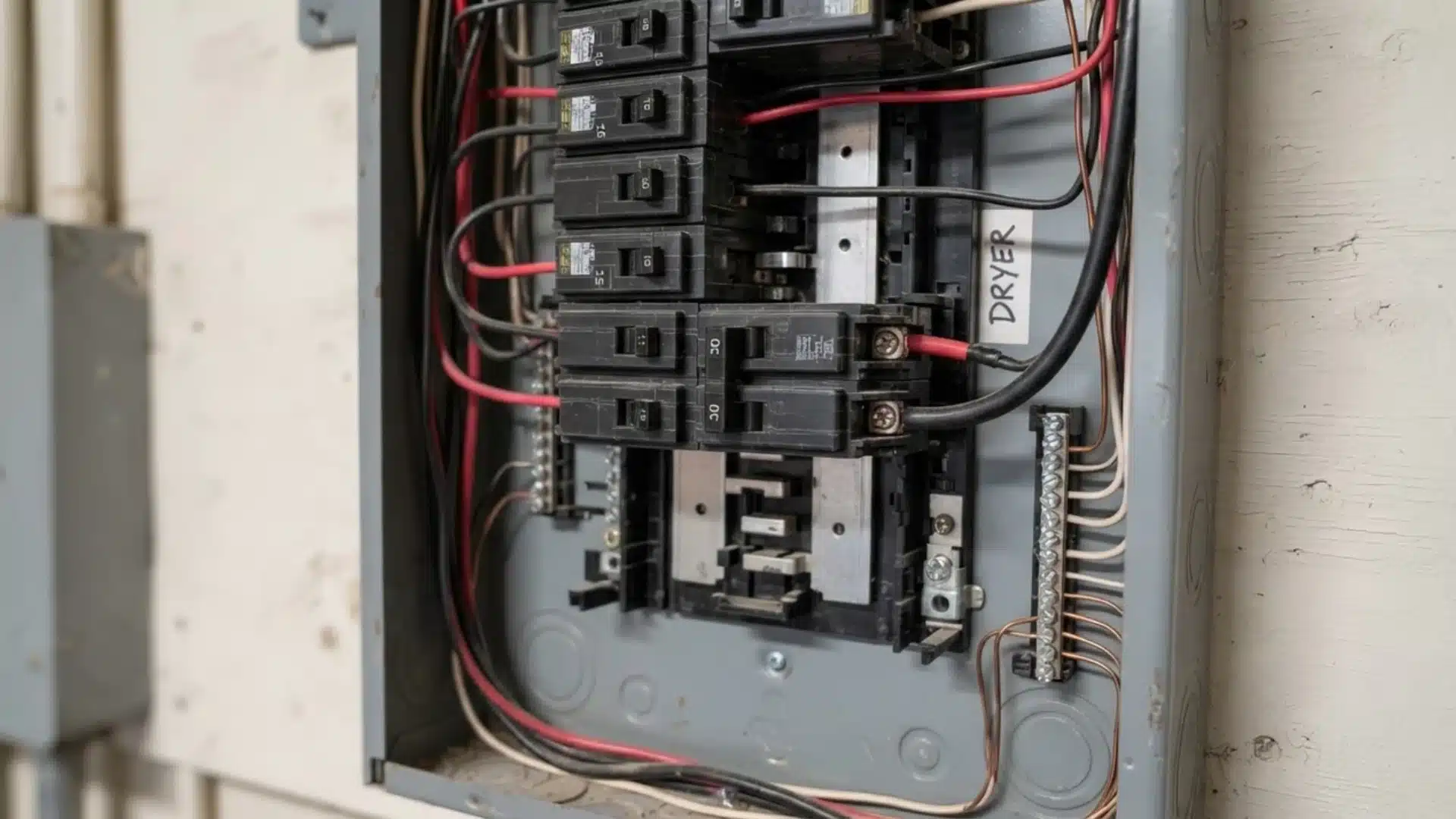
A standard 240V electric dryer commonly uses around 21 to 25 amps while operating. Many residential models have heating elements rated at several thousand watts, which account for most of the electrical load.
For example, a dryer rated at 5,400 watts on a 240V supply would have an estimated current draw of:
5,400 watts ÷ 240 volts = 22.5 amps
The drum motor, controls, lights, and other electrical parts also consume power, so exact ratings differ among models.
Although a dryer may draw about 22 or 24 amps during operation, many standard full-size models specify a 30-amp dedicated circuit. The breaker rating provides circuit protection according to the appliance and wiring requirements rather than matching the appliance’s normal operating current exactly.
Check the manufacturer’s rating label if an exact figure is needed.
How Many Amps Does a Gas Dryer Use?
A gas dryer usually draws only about 3 to 6 amps from a standard 120V household supply.
Its electrical demand is much lower because natural gas or propane produces the heat instead of a high-wattage electric heating element. Electricity mainly powers components such as:
- The drum motor
- Electronic controls
- Ignition components
- Interior lighting
- Sensors and displays
A gas dryer still requires a suitable electrical outlet even though its primary heat source is gas.
The exact amperage varies between manufacturers and models, so checking the appliance label remains important when replacing or installing a unit.
How Many Amps Does a 120V Dryer Use?
A 120V dryer can have very different electrical requirements from a conventional 240V model. Many 120V dryers are compact, portable, ventless, or designed for apartments and smaller spaces.
A common compact unit may draw around 10 to 15 amps, although some models fall outside that range.
Because 120V dryers operate with less available electrical power, they often have smaller heating elements and may take longer to dry the same amount of clothing compared with full-size 240V models.
Do not assume every compact dryer fits a standard household circuit simply because it has a 120V plug. Check the manufacturer’s amperage and circuit requirements before use.
Dryer Amps vs. Breaker Amps: What’s the Difference?
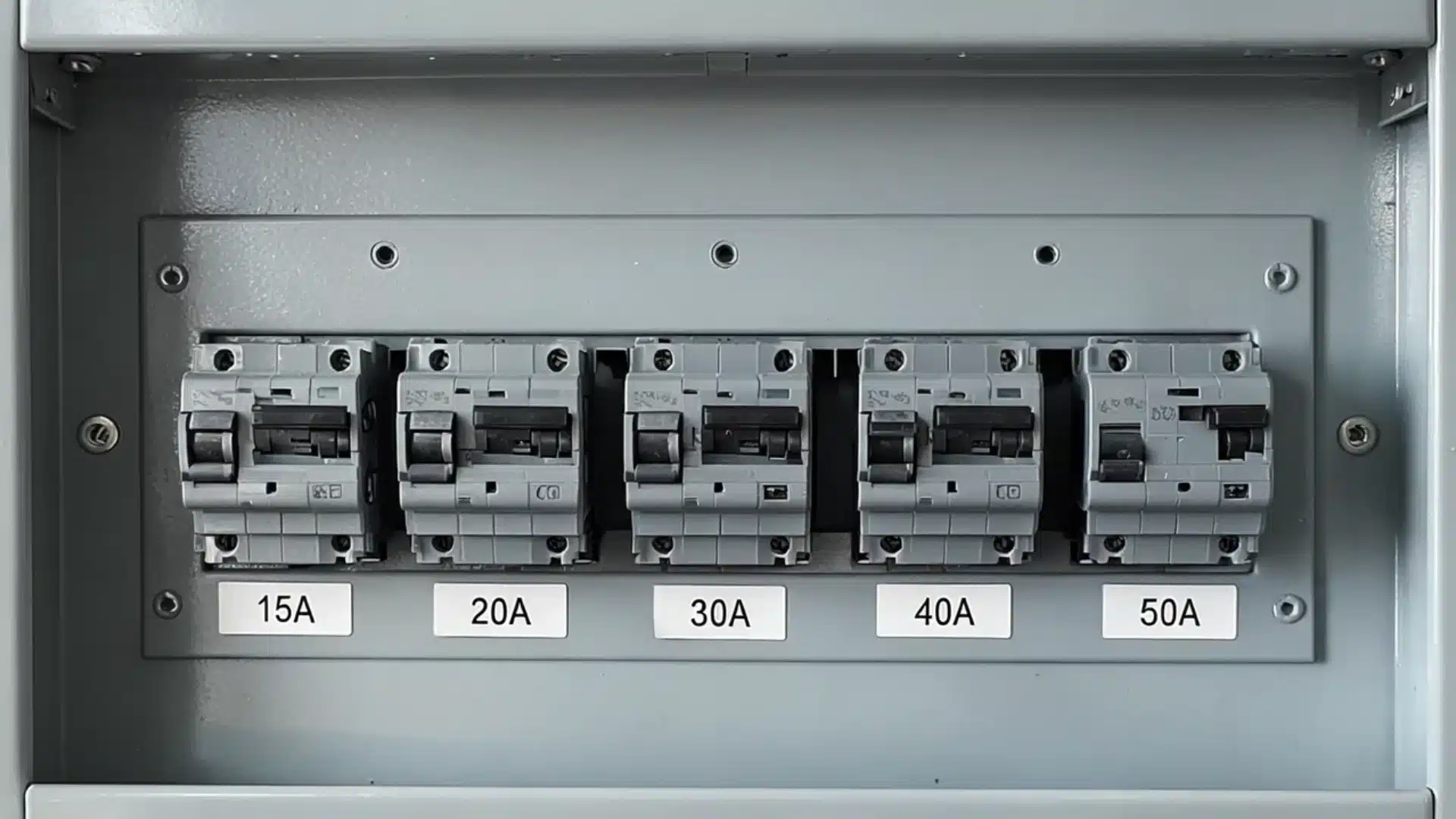
Actual current draw and breaker rating describe two different parts of the electrical setup. Understanding that difference helps prevent incorrect assumptions about dryer circuits.
A typical setup may look like this:
- Dryer running current: About 24 amps
- Circuit breaker: 30 amps
- Supply voltage: 240 volts
The breaker is designed to protect the branch-circuit wiring from excessive current. It is not meant to represent the exact number of amps an appliance draws every moment it operates. Mixing up these two numbers is also a common reason people end up puzzled over an unusually high electric bill without realizing the breaker size was never the real culprit.
For example, seeing a 30-amp breaker in the panel does not automatically mean the dryer pulls 30 amps continuously.
The manufacturer’s installation instructions normally state the circuit requirements for a specific model. Those instructions matter more than a general rule based only on the appliance’s estimated operating current.
How to Find the Exact Amp Rating of Your Dryer
Several simple checks can help identify the electrical rating of a specific dryer without relying on broad averages.
Check the Dryer Data Plate
The appliance data plate is usually the quickest source of electrical information. Depending on the model, it may be found:
- On the back panel
- Around the door opening
- Along the door frame
- Near the lint screen
- Inside an access area identified by the manufacturer
Look for figures labeled amps, amperes, volts, watts, current, or electrical rating.
I prefer checking this label first because it provides information for the exact appliance rather than a typical dryer category.
Check the Owner’s Manual
The owner’s or installation manual usually contains an electrical requirements section.
It may list the required:
- Voltage
- Circuit size
- Frequency
- Breaker rating
- Power cord configuration
- Electrical load
My next step would be comparing those specifications with the existing outlet and circuit rather than relying only on how the plug looks.
Calculate Amps From Watts and Volts
If the label lists watts and volts but does not show amperage, a basic calculation can provide an estimate: Amps = Watts ÷ Volts
For example: 5,400 watts ÷ 240 volts = 22.5 amps
The calculation can be useful for understanding electrical demand, but manufacturer specifications should still be used when determining installation requirements.
What Size Breaker Does an Electric Dryer Need?
Most conventional residential electric dryers are designed for a 30-amp, 240-volt double-pole circuit breaker. This standard dryer breaker size covers the vast majority of full-size units on the market
The breaker typically serves a dedicated dryer circuit rather than sharing the circuit with other household appliances. A dedicated setup helps the circuit handle the dryer’s relatively high electrical demand.
A dryer that repeatedly trips its breaker should not automatically be moved to a larger breaker. Tripping can point to problems such as an overloaded circuit, damaged wiring, a failing appliance component, or another electrical fault.
Installing a larger breaker without confirming the wire and appliance requirements can allow more current through the wiring than it was designed to carry.
Check the dryer’s installation instructions and circuit specifications before changing a breaker. Electrical panel or branch-circuit changes are generally best handled by a qualified electrician.
What Wire Size Is Commonly Used for an Electric Dryer?
A standard 30-amp residential electric dryer circuit commonly uses 10-gauge copper conductors.
Modern dryer installations generally use a four-wire connection containing:
- Two hot conductors
- One neutral conductor
- One equipment grounding conductor
Older homes may have different dryer connections based on when the electrical system was installed and the rules that applied at the time.
Wire size should never be selected based only on the appliance’s typical running amperage. The breaker rating, conductor material, wiring method, appliance specifications, and applicable electrical requirements all matter.
If the existing outlet or wiring does not match a new dryer, having the circuit checked is safer than changing only the cord or breaker.
Why Does Knowing Your Dryer’s Amperage Matter?
Knowing how much current a dryer requires can help with several practical decisions beyond simply reading the number on the appliance label.
- Circuit Planning: Dryer amperage helps determine if the existing electrical circuit is suitable for the appliance.
- Breaker Troubleshooting: Comparing normal current draw with the specified circuit can help identify situations that need further inspection.
- Generator Sizing: Electric dryers have relatively high power demands, which matter when calculating backup generator capacity.
- Power Calculations: Voltage and amperage can help estimate how much electrical power the dryer requires while operating.
- Dryer Replacement: Checking electrical requirements before buying another dryer can prevent compatibility problems with the existing outlet and circuit.
These checks are especially useful when replacing an older dryer with a model that has different voltage or installation requirements.
Final Thoughts
A dryer’s power needs are easier to understand once you break them down by type and usage. Anyone still wondering how many amps does a dryer use can take away this: most electric models run around 21 to 25 amps, while gas units stay much lower at just a few amps.
You also saw how compact 120V dryers can differ and why checking the data plate matters more than guessing.
I always remind you that running current and breaker size are not the same, which helps avoid confusion during installation or troubleshooting.
Knowing your dryer amperage helps you choose the right circuit and prevent electrical issues at home. If this helped you, share your experience or check out more guides to learn about safe appliance setup and power use.
Frequently Asked Questions
How many amps does a 220V dryer use?
A standard electric dryer commonly draws about 21 to 25 amps. Appliances described as 220V dryers generally operate on a residential supply commonly rated around 220–240 volts.
Are electric dryers 30 or 50 amps?
Most standard residential electric dryers use a 30-amp circuit. A 50-amp circuit is more commonly associated with other high-demand appliances, although manufacturer requirements should always be checked.
Can I put a dryer on a 40-amp breaker?
A larger breaker should not be installed unless the appliance specifications, wiring, receptacle, and circuit design support it. Most standard electric dryers specify a 30-amp circuit.
Does a dryer actually pull 30 amps?
Usually not during normal continuous operation. Many full-size electric dryers draw around 21 to 25 amps while being connected to a 30-amp circuit.
How many amps does a washer and dryer use?
The two appliances have different electrical requirements. Many washing machines operate on a standard 120V circuit, while full-size electric dryers commonly use a dedicated 240V, 30-amp circuit.
How can I tell if my dryer is 30 amp?
Check the dryer’s data plate and installation manual for its circuit requirements. The electrical panel and dryer receptacle can provide additional information about the existing circuit.