





Pick the wrong electricity plan and your solar system quietly underperforms for years. The panels get all the attention. The plan gets ten minutes, and that gap costs real money.
Your solar energy plans control two things: what you earn for power you send to the grid, and what you pay when the sun goes down. Both numbers shape your bill far more than most installers let on.
Here you’ll find how buyback, time-of-use, and free nights plans each work, what sets them apart, and a clear way to match one to how your home actually runs.
What Are Solar Energy Plans?
A solar energy plan is an electricity rate structure built for homes that send power back to the grid. It handles two flows: what you pull from the grid and what you push to it.
A standard electricity plan only charges you for what you use. It has no way to handle power moving in the other direction. That’s the core difference, and it’s why you can’t just pick any plan once your panels go live.
Before you get there, it’s also worth confirming what your installer is bundling into the contract. Some solar deals include a free roof replacement with solar panels if your roof is aging, and missing that detail before you sign can mean paying for it separately later.
Two terms get mixed up here constantly, and I want to clear that up before anything else.
- Net metering is a utility billing tool used in regulated markets. It offsets your bill at close to the retail rate.
- A solar buyback plan is a retail product in a deregulated market. It pays you a separate credit rate for exported power, and that rate is almost always lower than what you pay for grid power.
They are not the same thing, and they don’t exist in the same markets.
In deregulated markets, ERCOT, the Texas grid, is the clearest example, where you can shop providers and pick the plan that fits your home. In regulated markets, your utility sets the terms. One option, take it or leave it.
The Three Solar Energy Plan Types and How Each One Works
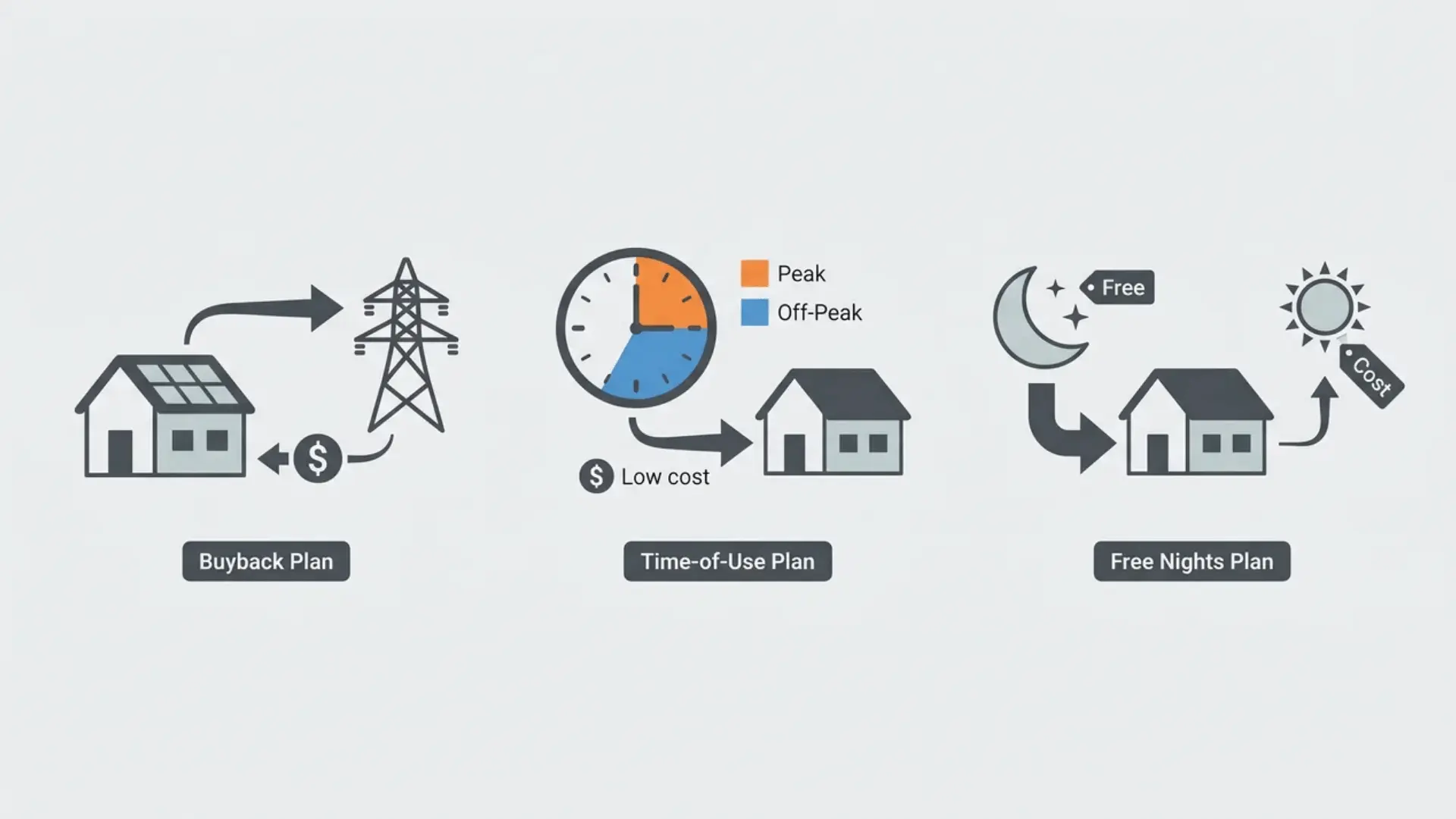
Three structurally different plan types exist in deregulated markets. The right one depends on one question: when does your household actually use the most electricity?
The plan name is almost irrelevant. The answer to that question is everything.
Before you compare plans, here’s something worth locking in: solar power your home uses directly is worth roughly twice what exported power earns.
You avoid paying the full retail rate, and the exported power earns a lower credit rate.
1. Solar Buyback Plans
Your provider credits you for every kilowatt-hour your panels send to the grid after your home has taken what it needs.
The credit rate is not the same as what you pay for grid power, and that gap is the whole story.
Typical buyback rates run $0.03–$0.08 per kWh. Typical retail rates run $0.10–$0.16 per kWh, per EIA residential pricing data. Every unit you use yourself is worth about twice what you export. Self-consumption wins every time.
Rollover policy matters just as much as the rate. Some providers wipe unused credits at month’s end. Others carry them forward with no cap. If you export heavily in summer and draw credits in winter, rollover terms can be worth more than a higher rate that resets monthly.
Here’s where this plan quietly fails: if you export a lot in summer but your provider resets credits monthly, those banked kilowatt-hours disappear. The rate looks good on paper. The reset erases the benefit before winter ever arrives.
2. Time-of-Use (TOU) Plans
A time-of-use plan charges different rates depending on when you use power. Peak hours cost more. Off-peak hours cost less.
For solar owners, there’s a flip side worth knowing: peak-hour exports earn a higher credit per kWh.
West-facing panels change the math here more than most people expect. They produce later in the day, often right into the peak window, so exports land when the credit rate is highest. South- or east-facing panels mostly miss that window and don’t get the same lift.
Where this plan goes wrong: if your household pulls heavily from the grid during peak hours, you pay elevated rates on every unit. TOU plans reward shifting laundry, dishwashers, and EV charging to off-peak hours. Skip that behavior shift and your costs climb fast.
3. Free Nights and Days Plans
These plans give you free electricity during set overnight windows. Daytime rates apply as normal, but your panels cover most of that anyway.
For the right household, the logic works cleanly: panels handle daytime grid costs, free overnight hours handle nighttime costs. Pair this with a home battery, and you can store free overnight power to use during the day instead of buying from the grid.
Where this plan struggles: if your heaviest usage falls during the day when standard rates apply, the free overnight window barely moves your bill. You need your schedule to actually map onto the free hours. If it doesn’t, the plan looks better than it performs.
How Solar Buyback Credits Actually Work and What the Rate Doesn’t Tell You
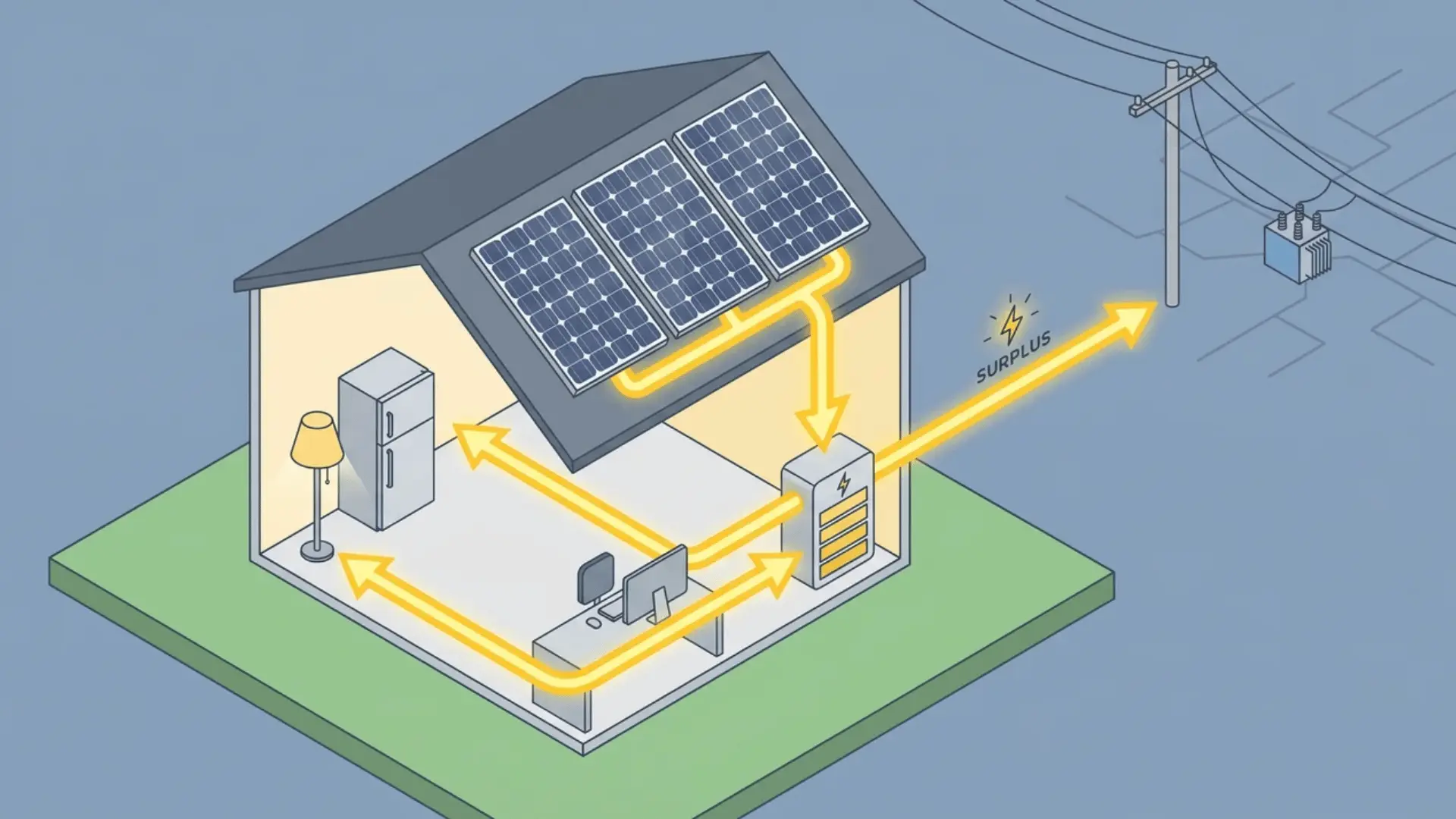
Buyback credits apply only to surplus energy, what’s left after your home has already used what the panels made in real time. Your total production number is not what gets credited.
I’ve seen this happen more than almost anything else in solar billing. Most homeowners assume the credit applies to everything their panels produce. In reality, it doesn’t, and that mistake leads directly to overestimating what a buyback plan actually pays out.
The credit sequence runs in four steps. The credit only enters at step four, everything before it reduces what’s left to credit.
- Step 1: Your panels produce power during the day
- Step 2: Your home consumes that power first, in real time
- Step 3: Only the leftover surplus flows out to the grid
- Step 4: That surplus, and only that, earns a buyback credit
Run the AC, dishwasher, and laundry during peak production hours and you may export almost nothing. The panels are generating, but the house is consuming most of it before any surplus reaches the grid.
Self-consumed power saves you $0.10–$0.16 per kWh in avoided grid costs. Exported power earns $0.03–$0.08 per kWh in credits.
You’re better off keeping power on-site than chasing a higher buyback rate every single time.
The rollover policy is where the real money lives. A plan that wipes credits monthly costs a summer-surplus home far more than a slightly lower rate with no expiration would.
Check the rate and the rollover terms together. One number without the other tells you almost nothing about what the plan is actually worth.
How to Choose the Right Solar Energy Plan for Your Home
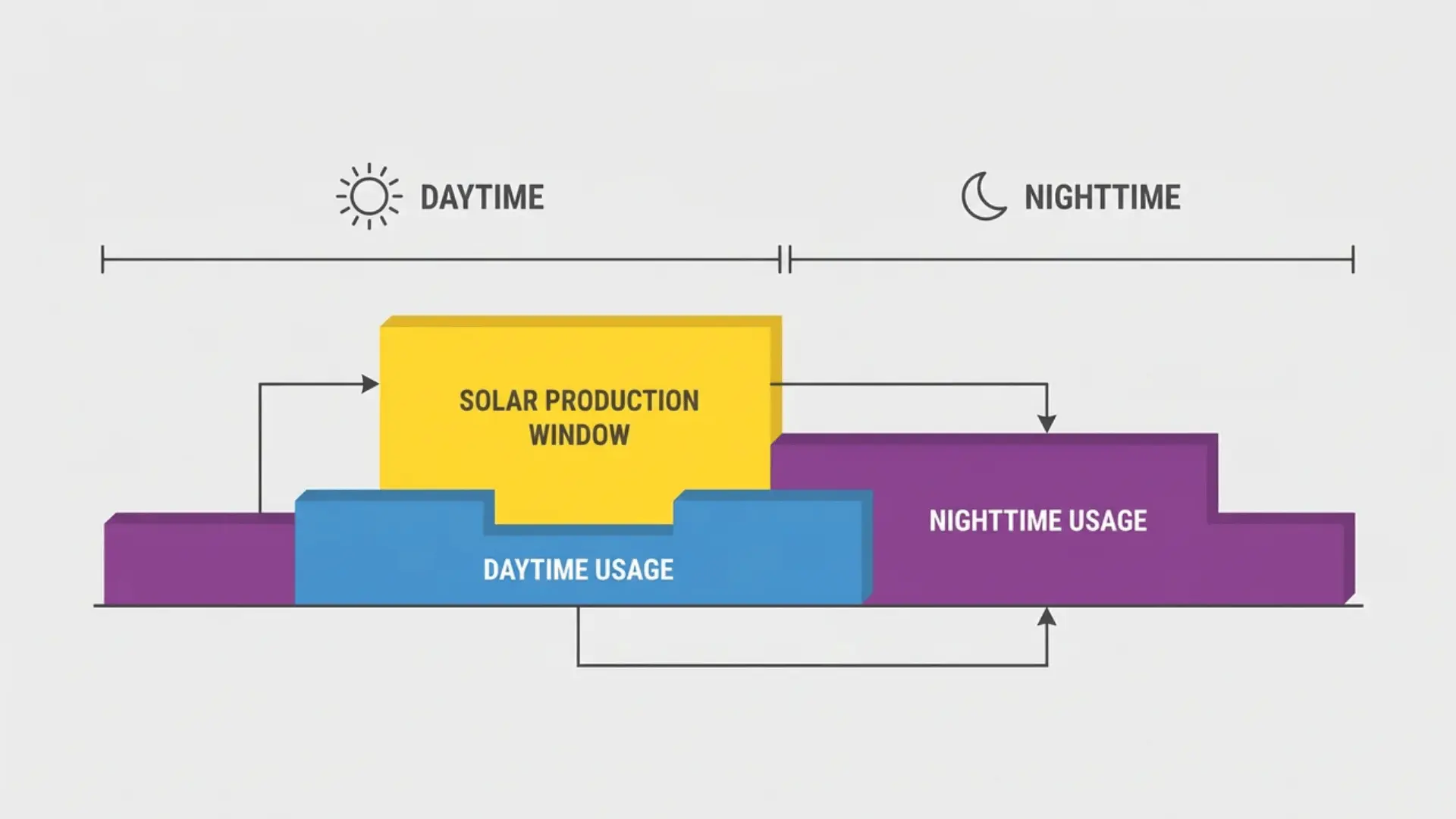
The right plan comes down to one question: when does your household use the most electricity? That one answer narrows the field faster than any rate chart ever will.
One thing to settle first: if you’re in a regulated market, this choice isn’t yours to make. Your utility sets the terms, and that’s that. Everything below is for deregulated markets like ERCOT.
High Daytime Export Profile
This fits smaller households or homes where people are out most of the day. Panels produce heavily, but daytime consumption stays low, so a lot of power goes to the grid.
If this sounds like your home, the buyback rate and rollover policy matter more than anything else on the plan. A high rate means more credits per month. But if those credits vanish at month’s end, a great summer rate doesn’t carry you anywhere by winter.
I’ve watched homeowners with genuinely strong systems lose significant seasonal value because their rollover terms were bad. If your system overproduces from spring through fall, strong rollover terms turn those credits into real winter savings. Without them, that surplus just disappears.
Heavy Evening and Night Usage Profile
If you have a family, an EV, or heavy after-sunset routines, you’re probably here. Daytime solar handles most of your grid draw. The question is what happens once the sun goes down.
A TOU plan charges more during peak evening hours but credits peak-hour exports at a higher rate. If your panels face west and produce into those windows, that works in your favor.
A free nights plan cuts overnight grid costs to zero. For EV owners charging after midnight, that shows up clearly every month. The better pick depends on how much evening usage you have and exactly when your panels are most productive.
Mixed or Unpredictable Usage Profile
Not every household fits a clean pattern. Seasonal shifts, schedule changes, and irregular routines can make one month look nothing like the next.
Three questions cut through the noise fast.
- Can you shift EV charging to free-night hours?
- Does your production peak before or after 3 pm?
- Do you expect your usage to shift significantly by season?
Your answers point clearly toward TOU, free nights, or a rollover-heavy buyback plan.
If none of those answers are clear yet, prioritize flexibility over rate. A plan you can exit without a penalty gives you room to adjust once your usage settles. Locking into the wrong structure for 12 months costs more than a slightly lower rate would ever save.
Solar Energy Plan Providers Worth Comparing
These providers handle your monthly bill and export credits after your panels go live. They are electricity plan providers only, not installers. Panel installation is a completely separate industry with separate contracts.
Plan names, rates, and rollover caps change. Before you sign anything, verify what each provider actually offers in your ZIP code right now.
Six providers show up consistently for deregulated markets. Here’s how they compare on the factors that matter most:
| Provider | Plan Name | Key Feature | Market |
|---|---|---|---|
| TXU Energy | Solar Buyback Plus | Rollover credits up to $1,000; widely available across ERCOT | Texas (ERCOT) |
| Gexa Energy | Solar Buyback | Competitive import rates; frequently benchmarked against TXU | Texas (ERCOT) |
| Reliant Energy | Solar Payback Plus | One of the more established names in the Texas deregulated market | Texas (ERCOT) |
| Octopus Energy | — | Unlimited credit rollover; no expiration cap or monthly reset | Select markets |
| Green Mountain Energy | Go Local Solar Plan | Sources 100% Texas solar; Green-e Energy certified | Texas (ERCOT) |
| Direct Energy | Direct Solar Unlimited | Fixed rate on a 12-month term; credits applied to all exported energy | Texas (ERCOT) |
No single provider fits every home. Use your usage profile from the section above to narrow the field first, then check what each provider is actually offering in your area right now.
Wrapping Up
Picking between solar energy plans comes down to three things, in this order: your usage pattern, the plan structure that fits it, then the provider. Get that sequence right and the rest follows.
Buyback, TOU, and free nights plans each suit a different kind of home. The credit rate matters, but rollover policy and peak-hour timing usually determine more of the real-world outcome than the headline rate ever suggests.
The federal tax credit, net metering rules, and provider availability are all separate decisions, worth knowing, but none of them change the matching logic.
Start with when your home uses the most power. Then check ZIP-code availability and current rollover terms for the providers that fit that profile.
Frequently Asked Questions
Is a solar buyback plan the same as net metering?
No. Net metering is a utility billing tool in regulated markets that offsets your bill at close to the retail rate. Solar buyback plans are retail products in deregulated markets like Texas that pay a separate, typically lower credit rate for exported power. The two terms describe different systems operating in different market structures.
Do solar buyback credits expire if I don’t use them?
It depends on the provider. Some plans wipe unused credits at the end of each month. Others carry them forward indefinitely. For homes that overproduce in summer and draw down in winter, the rollover policy can be worth hundreds of dollars annually. Check this before you sign; it matters as much as the rate itself.
Will the 30% federal solar tax credit affect which plan I choose?
No. The federal tax credit applies to your installation costs and is completely separate from your electricity plan choice. One affects what you pay upfront for the system. The other affects your monthly bill after it’s live. They operate independently; neither decision changes the other.
Can I switch solar energy plans if my rates or needs change?
In deregulated markets like Texas, yes. You can typically switch when your contract ends, or earlier by paying an early termination fee. Before switching, compare the new plan’s buyback rate and rollover policy against your current one. The plan that fit at installation may not be the right fit two years later.