


Leasing solar panel tax credits can be confusing because the savings do not work the same way they do when you buy a system.
People often assume that a lease lets them claim the same federal tax credit, while others believe they lose all financial benefits.
The truth falls somewhere in between. With a solar lease, the tax credit usually goes to the company that owns the panels, not the homeowner.
Even so, that does not always mean you miss out completely. Leasing companies often factor those tax savings into their pricing, which can help lower monthly lease payments over time.
Understanding who receives the credit, how the savings are passed along, and what has changed in recent years makes it much easier to compare leasing with buying.
What Does Leasing Solar Panels Tax Credit Mean?
This phrase gets searched a lot, but it is really two separate things stitched together. Leasing is a payment method. The tax credit is a federal incentive tied to who owns the equipment.
People searching this term are usually trying to find out whether choosing the lease path lets them skip the ownership requirement while still getting the incentive.
It does not work that way, and that mix-up is where most of the confusion starts. Once you separate the payment method from the incentive, the rest of this topic gets much easier to follow.
One is about how you pay for the system. The other is about who gets to claim a specific federal benefit tied to owning it.
Does Leasing Solar Panels Still Get You the Tax Credit?
Leasing solar panels does not hand you the federal tax credit directly. The credit belongs to whoever owns the system, and in a lease, that is the solar company, not you.
This matters more now than it used to. The 30% residential credit for people who buy their own system ended after 2025.
That change is one reason leasing and power purchase agreements have become more appealing for some homeowners in 2026.
Instead of the homeowner claiming the credit, the leasing company generally claims the commercial version and may reflect some of that value in the lease price.
It does not show up on your tax return or as a check in the mail. If it shows up at all, it’s baked into your monthly rate.
That distinction trips people up constantly. You are not getting a tax credit. You are getting a company’s tax credit passed along to you if the numbers actually work out that way.
How the Leasing Company’s Tax Credit Becomes Your Savings
The benefit from leasing solar panels does not come from receiving the tax credit directly. It comes from the leasing company using its tax savings to reduce the price you pay.
- The leasing company claims the federal commercial tax credit because it owns the solar system.
- It may also claim depreciation, which lowers its overall cost and can support a cheaper solar rate.
- You do not receive the credit on your tax return. You benefit only when those savings are reflected in your lease price.
- With a monthly lease, the discount may appear through lower payments over time. With a prepaid lease, more of it may be included in one large upfront payment.
- Compare the quoted solar rate with your current utility rate to see whether the savings are meaningful.
- Ask for a written explanation showing how the commercial tax credit affects your specific price.
- Request the actual calculations rather than accept a vague claim that the company passes savings on to customers.
The real question is not whether the leasing company receives a tax benefit. It is whether enough of that benefit reaches you through a clearly lower and fully explained rate.
What Happens After the Tax Credit Recapture Period?
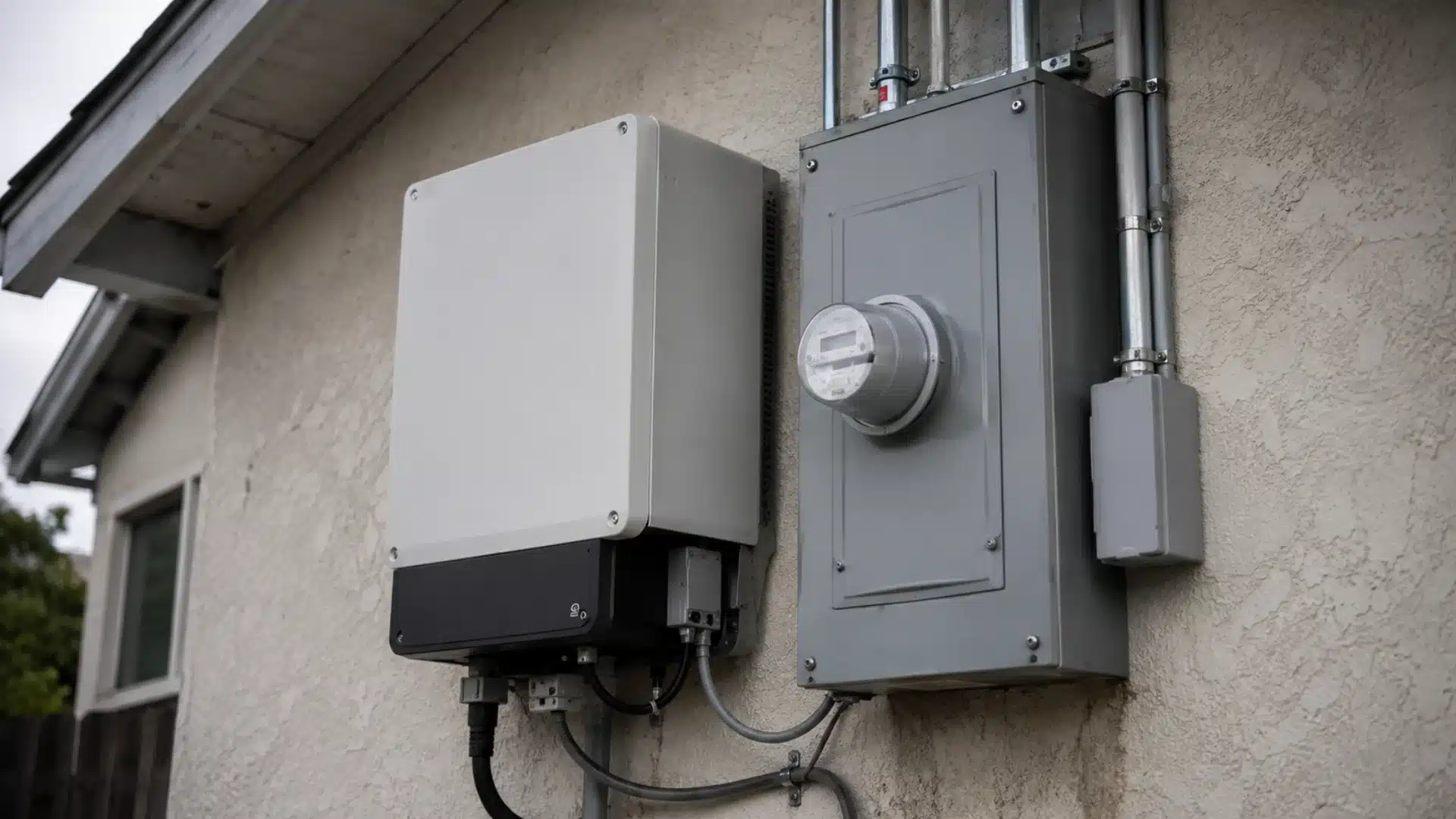
Most explanations stop at who claims the tax credit, but what happens afterward can also affect homeowners.
There is generally a five-year recapture period during which the leasing company must continue to meet IRS requirements to retain the federal tax credit.
During this time, buyout options may be limited because the company still owns the system.
If you sell your home before the lease ends, the buyer may need to assume the lease, or you may need to negotiate another solution based on your contract.
After the recapture period, some companies offer buyout options, while others allow renewal or system removal.
Where Leasing Falls Short of Owning
Leasing solves one problem and creates a different set of limits. Knowing both sides helps you decide if the trade is worth it for your situation.
- Fixed savings, not equity: A lease or PPA locks in a lower rate against your utility bill, but you never build ownership value in the system itself.
- State incentives often skip lessees: Many state rebates, SRECs, and property tax exemptions are structured for owners, so leasing can reduce the overall benefit even while the federal side indirectly works in your favor.
- No proof, no benefit: If your contract never ties your rate to the tax credit specifically, you have no real way to confirm you are getting anything from it at all.
None of this means leasing is a bad choice. It means leasing trades long-term upside for guaranteed short-term savings, and you should walk in knowing exactly which one you are choosing.
If You’ve Already Signed a Solar Lease
These situations become easier to understand when viewed through real examples. A homeowner who keeps a five-year lease for the full term usually reaches the end of the recapture period without any problems.
The system may then transfer for a small fee, while the lower solar rate continues. Selling the home after only two years is more complicated because the buyer must assume the lease, or the seller must negotiate a payoff before closing.
Another homeowner may later realize the installer never explained how the tax credit affected the quoted rate, making it impossible to confirm whether any real discount was included.
In most cases, the outcome depends on how long the lease stays in place and how clearly the pricing was explained from the start.
Conclusion
Leasing solar panel tax credits can still lower the cost of going solar, but the savings reach you indirectly.
The leasing company claims the incentive and then decides how much of that value appears in your monthly payment or the overall contract price.
That makes the lease terms more important than the credit itself. Review the quoted rate, escalator clause, buyout option, transfer rules, and state or utility incentives before signing.
Ask the installer to show the dollar value passed on to you and compare it with purchase and loan offers.
A clear breakdown can reveal whether the lease offers savings or simply uses tax benefits as a sales pitch. Have you received a lease quote? Share your experience in the comments.
Frequently Asked Questions
Can I claim the 30% tax credit myself if I lease my solar panels?
No. Under current law, whoever owns the system claims the credit, and with a lease, that is the solar company, not you. The company claims the commercial credit and is expected to pass the value through to you via a lower lease or PPA rate rather than a direct payment.
Is the federal solar tax credit still available in 2026?
The 30% residential credit for homeowners who directly purchase their system ended after 2025. The commercial version still exists for leasing companies and PPA providers, which is why leasing has become the main indirect way homeowners benefit from it in 2026.
What is the recapture window in a prepaid solar lease?
It is generally a five-year period during which the leasing company must continue meeting IRS requirements related to the federal tax credit. During this time, some lease agreements may limit buyout options. After the recapture period, companies may offer buyout options, while others allow lease renewal or system removal.
Do state solar incentives apply if I lease instead of buy?
Often not fully. Many state rebates, SRECs, and property tax exemptions are structured for system owners, so leasing can limit your access to these local benefits even as it indirectly captures the federal commercial credit through your rate.