
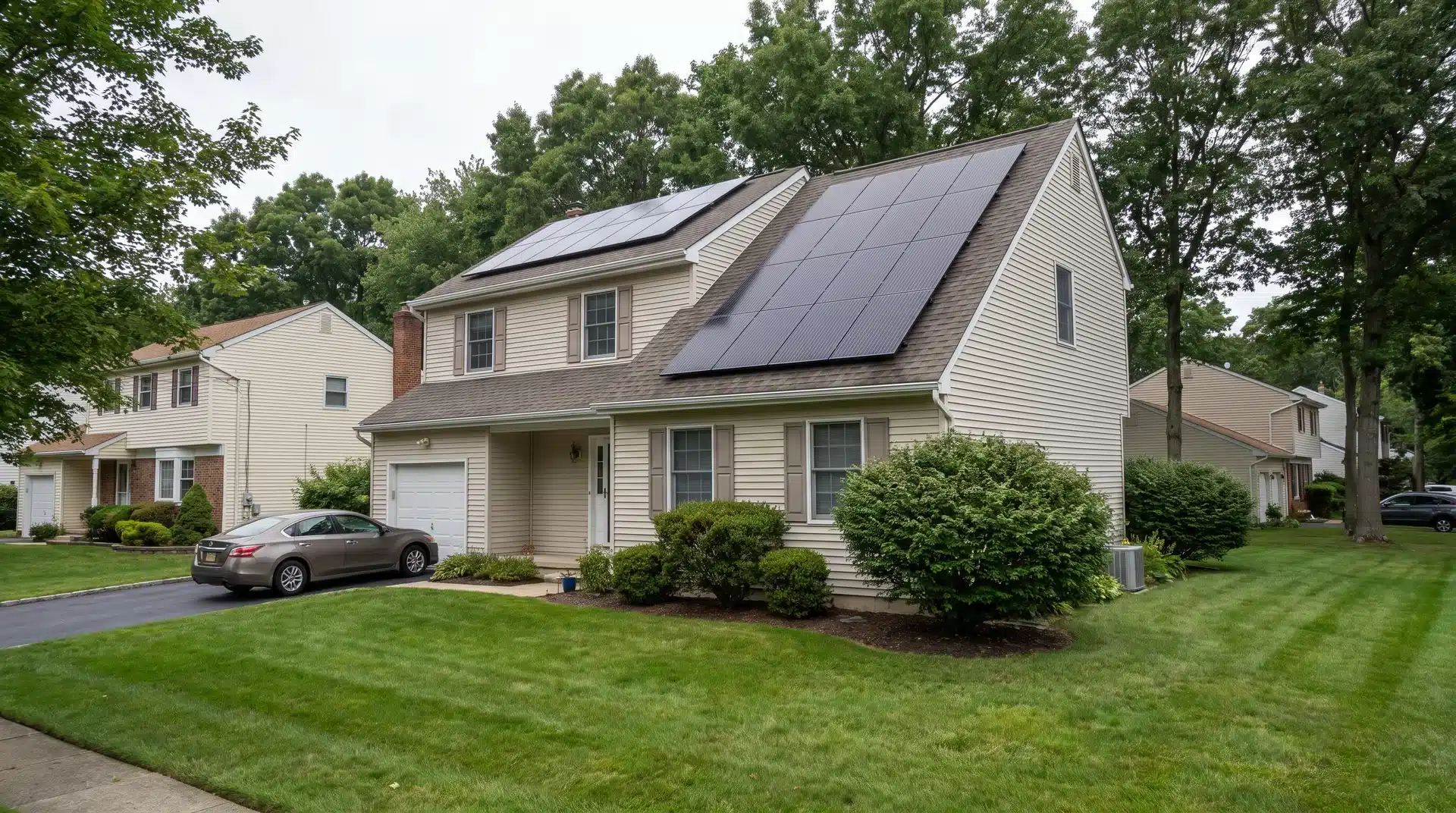


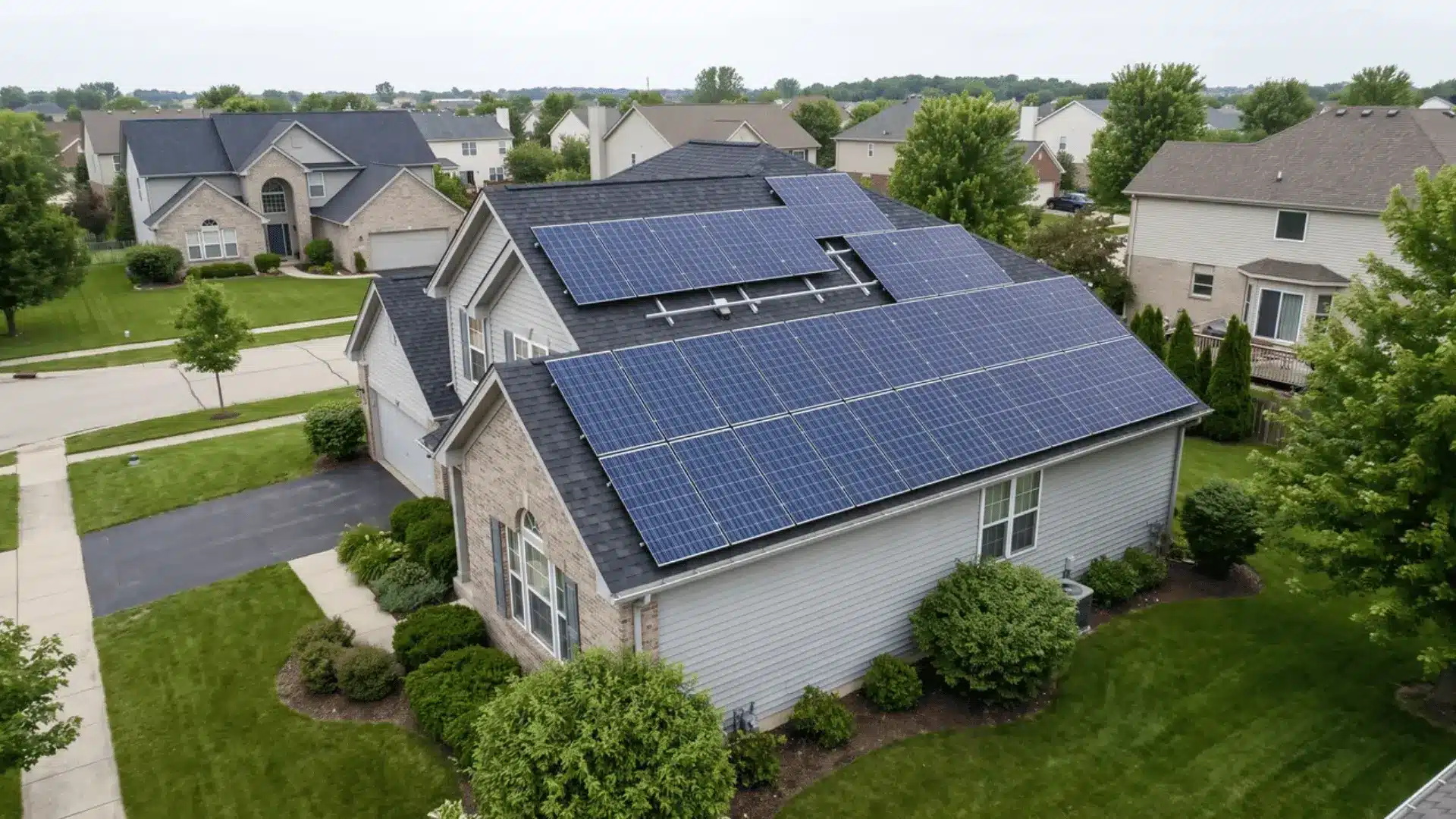
You’ve probably heard solar can save you money in New Jersey. But once you see terms like SRECs, SuSI, tax credits, and net metering, it gets harder to tell what actually matters.
After reviewing solar estimates, one thing stands out: many homeowners focus on the incentive list but miss how much each program really changes their costs.
Here, I’ll break down the active NJ solar incentives in 2026, what they pay, how they work together, and what can affect your total savings.
First, let’s look at the programs currently available and how each one can help lower your solar costs.
New Jersey Solar Incentives That Are Currently Available
New Jersey currently has five active solar incentives: the Successor Solar Incentive (SuSI) Program, net metering, a sales tax exemption, a property tax exemption, and the federal Residential Clean Energy Credit.
The old SREC program has been replaced by SuSI. If you’ve seen older content referencing SRECs, that system no longer applies to new installations.
Here’s what each incentive covers:
- Successor Solar Incentive (SuSI) Program: pays you for the electricity your system produces over 15 years
- Net metering: credits your utility bill for excess power you send back to the grid
- Sales tax exemption: removes the 6.625% state sales tax from your installation cost
- Property tax exemption: prevents your home’s increased value from raising your property tax bill
- Federal Residential Clean Energy Credit: reduces your federal tax liability by 30% of the system cost
The old SREC program has been replaced by SuSI. If you’ve seen older content referencing SRECs, that system no longer applies to new installations.
Community Solar
One program worth knowing about is Community Solar. It is designed for renters or homeowners whose roofs are not suitable for solar panels.
It works differently from the five incentives above. Instead of installing your own system, you subscribe to a share of a local solar project and receive credits on your electricity bill.
How Much Does Each NJ Solar Incentive Actually Pay?

The five NJ solar incentives do not all work the same way. Some lower your upfront installation cost. Some pay you over time. Others help when you file your taxes.
Understanding what each one actually adds to your savings makes it easier to decide if solar is a good fit for your home and budget.
For a typical NJ solar estimate, many installers use a 7.5 kW system that costs around $22,500 before incentives. The examples below are based on that starting point
Successor Solar Incentive (SuSI) Program
SuSI pays you $85 for every megawatt-hour (MWh) your system produces. Payments come monthly and continue for 15 years. It is one of the main New Jersey solar incentives available to homeowners looking for predictable solar savings.
A 7.5 kW system in New Jersey produces roughly 9 MWh per year. That works out to about $765 annually, or somewhere between $11,475 and $13,000 over the full 15-year term.
The old SREC market paid variable rates depending on supply and demand. SuSI replaced that system with a fixed rate.
You know exactly what you’ll earn before you install, which makes it easier to estimate your return from solar rebates in New Jersey programs.
Note: SuSI payments are taxable income. The IRS treats them as earnings. That does not erase the value, but it does affect your net return, especially if you are in a higher tax bracket.
Federal Residential Clean Energy Credit
The federal credit is worth 30% of your total system cost. On a $22,500 system, that’s $6,750 off your federal tax bill.
This is a tax credit, not a refund. It reduces what you owe the IRS; it doesn’t generate a check. If your tax liability is less than $6,750 in the year you install, you carry the unused portion forward to the following year.
The 30% rate is locked in through 2032. After that, it steps down. For new installations, timing matters.
Net Metering, Sales Tax Exemption, and Property Tax Exemption
These three work quietly in the background, but together they add real value.
- Net metering credits your utility bill at the full retail electricity rate for every kilowatt-hour you export to the grid. PSE&G and JCP&L both offer retail-rate net metering. Not every NJ utility operates the same program, worth confirming before you assume full credit.
- The sales tax exemption removes the 6.625% state sales tax from your installation. On a $22,500 system, that’s roughly $1,490 you never pay.
- The property tax exemption means the added home value from your panels doesn’t increase your property tax bill.
The exact savings depend on your municipality’s assessment rate, but for most homeowners, they run into several hundred dollars a year indefinitely.
How Do NJ Solar Incentives Stack and What Is Your Real Net Cost?
Every page about NJ solar incentives tells you what programs exist. Almost none show how they work together. That is the part that tells you what you will actually pay.
Breaking Down the Incentive Stack
Here is how the math works on a $22,500 system.
At purchase: The sales tax exemption removes 6.625% right away. You save roughly $1,490 at the point of sale, which is a cost you never have to pay.
On your next tax return: The federal ITC is based on the full pre-incentive system cost, not the amount left after other savings. On a $22,500 system, that creates a $6,750 credit against your federal tax liability.
This is where many homeowners get confused when comparing New Jersey solar incentives. The ITC is not reduced by the sales tax exemption or other upfront savings. The credit is still calculated from the original system cost.
Understanding how these savings stack is important because solar rebates in New Jersey programs do not all reduce your cost in the same way. Some lower your upfront price, while others add value over time.
Why Timing and Tax Liability Matter
Over 15 years, SuSI pays out around $11,475 to $13,000 in production payments. Those payments arrive monthly, but they are taxable income, which is something not many people know about.
If you are in the 22% federal tax bracket, you may keep closer to $0.66 of every SuSI dollar after taxes. That brings the real value closer to $8,900 to $10,100 instead of the full $13,000.
It does not make solar a bad investment. It just gives you a more realistic picture of what these programs are worth.
The Combined Picture
Running it all together on a $22,500 system:
- Sales tax exemption: ~$1,490 saved at purchase
- Federal ITC: $6,750 off your tax bill
- SuSI (post-tax, 22% bracket): ~$8,900–$10,100 over 15 years
- Property tax exemption: several hundred dollars per year, indefinitely
- Net metering: ongoing bill credits, value depends on your usage and utility rate
Total hard savings in the first 15 years: roughly $17,000–$19,000 for most homeowners before net metering and property tax exemption are factored in.
Payback on a $22,500 system typically ranges from 6 to 9 years under current NJ conditions. After that, you’re generating power at effectively zero marginal cost for the remaining life of the system.
Who Qualifies and What Can Disqualify You?
The incentives above are real. But two of them have conditions that can reduce what you actually capture and the SERP largely glosses over both.
The Federal Tax Credit Depends on Your Tax Liability
The 30% credit reduces what you owe the IRS. If your federal tax bill is $4,000 in the year you install, you can only use $4,000 of a $6,750 credit that year. The remainder carries forward but only if you have sufficient liability in future years to absorb it.
For most working homeowners, this isn’t an issue. For retirees on fixed income or anyone with low taxable income, it’s worth running the numbers before assuming full credit value.
Net Metering Rules Vary by Utility Provider
PSE&G and JCP&L offer retail-rate net metering, which means you receive credit close to the price you pay for electricity.
Not every utility in New Jersey follows the same rules. If your home is served by a municipal utility or a smaller provider, the credit rate may be different.
Before you rely on a solar savings estimate, confirm your utility’s exact net metering terms. This helps you avoid using a projected number that may not match what you actually receive.
SuSI Registration Must Be Completed on Time
You must register your system through the NJ Clean Energy Program before or during installation. There is no retroactive enrollment.
If your installer skips this step or delays it, you lose access to 15 years of production payments. It’s worth confirming registration is handled before work begins, not after.
Tax Exemptions Are Easier to Claim Than Other Incentives
The sales tax exemption applies at the point of sale. The property tax exemption is available statewide, though some municipalities require a simple filing to activate it.
Neither involves an application process significant enough to create a real risk of missing out.
Community solar follows a separate path entirely. If your roof isn’t suitable or you rent, it’s worth exploring, but the ITC, SuSI, and tax exemptions don’t apply to subscribers.
What Happens After the SuSI Period Ends?
It’s a question most installers don’t volunteer an answer to. Fifteen years feels far away, but it’s worth understanding what your system will look like on the other side.
- Net metering continues: Once SuSI ends, net metering doesn’t. You’ll still receive bill credits for every kilowatt-hour you export to the grid. That value depends on retail electricity rates at the time, which in New Jersey have historically trended upward. The longer you own the system, the more that credit is worth.
- The tax exemptions don’t expire: Your property tax exemption stays in place as long as the panels are on your roof. The sales tax exemption already happened at purchase there’s nothing to expire there.
- Your system will likely be paid off well before year 15: Under current NJ incentive conditions, most homeowners hit payback somewhere between six and nine years.
The short answer: your system keeps working. The payments stop, the savings don’t.
What Happens Once Your Solar Investment Is Recovered
That means the final five or six years of SuSI payments are pure surplus money coming in on a system that’s already returned its cost.
By the time SuSI ends, you’re looking at a system with roughly 10 years of warranty life remaining, no monthly production payment, and ongoing net metering credits. The economics are quieter than the first 15 years. They’re still solidly positive.
One figure worth noting: the federal ITC steps down from 30% after 2032. That affects new installations only, not existing systems. But if you’re weighing timing, it’s a real consideration.
Wrapping Up
New Jersey’s solar incentives are really strong, but only if you understand what each one delivers and how they work together.
You now know what’s available, what it actually pays, and where the conditions can quietly reduce your return.
The next step is straightforward. Get a quote from a licensed NJ solar installer, ask them to walk through how each incentive applies to your specific system, and make sure SuSI registration is confirmed before installation begins.
Frequently Asked Questions
Does New Jersey have a state solar tax credit?
No. New Jersey doesn’t offer a state income tax credit for solar. The tax benefits come in a different form: a full exemption from the 6.625% sales tax on equipment at purchase, and a permanent property tax exemption on the home value your panels add. When most NJ homeowners ask about a tax credit, they’re thinking of the federal 30% Residential Clean Energy Credit.
Is solar worth it in New Jersey in 2026?
For most homeowners who own their roof, get reasonable sun exposure, and have enough federal tax liability to use the ITC, the numbers work. Combined incentives typically yield payback in 6 to 9 years for a system warranted for 25. The cases where it gets complicated are low tax liability, a shaded or north-facing roof, or a utility that doesn’t offer full retail-rate net metering.
What is the SuSI Program and how does it replace SRECs?
SuSI replaced New Jersey’s SREC market in 2021. SRECs paid variable rates that fluctuated with market demand, some years higher, some lower. SuSI pays a fixed $85 per MWh for 15 years regardless of market conditions. Homeowners already registered under the old SREC system stay in that program. New installations enroll in SuSI through the NJ Clean Energy Program.
Can renters benefit from NJ solar incentives?
Not directly. Renters can’t install rooftop solar, so the ITC, SuSI, and tax exemptions don’t apply. New Jersey’s Community Solar Program, made permanent in 2023, is the practical alternative. You subscribe to a share of a local solar array and receive credits on your utility bill without owning any equipment.