


Searching for the best solar battery backup system returns hundreds of brand comparisons. None of them answer the question that actually determines whether a system works for you.
Three structurally different system categories exist. Each carries a different ceiling, cost structure, and installation path. The category decision matters more than any individual product choice.
Failures happen not from bad products but from mismatched sizing, wrong chemistry for daily cycling, and inverter output that cannot handle the startup surge of common loads.
Start with category selection. Everything else, sizing, chemistry, inverter capacity, and real cost, follows from that single foundational decision.
What Kind of Solar Battery Backup System Do You Actually Need?
A solar battery backup system is not one product. It falls into three distinct categories, and choosing the wrong one can cost far more than choosing the wrong brand.
The market divides into plug-and-play power stations, modular hybrid kits, and integrated whole-home ecosystems. Each installs differently, scales differently, and supports a different level of backup.
The right system depends on three factors:
- Backup coverage: Essential circuits, selected appliances, or whole-home power.
- Existing solar setup: Whether you’re adding storage to an existing solar system or installing everything together.
- Installation type: Portable plug-and-play backup or a permanently installed battery system.
One detail most product lists skip is that “whole-home backup” is a label, not a guarantee. Real coverage depends on inverter output (kW) and usable battery capacity (kWh) working together, not on either specification alone.
How Each System Type Works and Where It Falls Short?
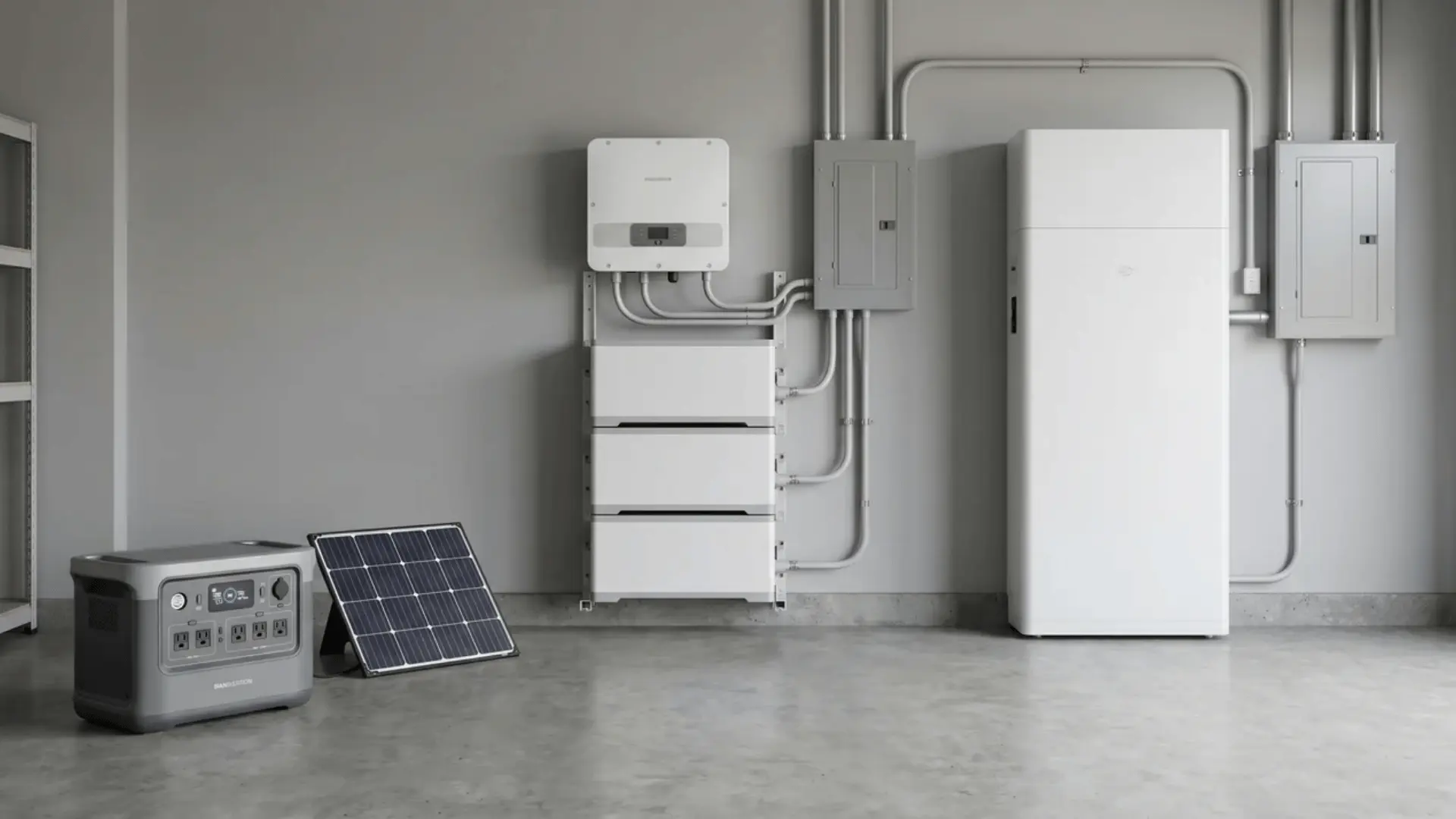
Each system category manages solar input, battery storage, and home load differently. Those differences determine exactly what happens the moment your grid goes down.
Plug-and-Play Power Stations
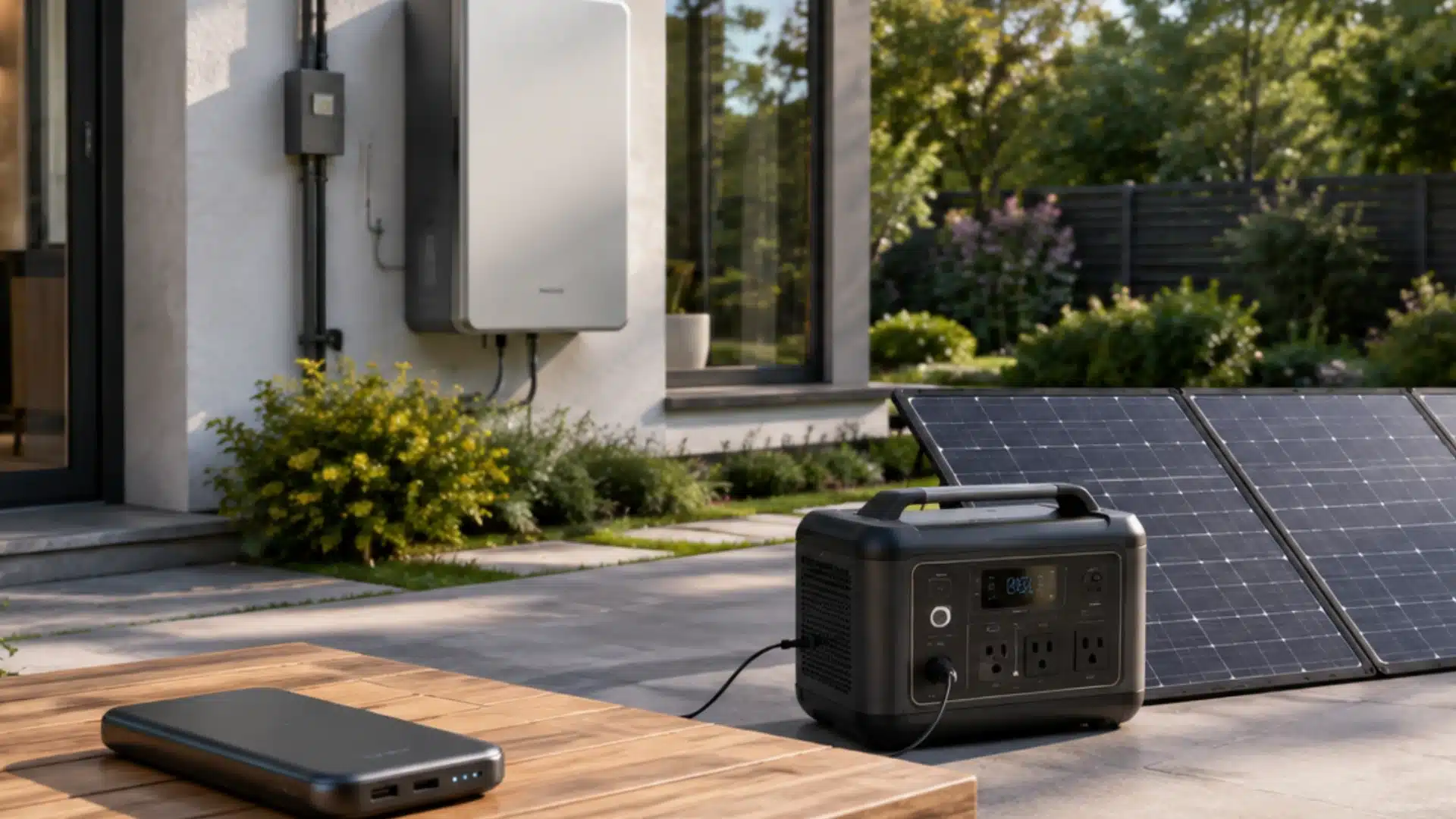
Plug-and-play stations like EcoFlow and Jackery require zero installation. You charge them up, plug in your appliances, and they deliver backup power without any electrician or permit.
Their output ceiling is real. Most stations top out under 7kW continuous, meaning you can run selected appliances but never your whole home simultaneously during an outage.
Solar integration exists but requires separately purchased add-on panels. Without them, you depend entirely on grid charging, which fails you during the extended outages these stations are meant to cover.
Modular Hybrid Kits
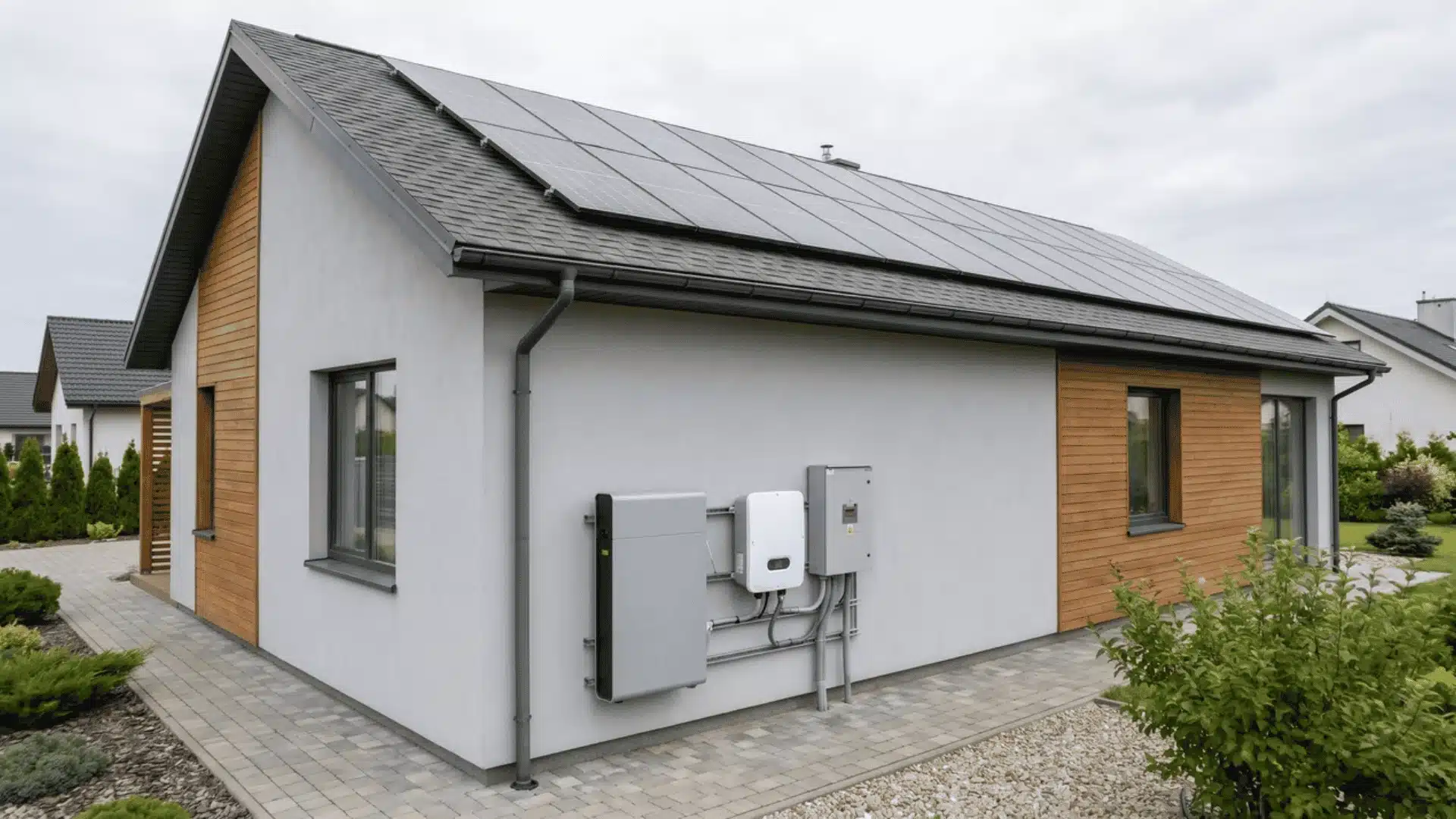
Modular hybrid kits use a hybrid inverter as the control center. It manages grid power, solar input, and battery storage simultaneously, routing each source intelligently based on demand.
Why the inverter sizing decision matters upfront:
- The inverter sets your continuous output ceiling permanently
- Undersizing it today limits what you can add tomorrow
- Most hybrid inverters range from 8kW to 12kW continuous output
How scalability actually works:
- You can start with batteries and add solar panels later
- Additional battery units stack to increase storage capacity
- Expansion is possible without replacing the core inverter
Professional installation is non-negotiable here. Permits, grid interconnection, and AC wiring require a licensed electrician regardless of your technical ability. If you’re wondering what happens after you choose a system, here’s what a solar battery installation actually involves.
Integrated Whole-Home Ecosystems
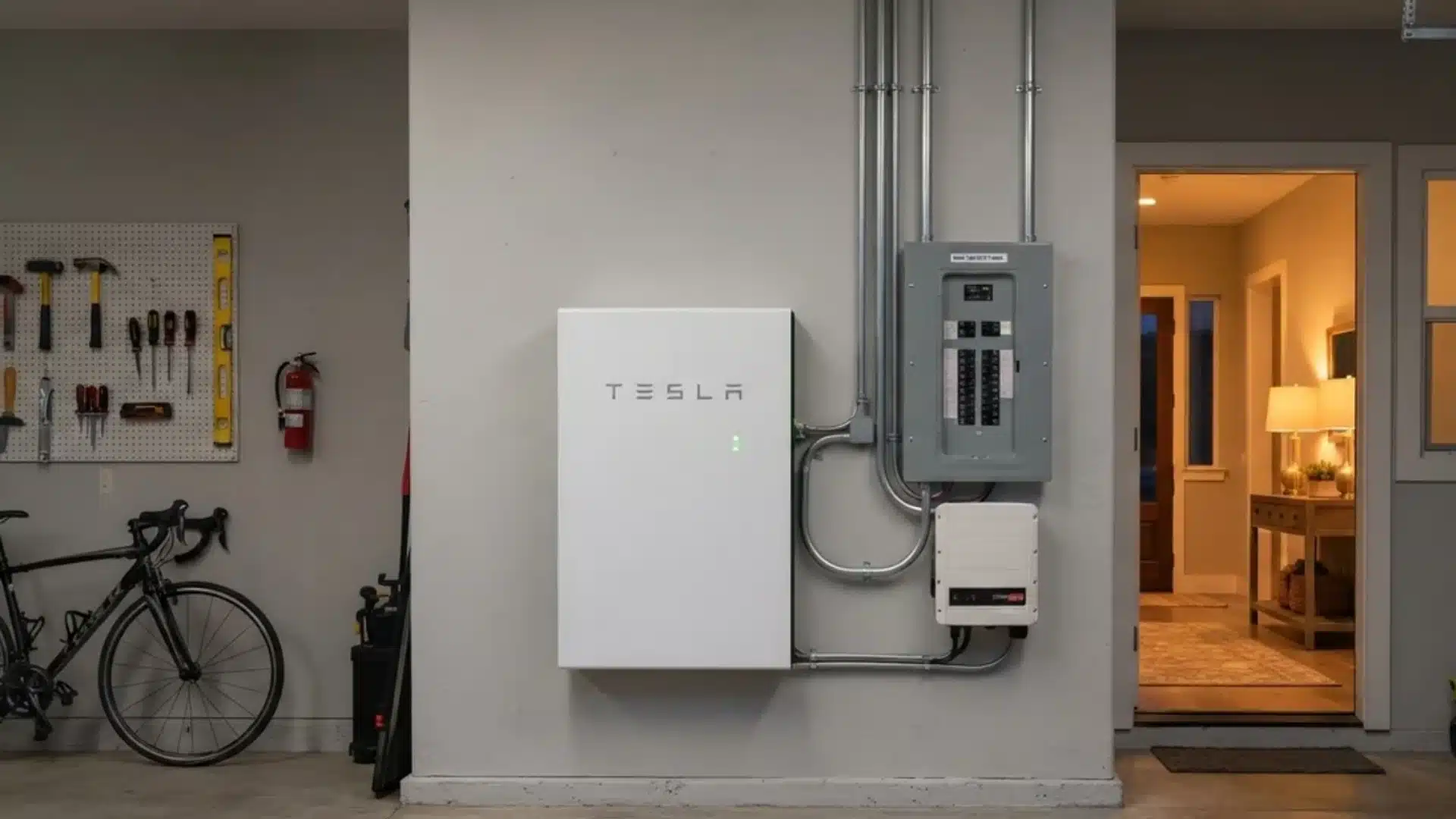
Systems like Generac PWRcell 2 and Enphase IQ are managed by a smart panel. Every component including solar, battery, and home load operates under one unified control system automatically.
The standout feature is switchover speed. When the grid drops, these systems transfer to backup power in under 20 milliseconds, fast enough that most appliances never register the interruption.
The real trade-off is proprietary lock-in. You cannot swap in a competitor battery or inverter later without replacing the entire system architecture from the ground up.
Understanding where each system type hits its limit is more valuable than knowing its best-case performance. Your situation determines which ceiling you can live with.
Battery Chemistry: Why LiFePO₄ Dominates and When It Matters?
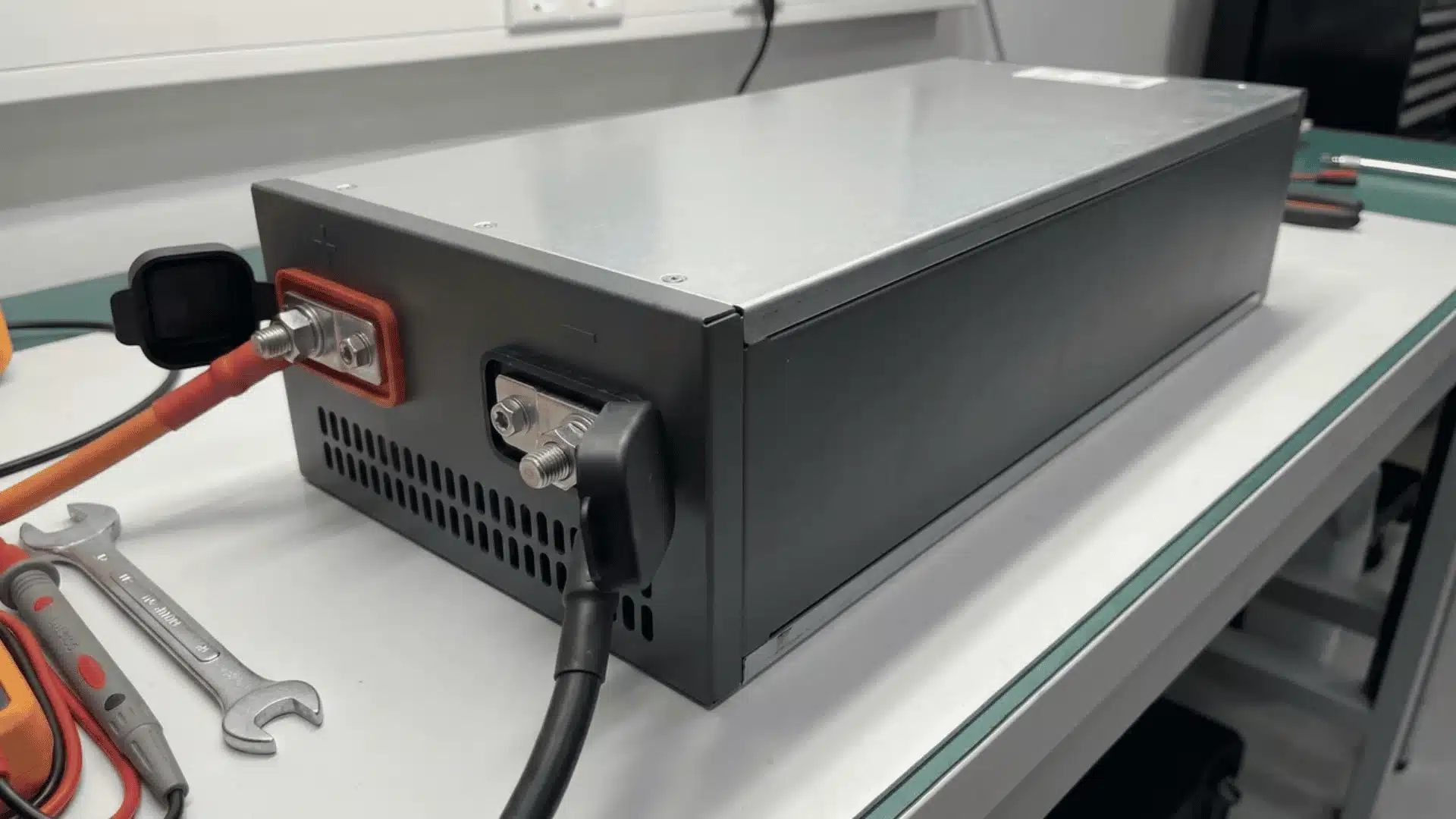
The chemistry inside your battery determines how many charge cycles it survives before meaningful capacity loss. For daily home backup use, that number matters more than peak storage.
LiFePO₄ trades energy density for two things that actually matter at home: thermal stability and long cycle life. That trade is why it dominates every current whole-home system.
Here is what that trade looks like in real numbers:
- LiFePO₄ delivers 3,000 to 6,000 cycles before significant degradation
- Older NMC Li-ion tops out at 500 to 1,000 cycles under similar conditions
- That gap translates directly into how many years your battery holds usable capacity
For a stationary home system, energy density is irrelevant. Your battery sits fixed in one place. What matters is surviving daily cycling safely and holding capacity for a decade.
How to Size a Solar Battery Backup System for Your Home?
Sizing a solar power backup system requires two numbers, not one. Undersize the stored energy or the inverter output and the system fails exactly when you need it most.
Every product listing leads with a single headline figure. That number tells you half the story at best. Real sizing means matching both capacity and output to your actual load.
Critical Loads vs. Whole-Home Backup
Your first decision is scope. Not every home needs whole-home backup, and oversizing for coverage you do not need inflates cost without adding meaningful protection.
Here is how the two tiers actually break down:
- Critical loads only covers refrigerator, lights, devices, and medical equipment
- That tier typically needs 10 to 20kWh storage and a 3 to 5kW inverter
- Whole-home backup including HVAC needs 20 to 40kWh and 10 to 12kW continuous output
- Adding central air conditioning is the single biggest jump in both numbers
Be honest about what you actually need running during an outage. Most households protect critical loads first and upgrade later once real usage patterns are clear.
The Sizing Calculation (kWh + kW Together)
kWh tells you how long backup lasts. kW tells you what can run at the same time. You need both numbers to work before a single product enters the conversation.
Here is where most buyers make the critical mistake:
- Running watts show what an appliance draws during normal operation
- Startup or inrush current is what it draws the moment it switches on
- HVAC compressors and well pumps pull 2 to 3 times their running wattage on startup
- A system sized only for running watts will trip the moment your compressor kicks on
How to apply this practically:
- List every appliance you want backed up with its running wattage
- Identify which ones have compressors or motors and note their startup draw
- Size your inverter to handle the highest single startup surge, not the average load
- Size your battery capacity to cover your total daily consumption at that load level
Getting both numbers right before you shop eliminates most of the confusion product listings create. Surge current is the detail that separates a system that holds up from one that does not.
Where it gets nuanced is portable stations. Some still use NMC chemistry for compactness. For occasional use that is fine, but daily solar cycling will expose that difference fast.
Knowing your system’s chemistry is not a technical detail. It is the clearest signal of how long your investment actually performs before capacity starts quietly slipping away.
What Solar Battery Backup Systems Cost and What Drives the Price?
The $1,200 to $65,000 price spread for solar battery backup systems reflects three fundamentally different product categories. You are not choosing between budget and premium. You are choosing between different systems entirely.
Before comparing any two products, map them to their category first. Price only makes sense once you know what tier you are actually looking at.
| System Category | Equipment Cost | Installation Cost | Total Installed Range |
|---|---|---|---|
| Plug-and-Play Stations | $1,200 to $8,000 | None | $1,200 to $8,000 |
| Modular Hybrid Kits | $4,500 to $25,000 | $2,000 to $8,000 | $6,500 to $33,000 |
| Whole-Home Ecosystems | $15,000 to $40,000 | $5,000 to $25,000 | $15,000 to $65,000 |
Installation labor is the cost most buyers discover too late. Here is how it breaks down across categories:
- Plug-and-play stations require zero installation and zero permits
- Modular hybrid kits need a licensed electrician and possibly a panel upgrade
- Whole-home ecosystems often use mandatory installer networks with fixed labor rates
- Panel upgrade costs alone can add $1,500 to $4,000 before a single battery is installed
Federal tax incentives change the real cost picture significantly at the upper two tiers, though less than they used to.
The Investment Tax Credit used to allow 30 percent back on battery storage paired with solar installation, but that residential version expired for homeowner cash and loan purchases at the end of 2025. But the 30 percent rate hasn’t disappeared; it’s just moved. It now lives in the commercial version of the credit, claimed by whoever owns the equipment.
So for a homeowner today, that 30 percent is only reachable through a solar lease or power purchase agreement, where the leasing company claims the credit and passes some of the value back through lower monthly pricing.
Here is how to apply it before you compare prices:
- Calculate the full installed cost including equipment and labor
- If you’re leasing or using a PPA, apply the 30 percent ITC to the combined figure, not just equipment
- A $20,000 hybrid kit leased under that structure reflects that $14,000-equivalent value in its pricing, a cash or loan purchase in 2026 does not
- Verify the current ITC rate before publishing as legislation can adjust percentages
Comparing sticker prices without factoring in installation and tax credits is how buyers consistently overpay or dismiss the wrong tier entirely. Run the full number before you decide.
Conclusion
The $1,200 to $65,000 price spread makes more sense once categories replace products as the starting point. Chemistry, inverter output, and surge capacity separate systems that hold up from ones that do not.
Whole-home coverage and critical-load backup are genuinely different commitments, technically and financially. Comparing specifications before resolving scope is how buyers consistently land in the wrong tier.
The ITC at 30 percent still changes effective cost at the modular and whole-home tier for lease and PPA buyers. Cash and loan buyers pay the sticker price.
Pick your category, size for surge not just running watts, and verify the ITC rate before a single installer gets called.
Frequently Asked Questions
How long will a solar battery backup system power my house?
It depends on the battery’s usable capacity (kWh) and what you’re running. A 10kWh battery running only critical loads refrigerator, lights, phone charging typically lasts 12–24 hours. Running central air conditioning reduces that to 4–8 hours. Whole-home systems with 20–40kWh can sustain most households for 1–2 days without solar recharge.
Do solar batteries work without solar panels?
Yes. Most modular and whole-home battery systems can charge from the grid and still provide backup power during outages. However, without solar panels, the battery won’t recharge during a multi-day outage you get one cycle of backup, then rely on grid restoration or a generator to recharge.
What is the lifespan of a home solar battery?
LiFePO₄ batteries used in most current home systems, are rated for 3,000–6,000 charge cycles, which translates to roughly 10–15 years under daily use. Capacity gradually degrades; most manufacturers warrant 60–70% usable capacity remaining at the end of the rated cycle count.
Can I install a solar battery backup system myself?
Plug-and-play power stations require no installation. Modular hybrid kits and whole-home systems involve AC wiring, grid interconnection, and in most jurisdictions a permit work that requires a licensed electrician. DIY installation on grid-tied systems typically voids warranties and may violate local code.