
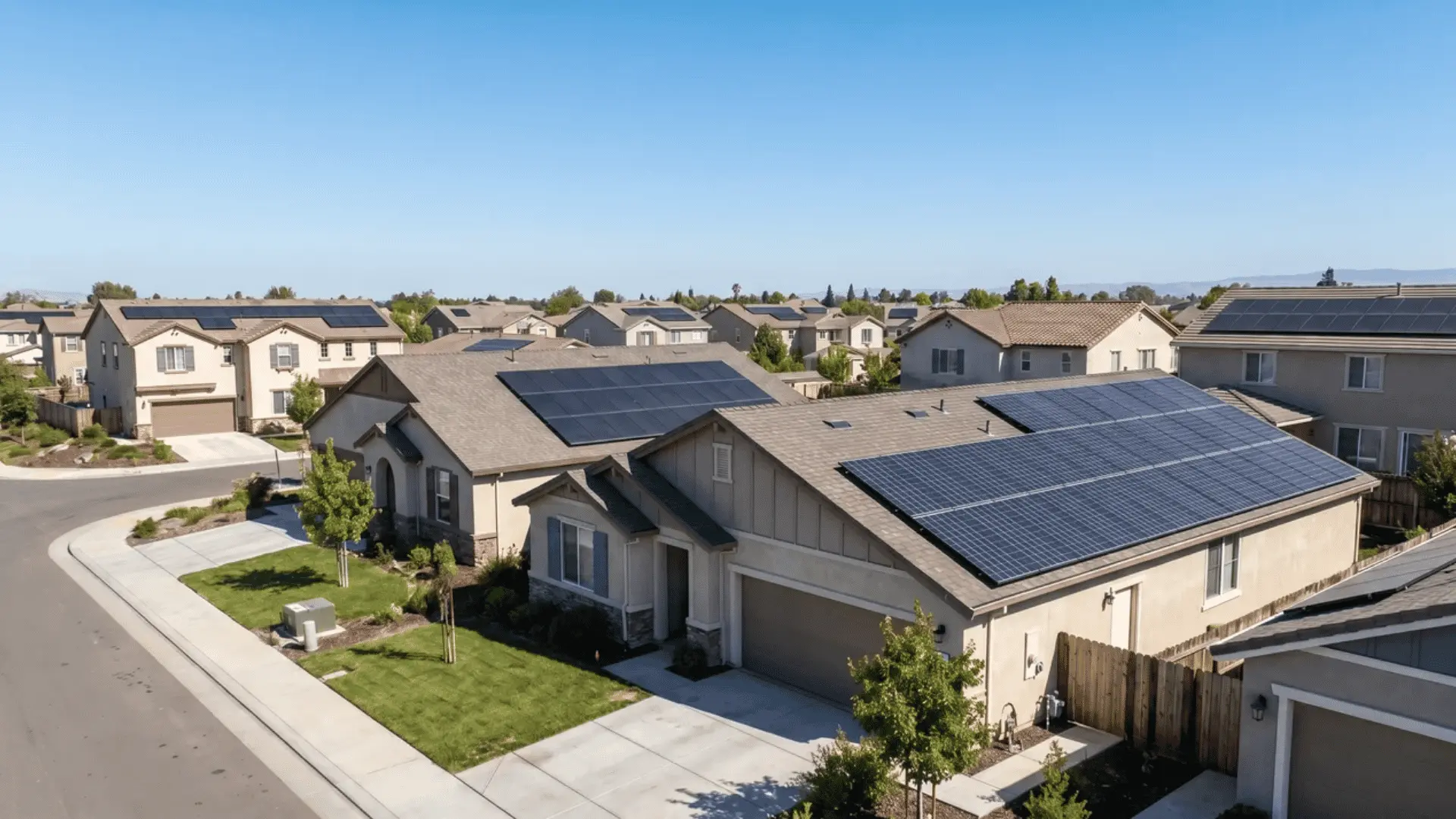


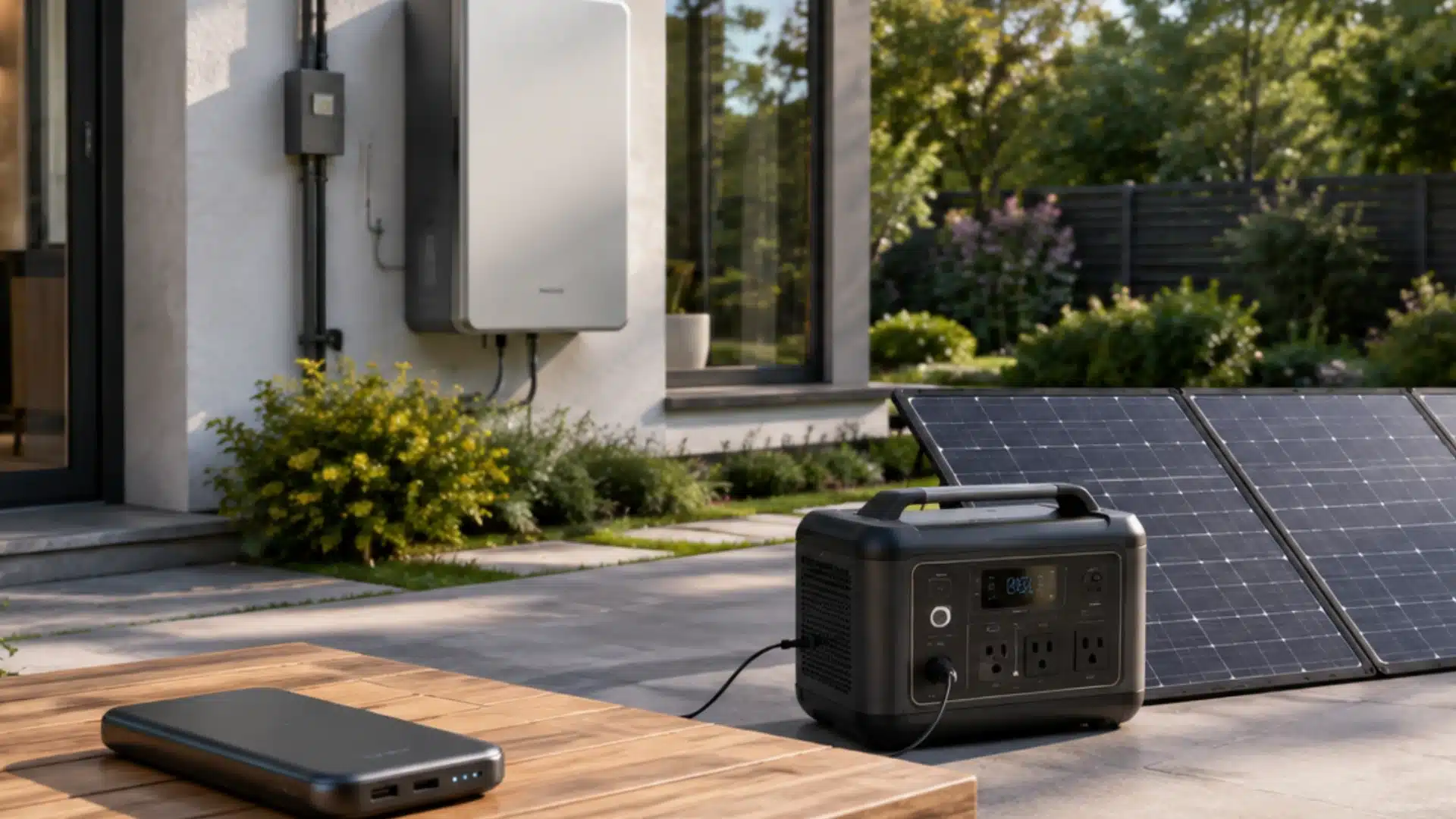
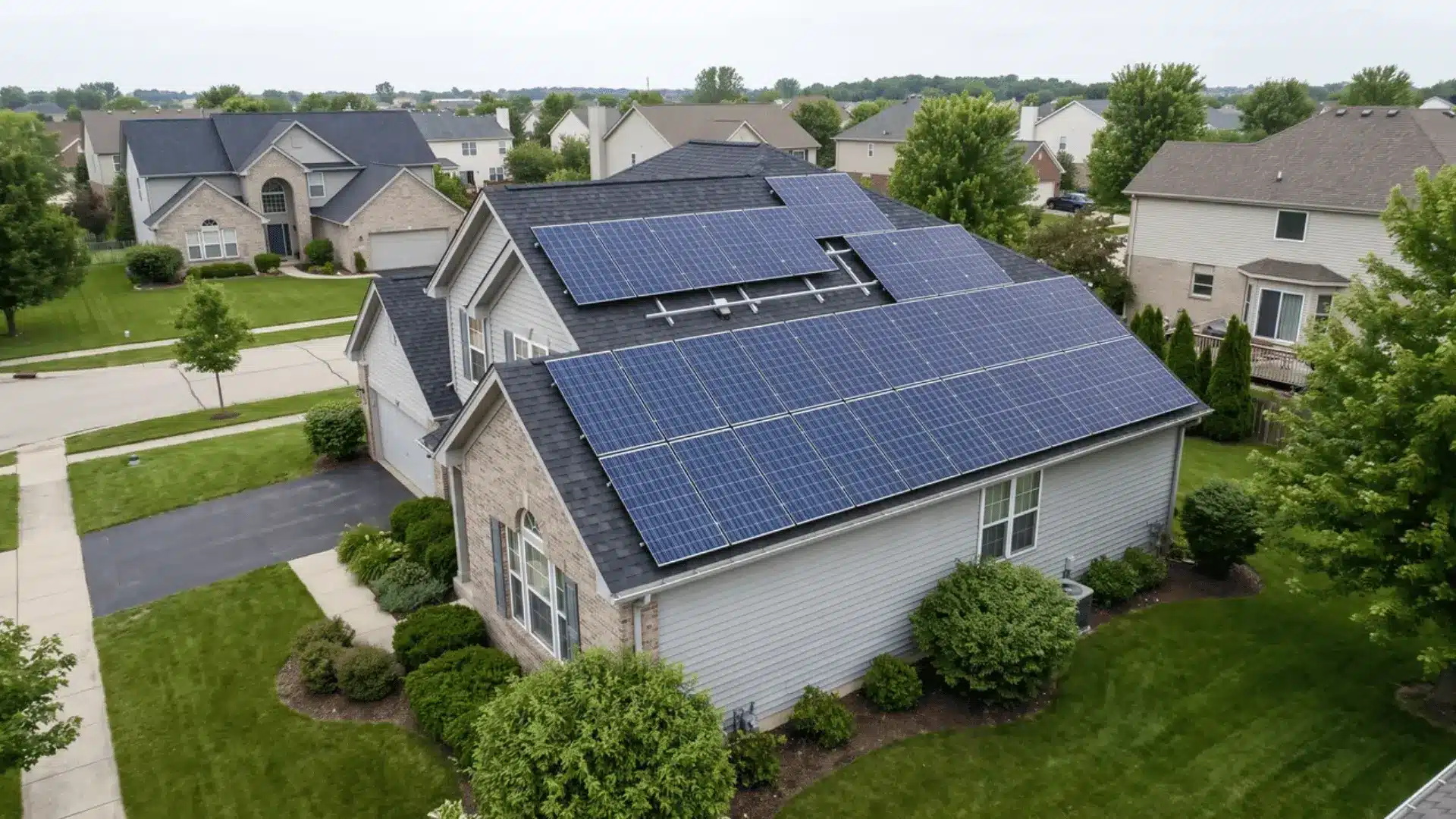
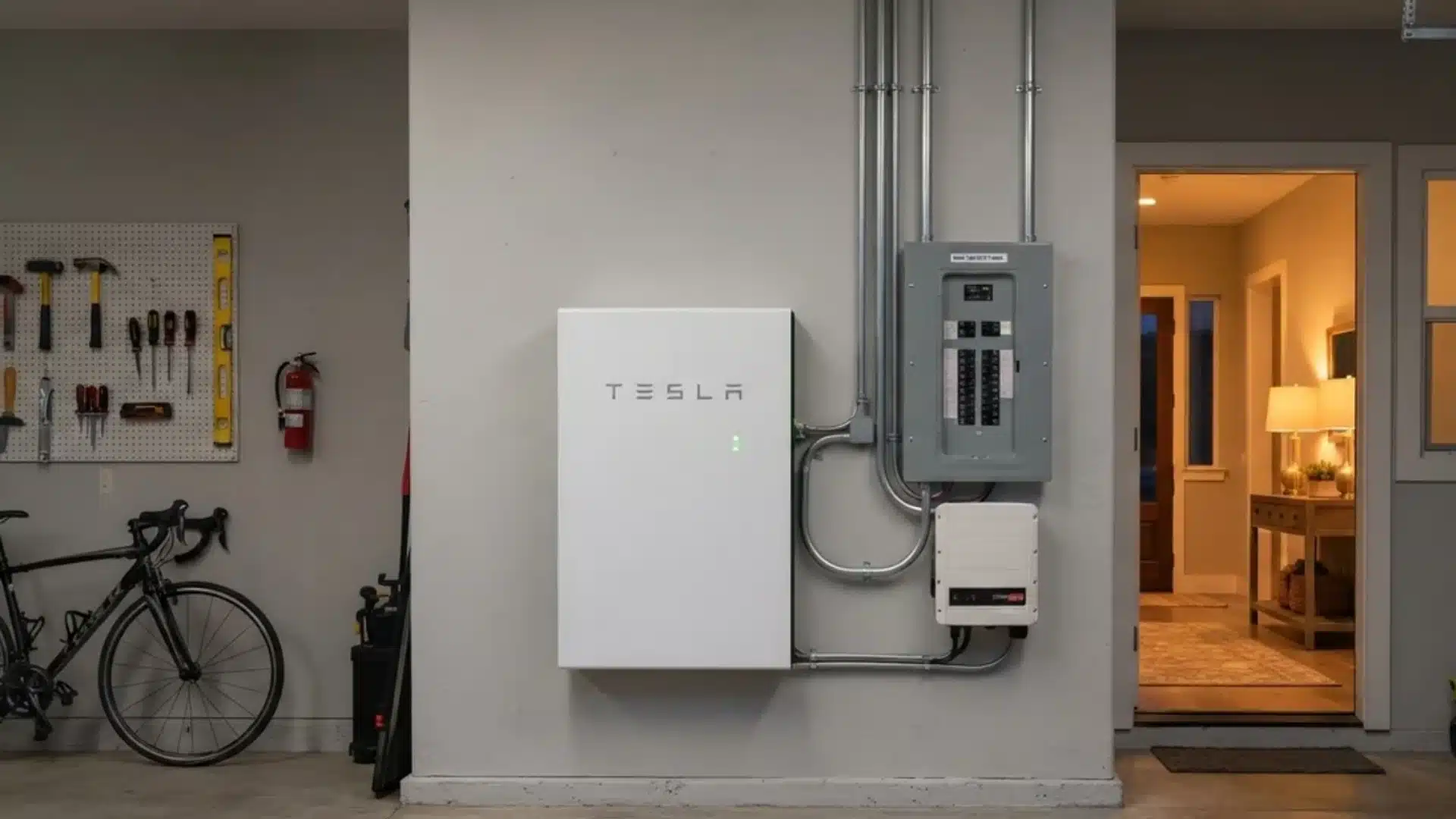
The federal Residential Clean Energy Credit expired on December 31, 2025. If you bought a solar system in 2026 as a homeowner, that 30% credit is gone under current law.
But solar rebates were never the same thing as that credit. They come from state agencies and electric utilities, they pay out differently, and they’re still running.
Below you’ll find what they are, how they differ from the expired credit, where the money comes from, and how to find what’s available at your address.
Solar Rebates: What They Are and Where to Find Them
A solar rebate is a direct payment or bill credit that cuts what you pay for a solar installation. It comes from a state agency, a utility company, or a funded program, not the federal government.
Rebates don’t wait until you file your taxes. The payment goes directly to you or your installer at or around the time of installation.
That timing is the part most people miss. The old federal tax credit only helped if you owed enough in federal taxes. No tax liability, no benefit.
Rebates don’t work that way. They pay the same to everyone who qualifies, no matter your income or tax situation.
I’ve watched this trip up retirees on fixed incomes who assumed the federal credit was their only shot. A rebate doesn’t care what you owe the IRS.
A retiree with a $2,000 annual federal tax bill gets the full rebate just like someone in a higher bracket does.
Rebates were always the more equitable option. And unlike the credit, they’re still active.
Your location decides what’s available to you. State energy offices, local utilities, and nonprofits each run their own programs. What exists in one city can look nothing like what’s available one town over.
How Do Solar Rebates Differ from the Federal Tax Credit?
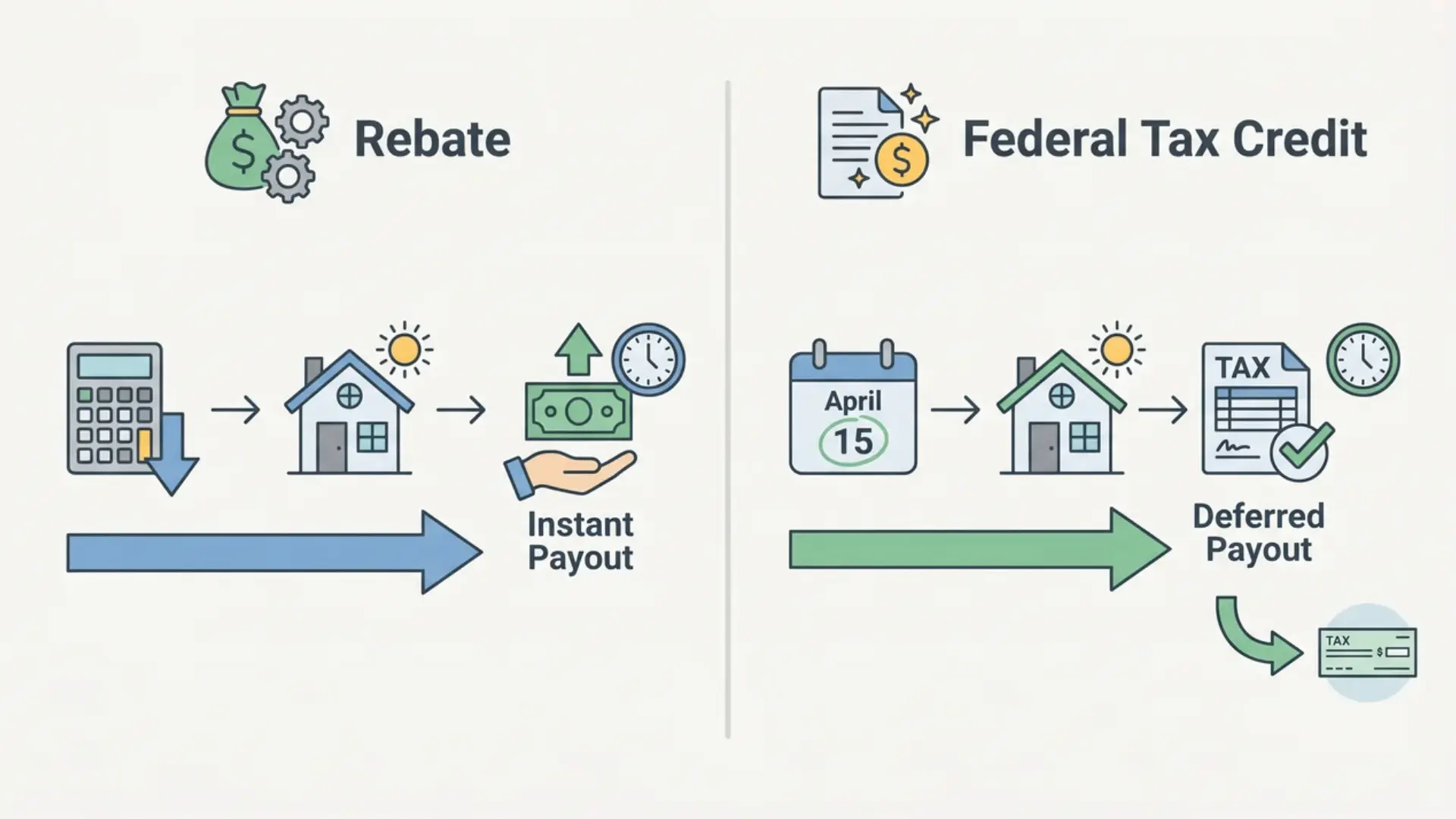
The federal Residential Clean Energy Credit expired for homeowners on December 31, 2025. Solar rebates are a completely separate payment type. They have not expired.
These two incentives never worked the same way. They paid out differently, on different timelines, and helped different people.
How Did the Federal Tax Credit Work?
The federal credit gave homeowners 30% back on their solar installation cost, applied against whatever they owed the IRS at tax time.
To claim it, you filed IRS Form 5695 with your annual return. That’s the key detail: the credit only cut taxes you already owed.
If your federal tax bill was $3,000 and your credit was $6,000, you captured $3,000 and lost the rest. No refund. No carryforward. Gone.
That design naturally favored higher earners. Bigger tax bill, more of the credit you could actually use. It ended on December 31, 2025.
How Do Rebates Pay Out Instead?
Rebates don’t touch your tax return at all. A state agency or utility pays them directly to you or your installer at or near the time of installation.
You don’t need to owe taxes to benefit. The payment happens at the transaction, not months later at filing.
If you’re a retiree with a small tax bill, or you just don’t owe much, rebates pay out exactly the same as they do for a high earner. The credit never worked like that.
Some programs are built specifically to help lower-income and fixed-income households the most. A few make it a hard eligibility condition. The credit is gone. The rebates aren’t.
Where Do Solar Rebates Come From in 2026?
In 2026, solar rebates flow from three distinct places: state government programs, electric utilities, and performance-based markets. What’s on the table for you depends entirely on where you live and who supplies your electricity.
These aren’t versions of the same thing. Each is funded differently, runs independently, and serves a different slice of the market.
1. State Programs
State energy offices run rebate programs funded through legislation or utility rate structures. When the money runs out, the program closes, sometimes for a while, sometimes for good.
Three active programs worth knowing:
- California: The DAC-SASH program targets lower-income households. Funding levels and eligibility rules shift regularly, so check the current structure before citing any figures.
- New York: NY-Sun pays upfront cash rebates based on installed capacity per watt, on top of the state’s own 25% solar tax credit.
- Oregon: The state runs separate rebate tracks for solar and battery storage, each with its own funding cap.
These programs change. Something that existed last year may be paused or restructured right now. Always check before you commit to an installer.
2. Utility Programs
Your electric utility may run its own rebate program, completely separate from anything the state offers. Eligibility is tied to your utility service territory, not your state border.
Two neighbors on the same street, served by different utilities, can have completely different options.
Austin Energy in Texas runs its own solar rebate. Focus on Energy covers Wisconsin customers. EnergyTrust of Oregon serves only certain utility customers; not every Oregon resident qualifies.
The name on your monthly electric bill is what determines what you can access. Look that up before you assume anything.
SRECs and Performance-Based Incentives
Solar Renewable Energy Certificates, or SRECs, work nothing like rebates. You earn one SREC for every megawatt-hour your system generates, per the EPA’s definition of how SREC markets work. Then sell those certificates on an open market or directly to your utility.
SRECs are ongoing income, not an upfront payment. They keep coming as long as your system produces power and a market exists to buy them. New Jersey and Massachusetts both have active SREC markets, according to EPA’s state-by-state SREC market tracker. Most states don’t.
I’ve seen this one surprise people more than almost anything else in this space. The rebate gets all the attention, but in a strong SREC market, the certificate income over ten years can outrun any upfront rebate by a wide margin. It’s worth a separate check on your state’s status.
If your state has no SREC market, this path doesn’t exist for you, regardless of how big your system is.
How to Find What’s Available in Your Area
Start with DSIRE, a free database maintained by NC State University that tracks active incentives by state, utility, and ZIP code.
Enter both your location and your utility provider. Entering just your state will miss utility-specific programs that may be worth more than the state offering.
Can Homeowners Still Access Any Federal Solar Incentive in 2026?
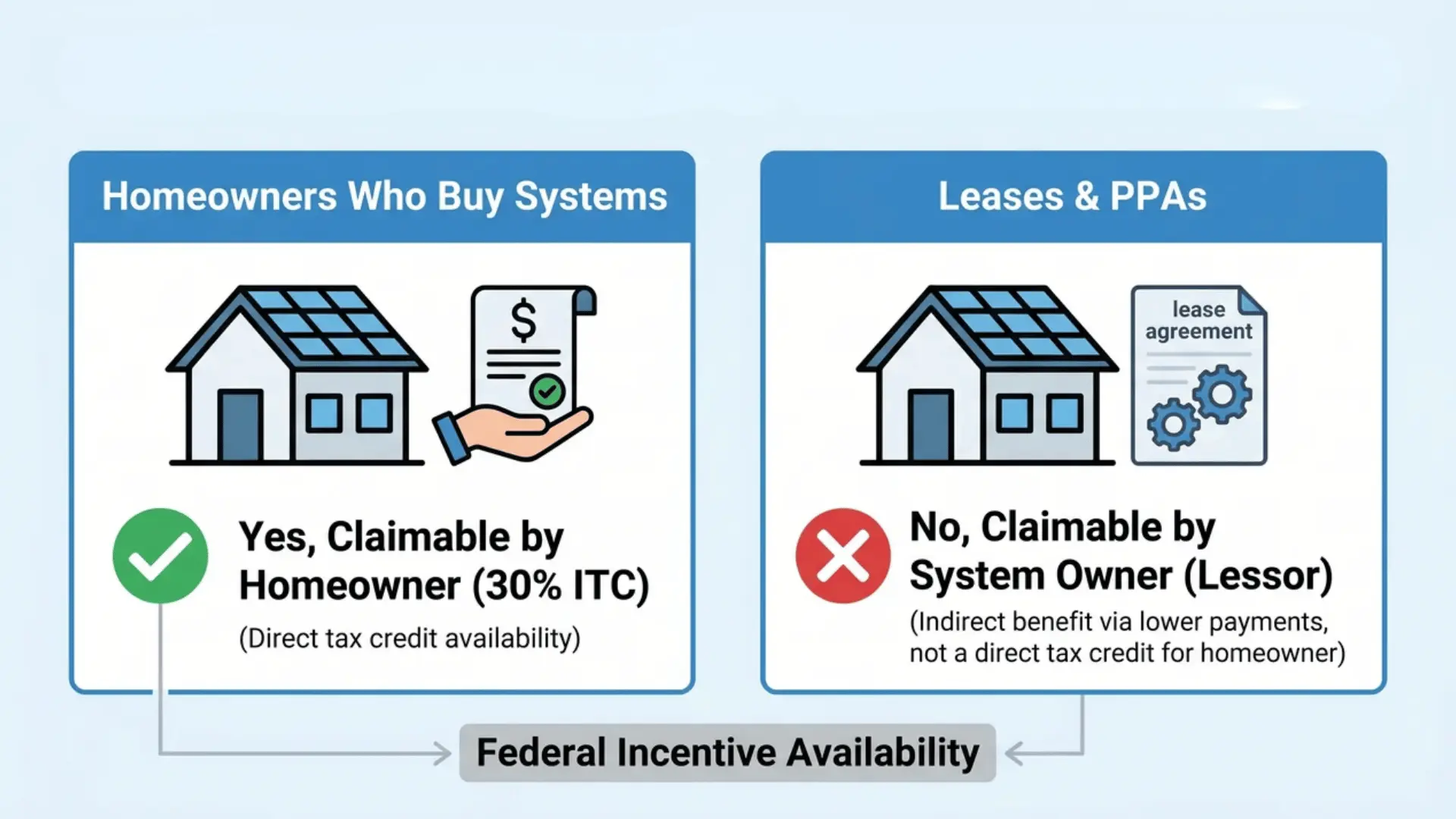
No, not if you’re buying the system outright. The Residential Clean Energy Credit ended on December 31, 2025. Under current law, a system installed in 2026 doesn’t qualify.
If you’re seeing headlines about ways to still get a federal incentive, read them carefully. Those paths aren’t for homeowners who own their system.
When you sign a Power Purchase Agreement (PPA) or lease solar panels, you don’t own the equipment. The installer or financing company does. They may qualify for commercial or investment tax credit incentives that didn’t expire when the residential credit did.
Here’s what that actually means for you:
The installer gets the tax credit on the equipment they own. They may pass some of that value back through lower pricing, a cheaper per-kWh rate on a PPA, or a reduced lease payment.
You don’t get a credit. You get a lower rate because the company factored its tax benefit into what it charges you. That discount is real, but it varies by installer. It’s not guaranteed, and it’s not the same as owning a credit yourself.
Whether Congress reinstates federal incentives in 2027 is still an open question. Check IRS.gov or dsireusa.org for anything current.
Do Solar Rebates Cover Battery Storage Too?
Some programs do and the reason they exist separately from solar rebates is worth understanding.
States and utilities fund battery storage rebates on their own track because batteries serve a grid purpose, not just a homeowner purpose. They shift peak demand and hold backup capacity during outages.
That grid value is exactly why California’s Self-Generation Incentive Program (SGIP) will pay for a battery even when you have no solar panels at all.
Here’s how it typically breaks down across programs:
- Standalone storage rebates: SGIP covers battery storage on its own, no solar required. The grid-management rationale drives this.
- Paired-system rebates: Programs like the Clean Power Alliance Sun Storage Rebate in California only cover storage when it’s installed alongside solar panels.
- Within a single program, solar-only and solar-plus-storage installations often receive different rebate amounts; the pairing structure matters, not just the program name.
- Enrollment windows open and close by funding tranche. SGIP and similar programs can exhaust their available funds within days of a new window opening.
That last point is the one I see catch people off guard the most. You can qualify on paper and still miss out because your installer didn’t file before the tranche closed. The program didn’t go away; it just ran out of that round’s money. A new window opens later, but on no fixed schedule.
Check your state energy office or utility directly for current amounts and open enrollment. Figures shift with every funding cycle, and what was true last quarter may not be true now.
Conclusion
Solar rebates and the federal tax credit were always separate tracks. The credit ending didn’t touch the rebates. State agencies and utilities are still running programs, and in many areas the savings are real and accessible.
Three things decide what you can claim: your state, your utility, and whether you own the system or lease it. Your utility matters as much as your state, sometimes more.
DSIRE pulls both state and utility programs into one place. Look up your state and your specific utility there before you talk to any installer. What you find will tell you more than any sales call will.
Frequently Asked Questions
Is the 30% federal solar tax credit still available in 2026?
No. The federal Residential Clean Energy Credit expired on December 31, 2025. Systems installed in 2026 don’t qualify under current law. State and utility rebate programs are still active and are now the main savings path for most homeowners. Check IRS.gov if federal legislation changes.
How does a solar rebate reduce my cost compared to a tax credit?
A rebate pays directly to you or your installer at installation, so it cuts your cost regardless of what you owe in taxes. The old tax credit only offset federal tax liability; lower-income households often captured less of it because their tax bills were smaller. Rebates pay the same to everyone who qualifies.
How do I find which solar rebates are available in my area?
Use DSIRE (dsireusa.org), a free database from NC State University that lists active incentives by state, utility, and zip code. Enter both your location and your utility provider. Utility programs are tied to service territory, not state lines; you may qualify for programs your neighbors don’t.
If I lease solar panels instead of buying them, do I get the rebate?
Usually not. You don’t own the panels on a lease or PPA, so you typically don’t qualify for direct state or utility rebates; those go to the system owner. Your installer may pass along some savings through a lower rate. Some programs extend rebates to lease customers; most don’t. Check with your state energy office.