

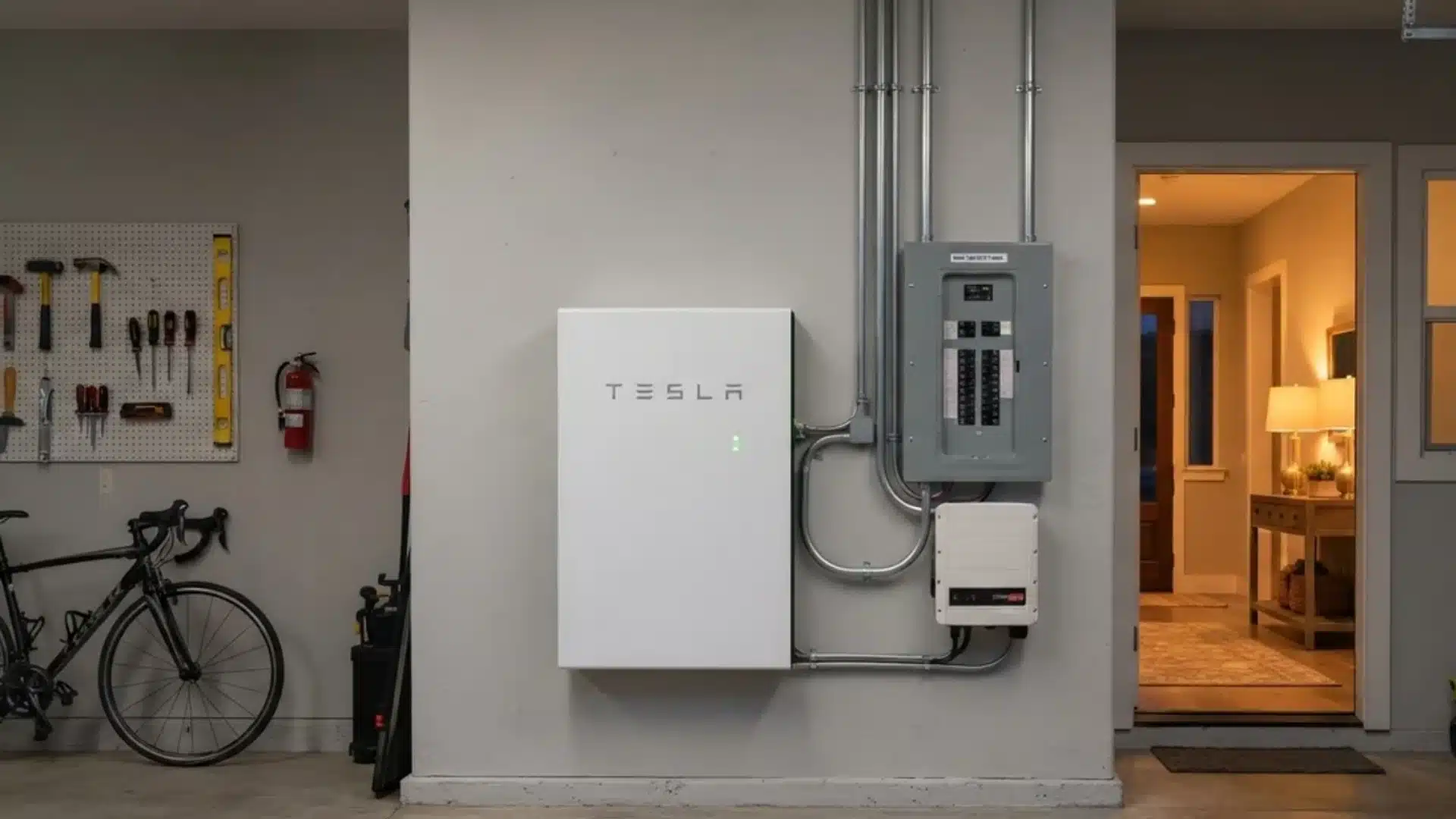
You just switched on a new solar array and watch your meter run backward, but assuming work ends there leads to costly mistakes over time.
Small hidden faults gradually reduce energy output, quietly eroding savings even when the system appears normal, making regular maintenance essential for consistent long-term performance.
Proper solar panel maintenance prevents gradual system degradation, protects hardware from damage, and consistently maintains high energy production across residential and commercial installations over time.
Regular tasks matter, including decoding sudden power drops and knowing when professional crews are needed for repairs and inspections in commercial solar maintenance plans.
What is Solar Panel Maintenance?
Solar panel maintenance refers to the ongoing care required to keep a solar power system operating efficiently throughout its lifespan. Even though the system has no moving parts, performance can still drop without routine attention.
Here’s what goes into solar panel maintenance:
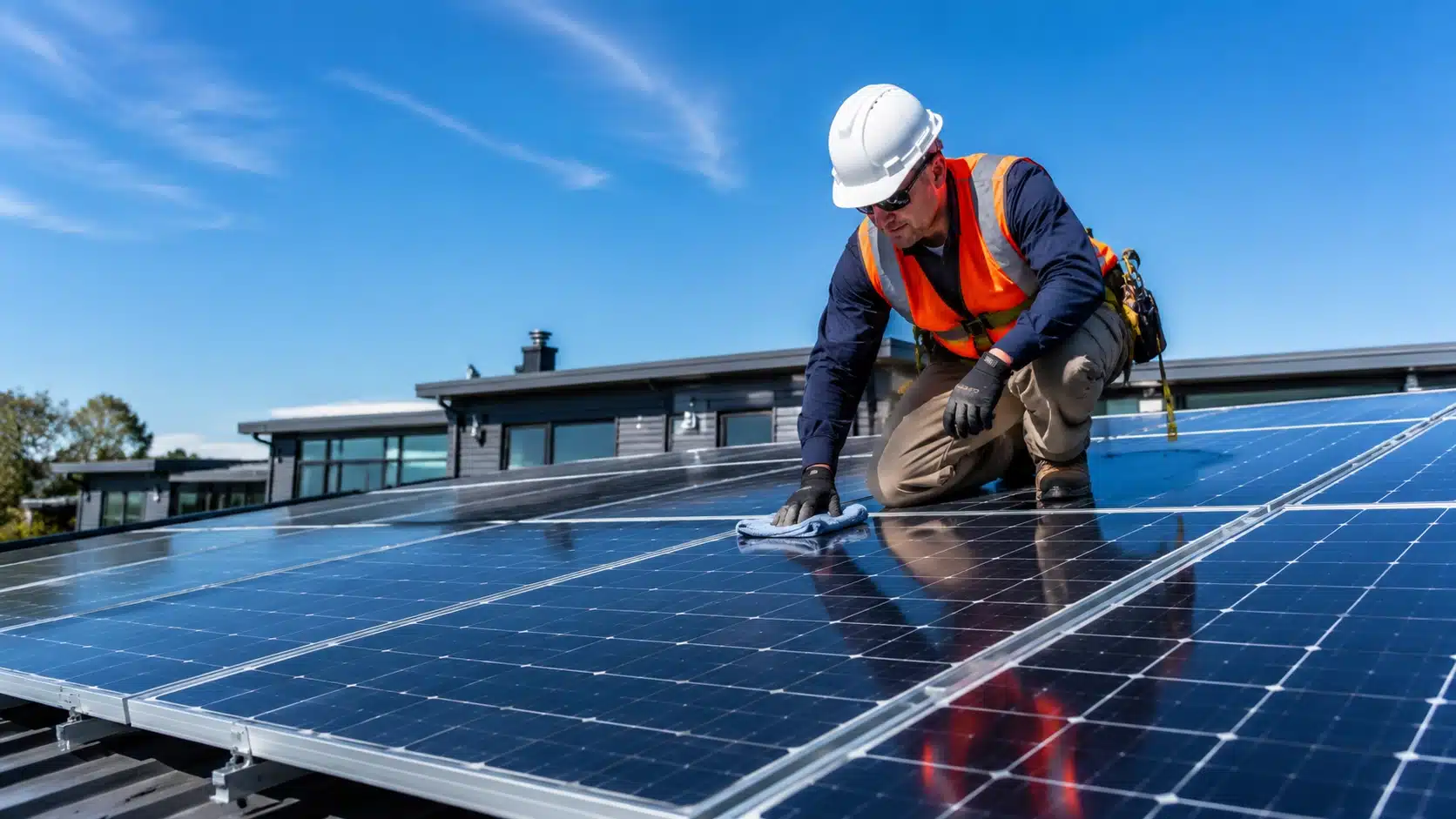
- Surface Cleaning: Dust, bird droppings, pollen, and pollution build up on panels and block sunlight, reducing energy output.
- Visual Inspection: Regular checks help spot cracks, loose wiring, or other physical damage before they become bigger issues.
- Performance Monitoring: Tracking energy output helps identify sudden or gradual drops that may signal hidden faults.
- Inverter Checks: The inverter is a key component that needs periodic review to confirm it is converting power correctly.
- Wiring and Connection Review: Loose or corroded connections can reduce efficiency and create safety risks if left unchecked.
- Environmental Considerations: Local conditions such as coastal salt, heavy dust, or high pollen levels influence how often maintenance is needed.
Maintenance needs vary depending on system size and location, from small residential rooftops to large commercial setups. Ignoring routine care does not cause immediate failure, but it leads to slow performance loss and reduced long-term savings.
What Does Solar Panel Maintenance Include?
A complete upkeep routine relies on three distinct tasks that feed into each other. Cleaning, physical inspections, and digital monitoring form a continuous protective loop for your investment.
Cleaning: Frequency, Timing, and Safety
Keeping the glass surface clear ensures sunlight can actually reach the photovoltaic cells underneath. Your local environment dictates your schedule far more than a calendar date does.
Here’s a quick look at how location and setup change your approach to washing panels:
- Residential properties usually need a manual wash just once or twice a year.
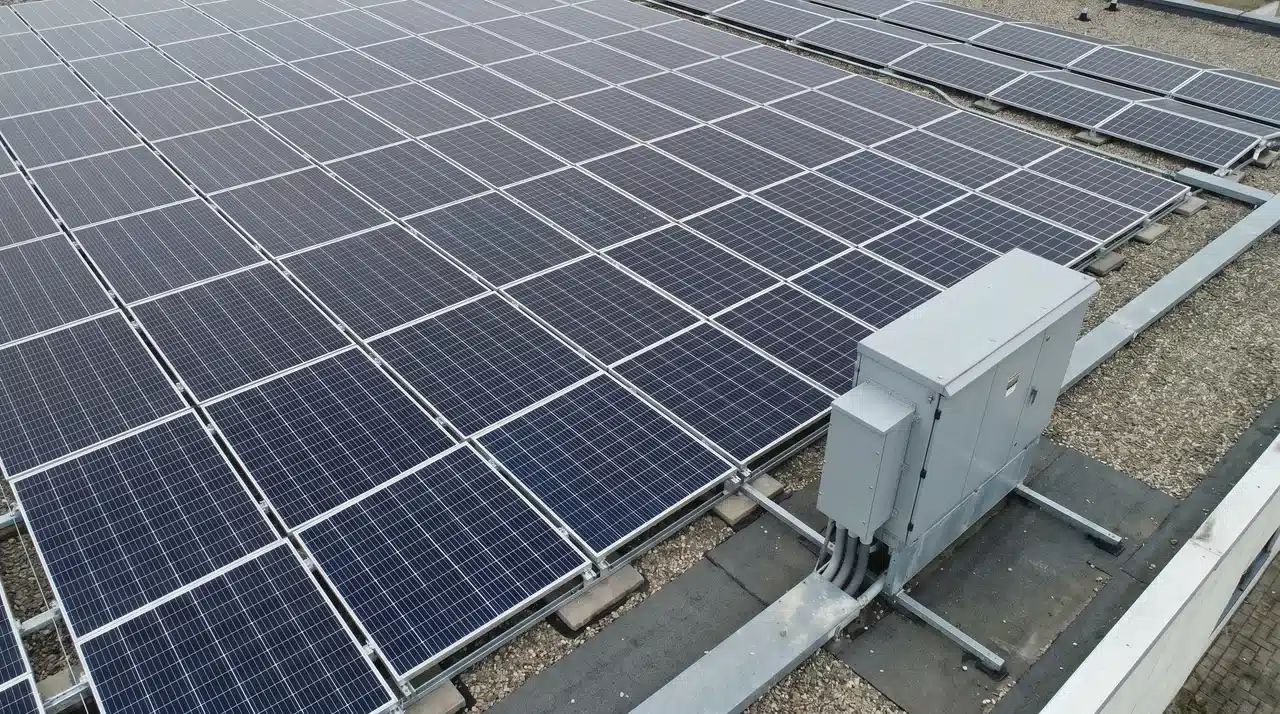
- Commercial arrays in dusty areas or coastal zones require cleaning two to four times annually.
- Early morning or late evening is the best time to wash the glass to prevent it from shattering.
- Deionized or distilled water must be used to prevent evaporated water from leaving mineral scale behind.
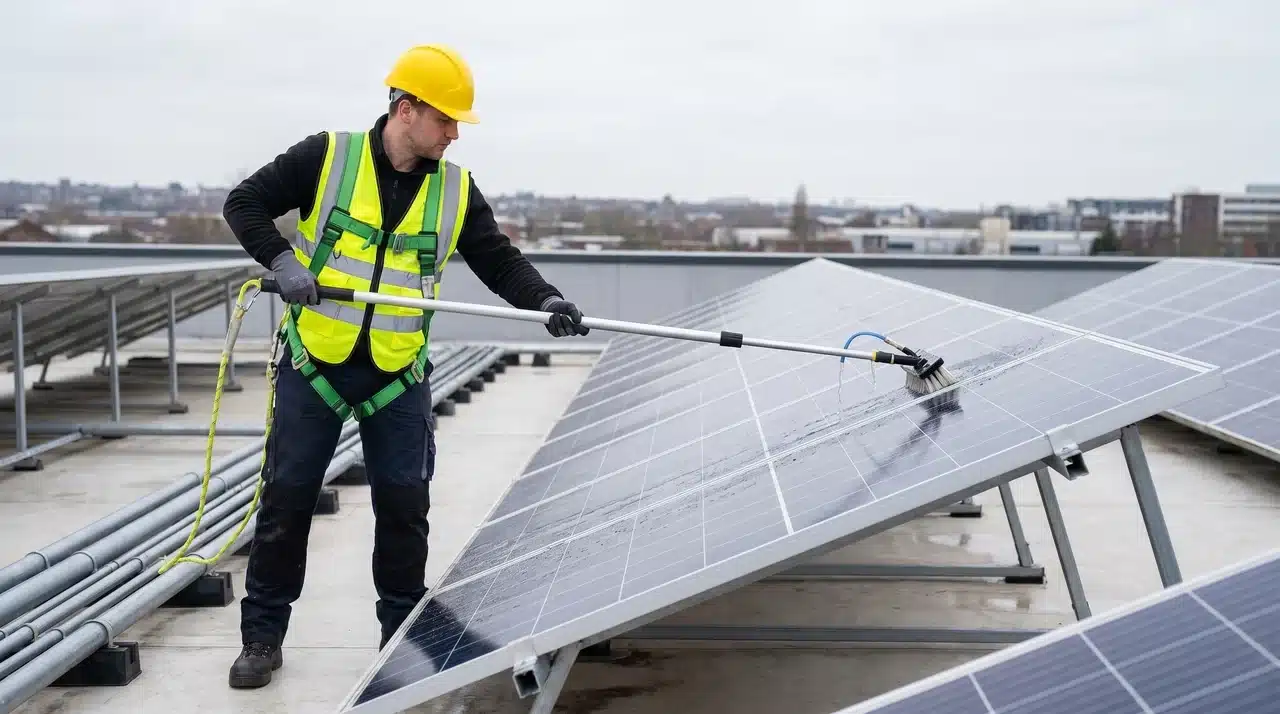
- Rooftop systems require professional crews to eliminate fall risks and high-voltage electrical hazards.
Washing away surface grime keeps production steady throughout the peak sunny seasons. Tailor your cleaning frequency to the visible buildup on your roof rather than guessing.
Annual Inspections and Thermal Imaging
A physical checkup catches structural wear that digital dashboards cannot see. It looks at the hardware holding the entire system together.
A standard annual inspection covers several physical and electronic touchpoints:
- Physical checks scan for glass cracks, micro-fractures, and loose racking bolts.
- Torque testing ensures electrical connections and structural mounts have not drifted out of spec.
- Infrared drone mapping spots hidden electrical failures by identifying localized temperature spikes.
A hot spot found during an inspection is a warning sign. The trapped heat actively accelerates cell damage and cracks the surrounding glass over time, permanently lowering your long-term energy yield.
Monitoring and Inverter Care
Digital monitoring serves as your day-to-day diagnostic-tracking layer. It watches your energy generation in real time and flags anomalies instantly.
Here’s what to evaluate when your system performance changes:
- Continuous software tracking establishes a baseline for normal daily energy production.
- Sudden output drops typically mean a tripped breaker or a component failure rather than simple dirt.
- New tree growth or nearby construction can cast fresh shadows that trigger performance alerts.
- Inverter hardware replacements are necessary every 10 to 15 years due to high electrical stress.
Monitoring ensures you do not have to wait for an annual visit to find a problem. It tells you exactly when to step in and check the hardware.
Why Solar Panel Maintenance Matters
Investing time or resources in your solar array ensures the upfront installation cost pays off over its lifespan. Regular upkeep keeps your system operating efficiently and ensures the hardware lasts.
Consistent care stops minor issues from cutting into your monthly energy savings. It transitions your system from an unmonitored roof fixture into an optimized power asset.
There are some rewards of staying on top of your solar upkeep:
- Sustained energy output maximizes your utility bill savings by keeping the cell paths clear.
- Extended equipment life keeps costly components, such as inverters, running smoothly for their full rated lifespan.
- Warranty protection remains intact because many manufacturers require proof of basic care to honor hardware claims.
For large business properties or high residential roofs, managing this process manually is rarely practical. A structured service plan from a local provider wraps these complex steps into a single recurring visit.
This hands-off option ensures that professionals handle the high-voltage testing and rooftop safety risks associated with commercial solar panel maintenance. You get the financial benefits of clean energy without the physical liability.
When to Hire a Professional for Solar Maintenance?
Safety is the biggest variable in solar upkeep. You are dealing with live electrical equipment exposed to the elements.
These are the cases when you must hand the job to a professional:
- Rooftop installations require safety harnesses and specialized high-angle training.
- Commercial arrays operate at much higher voltages than standard home systems do.
- Electrical faults require certified technicians to test and safely replace active components.
- Hardware warranties often require documented service records from a licensed maintenance company.
Most owners should not attempt to service rooftop arrays themselves. The fall risk alone usually outweighs the cost of a routine service visit.
What Solar Panel Maintenance Doesn’t Require
Solar upkeep is far simpler than most owners expect. You do not need a demanding routine to keep your system producing at its best.
| What You Don’t Need | Why It’s Unnecessary |
|---|---|
| Daily physical labor | Solar panels have no moving parts to grease or track |
| Constant manual washing | Normal rainfall clears light dust from tilted glass naturally |
| Complex commercial playbooks | Large arrays simply scale up the same three baseline steps |
Before grabbing a ladder, always check your digital dashboard first. Electrical faults and shading cause most output drops, not dirty glass. Keeping your routine data-driven saves you time, effort, and unnecessary physical risk.
Conclusion
Proper solar panel maintenance balances simple regular washing with smart software tracking. Systems left completely to the elements experience a gradual loss of efficiency that directly harms long-term savings.
While individual owners can easily manage basic ground-level checks, complex diagnostic work requires experienced field technicians. Entrusting specialized hardware testing to certified professionals preserves equipment warranties and ensures high-voltage safety.
A local solar maintenance expert can assess any system to build a customized inspection and cleaning schedule.
Contact a qualified provider today to safeguard your renewable infrastructure and maximize ongoing energy production.
Frequently Asked Questions
How often should solar panels be cleaned?
Most residential solar panels only need cleaning once every six months to a year, since rainfall handles much of the work naturally. Commercial systems in high-dust, coastal, or pollen-heavy areas typically need cleaning two to four times per year. The right frequency depends more on your local environment than on a fixed calendar.
Can I clean my solar panels myself?
For ground-mounted or easily accessible panels, light cleaning with a soft brush or squeegee and distilled water is usually fine if done early or late in the day. For roof-mounted systems, especially on commercial buildings, it’s safer to hire a professional, since rooftop access carries fall and electrical risks.
Why did my solar panel output suddenly drop?
A sudden drop in production is rarely about dirty panels. More often, it points to a tripped breaker, an inverter problem, or new shading from a tree or nearby structure. Check your monitoring platform first to pinpoint when the drop started, then rule out these causes before assuming the panels need cleaning.