


Solar savings are no longer limited to people with perfect roofs and room for panels. A shared solar program lets you benefit from clean energy without installing anything at home.
You subscribe to part of a local solar farm, and your utility adds credits to your bill based on the power your share produces.
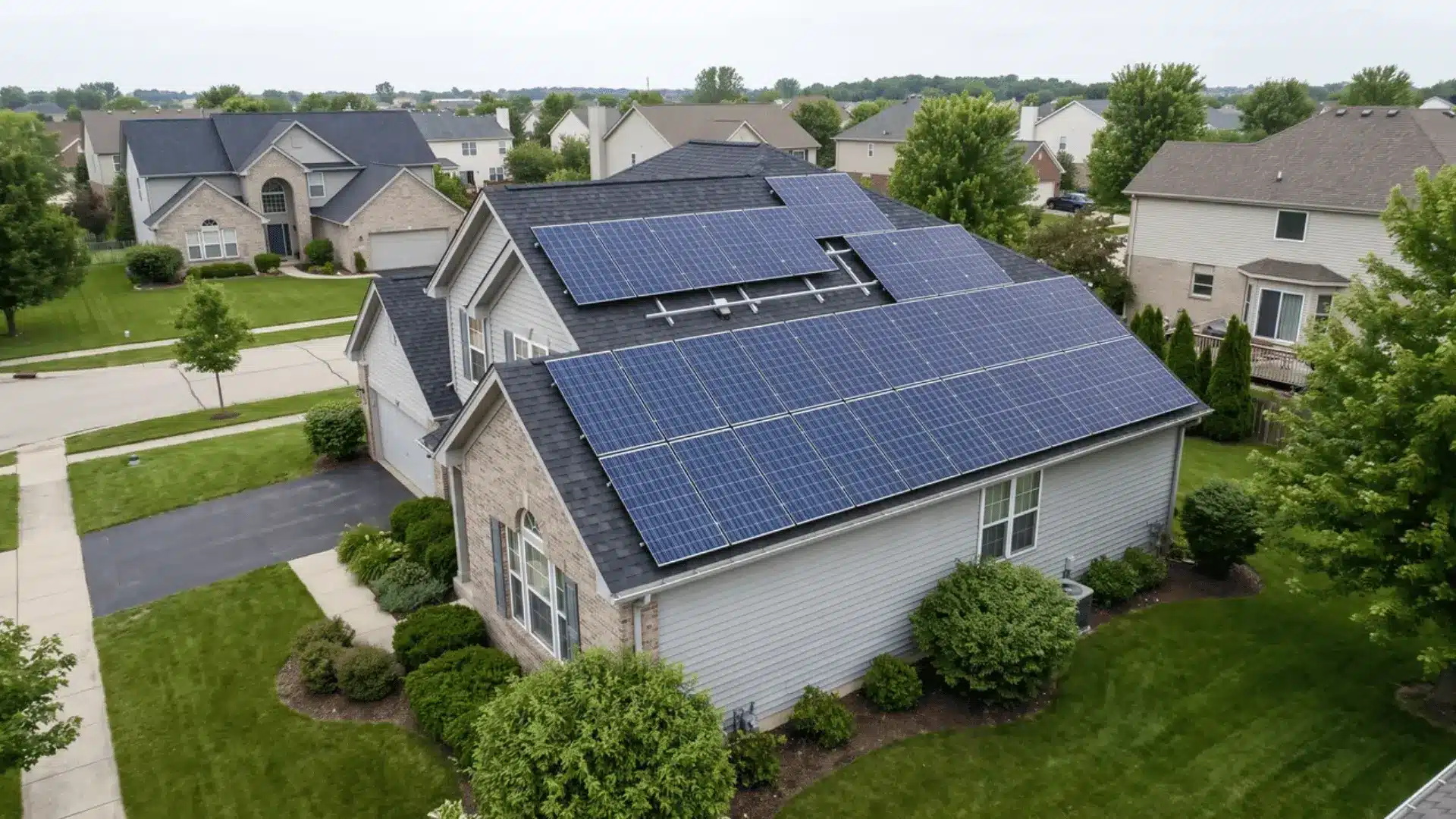
That matters because many U.S. households cannot install rooftop panels. Renters, shaded homes, aging roofs, apartments, and high upfront costs often get in the way.
With this setup, the solar project is located elsewhere within your utility area and sends electricity to the grid. You receive bill credits for your portion.
Before signing up, it helps to know how the credits, savings, and contract terms work.
What Is Community Solar?
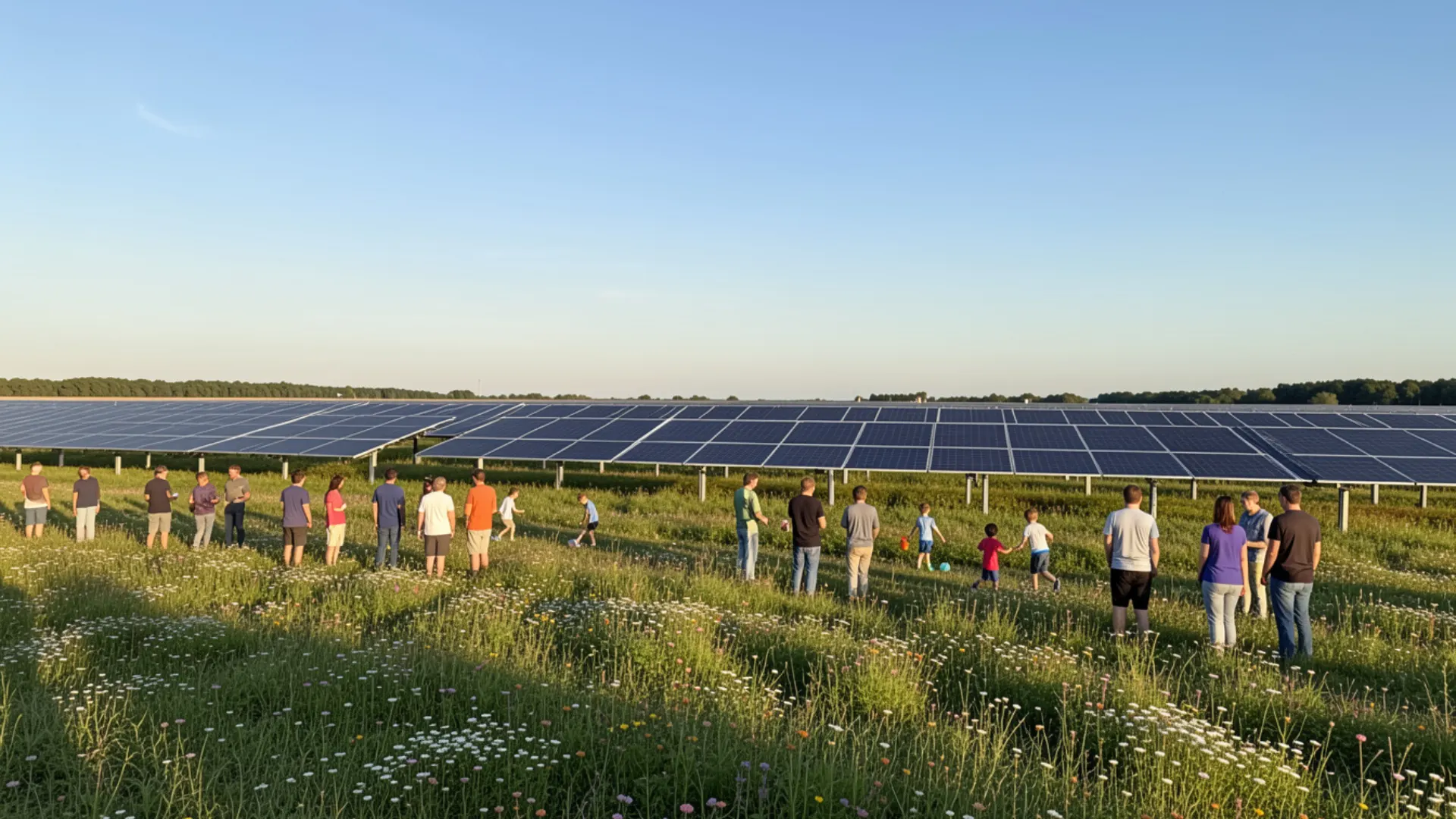
Community solar is a program in which multiple customers subscribe to, or occasionally buy shares in, a shared solar array instead of installing their own panels.
The Array is Usually Built off-Site: on open land, a warehouse roof, a former landfill, or another spot with good sun exposure. It’s rated under 5 megawatts in most states, small enough to serve a neighborhood rather than a whole region.
Each subscriber pays a monthly fee tied to their share of the project. In return, their utility applies a bill credit based on how much electricity that share generated. The result is usually a modest discount, typically 5% to 20% off the electricity portion of a bill.
You never see or touch the panels. You don’t own them either, unless you specifically choose a purchase-based program instead of a subscription.
How Does Community Solar Work?
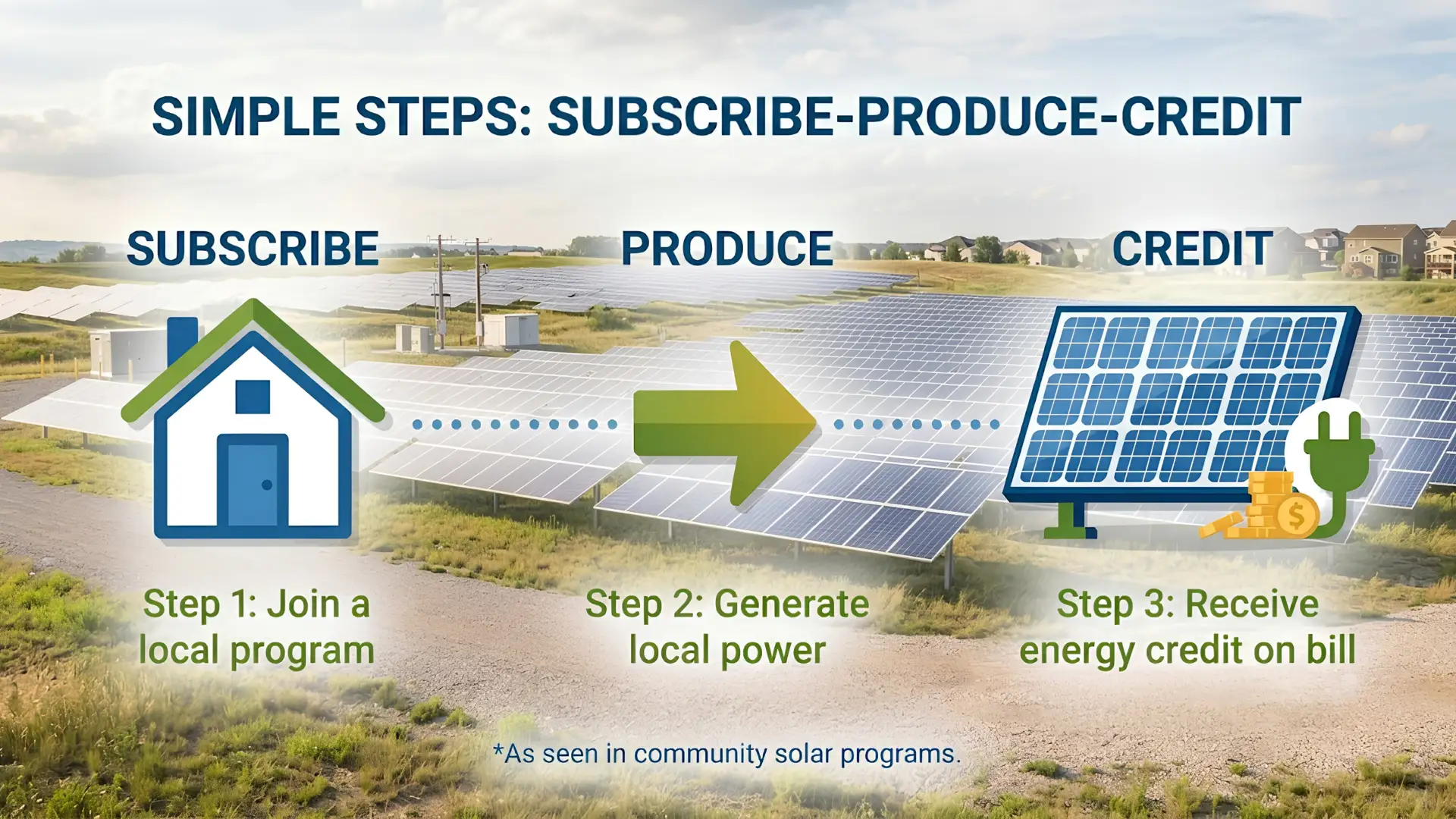
The process is easier to understand when you break it into three parts: subscribing to a share, allowing the solar farm to generate power, and receiving credits on your utility bill.
Step 1: You Subscribe to a Solar Share
You sign up through a subscriber organization, which manages the solar project, your account, and billing. Your subscription is usually based on your past electricity use, so your share is sized to cover part or most of your monthly power needs.
Step 2: The Solar Array Produces Electricity
The solar farm generates electricity and sends it into the local grid. That power does not flow directly to your home.
Instead, the utility tracks the total production and calculates how much belongs to each subscriber.
Step 3: You Receive Bill Credits
Your utility applies credits to your electric bill based on your share of production. You then pay the subscriber organization for those credits, usually at a lower rate.
That discount is where the savings come from. In many programs, credits appear one to three months later, and you may receive two bills: one from the utility and one from the subscriber organization.
Who Should Consider Community Solar
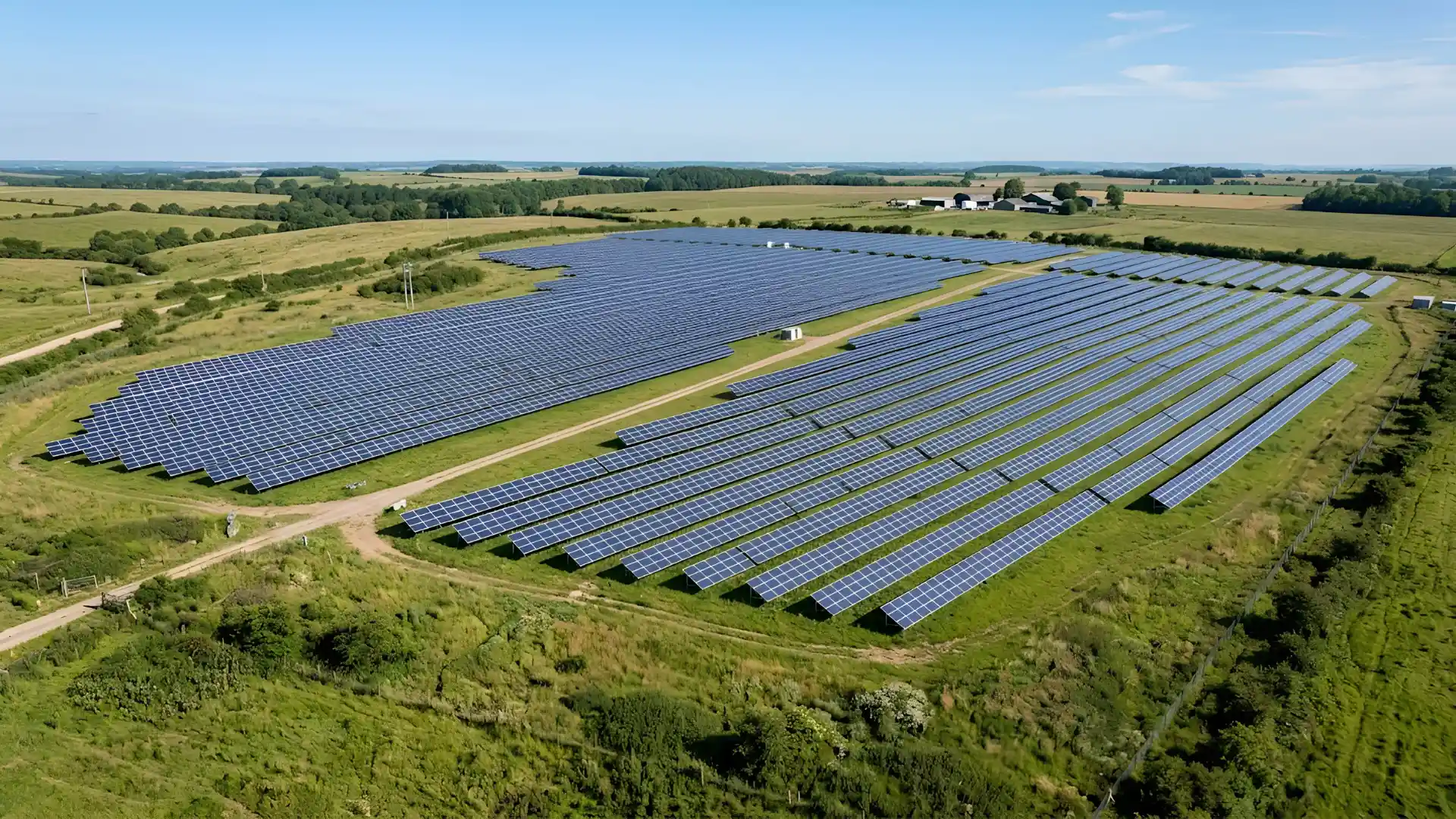
Community solar was built to reach people rooftop solar can’t.
- Renters who can’t install permanent equipment on a property they don’t own.
- Condo and apartment residents without access to a private roof.
- Homeowners with unsuitable roofs, including heavy shade, poor angle, or an aging roof that needs replacement, should first.
- Small businesses that lease their space rather than own the building.
- Low-income households, since many states now require community solar programs to guarantee minimum savings and ban sign-up or exit fees for this group.
If any of those describe your situation, community solar is usually the more realistic path to solar savings than a rooftop install.
Community Solar vs. Rooftop Solar
The two options solve the same problem in different ways, and the right pick depends on what you own and how long you plan to stay put.
| Factor | Community Solar | Rooftop Solar |
|---|---|---|
| Upfront cost | Little to none | Often $15,000 to $25,000+ |
| Who can use it | Renters, condo residents, and businesses | Property owners with a suitable roof |
| Ownership | Usually none (subscription-based) | Full ownership of the system |
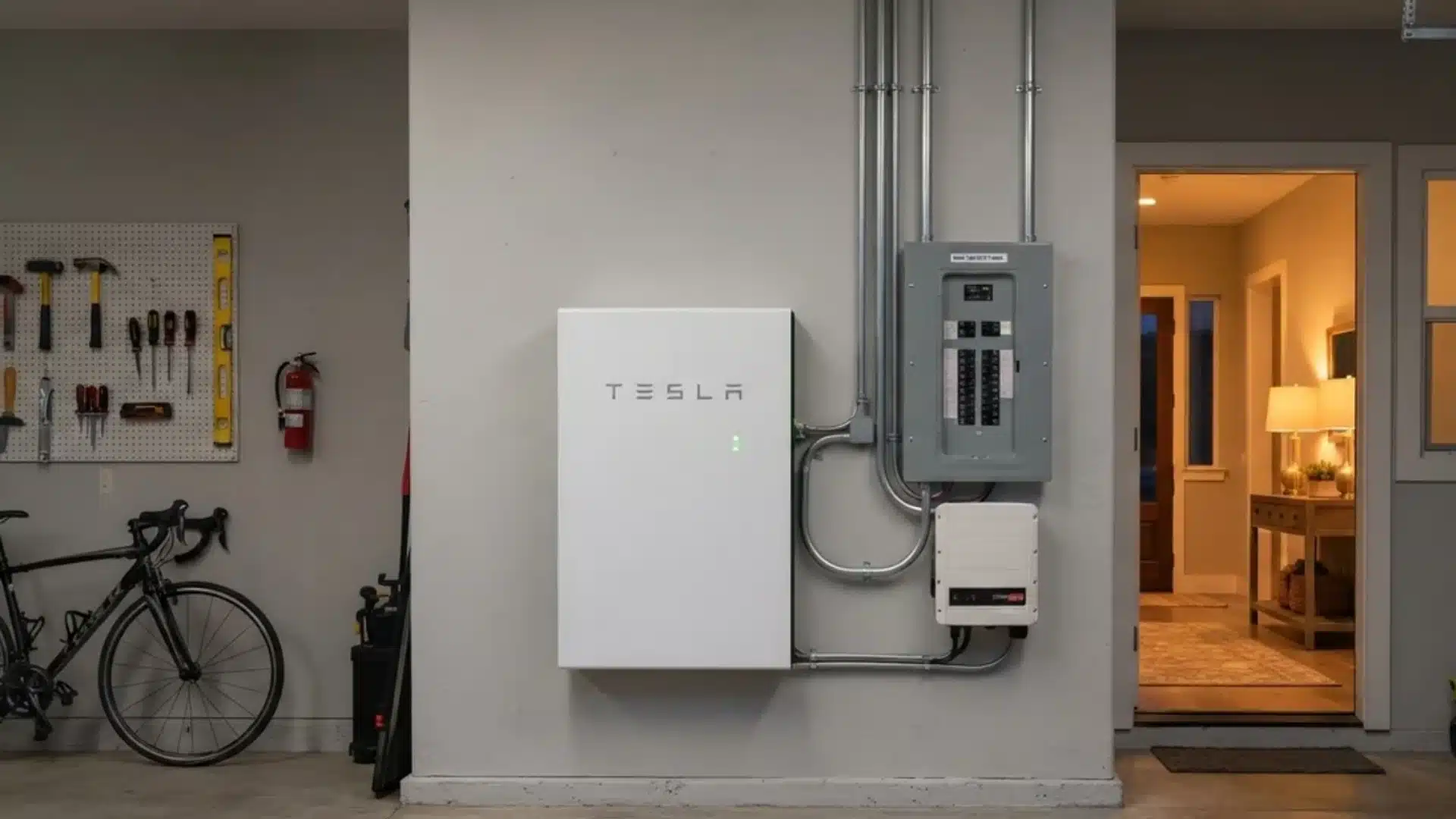
| Backup power option | Not available | Possible with added battery storage |
| Home resale value | No impact | Can increase resale value |
| Tax credits | Not eligible in most subscription models | Eligible for federal solar tax credit |
| Typical savings | 5% to 20% off electricity bill credits | Often larger over the system’s lifetime |
Rooftop solar tends to pay off more over 15 to 20 years, since you own the asset outright. Community solar trades that long-term upside for zero hassle and near-universal eligibility.
What People Are Saying About Community Solar
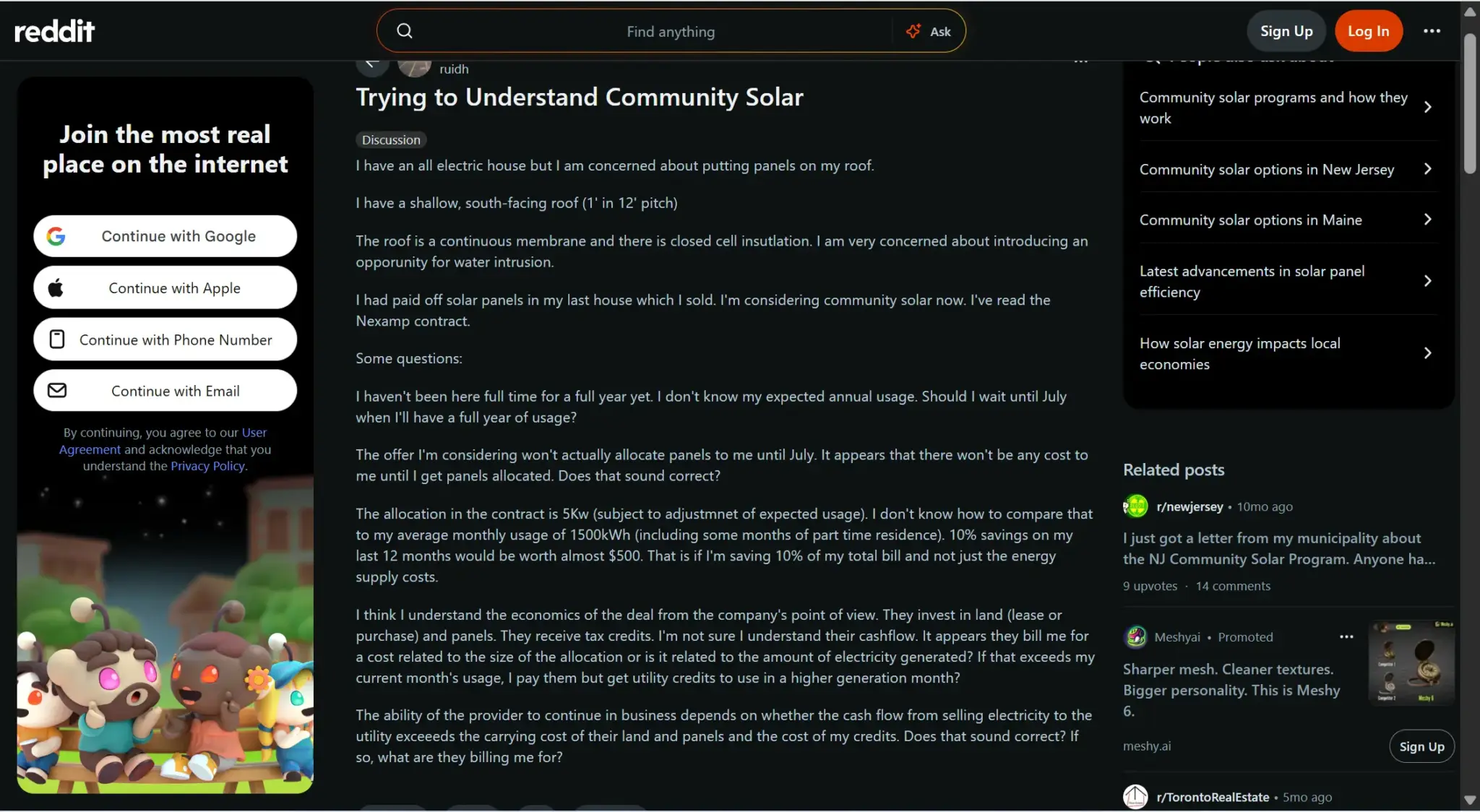
Online discussion around community solar often starts with the same concern shown here: people like the idea of solar credits, but they do not want panels on their own roofs.
In this case, the homeowner has a shallow membrane roof, closed-cell insulation, and experience with rooftop solar, so the appeal is clear: avoid roof work while still getting some solar benefit.
The main questions are practical. Should they wait until they know a full year of electricity use? Does a 5 kW allocation match a 1,500 kWh monthly average?
Are savings based on the whole bill or only the supply portion? The thread also reflects a common confusion: the provider bills for the solar allocation, while the utility applies credits later. The safest move is to confirm allocation size, fees, credit timing, and savings terms in writing before signing.
What To Check Before You Sign Up
A community solar contract can look simple at first, but the details matter. Terms change by state, utility, and provider, so read the agreement before you subscribe.
- Confirm the Savings Rate: Ask for the exact discount in writing. A clear percentage is better than a loose estimate or a promise of “up to” savings.
- Look for Extra Fees: Check for sign-up, exit, transfer, or termination fees. Strong programs usually keep these costs low or avoid them entirely.
- Review Contract Length: See how long the agreement lasts and whether you can transfer it if you move.
- Match the Share to Your Usage: Avoid subscribing at a level above your normal electricity use, since extra credits may be worth less.
- Check Consumer Protections: Look for plain-language disclosures, cancellation rules, and a clear complaint process.
None of these checks takes more than a phone call or a careful read of the contract, and skipping them is where most disappointing subscriptions start.
Conclusion
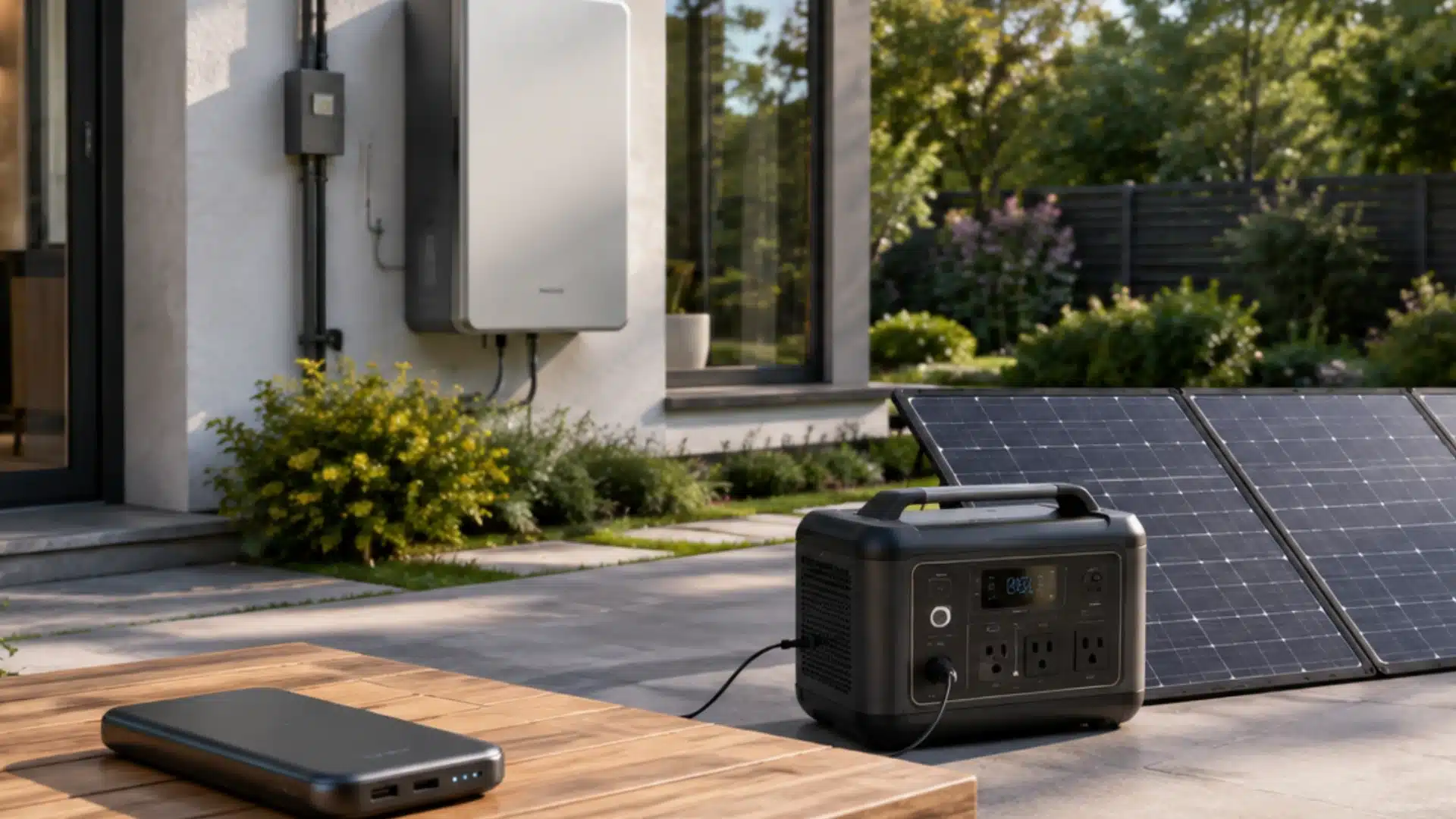
Community solar is moving from a niche option to a broader means of energy access. Projects already operate across most of the U.S., and more states are creating laws that support shared solar programs. The next step is battery storage, which can save daytime solar power for evening use and help communities during grid stress or outages.
Its biggest value is simple: renters, condo owners, and homeowners with shaded or aging roofs can still benefit from solar credits without installing panels. The trade-off is modest savings and no ownership, but you avoid upfront costs, maintenance, and roof work.
Before you subscribe, ask your utility what programs are open nearby, compare at least two offers, and get every savings rate, fee, and cancellation rule in writing.
Would you try community solar in your area? Comment below and share your thoughts.
Frequently Asked Questions
Is community solar the same as a solar co-op?
No. A solar co-op groups neighbors together to buy discounted rooftop panels for their own homes. Community solar involves one shared off-site array with no panels on your property.
Do I need to own my home to subscribe to community solar?
No. Renters can subscribe as long as they have an electric account with a participating utility in an eligible area.
How much can I actually save with community solar?
Most subscribers save between 5% and 20% off the electricity portion of their bill, depending on the state, provider, and contract terms.
Can I get community solar in every state?
Not yet. At least one project currently operates in 44 states and Washington, D.C., though availability and program rules vary widely by state.