
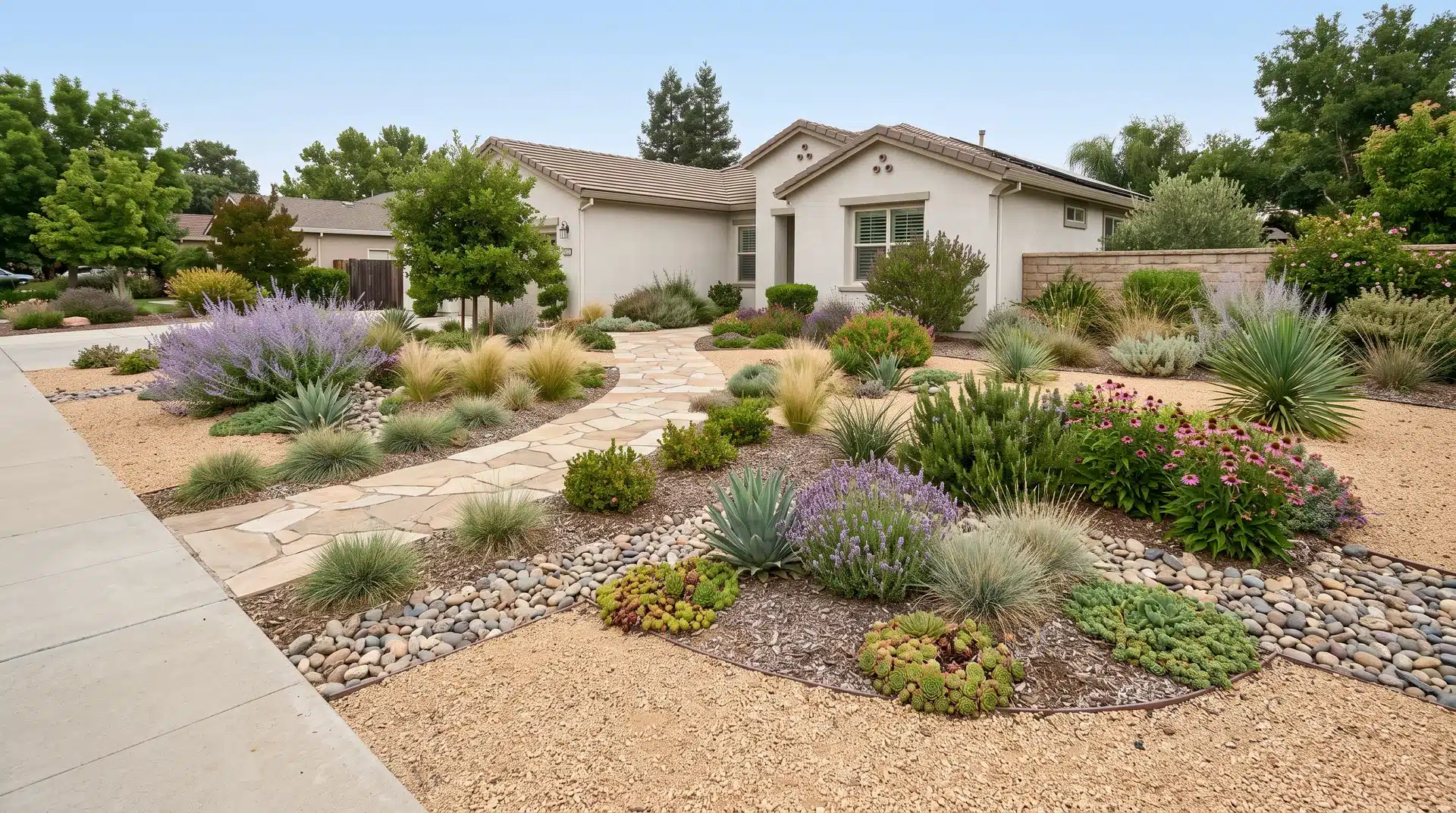





A yard should not feel like a second job. If you spend more time mowing, watering, and pulling weeds than enjoying your outdoor space, it may be time to rethink the landscape.
I’ve found that the right plants, layout, and materials can make a yard easier to care for while using less water. That’s where xeriscape ideas come in.
From replacing thirsty lawn areas to adding drought-tolerant plants, gravel paths, mulch, and useful seating areas, there are plenty of ways to create a yard that fits your needs.
Here, you’ll find practical ideas to build a water-wise landscape suited to your climate and everyday life.
What Is Xeriscaping?
Xeriscaping is a water-efficient landscaping approach that combines careful planning, appropriate plants, efficient irrigation, soil care, mulch, and practical hardscape. The term was coined by Denver Water in 1981, combining “landscape” with the Greek word “xeros,” meaning dry.
It is not a specific landscape style or a set list of plants. The goal is to create an attractive, useful yard that needs less supplemental water while fitting the local climate and site conditions.
Xeriscaping can also be part of sustainable landscaping, since it reduces water use and supports more resource-conscious choices when plants are suited to the local climate and soil.
A xeriscape in a dry region may look very different from one in a wetter climate. Plant choices, irrigation needs, soil, and hardscape should all be adjusted to the conditions of the site.
Gravel and drought-tolerant plants can be part of the design, but they are not what defines xeriscaping. The key is planning the landscape around water needs, local conditions, and efficient resource use.
Xeriscape Ideas to Save Water and Reduce Maintenance
These xeriscape ideas help you create a beautiful yard that uses less water, needs less upkeep, and works better with your local climate.
1. Replace Traditional Lawn With Drought-Tolerant Ground Covers
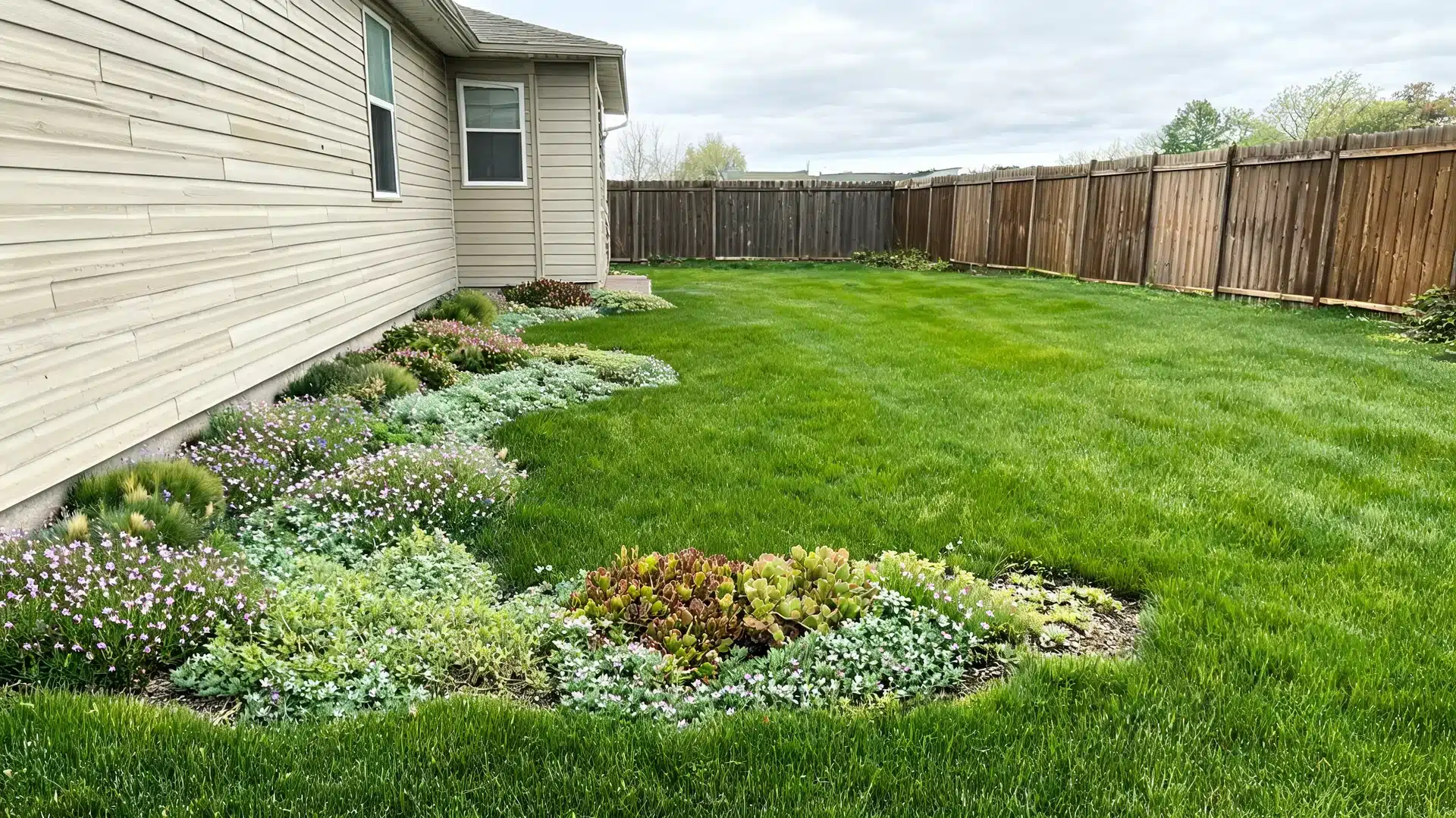
Start by removing grass from the areas you use the least, such as narrow strips, side yards, or awkward corners.
Replace those sections with low-water ground covers like creeping thyme, sedum, or buffalo grass. This is one of the easiest ways to reduce mowing and watering without changing your whole yard at once.
I’ve found that starting with a small section also makes it easier to see how a ground cover handles your soil, sun, and foot traffic before you commit to a larger area.
2. Use Ornamental Grasses for Texture and Structure
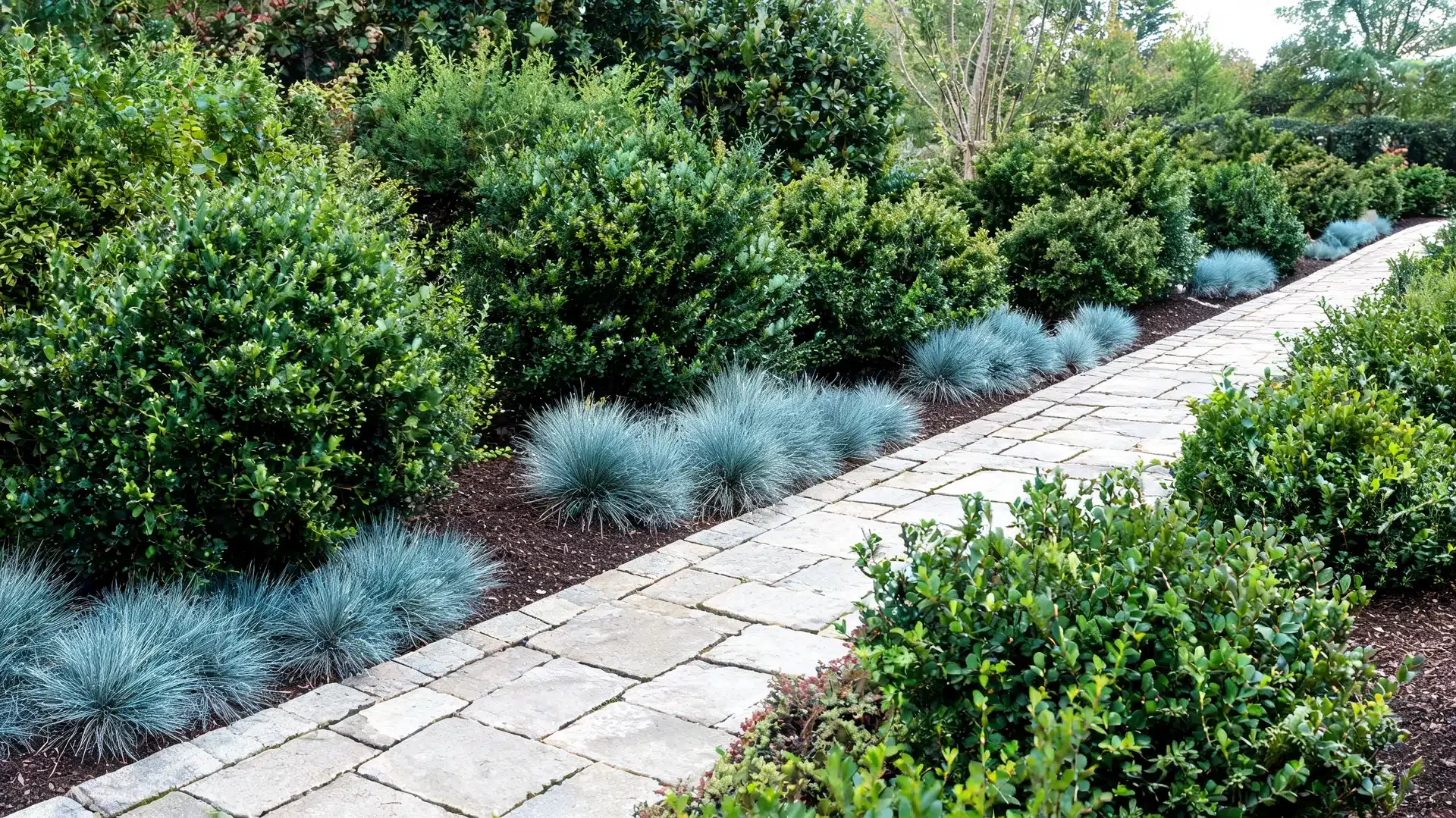
Add drought-tolerant ornamental grasses where your yard needs more height, movement, or softer edges. They work well beside pathways, between shrubs, and in open areas where a full lawn would need more maintenance.
Plant them in small groups instead of scattering single plants around the yard. Grouped grasses tend to look more intentional, and they are easier to manage once they reach their mature size.
3. Grow Flowering Drought-Tolerant Perennials Like Coneflowers and Sage
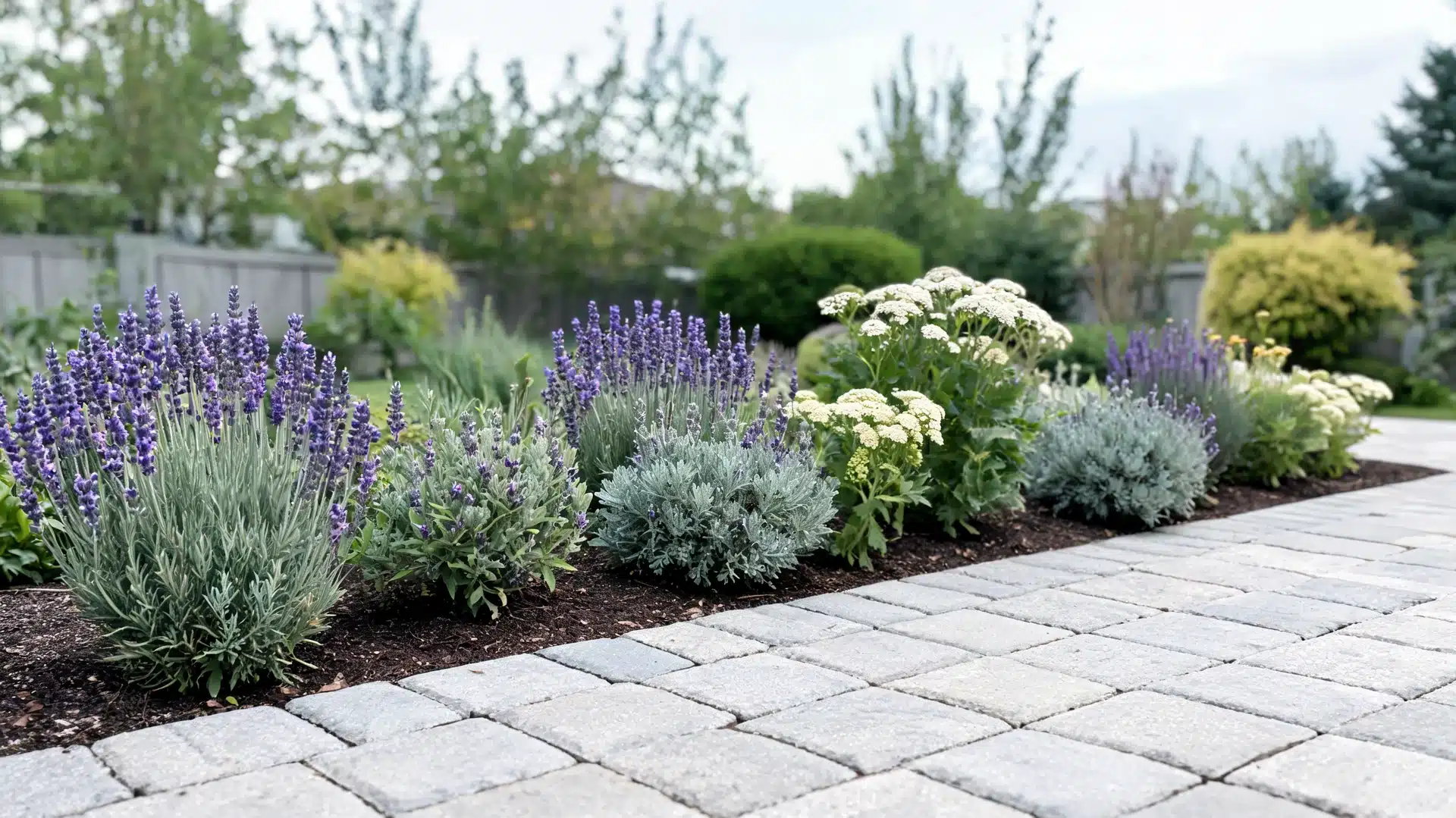
Add flowering plants if you want more color without giving up the lower-water approach. Coneflowers, Russian sage, germander sage, lavender, and other drought-tolerant perennials can bring seasonal blooms to otherwise simple planting beds.
Place them near walkways, entrances, or seating areas where you will notice them. In smaller yards, repeating a few varieties works better than mixing too many, which can make beds feel busy.
4. Use Agave, Yucca, and Other Architectural Plants as Accents
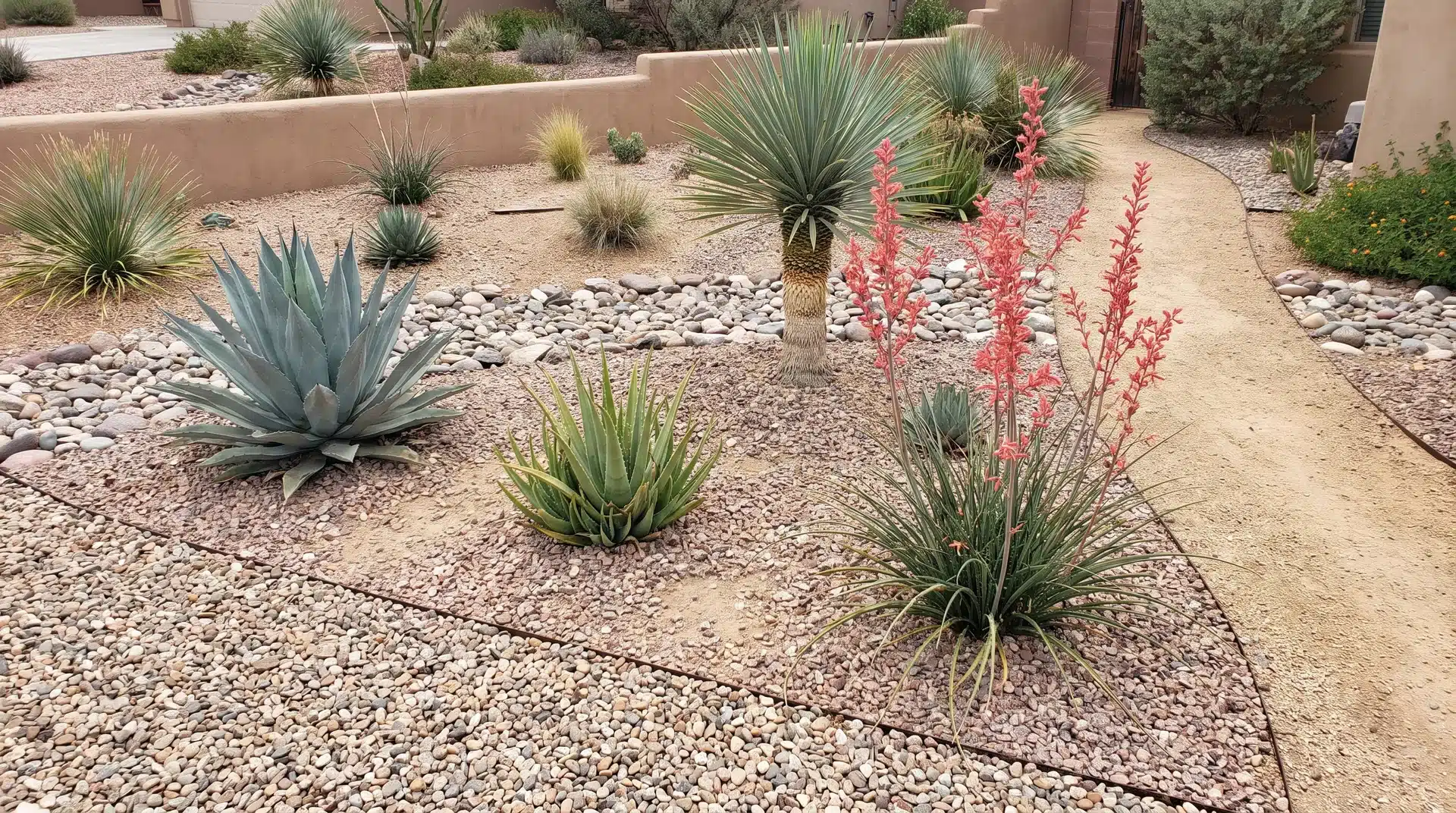
Use plants with strong shapes to add structure to your xeriscape beds. Agave, yucca, aloe, and red yucca can work well as standout plants in dry, sunny areas.
Keep them as accents rather than filling the whole bed with them. A few well-placed plants near gravel, a pathway, or an entrance will usually have more impact than a crowded mix.
5. Use Native Drought-Tolerant Plants as Anchors
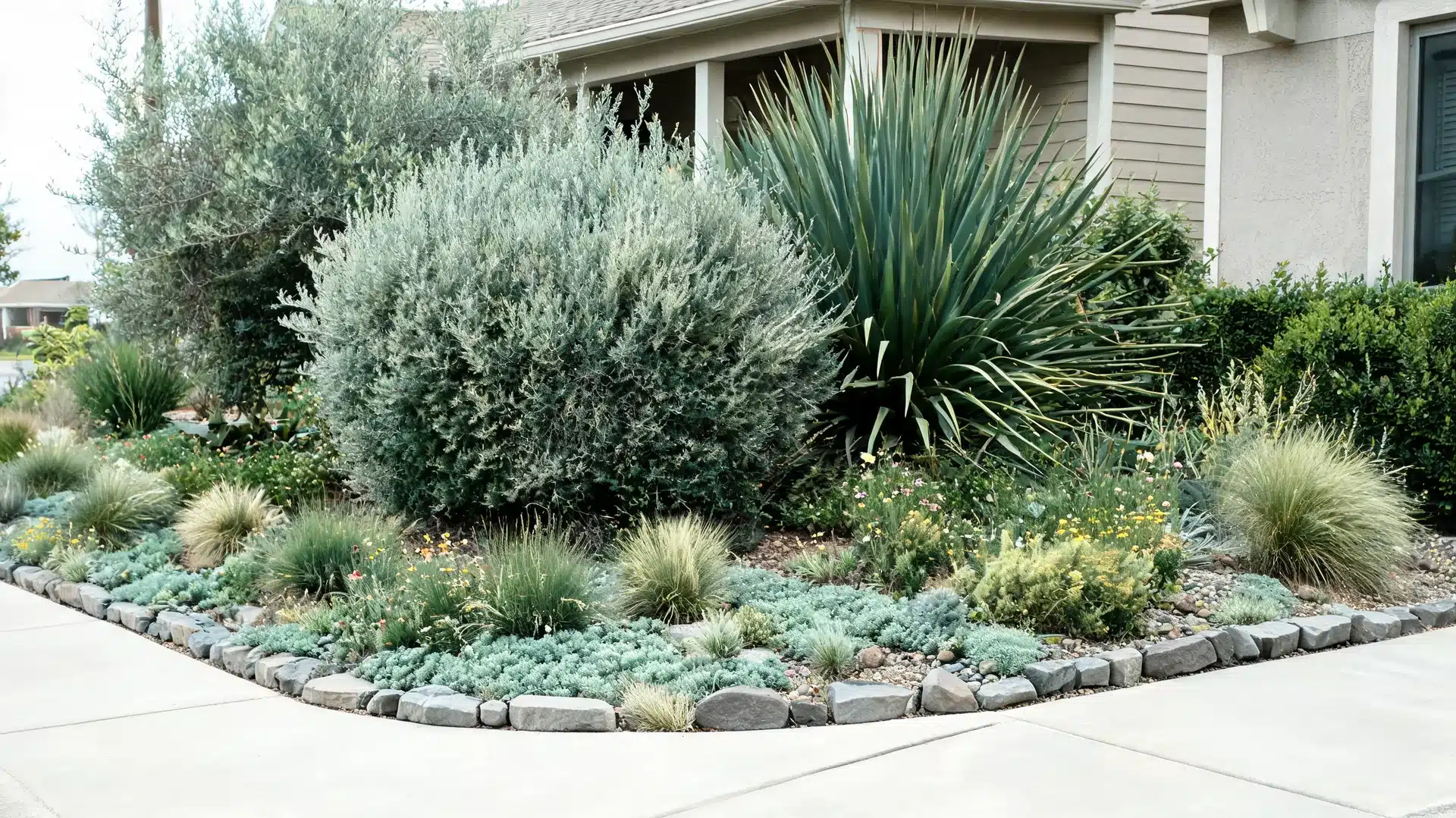
Choose native plants that already suit your region’s weather and soil.
Use larger native species as the main structure of the bed, then fill in around them with smaller grasses, perennials, or ground covers.
Native plants tend to need less water once established because they are adapted to local conditions. Starting with anchor plants first also makes it easier to judge how much room smaller plants will need.
6. Create Layered Xeriscape Beds With Shrubs and Perennials
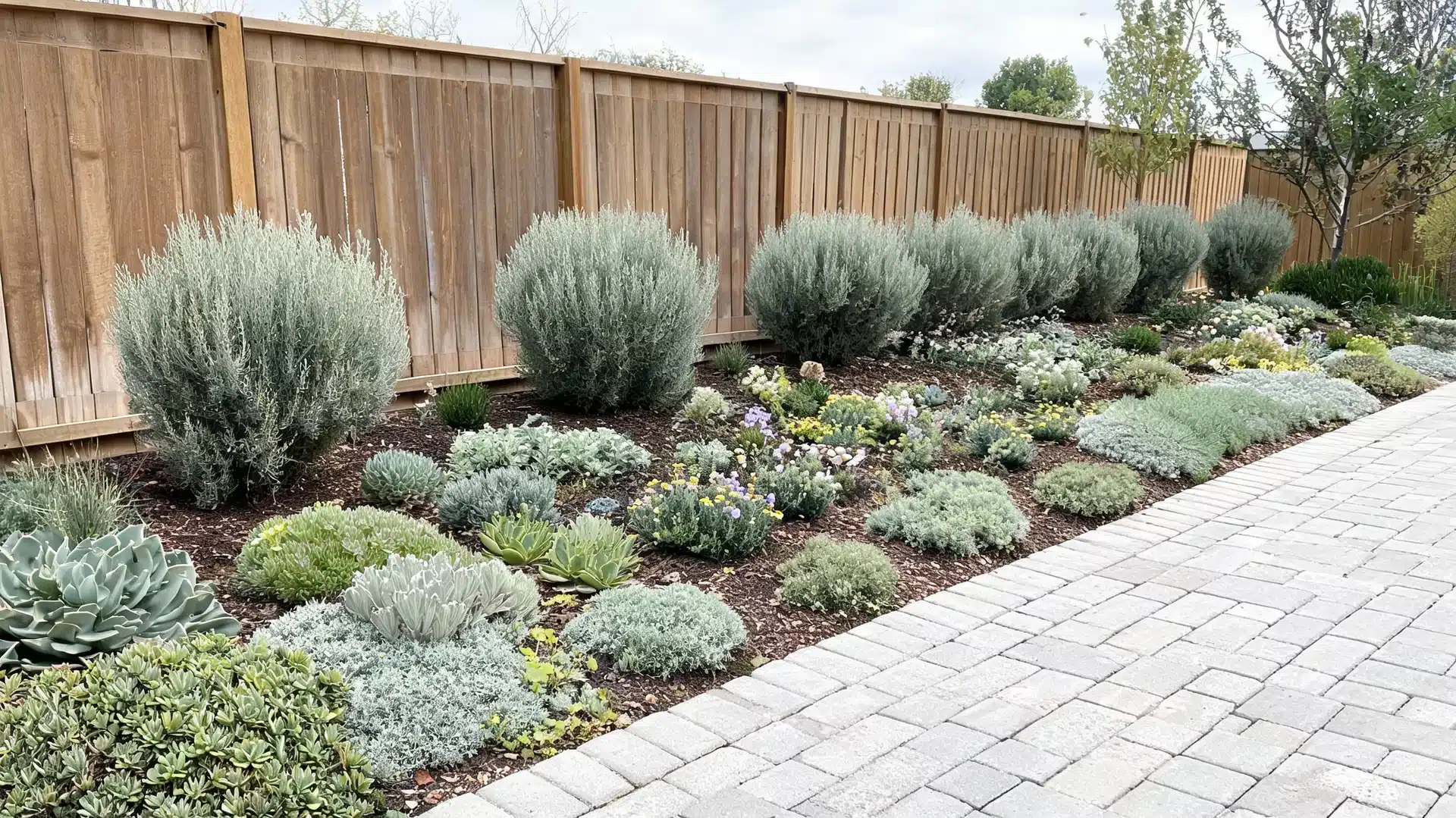
Build depth by combining plants at different heights. Place larger shrubs toward the back of beds or along fences, then add perennials, grasses, and ground covers toward the front.
This layering keeps a xeriscape bed from looking flat or empty. Before planting, check each shrub’s mature width, since a small nursery plant can quickly outgrow its space and crowd nearby perennials or spill into a walkway.
7. Group Plants by Water Needs
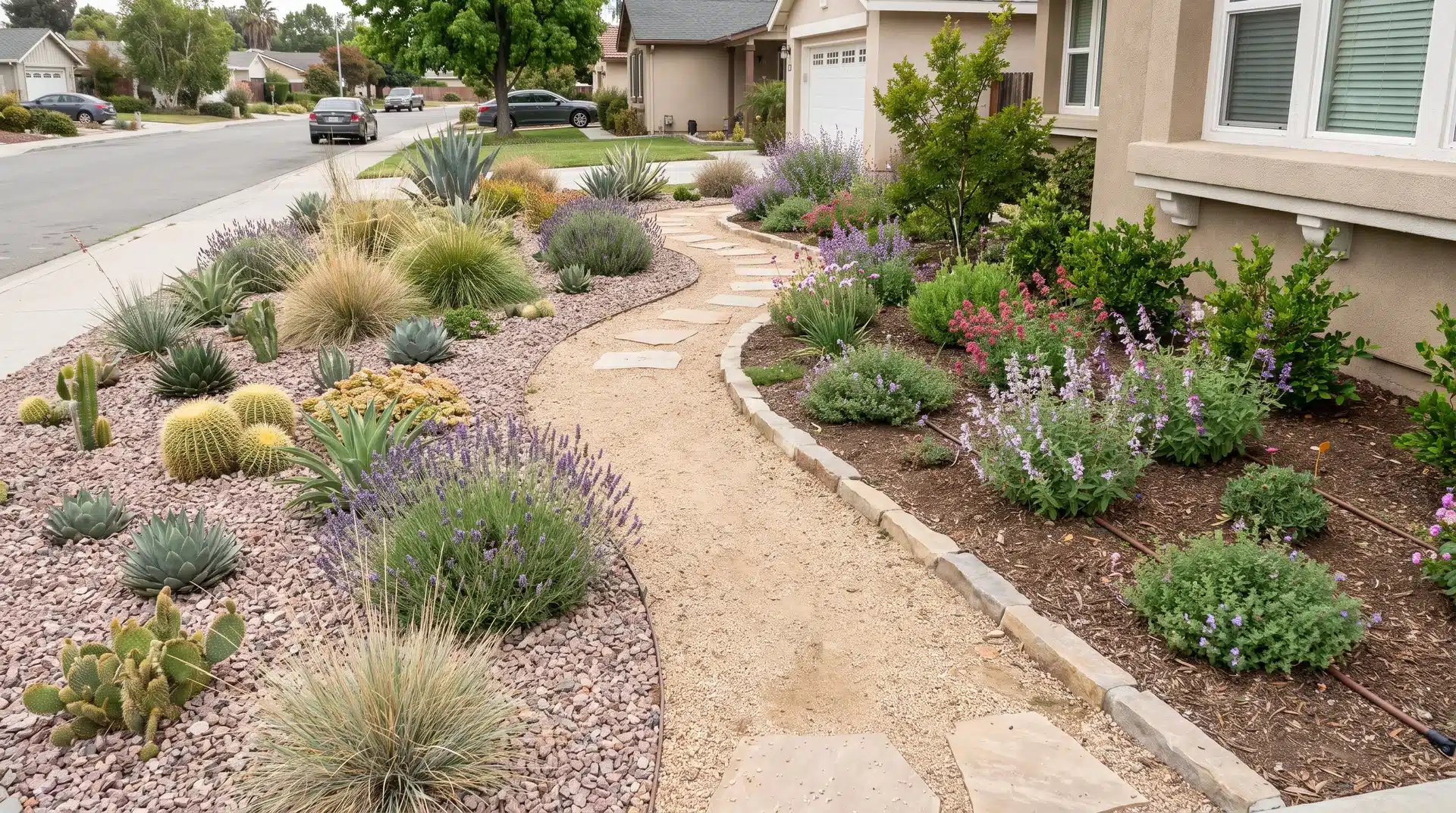
Make watering simpler by placing plants with similar moisture needs together. Keep the driest plants in one area and plants that need a little more water in another instead of mixing them throughout the same bed.
You do not need a complicated irrigation plan to make this work. Even dividing the yard into two or three basic watering zones can reduce overwatering and make it much easier to see which areas actually need attention.
8. Finish Xeriscape Beds with Mulch
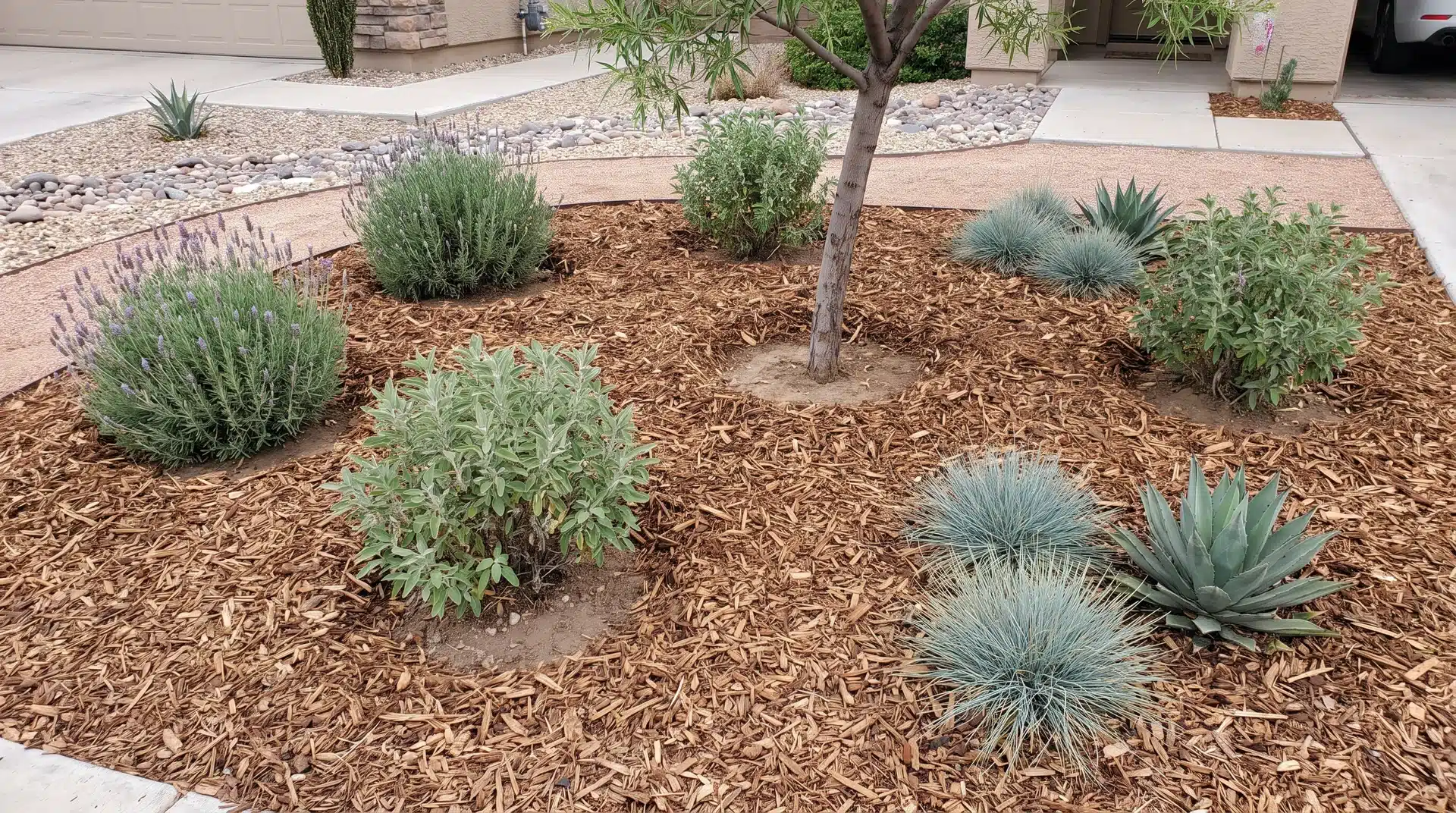
Add mulch around shrubs, trees, and perennials to help the soil hold moisture and reduce weed growth. It is especially useful in beds where bare soil would otherwise dry out quickly.
Spread it evenly, but leave some space around stems and trunks. I’ve seen mulch piled directly against plant bases hold too much moisture in the wrong place, so that small gap is worth keeping.
9. Use Decorative Gravel Around Planting Areas
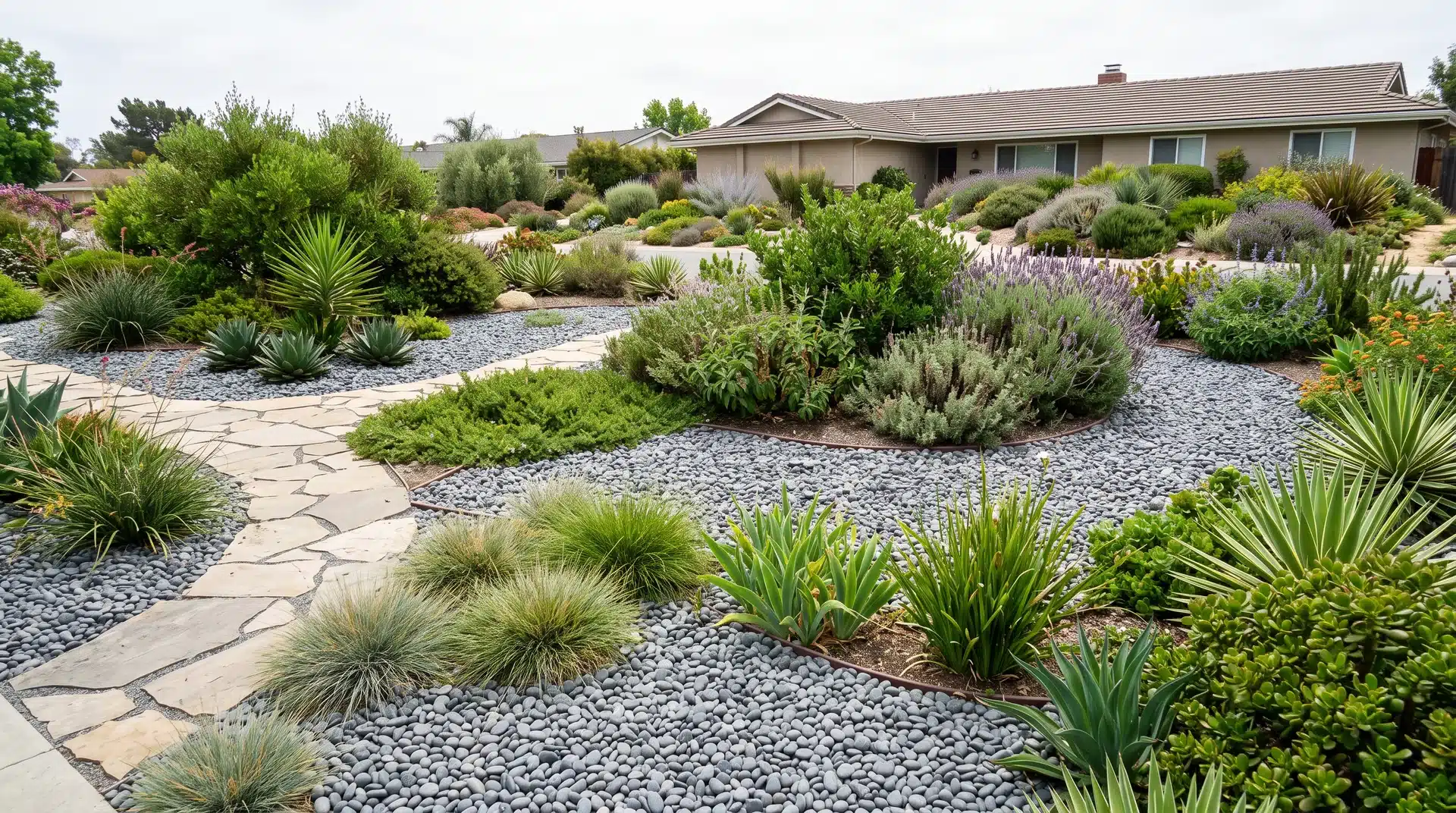
Use gravel to cover open spaces where grass is difficult to maintain or where you want less planted area. It works well around drought-tolerant plants, along paths, and between larger planting groups.
Try not to turn the entire yard into one continuous stone surface. Gravel works best when it supports the planting rather than replacing it completely, so leave enough greenery to keep the space from feeling bare.
10. Build a Low-Maintenance Rock Garden
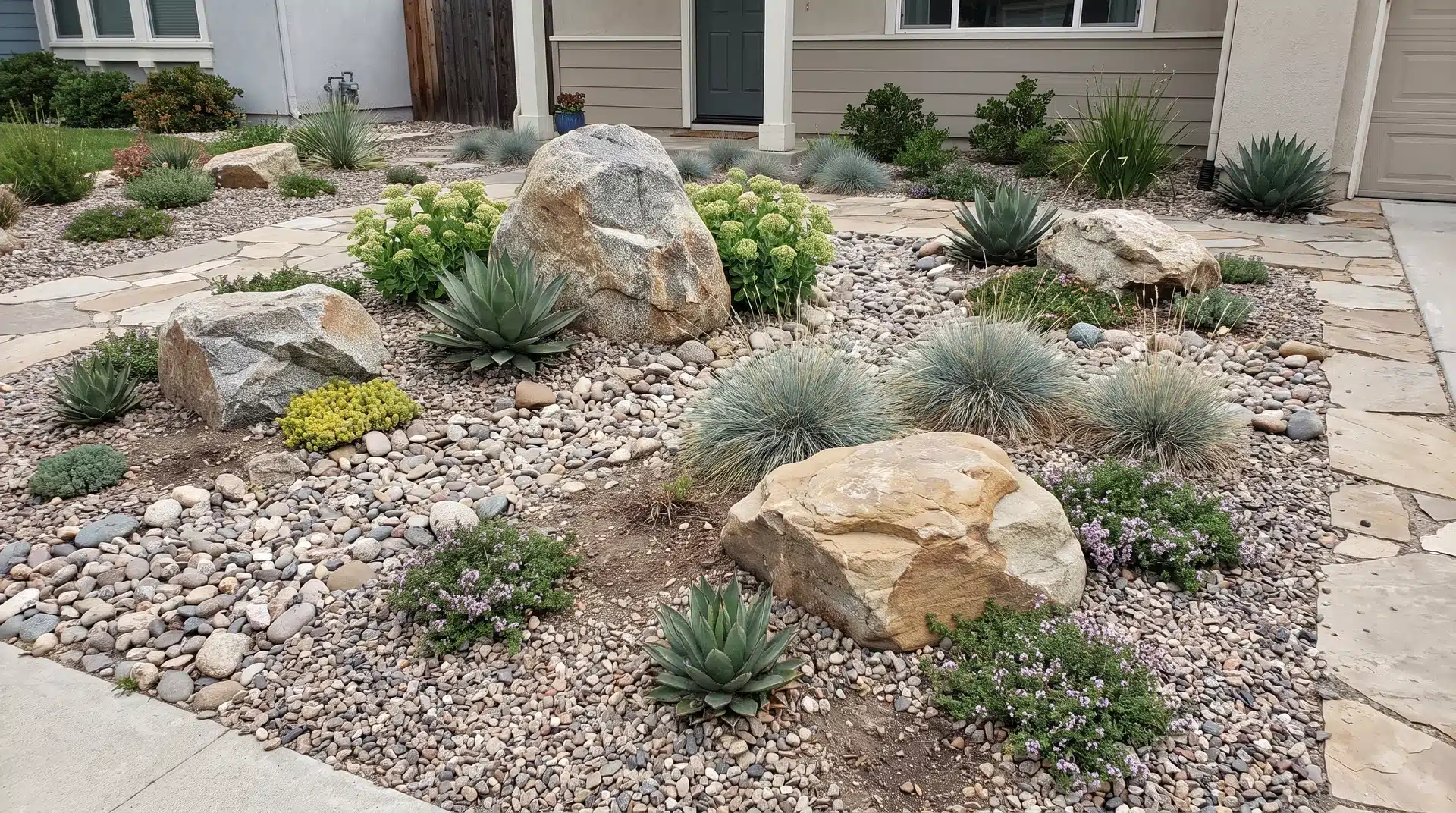
Create a rock garden by combining a few larger stones with drought-tolerant plants. This works especially well in dry areas or spots where grass struggles to grow. Place the largest rocks first, then arrange the plants around them based on their mature size.
I’ve seen rock gardens become crowded surprisingly fast when everything is planted too tightly at the beginning, so leaving more room than you think you need usually pays off.
11. Add a Functional Xeriscape Path
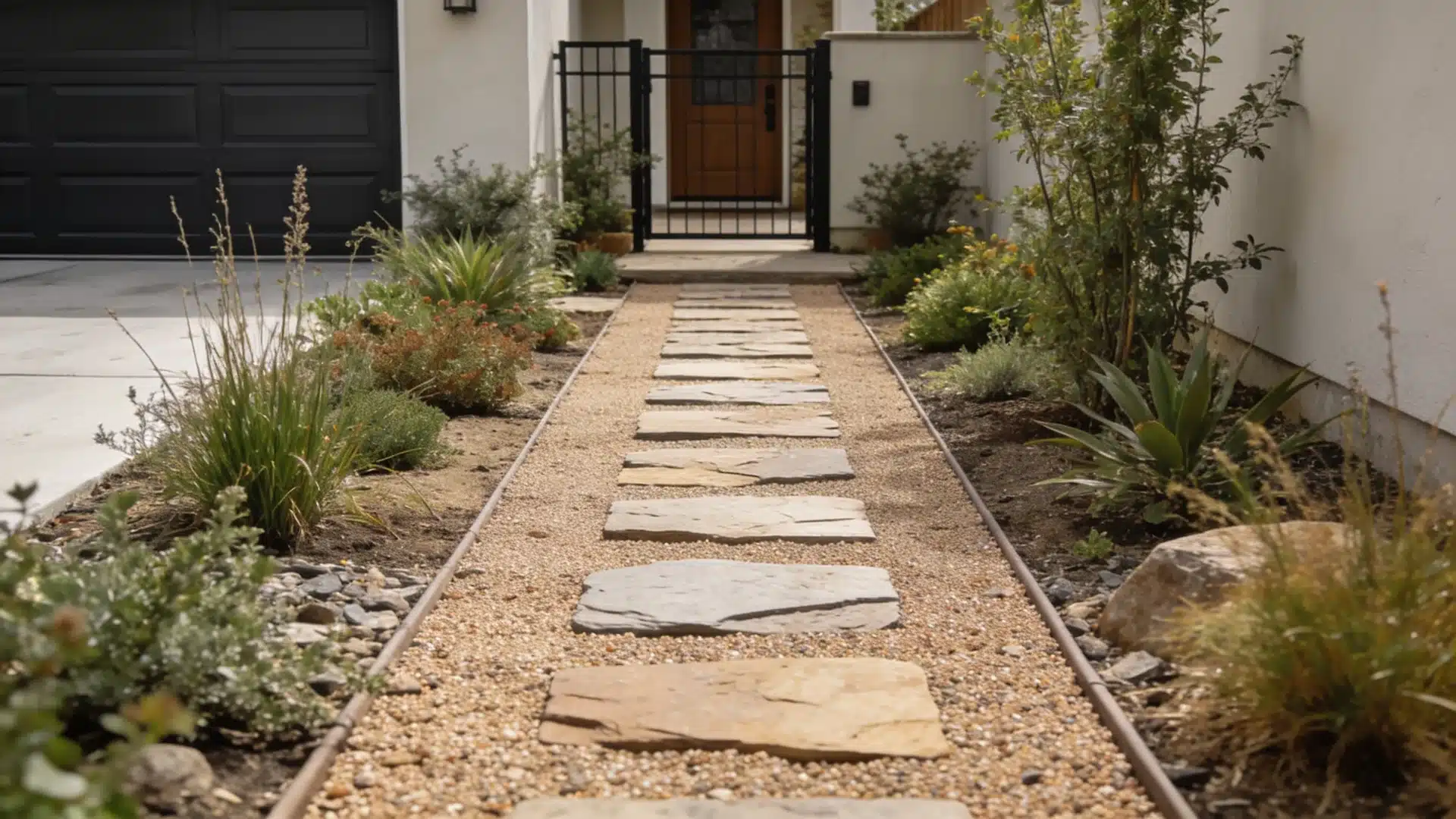
Use a pathway to connect the parts of your yard you already move between. Decomposed granite, flagstone, and permeable pavers can all create practical walkways without adding more lawn.
Plan the route around real foot traffic, such as the path from the driveway to the front door, gate, patio, or shed. A path that solves an everyday access problem will feel more natural than one added only to fill empty space.
12. Create a Xeriscape Focal Point
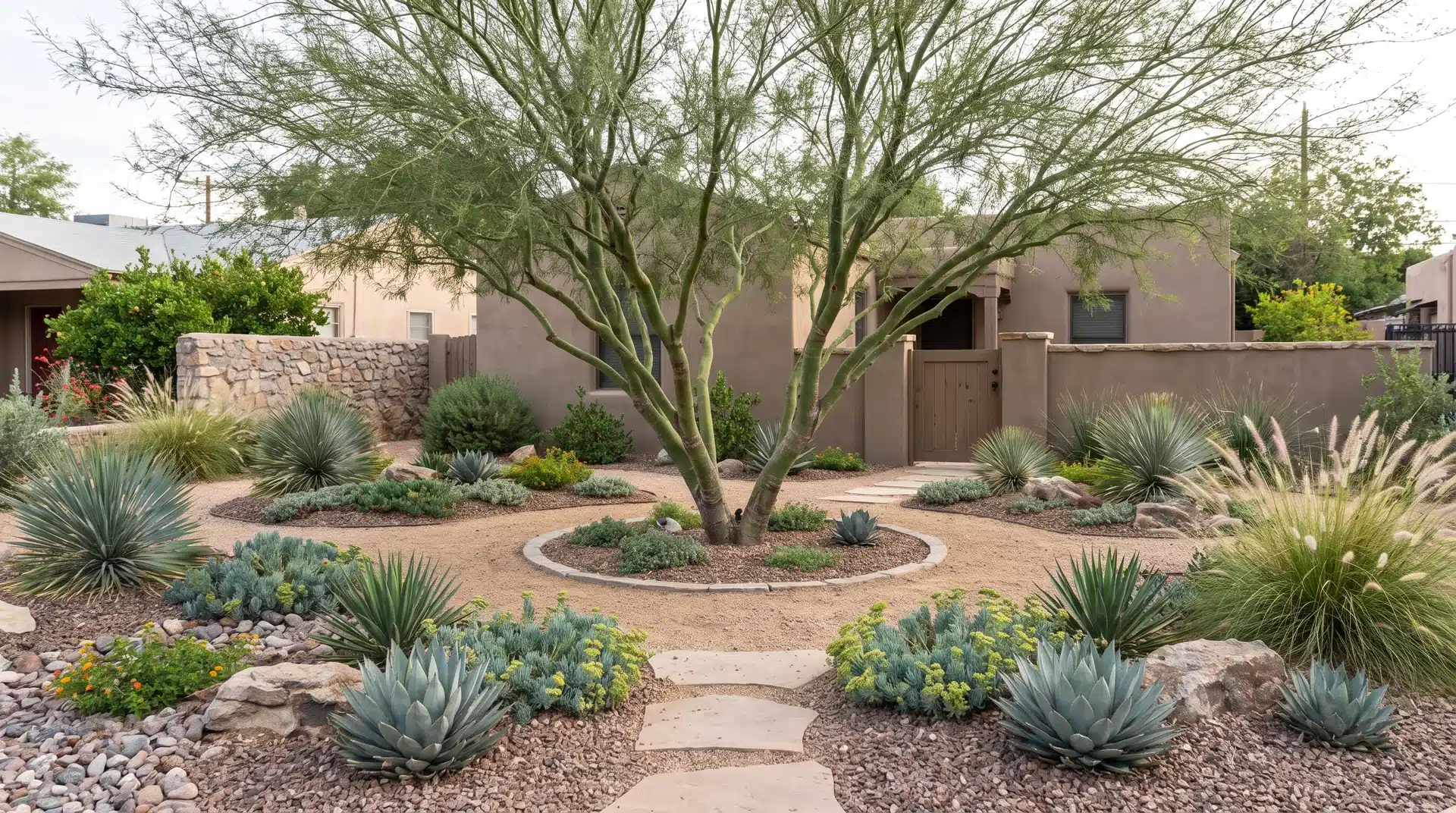
Choose one feature to anchor the landscape, such as a drought-tolerant tree, large boulder, or standout plant.
This gives the rest of the yard a clear visual center. Once you choose that feature, keep the surrounding planting a little simpler.
Too many competing elements can make the focal point disappear into the rest of the bed.
13. Convert an Old Lawn Spray Zone to Drip Irrigation
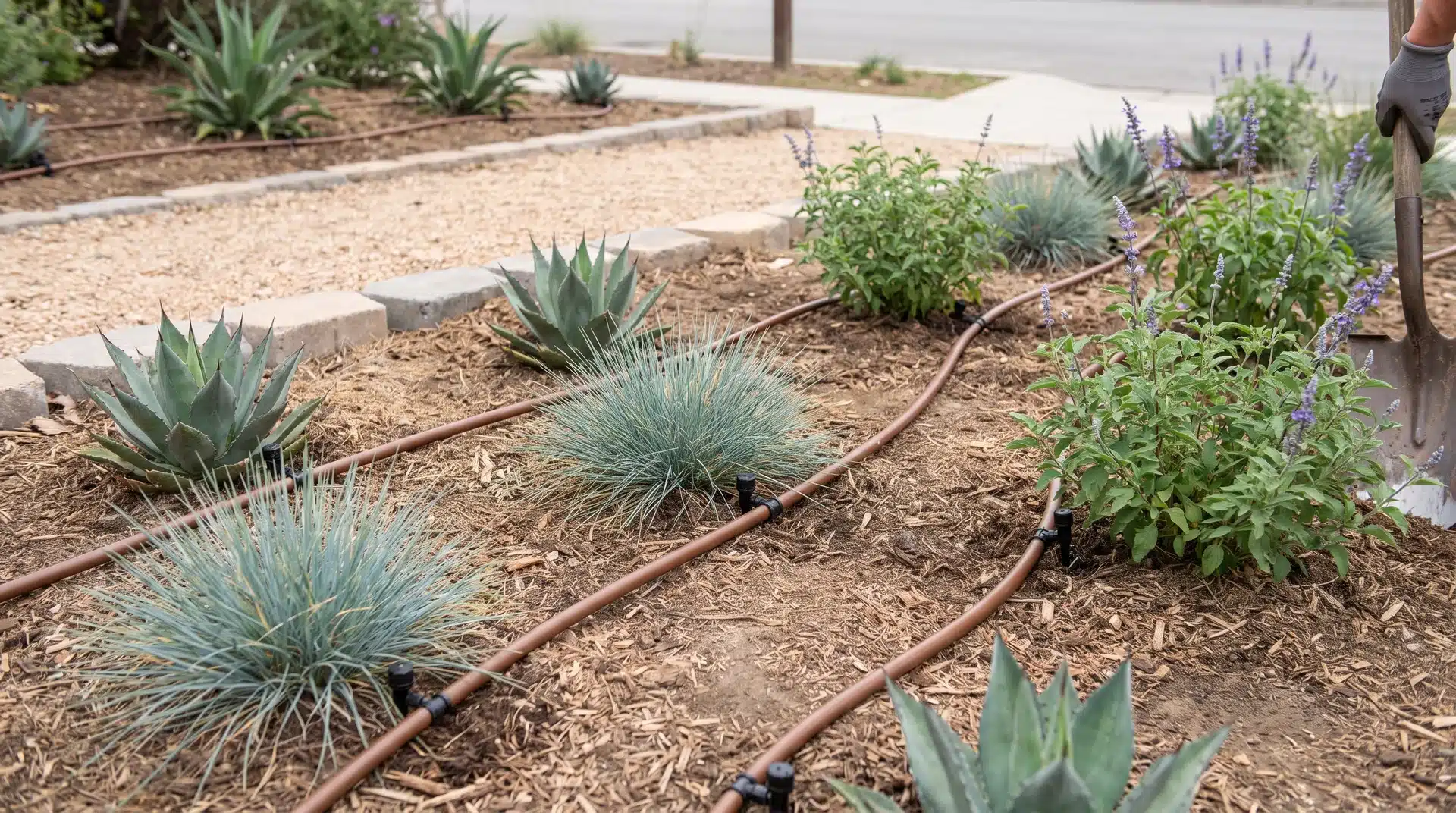
If you remove sections of lawn, update the irrigation system to match the new planting layout. Drip irrigation sends water directly to plant roots instead of spraying areas that no longer need it.
Set your plants in place first, then run the tubing based on where the root zones will be. Test the system before covering the lines so you can fix leaks, blocked emitters, or missed plants while everything is still easy to reach.
14. Add a Seating Area to the Xeriscape
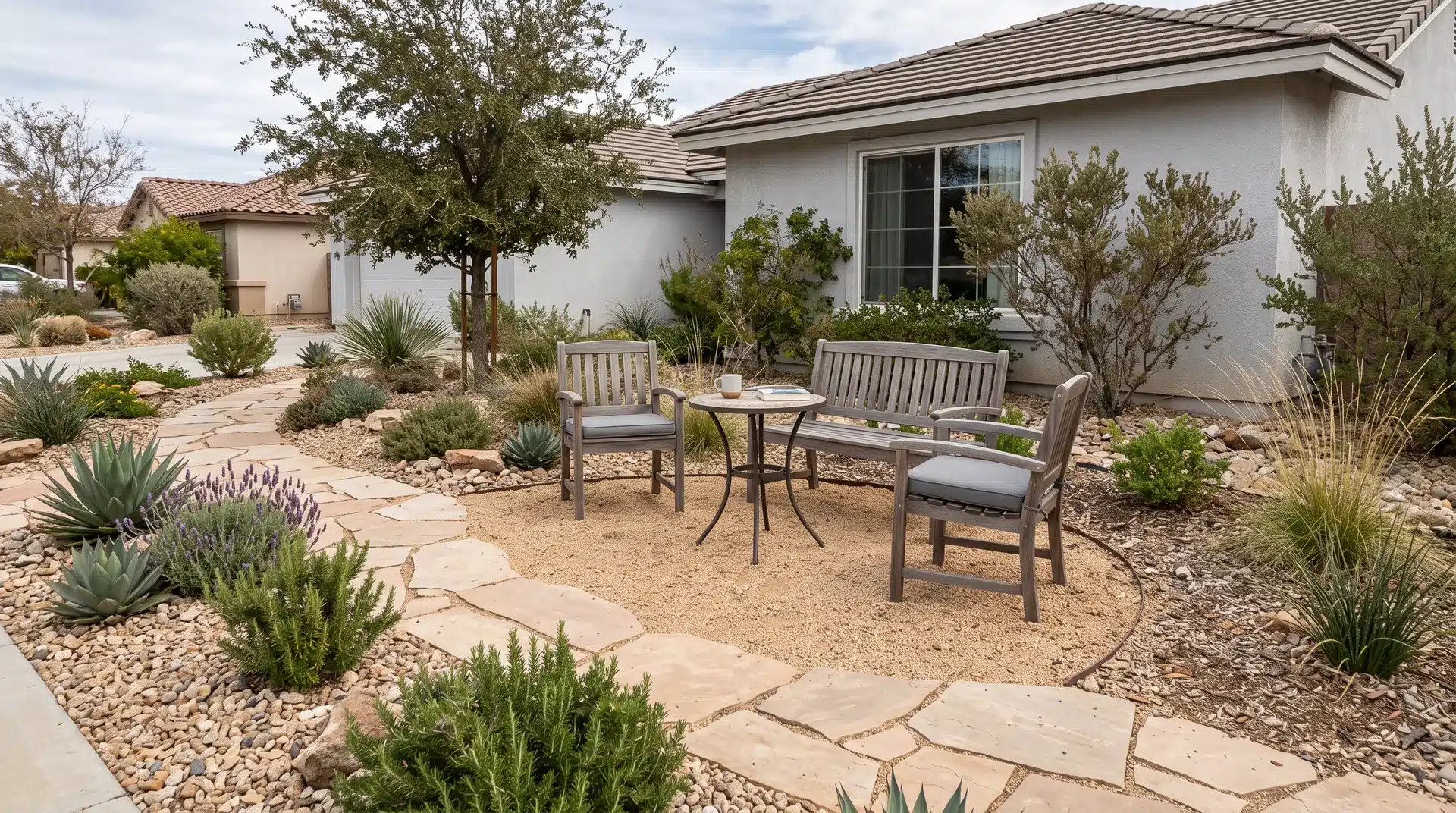
Turn part of a former lawn into a useful outdoor area with gravel, pavers, or stone. A small bench, chair, or table can make that space more practical without adding much maintenance.
Keep enough open room around the furniture for comfortable movement. In smaller yards, I would rather leave a little extra breathing room than squeeze in more plants and make the area harder to use.
15. Create a Dry Creek Bed Landscape
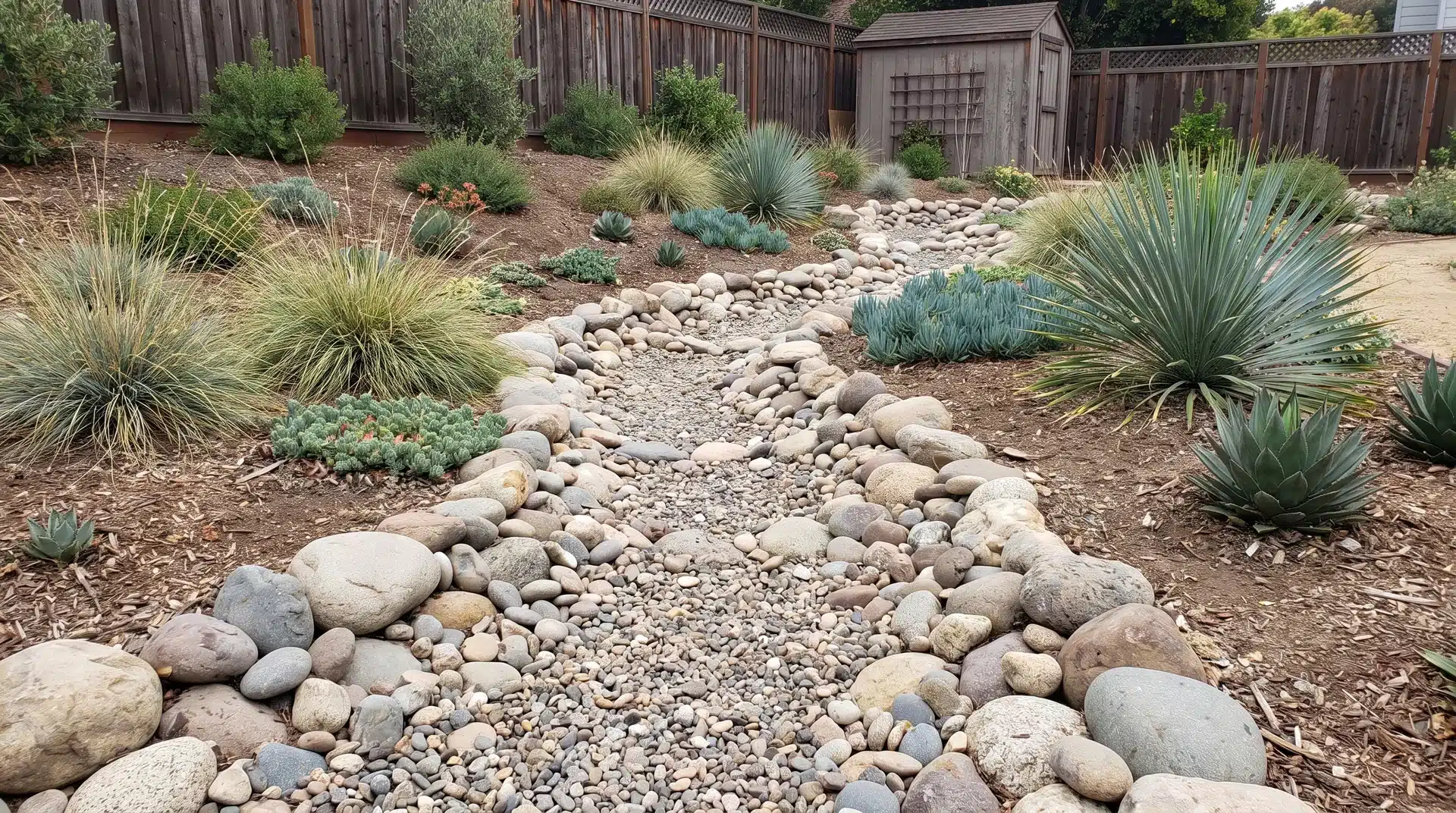
Add a dry creek bed with river rocks, gravel, and drought-tolerant plants to create a feature that also helps guide rainwater through the yard.
Follow the natural slope instead of forcing the creek bed into a decorative curve that ignores where water actually moves.
If runoff already collects in one part of the yard, use that existing pattern as your starting point so the feature looks natural and serves a real purpose.
Benefits of Xeriscaping: Water Savings and Less Maintenance
Xeriscaping earns its place for two reasons: lower water use and less routine maintenance. But how much you save depends on how much lawn you actually replace.
Outdoor watering makes up more than 30% of the average home’s total water use, and that number climbs to 60% in dry regions. Replacing a small strip of lawn will not move your bill much.
Replacing most of your lawn is where the real savings show up.
- Lower Water Bills: Full xeriscape conversions can cut landscape water use by 50 to 75%, based on figures from Denver Water, the agency that created the xeriscape concept.
- Less Mowing: Fewer grass areas mean fewer weekends spent behind a mower.
- Fewer Weeds to Pull: Mulch and ground covers block weed growth, so beds need less weeding over time.
- Lower Plant Upkeep: Drought-tolerant plants need less feeding, trimming, and watering once they are established.
I’ve seen homeowners add a few drought-tolerant plants around the edges and expect big changes. It does not work that way.
The mowing schedule barely shifts either. Replace a quarter of your lawn, and you will see a quarter of the benefit. Replace most of it, and both water use and maintenance time drop together.
Common Xeriscaping Misconceptions To Avoid
Xeriscaping does not mean turning your yard into a field of rocks or giving up greenery. A good design uses plants, mulch, turf, and hardscape in ways that fit the local climate and reduce unnecessary water use.
- It Is Not Just Gravel: Rocks can be part of a xeriscape, but they do not define it. Drought-tolerant plants, mulch, and practical lawn areas can all have a place.
- You Can Keep Some Grass: Xeriscaping does not require removing all lawn. A smaller turf area can remain for play or recreation, while organic lawn care can reduce the use of synthetic fertilizers and pesticides.
- Plants Still Need Water: Low-water plants need regular irrigation while they become established. Once established, many regionally appropriate plants need much less supplemental water.
- Maintenance Still Matters: Xeriscaping can reduce routine work, but it doesn’t eliminate maintenance. Weeding, pruning, cutting back plants, and checking irrigation may still be needed.
- Plants Should Match the Site: Choose plants based on your local climate, soil, sunlight, and moisture levels. Grouping plants with similar water needs also helps prevent overwatering and underwatering.
A successful xeriscape should feel like a usable part of your yard, not an empty space covered with stone. The right plants and layout can save water while providing shade, color, texture, and places to enjoy outdoors.
Wrapping Up
Creating a water-wise yard does not mean giving up a green, welcoming outdoor space.
The best xeriscape ideas combine drought-tolerant plants, smart watering, mulch, useful hardscape, and a layout that fits your yard. I’d suggest starting with one area instead of changing everything at once.
You can replace a small section of lawn, group plants by water needs, or add a simple gravel path and planting bed.
Over time, these changes can lower water use and reduce routine yard work. Think about your climate, soil, sunlight, and how you use the space before choosing plants or materials.
Which xeriscape idea would you try first? Share your favorite in the comments!
Frequently Asked Questions
What is the Cheapest Way to Xeriscape?
The lowest-cost approach is converting turf gradually instead of all at once: kill a section of lawn, cover it with mulch or gravel you already have room for, and add a few drought-tolerant plants or divisions from an existing bed. Skipping irrigation upgrades and buying small plants that fill in over time keeps costs down.
What are the 7 Principles of Xeriscaping?
The seven principles are planning and design, soil improvement, appropriate plant selection, practical turf areas, efficient irrigation, mulching, and appropriate maintenance. Together they guide a yard from initial layout through long-term upkeep, so water-saving choices like the plant and hardscape ideas above work as a system instead of isolated additions.
What are the Disadvantages of Xeriscaping?
Drought-tolerant plants still need regular watering during their first year or two while roots establish, and a full lawn-to-xeriscape conversion has upfront costs for plants, mulch, and hardscape. Some homeowners also find fewer plant options for deep shade, and an all-rock design without enough plant coverage can look stark or increase heat around the house.
What is the Best Material for Xeriscape?
There’s no single best material; each does a different job. Gravel and river rock cover large areas cheaply and drain well; organic mulch is better near plants because it improves soil as it breaks down; and flagstone or decomposed granite works best for paths that need to stay firm and walkable underfoot.