

Nobody obsesses over the best angle for solar panels more than the people who’ve already paid for a system that’s underperforming.
Tilt and azimuth work together, not separately, and treating them as one checkbox on an install form leaves real output sitting on the table year after year.
Up next, how your latitude sets a baseline, when that baseline stops working, and what to do when your actual roof refuses to cooperate with the textbook answer.
Get the angle right and your system quietly earns its keep for decades. Get it wrong, and no amount of premium panels will fix that.
Tilt vs. Azimuth: Two Variables That Don’t Correct for Each Other
Solar advice often reduces everything to one number, but positioning your panels really means solving two separate variables that don’t behave the same way at all.
The first is tilt, how steeply your panel sits relative to flat ground. Get this wrong and your panels miss the sun’s most direct angle every day.
The second is azimuth, which compass direction your panel faces. These two don’t compensate for each other; a perfectly tilted panel facing northeast still underperforms badly.
Here, I’m focusing on tilt itself. For how azimuth interacts with utility rates and roof orientation, see this rundown of which direction your panels should actually face, because that’s a different question entirely.
How Latitude Sets Your Tilt Angle Baseline
Your latitude determines the average height of the sun above your horizon, and that single number is what sets your starting point for tilt angle before anything else.
The formula is simple. Your baseline tilt sits at roughly 90 degrees minus your latitude, which points your panel face perpendicular to the average incoming solar ray.
Here’s how that plays out at three common latitudes, giving you a real starting number instead of an abstract formula to calculate on your own:
| Latitude | Baseline Tilt |
|---|---|
| 25° | 25–28° |
| 35° | 32–38° |
| 45° | 40–45° |
That’s your baseline for the best angle for solar panels on your specific roof, and the number most installers start from. It works well for most of the country, but it isn’t the final word for every roof.
When the Latitude Rule Overstates Accuracy
The latitude formula works well in sunny, low-humidity climates. Once you move above 55 degrees north or below 20 degrees north, its reliability starts to break down.
- At high latitudes, winter takes the biggest hit. A fixed tilt set to your annual average leaves panels poorly angled during the short, low-output winter days.
- Overcast climates add another wrinkle. In places like the Pacific Northwest or northern Europe, diffuse light spread across the sky favors a shallower tilt than latitude suggests.
Your latitude gives you a strong starting point, but your local climate and seasonal priorities are what turn that number into the right number for your roof.
Should You Adjust Tilt Seasonally?
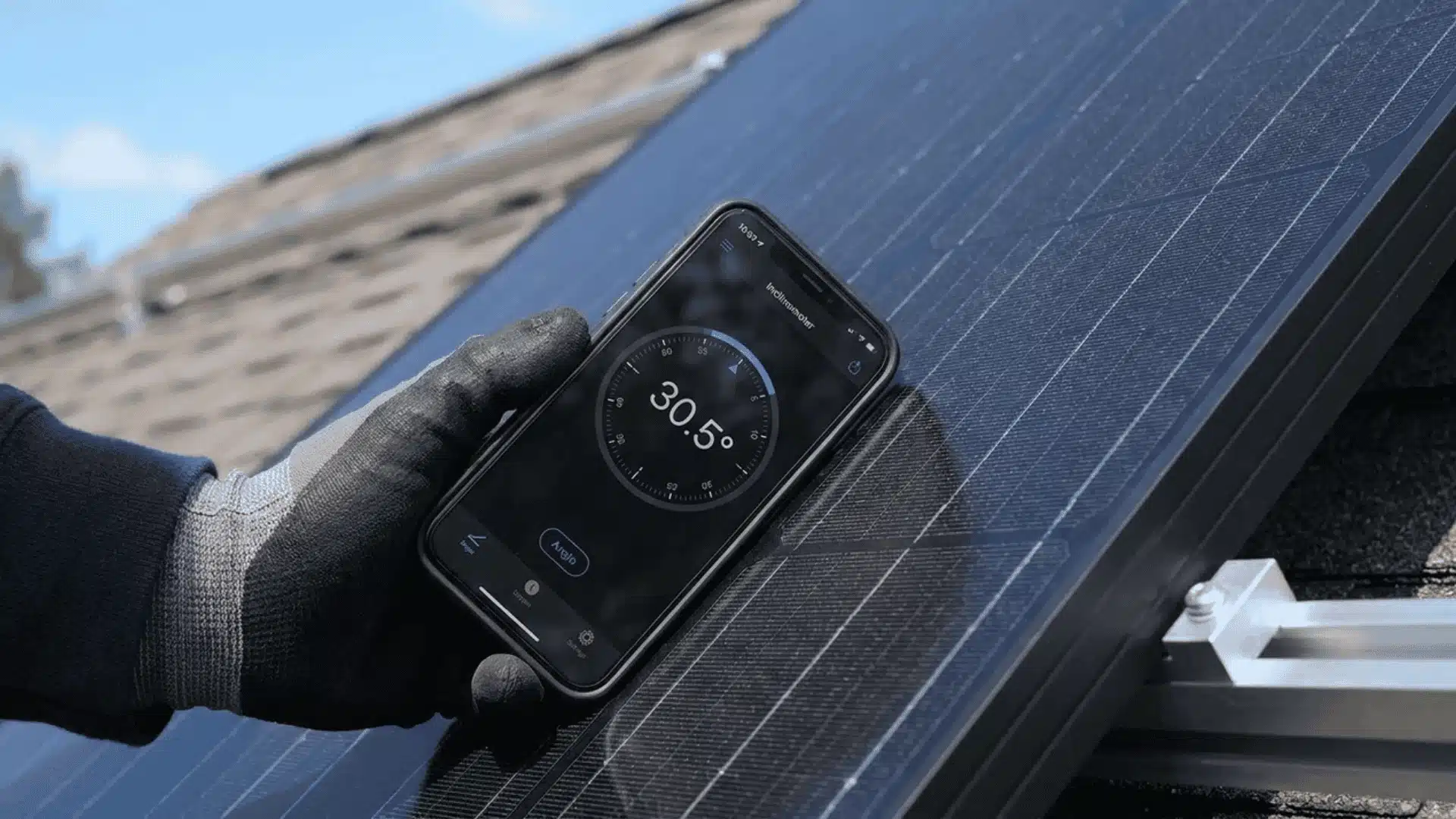
Most residential installs use a fixed tilt set at local latitude, and that’s the right call for the vast majority of homeowners reading this article today.
Understanding the seasonal trade-off still helps you make an informed decision, even if you never touch your mounting hardware after the day your installer leaves.
- Steeper Tilt (+10–15°) favors winter production, when the sun sits lower in the sky and direct radiation strikes your panels at a sharper, less efficient angle.
- Shallower Tilt (−10–15°) favors summer production, when the sun climbs higher overhead and a lower angle keeps your panels more perpendicular to incoming sunlight all season long.
- Latitude-Matched Tilt splits the difference between both seasons and maximizes your annual average output, which is genuinely what most homeowners actually need from their system.
- Grid-Tied Systems treat winter shortfall as a higher bill, not a reliability problem, so a fixed tilt at your annual average is the right target, adjustable mounts rarely justified.
- Off-Grid Systems face real risk if winter shortfall leaves you without power entirely, especially at high latitudes, making adjustable mounts or a steeper fixed tilt genuinely worth considering.
For grid-tied homes, fixed tilt at your annual average is the right call every time. Off-grid systems are where seasonal adjustment genuinely earns its cost.
What to Do When Your Roof Geometry Isn’t Optimal

Most roofs aren’t optimally angled for solar, and that’s completely normal. The real question isn’t how to change your roof, but how to work intelligently within it.
Deviation Bands and Output Loss
Not every deviation from ideal tilt costs you the same amount. The performance penalty follows a curve that starts gently and steepens sharply past certain thresholds.
| Deviation from Optimum | Estimated Annual Output Loss | Recommended Action |
|---|---|---|
| Under 5% | Negligible | No action needed |
| 5–15% | Minor | Monitor, but acceptable |
| 15–25% | Moderate | Consider a tilt-up racking assessment |
| Over 25% | Significant | Get a professional site review |
Staying within 15 degrees of your optimal tilt keeps annual losses under 15 percent for most installations, but beyond that band the curve steepens fast.
Tilt-Up Racking as a Correction Tool
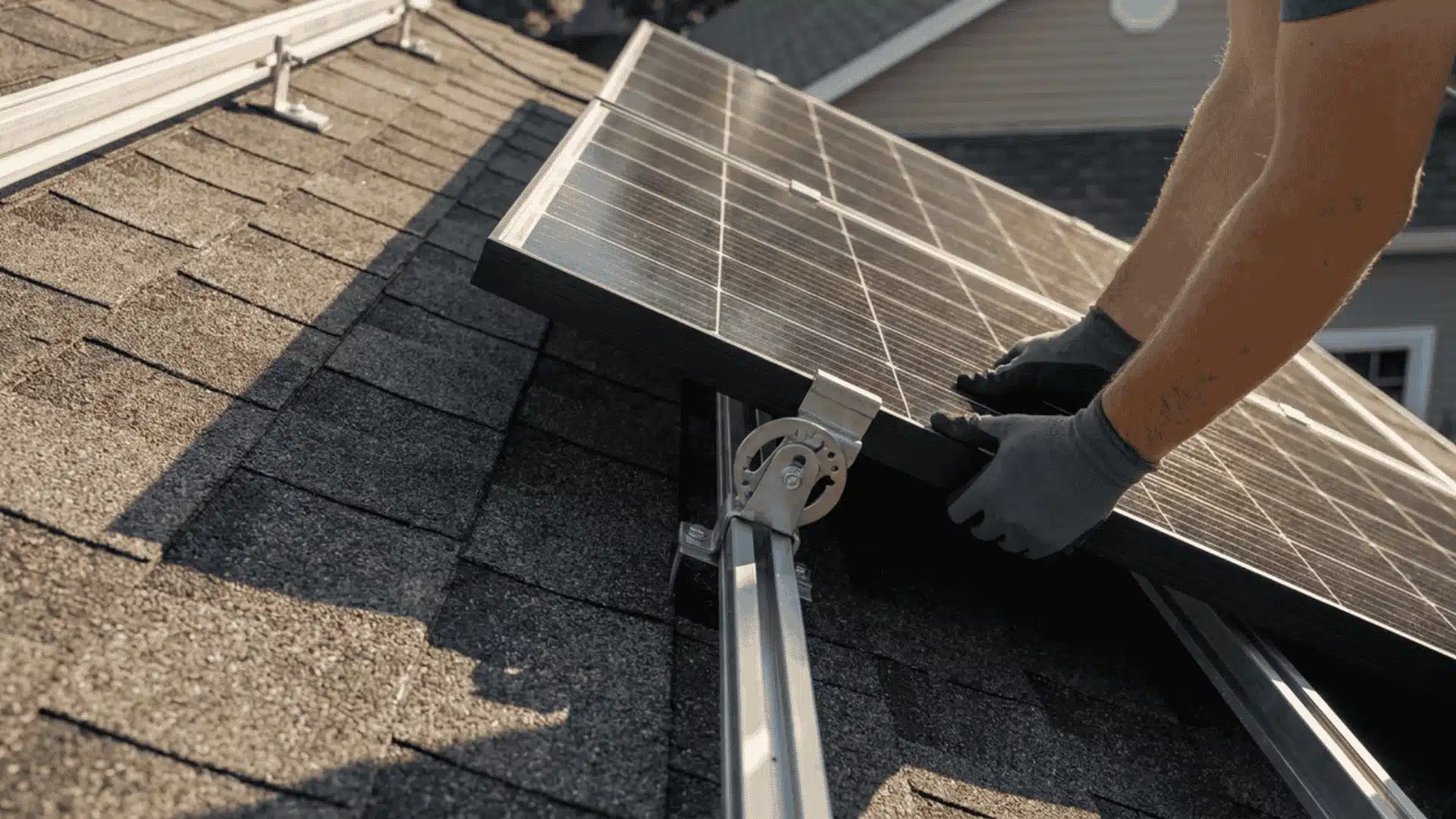
Tilt-up racking lets your installer set an independent tilt angle regardless of your actual roof pitch, making it the primary fix for flat or very low-slope roofs.
It’s worth considering when your roof pitch sits below 10 degrees and your latitude sits above 40 degrees north, where winter shortfall becomes a real concern.
On steeply pitched roofs, tilt-up racking creates significant wind uplift risk, since the raised angle catches wind loads your roof’s structure was never designed to handle.
Many local building codes restrict or outright prohibit tilt-up configurations on pitched residential roofs, so check your jurisdiction before assuming this correction is even available.
The irony is real. The roof geometry that most needs correcting, steep pitch at high latitude, is often the hardest geometry to correct structurally and legally.
Your roof’s geometry is a constraint to plan around, not a reason to walk away from solar entirely, once you know your real deviation and options.
How to Check If Your Panels Are Angled Correctly?
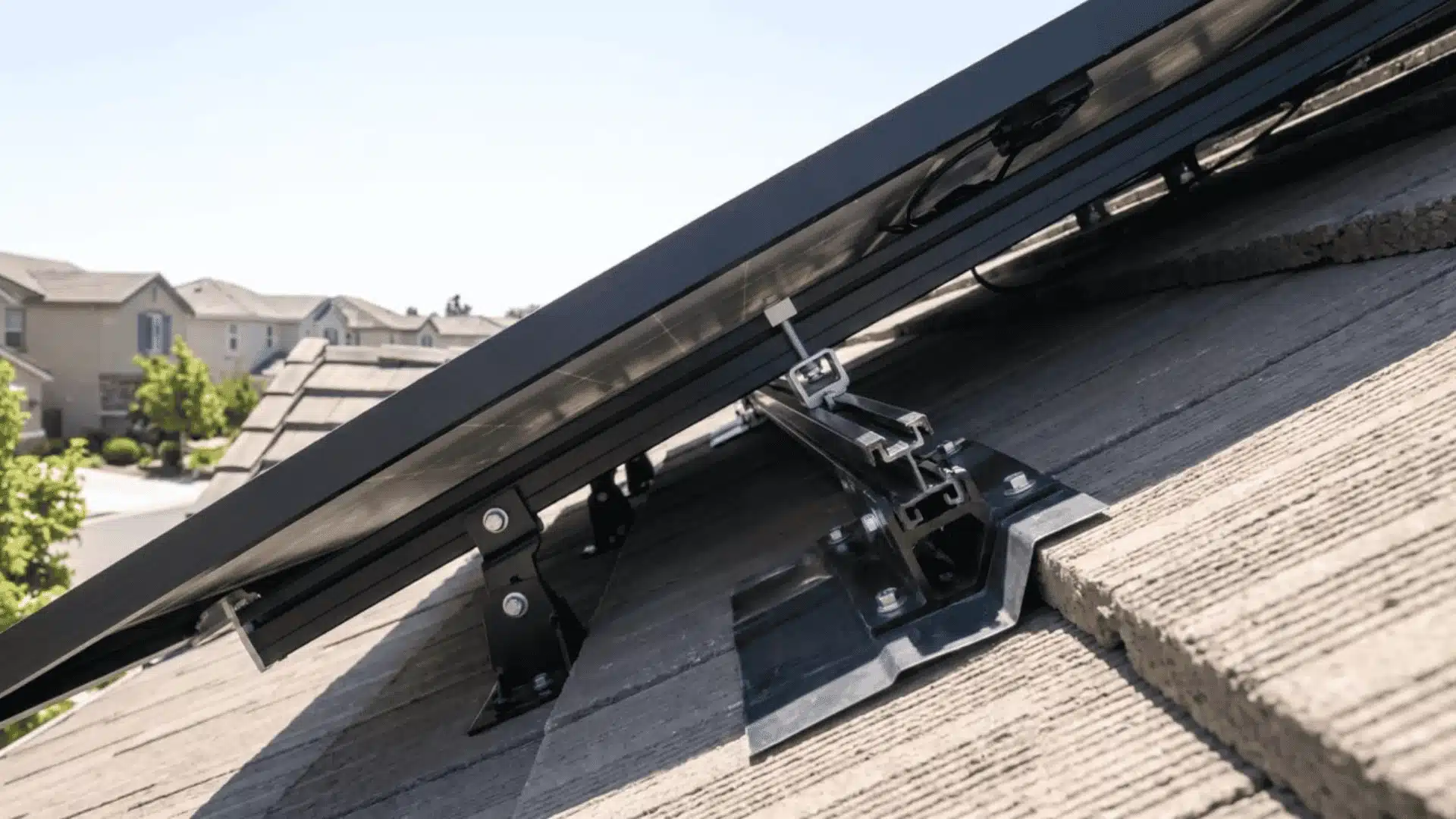
A digital inclinometer app measures tilt, and a compass app confirms azimuth, both already on your phone. Place it flat on the panel for tilt, then face forward for azimuth.
Correct your compass reading with your local magnetic declination to get true azimuth, not magnetic azimuth. Write down both corrected numbers before plugging them into a simulation tool next.
Running the Numbers Through PVWatts/PVGIS
Enter your measured tilt and azimuth and compare against the optimal run.
The output difference between your actual and optimal scenario is your real performance cost. That percentage is what you check against the deviation-band table above.
Under 5 percent needs nothing further. Between 5 and 15 percent is worth monitoring. Past 15 percent, revisit tilt-up racking or bring in a professional reviewer.
Verification confirms your geometry is correct, but it can’t catch shading from trees or nearby structures, which is a separate check worth running before you finalize anything.
One Thing Verification Won’t Catch: Shading
Angle verification has an important blind spot. Shading from trees, chimneys, or neighboring structures never shows up in your tilt and azimuth measurements or calculations.
If your measured angles look correct but real output still falls short of what PVWatts predicted, shading is the next variable worth investigating on your own roof.
A solar pathfinder tool or a professional site assessment is the right next step here. Your angles can be perfect and output can still underperform
Conclusion
Your roof’s angle is quietly working against or for you every single day, and most homeowners never measure it before writing the biggest check of the project.
Latitude gives you a solid starting number, but your climate, your roof pitch, your grid setup, and the solar panel angle direction guide for facing direction all nudge that number before you finalize anything.
Deviation bands, tilt-up racking, even shading you can’t see from the ground, none of it lives in a spec sheet. It lives on your actual roof.
Grab an inclinometer, run your numbers through PVWatts, and know your real angle before anyone climbs onto your roof with a toolbox and a quote already written up.
Frequently Asked Questions
What is the best angle for solar panels in the US?
For most of the contiguous United States, optimal fixed tilt falls between 25 and 40 degrees, roughly matching local latitude. Southern states like Florida sit closer to 25–28 degrees, while northern states like Minnesota run closer to 38–42 degrees.
Can solar panels be mounted flat?
Flat mounting at 0 degrees tilt reduces output substantially in most climates and lets debris and water accumulate on the panel surface, accelerating degradation. Installers generally recommend a minimum 10-degree tilt, and ballasted tilt-up racking is the standard fix on flat commercial roofs.
How much output do I lose with a non-ideal tilt angle?
Within about 15 degrees of your optimal tilt, annual losses typically stay under 15 percent. Beyond that band, losses increase non-linearly, so check your exact deviation against the bands covered above.
Is fixed tilt enough, or do I need adjustable mounts?
Fixed tilt at your latitude is enough for the vast majority of grid-tied homeowners, since annual average output is the right target. Adjustable mounts only pay off in specific cases, mainly off-grid systems where winter shortfall threatens reliability.