

I used to think solar power only worked for people who owned a home with the perfect roof. Then I learned there was another option.
It did not require installing a single panel. That made me curious about how community solar works and why more renters, condo owners, and homeowners are signing up for it.
Community solar lets people share the benefits of a larger solar project.
They still receive electricity through their regular utility service. It sounds simple at first. However, understanding how the billing, credits, and savings work together makes it much easier to decide if it is the right choice.
The Best Candidates for Community Solar
Community solar works best for people who want solar savings but cannot or do not want to install rooftop panels. That includes renters, condo owners, apartment residents, and homeowners with shaded roofs, old roofing, limited space, or structural issues.
It also helps people who’d rather avoid paying for solar upfront, plus the maintenance, permits, or long installation timeline that comes with a home solar system.
Instead of buying panels, you subscribe to a share of a nearby solar project and receive bill credits from your utility.
The catch is availability. Community solar only works if your state, utility, or local energy market supports it. Before comparing savings, contract terms, or providers, the first step is to check whether a real program exists in your area.
How Does Community Solar Work: Understanding the Three Stages of Solar Sharing
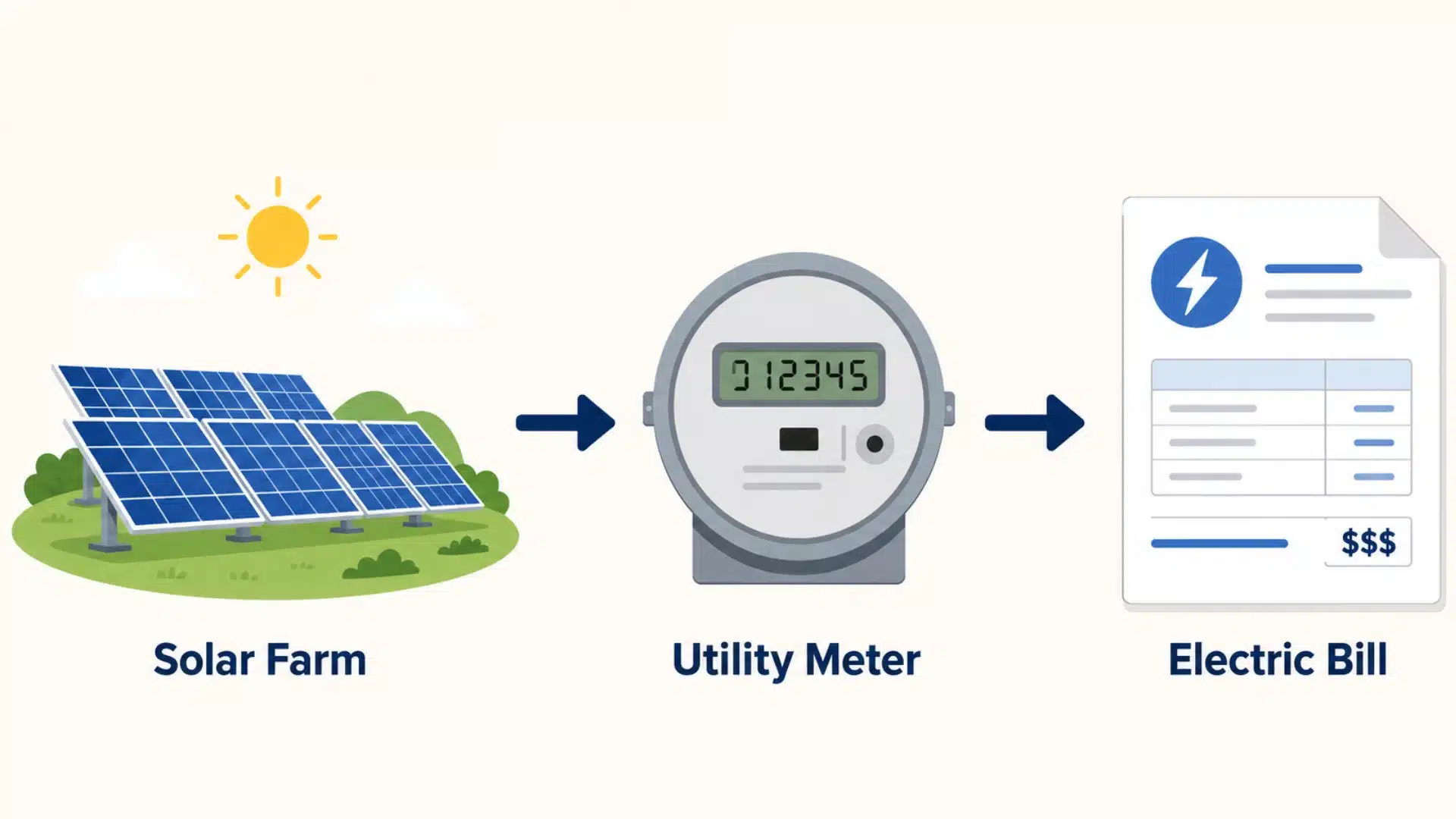
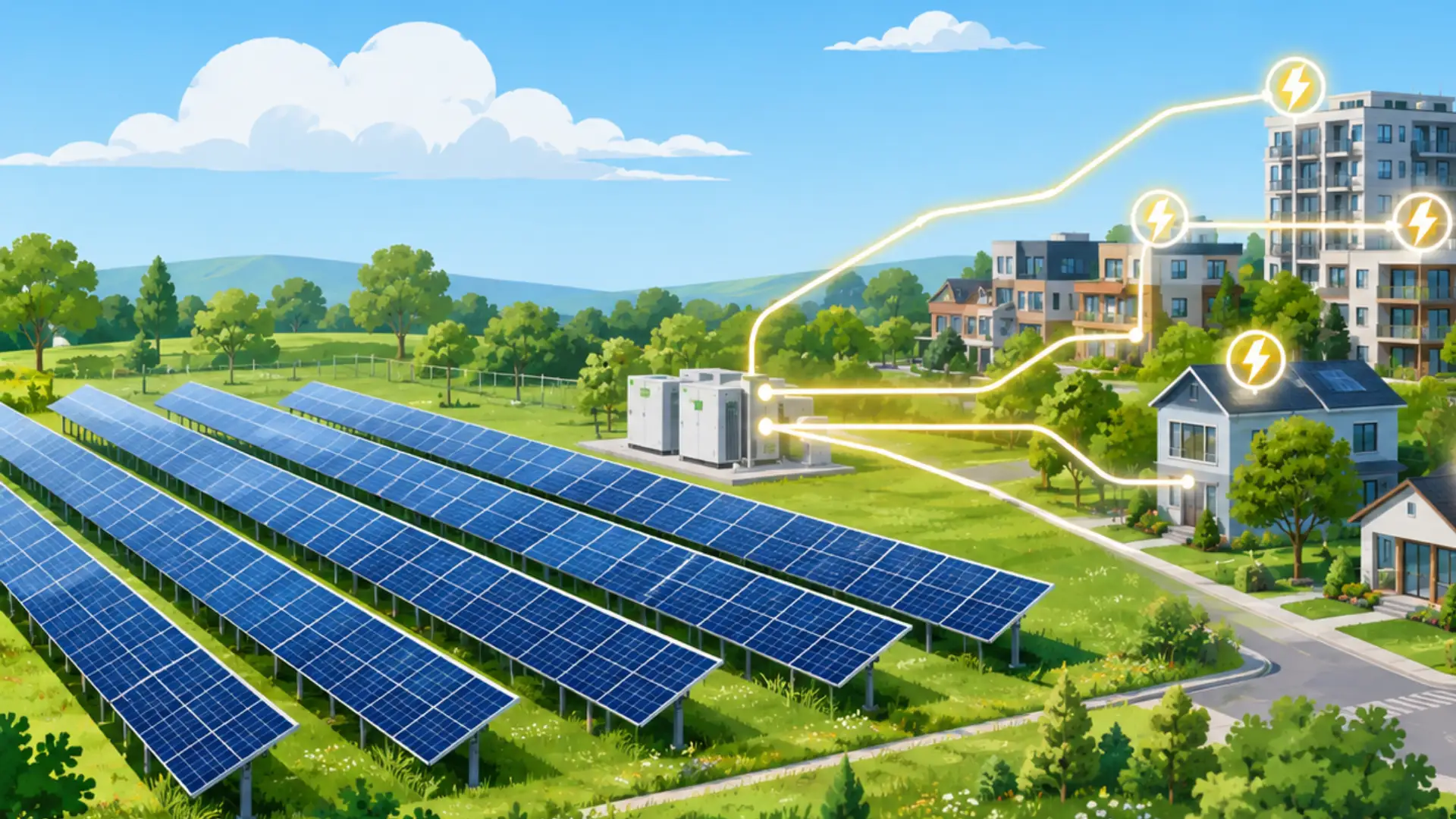
Community solar runs on a simple loop that repeats every billing cycle: generation, allocation, and crediting. Each stage feeds directly into the next.
1. Generation
A utility or third-party developer builds a large solar farm project within your utility’s service area. As the solar panels generate electricity from sunlight, that power is sent to the local electricity grid rather than directly to your home.
Your home continues receiving electricity through the same utility lines, while the energy produced is tracked for participating subscribers.
2. Allocation
Your utility tracks a specific share of the farm’s output as yours, measured in kilowatt-hours. This is where most explanations stop, but the size of your share isn’t random.
It’s typically set based on your historical usage, so a household that uses more electricity gets allocated a larger slice of the farm’s production.
That’s why two neighbors on the same program can see different savings even at the same discount rate.
3. Crediting
The utility converts your allocated kWh into a dollar credit and applies it to your bill. In some states, that credit shows up as a line item on your regular utility bill, so you never deal with a second statement at all.
In others, the community solar provider bills you separately for your discounted share, meaning you’ll juggle two bills each month. Which setup you get depends on your utility and where you live.
Each step depends on the one before it: the solar farm produces the power, the utility measures the shared value, and the bill credit shows the savings customers actually receive.
How the Credit and Your Payment Actually Connect
Community solar savings are often shown with a simple example: you get a $100 bill credit, pay the provider $90, and keep $10.
That makes the math look fixed, but real bills do not work that neatly. Your utility credit varies based on how much solar energy your share produces each month.
In sunnier months, the credit may be higher. In darker or cloudier months, it may drop. Many community solar subscriptions have steadier payments because they are based on your enrolled share rather than month-to-month weather changes.
However, billing models vary by provider, so the way you are charged may differ depending on the program.
That difference is why savings move month to month. One bill may show stronger savings, while another may look smaller. Over the year, the average usually falls within the promised 5%-20% range.
How Much You Can Actually Save
The 5% to 20% figure gets repeated everywhere, but nothing tells you what pushes you toward one end or the other.
Three things matter most:
- Your region’s solar output. Sunnier states with more consistent generation tend to land subscribers closer to the higher end.
- Your subscription’s discount rate. A steeper discount from the provider means more of the credit turns into real savings instead of covering your payment.
- Your existing usage. A smaller allocated share means smaller absolute savings, even at a strong discount rate.
Savings also compound. A 10% reduction sounds modest on one bill, but across a multi-year contract, it adds up the same way a small thermostat adjustment does over a full winter.
How to Find and Sign Up for a Program?
Community solar signup is easier when you treat it like a utility bill check, not a home improvement project.
- Check Your Utility Website: Start with your utility company’s website. Look for sections named renewable energy, clean energy, solar options, community solar, or billing programs.
- Use a DOE Resource: If your utility website does not show anything useful, check the Department of Energy’s Community Solar Basics page, along with income-qualified solar programs and other state or utility resources for nearby options.
- Compare Available offers: Do not choose the first provider that contacts you. Compare the discount rate, contract length, cancellation terms, and any hidden fees.
- Check Your State Rules: Community solar depends on local policy. The DSIRE database (Database of State Incentives for Renewables & Efficiency) tracks which states currently allow community solar, so it’s a quick way to confirm yours does before you go further. If your state or utility isn’t listed, there may be no real program to join yet
Once availability is confirmed, the best choice usually comes down to steady bill credits, clear terms, and a contract you can live with.
Community Solar vs. Rooftop Solar: Which Fits You
Community solar and rooftop solar both lower energy costs, but they work best for different homes, budgets, and ownership situations.
| Factor | Community Solar | Rooftop Solar |
|---|---|---|
| Roof requirement | No roof needed | Needs a sunny, suitable roof |
| Best for | Renters, condo owners, shaded homes, and low-upfront-cost users | Homeowners with good roof space and long-term plans |
| Upfront cost | Usually low or none | High installation cost unless financed |
| Equipment | No panels installed at your home | Panels installed on your roof |
| Maintenance | Handled by the solar project owner | Usually handled by the homeowner or installer |
| Savings | Based on the subscription discount rate | Based on how much your panels produce |
| Energy credit | Shows up as bill credits from a shared solar farm | Comes directly from your own solar system |
| Control | Less control over the project and savings rate | More control over system size and output |
| Main limit | Only available where programs exist | Not practical for renters or unsuitable roofs |
For homeowners with the right roof, rooftop solar can offer bigger long-term value, but for renters or shaded homes, community solar is usually the more realistic option.
Where Community Solar Runs Into Friction
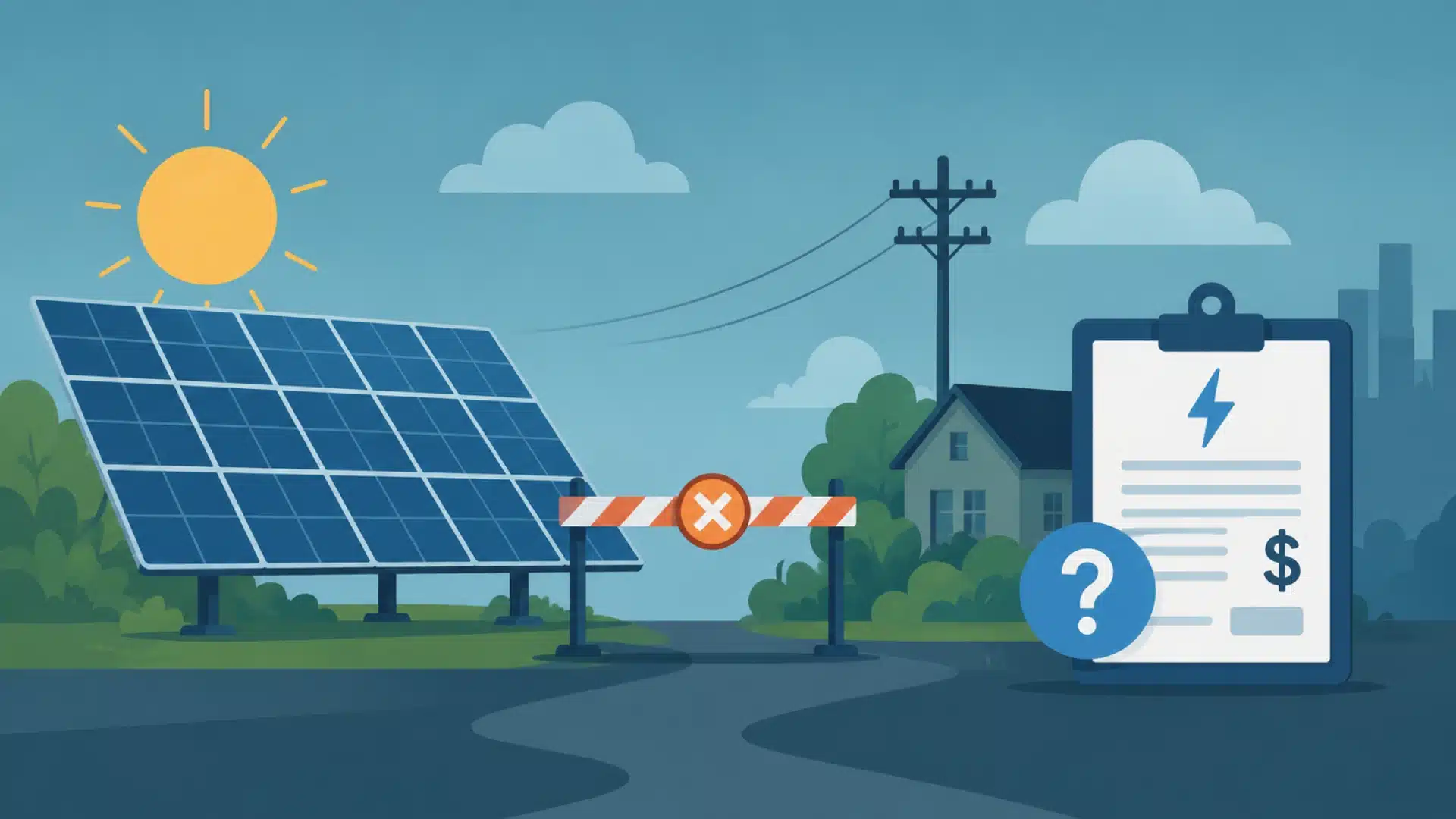
Community solar can be a good deal, but it is not completely risk-free. Your monthly credits depend on how much energy the shared solar farm produces, so savings may drop in winter, during stormy weather, or through long cloudy periods.
That can happen even if your home uses the same amount of electricity. The contract also matters. Some providers offer flexible terms, while others lock you in for longer periods or charge an early-exit fee.
Moving can create another issue, especially if your new address is outside the same utility service area. Rules are not the same everywhere, either.
State policy, utility rules, and provider terms can all affect your final savings. Community solar is not a bad option, but the details deserve a close look.
Signs a Community Solar Program Is Legitimate
Before signing anything, run the offer through a quick check. Legitimate programs tend to share the same handful of traits.
- No high upfront cost is required, since savings come through your utility bill rather than as a separate purchase.
- The program is tied to your utility account, not framed as a personal investment or membership fee.
- The contract clearly states the discount rate, length, and cancellation terms in writing.
- The provider is registered with your state’s solar or utility regulatory agency.
- Your savings estimate is presented as a range, not guaranteed as a fixed amount.
If a provider skips any of these details or pushes you to sign quickly, treat that as a reason to walk away.
Conclusion
Choosing solar does not always mean owning a rooftop system. Shared solar programs create another path for people who want lower energy costs without installing equipment at home.
Understanding how does community solar work helps you compare your options and decide if the savings, contract terms, and availability match your needs.
I found that the biggest factors are your location, utility rules, subscription details, and expected bill credits. Before joining a program, review the terms carefully and compare providers to avoid surprises.
If you have experience with community solar or questions about getting started, share your thoughts and keep learning about available energy options.
Frequently Asked Questions
Is community solar a scam or a pyramid scheme?
No. It’s a regulated billing arrangement, not a recruitment-based model, so there’s no requirement to bring in other subscribers. Legitimate programs are tied to a real solar farm and overseen by state utility regulators. Still, it’s worth reviewing a specific offer’s contract terms before signing.
What is the 33% rule in solar panels?
This typically refers to a rooftop solar sizing guideline, not community solar. Community solar allocations are instead sized to your utility usage and the farm’s available capacity, not a fixed percentage rule.
Is community solar worth it?
For renters or homeowners who can’t install rooftop panels, it usually is, since it delivers savings without any upfront cost. The exact value depends on your state’s program rules and how much local production varies by season.
What happens to my subscription if I move?
Most subscriptions are tied to your specific utility service area, so moving outside it typically ends your participation. Some providers allow you to transfer your subscription within the same utility territory, so it’s worth checking your contract before relocating.