

Most people search “heat pump vs mini split” thinking they’re choosing between two different technologies. They’re not. A mini-split is a type of heat pump, not a competitor to one.
Once you get that, the real question changes. It’s not heat pump vs mini split. It’s ducted vs ductless. If you’re still fuzzy on how ductless systems actually work, that’s worth sorting out first, since it shapes everything below.
I’ll walk you through what each system does, how it holds up once installed, and which one fits your home. No sales pitch. Just what actually matters when you’re staring at a quote.
What Is the Difference Between a Heat Pump and a Mini-Split?
A mini-split is a type of heat pump, not a separate technology. The only real difference is delivery. Once you know your ductwork situation, you’ve already answered the actual question: ducted vs. ductless.
| Heat Pump | Mini-Split | |
|---|---|---|
| What it is | The broader category. Moves heat instead of making it. | A specific type of heat pump within that category. |
| How it works | Pulls warmth from outside air and sends it in, reversing the process to cool. | Same core process, just delivered differently. |
| Delivery | Can use ducts or skip them. | Skips ducts entirely, sends conditioned air straight to the room. |
| Common mix-up | Treated as a separate option from mini-splits. | Treated as competing with heat pumps instead of being one. |
Here’s where I see people get tripped up: forums and product pages treat these as two separate purchases. So is a heat pump the same as a mini split? Not exactly, but close. One is nested inside the other, which is where most of the confusion starts.
How Are Heat Pumps and Mini-Splits Built Differently?
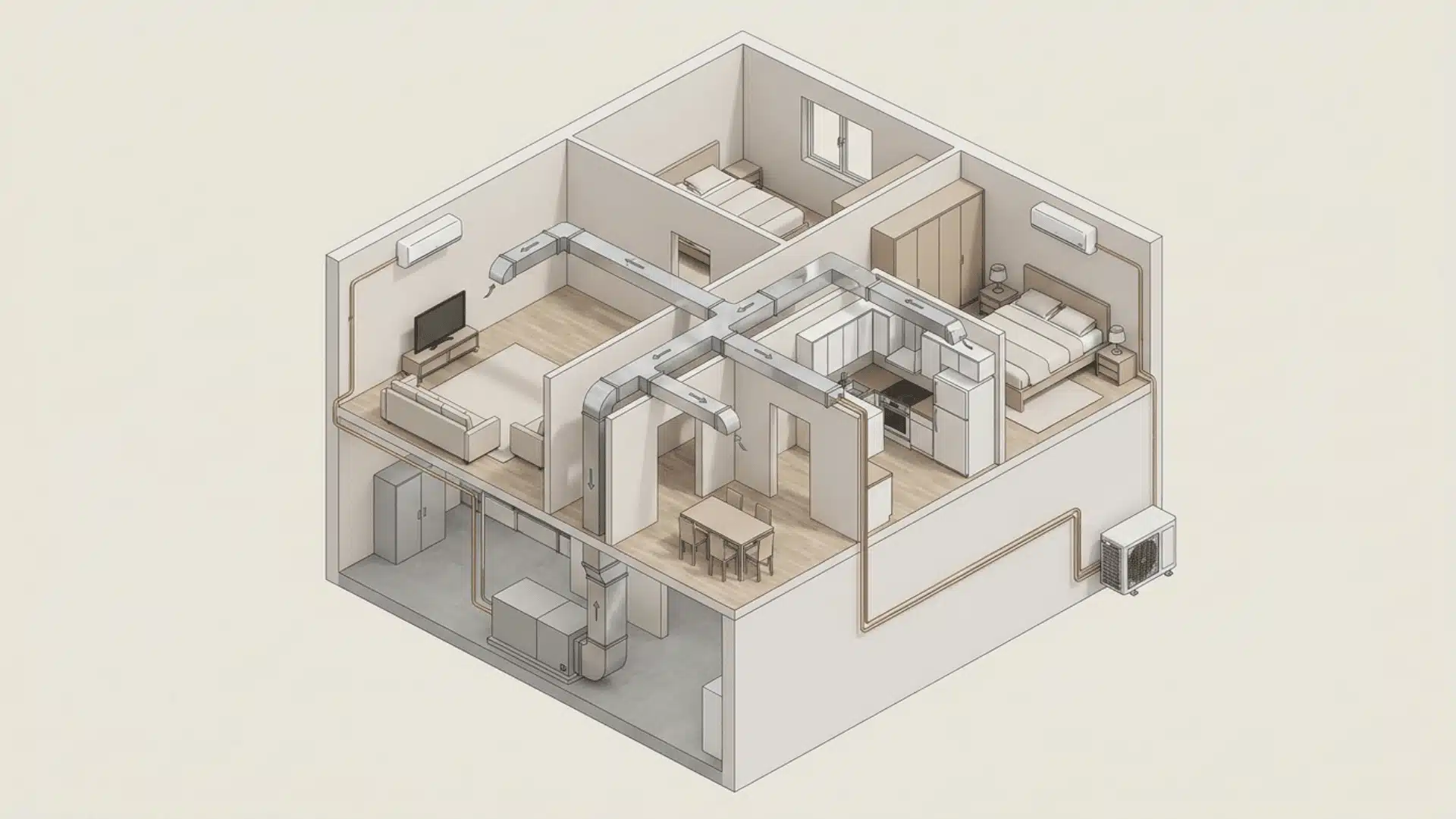
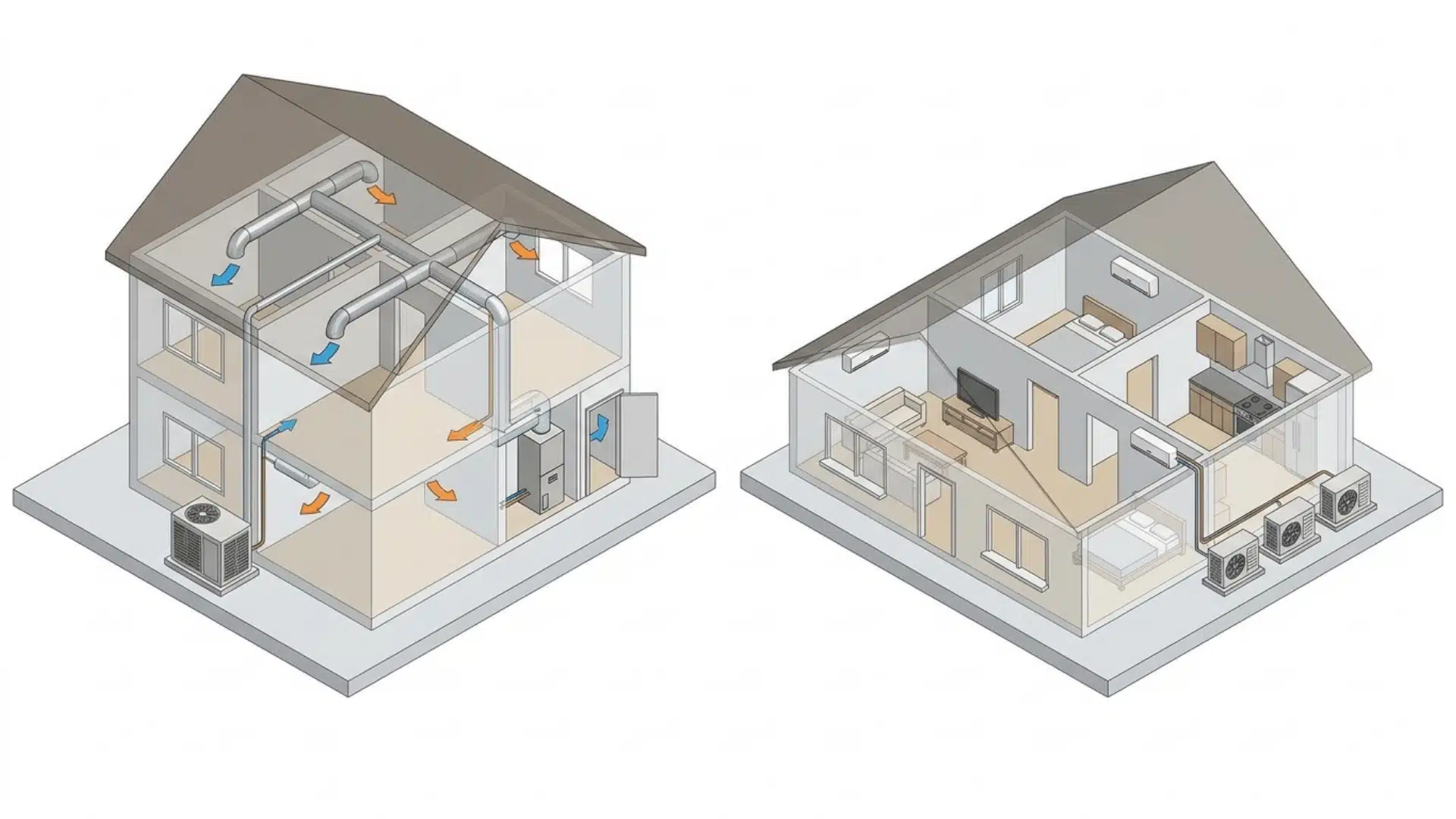
The structural difference comes down to one thing: ducted delivery versus ductless delivery. That single difference drives almost everything else, from efficiency to cost to comfort.
1. How a Ducted Heat Pump Moves Air
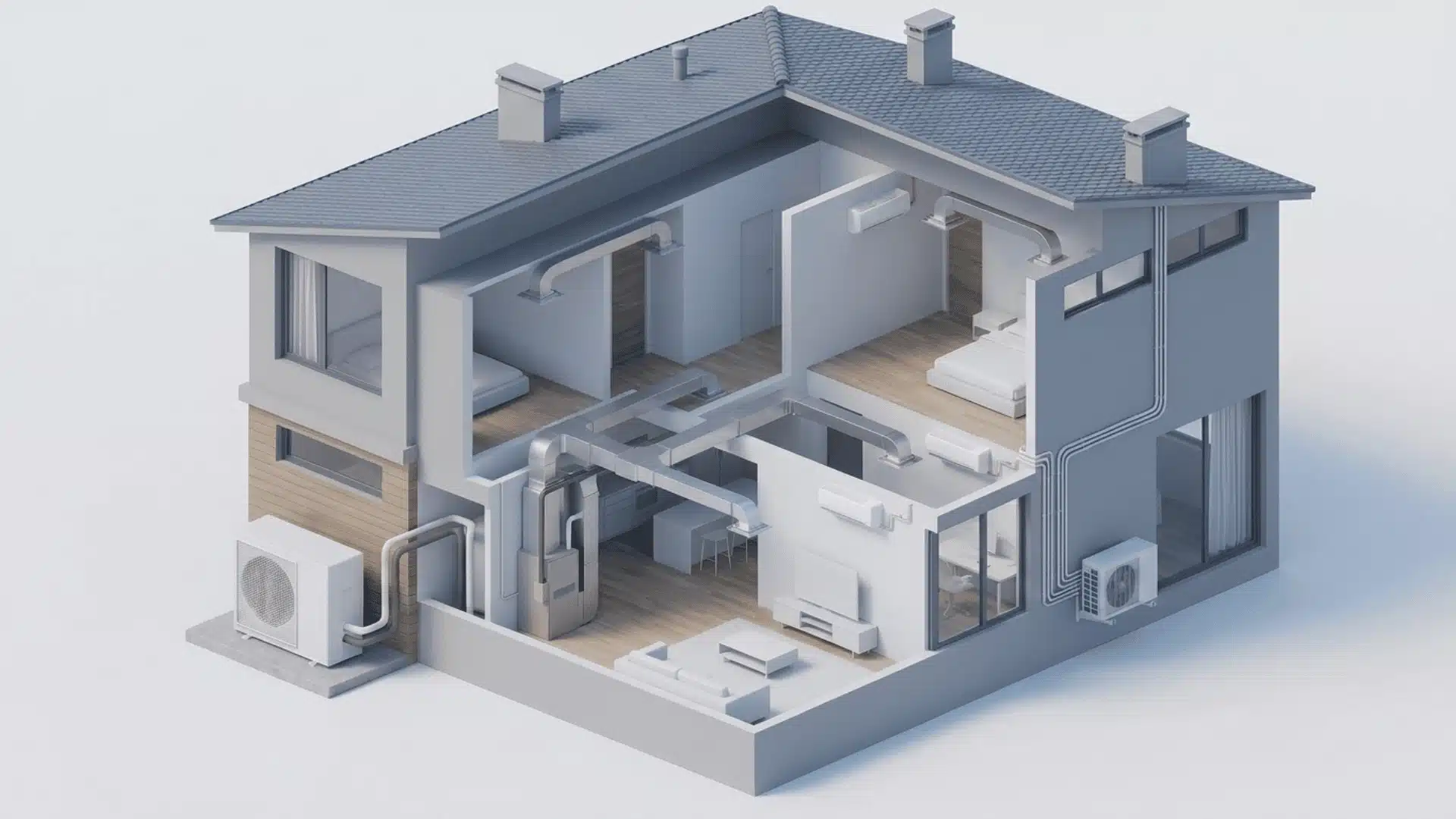
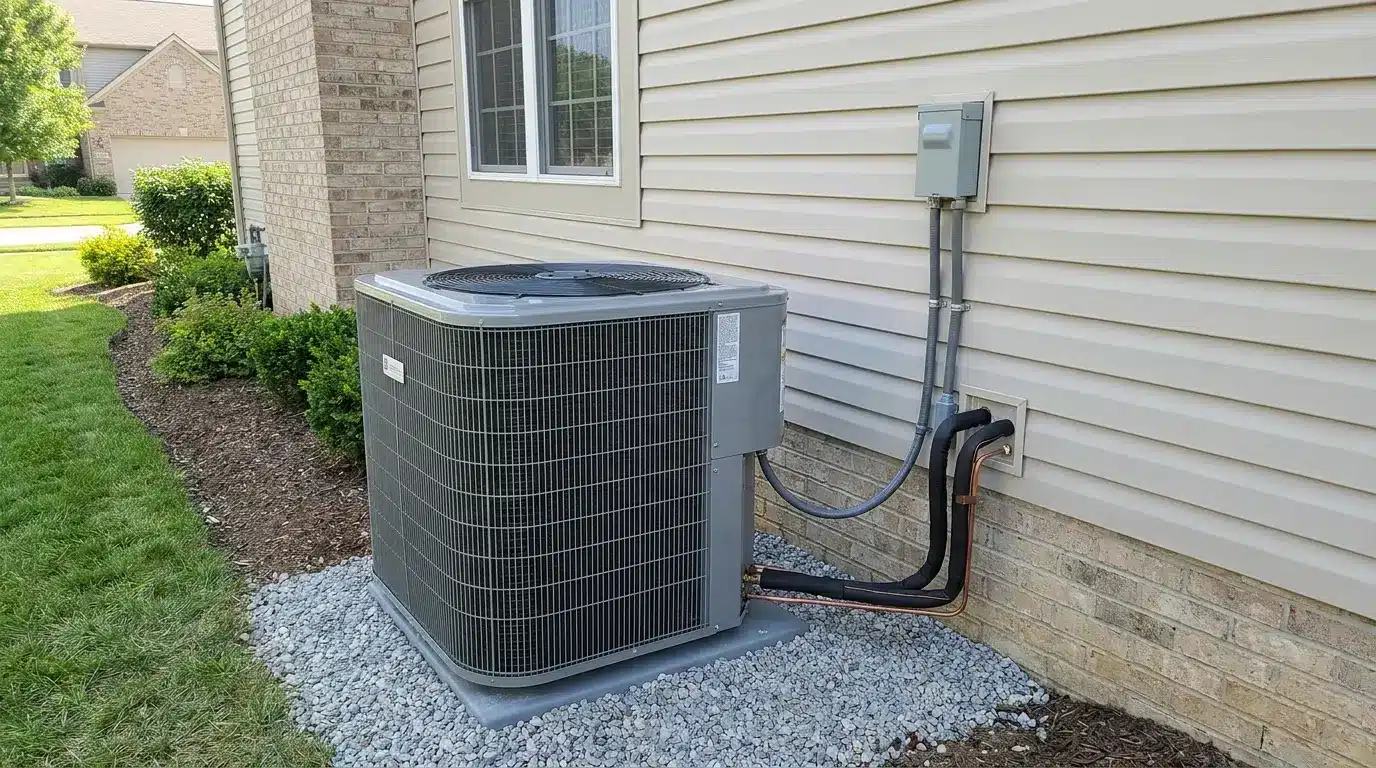
A ducted heat pump uses an outdoor unit connected to one central air handler inside your home.
That handler conditions the air. A blower then pushes it through ducts running through walls, ceilings, floors, sometimes even an unheated attic.
The air comes out through vents in each room. Your whole house gets treated as one zone, conditioned whether you’re using every room or not.
2. How a Ductless Mini-Split Moves Air
A mini-split skips that whole network. The outdoor unit still moves heat through the refrigerant, just like a ducted system. But instead of routing it to a single central handler, small refrigerant lines carry it directly to wall-mounted units in each room.
Each unit only conditions its own space. Nothing travels through ducts at all. This delivery method is also exactly why mini-split efficiency numbers tend to hold up better once a system is actually installed, rather than just looking good on a spec sheet.
3. Where Duct Loss Actually Happens
This structural gap explains a number you’ll see everywhere: ducted systems lose 20 to 30 percent of conditioned air before it reaches the room. Almost nobody explains why.
I’ve found it happens three separate ways, and each one chips away at what actually reaches you.
- Conduction pulls heat out through duct walls as air moves through unconditioned attics or crawlspaces.
- Leakage lets conditioned air escape through unsealed joints, straight into spaces you’re not even heating or cooling.
- A pressure imbalance occurs when ducts are undersized or damaged. The blower works harder and still delivers less.
None of this shows up on a spec sheet. That’s exactly why two systems with the same rated efficiency can perform completely differently once they’re actually installed in your house.
Which System Actually Performs Better in Real Homes?
I’ve seen homeowners chase a bigger efficiency number on the label and still pay more each month than a lower-rated system next door. Ratings on paper don’t guarantee real-world performance. Each system has one hidden factor that decides whether it delivers as advertised.
1. Efficiency and Duct Loss
A ducted heat pump’s rated efficiency assumes sealed, well-insulated ducts running through conditioned space.
In practice, conduction, leakage, and pressure imbalance pull that number down. The gap grows as your ducts age.
A mini-split skips all of that. Refrigerant goes straight to the room, so it usually delivers efficiency close to what’s on the label.
The catch is climate. A standard mini-split without a cold-climate rating loses power as the temperature drops. That’s the ductless version of the ducted system’s duct-loss problem. It’s a hidden condition that undercuts the number on the spec sheet.
2. Installation and Operating Costs
A ducted heat pump usually costs $2,500 to $10,000 to install if the ductwork’s already usable. You’re mostly swapping equipment, not building anything new.
Mini-splits cost more per zone, and the range is wider: $2,000 to $14,000, depending on how many rooms you’re covering. A single room sits at the low end. A whole house with several indoor units pushes toward the top, sometimes past what a ducted system would run.
Operating cost follows the same pattern. A heat pump fighting bad ductwork often costs more each month than its rating suggests. A mini-split’s energy bill tends to track its efficiency rating more closely, as long as it’s rated for your climate.
3. Where the Obvious Choice Breaks Down
Even the obvious right choice for your home can still let you down under one condition.
A heat pump sitting on old, leaky ducts routed through an unheated attic will underperform no matter how efficient the unit itself is rated. The equipment isn’t the problem. The path the air takes is.
A mini-split in a cold climate without the right rating fails the same way, just from the other direction. The unit might be well-built. It just wasn’t built for your winters, and it loses power exactly when you need it most.
When Should You Choose a Heat Pump or a Mini-Split?
By now, you probably know your ductwork’s condition and how you use your rooms. That’s really all you need to decide, and I’d rather you get this part right than pick based on price alone.
Go with a ducted heat pump if:
- Your ductwork’s already in decent shape, so you’re replacing equipment rather than redesigning your whole house.
- Most rooms are used most of the time, and one steady temperature matters more than room-by-room control.
- You’d rather keep equipment hidden in an attic or closet than look at wall units.
Go with a mini-split if:
- Your home has no ductwork at all, common in older homes, additions, and converted spaces.
- One room is always too hot or too cold. That’s a distribution problem, and a dedicated unit fixes it directly.
One thing flips either answer. A mini-split without a cold-climate rating will struggle through a hard winter no matter how well it suits your ductwork. And a heat pump riding on ductwork that’s beyond saving will underperform no matter how efficient the unit is rated.
Summing Up
I’ll be honest: the heat pump vs mini split question isn’t really a puzzle once you know what to look for.
It comes down to your ductwork, plain and simple. If yours is solid, a central system keeps things simple and affordable.
If it’s missing or falling apart, a mini-split saves you that headache entirely. Your costs, comfort, and monthly bills all trace back to that one detail.
I’d get your ducts checked before you request a single quote. That step alone can shift the whole decision.
Have a system already? Tell me what worked for your home. And check out my other HVAC guides before you commit to anything new.
Frequently Asked Questions
How much does a heat pump cost for a 2,000-square-foot house?
A 2,000-square-foot home usually needs $8,000 to $16,000 for a heat pump install. It depends on your ductwork, climate zone, and unit efficiency. If your ducts are usable, costs stay low. If they need repair, expect the total to climb, sometimes past that range.
What are the disadvantages of a mini-split heat pump?
Mini-splits cost more per zone, so covering a whole home adds up fast. Indoor units sit on walls or ceilings, which some people don’t love the look of. Standard units also lose efficiency in cold climates unless they’re rated for it. And each indoor unit needs its own filter cleaned regularly to maintain performance.
Why does my house feel cold with a heat pump?
Cold spots usually result from leaky, poorly insulated, or undersized ductwork that loses air before it reaches the room. It can also mean the system’s undersized for your home. Or outdoor temps have dropped below the unit’s efficient range without backup heat kicking in.
Why is my electric bill so high with a mini-split?
The usual causes are a unit that isn’t cold-climate-rated running in low temps, a system that’s the wrong size for the space, or dirty filters and coils. Since each indoor head needs its own upkeep, skipping maintenance across several units adds up fast.