
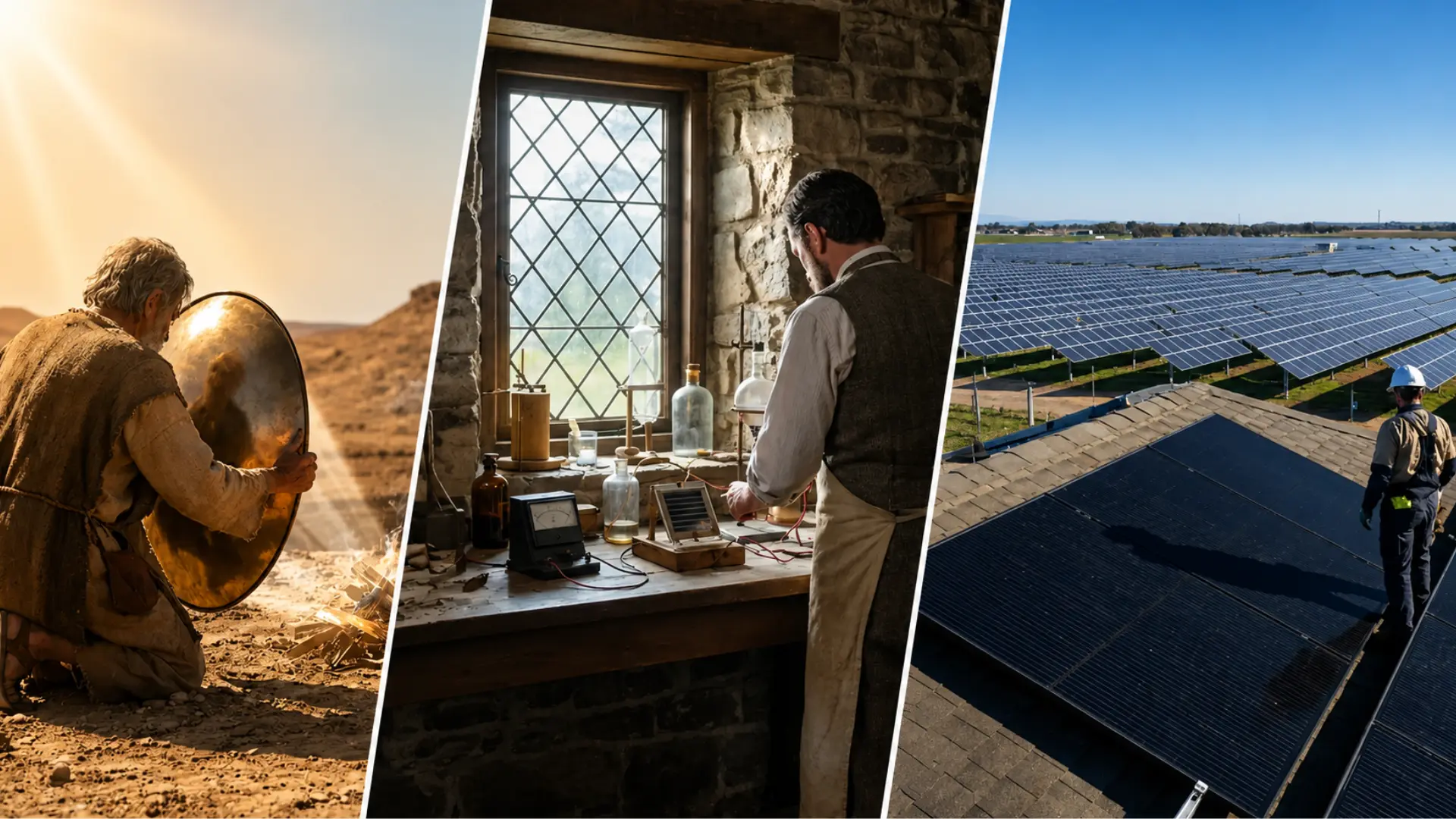

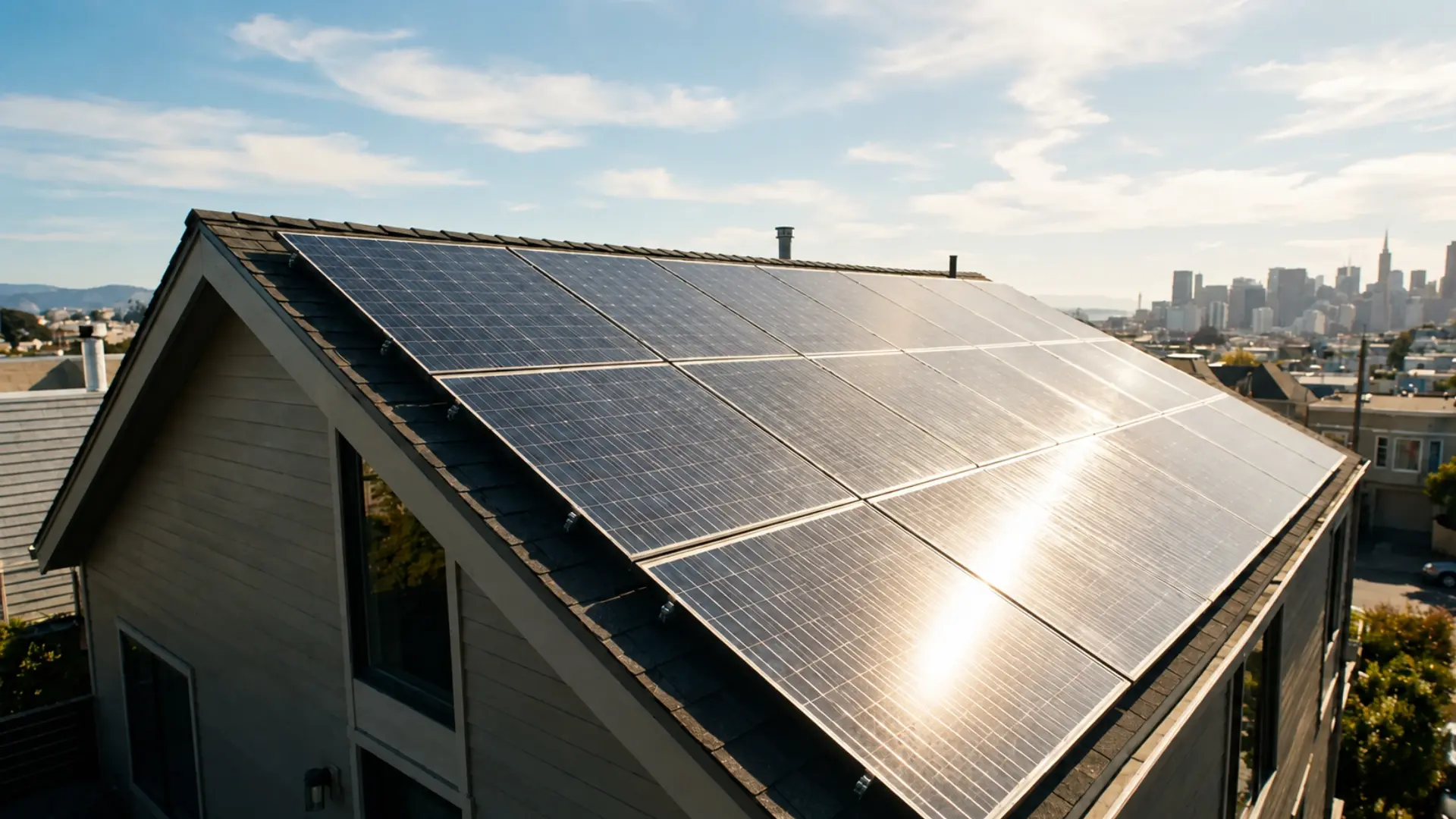
Most people see rooftop panels and assume solar power is a modern invention. I used to think the same, but the story begins thousands of years before electricity entered the picture.
Early civilizations used sunlight to start fires, warm buildings, and shape life around the sun. The history of solar energy began in 1839, when physicist Alexandre Edmond Becquerel observed that light could generate an electric current.
That discovery did not lead to instant progress. Solar development moved slowly through failed experiments, costly materials, and long periods of little interest.
Then satellites, oil shortages, and better silicon production changed everything. The path to today’s solar panels is filled with delays, breakthroughs, and people who kept testing ideas others dismissed.
How Did Ancient Civilizations Use Solar Energy Before Electricity?
People were using sunlight thousands of years before anyone understood how to turn it into electricity. Around the 7th century B.C., early civilizations used polished mirrors, curved glass, and other reflective surfaces to focus sunlight and start fires.
The Greeks and Romans later applied the sun’s heat more deliberately in daily life. They designed homes with south-facing windows so rooms could collect more warmth during colder months.
Indigenous communities in North America used similar building layouts to make better use of seasonal sunlight. These early methods were practical, but they were not solar power in the modern sense.
They captured heat and light directly instead of converting sunlight into electrical energy. That difference marks an important gap in the timeline. Nearly 2,400 more years would pass before scientists began finding ways to generate electricity from sunlight.
Who Found the Photovoltaic Effect and Built the First Solar Cell?
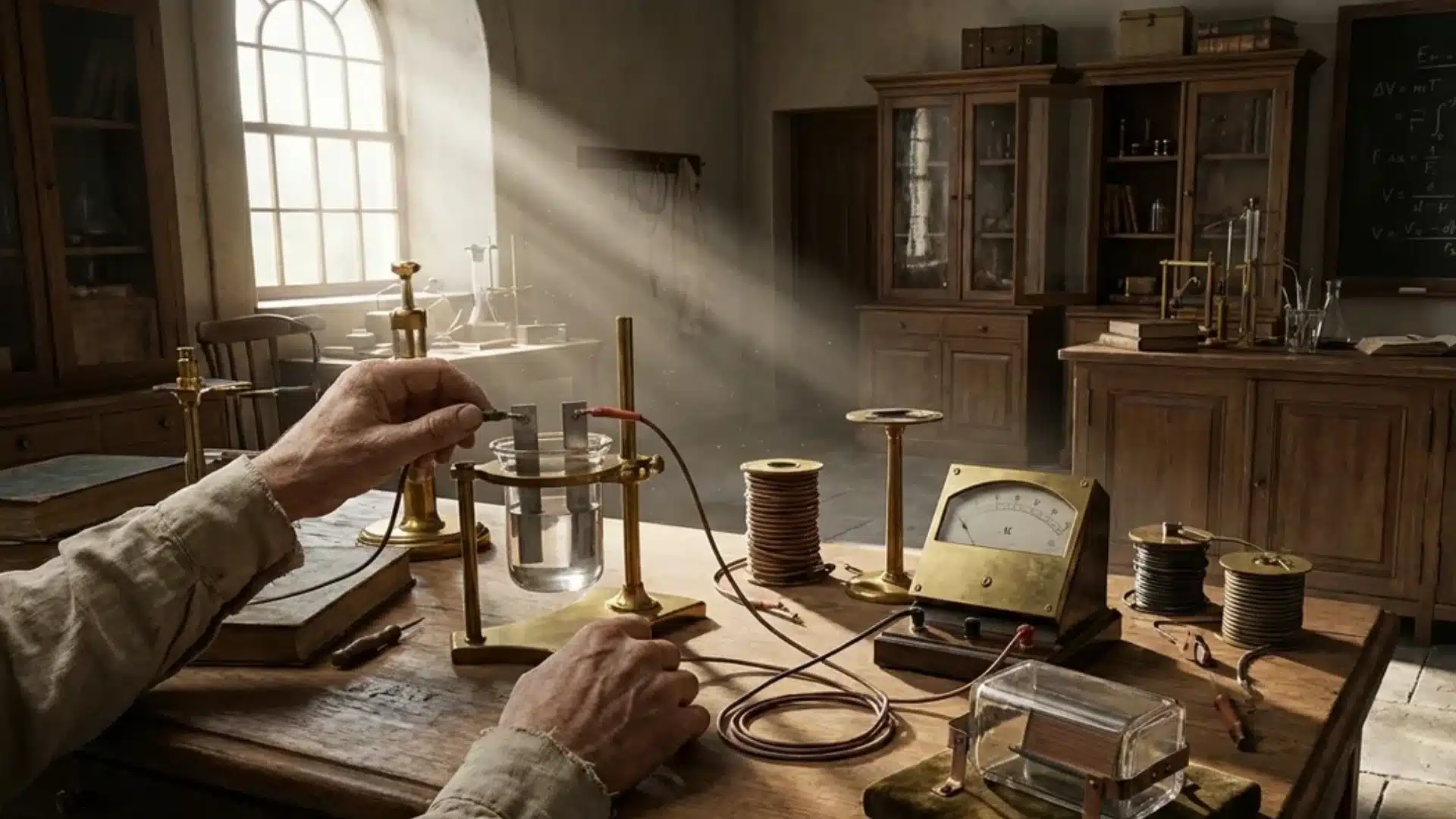
A major breakthrough came in 1839 when French physicist Edmond Becquerel discovered the photovoltaic effect.
While experimenting with electrolytic cells, he noticed that exposing certain materials to light produced a small electric current.
The finding was remarkable, but it remained a scientific observation rather than a usable technology. It took another 44 years before anyone transformed the idea into a functioning device.
In 1883, American inventor Charles Fritts built the first true solar cell using selenium wafers coated with a thin layer of gold.
His design converted less than 1% of incoming sunlight into electricity, making it far too inefficient for practical use.
Even so, Fritts proved that sunlight could be turned directly into electrical power, laying the foundation for every solar panel developed afterward. If you’re wondering how solar energy works, understanding the photovoltaic effect explains how modern panels convert sunlight into usable electricity.
Why Did It Take 70 Years to Build a Solar Cell That Actually Worked?
The gap between 1883 and 1954 wasn’t a case of nobody trying. Selenium cells stayed stuck below 1% efficiency for decades, and the real problem was purity.
Making a solar cell work well requires a semiconductor material refined to an extremely precise standard. Selenium never got clean enough, and nobody in the 1880s had the tools to fix that.
Silicon changed the picture, but not because someone set out to build a better solar cell. The transistor industry needed ultra-pure silicon for its own purposes.
By the early 1950s, it had already solved that purification problem. In 1954, three Bell Labs researchers adapted that purified silicon into a working solar cell.
Daryl Chapin, Calvin Fuller, and Gerald Pearson led the work. It reached 6% efficiency, six times better than Fritts’s original.
Solar power didn’t earn its breakthrough on its own. It borrowed one that had already been solved for a completely different industry. That same silicon technology is still the basis for how to use solar panels effectively today.
Why the Space Race Became Solar Power’s Turning Point
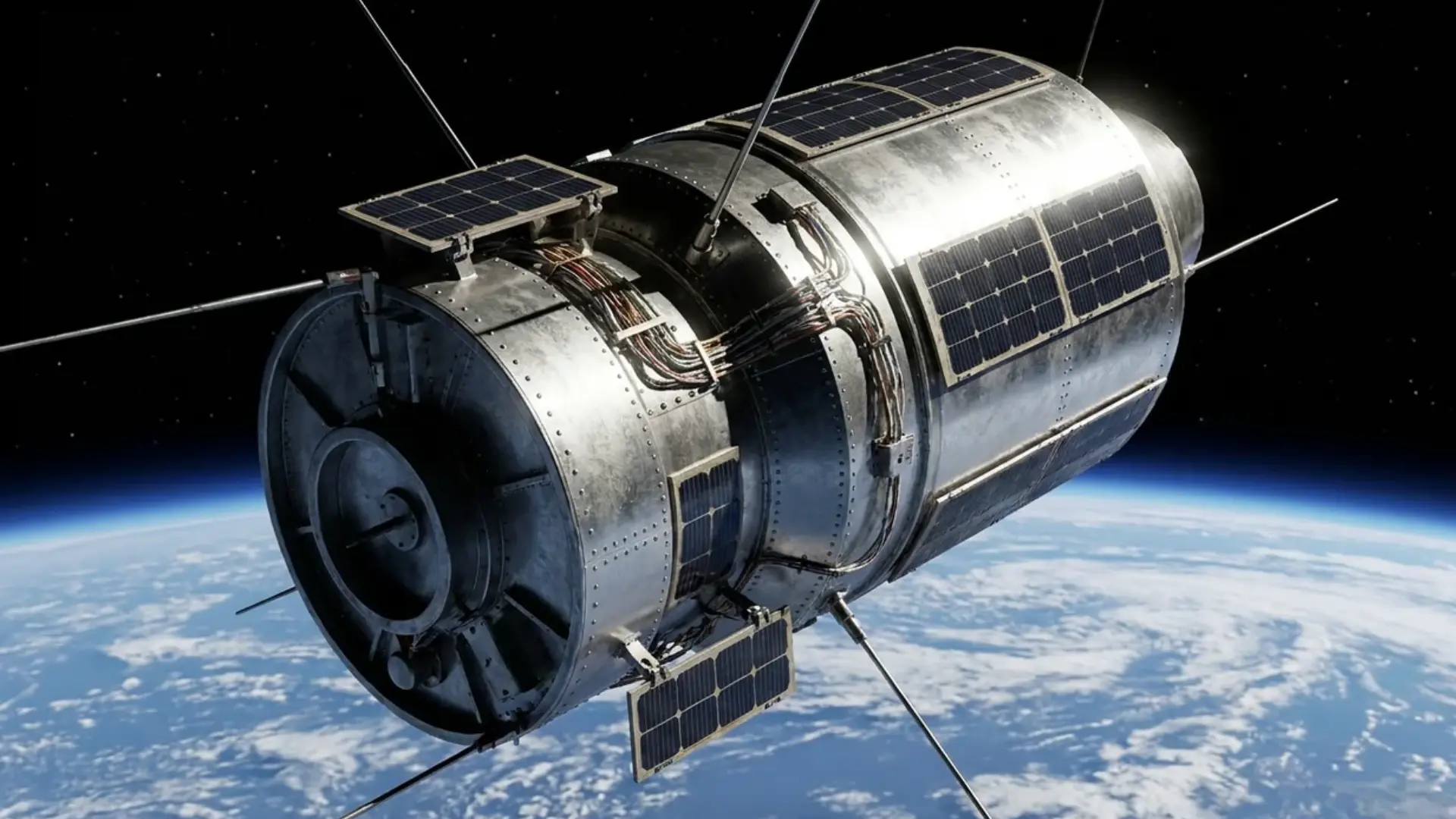
Two major events outside the consumer market gave solar technology the push it needed. The Space Race and the 1973 oil crisis turned solar cells into a practical industry.
Space Program Demand
In 1958, Vanguard I became the first satellite powered by solar cells. It needed a power source that could last in orbit without maintenance.
Cost didn’t matter much for that mission. Reliability did. That’s why the space program funded solar cells years before any consumer market existed.
Vanguard I’s success proved that solar cells could operate for years without failure. That track record gave the technology its first real credibility.
The 1973 Oil Crisis
The 1973 oil crisis changed the picture again. Oil shortages exposed how dependent the U.S. was on imported fuel.
Governments responded by funding research into alternative energy sources, including solar. That funding wasn’t about building solar for homes. It was about reducing reliance on oil. Still, the money mattered.
It pushed solar research out of the lab and into terrestrial use for the first time. Manufacturing costs began to drop as a direct result, setting in motion the slow decline in prices that continued for decades.
What Kept Solar Energy From Reaching Homes and the Power Grid for So Long?
Solar power reached homes and utility grids through decades of steady manufacturing progress, not one sudden breakthrough.
Commercial concentrated solar plants, like the SEGS facilities built in California’s Mojave Desert, began appearing in the 1980s, more than a decade after the oil crisis funding increased.
Utility-scale solar farms developed later as equipment became more reliable and large installations became easier to manage. Rooftop solar expanded once better materials, improved production methods, and lower manufacturing costs made panels more affordable.
Early commercial panels ran around $300 per watt in the 1950s; today that figure has fallen below $0.50 per watt. No single invention caused the change.
Solar adoption grew as the cost per watt gradually declined over several decades, and current figures should always be checked against trusted government or industry sources rather than social posts.
Together, these improvements moved solar from an expensive laboratory technology into a practical source of electricity.
Conclusion
What stands out to me is that innovation rarely follows a straight path. Solar power advanced through decades of small improvements, unexpected discoveries, and real-world challenges that pushed people to find better solutions.
The history of solar energy shows that progress depended on science, manufacturing, government support, and changing global needs working together over time.
That combination transformed an early scientific discovery into a technology that now powers homes, businesses, and entire communities.
Understanding this journey also makes today’s solar systems easier to appreciate because every panel reflects years of trial and improvement.
Which milestone surprised you the most, or is there another chapter in solar’s story you’d like to know more about? Share your thoughts and questions in the comments.
Frequently Asked Questions
Who built the first solar cell?
Charles Fritts built the first working solar cell in 1883, using selenium wafers. He followed up on Edmond Becquerel’s 1839 finding that light could create an electric current. Fritts’s cell converted less than 1% of sunlight into electricity, so it wasn’t practical. The first efficient design didn’t arrive until 1954, at Bell Labs.
When did solar panels first appear on homes?
Residential solar took decades to arrive after Bell Labs built the first efficient cell in 1954. Cost had to drop first, and that mostly happened after the 1973 oil crisis pushed governments to fund research. Commercial solar power plants showed up in the 1980s. Rooftop panels on ordinary homes came later still, as manufacturing costs kept falling.
Is solar energy older than electricity?
Yes. People used passive solar methods, like burning mirrors and heat-trapping windows, as early as the 7th century B.C. Electricity-generating solar technology is much younger. It started in 1839, when Edmond Becquerel first noticed the photovoltaic effect. It took until 1883 for anyone to build a working solar cell from that finding.
Why did solar cells take so long to become efficient?
Early selenium solar cells stayed below 1% efficiency for about 70 years. The real problem was purity. Making an efficient solar cell requires a semiconductor refined to a very high standard, and selenium never became clean enough. Silicon only became usable in 1954, after the transistor industry had already solved that purification problem.