


I used to think solar panels simply soaked up sunlight and somehow produced electricity. The reality is much more interesting.
Every panel relies on tiny physical reactions that occur within seconds, converting sunlight into usable power without any moving parts. Once I understood the science behind it, many common misconceptions disappeared.
If you have been asking how solar energy works, the explanation becomes much easier when you follow each stage in the correct order.
Learning how solar energy is converted into electricity also helps you understand why sunlight, not heat, powers a solar system and why your home still depends on an inverter before electricity reaches your outlets. Here’s the full process, broken down into simple, easy-to-follow stages.
What Starts the Solar-to-Electricity Conversion Process?
Before looking at the science, it helps to know that this technology did not appear overnight. The development of solar power technology spans more than a century, with early photovoltaic discoveries leading to the highly efficient panels installed on homes today. Understanding that evolution makes the modern conversion process easier to appreciate
Sunlight contains tiny packets of energy known as photons. When these photons hit a solar panel, they pass into the silicon cells beneath its surface.
Their energy then interacts with electrons inside the silicon, creating the first step in electricity production. The strength of this reaction depends mainly on how much light reaches the panel, not how hot the weather feels.
Silicon became the standard material for solar cells because it’s abundant, non-toxic, and efficient at converting sunlight into electricity, and it holds up reliably for decades of outdoor use.
That is why solar panels can still work efficiently on cool, bright days. In fact, extreme heat may slightly reduce panel performance.
Cloud cover lowers output because fewer photons reach the cells, while night stops the process almost completely. As sunlight becomes stronger, more electrons are released and begin moving through the cell.
Once enough photons strike the silicon and free these electrons, the panel can begin converting sunlight into electrical energy.
How Do Solar Panels Convert Sunlight Into Electricity?
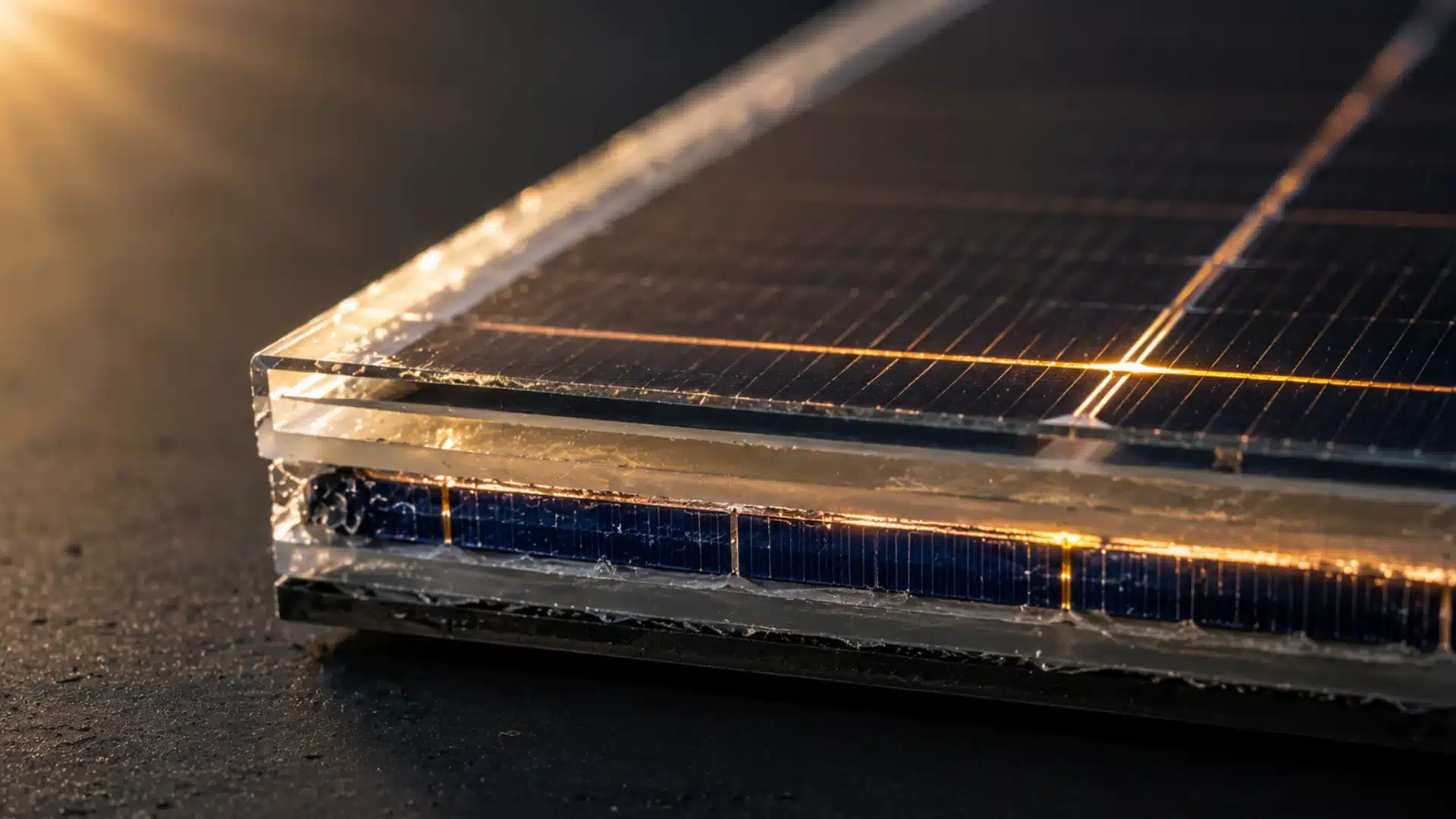
How is solar energy converted into electricity: The process follows four stages: light absorption, electron excitation, current generation, and current collection. Each stage feeds directly into the next before the electricity is converted into usable AC power by the inverter
1. Light Absorption in the Solar Cell
This is the moment sunlight’s energy physically enters the silicon. Photons that reach the cell are absorbed rather than reflected away.
Panels use silicon specifically because its atomic structure is suited to holding that energy briefly before releasing it.
Without absorption, nothing else in the process can happen. The cell’s dark, matte surface is designed to capture as much light as possible rather than reflect it.
2. Electron Excitation
Freed electrons, not the sunlight itself, are what eventually become the electric current. Absorbed photon energy knocks electrons loose from their normal position around silicon atoms.
Only photons carrying enough energy can free an electron. Weaker light frees fewer electrons rather than freeing them more slowly. This is why dim conditions reduce total output rather than just delay it.
Understanding this electron movement also makes it easier to get the most from a residential solar system. Once you know how electricity is produced inside the panels, it becomes clearer why panel placement, sunlight exposure, and inverter performance all influence daily energy production.
3. How the Electric Field Generates Current
Manufacturers create the electric field by adding different trace elements to two silicon layers, producing an n-type layer with extra electrons and a p-type layer with fewer.
Where these layers meet, an electric field forms and pushes freed electrons in one direction. Without this junction, electrons would move randomly, preventing a steady electrical current from developing.
4. Turning the Current Into Usable DC Electricity
This step is where electron flow becomes electricity that the panel can actually output. Metal conductive plates and thin wires inside the panel collect the directional flow of electrons.
This collected flow is Direct Current, meaning it moves steadily in one direction rather than switching back and forth.
At this point, the panel has technically produced electricity. But that electricity is not yet in a form your home appliances can use. That is where the next stage comes in.
How Does an Inverter Turn Solar Power Into Usable Electricity?
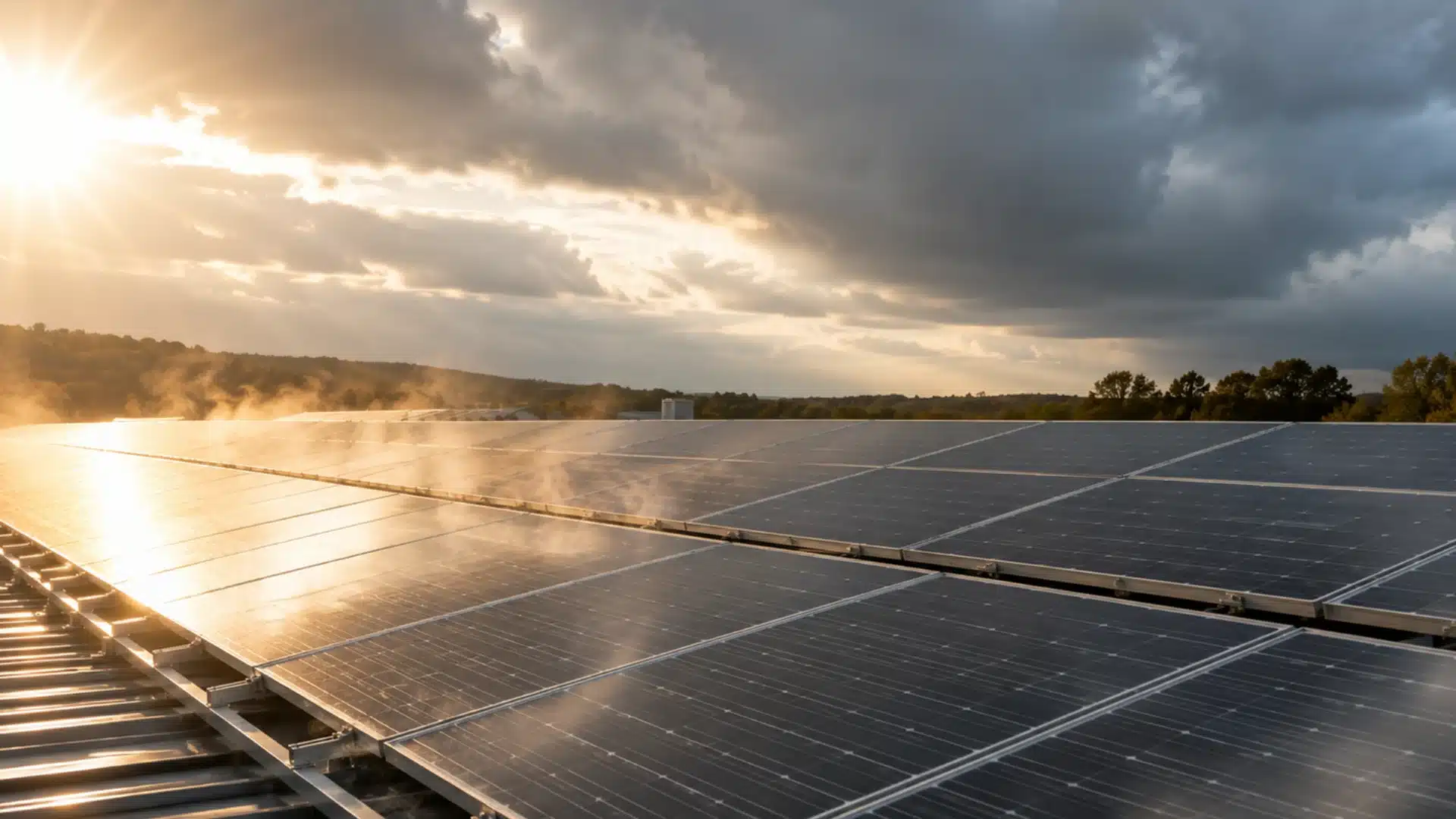
Solar panels produce Direct Current, but homes and utility grids operate on Alternating Current. This means the electricity leaving the panels cannot power household appliances in its original form.
The inverter solves this problem by rapidly reversing the direction of the electric current and converting DC electricity into AC electricity that meets home and grid requirements.
This conversion is the final stage of how solar energy is converted into electricity that can reach lights, outlets, and appliances.
The inverter also monitors voltage, power output, and system performance to keep the electricity safe and stable.
If it stops working, the panels may continue producing DC power, but the home cannot use it. Without the inverter, every earlier stage of solar energy production remains incomplete.
Where Does the Solar Conversion Process Lose Efficiency?
Solar panels lose some energy at several points before electricity reaches the home. The main causes include heat, reflection, resistance, reduced light exposure, and equipment performance.
- Heat loss: Some of the absorbed sunlight is converted into heat rather than freeing electrons. High temperatures can therefore lower panel efficiency.
- Reflection and resistance: Some light reflects off the panel surface, while electrical resistance reduces the current as it flows through the wiring.
- Indirect light: Clouds and shade reduce the number of photons reaching the cells, limiting electron movement and lowering output.
- Inverter loss: A small amount of energy is lost when the inverter converts DC electricity into AC power for household use.
- Dirt and surface buildup: Dust, leaves, pollen, or bird droppings can block sunlight and reduce the energy reaching solar cells.
These losses cannot be removed completely, but proper installation, ventilation, cleaning, and quality equipment can help keep them under control.
Conclusion
I find solar power much easier to understand when it is broken into stages rather than treated as a single instant reaction.
Photons strike the cells, electrons begin moving, the built-in electric field directs that movement, and the inverter turns it into power your home can use.
That sequence explains how solar energy works without reducing the answer to a vague claim about sunlight becoming electricity.
It also shows how solar energy is converted into electricity before it reaches outlets, appliances, or batteries.
Some energy is lost through heat, reflection, resistance, and conversion, but the system works reliably when each part performs as intended. Which stage of the process surprised you most? Share your thoughts or questions in the comments.
Frequently Asked Questions
How is solar energy converted into electrical energy by solar panels?
Solar panels convert sunlight into electricity through the photovoltaic effect. Photons striking silicon cells knock electrons loose, and a built-in electric field forces those electrons to flow as current. This current is collected as Direct Current, then passed through an inverter, which converts it into the Alternating Current used to power homes and the grid.
What is the biggest downside to solar electricity?
The main limitation is inconsistency. Solar panels generate electricity only when they receive sunlight, so their output drops sharply on cloudy days and stops entirely at night. Heat also reduces efficiency, so very hot climates can see lower output despite strong sunlight. Without battery storage, homes still need grid power or backup for low-light periods.
What are the main advantages of solar energy?
Solar energy produces electricity with no fuel costs and no emissions once panels are installed, and it can reduce or eliminate monthly electricity bills over time. Panels require little maintenance, systems can last decades, and excess electricity can often be sent back to the grid for credit through net metering programs.
Do solar panels work without direct sunlight?
Yes, but less efficiently. Solar cells can still generate electricity from diffuse light on cloudy days because photons still reach the silicon, just in smaller numbers. Output typically drops significantly compared to direct sunlight, and panels generate no electricity at night since there is no light to excite electrons.