


A heat pump that is too large or too small can cost you for years. You may get one recommendation from a contractor, hear a different size from a neighbor, and still have no idea which answer is right.
The question of what size heat pump I need is more complicated than checking a simple square-footage chart.
I would start by looking at the full picture: climate, insulation, air leakage, windows, ceiling height, ductwork, and the home’s actual heating and cooling load.
You will learn how BTUs and tonnage work, when estimates are useful, why oversizing causes problems, and how a Manual J calculation helps you confirm the right system before you buy.
What Size Heat Pump Do I Need?
The right heat pump size depends on more than the home’s square footage. As a preliminary estimate, many homes require about 20 to 30 BTUs of heating or cooling capacity per square foot.
Since one ton equals 12,000 BTUs per hour, a 1,500-square-foot home may need roughly 30,000 to 45,000 BTUs, or about 2.5 to 3.5 tons. However, this range can change based on local climate, insulation quality, air leakage, ceiling height, window size, sun exposure, and duct condition.
A poorly insulated home in a cold region may need more capacity than a well-sealed home of the same size. Square footage provides only a starting point, so a professional Manual J load calculation should confirm the final system size.
Heat Pump Size by Square Footage
Home size provides a useful starting point for estimating heat pump capacity. The table below shows general BTU and tonnage ranges for common home sizes.
| Home Size | Estimated Capacity | Approximate Heat Pump Size |
|---|---|---|
| 500–800 sq. ft. | 12,000–18,000 BTUs | 1–1.5 tons |
| 800–1,200 sq. ft. | 18,000–30,000 BTUs | 1.5–2.5 tons |
| 1,200–1,500 sq. ft. | 24,000–36,000 BTUs | 2–3 tons |
| 1,500–2,000 sq. ft. | 30,000–48,000 BTUs | 2.5–4 tons |
| 2,000–2,500 sq. ft. | 42,000–60,000 BTUs | 3.5–5 tons |
| 2,500–3,000 sq. ft. | 48,000–72,000 BTUs | 4–6 tons |
These estimates provide a useful starting point when asking how big of a heat pump do I need, but they cannot confirm the final capacity. Climate, insulation, ceiling height, air leakage, windows, ductwork, and home orientation can significantly change the required system size.
Understanding Heat Pump Tons and BTUs
Heat pump capacity is usually expressed in British thermal units (BTUs) and tons. BTUs measure how much heat the system can move in one hour, while tonnage is a larger sizing unit used by HVAC professionals.
One ton equals 12,000 BTUs per hour, so a 2-ton heat pump provides about 24,000 BTUs, a 3-ton unit provides 36,000 BTUs, and a 4-ton system provides 48,000 BTUs. Larger capacity also means higher heat pump wattage, since the compressor and blower need more electrical input to move that additional heat.
The word “ton” does not describe the equipment’s physical weight. It refers only to heating and cooling capacity.
Higher tonnage does not automatically mean better performance because oversized systems may short-cycle, reduce humidity control, and create uneven temperatures.
The correct BTU rating should match the home’s calculated heating and cooling load, local climate, insulation, air leakage, window area, ceiling height, and ductwork condition.
Factors That Affect Heat Pump Size
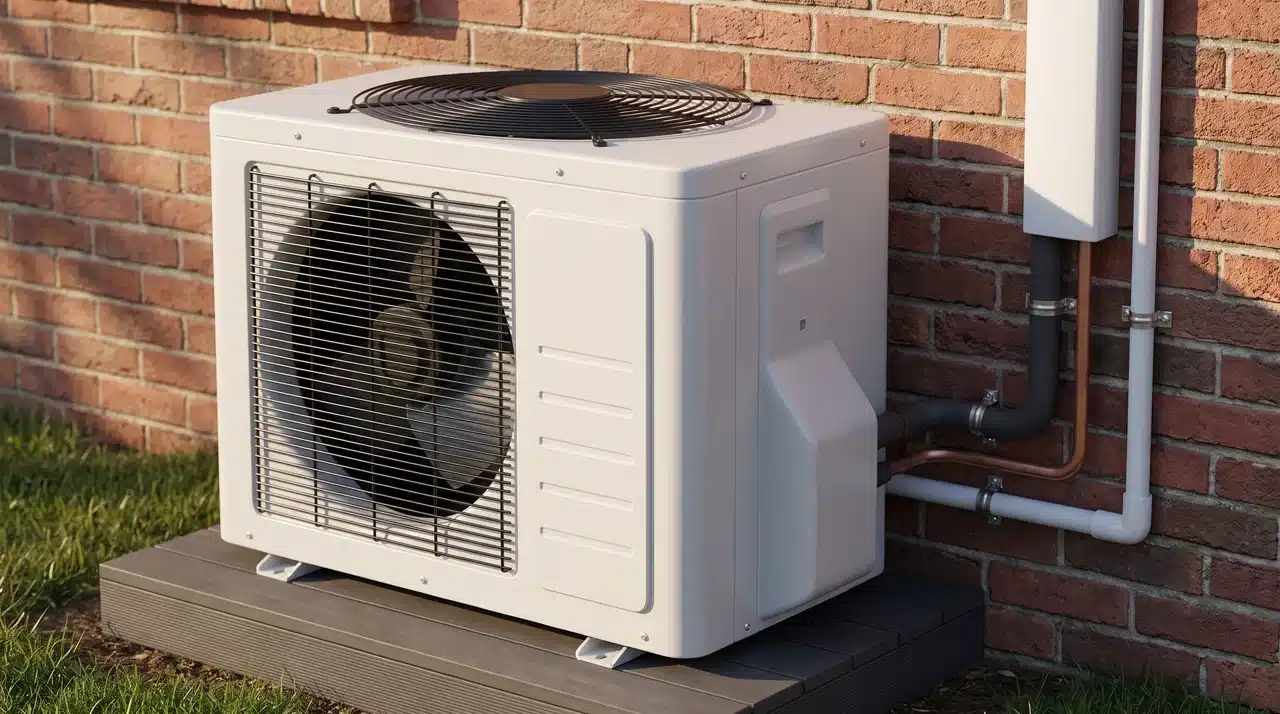
Homes with the same square footage can require different heat pump capacities because climate, construction, layout, insulation, windows, and ductwork affect heating and cooling demand.
1. Local Climate
Climate strongly influences how much heating and cooling capacity a home needs. Colder regions may require greater winter output, especially when temperatures remain below freezing.
Hot, humid areas require sufficient cooling capacity to control temperature and moisture. Check the unit’s performance at local design temperatures, as nominal capacity may drop significantly in very cold weather.
2. Insulation Quality
Good insulation slows heat transfer through the attic, walls, floors, and foundation, reducing the workload placed on a heat pump. Older or poorly insulated homes often need more capacity to maintain comfortable temperatures.
Review insulation age, location, condition, and R-values before sizing. Improving insulation first may allow a smaller, more efficient system to perform effectively.
3. Air Leakage
Unsealed gaps around windows, doors, plumbing penetrations, electrical outlets, and duct connections allow conditioned air to escape and outdoor air to enter. This increases both heating and cooling demand.
A blower-door test can reveal hidden leakage. Sealing these openings before installation may reduce the calculated load, improve comfort, and prevent unnecessary equipment oversizing.
4. Window Size and Orientation
Windows can create considerable heat gain in summer and heat loss during winter. Large, single-pane, or poorly sealed windows increase system demand. South- and west-facing glass may receive strong afternoon sunlight, raising the cooling load.
Double- or triple-pane glazing, insulated frames, exterior shading, and suitable window coverings can lower the required heat pump capacity.
5. Ceiling Height
Basic square-footage estimates commonly assume ceilings are about eight feet high. Vaulted, cathedral, or unusually tall ceilings increase the total volume of air the heat pump must condition.
These spaces may also develop temperature differences between upper and lower areas. Accurate sizing should consider room volume, ceiling insulation, air movement, and the location of supply vents.
6. Home Layout
A home’s layout affects how easily conditioned air reaches each room. Open floor plans may allow better airflow but can create large connected zones with significant heating and cooling loads.
Divided layouts may produce isolated hot or cold rooms. Multi-story homes also experience temperature differences, so separate zones, multiple indoor units, or improved airflow may be required.
7. Sun Exposure and Shade
Homes receiving strong direct sunlight often experience higher cooling loads, especially when large windows or dark roofing faces south or west. Trees, roof overhangs, awnings, and nearby structures can reduce solar heat gain.
Seasonal shade should also be considered, as deciduous trees block summer sun but allow more sunlight to reach the home in winter.
8. Number of Occupants
People release body heat and moisture, increasing the home’s internal cooling load. Lighting, computers, televisions, cooking equipment, and other appliances also add heat.
A frequently occupied home may need different capacity than a similar property used by one or two people. Load calculations should account for typical occupancy patterns rather than occasional gatherings or temporary visitors.
9. Existing Ductwork
Ductwork must deliver the required airflow without excessive leakage, restriction, or heat loss. Undersized ducts can create noise and reduce system performance, while poorly insulated ducts in attics or crawl spaces waste energy.
Before selecting a heat pump, inspect duct size, condition, insulation, and sealing. Repairs or redesign may be necessary to support the proposed capacity.
How Climate Changes Heat Pump Capacity
Climate affects both the capacity a heat pump needs and how well it performs during seasonal temperature extremes. Use this table as a preliminary guide.
| Climate Condition | Typical Sizing Effect |
|---|---|
| Mild coastal climate | Lower heating capacity may be sufficient |
| Hot and humid climate | Cooling capacity and moisture removal become priorities |
| Mixed climate | Balanced heating and cooling capacity is needed |
| Cold climate | Greater low-temperature heating output may be required |
| Extremely cold climate | A cold-climate model or supplemental heat may be necessary |
Do not automatically choose a larger unit for cold weather. Compare its rated heating output at local winter design temperatures before making the final selection.
Equipment efficiency and low-temperature output should also guide final selection.
Manual J Load Calculation Determines the Correct Heat Pump Size
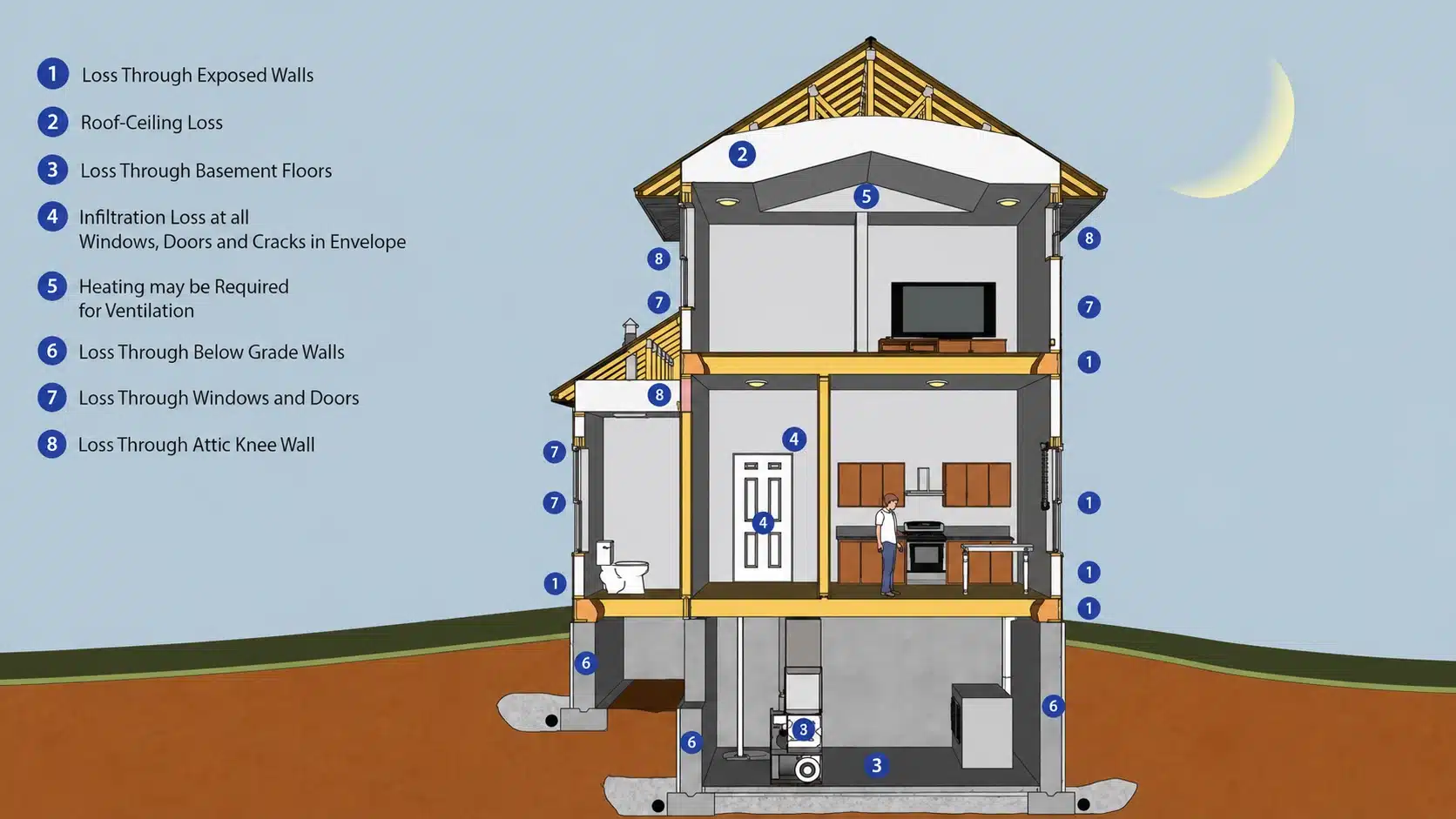
A Manual J calculation is the recognized method used to estimate a home’s heating and cooling loads.
Instead of assuming every house performs the same way, it evaluates the specific construction and conditions of the property.
A detailed calculation may include:
- Conditioned floor area
- Ceiling heights
- Local heating and cooling design temperatures
- Attic, wall, floor, and roof insulation
- Window size, type, orientation, and shading
- Door construction
- Air leakage
- Occupancy
- Internal heat from appliances and lighting
- Duct location and leakage
- Room-by-room heating and cooling demand
The result indicates how many BTUs the home loses in cold weather and gains in hot weather. That load can then be matched with equipment capable of meeting it.
Whole-House vs Mini-Split Heat Pump Sizing
Heat pump configuration changes how capacity is calculated. Compare central, single-zone, and multi-zone systems before selecting equipment for the home.
| Heat Pump Type | Sizing Approach | Important Considerations |
|---|---|---|
| Central ducted system | Sized for the home’s total heating and cooling load | Duct condition, airflow, insulation, leakage, and room-by-room distribution |
| Single-zone mini-split | Sized separately for one room or open area | Floor area, ceiling height, windows, sun exposure, insulation, and room use |
| Multi-zone mini-split | Indoor units are sized individually, while the outdoor unit supports combined demand | Connected capacity, simultaneous usage, zone diversity, and manufacturer matching limits |
Each option still requires accurate load calculations, correct airflow, and equipment matching to prevent comfort problems and unnecessary energy use.
Signs Your Heat Pump Is Incorrectly Sized
An incorrectly sized heat pump may struggle to maintain comfort, waste energy, and wear out faster. Watch for these common symptoms of undersizing and oversizing.
- Runs continuously: An undersized system may run almost constantly, even in moderate weather, because it lacks sufficient capacity to reach the thermostat setting.
- Cannot maintain temperature: The home may remain too warm in summer or too cold in winter, especially during periods of extreme outdoor temperatures.
- Uses auxiliary heat frequently: A heat pump that is too small may depend heavily on electric resistance backup heat, increasing household energy consumption.
- Creates uneven temperatures: Some rooms may remain uncomfortable because the system cannot deliver enough conditioned air throughout the entire home.
- Starts and stops frequently: An oversized heat pump may reach the thermostat setting quickly, shut down, and restart repeatedly instead of completing longer cycles.
- Causes temperature swings: Excess capacity can rapidly heat or cool the home, creating noticeable changes between uncomfortable and overly conditioned temperatures.
- Removes insufficient humidity: An oversized unit may not run long enough to effectively remove moisture, leaving the home cool but humid.
- Produces noisy airflow: A system that is too large for the ductwork may create strong bursts of air, rattling vents, and excessive operating noise.
These signs can also result from dirty filters, leaking ducts, poor insulation, restricted airflow, thermostat problems, or mechanical faults, so professional diagnosis is important.
Final Thoughts
Choosing the right heat pump means matching the equipment to the home, not simply buying the largest unit available.
Square footage can give you a starting range, but climate, insulation, windows, air leakage, ceiling height, ductwork, and layout all change the final load.
I would use those estimates for planning, then ask for a proper Manual J calculation before signing a contract.
That is the most reliable way to determine what size heat pump I need and to avoid short cycling, poor performance, uneven temperatures, or unnecessary energy costs.
Compare the contractor’s load results with the proposed BTU output, then review related heating and cooling blogs before making your final decision.
Frequently Asked Questions
Should I Size a Heat Pump Before Improving Insulation?
Whenever possible, complete major insulation, air-sealing, or window upgrades before final sizing. These improvements can reduce the home’s heating and cooling load, which may allow a smaller system and prevent unnecessary oversizing.
Does an Unfinished Basement Count Toward Heat Pump Size?
Only conditioned spaces should normally be included in the main sizing calculation. An unfinished basement, garage, attic, or enclosed porch may affect heat loss, but it should not be treated like regularly heated living space.
Can a Variable-Speed Heat Pump Be Slightly Oversized?
Variable-speed equipment can adjust its output more effectively than a single-stage unit, but it should still be selected from an accurate load calculation. Excessive oversizing can still reduce efficiency, humidity control, and overall comfort.
Do Preferred Thermostat Settings Affect Heat Pump Sizing?
Normal thermostat preferences have some influence, but sizing should be based on recognized indoor and outdoor design conditions. Choosing a much larger unit simply because someone prefers unusually warm or cool temperatures can create performance problems.
Should Heating or Cooling Demand Determine the Final Size?
The contractor should calculate both loads and select equipment that performs well in each season. In colder climates, supplemental heat may cover rare extremes instead of increasing the heat pump size enough to harm summer cooling performance.
Does Adding a Room Require a Larger Heat Pump?
A room addition increases conditioned area and may change the total load, but replacing the entire system is not always necessary. The contractor should recalculate demand and check whether the existing equipment and ductwork have enough remaining capacity.