

Choosing between two clean power sources sounds simple until sunlight, wind, space, cost, and maintenance enter the decision. You may know both options produce electricity, but not which one fits a home, farm, or larger project.
I understand why the comparison can feel confusing when each technology performs best under different conditions. Solar and wind energy offer practical benefits, yet neither is the right choice everywhere.
Here, you can learn how panels and turbines generate power, where each system works best, and what affects output, installation, storage, and long-term costs.
I also explain their shared benefits, key limits, and how hybrid systems can provide steadier power, so you can compare your options with realistic expectations.
What Are Solar and Wind Energy?
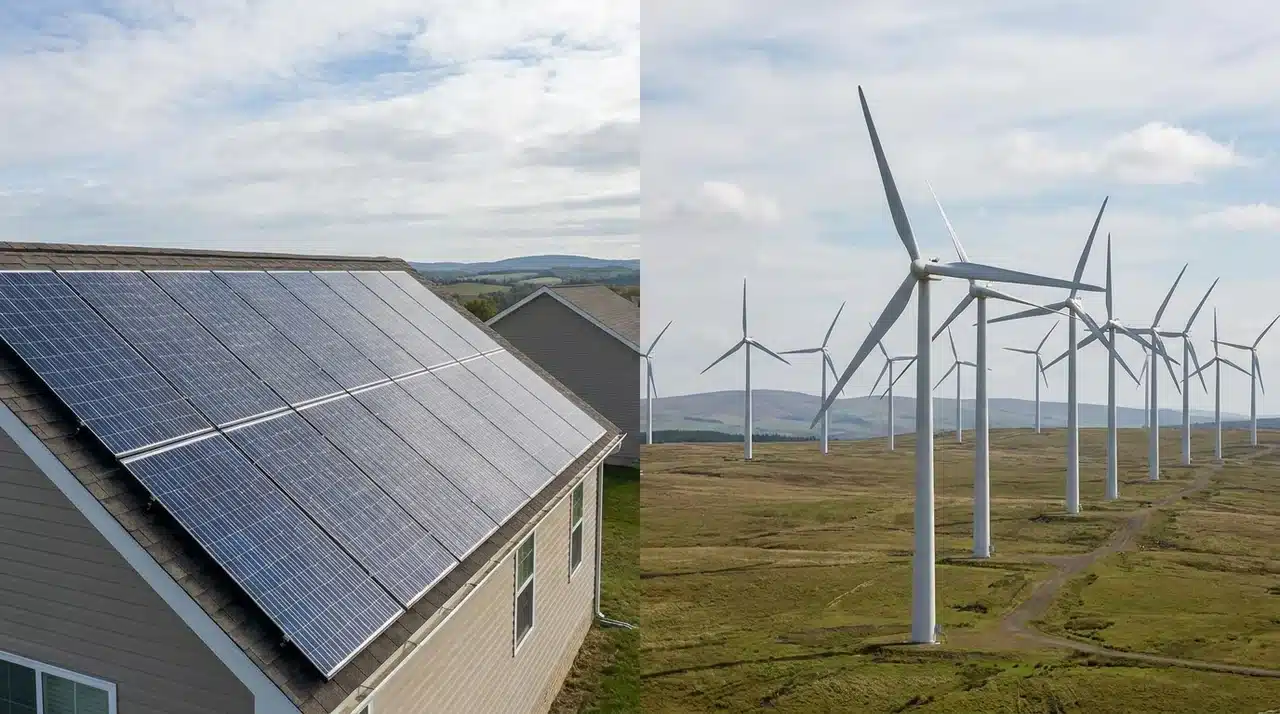
Solar and wind energy are two renewable power sources that use natural elements to generate electricity. Instead of relying on fuels that need to be burned, these systems capture energy that is already available from the sun and moving air. Both have become more common across the US, from residential setups to large-scale energy projects.
Solar energy comes from sunlight and is captured through solar panels. These panels contain photovoltaic cells that convert sunlight into electricity that can power homes, businesses, and utility-scale solar farms. If you’re curious about the solar power process from start to finish, it helps explain why panel placement matters so much for output.
For example, a homeowner can install rooftop solar panels to generate electricity and reduce reliance on the traditional power grid. The amount of electricity produced depends on factors such as sunlight exposure, panel placement, and local weather conditions.
Wind energy uses the natural movement of air to generate electricity, with wind turbine blades capturing air movement and spinning a generator to produce power. These systems are commonly used in large wind farms, offshore projects, and rural areas with enough open space and consistent wind flow.
While both solar and wind energy rely on natural resources, the way they generate electricity and where they work best can be very different.
How Do Solar Panels and Wind Turbines Work?
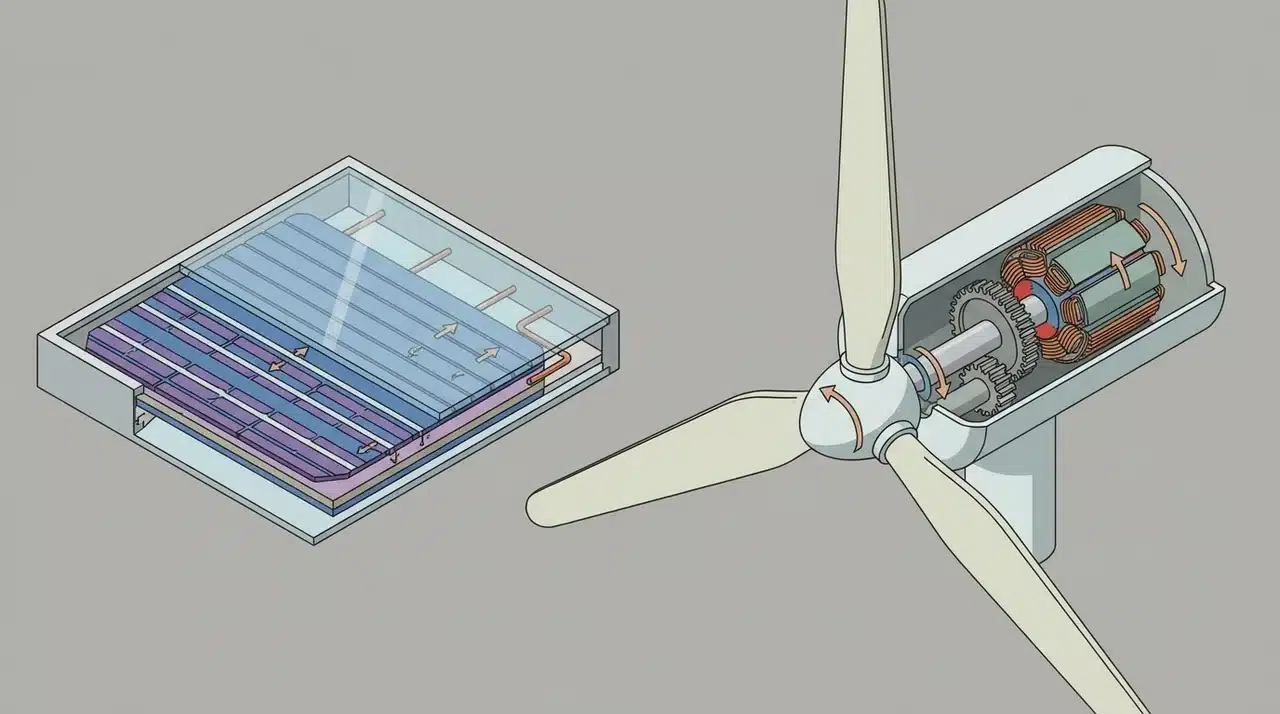
Solar panels and wind turbines both generate electricity, but they use different sources of energy to do it. Solar panels rely on sunlight, while wind turbines use the movement of air. Understanding how each system works makes it easier to see why one option may work better than the other in different locations.
Solar panels generate electricity by capturing energy from sunlight. When sunlight reaches the photovoltaic cells inside a solar panel, the cells create direct current (DC) electricity.
An inverter then converts this electricity into alternating current (AC) power, which is the type used by most homes and businesses. It’s worth understanding the solar panel manufacturing process too, since the way cells are built directly affects how efficiently they convert that sunlight.
The electricity can then power appliances, reduce the amount of energy needed from the grid, or be sent back to the grid when there is extra production.
Wind turbines generate electricity by turning the movement of air into power. When wind pushes against the turbine blades, they begin to rotate and spin a connected rotor. This movement drives a generator inside the turbine, which converts mechanical energy into electricity.
The generated power then travels through power lines to supply homes, businesses, or larger energy networks. The amount of electricity produced depends on factors like wind speed, turbine size, and location.
Solar Panels vs Wind Turbines: Key Differences
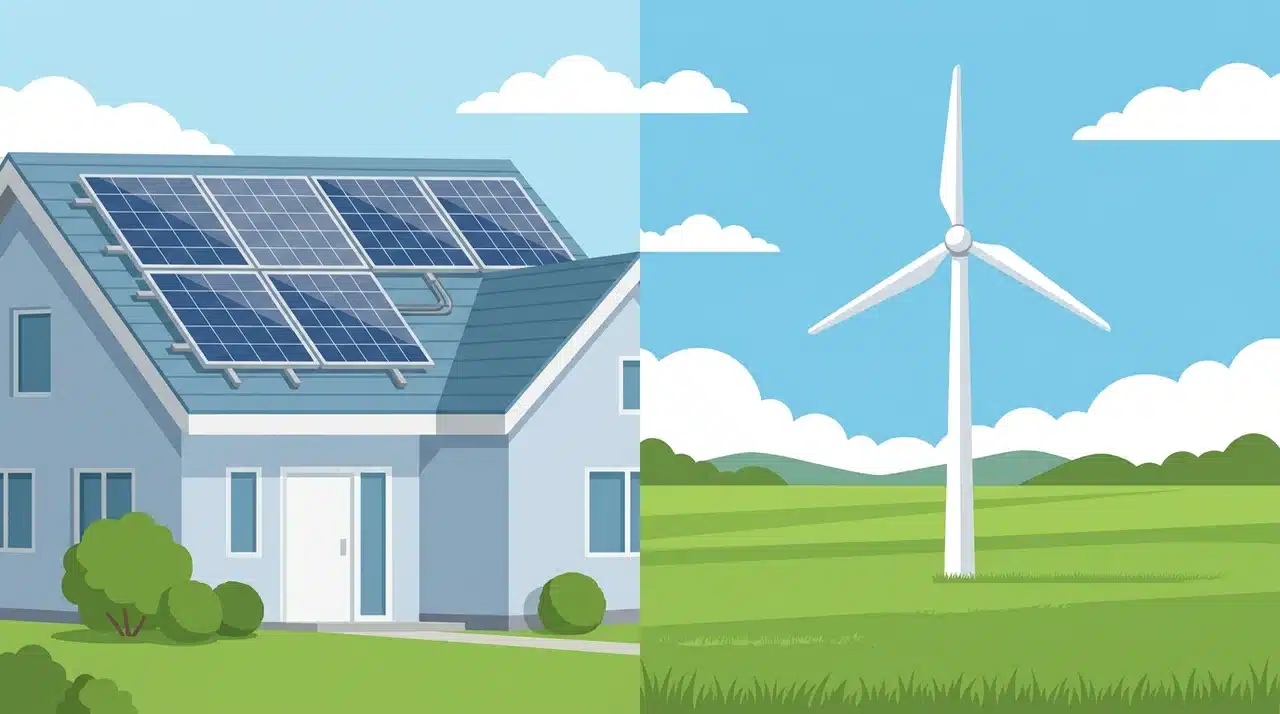
Solar panels and wind turbines both create clean electricity, but they work in very different ways. This quick comparison highlights the key differences to help you understand which option fits different energy needs.
| Feature | Solar Panels | Wind Turbines |
|---|---|---|
| Energy source | Use sunlight to generate electricity | Use moving air to generate electricity |
| How they work | Photovoltaic cells convert sunlight into usable power | Blades spin a generator to create electricity |
| Best conditions | Work best in areas with strong sunlight exposure | Work best in locations with consistent wind speeds |
| Energy output | Better for smaller systems and residential use | Can produce more electricity in suitable high-wind areas |
| Installation and space | Easier to install on rooftops and smaller properties | Requires more space and is better suited for large properties |
| Maintenance and lifespan | Low maintenance and can last 25 years or more | Needs more maintenance but can operate for decades with proper care |
Both technologies have a role in renewable energy, but the right choice depends on factors like location, available space, and how much power you need. Use this comparison to see which option makes the most sense for you.
Key Advantages of Renewable Energy Systems
Solar and wind energy offer several advantages compared with traditional energy sources. Both use natural resources to generate electricity and can help support a cleaner and more flexible energy system.
1. Renewable Electricity
Solar and wind energy rely on resources that naturally replenish.
Sunlight and moving air are available without needing to extract and burn fuels, which helps reduce dependence on fossil fuel-based electricity generation. This makes renewable energy an important part of efforts to create more sustainable power systems.
2. Lower Operating Costs
Once installed, solar panels and wind turbines do not require fuel to generate electricity. This can help reduce long-term energy costs because there is no ongoing expense for fuel supply.
While installation and maintenance costs vary, both systems generally have limited operating needs compared with traditional power plants.
3. Reduced Emissions
Solar panels and wind turbines generate electricity without burning fuel during operation. This means they produce little to no direct greenhouse gas emissions while creating power.
However, manufacturing, transportation, and installation still require resources, which are factors to consider when looking at their overall environmental impact.
4. Energy Independence
Solar and wind systems can help homeowners, businesses, and communities produce electricity closer to where it is used.
For example, rooftop solar can allow a homeowner to generate part of their own power, while larger wind projects can support local energy supplies. This can reduce reliance on traditional energy sources and provide more control over electricity generation.
Limitations to Consider Before Going Renewable
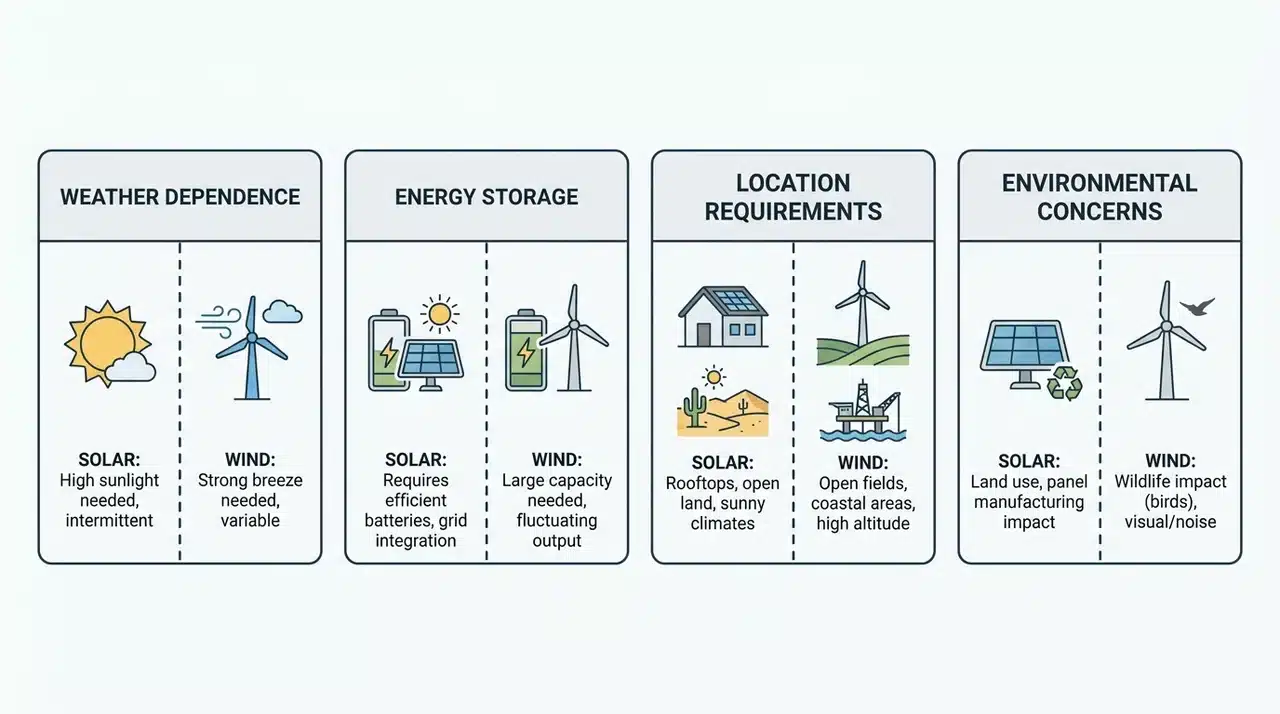
While solar and wind energy provide cleaner ways to generate electricity, they are not without challenges. Factors like weather, location, storage, and environmental impact can affect how practical these systems are for different users.
- Weather Dependence: Solar panels rely on sunlight to generate electricity, meaning output drops during cloudy weather and stops at night, while wind turbines need steady wind speeds to operate efficiently and may not perform well in areas with inconsistent air movement.
- Energy Storage Needs: Batteries can store extra electricity produced during high-output periods and provide power when solar or wind generation is lower, but they also increase the overall system cost due to additional equipment, installation, and maintenance needs.
- Location Requirements: Solar panels perform best in areas with strong sunlight and minimal shade, while wind turbines require open land and reliable wind conditions, making them better suited for rural areas and large-scale projects.
- Environmental Concerns: Wind turbines may create risks for birds and bats, though careful site selection can reduce these impacts, while solar panel production requires raw materials and energy that create environmental considerations during manufacturing.
Understanding these challenges helps you choose a renewable energy system that matches your location, energy goals, and practical needs while setting realistic expectations about performance and costs.
Can Renewable Sources Work Better Together?
Solar and wind energy do not have to compete with each other. In many cases, they can work together as a hybrid renewable energy system to create a more reliable power supply. Since each source produces electricity under different conditions, combining them can help balance energy production.
Solar panels usually generate the most electricity during sunny periods, especially during the daytime. Wind turbines, on the other hand, can continue producing power when wind conditions are favorable, including times when solar output is lower.
Using both systems together can reduce the impact of changing weather conditions and provide a more consistent energy supply.
Hybrid solar and wind systems are often used in places where reliable electricity is important, such as farms, remote communities, and large energy projects. These systems can help areas with limited access to traditional power sources produce their own electricity.
Cost Factors to Consider Before Installation
The total cost of renewable energy systems can vary widely based on the type of setup, installation needs, and location. Here are the key factors that influence solar and wind energy costs.
| Cost Factor | Solar Energy Systems | Wind Energy Systems |
|---|---|---|
| System Size | Larger solar systems with more panels generate more electricity but increase the overall installation cost. | Larger turbines can produce more power but require a higher upfront investment. |
| Installation Requirements | Costs depend on labor, roof structure, panel placement, and any required electrical upgrades. | Costs include specialized equipment, site assessments, and professional installation. |
| Space Requirements | Roof condition, available space, and panel placement can affect installation expenses. | Requires open land and suitable locations, which can increase preparation costs. |
| Energy Storage | Adding batteries allows homeowners to store extra electricity but increases the total system cost. | Storage options can also add costs when used to manage inconsistent energy production. |
| Maintenance | Solar panels usually have lower maintenance needs due to fewer moving parts. | Wind turbines require more maintenance because of their mechanical components. |
| Incentives | Federal incentives, state programs, and local utility policies may help reduce installation costs. | Available incentives and local programs can also affect the overall investment. |
While the upfront cost is an important factor, the long-term value of a renewable energy system depends on how well it matches your location, electricity needs, and available resources. A lower initial cost does not always mean the best fit.
Choosing Between Two Clean Energy Options
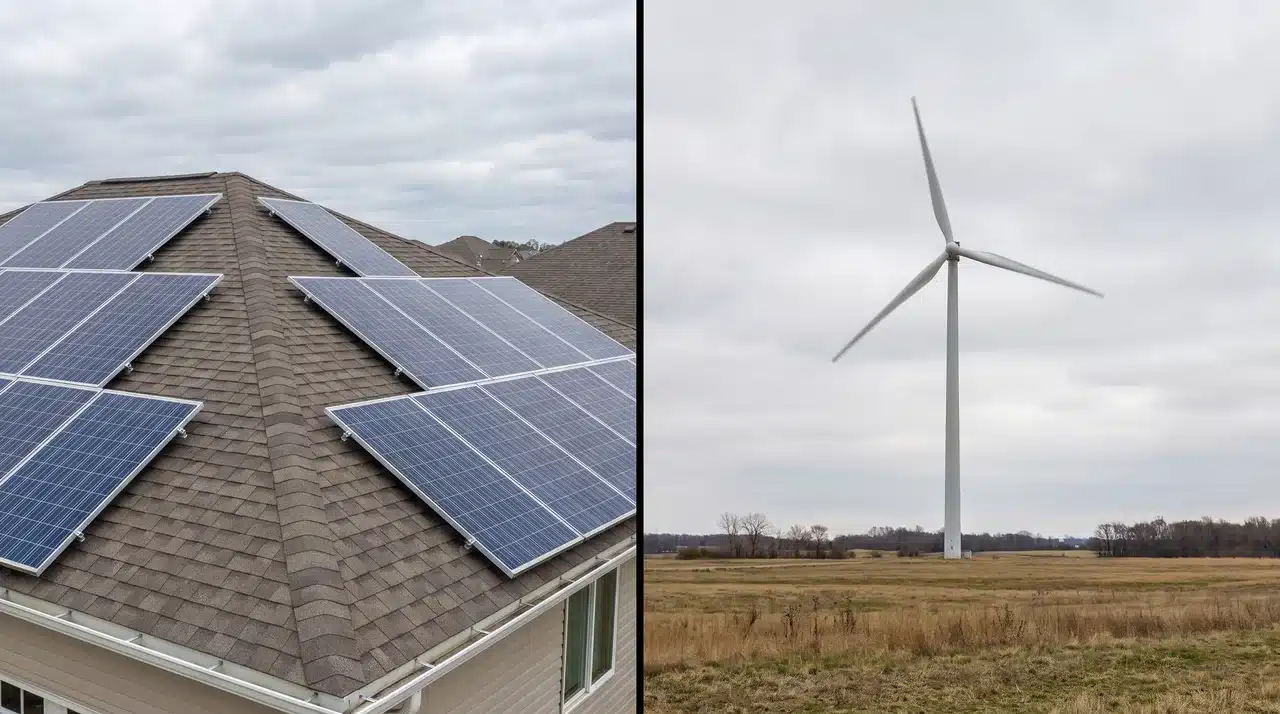
There is no single winner when comparing solar and wind energy because the better choice depends on where and how the system will be used. Solar panels and wind turbines both have advantages, but their performance changes based on factors like weather, location, available space, and electricity needs.
Solar energy is often a better option for homeowners because solar panels can be installed on rooftops, require less space, and are easier to maintain. They work especially well in sunny areas where panels can receive plenty of direct sunlight throughout the year.
For many residential properties, solar provides a simpler way to generate electricity without major changes to the property.
Wind energy can be a better fit for large properties, rural areas, and utility-scale projects where there is enough open space and steady wind. Wind turbines can produce large amounts of electricity when installed in locations with strong wind resources, making them useful for farms, remote areas, and large energy systems.
The better option depends on your location, energy needs, available space, and budget. A system that works well for one property may not be the right choice for another.
Conclusion
The better power source is the one that matches your location, space, energy needs, and budget. Solar panels often suit homes because they fit rooftops and need less maintenance.
Wind turbines make more sense on open land with steady airflow and room for larger equipment.
Both can lower reliance on fossil fuels, limit direct operating emissions, and support local electricity production. They also depend on changing weather, and storage can raise the cost.
I find that comparing site conditions before price alone leads to a more practical choice. Solar and wind energy can even work together when steadier output matters.
Review your property’s resources, compare realistic costs, and share which option best fits your plans.
Frequently Asked Questions
Can Solar and Wind Energy Reduce Electricity Bills?
Yes, renewable energy systems can help lower electricity costs by allowing homes and businesses to generate part or all of their own power instead of buying all electricity from the grid.
Do Solar Panels and Wind Turbines Work During Power Outages?
Not automatically. Most systems need battery storage or special backup equipment to continue supplying electricity when the main grid goes down.
Can Solar and Wind Energy Be Used in Every State?
Both systems can be used across the US, but their effectiveness depends on local conditions like climate, weather patterns, land availability, and energy needs.
Is It Possible to Sell Extra Energy Back to the Grid?
In many areas, homeowners can send excess electricity back to the grid through programs offered by utilities. Availability and payment rules depend on local policies.