
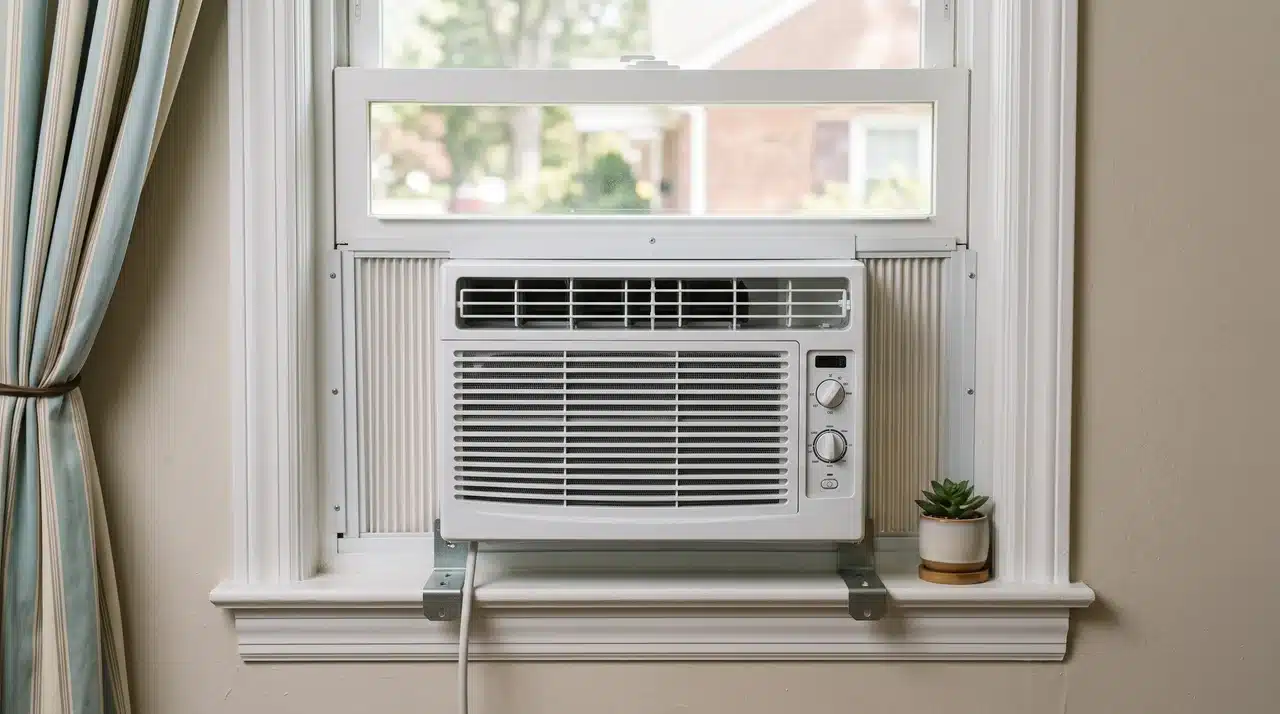


That small AC sitting in your window can make a bigger difference to your summer electric bill than you might expect. When people ask me do window AC units use a lot of electricity, I usually tell them not to judge the answer by wattage alone.
Most models draw roughly 500 to 1,500 watts, though large 15,000 BTU or bigger units can pull over 2,000 watts, and that number only tells part of the story.
Room size, weather, thermostat settings, efficiency, runtime, and your local electricity rate all affect what you actually pay. I find it more useful to look at how the unit fits your room and daily routine.
Once you do that, the numbers start making much more sense.
Do Window AC Units Use a Lot of Electricity?
A window AC uses a moderate amount of electricity. It draws more power than many everyday appliances, but that does not automatically make it expensive to run.
A refrigerator usually consumes less power at any given moment, while an electric dryer can draw much more. The difference is how often each appliance runs.
That is why the wattage on the label only tells part of the story. Runtime and your electricity rate have a much bigger effect on the final cost.
I have seen two people use the same window AC and end up with very different bills. One kept it running all day at 68°F. The other switched it on for a few evening hours.
Same unit and same rated wattage, but very different monthly costs.
There is another detail worth checking. Two window ACs with similar wattage can still consume different amounts of electricity during normal use.
Efficiency, compressor cycling, room conditions, and thermostat settings all affect how long the unit works at full power. That is why wattage should never be your only comparison point.
What Actually Drives a Window AC’s Electricity Use
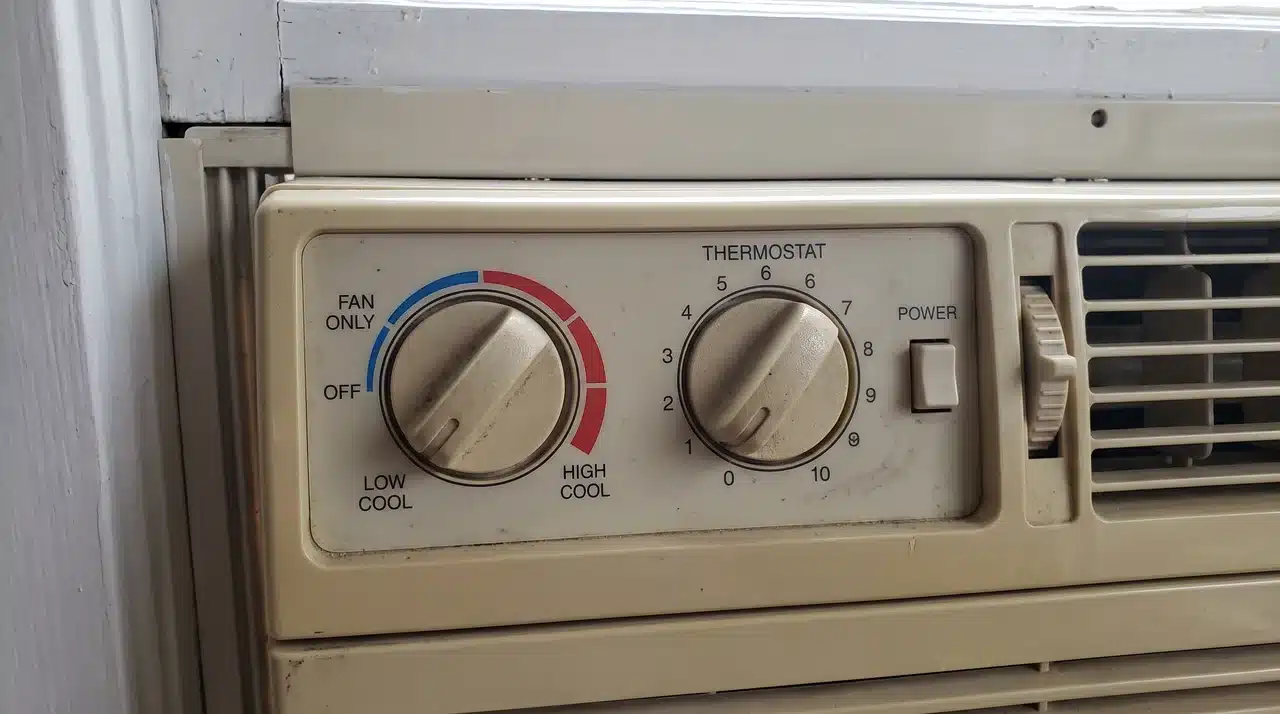
A window AC’s electricity use is not fixed. It changes based on the unit and how you use it. Three factors matter most: size, runtime, and efficiency.
Size and Wattage
A window AC’s size decides how much power it needs. Small units around 5,000 to 6,000 BTU draw about 500 to 700 watts.
Medium units (8,000 to 10,000 BTU) use roughly 700 to 1,000 watts. Large units at 12,000 BTU or more pull 1,000 to 1,500 watts or higher. A bigger unit is not always costlier, since it cools a room faster and shuts off sooner.
Runtime and Thermostat Setting
Runtime affects electricity use more than wattage alone. A unit running longer hours uses more power, even at the same wattage rating. Setting the thermostat very low does not cool a room faster.
It only makes the compressor run longer to reach that lower temperature. A moderate setting that lets the unit cycle off often costs less than a very low setting held all day.
Energy Efficiency Rating (EER/CEER)
The Energy Efficiency Ratio, or EER, shows how much cooling a unit produces for each watt. Newer models often use a CEER rating, which also counts standby power.
A higher number means less electricity for the same cooling. Ratings of 8 to 9 are basic.
Ratings of 10 to 11 are good, and 12 or above is high efficiency, often marked ENERGY STAR. A higher-rated unit works the same way as other energy-efficient appliances, lowering monthly costs without changing daily habits.
How to Calculate Your Own Window AC’s Electricity Cost
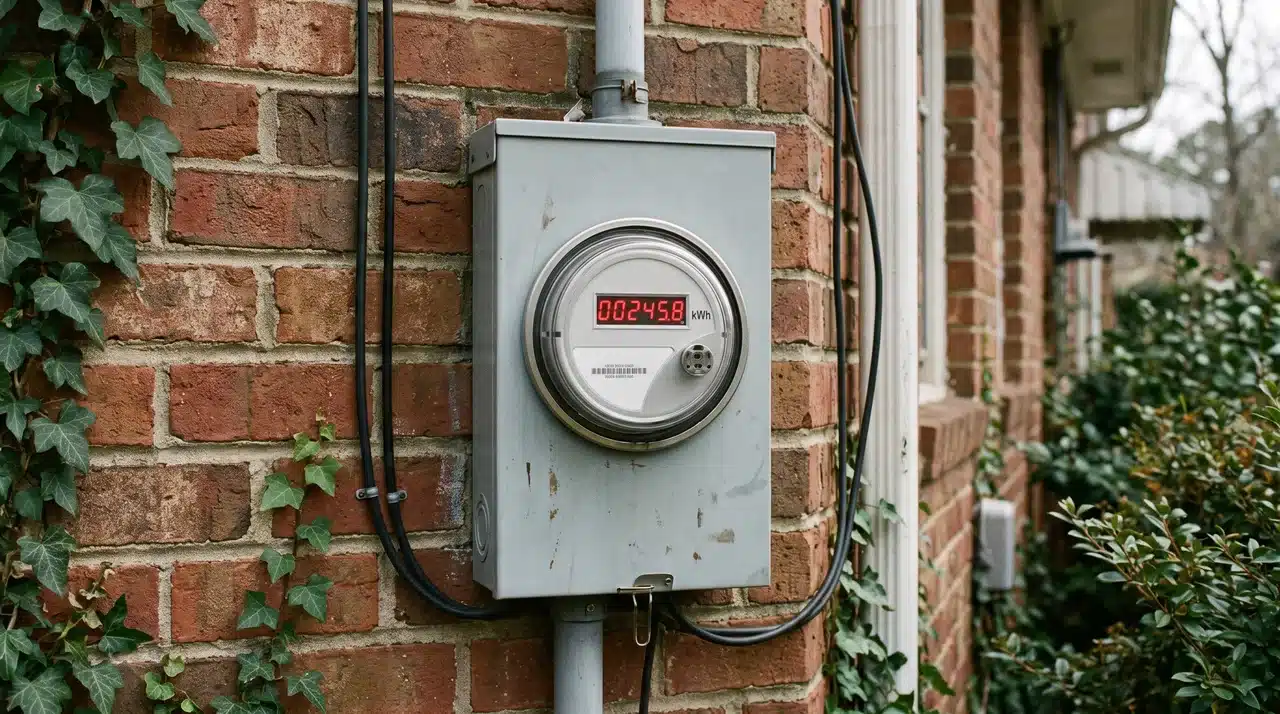
You do not need a complicated calculator to estimate what your window AC costs to run. You only need its wattage, runtime, and your electricity rate.
Use this formula: Watts × hours used ÷ 1,000 × electricity rate = estimated daily cost
Dividing by 1,000 converts watt-hours into kilowatt-hours, or kWh. That is the unit your utility company uses to bill for electricity.
Say you have a 900-watt window AC that runs for eight hours a day.
First, calculate its daily electricity use: 900 × 8 ÷ 1,000 = 7.2 kWh
If your electricity rate is $0.15 per kWh, multiply the two: 7.2 × $0.15 = $1.08 per day
At that rate, running the AC for 30 days would cost about $32.40.
Keep in mind that this assumes the unit draws 900 watts for all eight hours. In normal use, the compressor may cycle on and off after the room reaches the set temperature. That can lower actual electricity use.
Change any part of the formula, and your estimate changes too. Higher wattage, longer runtime, or a higher electricity rate will increase the cost.
Check the unit’s label or manual for its rated wattage. Then look at a recent utility bill for your electricity rate per kWh. Using your own numbers gives you a much better estimate than relying on a broad online average.
Is A Window AC Cheaper Than Central Air?
A window AC is usually cheaper when you only need to cool one room. Central air cools many rooms at once.
That difference matters when comparing window AC electricity use with whole-home cooling.
If I only needed to keep a bedroom or home office comfortable, I would look at the window unit first. You are cooling the room you are actually using instead of paying to cool the rest of the house.
Central air makes more sense when most of the home needs cooling, which is also where solar-powered cooling systems usually enter the conversation. One system can maintain temperatures across several rooms at the same time.
The comparison gets less clear once several window units are running together. Three or four units can add up quickly, especially if each one runs for long periods.
| Cooling Setup | Usually Makes More Sense When |
|---|---|
| Window AC | Cooling one or a few rooms |
| Central AC | Cooling most or all of the house |
| Multiple Window ACs | Cost depends on unit size, runtime, efficiency, and home layout |
I would not assume a window AC is automatically cheaper in every home. Its biggest cost advantage usually comes from cooling only the rooms you need.
Window AC Vs. Portable AC Electricity Use
Window and portable air conditioners can offer similar cooling capacity, but they do not always use electricity the same way.
Window units often have an efficiency advantage because part of the system sits outside. The heat removed from the room is released directly outdoors.
Portable ACs sit inside the room and vent hot air through a hose. Depending on the design, that setup can make it harder to remove heat efficiently.
Still, electricity use varies by model. BTU rating, efficiency, room conditions, and daily runtime all affect how much power an AC actually uses.
So don’t assume every window unit costs less to run. Compare efficiency ratings, wattage, and estimated annual energy use between specific models.
Simple Ways to Lower Your Window AC’s Electricity Use
A window AC does not have to run at full power all day. A few small habits can reduce your electricity bill without sacrificing comfort.
- Set a Moderate Thermostat: Keep the setting around 76 to 78°F when the room is in use. A lower setting does not cool faster. It just makes the compressor run longer and use more electricity.
- Clean or Replace the Filter: A dirty filter blocks airflow and forces the unit to work harder. Check the filter every month during summer and clean or swap it as needed.
- Seal Gaps Around the Unit: Small gaps around the AC let cool air escape and warm air in. Weatherstripping or foam seals help the unit hold its temperature with less effort.
- Block Direct Sunlight: Curtains or blinds on sun-facing windows cut down heat entering the room. Less heat means the AC does not have to run as long.
- Turn It Off When the Room Is Empty: Run the AC only when someone is in the room to avoid wasted electricity. A ceiling fan can also help the room feel cooler at a higher thermostat setting.
None of these steps need a new unit or extra cost. Small habits like these can lower a monthly electric bill over a full summer. Combine two or three of them together, and the difference becomes easier to see on your next bill.
Final Thoughts
What I would take away from all of this is that a window AC’s wattage never tells the whole story. The better question behind do window AC units use a lot of electricity is how the unit behaves in your room and how you actually use it.
A properly sized AC that cycles off regularly can be quite different from one running nearly nonstop in a hot, poorly matched space. Your local rate then turns that usage into the number you see on your bill.
I would start with your own unit rather than a generic average. Check the wattage, look at your real runtime, find your electricity rate, and run the calculation.
Five minutes with those numbers can tell you far more than guessing from your summer bill.
Frequently Asked Questions
Do window units make the electric bill go up?
Yes. A window AC adds to your electric bill whenever it runs. The increase depends mainly on wattage, runtime, compressor cycling, and your electricity rate. A smaller unit used for a few hours may add relatively little. A larger AC running most of the day can have a much bigger effect.
How much does it cost to run a window air conditioner for 8 hours?
The cost depends on the unit’s wattage and your local electricity rate. A 900-watt AC running continuously for eight hours would use about 7.2 kWh. Multiply 7.2 kWh by the rate on your electric bill to estimate the cost. Actual use may be lower if the compressor cycles off.
Is it cheaper to run AC or a window unit?
A window AC is often cheaper when you only need to cool one room. You avoid paying to cool other areas of the house at the same time. Central air may make more sense when several rooms need cooling. The better option depends on efficiency, runtime, home size, and how much space you want cooled.
What is the 3-minute rule for air conditioners?
The 3-minute rule means waiting about three minutes before restarting an AC after turning it off. This gives pressure inside the refrigeration system time to settle. Restarting too quickly can place extra stress on the compressor. Some newer units include a built-in restart delay, so check your owner’s manual for the manufacturer’s guidance.