
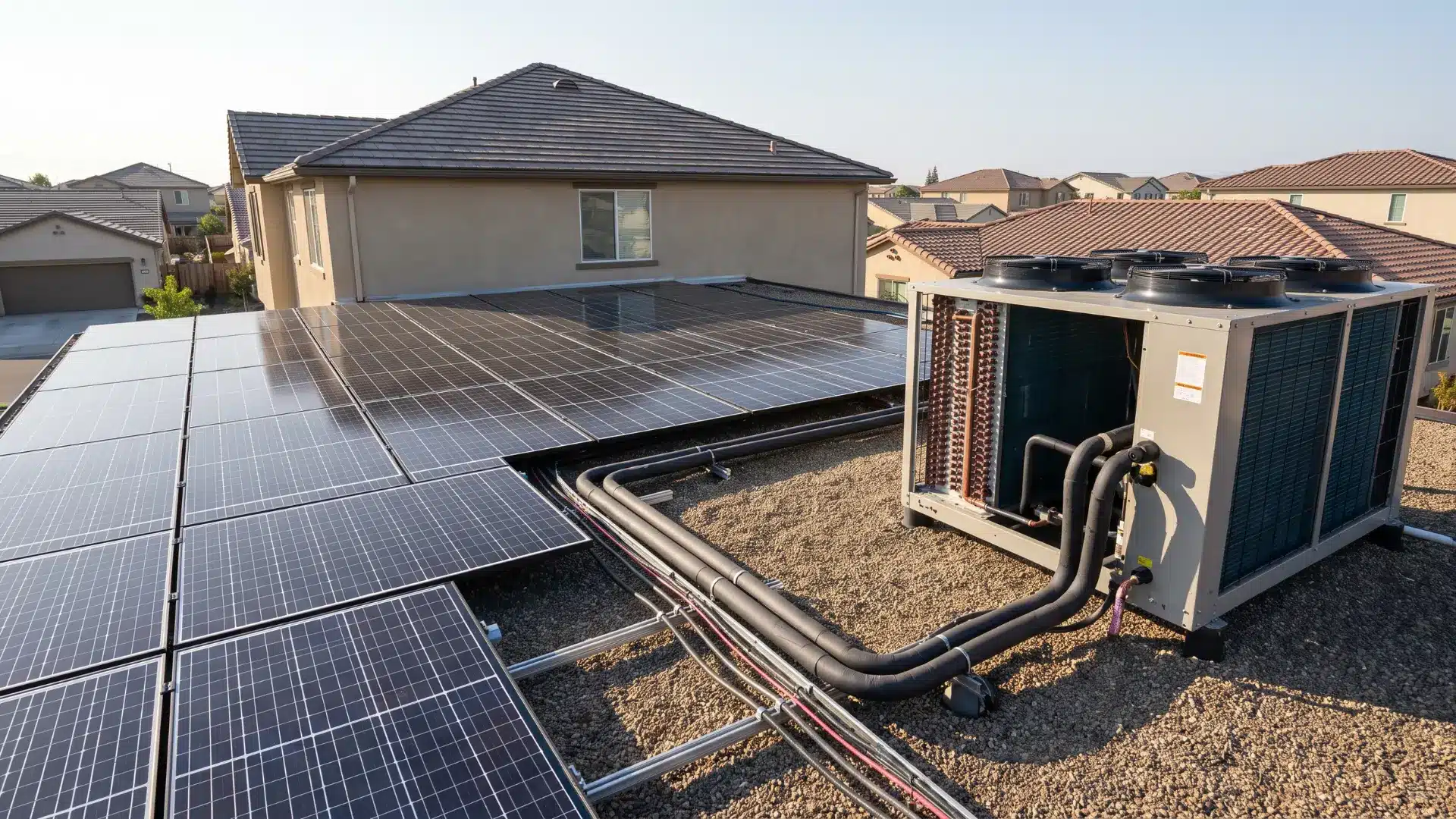

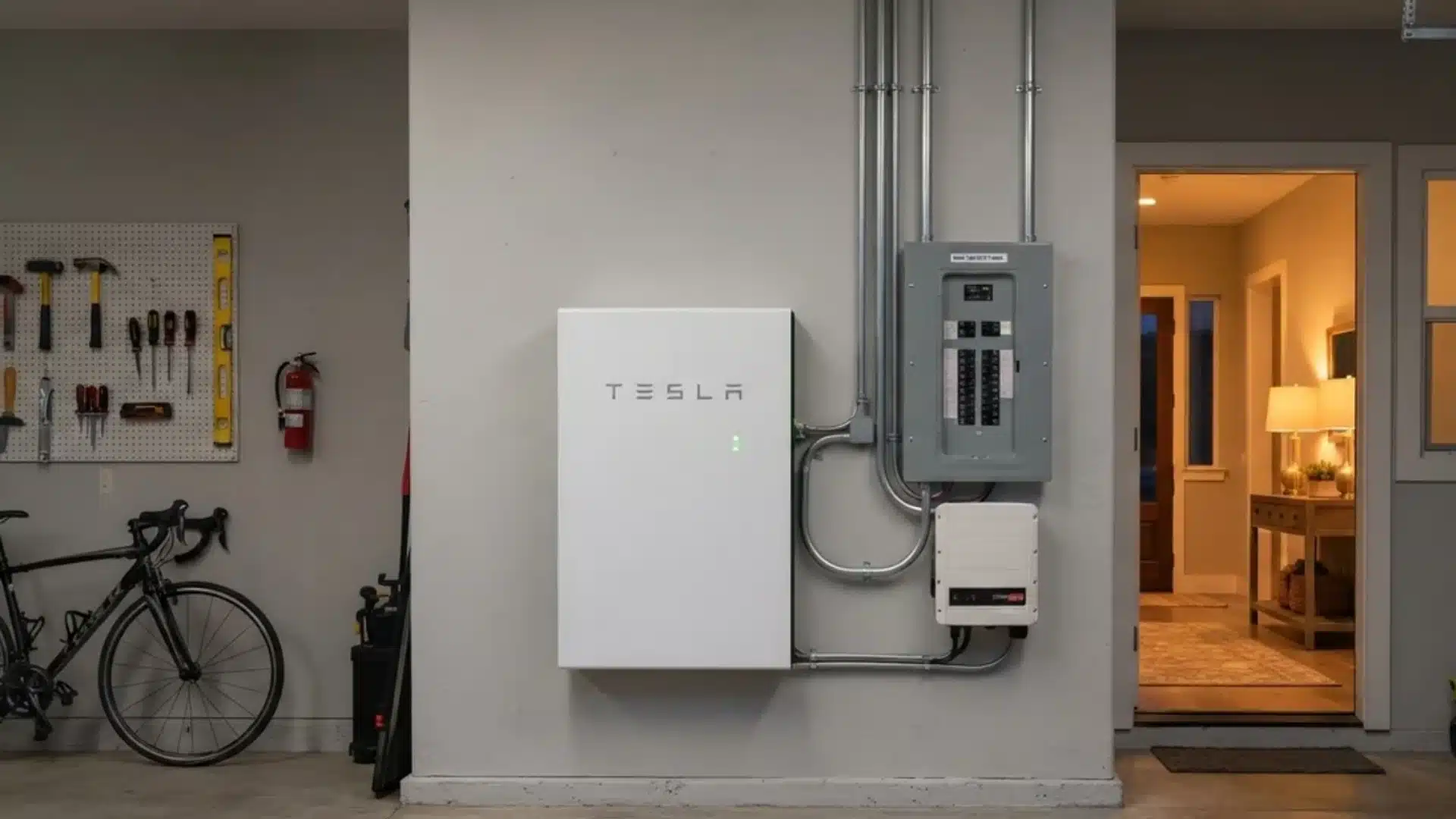
Solar cooling uses energy from the sun to provide ventilation, refrigeration, or air conditioning. It can be as simple as a small solar attic fan or as complex as a thermal chiller for a commercial building.
I find the technology useful because cooling demand often rises during the same sunny hours when solar panels produce the most electricity.
However, not every product delivers the same cooling performance. A ventilation fan cannot replace an air conditioner, and a small portable cooler cannot cool an entire room.
My goal here is to explain the main solar cooling systems, their costs, power needs, benefits, and practical limits.
What Is Solar Cooling and How Does It Work?
Solar cooling is a general term for systems that use solar energy to lower temperatures. These systems can cool rooms, remove hot attic air, refrigerate food, or store cooling energy for later use.
There are two main operating methods:
Photovoltaic solar cooling uses solar panels to produce electricity. That electricity runs an air conditioner, refrigerator, fan, pump, or portable cooling unit.
Solar thermal cooling captures heat through solar collectors. The collected heat powers an absorption or adsorption chiller, which removes heat from a building.
This process differs from Active Solar Heating, which collects and distributes solar heat to warm indoor spaces or water rather than produce cooling.
Some systems work only when sunlight is available. Others use batteries, grid electricity, generators, or thermal storage to keep running after sunset.
Types of Solar Cooling Systems
Solar cooling equipment varies greatly in size and purpose. Selecting the right type starts with identifying what needs to be cooled and for how long.
1. Solar-Powered Air Conditioners

A solar-powered air conditioner uses electricity from photovoltaic panels to cool an indoor space. Common choices include direct-current, hybrid, and standard alternating-current units.
A direct-DC air conditioner connects to a dedicated solar array and may operate without an inverter. It normally performs best during sunny daytime hours.
A hybrid air conditioner can draw electricity from solar panels and the utility grid. Solar power supplies part or all of the daytime load, while grid electricity covers low-light periods and nighttime use.
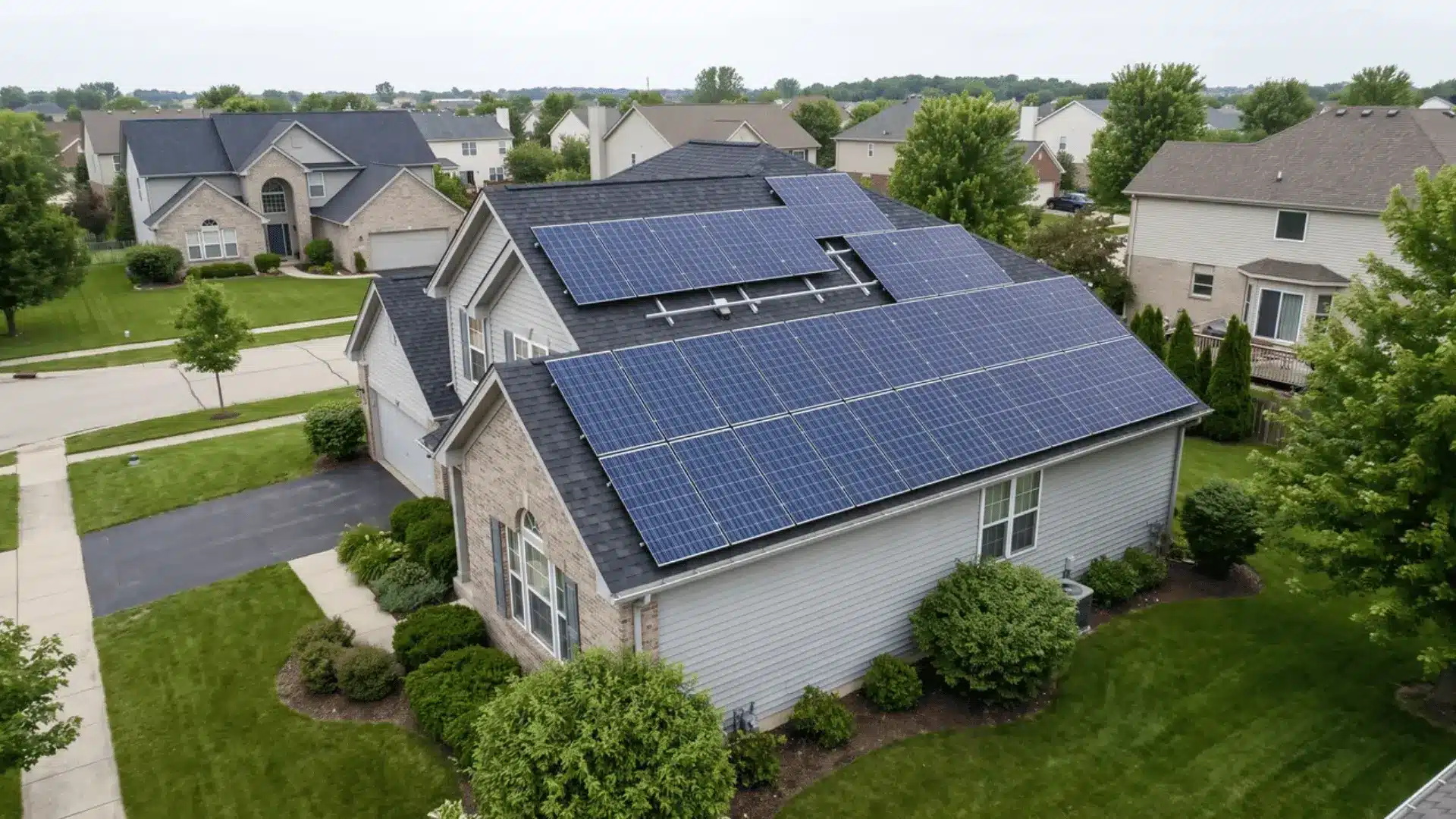
A standard AC unit can also run on a regular home solar system. This setup usually requires an inverter and enough solar capacity to support the unit’s running and startup loads.
2. Solar Ventilation Fans
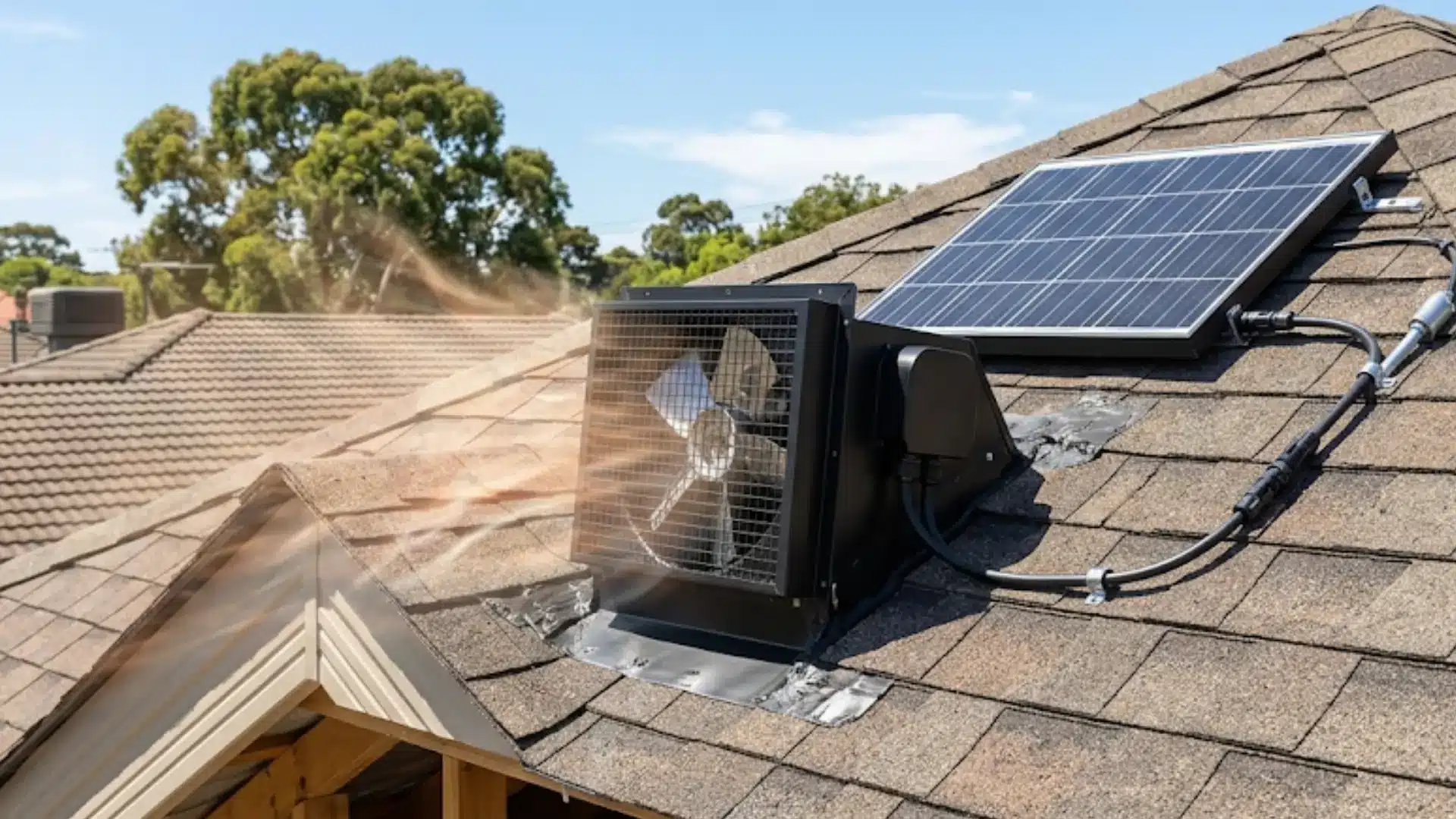
Solar ventilation fans remove trapped hot air rather than actively lowering air temperature. They are often installed in attics, sheds, greenhouses, garages, and animal enclosures.
A typical kit includes a small solar panel connected directly to a DC fan. The fan runs faster during strong sunlight, which is often when heat buildup is highest.
These fans are affordable and simple to install, but they are not air conditioners. Their main purpose is to improve airflow and reduce accumulated heat or moisture.
3. Solar Refrigerators and Portable Coolers
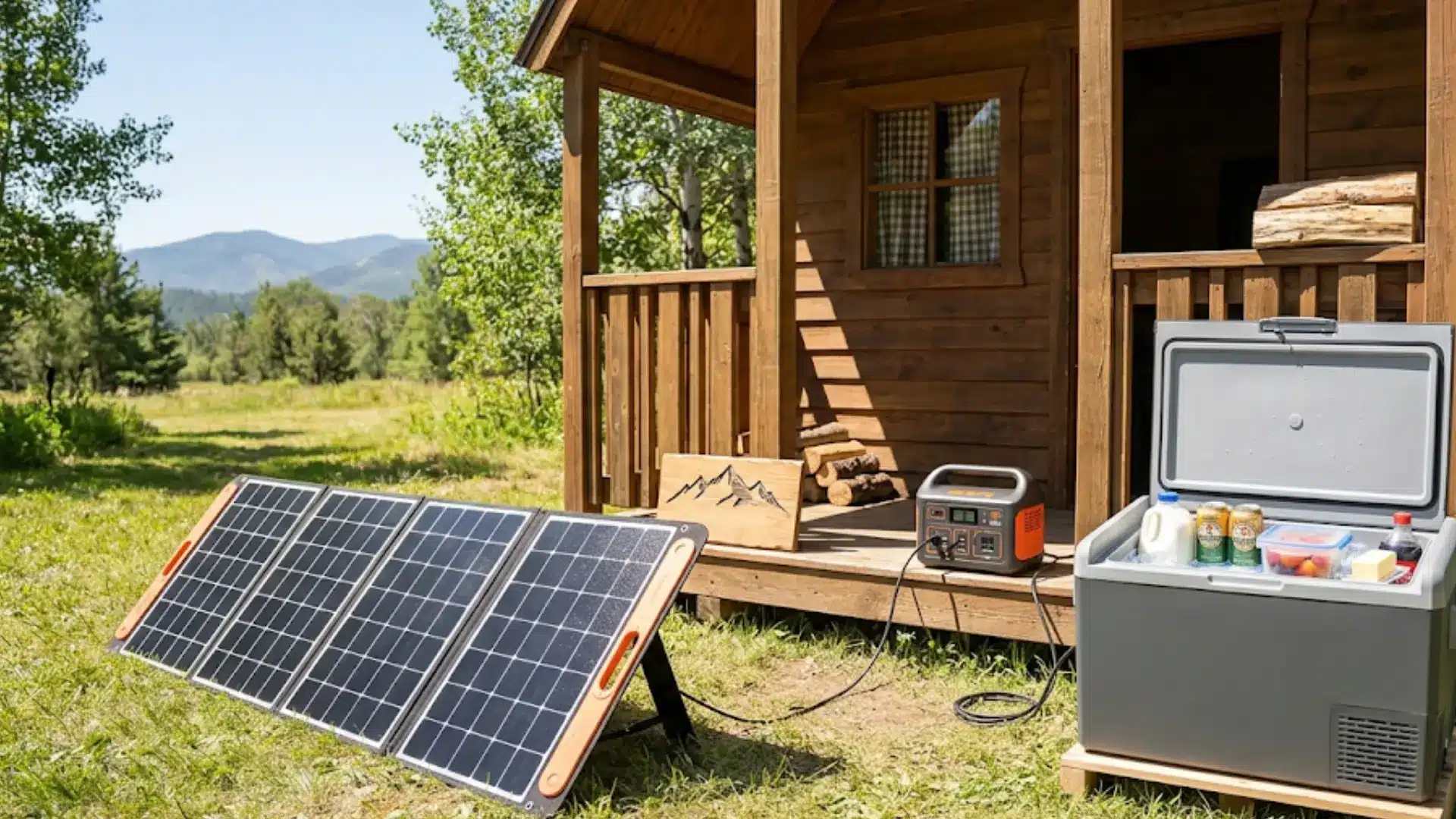
Solar refrigerators use photovoltaic electricity to keep food, drinks, or medicine cold. They are commonly used in cabins, campsites, boats, vehicles, farms, and off-grid clinics.
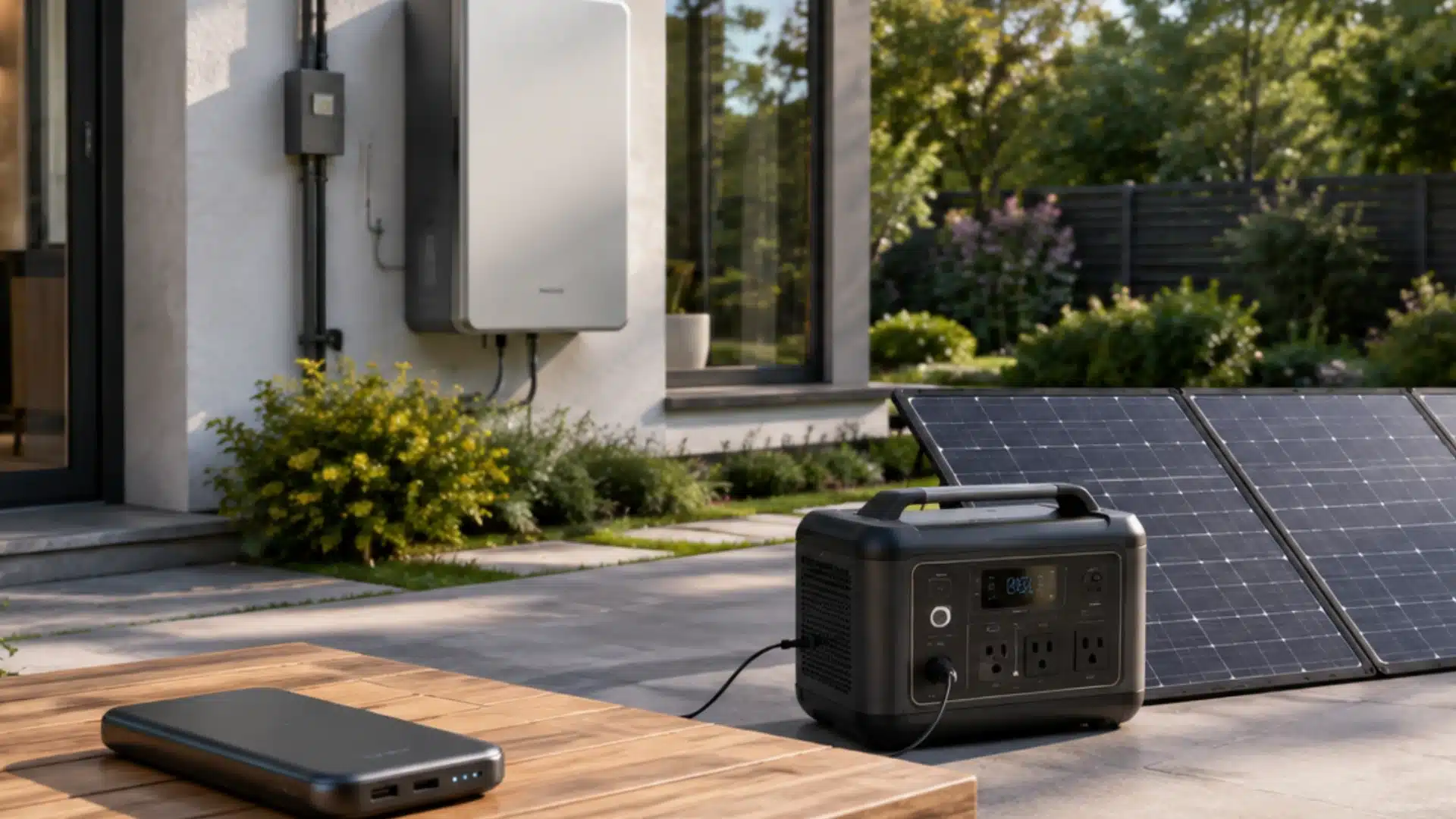
Some portable models connect directly to a solar panel or portable power station. Others include a small internal battery for short periods without sunlight.
Compressor-based solar refrigerators generally provide more consistent cooling than basic evaporative coolers. Their low power demand also makes them easier to operate from a small solar setup.
4. Solar Thermal Cooling Systems
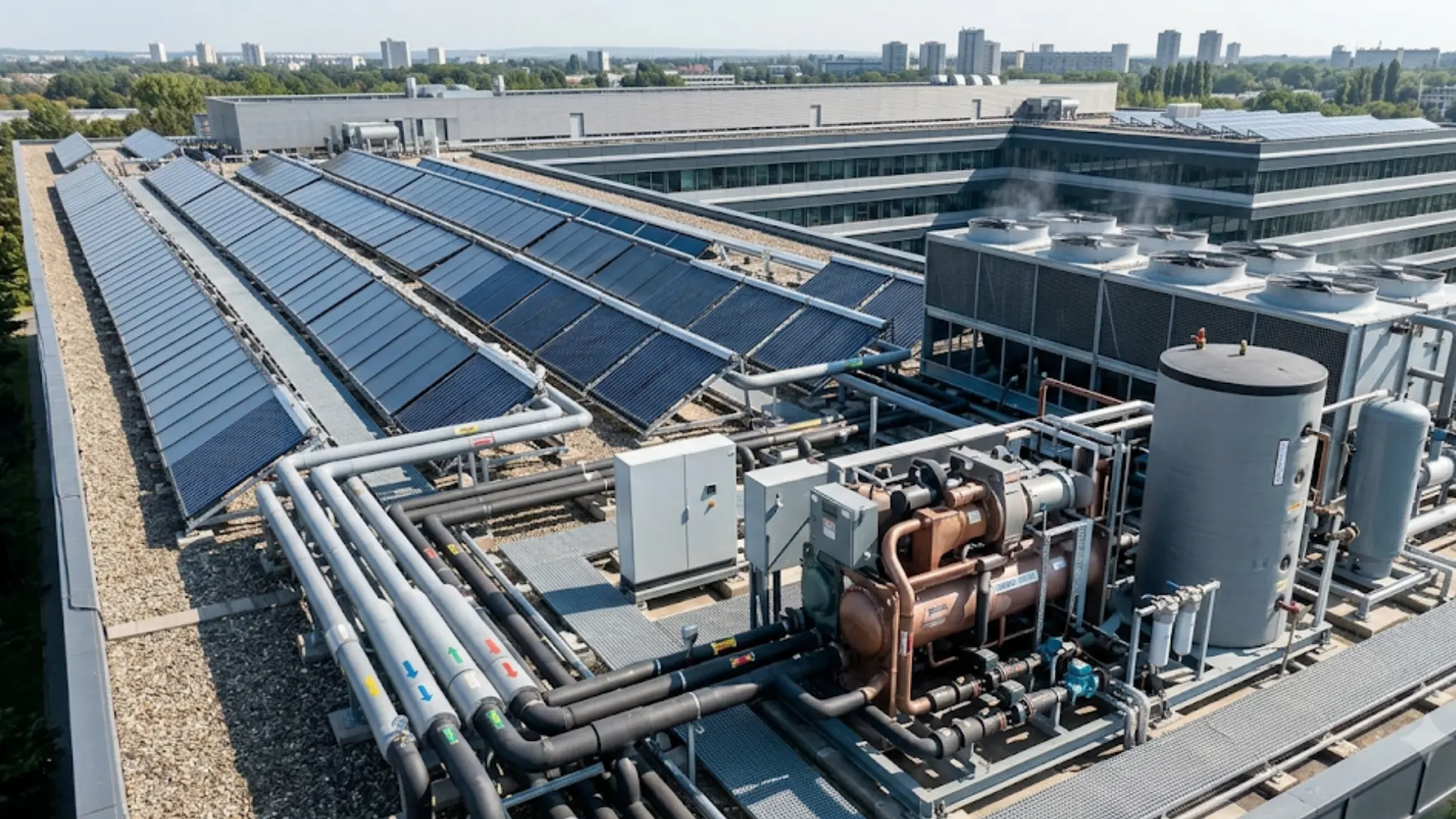
Solar thermal systems collect heat rather than producing electricity. That heat drives an absorption or adsorption chiller, which creates chilled water for indoor cooling.
These systems are mainly used in large homes, commercial buildings, hotels, hospitals, and industrial facilities. They usually require solar collectors, pumps, storage tanks, cooling towers, and professional controls.
The equipment can reduce electrical demand, but its installation cost and complexity make it less practical for a small room or basic residential project.
5. Ice-Based Thermal Storage
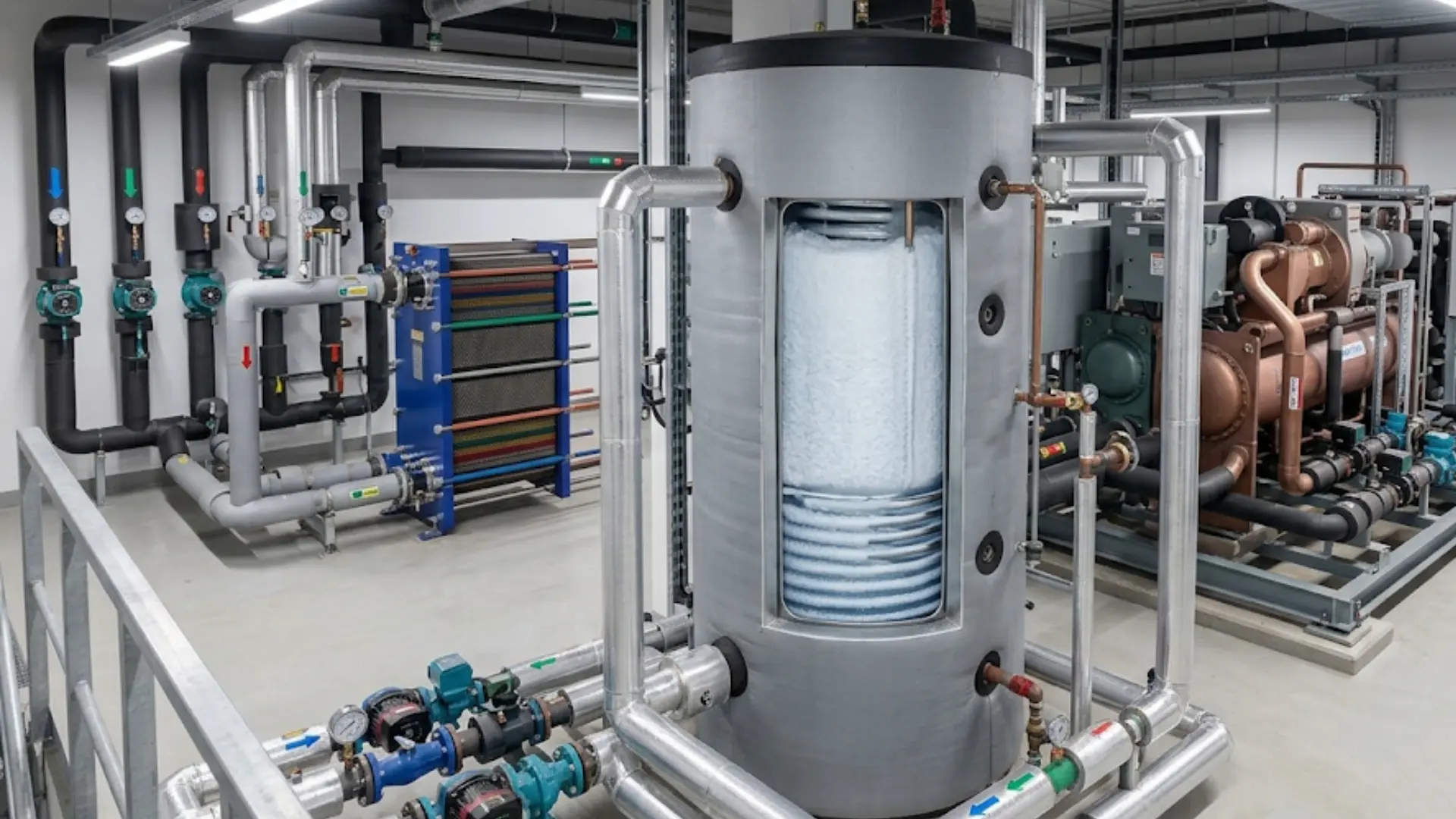
An ice-storage system uses available solar electricity to freeze water during the day. The stored ice then helps cool a building later, including during cloudy periods or evening peak demand.
Thermal storage can reduce the need for a large electrical battery bank. However, it requires an insulated tank, heat exchanger, pumps, controls, and enough space for the storage equipment.
It is often more suitable for buildings with predictable cooling schedules than for small portable applications.
Solar Cooling System Components
The required parts depend on the cooling method and equipment size. A basic ventilation kit may need only a panel and fan, while a room AC needs a more complete power system.
Common components include:
- Solar Panels: Produce DC electricity for the cooling equipment or battery system.
- Thermal Collectors: Capture heat for absorption or adsorption cooling.
- Charge Controller: Regulates the electricity sent from panels to batteries.
- Inverter: Converts DC solar electricity into AC power for standard appliances.
- Battery Bank: Stores electricity for use during low-light periods or at night.
- Compressor or Chiller: Removes heat from the air, water, or refrigerated compartment.
- Fans and Pumps: Move air, water, refrigerant, or heat-transfer fluid.
- Thermal Storage: Stores chilled water or ice for later use.
- Backup Supply: Provides grid or generator power when solar production is insufficient.
Correct sizing matters because an undersized array may not keep the cooling equipment running. An oversized setup can work well but may cost more than the expected energy savings justify.
Solar Cooling Options Compared
The following comparison shows how common systems differ in purpose and power needs.
| System type | Best use | Typical solar requirement | Backup needed | Relative cost |
|---|---|---|---|---|
| Solar ventilation fan | Attics, sheds and greenhouses | 15–40W panel | Usually no | Low |
| Portable solar cooler | Camping, vehicles and small food storage | 50–200W | Optional battery | Low to medium |
| Direct-DC air conditioner | Daytime room cooling | Several solar panels | Optional | High |
| Hybrid solar air conditioner | Regular home cooling | Several solar panels | Grid or battery | High |
| Solar thermal chiller | Large buildings | Large collector area | Often required | Very high |
| Ice-storage system | Delayed or evening cooling | Depends on cooling load | Optional | High |
Small fans and refrigerators are usually easier to install. Air conditioners and thermal systems need a detailed load calculation before equipment is purchased.
Benefits and Drawbacks of Solar Cooling
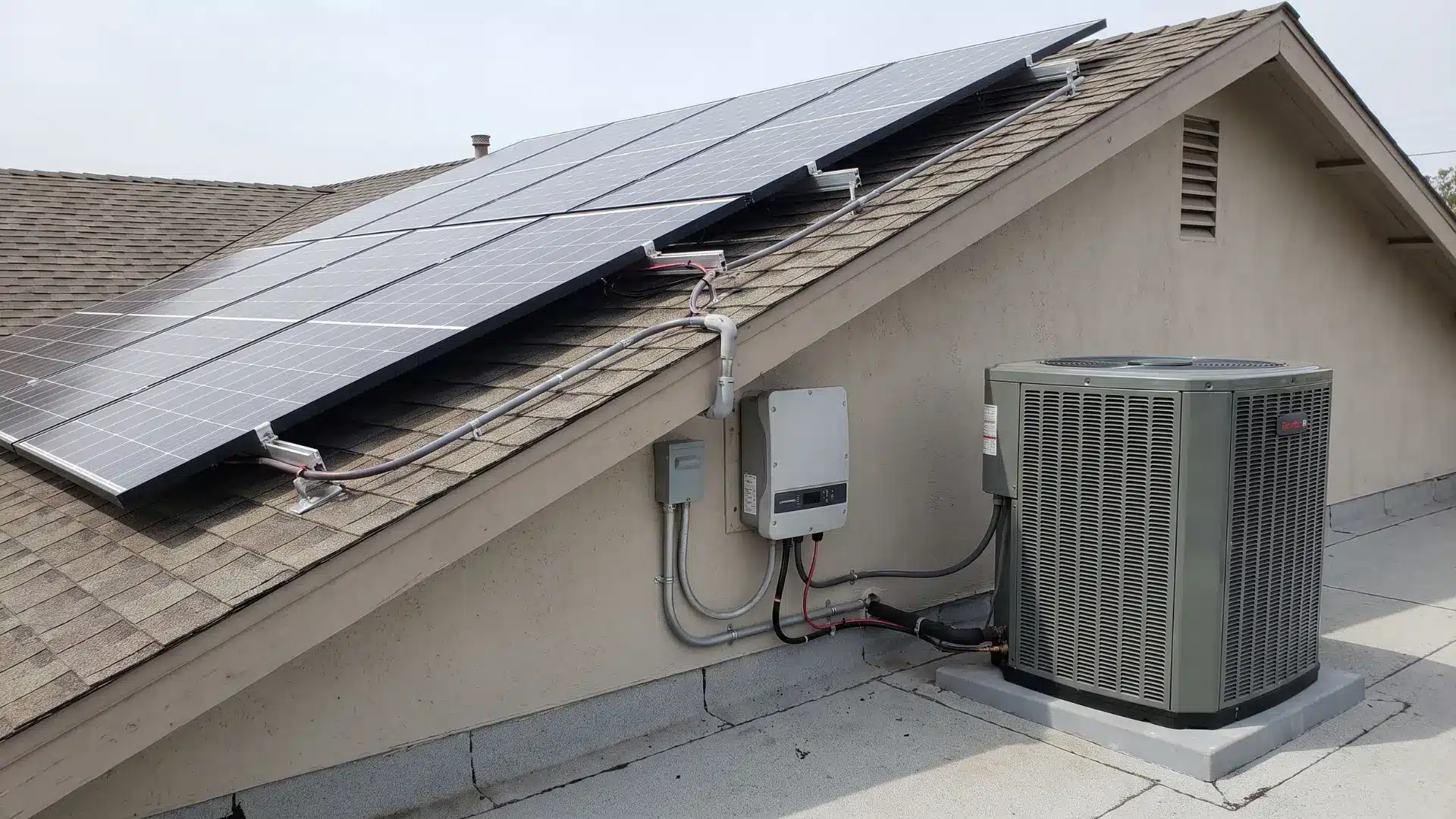
Solar power can reduce the electricity required for daytime cooling, but installation conditions affect the final results.
Benefits
- Lower Daytime Consumption: Solar production can offset electricity used during hot afternoon hours.
- Reduced Peak Demand: Cooling energy can come from panels when utility demand and rates are high.
- Off-Grid Operation: Small fans, refrigerators, and some AC units can operate in remote locations.
- Lower Operating Emissions: Solar energy can reduce reliance on electricity produced from fossil fuels.
- Flexible System Sizes: Options range from compact ventilation kits to building-wide cooling systems.
- Possible Long-Term Savings: A properly sized system may reduce monthly energy costs over its service life.
Drawbacks
- High Initial Cost: Panels, batteries, controls, and cooling equipment require a large upfront investment.
- Variable Solar Production: Clouds, shade, dust, and short winter days can lower power output.
- Battery Expense: Nighttime cooling may require costly electrical storage.
- Space Requirements: Large systems need adequate roof or ground area for panels or collectors.
- Complex Sizing: Cooling loads and solar production must be calculated carefully.
- Maintenance Needs: Filters, fans, pumps, panels, batteries, and refrigerant systems need periodic care.
The strongest financial case usually appears where daytime cooling demand is high and reliable sunlight is available.
Solar Cooling Costs and Panel Requirements
Cooling capacity, daily runtime, available sunlight, equipment type, and backup power determine the required solar array and the project’s total cost.
| Solar cooling system | Typical power requirement | Panel requirement | Additional equipment | Cost level |
|---|---|---|---|---|
| Solar ventilation fan | 15–40 watts | One small 15–40W panel | Usually none | Low |
| Portable solar refrigerator | 40–100 watts | 100–300W solar array | Charge controller and battery | Low to medium |
| Small room air conditioner | 500–1,000 watts | 1–2kW solar array | Inverter and optional battery | High |
| 12,000 BTU solar AC | 900–1,500 watts | 2–3kW solar array | Inverter, controls, and backup power | High |
| Whole-house cooling system | 2,000–5,000+ watts | 5–10kW+ solar array | Large inverter, controls, and battery | Very high |
| Solar thermal cooling | Varies by cooling load | Large collector area | Pumps, chiller, tank, and controls | Very high |
These figures provide starting estimates. An installer should calculate cooling load, peak-sun hours, energy losses, and startup demand before recommending equipment.
Can Solar Panels Keep a House Cooler?
Rooftop solar panels may reduce some heat entering a building because they shade part of the roof. The air gap between the panels and roof can also allow heat to move away before reaching the indoor space.
The effect varies based on panel spacing, roof material, attic ventilation, insulation, building orientation, and climate. Panels should not be treated as a replacement for roof insulation or proper ventilation.
Their main cooling benefit comes from generating electricity that can run an efficient air conditioner. Any roof-shading effect is an additional benefit rather than the system’s primary purpose.
How to Choose the Right Solar Cooling System
Start by calculating the size of the area and the temperature reduction required. Ventilation may be enough for a greenhouse or attic, while an occupied bedroom usually needs mechanical air conditioning.
Consider the following factors:
- Cooling Area: Measure the room, building, cabinet, or storage compartment.
- Daily Runtime: Estimate how many hours the equipment must operate.
- Sun Exposure: Check for roof shade and seasonal changes in sunlight.
- Nighttime Use: Decide if batteries, grid power, or thermal storage are necessary.
- Existing Equipment: A current solar array may support additional cooling if it has spare capacity.
- Available Space: Confirm room for panels, collectors, batteries, and storage tanks.
- Local Climate: Humidity and outdoor temperature affect cooling performance.
- Installation Budget: Include equipment, labor, wiring, mounting, permits, and maintenance.
- Service Support: Confirm that local technicians can repair the selected equipment.
Look closely at actual cooling capacity rather than relying on the product name. Some devices sold as solar air coolers are only small fans paired with a water reservoir.
Is Solar Cooling Worth It?
Solar cooling can make sense in sunny areas with high daytime electricity rates. It is also useful for cabins, farms, workshops, vehicles, and other places where grid power is limited or unavailable.
A solar ventilation fan or portable refrigerator offers a relatively accessible starting point. Whole-room and whole-house air conditioning require a larger investment and more careful planning.
For a grid-connected home, a high-efficiency air conditioner paired with a standard rooftop solar array may be more practical than a specialized solar AC.
I would compare total installation cost, expected annual production, warranty terms, and repair access before choosing. My final decision would also account for nighttime cooling needs, since storage can add considerably to the project cost.
Conclusion
Solar cooling covers several technologies, from simple ventilation fans to full air-conditioning and thermal-storage systems. The right choice depends on the cooling load, operating schedule, sunlight, available space, and budget.
Small systems can provide practical ventilation or refrigeration without a major installation. Room and whole-house systems need accurate calculations because air conditioning consumes far more power.
I recommend comparing equipment efficiency and total system costs before buying. My preferred approach is to calculate the building’s cooling load first, then size the solar array and backup supply around real energy demand.
Frequently Asked Questions
Do solar cooling systems require planning permission?
Rules depend on the location, system size, building type, and installation method. Rooftop panels, structural changes, electrical work, or large thermal equipment may require local permits.
How long does a solar cooling system last?
Solar panels often last longer than cooling equipment. Air conditioners, batteries, pumps, inverters, and control systems may need repair or replacement at different points during ownership.
Can an existing air conditioner be connected to solar panels?
Yes, many standard air conditioners can use electricity from a grid-connected solar array. An installer must confirm that the inverter and electrical system can handle startup demand.
Are government incentives available for solar cooling?
Some regions offer tax credits, rebates, or financing for solar panels, efficient air conditioners, batteries, or commercial energy projects. Eligibility and covered equipment vary by local program.