

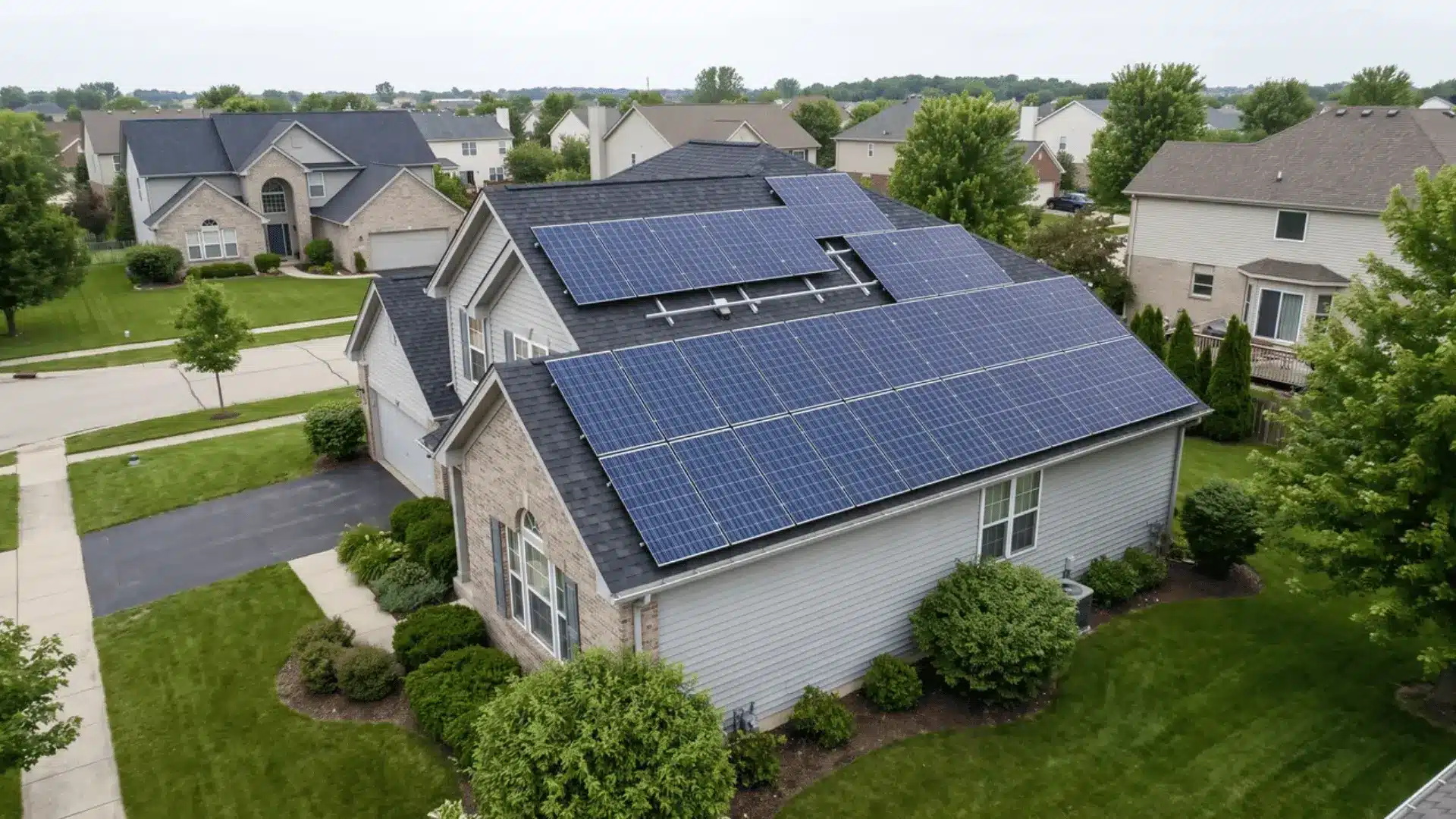
Solar panels on a roof usually suggest electricity, but some roof-mounted collectors serve a different purpose.
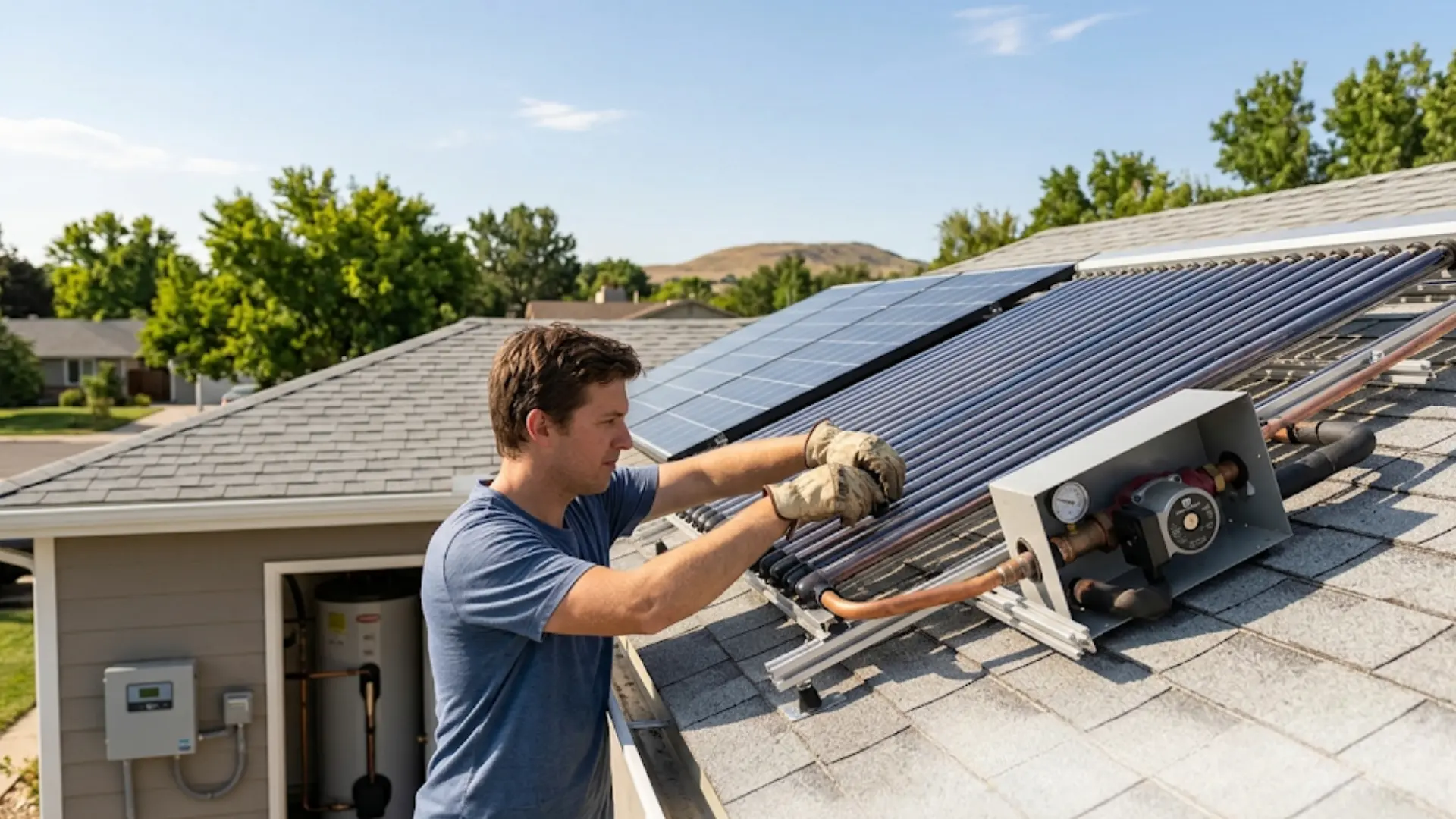
Active solar heating captures sunlight as heat and uses pumps, fans, sensors, and controllers to move it through a building. The system can support hot water, space heating, radiant floors, or swimming pools, but it does not generate electricity.
I have seen people confuse solar thermal collectors with photovoltaic panels and expect savings in the wrong part of their energy bill.
Understanding the equipment and heating cycle makes it easier to judge whether this system suits a property.
What Is Active Solar Heating?
Active solar heating is a solar thermal system that uses mechanical equipment to collect, transfer, store, and distribute heat.
A solar collector absorbs sunlight and transfers the resulting heat to water, an antifreeze mixture, or air. A pump or fan then carries the heated material through pipes or ducts.
The word “active” refers to this mechanical circulation. Sensors measure temperatures, while a controller decides when pumps, fans, and valves should operate.
Active solar heating is commonly used for:
- Domestic hot water
- Space heating
- Radiant-floor heating
- Swimming-pool heating
- Combined water and space heating
This technology differs from solar photovoltaic panels. PV panels turn sunlight into electricity for appliances, lighting, and other electrical loads. Solar thermal collectors convert sunlight directly into usable heat.
How Does Active Solar Heating Work?
An active system uses a controlled cycle to collect and move heat:
- A solar collector absorbs energy from sunlight.
- Water, antifreeze, or air collects the resulting heat.
- Sensors measure the temperatures in the collector and storage unit.
- A controller checks the difference between those readings.
- A pump or fan starts when the collector contains useful heat.
- The heated liquid or air moves into storage or directly into the building.
- Radiators, radiant floors, air handlers, or ducts release the heat.
- A backup heater operates when solar output cannot meet demand.
The differential controller is central to this cycle. It starts circulation when the collector becomes sufficiently warmer than the storage tank or indoor space.
Circulation stops when the temperature difference becomes too small. Without this control, the system could move fluid through a cold collector and carry heat away from storage.
Main Parts of an Active Solar Heating System
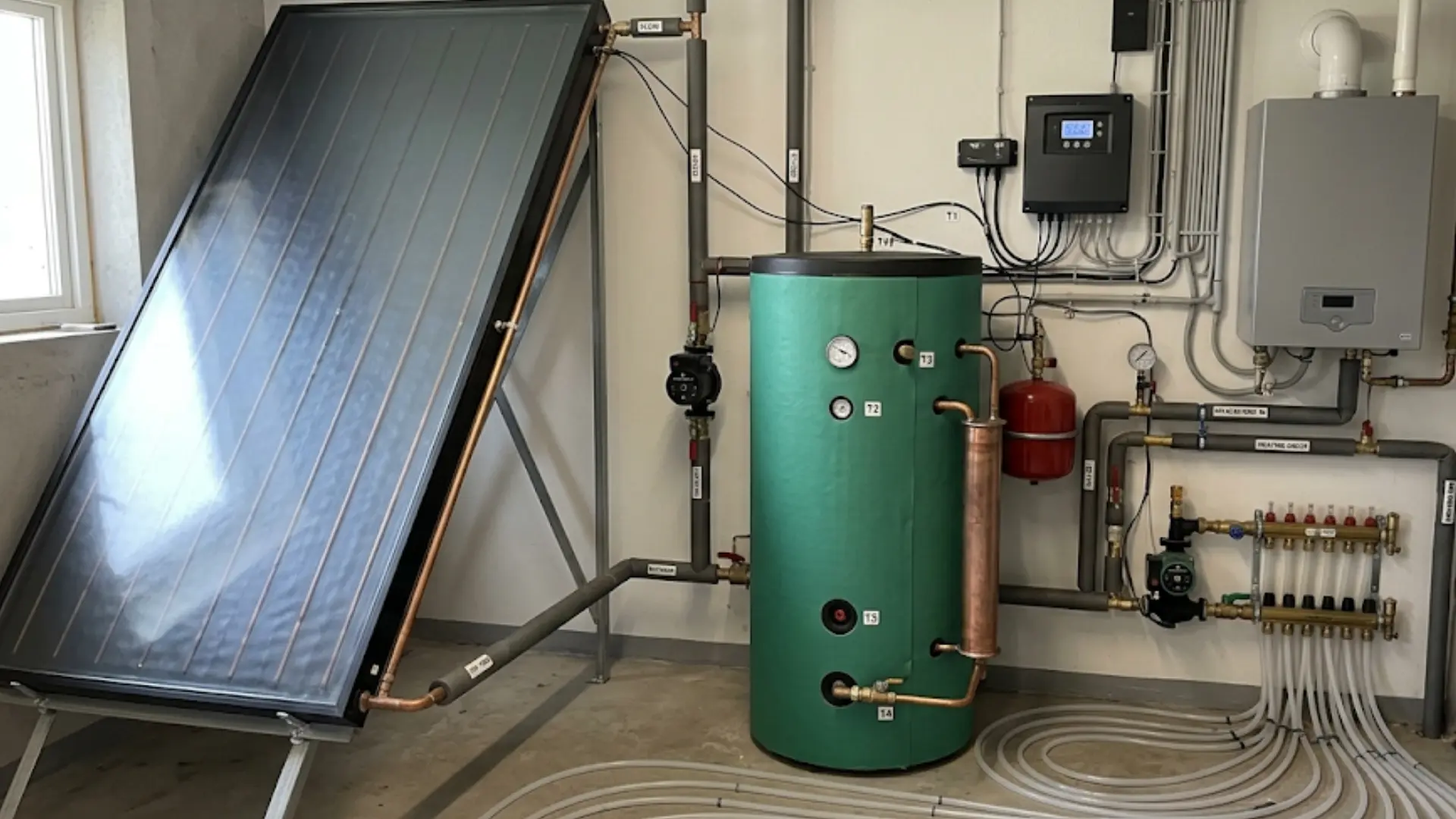
Every component performs a separate task within the heating cycle. Correct sizing and coordination are important because a weak pump, poorly placed collector, or faulty sensor can affect the entire system.
1. Solar Collector
The collector absorbs sunlight and converts it into heat. Common choices include flat-plate collectors, evacuated tubes, and solar air collectors.
Collectors need suitable orientation and strong solar exposure. Mechanical circulation offers flexibility in moving heat, but it cannot compensate for heavy shade or poor collector placement.
2. Heat-Transfer Medium
The heat-transfer medium carries energy away from the collector. Liquid systems commonly use water or a water-and-propylene-glycol mixture. Air systems use heated air and do not require liquid-filled pipes.
The chosen medium affects freeze protection, storage, maintenance, and distribution.
3. Pump or Fan
A pump moves liquid through pipes, while a fan carries heated air through ducts. When circulation stops, collected heat cannot reach storage or the occupied rooms.
The equipment must provide the correct flow rate without using excessive electricity.
4. Differential Controller
The controller receives readings from temperature sensors and starts circulation when useful heat is available. It stops the pump or fan when the collector can no longer add heat efficiently.
Properly designed controls may also support freeze and overheating protection.
5. Thermal Storage
Storage holds collected heat until it is needed. Liquid systems normally use insulated water tanks. Air systems may use masonry or rock-bed storage, though some send heated air directly into the building.
Storage size affects how much daytime heat remains available after sunlight decreases.
6. Distribution Equipment
Distribution equipment releases stored or collected heat into the building. Depending on the system, it may include:
- Radiant floors
- Radiators
- Baseboard units
- Air handlers
- Forced-air ducts
- Pool heat exchangers
The distribution temperature must match the available solar heat. Low-temperature radiant floors often pair more easily with solar thermal equipment than systems that require very hot water.
7. Backup Heater
Solar output changes with cloud cover, season, and time of day. A furnace, boiler, heat pump, or electric heating element usually supplies additional energy when stored heat is insufficient.
Backup equipment keeps indoor temperatures and hot-water service reliable during periods of low solar output.
Liquid vs. Air Active Solar Heating Systems
The two main types differ in what carries the heat and how it reaches the building.
The following table shows the main differences between liquid and air systems.
| Factor | Liquid or Hydronic System | Air System |
|---|---|---|
| Heat-transfer medium | Water or antifreeze mixture | Air |
| Circulation equipment | Pump | Fan |
| Common uses | Hot water, radiant floors, and hydronic heating | Direct space heating |
| Typical storage | Insulated water tank | Masonry, rock bed, or no separate storage |
| Freeze risk | Possible without suitable protection | No liquid freeze risk |
| Heat distribution | Pipes, radiators, or radiant floors | Ducts and registers |
| Main concerns | Leaks, corrosion, freezing, and fluid condition | Air leakage, fan performance, and duct losses |
Neither type is automatically better. The right choice depends on its intended use, winter temperatures, current heating equipment, storage space, and maintenance requirements.
Liquid systems suit properties with steady hot-water demand or hydronic distribution. Air systems may fit buildings that need direct space heating and already have suitable ductwork.
Active Solar Heating vs. Passive Solar Heating
Both methods use sunlight, but they collect and move heat differently.
This comparison explains how their equipment, planning, and maintenance needs differ.
| Factor | Active Solar Heating | Passive Solar Heating |
|---|---|---|
| Heat movement | Pumps or fans | Natural conduction, convection, and radiation |
| Main features | Collectors, controls, circulation equipment, and storage | Windows, insulation, thermal mass, shading, and building orientation |
| Electricity use | Requires some operating electricity | Usually requires no operating electricity |
| System control | Sensors and automatic controls | Building design and seasonal sunlight |
| Maintenance | Mechanical equipment needs servicing | Few mechanical maintenance needs |
| Best planning stage | May be added to an existing building | Usually easiest during construction or major renovation |
Passive heating uses building features such as sun-facing windows, roof overhangs, insulation, and heat-storing materials. It does not depend on a dedicated pump or fan to collect and distribute solar heat.
A property can use both methods. Passive features reduce heating demand, while an active system supplies hot water or added space heating.
Active solar heating should not be confused with solar cooling. Heating systems collect and move warmth into a building, while cooling systems remove indoor heat using equipment such as solar-assisted chillers or PV-powered heat pumps.
Benefits of Active Solar Heating

A properly designed system can reduce conventional energy use and provide more control than passive solar features alone.
- Lower Fuel Use: Collected solar heat reduces the energy required from a boiler, furnace, heat pump, or electric heater.
- Controlled Circulation: Sensors and controllers move heat only when temperature conditions make the transfer useful.
- Heat Storage: An insulated tank or other storage material can retain daytime heat for later use.
- Several Applications: Depending on its design, one system may support hot water, pool heating, radiant floors, or space heating.
- Lower Operating Emissions: Solar heat can reduce dependence on fossil-fuel heating equipment.
- Retrofit Potential: Some systems can connect to existing hydronic heating or forced-air distribution.
Actual performance depends on collector exposure, local weather, system sizing, insulation, heat demand, and equipment condition. A benefit listed on paper may remain limited if the property has poor solar access or high preventable heat loss.
Disadvantages of Active Solar Heating
Mechanical circulation provides better control, but it also adds equipment, installation costs, and maintenance responsibilities.
- Higher Initial Cost: Collectors, storage tanks, pumps, controls, and professional installation can require a large upfront expense.
- Mechanical Maintenance: Pumps, fans, sensors, valves, fluids, and heat exchangers need periodic inspection.
- Operating Electricity: Controllers and circulation equipment require a small but continuing electricity supply.
- Changing Solar Output: Production falls during cloudy weather, shorter winter days, and overnight periods.
- Temperature Risks: Liquid systems require protection against freezing, overheating, and excessive pressure.
- Storage Space: Insulated tanks or other storage equipment can occupy considerable indoor space.
- Backup Heating: Solar energy rarely matches the full heating load during every hour of the year.
A damaged sensor, failed pump, or degraded heat-transfer fluid may reduce performance without creating an obvious indoor warning. Scheduled checks help identify these problems before they affect the whole system.
What Does Active Solar Heating Cost?
Active solar heating costs vary because each property needs a different collector area, storage capacity, and distribution arrangement. A small domestic water-heating system generally costs less than equipment designed to heat an entire building.
The final price may depend on:
- Collector type and total area
- Roof condition and installation access
- Storage capacity
- Pipe or duct requirements
- Freeze and overheating protection
- Heat exchangers and control equipment
- Local permits and labor rates
- Compatibility with existing heating equipment
- Required electrical or structural work
Available rebates and tax incentives may reduce the initial expense, but programs differ by location and can change over time.
Request itemized quotes based on the same project scope. Each quote should state the equipment included, estimated solar contribution, expected maintenance, warranties, and any excluded work.
Check whether roof repairs, permits, backup heating, storage, and commissioning are included before comparing prices or accepting a projected payback period.
Is Active Solar Heating Worth It?
Yes, active solar heating can be worth it when your property has steady heat demand, strong solar exposure, and high conventional fuel costs. It makes less financial sense when heating needs are low, collectors face heavy shade, or the building loses heat through poor insulation.
Start by improving air sealing and insulation so the system is not compensating for avoidable waste. Then compare energy demand, winter conditions, roof condition, equipment space, maintenance costs, and available incentives.
Your ownership period matters because savings accumulate over time. I recommend requesting several quotes based on the same heating-load assessment. This makes system sizes, warranties, performance estimates, and exclusions easier to compare. Use realistic energy prices and maintenance costs when judging any payback period.
Active Solar Heating Installation Process
Installation follows a planned sequence to ensure the collectors, storage, controls, and existing heating equipment work safely and efficiently as one connected system.
- Site Assessment: An installer checks sunlight exposure, roof condition, shading, heating demand, and available space for collectors and indoor equipment.
- System Design: The collector area, storage capacity, circulation method, and backup heat source are sized for the property’s needs.
- Collector Mounting: Solar collectors are secured to the roof, wall, or ground at a suitable angle for direct sunlight.
- Pipe or Duct Installation: Insulated pipes or sealed ducts connect the collectors to storage tanks, distribution equipment, and living areas.
- Equipment Connection: Pumps, fans, valves, heat exchangers, sensors, and controllers are installed and connected to the existing heating system.
- Safety Setup: The installer adds freeze protection, pressure controls, expansion equipment, and overheating safeguards required by the system design.
- Testing and Commissioning: Fluid flow, airflow, temperature sensors, controls, storage, and backup heating are tested before regular operation begins.
A qualified solar thermal installer should complete the work, explain the controls, provide maintenance instructions, and confirm that every component operates correctly.
Active Solar Heating Maintenance
Maintenance requirements depend on the collector type, heat-transfer medium, climate, and installed equipment.
A regular service schedule may include:
- Inspecting Collectors: Check for physical damage, loose mounts, shading changes, or heavy debris.
- Testing Pumps and Fans: Confirm that circulation equipment starts, stops, and operates without unusual noise.
- Checking for Leaks: Examine pipes, storage tanks, valves, heat exchangers, and fittings.
- Measuring Pressure and Flow: Verify that liquid or air moves through the system at the intended rate.
- Testing Heat-Transfer Fluid: Check glycol concentration, condition, and freeze protection in closed-loop systems.
- Inspecting Insulation: Repair damaged pipe or duct insulation to limit heat loss.
- Testing Sensors and Controls: Confirm that readings are accurate and the differential controller responds correctly.
- Servicing Valves and Heat Exchangers: Look for scale, corrosion, sticking parts, or reduced heat transfer.
- Checking Safety Features: Test freeze, pressure, and overheating protection.
Collectors and storage tanks may remain in service for many years, but pumps, fans, seals, valves, sensors, and fluids can need earlier attention. Manufacturer schedules and warranty terms provide a more useful estimate than applying one lifespan to the entire system.
Final Verdict
Active solar heating uses collectors, pumps or fans, storage, and automatic controls to move solar heat where it is needed. Liquid systems commonly support hot water and radiant floors, while air systems focus on warming indoor spaces.
Climate, energy demand, collector exposure, roof condition, and existing equipment all affect performance. Cost and maintenance matter as well, so accurate heating-load calculations and comparable local quotes are essential.
I think the strongest results begin with good insulation, suitable solar exposure, and realistic expectations about backup heating. Compare several systems carefully, review the full installation scope, and ask installers how their estimates account for seasonal changes and maintenance.
Frequently Asked Questions
Is an Active Solar Heating System Noisy?
A well-installed system should operate quietly. Pumps may create a low hum, while air-system fans can produce airflow noise. Rattling, grinding, or loud vibration may indicate loose equipment, trapped air, or worn components.
What Happens to Active Solar Heating During a Power Cut?
Standard pumps, fans, and controllers stop working without electricity, so heat circulation pauses. Stored heat may remain available, but delivery depends on the system. Battery backup or a suitable solar-powered pump can support limited operation.
Can Heat-Transfer Fluid Mix With Household Water?
Closed-loop systems keep antifreeze solution separate from household water by using a heat exchanger. A damaged exchanger could create a contamination risk, so approved fluids, correct pressure settings, and scheduled inspections remain important.
Can Active Solar Heating Provide Cooling in Summer?
A standard active solar heating system does not cool indoor spaces. Specialized solar-assisted cooling equipment exists, but it uses different components and controls. Shading collectors or managing excess summer heat may still be necessary.
Can I Monitor the System From a Phone?
Some modern controllers support apps or web dashboards that display collector temperatures, storage levels, pump activity, and energy production. Compatibility depends on the controller, available sensors, internet connection, and monitoring package selected.
Does Active Solar Heating Affect Home Insurance?
Adding roof-mounted collectors and storage equipment may change the property’s insured value or structural details. Tell the insurer before installation and confirm coverage for collectors, roof damage, leaks, equipment failure, and storm-related losses.