


A heat pump that keeps running longer, costs more to repair, or struggles to keep rooms comfortable can make replacement feel hard to judge.
You do not want to replace it too early, but waiting too long can leave you with a sudden breakdown.
Heat Pump Replacement makes more sense when you understand the warning signs, costs, sizing needs, and installation details behind the decision.
I look at the full condition of the system, not age alone. Here, you can compare repair and replacement, understand what affects price, choose the right system size, and know what to ask an installer before making a final call.
When Should You Repair or Replace a Heat Pump?
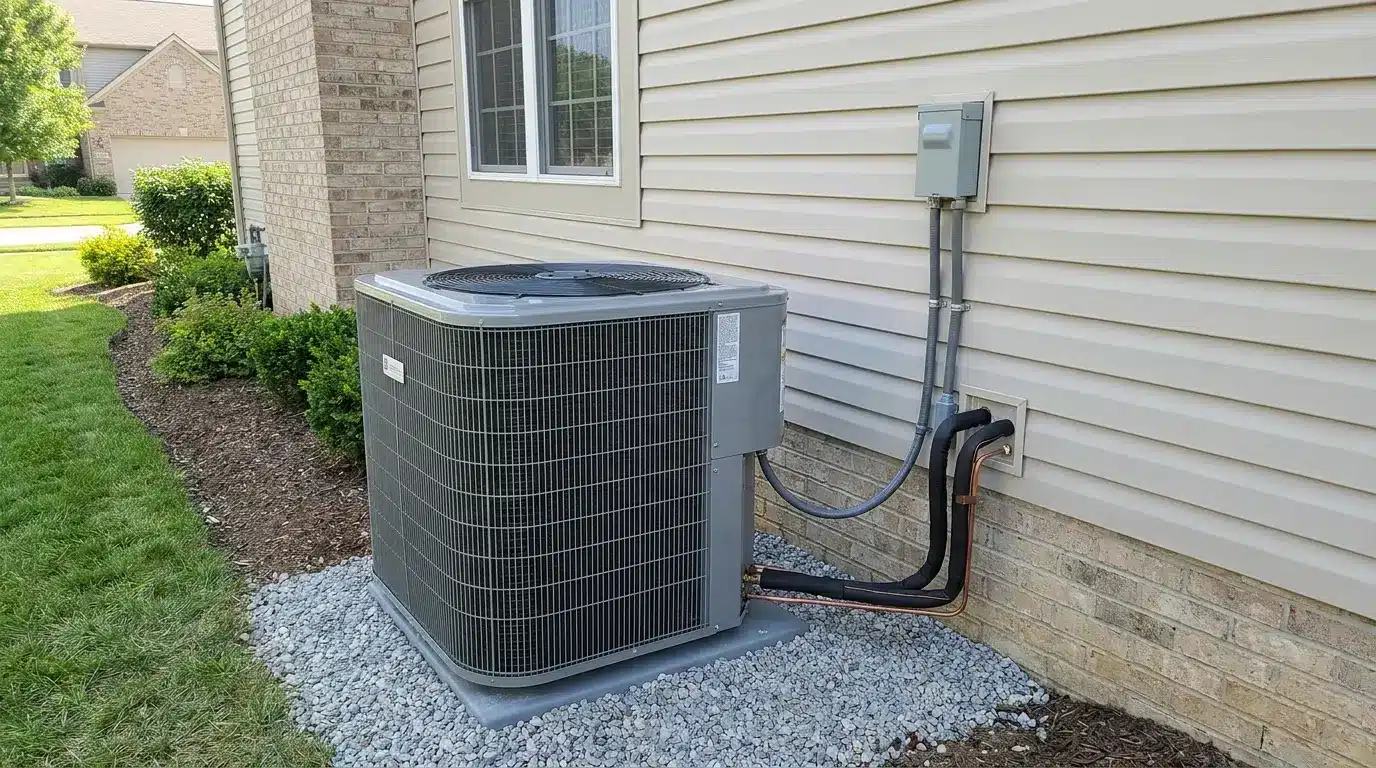
Age can help you judge a heat pump, but it should not make the decision by itself. A system that still heats and cools properly, uses a reasonable amount of energy, and rarely needs service may have useful life left. If you’re not even sure what equipment is sitting outside, it helps to first confirm your system type before comparing repair costs against a full swap.
Regular heat pump maintenance service can also help identify dirty coils, airflow restrictions, electrical problems, or worn parts before you assume the entire system needs replacement. If routine maintenance restores normal comfort and performance, keeping the existing unit may still make financial sense.
The situation changes when several problems appear together. Frequent service calls, expensive component failures, uneven temperatures, rising electricity use, or trouble reaching the thermostat setting can make replacement more practical.
A small repair is different from a compressor, coil, or major refrigerant problem. Before spending heavily on an older unit, ask the technician about the condition of the remaining components and the likelihood of another repair soon.
How Much Does Heat Pump Replacement Cost?
Heat pump replacement can vary widely in price because every property and HVAC setup is different. Bryant and Carrier cite a broad installed range of around $6,000 to $25,000. A basic replacement using existing connections may stay closer to the lower end, while larger or more complex projects can cost considerably more.
The table below gives a simple way to understand where your project may fall.
| Replacement Type | What It Usually Involves | Cost Level |
|---|---|---|
| Basic Replacement | Similar system using suitable existing electrical, duct, and refrigerant connections | Lower |
| Standard Replacement | New indoor and outdoor equipment with minor installation changes | Moderate |
| High-Efficiency System | Higher-efficiency or variable-capacity equipment with upgraded controls | Moderate to High |
| Complex Replacement | Electrical, duct, refrigerant-line, or structural changes | High |
| Geothermal System | Ground-loop work and specialized equipment | Highest |
These categories are useful for early budgeting, but a local written estimate gives you a much clearer idea of the actual amount you may pay.
Factors That Affect Heat Pump Replacement Cost
Two properties of similar size can receive very different replacement quotes. The final price depends on the equipment selected and the amount of work required to install it correctly.
- System Size: Higher-capacity heat pumps generally cost more, since a bigger heating and cooling wattage draw usually means larger compressors and higher equipment prices. The correct capacity should come from the property’s heating and cooling load rather than square footage alone.
- Heat Pump Type: Standard ducted, ductless, cold-climate, and geothermal systems have different equipment and installation requirements.
- Efficiency Rating: Models with higher SEER2 and HSPF2 ratings often cost more upfront. Variable-capacity compressors and advanced controls can also raise the equipment price.
- Indoor Equipment: Replacing an air handler, coil, furnace, or other indoor component adds to the project cost compared with replacing only compatible outdoor equipment.
- Ductwork Changes: Leaking, damaged, or incorrectly sized ducts may require repairs or modifications before the new system can perform properly.
- Electrical Work: Some installations require new circuits, wiring, disconnects, or electrical-panel upgrades.
- Refrigerant Lines: Existing lines may sometimes remain in use, while other installations require replacement or modification.
- Labor and Access: Equipment installed in tight attics, crawlspaces, rooftops, or other difficult locations can require more labor.
- Permits and Disposal: Permit fees, inspections, old-equipment removal, and disposal charges may be included separately or built into the contractor’s quote.
- Local Pricing: Labor rates, equipment availability, climate requirements, and local building rules can all affect what you pay.
Ask each contractor for an itemized estimate so you can compare the equipment and included work, not just the final number.
Rebates, Tax Credits, and Financing
Available incentives may help reduce the amount you pay for qualifying heat pump equipment. Programs can come from federal sources, state agencies, utility companies, local energy programs, or manufacturers.
Eligibility can depend on the exact model, efficiency rating, installation date, location, and other program requirements. Confirm that the proposed equipment qualifies before counting an incentive toward your budget.
Financing can spread the upfront cost over several payments, but check more than the monthly amount. Compare the interest rate, loan term, fees, and total repayment cost before signing.
A smaller monthly payment can still result in a higher overall cost when the loan runs for many years.
How to Choose the Right Replacement Heat Pump
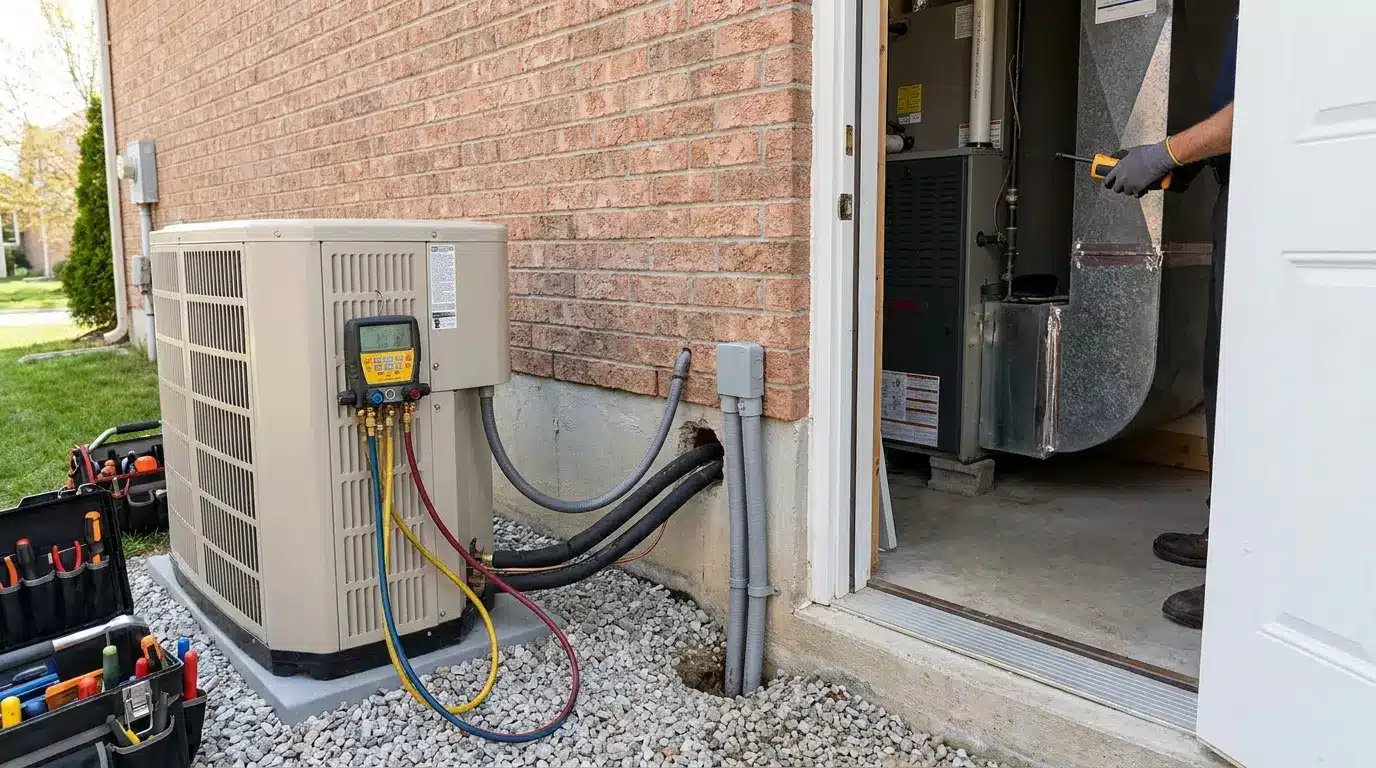
Choosing a replacement involves more than comparing brand names or buying the model with the highest efficiency rating. The system needs to match the property, climate, indoor equipment, and expected comfort level.
1. Get the System Size Right
Replacing an old three-ton unit with another three-ton unit may seem logical, but the original system may not have been sized correctly.
The heating and cooling load may also have changed since the old equipment was installed. New windows, added insulation, air sealing, additions, and renovations can affect how much capacity the property needs.
A load calculation should consider factors such as:
- floor area
- insulation levels
- window performance
- air leakage
- ceiling height
- local climate
- building orientation
- internal heat gains
An undersized system may struggle during severe temperatures. An oversized system may run in shorter cycles and provide less consistent comfort.
Ask how the contractor calculated the required capacity instead of accepting the old equipment size automatically.
2. Compare Efficiency and Operating Features
SEER2 helps compare seasonal cooling efficiency, while HSPF2 relates to heating efficiency.
Higher ratings can indicate lower energy use under standardized conditions, but actual performance still depends on installation quality, thermostat settings, duct condition, climate, and electricity prices.
Operating design matters as well.
Single-stage heat pumps mainly operate at one output level. Variable-capacity systems can adjust their output as heating or cooling demand changes. That can provide longer operating cycles and steadier indoor temperatures.
Variable-capacity systems usually cost more upfront, so the added expense should fit your comfort needs and budget.
3. Consider Cold-Weather Performance
People living in colder areas need to look beyond a general heating-efficiency number.
Heat pump capacity can change as the outdoor temperature falls. Some models maintain much more heating output in cold conditions than others.
Ask the contractor how much capacity the proposed equipment provides at temperatures common during your local winter.
It is also useful to ask when backup heat is expected to operate. This can give you a more realistic idea of how the system may perform during the coldest weather.
4. Check Equipment Compatibility and Warranty
The outdoor heat pump and indoor equipment need to work together properly.
The indoor side may include an air handler, coil, or furnace depending on the existing system. Keeping older indoor equipment can sometimes reduce the upfront cost, but compatibility needs to be confirmed.
Mismatched equipment can affect capacity, efficiency, controls, refrigerant performance, and warranty coverage.
The age of the indoor unit matters too. Keeping a heavily worn air handler could leave older motors, coils, and controls in service beside new outdoor equipment.
Review the warranty at the same time. Check parts coverage, compressor protection, registration deadlines, transfer rules, exclusions, maintenance requirements, and labor coverage.
Manufacturer coverage may pay for a replacement part without paying the labor needed to install it, so ask the contractor what labor protection is included separately.
What Happens During Heat Pump Replacement?
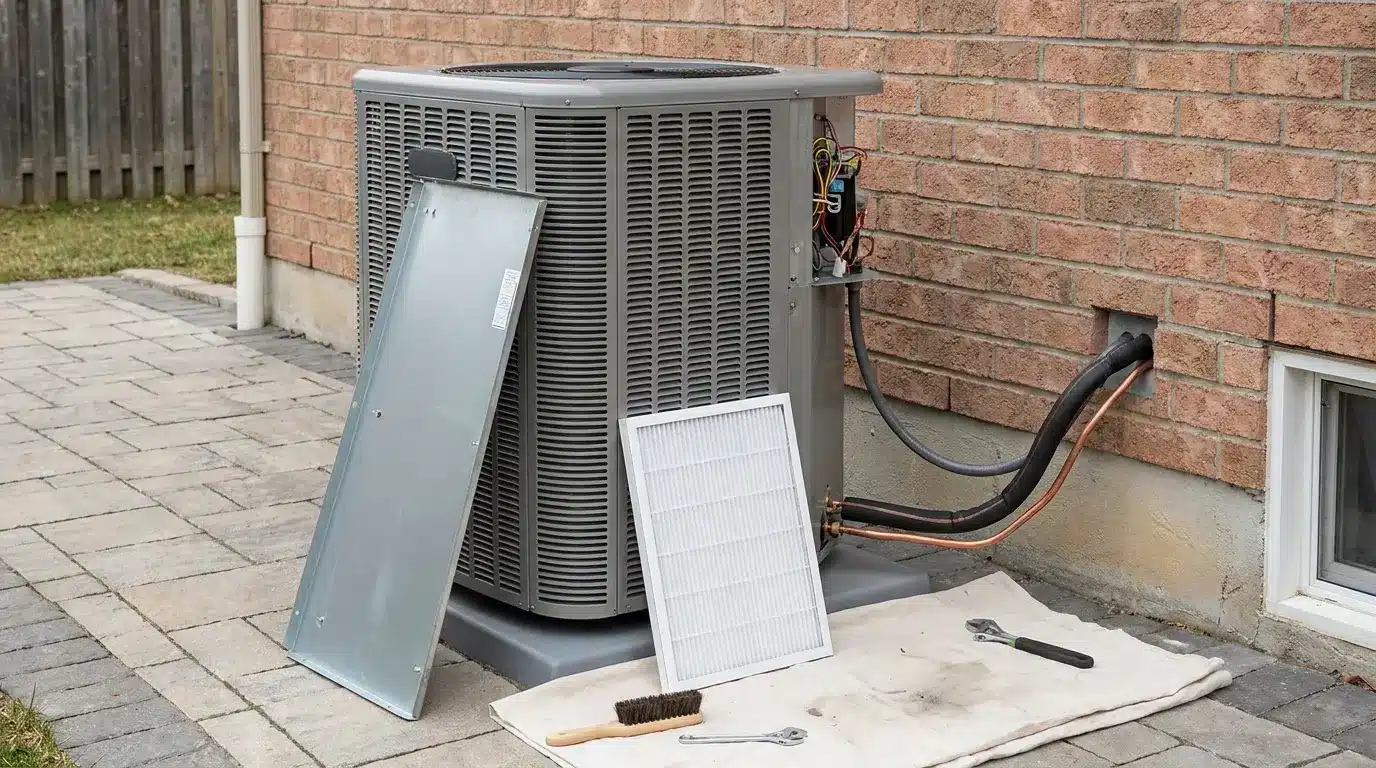
Heat pump replacement involves more than disconnecting the old outdoor cabinet and placing a new unit in the same spot.
The contractor should first inspect the existing system. That normally includes the outdoor equipment, indoor unit, electrical connections, thermostat, refrigerant lines, drainage, and ductwork.
Existing comfort problems should also be discussed before installation begins. If one room has always stayed warmer than the rest of the house, for example, a duct or airflow problem may need attention along with the equipment replacement.
Next, the old system is disconnected and removed. Refrigerant needs to be recovered properly, and the outdoor mounting area may require cleaning, leveling, or a new pad.
The new equipment is then positioned and connected. Work may involve refrigerant piping, electrical wiring, thermostat controls, drainage, duct transitions, and indoor equipment connections.
Testing should happen before the project is considered complete. The installer should check airflow, refrigerant performance, electrical operation, thermostat communication, drainage, heating, and cooling.
A straightforward residential replacement may sometimes be finished within one day. Jobs involving electrical upgrades, duct changes, new lines, difficult access, or inspections can take longer.
Questions to Ask Before Hiring a Heat Pump Installer
A clear written estimate makes it much easier to compare HVAC contractors. Ask about the equipment and the work included instead of comparing only the final price.
- System Sizing: Ask how the contractor calculated the heating and cooling capacity needed for the property.
- Equipment Models: Request exact model numbers for the proposed indoor and outdoor equipment.
- Installed Cost: Confirm that labor, equipment, permits, disposal, electrical work, and required modifications are included.
- Efficiency Ratings: Ask for the SEER2 and HSPF2 ratings of the exact equipment combination.
- Cold Performance: Ask how much heating output the proposed model maintains during typical winter temperatures in your area.
- Equipment Matching: Confirm that the indoor and outdoor components are approved to operate together.
- Warranty Coverage: Check manufacturer parts coverage separately from contractor labor protection.
- Installation Changes: Ask if the project requires ductwork, wiring, refrigerant-line, drain, or thermostat changes.
- Final Testing: Confirm how the contractor checks airflow, controls, refrigerant operation, heating, and cooling after installation.
Compare the complete written scopes side by side. A lower quote may leave out work that another contractor has already included.
Final Thoughts
Replacing a heat pump is easier to judge when you look at the whole system instead of focusing on one repair or one age number.
You now know how comfort problems, rising energy use, repair history, system size, efficiency, and installation needs all affect the decision.
Heat Pump Replacement should make sense for your budget, your home, and the condition of your current equipment.
I would compare detailed quotes, check equipment matching, review warranty coverage, and ask how the contractor tests the system after installation. These steps can help you avoid rushed choices and unexpected costs.
If you are still comparing options, check out related HVAC blogs before choosing your next system.
Frequently Asked Questions
How Often Does A Heat Pump Need To Be Replaced?
Most heat pumps last 10 to 15 years before replacement becomes the more cost-effective option. Units approaching or past that age with frequent breakdowns, rising energy bills, or repair costs exceeding half the price of a new system are strong candidates for replacement instead of continued repairs.
Do I Need To Replace The Indoor Unit Too?
Yes, in most cases. Pairing a new outdoor unit with an older indoor coil or air handler can void the manufacturer’s warranty and reduce the system’s actual efficiency below its rated performance. Replacing matched components together protects both warranty coverage and real-world energy savings.
Which Heat Pump Is Best For Cold Climates?
The best option is a cold-climate-rated heat pump designed to maintain heating capacity at low outdoor temperatures, sometimes paired with backup heat for extreme cold. Standard models can lose efficiency below freezing, so climate suitability should matter as much as price when comparing systems.